Wednesday, January 14, 2026
Home Blog Page 4135

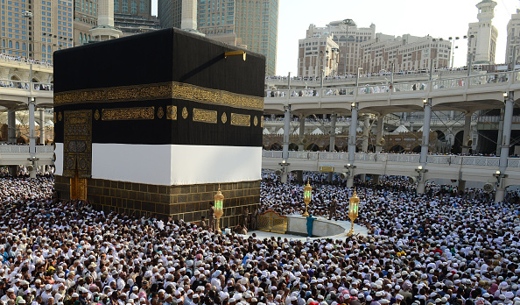
Iran to Send Pilgrims to Hajj If Saudis Pay Blood Money: Minister

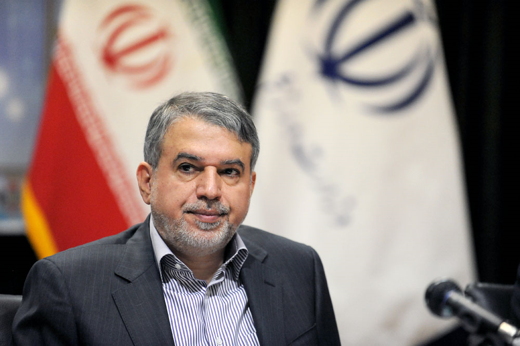
Salehi AmiriIn his first press conference, Reza Salehi Amiri, the Iranian Minister of Culture and Islamic Guidance, explained Iran’s conditions to resume sending pilgrims to Saudi Arabia.

“The Islamic Republic’s official policy is to ensure that the dignity and security of its pilgrims is guaranteed in Hajj pilgrimage,” he noted, according to a report by IFP.

Therefore, he added, if Saudi Arabian government accepts our minimum conditions and pay the blood money of Mina martyrs, Iran will send its pilgrims to Hajj this year.

Iran has received an invitation from Saudi Arabia for talks on the 2017 Hajj pilgrimage, and an Iranian delegation is slated to travel to Saudi Arabia on February 23 for talks.

More than 1.8 million faithful took part in last year’s Hajj, but Iranians stayed at home after tensions between Riyadh and Tehran boiled over following a deadly crush of people during the 2015 pilgrimage.

On September 24, 2015, thousands of people lost their lives in the crush after Saudi authorities blocked a road in Mina during a ritual, forcing large crowds of pilgrims to collide.

The crush was the deadliest incident in the history of the pilgrimage. Saudi Arabia claims nearly 770 people were killed in the incident, but officials at Iran’s Hajj and Pilgrimage Organization say about 7,000 people, including over 460 Iranian pilgrims, lost their lives.

Iran’s President Starts Tour of Oman and Kuwait to Promote Cooperation with Arab States

rouhani

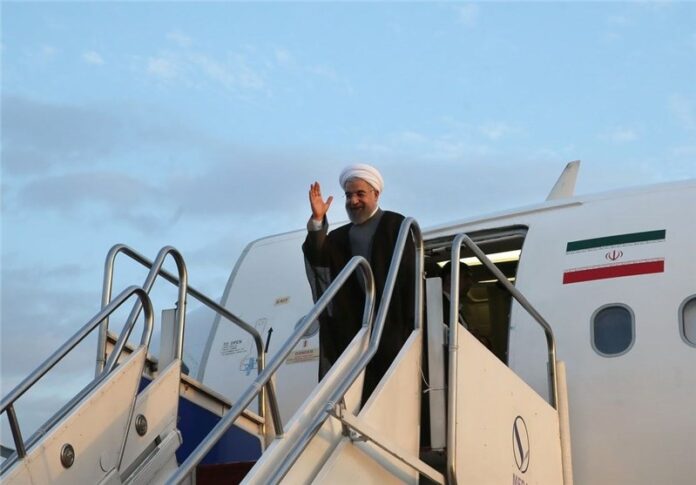
President Rouhani left Tehran for Muscat on Wednesday morning at the invitation of Oman’s Sultan Qaboos bin Said Al Said.

Accompanied by a delegation of Iranian ministers, advisors and representatives of the private sector, President Rouhani will leave Oman for Kuwait this evening at the invitation of Kuwait’s Emir Sheikh Sabah al-Ahmad Al-Sabah.

Speaking to reporters before his departure for Muscat, President Rouhani underlined that Iran favors “promotion of ties with the regional and neighboring countries, and strengthening of stability, security and development across the region.”

He also pointed to a recent message from six members of the PGCC – Saudi Arabia, Kuwait, the United Arab Emirates, Qatar, Bahrain, and Oman – on their willingness to boost relations with Iran and clear up misunderstandings via dialogue and negotiations, saying he “welcomes the essence of the message” and will discuss promotion of cooperation with those Arab states during his visits to Oman and Kuwait.

In late January, Foreign Minister of Kuwait Sheikh Sabah Al Khalid Al Sabah paid a visit to Tehran to relay a message from the Kuwaiti emir to President Rouhani.

Elsewhere in his remarks, the Iranian president reiterated that Iran’s foreign policy is based upon good neighborliness and protection of the Persian Gulf’s security, stressing that Tehran neither seeks invasion or interference in the internal affairs of the other countries nor plans to impose its religious and political ideas on the others.

“Mutual cooperation with the Islamic friend countries and neighbors is a priority,” he underscored.

President Rouhani also denounced the “fake” rifts fomented by certain foreign powers, stressing that Sunni and Shiite Muslims have a long history of peaceful coexistence, and the phobia about Iran, Shiites, Sunnis, or neighbors have been all induced by the outsiders.

He also unveiled plans for talks on “ending the bloodshed” in Syria, Iraq and Yemen during his visits to the Arab neighbors.

Which One Will Win: Erdogan or Democracy?

Erdogan
Mahmood Askarieh
Mahmood Askarieh – IFP Managing Editor and Owner

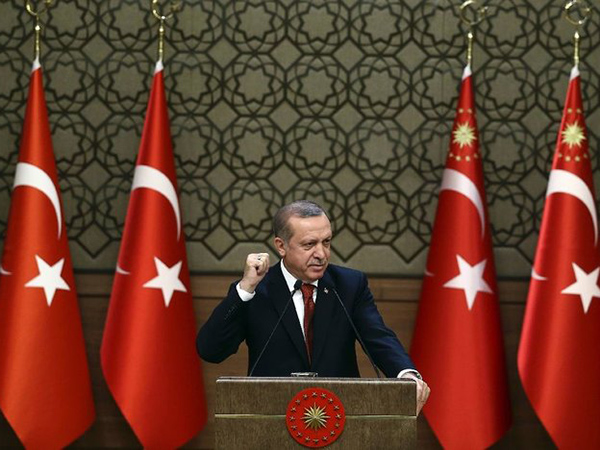
Turkish people will soon be called on to make their decision whether they would like the country’s ruling system to undergo a transition from a democratic parliamentary system to a presidential system or not.

According to a report by IFP, on January 21, the Turkish Parliament passed a constitutional amendment bill with 18 articles to change the system of government.

If approved in the referendum due to be held within two months of presidential approval [in April], the constitutional amendment will effectively convert Turkey into a presidential system of government, giving [its] President Recep Tayyip Erdoğan an opportunity to be elected for two more terms until 2029 — his current term ends in 2019 — and the authority to directly appoint some top judges on the constitutional court and on another judicial body that oversees judges and prosecutors.

A presidential system would also authorize Erdoğan to dissolve the parliament and, in the absence of martial law, be able to declare a state of emergency with increased security measures similar to those under martial law.

The countdown has begun. Turkish people are approaching the fate-deciding day, the day of the referendum (April 16). In such condition, the fear and anxiety of tumbling into despotism would grow on a daily basis among those opposing the referendum and transition.

On April 16, Turkish liberals will once again confront a dilemma of the kind they faced on June 7, 2015, when they went to the ballot boxes to vote for the members of their parliament, doomed the Justice and Development Party (AKP) to failure, even though at the expense of supporting the minority, and prevented pro-Erdoğan candidates form winning two-thirds of the seats in the parliament and, thus, transforming the parliamentary system into a presidential one without holding a referendum.

What would be the outcome? Which one would emerge victorious: Democracy or despotism? What would Erdoğan need to win the competition? What balm would heal the wounds inflicted on Turkish people’s soul and pride?

Will Erdoğan manage to reverse its defeat in Syria [and the entire region] and turn the tables on those who criticize his policies, thanks to the opportunity provided by the present bewilderment and indecisiveness of the new US government and the resettlement of homeless Syrian refugees — in fact taking them hostage — as leverage to appease Europe, which was criticizing Ankara for supressing Kurds who were truly fighting against the ISIS, as well as secluding a large part of the Syrian territory by imposing a no-fly zone over it?

Why is Erdoğan hurriedly seeking to, by hook or by crook, regain the prestige he has lost due to his wholehearted support for the ISIS over the past two years? Why does the victory have to go to him at any cost and as soon as possible? What was the truth behind the 2016 Turkish coup d’état attempt which was, apparently, an excuse for the large-scale suppression of domestic opponents and critics as well as implementing unprecedented security measures in the country?

As the referendum date looms, all these questions might be answered one by one. Erdoğan would not consent to a title less prestigious than ‘Sultan Recep the First”. Apparently, the key to the gate of the new Ottoman Empire’s castle is hidden somewhere in the ISIS’ pocket or the Syrian city of Raqqa, where the stronghold of the ISIS’ ringleader, Ibrahim al-Samarrai — also known as Abu Bakr al-Baghdadi — has been built.

Erdoğan would require to compensate for his defeat in the Syrian front to secure sufficient votes for his reforms and win the nationwide referendum. Nevertheless, in the meanwhile, Turkey’s good days are certainly to be sacrificed.

Foreign Investment Expected to Boost Iranian Industries: MP

Foreign Investment

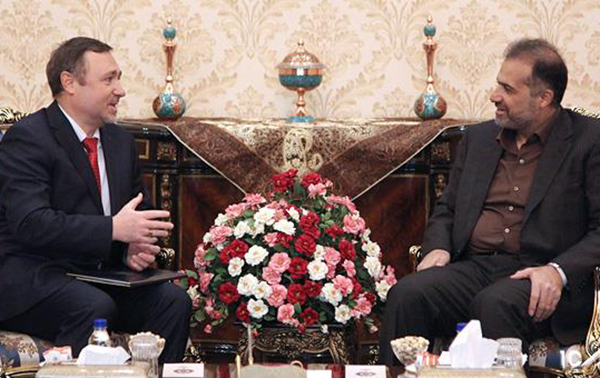
“Despite the ongoing chaos in the Middle East, Iran is still a calm, safe country,” Iranian lawmaker Kazem Jalali stated in a Monday meeting with Sergei Buldiliak, Ukraine’s ambassador to Tehran.

Therefore, Jalali added, we expect international investment in Iran to boost the country’s export-based production, as well as the transfer of technical knowledge.

According to a Farsi report by ICANA, the Iranian MP referred to energy industry as an appropriate area for bilateral cooperation between Iran and Ukraine, and emphasized the need to further the talks in this regard.

Buldiliak, for his part, stressed that “by collaborating with Iran in the field of energy, Ukraine will contribute to the stability and security of its domestic energy section.”

“In Ukraine, the aerospace industry, and the space, shipbuilding and helicopter manufacturing technologies have high capacities for extended cooperation with Iran.”

“Ukraine regards Iran as a friend,” he stated. “We are hopeful about development of our bilateral relations with this country.”

He also noted that Ukraine would be glad to receive Ali Larijani, the speaker of Iran’s Parliament.

Trump Should Talk with Putin to Resolve Global Issues: Japanese PM

Japanese PM meet trump

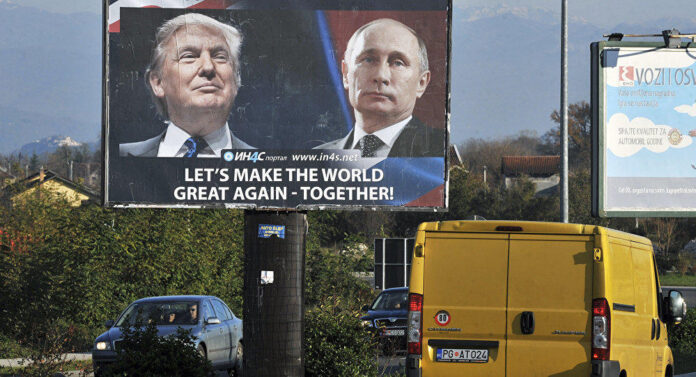
In an interview with the NHK news channel after his return to Japan on Monday, Japanese PM Abe said he has addressed various issues in his meeting with Trump, including the [anti-Russian] sanctions, the Syrian issue, the Iranian issue and the Ukrainian issue.

“These issues cannot be resolved if President Putin and President Trump do not maintain direct dialogue, can they?”

ISIS Beheads Its Swordsmith with His Own Sword!

isis

According to a Farsi report by Fars News, a local source in Mosul announced that the ISIS terrorists beheaded Abu Hamza Al-Suri, the man who made swords for ISIS elements, on February 13.

Al-Sumaria wrote that the ISIS Islamic Sharia Court sentenced this well-known man to death on charges of treason.

Abu Yahiya Al-Araqi, the man responsible for ISIS’ chemical bombs, was also killed in suspicious circumstances one day before in western Mosul.

North Korean Leader’s Half-Brother Reportedly Killed in Malaysia

North Korean Leader's Half-Brother

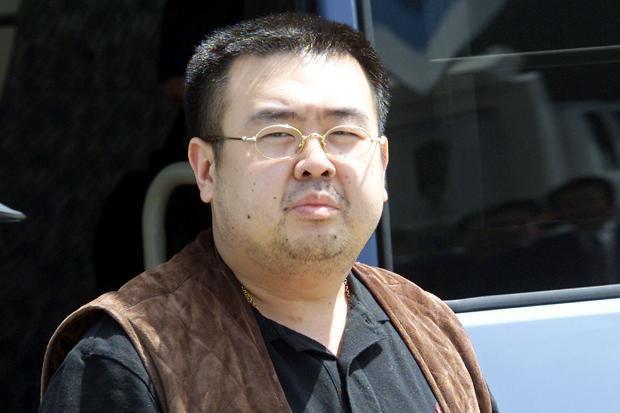
Kim Jong Nam, the older half-brother of the North Korean leader, was known to spend a significant amount of his time outside the country and had spoken out publicly against his family’s dynastic control of the isolated state.

He was believed to be in his mid-40s.

Police in Malaysia told Reuters on Tuesday an unidentified North Korean man had died en route to hospital from Kuala Lumpur airport on Monday. Abdul Aziz Ali, police chief for the Sepang district, said the man’s identity had not been verified.

An employee in the emergency ward of Putrajaya hospital said a deceased Korean there was born in 1970 and surnamed Kim.

South Korea’s TV Chosun, a cable television network, said that Kim was poisoned at Kuala Lumpur airport by two women believed to be North Korean operatives, who were at large, citing multiple South Korean government sources.

Kim Jong Nam and Kim Jong Un are both sons of former leader Kim Jong Il, who died in late 2011, but they had different mothers.

Kim Jong Nam was believed to be close to his uncle, Jang Song Thaek, who was North Korea’s second most powerful man before being executed on Kim Jong Un’s orders in 2013.

In 2001, Kim Jong Nam was caught at an airport in Japan traveling on a fake passport, saying he had wanted to visit Tokyo Disneyland. He was known to travel to Hong Kong, Macau and mainland China.

He said several times over the years that he had no interest in leading his country.

“Personally I am against third-generation succession,” he told Japan’s Asahi TV in 2010, before his younger had succeeded their father.

“I hope my younger brother will do his best for the sake of North Koreans’ prosperous lives.”

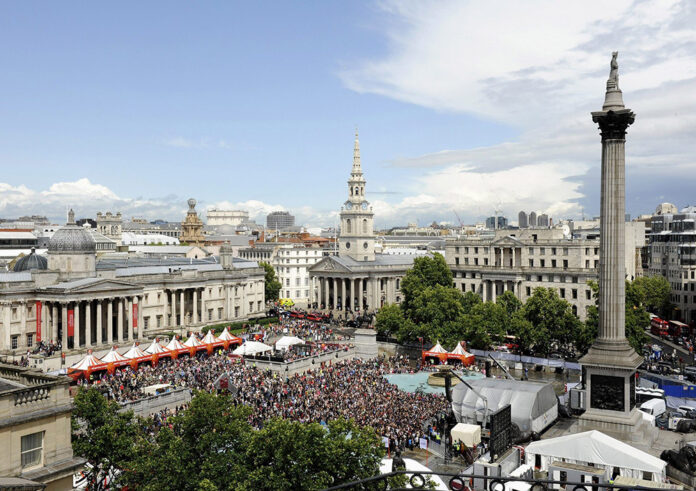
10,000 Expected to Attend Open-Air Screening of Iranian Film in London

Trafalgar Square-London

Sadiq Khan, the Mayor of London, will join some of the leading names in British film at a free premiere screening of the Oscar-nominated The Salesman, the Iranian director of which was affected by Donald Trump’s travel ban.

According to The Guardian, during Academy Awards night on 26 February, Trafalgar Square will be transformed into London’s biggest open-air cinema for the first UK showing of Asghar Farhadi’s drama, hours before the Oscars are handed out in Hollywood.

Leading names from the British film industry, including the Palme d’Or-winning director Mike Leigh, will address an expected audience of up to 10,000 people in central London.

Sadiq Khan is organising the screening, alongside the actor Lily Cole, the producer Kate Wilson and the film-maker Mark Donne, to coincide with the Oscars and “celebrate the capital’s success as a creative hub and beacon for openness and diversity” after the Brexit vote.

The announcement comes after actors and film-makers including Julie Christie, Kevin Macdonald, Keira Knightley, Ridley Scott and Terry Gilliam wrote to the Duke of Westminster to ask for permission to hold a screening outside the US embassy to protest against the US president’s ban on visitors from seven Muslim-majority countries: Iran, Iraq, Sudan, Libya, Somalia, Syria and Yemen.
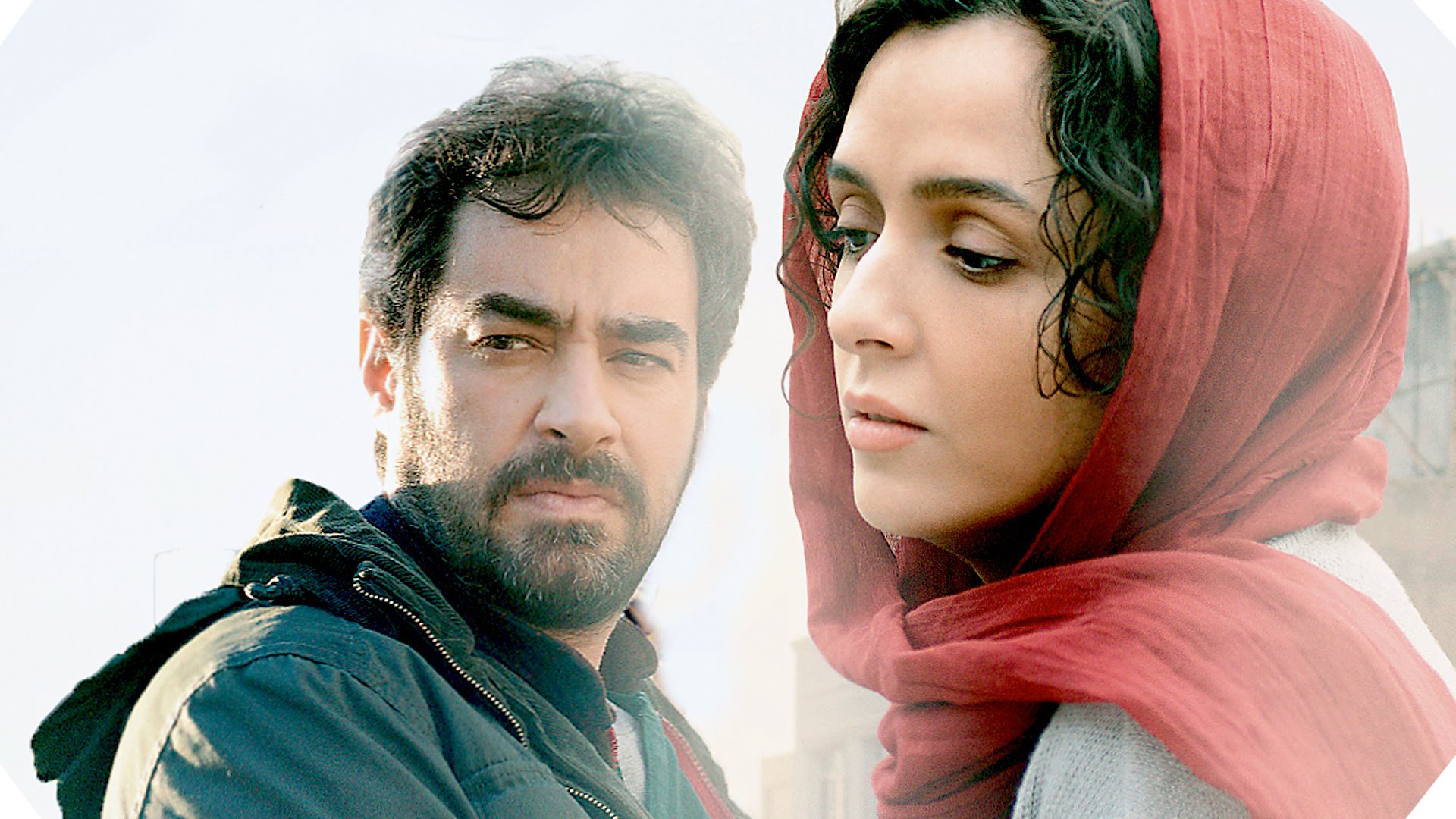
The Salesman - Asghar Farhadi

The Salesman is nominated for best foreign language film at the Oscars and stars Taraneh Alidoosti and Shahab Hosseini, who won best actor at Cannes last year. The film also won best screenplay at Cannes. Farhadi, who won a best foreign language film Oscar for A Separation in 2012, said he would not attend this year’s ceremony even if he were offered special dispensation, in solidarity with those who had been affected by the ban.
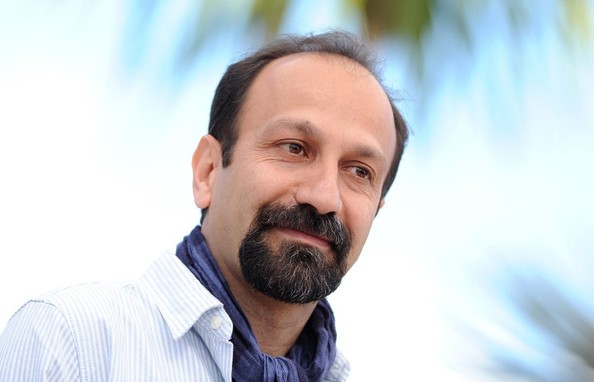
asghar-farhadiFarhadi said the Trafalgar Square screening had great symbolic value. “The gathering of the audience around The Salesman in this famous London square is symbolic of unity against the division and separation of people,” he said.

“I offer my warmest thanks to the mayor of London and the cinema community for this generous initiative. I welcome and appreciate this invaluable show of solidarity.”

Leigh said Farhadi, who he has known since serving with him on the 2012 Berlin film festival jury, was “one of the world’s greatest film-makers”.

“For those of us who make movies about real life, real people and real issues, he is a master, a true inspiration to all of us. We must show solidarity with Asghar and his principles, against divisiveness and hate,” Leigh said.

The London screening will begin at 4.30pm. Curzon Artificial Eye is also showing the film across the country on the same day.

Philip Knatchbull, the chief executive of Curzon, said it was a real privilege to be able to celebrate The Salesman with such a marquee screening. “Curzon is committed to film-makers from across the world who have outward-looking and inclusive voices, and to find common cause in that aim with the mayor of London is tremendous,” he said.

Trump’s executive order, now blocked by US courts, was roundly condemned by the international community, the UN and human rights groups, including the International Rescue Committee and Amnesty International.

Farhadi originally planned to attend the Oscars ceremony to highlight “the unjust circumstances that have arisen for the immigrants and travellers of several countries to the United States”, he wrote to the New York Times. But the conditions that would be attached to a potential entry visa were unacceptable, he said.

Alidoosti also vowed to boycott the ceremony.

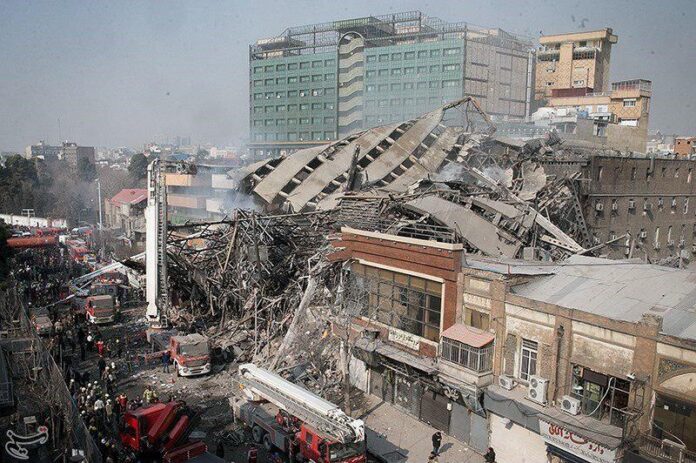
Two Arrested over Plasco Building Fire

Tehran Plasco Collapse

Two people are detained in connection with Plasco building fire, said Gholam-Hossein Mohseni Ejei, the Spokesman and Deputy Chief of Iran’s Judiciary.

“The two suspects may have started the fire in Plasco,” he added, according to a report by IFP.

“The case is pending in Tehran Court,” he said when asked about the latest developments of Plasco case in a recent press meeting.

“A team composed of several experts will investigate the other causes of fire,” he added.

No official has been summoned to the court yet, he went on to say.

Turkish President Receives Bahrain’s Highest National Order

“I am receiving this medal as a sign of the brotherhood between the states and peoples of Bahrain and Turkey,” Erdoğan said after receiving Bahrain’s highest medal in a ceremony at Sakhir Palace following a tete-a-tete meeting between President Erdoğan and King Hamad bin Isa Al Khalifa of Bahrain.

“I will always keep with honour this medal, which holds a unique place in our shared history,” he added.

The official website of Turkish presidency further quoted him as saying, “I pray to my Lord that our friendship and brotherhood become eternal and our cooperation permanent. I feel great pleasure to see that you also share the same will and determination.”

King Al Khalifa, in his speech at the ceremony, said for his part, “We would like to present this medal to you because of your efforts. Because you are working to serve the Islamic world.”