Sunday, May 3, 2026
Home Blog Page 406

US and Ukraine ink minerals deal

The US and Ukraine have been trying to hammer out the natural resources agreement since US President Donald Trump returned to the White House in January.

The deal comes after weeks of intense negotiations that at times turned bitter and temporarily derailed Washington’s aid to Ukraine.

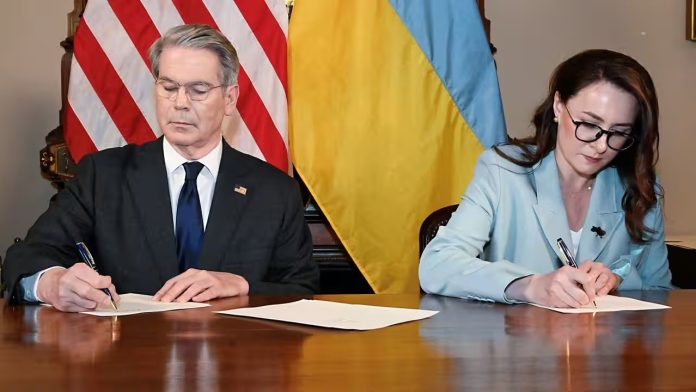
The US Treasury Department on Wednesday announced that both countries signed the agreement. “As the President has said, the United States is committed to helping facilitate the end of this cruel and senseless war,” Treasury Secretary Scott Bessent said in a statement.

“This agreement signals clearly to Russia that the Trump Administration is committed to a peace process centered on a free, sovereign, and prosperous Ukraine over the long term,” Bessent said, adding, “And to be clear, no state or person who financed or supplied the Russian war machine will be allowed to benefit from the reconstruction of Ukraine.”

Ukraine’s Economy Minister Yulia Svyrydenko was in Washington to sign on behalf of the Ukrainian government.

Among the terms of the agreement are “full ownership and control” staying with Ukraine, she posted to X on Wednesday.

“All resources on our territory and in territorial waters belong to Ukraine,” she said, adding: “It is the Ukrainian state that determines what and where to extract. Subsoil remains under Ukrainian ownership — this is clearly established in the Agreement.”

The signing comes hours after a last-minute disagreement over which documents to sign Wednesday threatened to derail the deal.

Ukraine’s President Volodymyr Zelensky was expected to strike the deal during his trip to Washington in February – but the agreement was left unsigned when that visit was cut short following the contentious Oval Office meeting.

Among the key sticking point of the negotiations was the question of security guarantees – and whether the US would provide them as part of the deal. Trump initially refused that, saying he wants Ukraine to sign the agreement first and talk about guarantees later.

At that time, Zelensky described the draft agreement as asking him to “sell” his country. Ukrainian officials have since indicated they believed that US investment and the presence of American companies in Ukraine will make the US more interested in Ukraine’s security.

Shortly after the doomed White House visit, Trump ordered US aid to Ukraine to be suspended. While the assistance has since been restored, the episode became a major wakeup call for Ukraine’s European allies, who have pledged to step up their help to the country.

Trump has largely billed the agreement as Ukraine “paying back” for the aid the US has provided to Ukraine since Russia launched its unprovoked full-scale invasion of the country in February 2022.

Speaking to Fox News Wednesday, Bessent said the deal is “a signal to the American people, that we have a chance to participate, get some of the funding and the weapons, compensation for those.”

The details of the agreement have not been made public. However, Ukraine’s Prime Minister Denys Shmyhal said on Sunday that the deal “will not include assistance provided before its signing.”

Speaking on Wednesday, Shmyhal described the deal as “a strategic agreement on the establishment of an investment partnership fund.”

“It is truly an equal and beneficial international agreement on joint investments in the development and recovery of Ukraine between the US and Ukrainian governments,” he added.

Under the deal, the US and Ukraine will create a joint investment fund in Ukraine with an equal contributions from both and equal distribution of management shares between them, Shmyhal said.

“The American side may also count new, I emphasize new, military aid to Ukraine as a contribution to this fund,” Shmyhal said.

Kyiv’s allies have long eyed the country’s mineral riches. Ukraine has deposits of 22 of the 50 materials classed as critical by the US Geological Survey.

These include rare earth minerals and other materials that are critical to the production of electronics, clean energy technologies and some weapon systems.

The global production of rare earth minerals and other strategically important materials has long been dominated by China, leaving Western countries desperate for other alternative sources – including Ukraine.

A memorandum of understanding prepared under the Biden administration last year said the US would promote investment opportunities in Ukraine’s mining projects to American companies in exchange for Kyiv creating economic incentives and implementing good business and environmental practices.

Ukraine already has a similar agreement with the European Union, signed in 2021.
Wildfires rage near Jerusalem, forcing evacuations and road closures

Tel Aviv is seeking international assistance to fight the fires, as the defense minister says Israel is “in a time of national emergency.”

“This is perhaps the largest fire ever in the country,” Jerusalem District Fire Department Commander Shmulik Friedman told reporters on Wednesday afternoon.

He warned that winds in excess of 60 miles an hour are expected “in the near future,” dramatically increasing the risk of the fires.

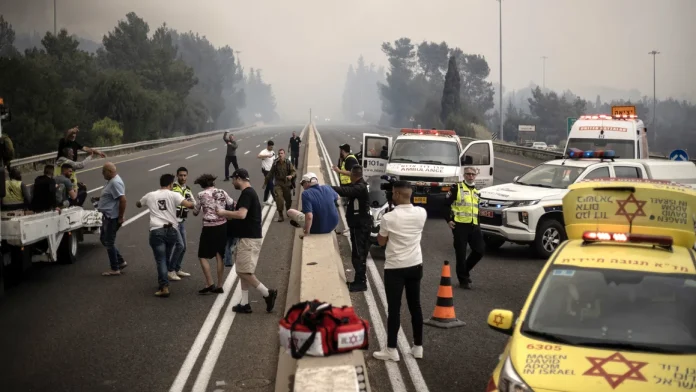
The fire forced authorities to close Route 1, the major road connecting Tel Aviv and Jerusalem on Wednesday – Israel’s Memorial Day.

Videos from social media show people walking along the highway with thick smoke filling the air.

Hours later, emergency workers ran amongst long lines of abandoned cars on the highway, looking for anyone who may still be in their cars, according to a video from United Hatzalah, an emergency response organization.

“We don’t know at this time what caused the fire. We don’t have even a bit of a clue. We are still not dealing with it,” Friedman stated, adding, “We are far from control.”

The fire is active on multiple fronts, authorities announced, with one area concentrated around the town of Neve Shalom, located about 15 miles west of Jerusalem. In one clip, the flames can be seen next to the road along a packed section of highway.

Israel’s Foreign Minister Gideon Sa’ar held a marathon of talks with other countries to bring in firefighting aircraft, according to his office, particularly nearby countries in Europe. Three aircraft from Italy and Macedonia will arrive “as soon as possible,” the National Security Council said in a statement.

At least ten communities in the area have been evacuated, authorities added.

“We are in a time of national emergency, and all available forces must be mobilized to save lives and bring the fires under control,” stated Defense Minister Israel Katz Wednesday.

There are about 120 teams fighting the fire, Israel’s Fire and Rescue Services announced, as well as 12 firefighting aircraft and helicopters.

More than a dozen people have arrived at two separate hospitals as a result of the fire, according to Shamir Medical Center and Kaplan Medical Center.

Meanwhile, Hadassah Medical Center on the outskirts of Jerusalem asked the public not to come to the hospital “unless absolutely necessary.” The hospital has begun evacuating patients who do not need to be hospitalized, even as it prepares to accept new patients who may have suffered injuries in the fires.

The fire is in approximately the same location as a similar blaze last week.

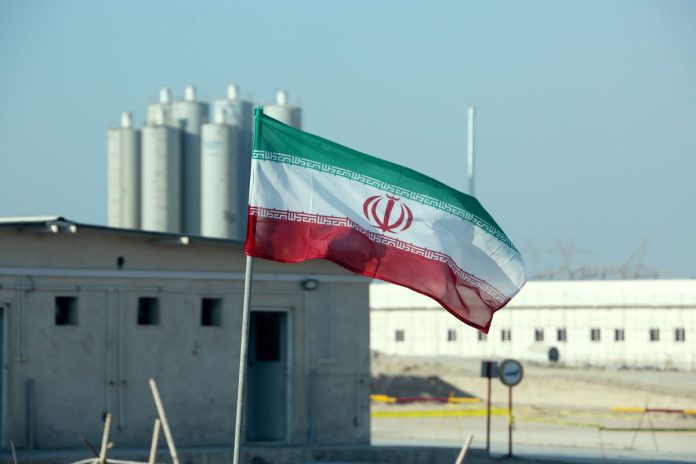
Iran’s security chief: Nukes have no place in Iran’s defensive doctrine

Iran nuclear programe

Addresding the BRICS security mreeting in Brazil, Ali Akbar
Ahmadian cited the UN oversight bodies’ reports as proof that Iran’s nuclear activities have never deviated from the peaceful path.

He reaffirmed Iran’s determination to use nuclear energy for civilian purposes, saying the Islamic Republic will not relinquish its inalienable right to the technology.

Speaking about the Palestinian issue, Ahmadian said, “As for Palestine, we are witnessing the reproduction of the dangerous discourse known as Peace through Strength and Coercion Diplomacy”.

Elsewhere, Ahmadian spoke about US threats against the BRICS grouping which includes countries like Iran, China and Russia.

He said such threats show the huge potential of BRICS for creating a powerful economic, political and cultural bloc.

Ahmadian noted that Tehran proposes the formation of a Supply Chain Security Committee
focused on key measures such as transport insurance, establishing an anti-sanction corridor, and launching a support fund to counteract foreign
sanctions.

This, he said, aims to strengthen the resilience and security of supply chains against external pressures and to ensure smoother trade and logistics operations in the face of Western sanctions.

Iranian gynecologist wins WIPO medal 

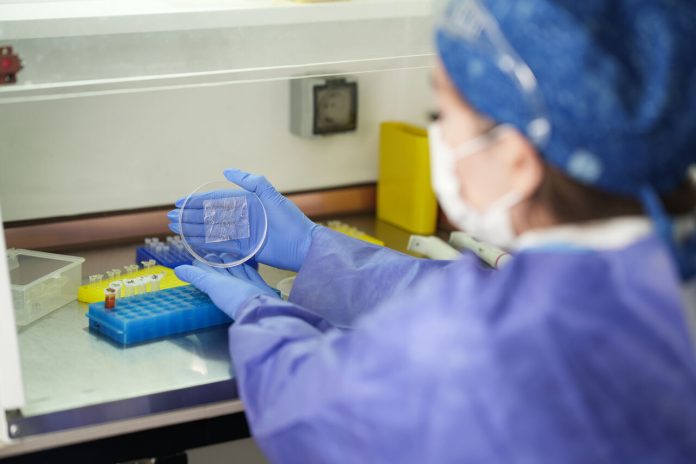
Hosseini has succeeded in using stem cells to control HPV and heal cervical wounds.

Meanwhile,this humanitarian invention has received a Grade A standard and innovation certificate from the secretary general of the International Federation of Inventors’ Associations, IFIA, and the special Gold Plus medal from the Swiss jury in Geneva.

The WIPO prize is the most prestigious medal for global inventions. Actually, they call it the Nobel Prize for inventions and the event is held under the auspices of the UN in Geneva. WIPO is a specialized agency of the UN serving innovators worldwide. The organization also ensures that innovators’ ideas are safely brought to market and improve quality of life everywhere.

Meantime, IFIA awards the WIPO medal to the best invention of that year.

Ms. Hosseini’s achievement comes as she has already won a gold medal in September 2024 from Silicon Valley, USA, in the field of HPV medicine.

Europe unlikely to gather 25,000 troops for Ukraine: Times

British Army

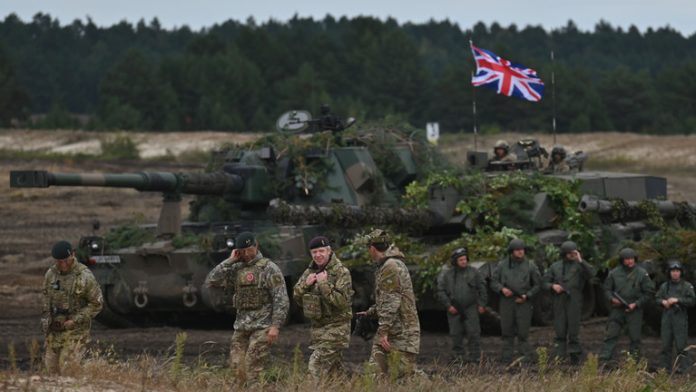
The Times was given a rare insight into conversations between Europe’s defense ministers and military chiefs as they thrashed out plans for a “coalition of the willing” force.

Admiral Sir Tony Radakin, the British chief of the defense staff, is said to have asked his counterparts on the Continent if they could put together a 64,000-strong force to send to the country in the event of a peace deal.

He said Britain would be willing to send up to 10,000 personnel in a meeting earlier this month.

However, at the next meetings, defense ministers from all over Europe stated that they had no chance of recruiting 64,000 troops. Close allies expressed their doubts to British Defense Minister John Healey. They indicated that a force of this size would require a total of 256,000 troops over two years, taking into account rotation.

The European military declared that even 25,000 people “would become a target for joint efforts,” stated a source privy to the discussions in Brussels. According to him, Estonia and Finland were concerned that any deployment would “weaken” their own border defenses, and Poland, Spain and Italy made it clear that they would not give their soldiers.

It is now assumed that Britain and France will send instructors to Western Ukraine instead of multinational ground forces.

Russia has repeatedly stated that the appearance of NATO troops in Ukraine is unacceptable.

Muslim groups urge UK PM to recognise Palestine, cease arms exports to Israel

West Bank

The letter is set to be delivered to 10 Downing Street on Tuesday by the Muslim Council of Britain (MCB).

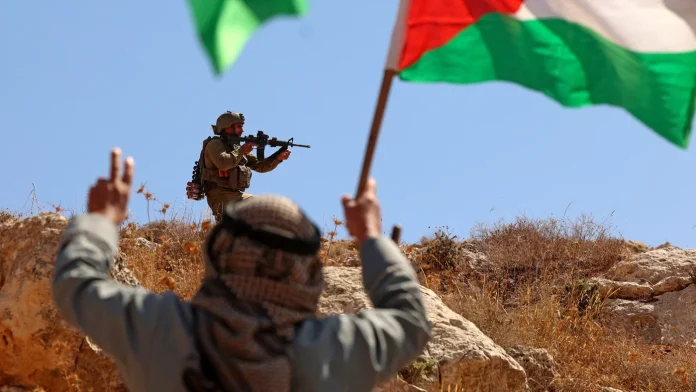
“For the past 18 months, we have seen the indiscriminate slaughter of Palestinians daily and found very little support from the government to take practical steps to prevent this,” the letter reads

“Beyond vague and equivocating statements, the actions have been the opposite; including the supply of weapons parts, surveillance flights or allowing the free passage of UK citizens to join the [Israeli army].”

It goes on to say that while Ukrainian refugees were welcomed “with open arms” following Russia’s invasion, Starmer “vowed to close the loophole” when a Palestinian family from Gaza sought to use the same system to find asylum.

“Although the two conflicts have their unique features, the Palestinian civilians being killed in their tens of thousands are no less human and no less deserving of the right to self-determination and safety,” the letter said.

“As British citizens, we cannot in good conscience accept our nation’s involvement or hollow words of condemnation in what is described by multiple agencies, bodies and experts as a genocide.”

The signatories went on to make four demands on the UK government: to urge the entry of humanitarian aid into Gaza, to immediately cease all arms exports and military support to Israel’s government, to demand an end to mass killings and the return of all hostages and prisoners, and to recognise Palestine as a sovereign and independent state.

It came on the same day that Starmer and Foreign Secretary David Lammy met with Mohammad Mustafa, the Palestinian Authority prime minister.

The UK announced a package of £101m in support to the occupied Palestinian territories, while Lammy signed a memorandum of understanding with Mustafa to recognise a Palestinian state as part of a two state solution.

Tuesday’s letter was signed by representatives from several mosques across the UK, as well as Muslim charities and community groups.

Wajid Akhter, secretary general of the MCB, stated that British Muslim communities were “simply calling for a foreign policy rooted in justice, humanity and international law”.

“We have rightly mobilised a coalition of the willing to oppose Russia’s illegal occupation of Ukraine, yet the illegal occupation of Palestine and the mass killing of Palestinian civilians is met with silence,” Akhter continued, adding, “We urge Prime Minister Keir Starmer to show moral leadership and act swiftly.”

He went on to say that Britain could lead international efforts towards ending the conflict and recognising a Palestinian state.

Nearly 150 countries recognise a Palestinian state, including, as of last year, Norway, Spain and Ireland. France recently indicated that it may recognise Palestine in June.

The UK’s Labour government has said it officially supports the creation of a Palestinian state “at the right time” and not unilaterally.

“It would be a tragedy if Britain was to miss this opportunity to be on the right side of history and to lead on an issue that every government has been committed to but not acted on,” added Akhter.

Poll shows most Ukrainians don’t trust Trump

Trump

A similar poll in November 2024, before Trump was sworn in for his second term, indicated that 44.6% of Ukrainians said they trusted Trump, compared to 47.2% who didn’t. The NEC attributed Trump’s “relatively high score” at the time to the “general disappointment with the hesitant policy of Joe Biden’s administration toward supporting Ukraine,” as well as Trump’s campaign promise to quickly negotiate a peace deal between Kiev and Moscow.

Trust in the US president has since plummeted in Ukraine because his strategy “at times, seemed more in line with Russia’s revanchist vision than with international law,” the NEC said.

While Trump has criticized both Russia and Ukraine, he blamed Ukrainian leader Vladimir Zelensky for the conflict. Their meeting in the Oval Office in February descended into a shouting match, during which Trump and US Vice President J.D. Vance accused Zelensky of being ungrateful for American aid and “gambling with World War III.”

Trump has declined to offer security guarantees to Ukraine, instead pressuring Kiev to sign a deal that would allow the US to profit from the country’s natural resources.

The peace agreement proposed by Washington reportedly includes US recognition of Russian sovereignty over Crimea, freezing the conflict along the current front line, and acknowledging Moscow’s control over large parts of the four former Ukrainian regions that voted to join Russia. The deal would also reportedly prevent Ukraine from joining NATO and initiate a phased removal of sanctions imposed on Russia.

Moscow has said that a viable peace can only be achieved if Ukraine abandons its territorial claims and drops plans to join NATO – something Kiev has refused to do.

Iran observes Persian Gulf Day amid sovereignty reaffirmation

Persian Gulf

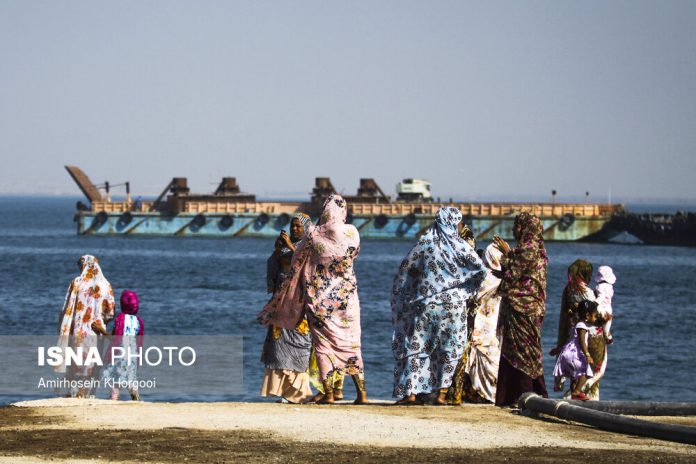
The annual event, marked on Ordibehesht 10 – April 29/30 – honors the 1622 expulsion of Portuguese colonizers after 115 years of occupation and reinforces Iran’s stance against alternative nomenclature by regional Arab neighbors.

Added to Iran’s national heritage list in 2010, the day celebrates the Persian Gulf’s cultural and geopolitical significance.

The 970-km-long Persian Gulf, flanked by Iran and the Arabian Peninsula, ranks as the world’s third-largest gulf.

Nationwide observances included cultural exhibitions and educational campaigns stressing the name’s historical roots dating to ancient Greek geographers.

Besides the name game the Arab states have launched, the United Arab Emirates, as a newly established country, has laid claims on the three Iranian islands of Abu Musa, the Greater Tunb, and the Lesser Tunb in recent years, while Iran has asserted the trio islands in the Persian Gulf are inseparable parts of the Iranian territory.

Iran’s UN envoy lambasts French ‘economic blackmail’ of reimposing anti-Tehran sanctions

Amir Saeed Iravani

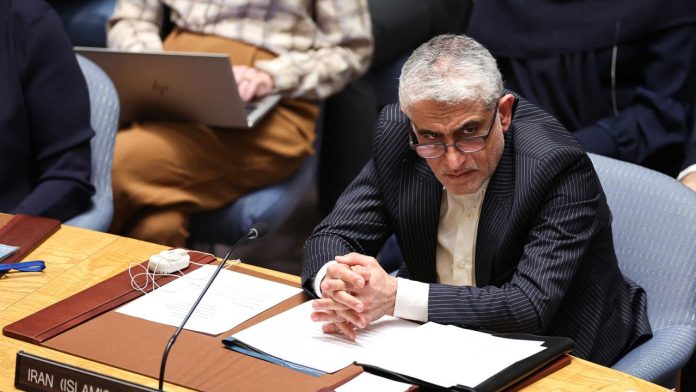
“Resorting to threats and economic blackmail is entirely unacceptable and represents a clear breach of the principles enshrined in the UN Charter,” Amir Saeid Iravani wrote in letters to UN chief General Antonio Guterres and Security Council head Jérôme Bonnafont.

French Foreign Minister Jean-Noel Barrot said on Monday that his government along with Germany and Britain “will not hesitate for a single second to reapply all the sanctions” lifted a decade ago if European security is threatened by Iran’s nuclear activities.

Iravani said France’s threat to trigger the so-called snapback mechanism despite its own failure to honor its commitments contradicts the fundamental principles of international law that preclude a party from claiming rights under an agreement while simultaneously failing to fulfill its obligations.

“Such an action is legally and procedurally flawed, unacceptable, and invalid, and would undermine the credibility of the Security Council,” he added.

The snapback mechanism is triggered simply by the assertion of significant non-compliance on the part of a participating state, a prerogative the West might abuse based on its accusations.

Iravani further reaffirmed Iran’s commitment to diplomacy and constructive engagement, but “genuine diplomacy cannot be conducted under threats or pressure”.

“If France and its partners are truly interested in a diplomatic resolution, they must abandon coercion and respect the sovereign rights of States under international law.”

Iravani said France’s credibility on non-proliferation is fundamentally undermined by its own record as it continues to modernize and expand its nuclear arsenal, remains silent about, and is complicit in the Israeli regime’s undeclared nuclear weapons program.

France has also yet to fulfill its disarmament obligations under Article VI of the Treaty on the Non-Proliferation of Nuclear Weapons (NPT), he added.

The ambassador rejected the French foreign minister’s accusations that Iran sought to acquire nuclear weapons,

“Allegations that Iran is ‘on the cusp’ of developing nuclear weapons are entirely unfounded and politically irresponsible. The Islamic Republic of Iran has never pursued nuclear weapons, and its defensive doctrine has not been changed,” Iravani said.

“Iran unequivocally rejects all weapons of mass destruction (WMDs), including nuclear arms,” he said. “As a founding member of the Treaty on the Non-Proliferation of Nuclear Weapons (NPT), Iran remains fully committed to its obligations under the treaty.”

The International Atomic Energy Agency (IAEA), he said, “continues to monitor and verify the peaceful nature of Iran’s nuclear program. Its reports have consistently verified that there has been no diversion of nuclear material for non-peaceful purposes.”

Barrot’s allegations about Tehran’s peaceful nuclear program reflect either a fundamental misunderstanding or deliberate distortion of Iran’s legal rights under international law, he said.

The claims also demonstrate a selective interpretation of facts and exemplifies a persistent pattern of double standards by a country that bears specific responsibilities as a permanent member of the Security Council, he added.

Iranian gov’t spokesperson says ‘human error’ likely caused deadly port fire, rules out sabotage

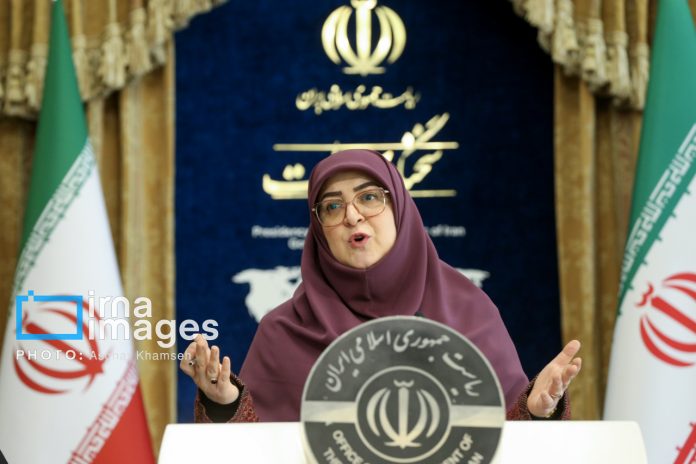
Speaking to reporters after a weekly cabinet meeting, Mohajerani denied any cover-up of information regarding Saturday’s incident that left scores dead and hundreds injured, saying, “We have no reason to hide the truth from people.”

She confirmed that port operations had resumed normally the day after the fire, with no damage to essential goods shipments.

The spokesperson provided an update on the casualty toll, confirming 70 deaths in the incident.

She emphasized that authorities were waiting for final expert reports before determining responsibility, but promised full transparency.

Mohajerani also addressed the potential impeachment of the Roads Minister Farzaneh Sadegh by parliament over the blast, calling it legislators’ constitutional right while urging them to avoid politicizing the matter.

Iranian authorities have launched a probe into the incident, with the interior minister expected to announce the results to the public, but no date has been specified.