Tuesday, January 20, 2026
Home Blog Page 4044

Presidential Candidate Raisi Votes in Iran Elections

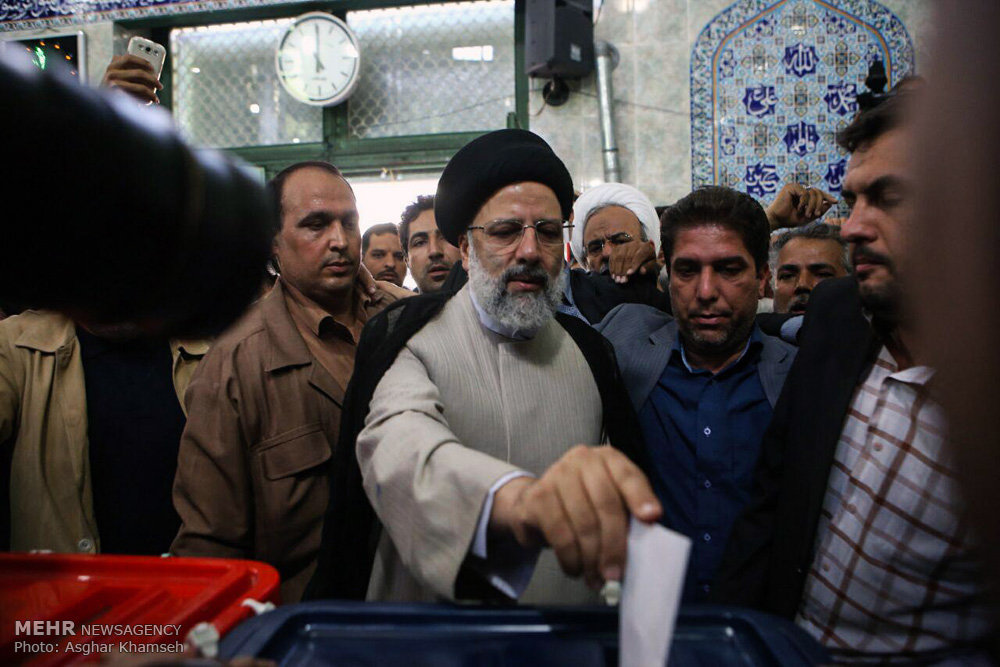
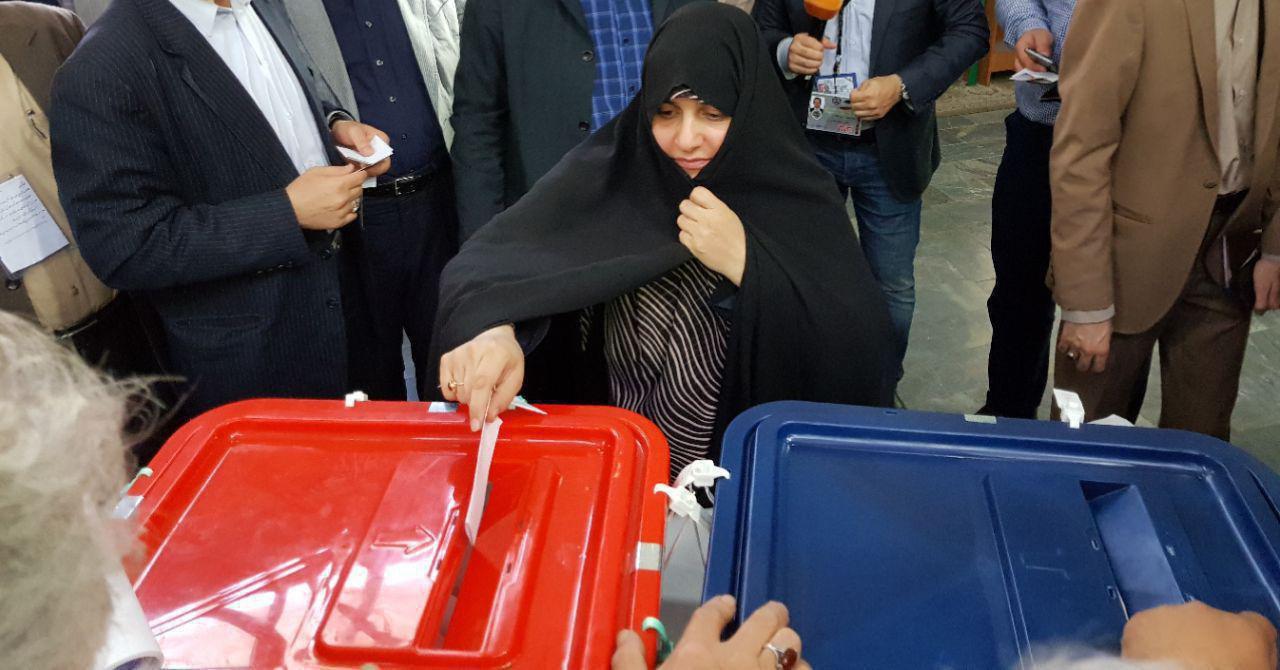
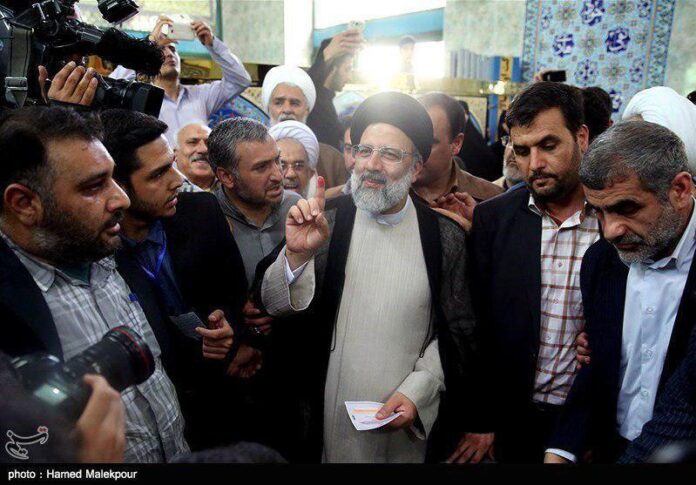
Presidential Candidate Raisi Votes in Iran ElectionsRaisi, one of the two main presidential candidates, along with his wife Jamileh Alamolhoda voted in a station in Shahr-e Rey, southern Tehran.

After voting, Raisi told reporters that he will accept the results of Iran elections, and respect people’s votes.

“People’s role in the formation of governmental bodies is a source of honour for the Islamic Republic,” he noted, adding people’s votes in Iran are not just a formality.

Presidential Candidate Raisi Votes in Iran Elections-1

Iran’s Leader Casts His Vote in Iran Elections

Iran supreme leader in iran elections

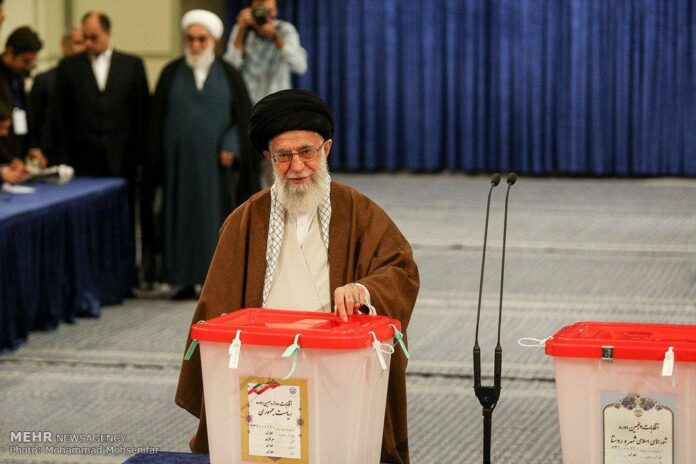
Ayatollah Khamenei was among the first to cast his ballot, calling on Iranians to turn out in big numbers.

Speaking after casting his vote, the Leader said, “I thank God Almighty for the blessing of democracy and people’s participation in the election. This is a great blessing.”

“Praise be to God, our people are thankful for this blessing. You see they are participating and my advice is that more and more people participate and come to the polls at the earliest time possible.”

Ayatollah Khamenei described the 2017 elections as very important, saying the destiny of the country is in the hand of the masses.

“I believe a good work should be done in early hours and should not be delayed. I also believe the presidential election is very important,” the Leader said, as reported by Press TV.

“The destiny of the county is in the hands of the people who choose the chief executive. They should heed the importance of this task,” Ayatollah Khamenei added.

Polls Open in Iran’s Presidential, Local Elections

Some 63,500 polling stations opened at 08:00 local time (0330 GMT) Friday for long lines which had already formed around the country where more than 56 million are eligible to vote.

Polls will close at 18:00 (1330 GMT), but voting hours will most likely be extended as the country has seen in previous elections, amid expectations of a high turnout.

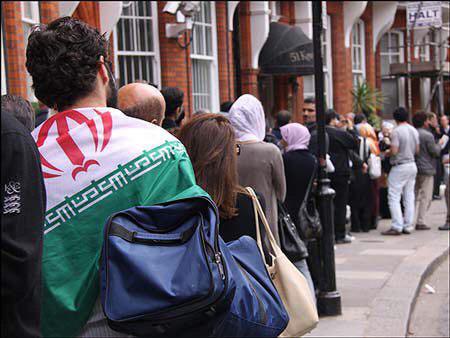
Outside Iran, a researcher at Victoria University of Wellington in New Zealand became the first Iranian to cast his ballot. Voting was also underway in the cities of Aukland, Christchurch and Dunedin.

Across Asia, Europe and the Americas, Iranian expatriates were casting their ballots in various countries but Canada did not allow the Islamic Republic to set up polling stations on its territory, Press TV reported.

Based on Iran’s election law, if no candidate manages to secure over 50 percent of the votes, a runoff will take place a week later.

Weeks of heated campaigning came to an end on Thursday morning, 24 hours before the start of the elections.

Iranian Expats in New Zealand Start Voting in Iran Elections

Media reports show that polls have opened on Friday in a couple of cities in New Zealand, where many Iranian expats, particularly university students, have gone to the ballot boxes to cast their ballots.

Victoria University of Wellington and Massey University in Auckland are the first stations to collect Iranian expats’ votes.

Voters can also cast their votes in five other stations in various cities of the Oceanic country. Christchurch, Dunedin, Auckland, and Wellington are the cities where ballot boxes are located.

Voting in Iran will begin at 8 am (Iran local time) across the country.

Iranians Engaged in Street Debates ahead of Election

Iran elections campaigns

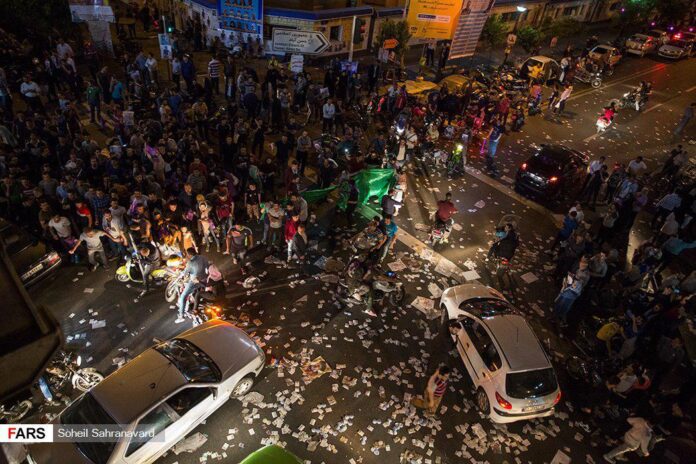
Every four years, the ambience of big and small cities in Iran changes; routine everyday discussions are replaced by a kind of common and public discourse; everyone hopes for the situation to improve; everyone gears up for an event which is going to determine the future of them all, despite their similarities and differences, for the  four years to come. Every four years, cities, streets and alleys take on a different mood. The mood on the last night of the election campaign [Wednesday] was similar to that of previous years.


Grand Bazaar of Tehran, 12 noon, May 17, 2017

Crowds of people, most of them men, have got together. Their voices are inaudible. Little by little, their voices get louder. Arguments about the upcoming elections are heating up. Everyone interrupts the others and tries to get his own way.

“Dear sir, I’ve been through thick and thin, why are you against this for no good reason?”

But he is interrupted.

“If you’ve been through thick and thin, I’m worldly-wise, too. I’m educated. Don’t look at my age. My beard is not as grey as yours, but I’m more experienced than you are. I have traveled a lot, and read lots of books.”

Another person butts in.

“What does it have to do with books? We grew up here in bazaar. We know what’s good for people.”

Similar conversations are taking place elsewhere as well. In taxis, on buses and on the subway, and even in cyberspace and on different social media networks. But unlike in previous days, now people need more time. Short conversations won’t do. Those who think they have a lot to say have come onto the streets to express their support for the candidate they are going to vote for on Friday. The conversations are sometimes soft and friendly, and sometimes inflammatory, like this conversation between the young man and the older one, both of whom are raising their voices.

Is this situation worrying? Will it bring about rapport or divisions? Iranian sociologist Mohammad Amin Qane’i-Raad believes such interactions are the prerequisite for a dynamic society.

Here is what he told Khabar Online about that.

“In elections, we need two kinds of interaction: cold and warm. Cold interaction takes place via cyberspace. It is not face-to-face, it is short and without any specific result. However, warm interaction means face-to-face conversation between people, which creates energy and motivation. Elections need this energy, which pushes people away from indifference and brings them to polling stations. Such energy encourages people to spend so much time on getting to know the candidates and decide which one they are going to vote for.”


Iran elections campaign

Tehran, Tajrish Square, 5 p.m., May 17, 2017

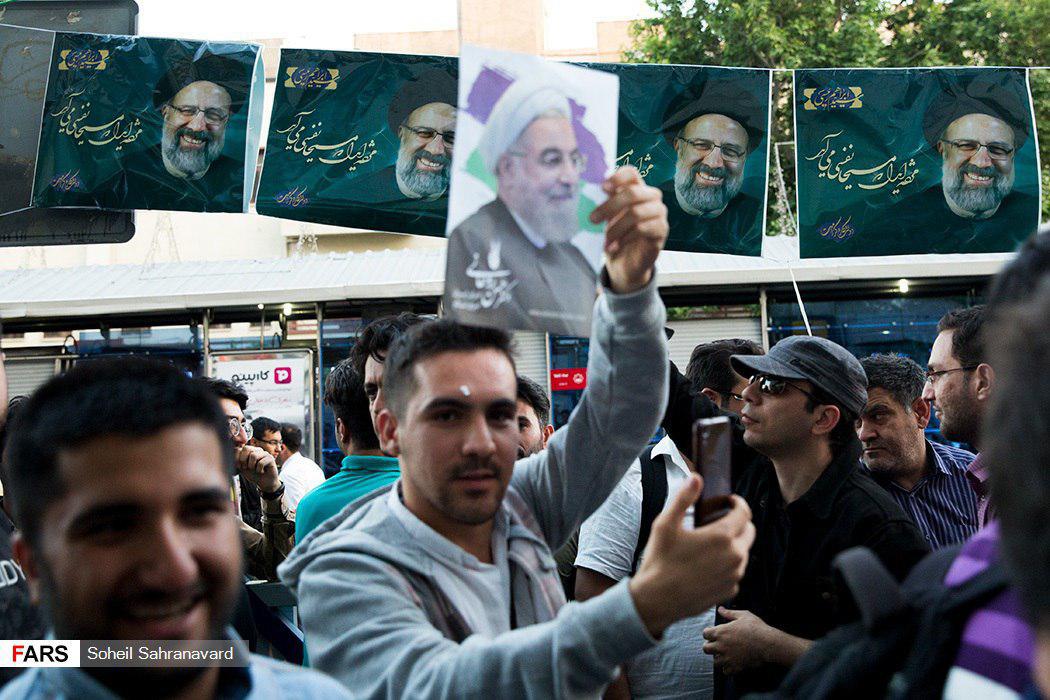
Instead of crowded shops and the hustle and bustle of shoppers, what draws attention this time are the campaign posters and crowds of candidates’ supporters. In every corner of the Tajrish Square in northern Tehran, men and women are standing with coloured bracelets holding the posters of their favourite candidates. Most of them are young people, but there are also the elderly and children, who are encouraging others to vote for their desired candidates. Different types of ribbons, flags and posters are changing hands. Some are offering flowers to others.

A group of people, who obviously differ on the issue of elections, have got together.

“Why should we vote? Which candidate, if elected, would benefit the country most? Which campaign promises will be fulfilled? Which candidate has had a better performance, and who was more successful in the presidential debates?”

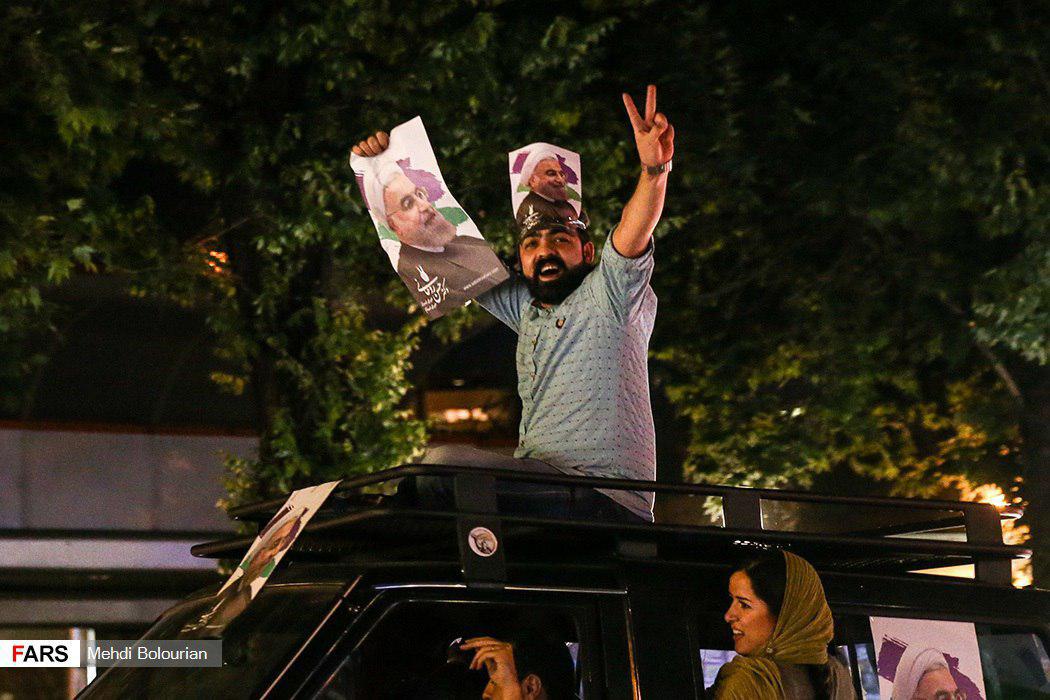
There is no need for an excuse to open a conversation. Looks like everyone knows each other. They simply stop and begin to talk. Those riding in cars join in, too. They begin to honk their horns. The posters of their favourite candidates are all over their cars. They even play songs by singers supporting the candidates of different camps.

Qane’i-Raad, a former head of the Iranian Sociology Association, regards such interaction as constructive.

“These conversations make it possible to promote social learning and give people the chance to talk to each other. Dialogue is the most important condition for living in a sound, happy and dynamic society. If we want to have a society based on wisdom, we should set the stage for dialogue. It is good to see individuals spend time to agree or disagree with each other, offer reasoning and criticise different issues. As long as it is in the form of dialogue, it is positive and constructive. But it shouldn’t turn into insults and mudslinging.”


Iranians Engaged in Street Debates ahead of Election


Tehran, Shohada Square, 11 p.m., May 17, 2017

Here, two groups are standing opposite each other chanting slogans. Each group supports one of the candidates. Further down the street there is one of the campaign offices of one of the candidates. A number of supporters of the rival candidate are standing close by and asking those leaving the office to have a conversation with them. It’s a kind of street debate. They show whatever they have to the supporters of the other camp, including information, news, rumours plus evidence proving those rumours are false, documents, pictures and films on their cell phones.

Qane’i-Raad believes one should not worry about differences because it is these very differences that help improve the situation.

“During election time, we need differences as much as we need rapport. Differences should exist in such conditions, so that candidates of different camps could strive to eliminate their weaknesses. Moreover, these differences will teach people how to listen to one another with rapport, and how to accept opposing views without becoming furious or disrespecting each other.”

He believes the displaying of such differences is the sign of a powerful society.

“Of course such differences should be in such a way that they do not lead to fundamental gaps. A society is powerful whose citizens get to know each other through such interactions. It will be naïve to think that such dialogue is detrimental. It is a kind of a paradoxical atmosphere. In other words, it helps distinguish people, and sometimes widens the gap between them, but at the same time brings them closer together. A key point is that such conversations are taking place by people themselves. If people were ordered to come to the streets, then the dialog would definitely not be as useful. But the fact that people willingly come to the streets and talk together for hours means they have a lot in common.”

It’s midnight. The streets are not as crowded as a couple of hours ago. Still, there are a lot of people on the streets. With their presence, words and posters, they are encouraging others to vote for their favourite candidate. They are making last-ditch efforts to sway voters.

China Protests US Sanctions against Iran

China Protests US Sanctions against Iran

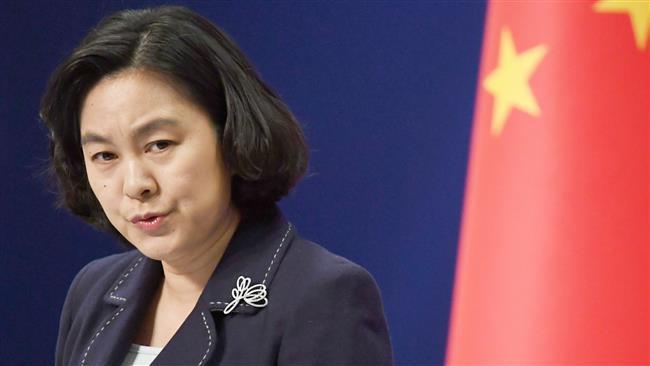
“The Chinese side is always opposed to unilateral sanctions, to the frequent implementation of unilateral sanctions, especially when it hurts interests of third parties,” Chinese foreign ministry spokeswoman Hua Chunying said.

The administration of US President Donald Trump on Wednesday decided to stick by a nuclear deal between Iran and world powers and continue waiving sanctions related to its atomic activities.

But it balanced the decision with new measures against Iranian defence officials and a Chinese business linked to Iran’s ballistic missile program, the AFP reported.

“We think (this kind of sanctions) are unhelpful in enhancing mutual trust and unhelpful to the international efforts to solve this issue,” Hua says at a regular press briefing.

Iran Develops Software to Stop WannaCry Ransomware

While the massive attack of the “WannaCry” ransomware has infected computers in more than 100 countries, causing a host of problems for internet usersand paralyzing many centres, an anti-ransomware software titled “Padvish”, designed and developed by Iranian experts, has managed to successfully identify the malicious ransomware and stop its attacks on computers.

According  to IFP, the “WannaCry” virus spreads among computers running on Microsoft Windows operating systems, infecting and then locking individual machines and encrypting all the files and data stored on them. Affected users receive an electronic message demanding a ransom to be paid in the electronic currency called Bitcoin. Unless the money is paid, victims cannot gain access to the encrypted files and data on their computer.

While many cyber-security companies are working and putting forward solutions to counter the ransomware, the Iranian antivirus software has successfully managed to catch the “WannaCry” virus and prevent it from infecting computers. In addition to identifying and neutralizing the “WannaCry” virus, the Iranian security software can stop attacks by other types of ransomwares on computers.

Iran Telecommunication Research Centre, in cooperation withan Iranian knowledge-based company, has developed “Padvish”, using the expertise of dozens of the country’s young experts and elites. In 2016, an upgraded commercial and home edition of the software was released.

According to a report by Financial Times, Russian President Vladimir Putin recently blamed the US intelligence services for the “WannaCry” virus that affected tens of thousands of computers worldwide last week.

Putin also called on the world leaders to sign a legal MoU on cyber-security with countries such as Russia, which was rejected by Barack Obama’s White House last year.

No Security Problem Reported in Run-up to Iran Elections

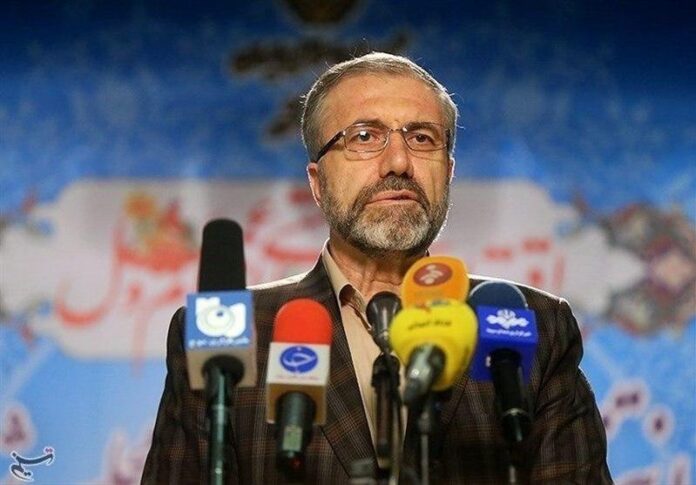
Speaking at a press conference on the eve of the polls on Thursday, Deputy Interior Minister for Security Affairs Hossein Zolfaqari said the period of electoral campaigns went by in the right order and without any security problems.

Expressing the hope that the good security would prevail until after the elections, he underlined that any comment on the election results or release of figures showing results of opinion polls in any shape is now forbidden and inauthentic, saying the Interior Ministry is the only official source for announcing the results.

Zolfaqari also declared the prohibition of prediction of results by any candidate and claiming victory or calling for celebrating election victory before the official release of the vote counts.

The Interior Ministry has already announced that the 12th presidential election and the 5th City and Village Councils elections, to be held simultaneously on Friday, will involve around 1.5 million executive forces and monitors, 350,000 security forces, 70,000 inspectors, and around 100,000 representatives of local governors.

Forces from the Police, the Islamic Revolution Guards Corps (IRGC), and Basij are tasked with ensuring security of the election.

63,429 polling stations and 14,000 travelling ballot boxes have been arranged for the polls.

Authorities say the number of eligible voters stands at more than 56,400,000. Iranian expatriates in 104 countries will be able to vote in the presidential election.

There are four candidates seeking presidency in Friday’s polls, including incumbent President Hassan Rouhani, Ebrahim Raisi, Mostafa Hashemitaba, and Mostafa Aqa-Mirsalim. Two other hopefuls, Eshaq Jahangiri and Mohammad Baqer Qalibaf, dropped out of the race in favor of Rouhani and Raisi, respectively.

A run-off would be held a week later if none of the candidates wins a majority, which is at least 50 percent plus one vote.

Iran Not Committed to Full Implementation of UNESCO 2030 Document

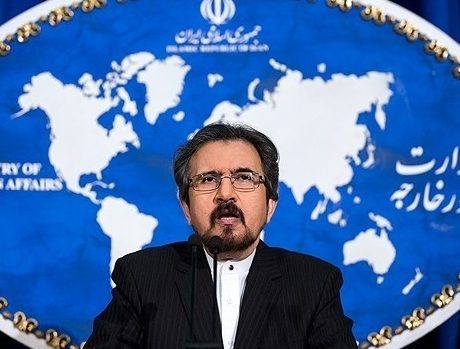
Foreign Ministry spokesman Bahram Qassemi made the remarks on Wednesday in relation to a UN document, dubbed as the Education 2030 agenda, which charts out development goals for world nations.

He noted that Iran has officially notified UNESCO that any part of the document which is against the country’s cultural, religious, social and moral beliefs is not executable.

“Our country has no commitment whatsoever to its execution,” he said, stressing that this is Iran’s “unchangeable stance” on the subject.

On May 7, Leader of the Islamic Revolution Ayatollah Seyyed Ali Khamenei said the document had been prepared under the influence of world powers.

Iran signed the document in 2016, but Ayatollah Khamenei said the Islamic Republic will not submit to it.

“A hushed signing and implementation of this document is definitely not permissible and the related bodies have been notified of that,” the Leader said.

Iran’s education planners say the UNESCO document is not in tune with the country’s educational standards, adopted by the Supreme Council of the Cultural Revolution.

They have warned that submitting to the UNESCO agenda would require Iran to share its educational information which could end up in wrong hands.

Iran Imposes Retaliatory Sanctions against US Entities

In a statement on Thursday, Iran’s Foreign Ministry slammed the US Treasury Department’s move to announce new sanctions on Iran as an attempt to “downplay the positive outcomes” of the Washington government’s measure to continue to waive anti-Iran sanctions as required by the Joint Comprehensive Plan of Action (JCPOA), a nuclear agreement between Tehran and the Group 5+1 (Russia, China, the US, Britain, France and Germany).

In dual actions on Wednesday, the US administration extended wide sanctions relief for Iran under the JCPOA, but also imposed penalties on Iranian and Chinese figures for what it called supports for Tehran’s ballistic missile program.

“The Islamic Republic of Iran condemns the US government’s bad will (and) attempts to reduce the positive impacts of carrying out its (US) JCPOA-required commitments by adding legal and natural personalities to its (US) list of foreign, unilateral and illegal sanctions, and considers that as unacceptable and in breach of the international law,” the statement added.

The Foreign Ministry also reiterated that Iran’s inalienable right to boost its defense capabilities for protecting its sovereignty and territorial integrity or to press ahead with its missile program have nothing to do with its international commitments and with the UN Resolution 2231.

Resolution 2231, passed by the 15-memebr United Nations Security Council in July 2015, has endorsed the 159-page JCPOA. The resolution calls upon Iran “not to undertake any activity related to ballistic missiles designed to be capable of delivering nuclear weapons.”

Iran maintains that none of its missiles have been designed to be capable of carrying nuclear warheads, because nuclear weapons have basically no place in the Islamic Republic’s defense doctrine.

Elsewhere in the statement, the Iranian Foreign Ministry said it came up with a plan to retaliate the new US sanctions by adding nine American individuals and companies to the list of the “legal and natural individuals under Iran sanctions.”

According to the statement, the nine entities “have a proven record of brazen violation of human rights and international humanitarian law by engagement or direct and indirect aid and abet in the Zionist regime’s anti-human crimes in the occupied Palestine or in that regime’s terrorist measures, of involvement or aid and abet in sponsoring Takfiri terrorism and suppression of people of the (Middle East) region, or of effective engagement in measures against the Islamic Republic of Iran’s national security.”

The US Treasury Department announced in its Wednesday statement that Washington has sanctioned two Iranian defense officials, an Iranian company and members of a China-based network for the so-called supports for Iran’s ballistic missile program.