Friday, April 10, 2026
Home Blog Page 4016

Iran and Austria stress closer agriculture cooperation

Iran Austria agriculture

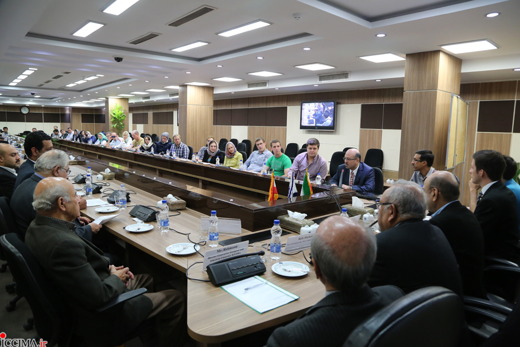
At a meeting between a delegation from the Austrian Young Farmers’ Association and Secretary General of Iran Chamber of Commerce, Industries, Mines and Agriculture (ICCIMA) Hossein Noghrehkar Shirazi, the two sides put emphasis on expansion of bilateral economic cooperation, the public relations office of ICCIMA reported on September 14, 2014.

The secretary general of ICCIMA underscored the decades-long record of Tehran-Vienna cooperation and said since the 1979 Revolution and Iran-Iraq war, collaboration between the two countries on different fronts has been on the rise. “For a variety of reasons, some European countries have distanced themselves from Iran of late, however Iran-Austria relations are built a solid foundation which won’t be shaken.”

Noghrehkar, who was Iran’s ambassador to Austria in the late 1980s, added in 1987 the volume of trade between the two nations stood at $100 million, but in less than four years it hit the $1 billion mark in the industrial sector.

Reiterating that Austrian agricultural capabilities, unlike its industrial involvement, have not been noticeable in Iran, he expressed hope that the delegation will help forge closer economic cooperation on the agricultural front and that the meeting can produce positive results and lead to exchanges of views and knowledge between those who are active in farming in both countries.

For his part, the director general of the Austrian Yong Farmers’ Association voiced hope that Tehran-Vienna relations and their cooperation on the agricultural front will be shored up and asked for information about Iran’s agriculture, support for young farmers in Iran and its agricultural facilities.

At the meeting, Morteza Hoghoughi, who is in charge of the ICCIMA Office for Agriculture and Irrigation, said that water is the most important factor contributing to agricultural expansion, that’s why based on geographical diversity and the amount of rainfall in different regions, there is immense agricultural diversity across Iran and any agricultural crop can be found in Iran.

He went on to say that technology and current conventional farming practices are of great importance. Without conventional methods, the functionality of technology will be limited and to talk about agricultural matters, a complete understanding of and a pragmatic approach to Iran’s agriculture are imperative.
 

West can’t counter terrorism via double standards: Zarif

Iran-FM-Mohammad Javad Zarif

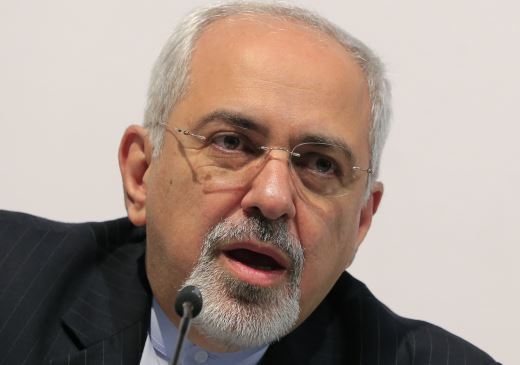
“The US and West will be unable to resolve the issue of terrorism by continuing to pursue their past policies,” Iran’s Foreign Minister Mohammad Javad Zarif said in a meeting with his Spanish opposite number José Manuel García-Margallo in New York on Friday.

The top Iranian diplomat added that it is impossible to fight against terrorists in Syria while seeking to weaken the country’s legal government.

“During four months of savage activities by the ISIL in Iraq, the Americans took no effective measure, namely cutting off direct and indirect aid to them (terrorists), in order to counter them,” Zarif added.

The ISIL terrorists control large parts of Syria’s east and north. ISIL also sent its Takfiri militants into Iraq in June, seizing large swathes of land straddling the border between Syria and Iraq.

The Takfiri terrorist group has committed heinous crimes including mass execution of people and beheading of their hostages.

The Spanish foreign minister, for his part, said Madrid stands ready to tap into its potential and hold political consultations with regional states, including Iran, in a bid to work out proper solutions to the existing woes in Iraq and Syria.

García-Margallo commended Iran’s effective role in the region and slammed Tehran’s not having been invited to an international conference in Paris on September 15 to discuss the threat posed by the ISIL Takfiri militants.

France hosted a conference, dubbed the International Conference on Peace and Security in Iraq, to discuss ways of tackling the ISIL terrorists in Iraq and Syria, but under the US pressure did not invite Iran to the event.


Final nuclear deal possible before Nov 24: Zarif

Iran-zarif-FM
Iran-zarif-FM

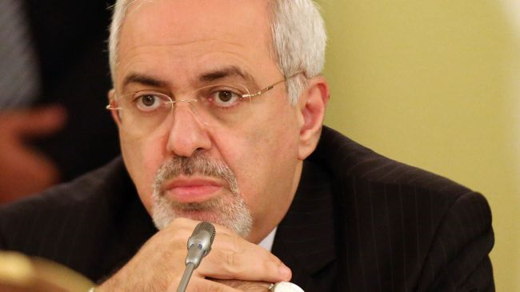
“If the other parties to the nuclear talks are prepared to make a tough decision, it is possible to reach a comprehensive deal even before November 24,” Zarif said at a Friday meeting with his Norwegian counterpart Borge Brende in New York.

Iran and the P5+1 group, the US, Russia, Britain, France, China plus Germany,  have started their new round of nuclear negotiations in New York to reach a final agreement aimed at resolving the standoff over Tehran’s civilian nuclear work.

The two sides signed a historic interim deal in Geneva last November. The agreement came into force on January 20 and expired six months later. In July, Tehran and the six states agreed to extend their negotiations until November 24 in a bid to work out a final accord.

Apart from the latest developments regarding Tehran’s nuclear negotiations, Zarif and Brende also discussed different bilateral, regional and international issues.

The Iranian foreign minister criticized the policies adopted by some regional and extra-regional countries regarding the developments across the Middle East, particularly in Syria and Iraq, where the ISIL Takfiri Takfiri militants are wreaking havoc, and underscored the need for the revision of such approaches and attention to nations’ demands.

The ISIL terrorists control large parts of Syria’s east and north. ISIL also sent its Takfiri militants into Iraq in June, seizing large swathes of land straddling the border between Syria and Iraq.

Brende, for his part, praised Iran’s support for Iraq in its campaign against the ISIL terrorists and said if it were not for Iran’s involvement, the Takfiri group would have occupied many strategic areas in Iraq and Syria.

He also pointed to the growing ties between Tehran and Oslo and underlined the need for the promotion of bilateral relations in different arenas.


Kerry: Iran has ‘a role’ in campaign against ISIL

Kerry-US-iran-iraq
Kerry-US-iran-iraq

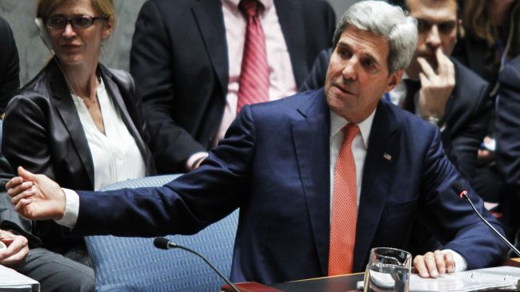
The United States says it is assembling a broad and international coalition to “degrade and ultimately defeat ISIL.”

“The coalition required to eliminate ISIL is not only, or even primarily, military in nature,” Kerry said on Friday at a United Nations Security Council meeting on Iraq. “It must be comprehensive and include close collaboration across multiple lines of effort.”

“There is a role for nearly every country in the world to play, including Iran,” he added.

Earlier in the day, the US State Department said that American and Iranian officials held discussions on the issue on the sidelines of the nuclear talks.

On Monday, Leader of the Islamic Revolution Ayatollah Seyyed Ali Khamenei said Washington only established the US-led coalition against ISIL in order to attempt to expand its military presence in the Middle East region.

In an interview with NBC News on Wednesday, Iranian President Hassan Rouhani called the coalition against the ISIL terrorists “ridiculous”, saying the coalition members include those who provided ISIL with weapons and training.

The ISIL terrorists, who were initially trained by the CIA in Jordan in 2012 to destabilize the Syrian government, control large parts of Syria’s northern territory. ISIL sent its fighters into Iraq in June, quickly seizing vast expanse of land straddling the border between the two countries.

Tehran has repeatedly expressed support for the Iraqi government in its campaign against the Takfiri militants and was the first country to provide military assistance to Iraqi Kurdish forces fighting ISIL.


Iran’s Zarif slams US-led sanctions against Tehran

Iran's FM Mohammad Javad Zarif

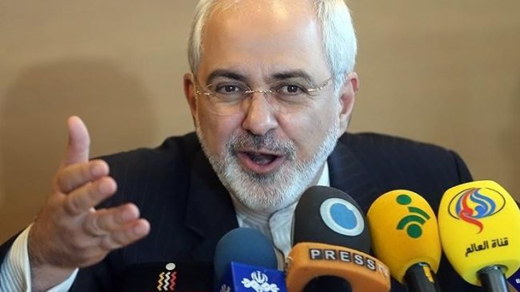
Speaking in New York on Wednesday, Mohammad Javad Zarif said the United States is “infatuated” and “obsessed” with sanctions and such measures will get nowhere.

The Iranian foreign minister argued that the US Congress wants the anti-Iran sanctions to remain in place amid negotiations aimed at reaching a final nuclear deal between Iran and the five permanent members of the UN Security Council plus Germany.

“The US is obsessed with sanctions, because this deal would require the US to lift the sanctions and now the reason Congress is objecting to this is that it wants to keep these sanctions…. Yes, sanctions have become an end in themselves, sanctions do not serve any purpose,” Zarif stated.

The Iranian foreign minister also stated that the sanctions have failed to put limits on Iran’s nuclear energy program and Tehran has increased the number of its centrifuges, adding, “So sanctions have produced, just in normal calculus, 18,800 centrifuges.”

The remarks come ahead of a new round of nuclear talks between Iran and the five permanent members of the UN Security Council – the United States, China, Russia, France and Britain – plus Germany in New York.

The two sides have agreed on the extension of the talks until November due to disagreements on key issues.


Iran holds bilateral N-talks with Russia, US in New York

Iran-Deputy-FM-Abbas Araqchi

On Thursday, Iranian Deputy Foreign Minister for Legal and International Affairs Abbas Araqchi and Deputy Foreign Minister for Europe and the Americas Majid Takht-e Ravanchi held two hours of nuclear talks with their Russian counterpart Sergei Ryabkov in New York.

The two Iranian diplomats also sat down with US Undersecretary of State Wendy Sherman and Deputy Secretary of State William Burns to exchange views on the progress of nuclear discussions between Iran and the P5+1 – the US, Russia, China, France, Britain and Germany.

The preparatory meetings come as Iran and the six states are set to officially kick off their seventh round of negotiations this year on the country’s nuclear energy program. The plenary talks will be held on Friday on the sidelines of the 69th session of the UN General Assembly in New York.

On Wednesday, Iran’s Foreign Minister Mohammad Javad Zarif attended a working lunch session with EU foreign policy chief Catherine Ashton in New York to review the latest on the talks aimed at reaching a final accord on Tehran’s civilian nuclear work by the November 24 deadline.

Zarif leads the Iranian delegation and Ashton represents the P5+1 states in the ongoing nuclear negotiations.

Last November, Tehran and its negotiating partners signed an interim deal in Geneva, which took effect on January 20 and expired six months later.

In July, the two sides agreed to extend the negotiations until November 24 this year after they failed to reach common ground on a number of key issues.


Iran plays constructive role in Mideast, says UN chief

zarif-ban ki-moon
zarif-ban ki-moon

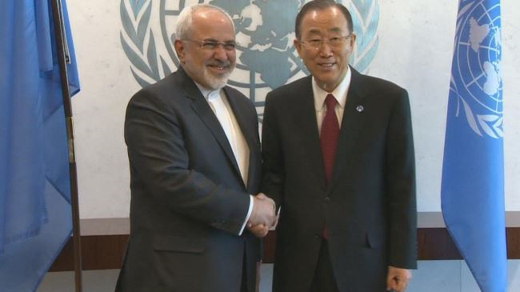
The Islamic Republic of Iran has a constructive and instrumental role in settling conflicts in the region and Iran’s potentialities should be utilized to resolve the current regional crises, Ban said in a meeting with Iranian Foreign Minister Mohammad Javad Zarif at the United Nations Headquarters in New York on Thursday.

He also described Iran as a key player in the Persian Gulf region.

Iran has repeatedly voiced readiness to further contribute to the establishment of peace and security in the region.

The Islamic Republic has on several occasions voiced support for the Iraqi government since it began fighting against the ISIL Takfiri terrorists in June. The ISIL terrorists are in control of some areas in Syria and have captured large swathes of land in neighboring Iraq.

Zarif, for his part, said that Iran remains committed to working towards reinforcing regional security and maintaining good relations with its neighbors.

He also said that Iran is dedicated to fighting extremism and terrorism.

The senior visiting Iranian diplomat noted that Tehran was determined to reach a final nuclear deal with the P5+1 countries and added, “We are optimistic about the conclusion of an agreement and believe that it is possible.”

He also pointed to a recent report by the UN chief about the rights situation in Iran and said it contradicts the realities on the ground in the country.

Referring to the alarming human rights situation in the region, Zarif said the report is politically-motivated and bears testimony to the double standards adopted on the issue of human rights.

Zarif is in New York for a new round of talks between Iran and the five permanent members of the UN Security Council – the United States, Russia, China, France and Britain – plus Germany over Tehran’s nuclear work, scheduled to start officially on Friday.


IAEA report confirms Iran commitment: Najafi

Iran-Ambassador-Najafi

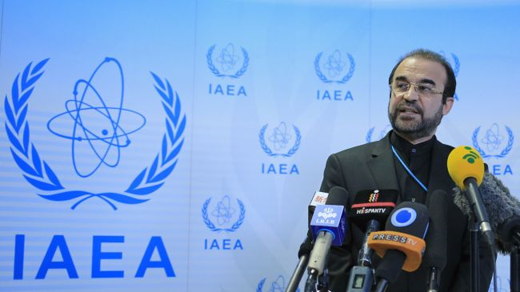
“The recent report by the IAEA Director General (Yukiya Amano) which confirmed no violations in Iran’s nuclear energy program is a clear evidence for Iran’s cooperation and fulfillment of its commitments,” Reza Najafi said on Thursday.

The Iranian official further refuted allegations that Iran’s nuclear energy program “has military dimensions,” saying the Islamic Republic of Iran does not consider such claims valid.

Najafi made the remarks after Laura Kennedy, the US representative at the IAEA, claimed, “Concerns about the possible military dimensions of Iran’s nuclear program must be addressed as part of any comprehensive” deal between Iran and the six powers.

Iran and the IAEA signed a joint statement on November 11, 2013, to outline a roadmap for mutual cooperation on certain outstanding nuclear issues.

On May 21, the two sides held a technical meeting within the Framework for Cooperation agreed in November 2013. During the meeting, they agreed to five practical measures which were to be implemented by August 25.

On September 15, Amano confirmed that Iran had enforced three of the five transparency measures it had previously agreed to, and said Tehran and the IAEA had begun talks on the implementation of the two remaining measures.

Earlier this month, Najafi said given the complexity of the issues, Iran and the agency had already predicted it might not be possible to finish their reviews of the remaining issues by August 25.

Last November, Iran and the five permanent members of the UN Security Council – the United States, Russia, China, France and Britain – plus Germany signed an interim deal in Geneva, which took effect on January 20 and expired six months later. In July, Iran and the six countries agreed to extend negotiations until November 24 this year after they failed to reach common ground on a number of key issues.


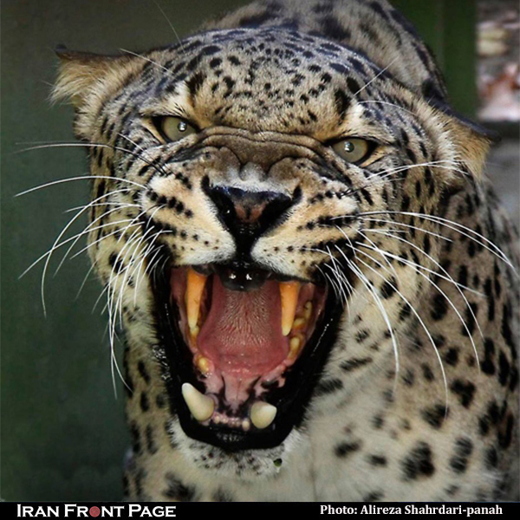
Rica is doing well and his teeth are shining brightly

Persian leopard-Rica
Rica

IFP has recently reached out to Alireza Shahrdari-Panah, a photojournalist who served as an assistant to Dr. Memarian, to get the latest on Rica – the male leopard who underwent dental surgery to have his lower fangs implanted with gold crowns – and to find out if the surgery has been successful in lifting the big cat out of pain.

Mr. Shahrdari-Panah told us that Rica couldn’t be better and invited us to pay a visit to him in order to see his great implanted fangs in person.

Shahrdari-Panah, who is a wildlife enthusiast, has sent the latest photo of Rica to us along with a humorous note: “These are brushed, white teeth of Rica. He has asked us to have his upper fangs implanted, too!!!!!”

Upon a flow of demands by numerous visitors interested in wildlife we decided to post the latest on Rica.

ISIL product of foreign invasion in ME: Zarif

Iran-FM-Mohammad Javad Zarif

Zarif made the remarks during a speech at the Council on Foreign Relations in New York on Wednesday.

He said the states that took part in a Paris conference on the US-led coalition against the ISIL earlier this week, had supported the Takfiris in the past.

“We do not support foreign military involvement in the region,” Zarif said, adding, “As a principle, we don’t believe that injection of foreign forces – either air or ground – solves our problem.”

The Iranian foreign minister noted that Iran was the first country to take measures to help Iraq in the face of the Takfiri threat.

He called for a Syrian-led solution to the crisis in Iraq’s neighboring country.

The Takfiri terrorists currently control parts of Syria and Iraq. They have threatened all communities, including Shias, Sunnis, Kurds, Christians, Izadi Kurds and others, as they continue their atrocities in Iraq.

Zarif also commented about Iran’s nuclear energy program, slamming the United States for its obsession with sanctions against Tehran.

Iran has lived up to its obligations regarding the nuclear program and is determined to resolve the issue, he stated.

Last November, Tehran and the six countries signed an interim deal in Geneva, which took effect on January 20 and expired six months later. In July, Iran and the six countries agreed to extend negotiations until November 24 this year after they failed to reach common ground on a number of key issues.

Iran has planned bilateral meetings with the six major world powers on Tehran’s nuclear energy program. Zarif said earlier that the meetings would take place before Iranian President Hassan Rouhani arrives in New York next week to attend the UN General Assembly.