Saturday, April 25, 2026
Home Blog Page 3995

Dissidents Threaten Saudi Regime with Overthrow

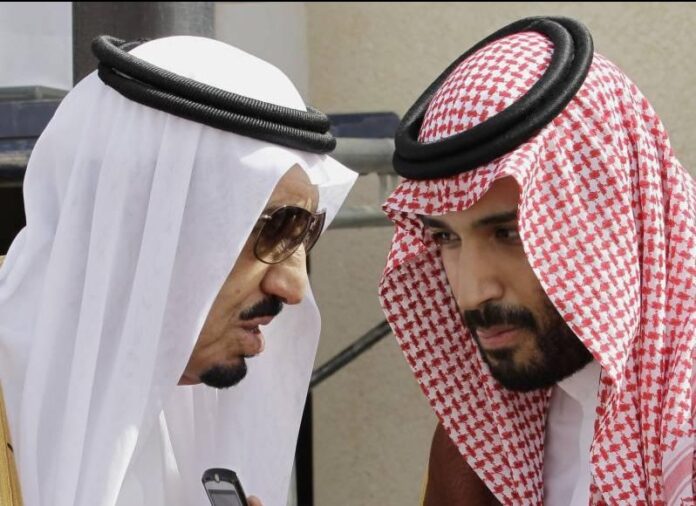
bin salman

According to the Arabic-language Al-Khaleej Al-Jadid news website, Saudi dissidents from various factions in the country have formed a new coalition called “The Coalition of Dissidents in the Arabian Peninsula”. The coalition has warned the Saudi regime that it should either change its behaviors or face a revolution.

The Arabic website also quoted the dissidents as saying that they are seeking to make peaceful changes in the country. In a statement, the union said its main goal is to make political changes in Saudi Arabia. To achieve the goal, the coalition says it has pinned hope on the public participation and peaceful transfer of power in the country.

“The coalition has been formed to shoulder the burden of making changes in Saudi Arabia,” the statement read.

“To make the changes, the coalition relies on the nation as its main supporter to make the regime responsible to people.”

The coalition also warned that if the regime defies reforms, the dissidents have no other choice but to stage a revolution and overthrow the regime.

“The final moment has come for the Saudi family. They are leading the country to edge of the abyss so that today our country has turned into a source of evil. This has put each of us in trouble everywhere,” it added.

The coalition has called on the Saudi Arabians to closely supervise the moves of the ruling family and said, “You, the people, need to be aware that you are entitled to take part in the process of decision-making and adopting strategies for the country and if the Saudi regime disobeys God’s instructions, you can step in and hold it responsible.”

The groups taking part in the coalition are Islamic Ummah Party, Arabian Peninsula Ahrar Tajammo, Islamic al-Tajdid Party, al-Fozool Half and E’teghal Hoghooghi Jame’iat.

According to al-Khaleej al-Jadid, the Saudi dissidents are critical of Riyadh’s foreign policies and maintain that the Saudi family has violated all the general principals of the country.

The coalition is also outraged by the Salman King’s decision to appoint his son Mohammad bin Salman as the crown prince, saying the elevation of bin Salman has been made by offering hefty bribes.
Iranian FM Wraps Up Five-Day European Tour

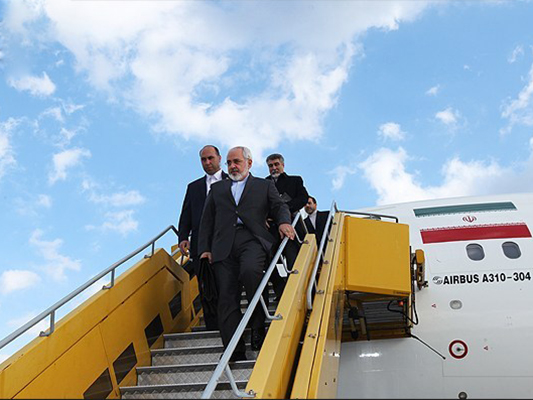
The German capital of Berlin was the first leg of Zarif’s tour of European countries, which started on Monday.

While in Berlin, the Iranian top diplomat met German President Frank-Walter Steinmeier, Foreign Minister Sigmar Gabriel, Federal Minister of Finance Wolfgang Schauble, and German Minister of Economic Affairs and Energy Brigitte Zypries.

He also addressed the annual meeting of the European Council on Foreign Relations (ECFR) in Berlin.

Later on Wednesday, Zarif left the German capital for Rome, the second destination of his European tour.

During his visit to the Italian capital, the Iranian foreign minister held talks with Prime Minister Paolo Gentiloni, the President of Italy’s Chamber of Deputies Laura Boldrini, and Italian Foreign Minister Angelino Alfano.

Zarif also visited the French capital of Paris on Thursday as the last leg of his five-day tour. While in Paris, he held separate meetings with French President Emmanuel Macron, Foreign Minister Jean-Yves Le Drian, and the President of the French Senate Gérard Larcher.

Iranian Foreign Ministry Spokesman Bahram Qassemi says the European tour was put on Zarif’s agenda after the country’s diplomatic apparatus felt the necessity for reviewing the latest developments in bilateral relations with the three states in various fields including politics, economy, commerce, banking, and industry.

Qassemi said in a recent interview that the need is highly felt for attracting these countries’ investments and paving the way for the visit of German, Italian, and French economic leaders to Iran as a prelude to promoting cooperation between the two sides.

The Iranian spokesman also referred to the issue of terrorism and the need for joint efforts to fight it as another reason for Zarif’s visits to these states.

He said terrorism threatens not only the Middle East but also the Europe, and added, “This requires us at this sensitive time to hold talks and exchange views with the three major European countries.”

New Group of Turkish Troops Arrives in Qatar

Qatar’s Defence Ministry has said a new batch of armed forces from Turkey have been transferred to Al-Udeid air base, southwest of Doha, to join the Turkish troops already deployed in the base.

It added the Turkish forces began their military training exercises in the base last week.

The troops are set to take part in joint exercises within the framework of a defence agreement signed between Doha and Ankara aimed at raising Qatar’s defence capabilities, supporting “counter-terror” efforts, and maintaining security and stability in the region.

The deployment came as Qatar’s Minister of State for Defence Khalid bin Mohammed al-Attiyah arrived on Thursday (June 29) in Ankara to meet with his Turkish counterpart Fikri Işık as well as Turkish President Recep Tayyip Erdogan.

Turkey’s parliament on June 8 approved a 2015 deal with Qatar aimed at strengthening military cooperation between the two states, which gave Ankara the right to establish military bases in Doha and deploy forces in them.

The closure of the Turkish military base in Doha is among the 13 demands made by Saudi Arabia, the UAE, Bahrain and Egypt from Qatar as preconditions for normalising ties with the Arab state and lifting the sanctions they imposed on Doha for its alleged support for terrorism.

Boy Left Alone at Sea with Father Killed by Saudis

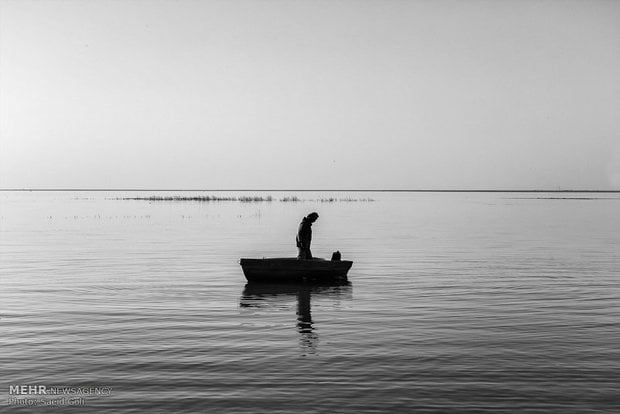
“I reached the shore with my father’s dead body at twilight. My mother, brother, wife and children along with other relatives as well as police officers were waiting for us. I didn’t expect to see them there. How on earth they had received the news? Maybe I had told them myself, but I couldn’t remember whether or not I’d called them and if yes, when? My father had three lumbar disc surgeries in the past and the Saudi guards had shot him in the waist.”

These lines are part of the painful memory of the son of an Iranian fisherman who was shot dead recently by Saudi guards on the water border between Iran and Saudi Arabia.

Farhad Siamir, the son of the slain captain Siamir, was accompanying his father in the sea during the dark night at which the Saudi guards fired seven bullets at their boat and killed his father.

“It was 11 pm. We had gone to an area near Forouzan oil wells to catch fish. All the regional fishermen are familiar with the area and we never had any problem for fishing there. Even the Indian and Saudi Arabian fishermen know that there is no water boundary between Iran and Saudi Arabia,” he said.

“During the night, a strong wind was blowing and “we were fishing under the torches of Forouzan oil wells. All of a sudden, our boat developed a technical fault and switched off. It took us about 45 minutes to diagnose the fault. My father checked the wires and finally managed to remove the problem. So we started our journey to home,” he said.

Farhad said on the way back home, several Saudi boats began to hunt them down. “They came closer and began to fire at us even after finding out that we are fishermen. There were a number of Indian boats around as well, but the Saudi guards just fired at us,” he remembered.

According to Farhad, the Saudi guards began to shoot at them at a distance of 30 to 40 metres. “They first fired 6 to 7 bullets at us. We desperately laid on the deck,” he noted.

“I got into a panic when I heard the cry of my father. I began to shout. Then immediately I switched on the boat to flee the scene. Having arrived in the area under Forouzan torches, I breathed a sigh of relief to see the Saudi guards are not hunting us down any longer. My father’s body had become cold. He didn’t show any sign of life. I was getting desperate. It was 1 am and to reach home I had to spend 4 hours more alone with my father’s dead body.”

“They had killed my father before my eyes. I was wondering how to inform my family of our father’s death. I called my brother and said our father has been shot and wounded. Then my cell phone dropped in the sea. I cannot remember those moments. My brother says I called him and told what had happened. I asked him when and how? I made the same statement in the court. They say I called my brother, but I don’t remember the details,” he said.

During the visit of deputy governor of Bushehr Province to Siamir’s house to express sympathy with the family over their father’s death, Farhad called on the Iranian officials to take revenge on his father’s killers.

“The Saudi boats usually enter Iranian waters, but they have never come under attack so far. The Saudi guards fired at us despite knowing that we are just fishermen. My father seemed very old at the age of 52 because he bore the burden of earning a livelihood under terrible condition. He lost his life in the sea while earning a livelihood for his family,” he said.

Iran Urges Muslim Nations to Jointly Produce Wealth

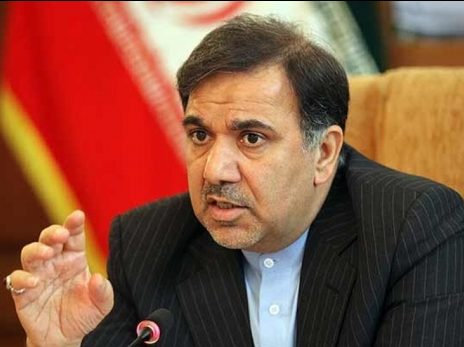
Iran’s minister of roads, housing and urban development has talked about his recent visit to Airbus plane manufacturing plants in southern France.

Abbas Akhoundi says during his visit to the final assembly lines of the Airbus Company in Toulouse on June 24, one of the managers briefed him on the operations at the facilities.

“Why did you choose Toulouse?” Akoundi asked the manager.

“The reason to choose Toulouse was that this place was out of the German bombers’ reach during the World War II. But now, France, Germany and other countries involved in the war are producing Airbus aircraft as a joint product,” answered the manger.

“I asked myself if we can imagine a day when countries within the domain of the Iranian civilization or Muslim world move to jointly produce wealth rather than remain passive and get involved in wars or bloody conflicts,” the minister wrote on his Instagram account.

“I personally think yes we can, provided that we understand the logic behind joint action,” he wrote.

His visit comes as Airbus and Iran have signed final contracts as well as memoranda of understanding on the sale of over 170 planes to the country.

While under sanctions, Iran was banned from buying new aircraft or spare parts, and often had to use undamaged parts on other airplanes to keep its faulty aircraft up and running.

Accusing Neighbours Not to Resolve Bahrain’s Domestic Woes: Iran

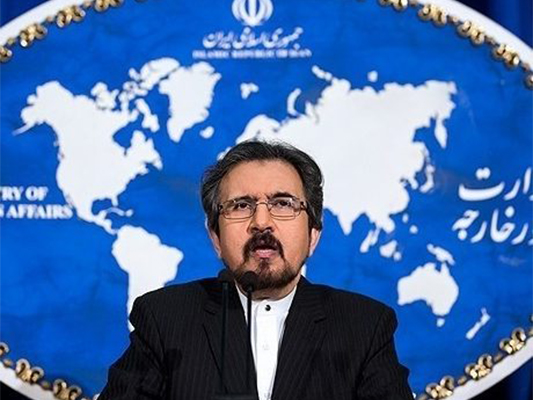
“Every now and then the Bahraini government says it has arrested a number of its nationals under the pretext of countering terrorist cells, and claims they were linked to the Islamic Republic of Iran,” Qassemi said in a statement on Friday.

“The international community is well aware that the 6-year-old domestic crisis in Bahrain is the result of the government’s security approach to the civil and peaceful protests of the majority of its people,” foreign ministry spokesman added.

Qassemi once again urged the Bahraini government to accept the repeated international calls for abandoning the ‘security approach’ to civil protests and start talks with popular opposition leaders instead of continuously pinning the blame on others and accusing neighbours, which is an outdated and ineffective policy.

His remarks came after the Bahraini regime said on Thursday that it has arrested members of a terror cell allegedly linked to Iran.

Bahrain, a close ally of the US in the Persian Gulf region, has been witnessing protests against the ruling Al Khalifa dynasty since early 2011, with Manama using heavy-handed measures in an attempt to crush the demonstrations.

Scores of Bahrainis have been killed and hundreds of others injured and arrested in the ongoing crackdown on the peaceful demonstrations.

New French Gov’t Seeking Broader Ties with Iran: FM Zarif

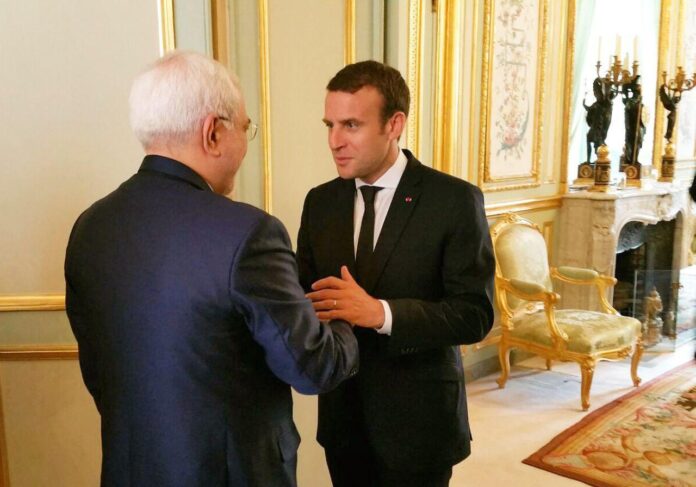
zarif-macron

During the meeting in Élysée Palace, Foreign Minister Mohammad Javad Zarif and French President Emmanuel Macron conferred on the expansion of mutual cooperation in various fields.

The two sides also exchanged views on the most important regional issues and international developments.

Zarif submitted a written message from Iranian President Hassan Rouhani to Macron, which, according to the Iranian minister, contained Rouhani’s views on Tehran-Paris cooperation and regional and international issues.

Speaking to IRIB in Paris, the Iranian foreign minister said during the ‘good’ meeting he had with Macron, the French president underlined his country’s serious resolve to boost economic cooperation with Iran.

“It is crystal clear that the new French administration is interested in further broadening ties with the Islamic Republic, and willing to have active presence in [resolution of] the regional issues,” Zarif noted, expressing Tehran’s preparedness to have close cooperation with Paris in such issues.

Despite different views between Iran and France on certain issues, there are multiple cases on which the two sides can work together, Zarif added.

Iran’s President Congratulates Iraq on Mosul Liberation

Iran Congratulates Sri Lanka on Independence Day

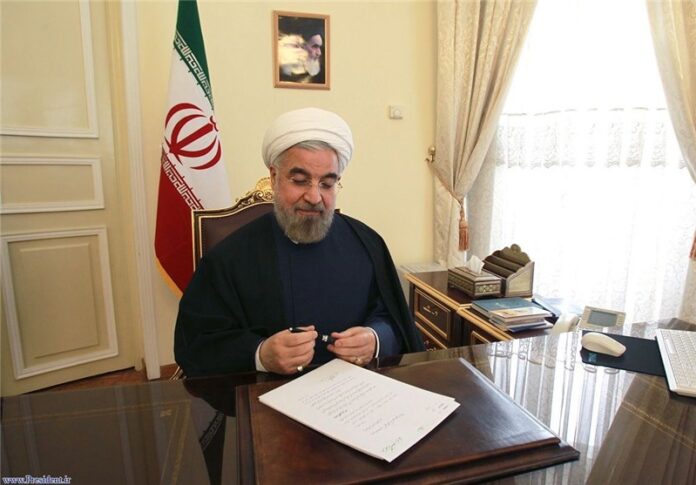
In separate messages to President of Iraq Fuad Masum and the country’s top Shiite cleric Grand Ayatollah Seyed Ali al-Sistani on Friday, the Iranian president hailed recapture of Mosul by the Iraqi military forces.

In the message to his Iraqi counterpart, President Rouhani described the “positive security-creating developments” in Iraq and the victories in the fierce fight against terrorism and extremism as a “result of unwavering efforts by the Iraqi people and military forces” and of the assistance provided by the neighboring countries.

He also expressed confidence that the same status of firm and mighty war against terrorism will restore peace and security to the Middle East and could rid the region’s Muslim people of “the nightmare of war and bloodshed.”

Also in his message to Ayatollah Sistani, the Iranian president said the liberation of Mosul once again reflects the premier position of religious authorities and leadership in Iraq.

“Three years ago, during the days of disappointment and chaos, it was the Hawza (Shiite Muslim seminary) and the Marja’ (religious authorities) that restored the necessary hope and resolve for the battle in the Iraqi society and caused the people and the Army to act against the aggressors,” Rouhani added.

Daesh militants made swift advances in northern and western Iraq over the summer of 2014, after capturing swaths of northern Syria.

Afterwards, a combination of concentrated attacks by the Iraqi military and the volunteer forces, who rushed to take arms after Ayatollah Sistani issued a fatwa calling for the fight against the militants, blunted the edge of Daesh offensive and forced the terrorist group withdraw from much of the areas it had occupied.

After eight months of difficult urban warfare, Iraqi military forces on Thursday captured the Mosul mosque at the heart of the northern city, which Daesh had declared its de facto capital.

Iraqi Prime Minister Haider al-Abadi said the liberation of the site of the symbolic al-Nuri Mosque in Old Mosul is “the declaration of the end of the statelet of Daesh.”

Iraqi authorities expect the long battle for Mosul to end in coming days as remaining Daesh militants are bottled up in just a handful of neighborhoods of the Old City.

Daesh stronghold in Syria’s Raqqa is also close to falling.

Iran Calls for Resolution of Venezuelan Conflict through Dialogue

Speaking on Thursday, Foreign Ministry spokesman Bahram Qassemi called on the Venezuelan government and the opposition to keep calm and act within the framework of law.

“Avoiding violence and turning to dialog in a calm atmosphere without foreign interference is the best way to resolve rifts and serve the interests of all Venezuelan people,” Qassemi said.

The Islamic Republic stresses the strong bonds of friendship between the Iranian and Venezuelan nations and governments, while condemning the recent attack on the country’s Supreme Court and the Interior Ministry, he added.

“The Islamic Republic of Iran believes that such illegal and violent acts against legal and legitimate bodies and structures not only complicate the situation in the country but toughens the process to reach an agreement and settle issues through dialogue and negotiation,” Qassemi pointed out.

Venezuela has been the scene of intense anti-government protests since early April. Clashes between security forces and demonstrators have left at least 75 people dead.

On Tuesday, a Venezuelan police helicopter strafed the Supreme Court and the Interior Ministry.

A police officer identified himself as Oscar Perez in a video posted on the social media platform Instagram, saying that he had piloted the stolen chopper to attack what he called a “criminal government.”

Venezuela’s President Nicolas Maduro denounced the incident as a terror attack, saying it could have caused dozens of deaths.

“Sooner rather than later, we are going to capture the helicopter and those behind this armed terrorist attack against the institutions of the country,” Maduro said.

Venezuelan demonstrators are demanding general elections, freedom for hundreds of jailed opposition activists and measures to alleviate the country’s economic crisis.

Maduro accuses the protesters of seeking a coup against him with the US government’s support.

Police Seize 62kg of Opium in Northeastern Iran

Two provincial teams of drug control forces have seized 62kg of opium in a residential unit and a car in Khorasan Razavi Province in northeastern Iran after armed operations.

The deputy head of Mashhad’s Islamic Revolution Prosecutor’s Office, Judge Mahdi Khodabakhshi, said while on patrol, the anti-narcotic forces of the province became suspicious of a car and ordered the driver to pull the car over.

“Upon seeing the forces, the young male driver attempted to escape. The forces began chasing him. Having learnt that the driver has ignored their warning to stop the car, they shot a few bullets in the air. At hearing the sound of the bullets the driver pulled over the car and handed himself in.”

He said after inspecting the car, the forces found 25kg of opium smartly hidden inside.

Khodabakhshi added another team of the province’s anti-drug police identified an opium distribution centre in Mashhad and, after inspecting the place, discovered 37kg of narcotics and arrested two of the city’s famous drug distributors.