Saturday, April 25, 2026
Home Blog Page 3994

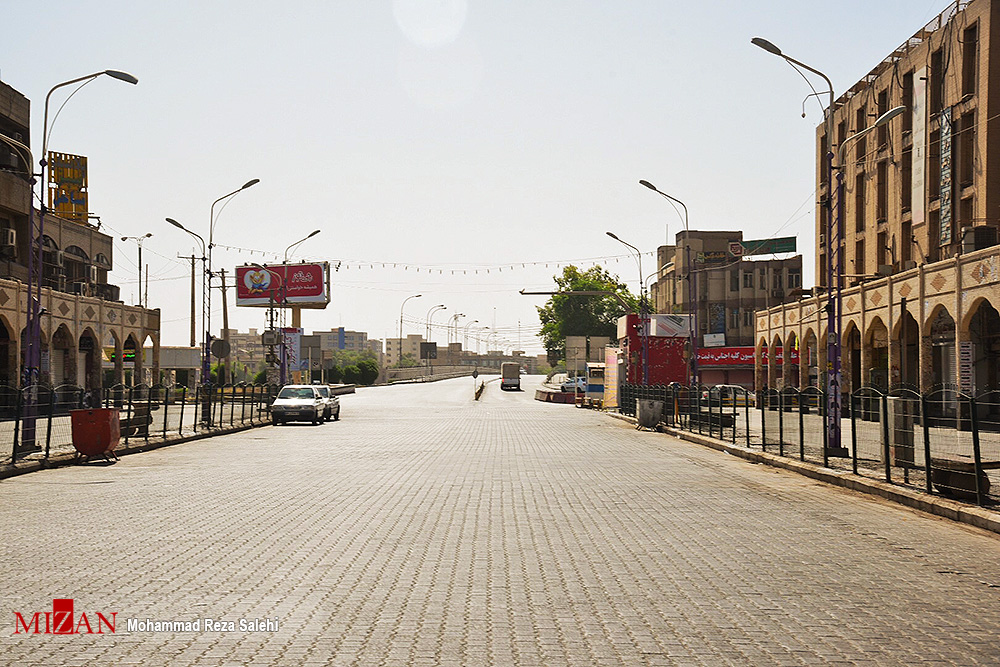
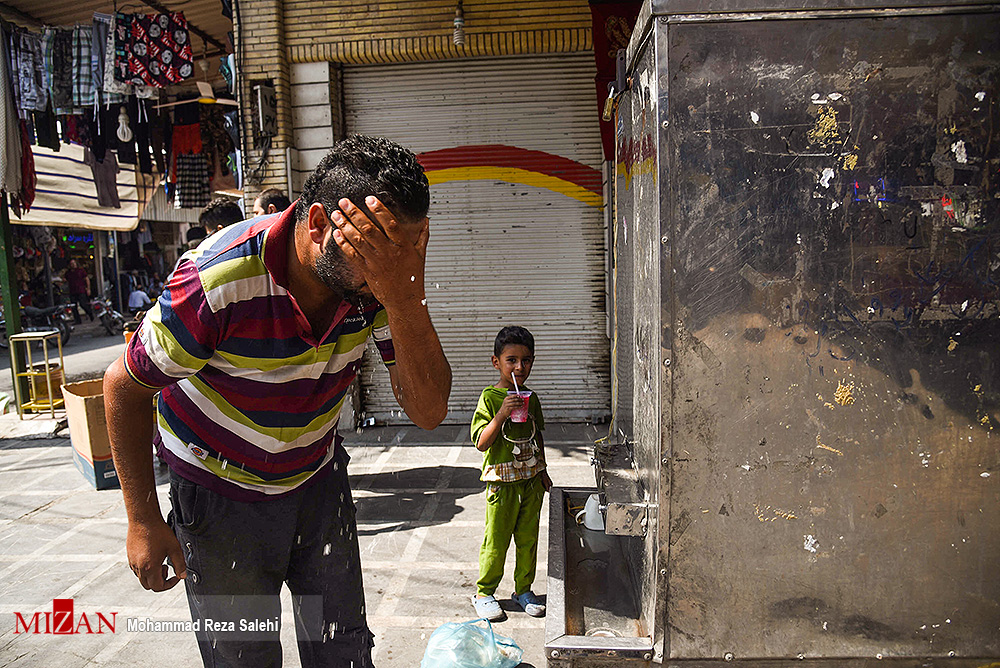
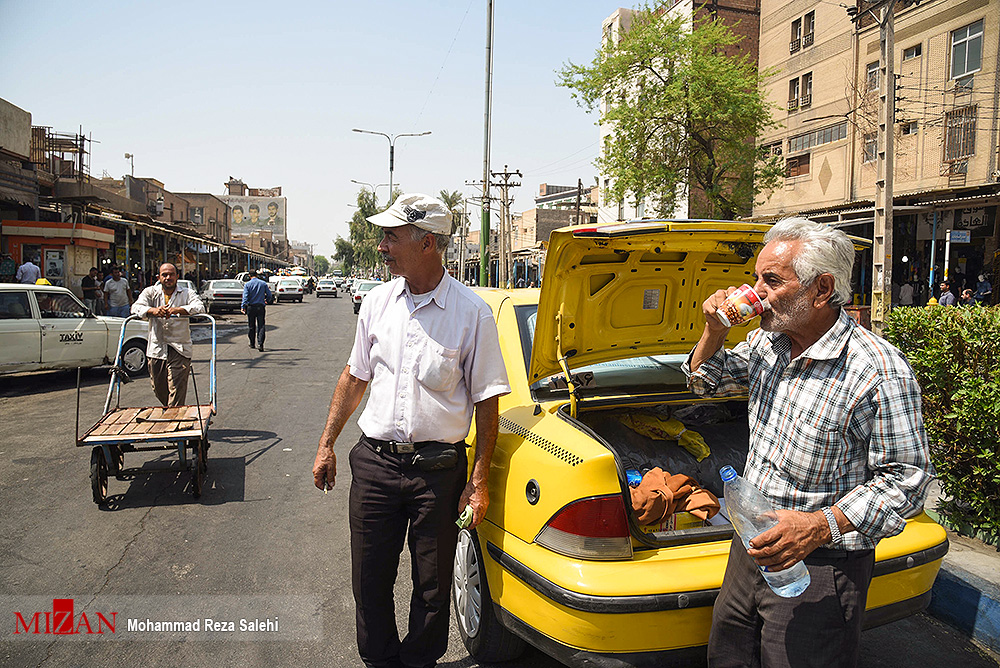
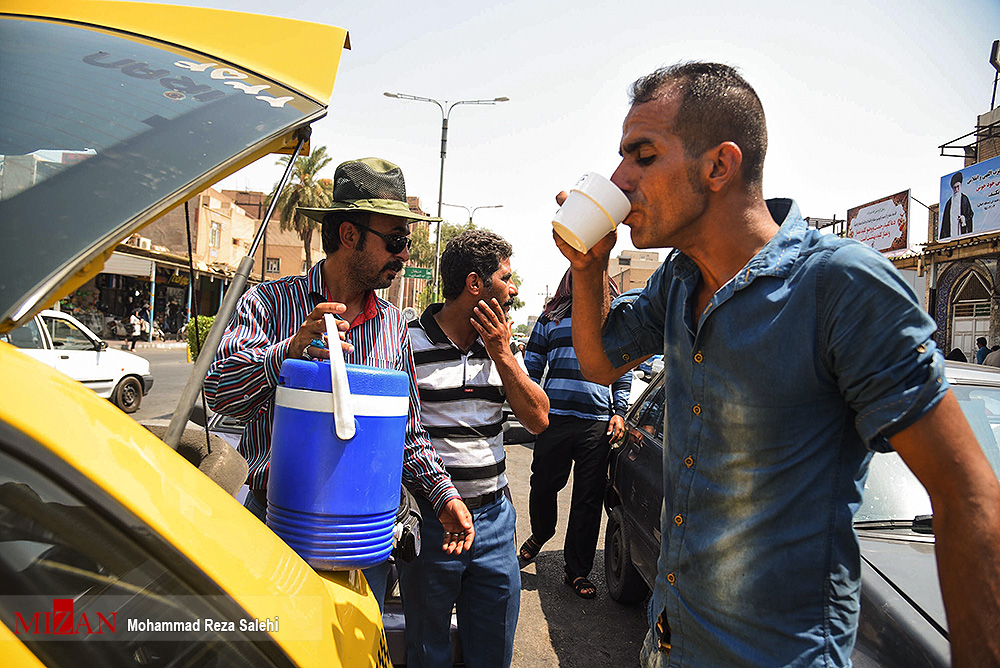
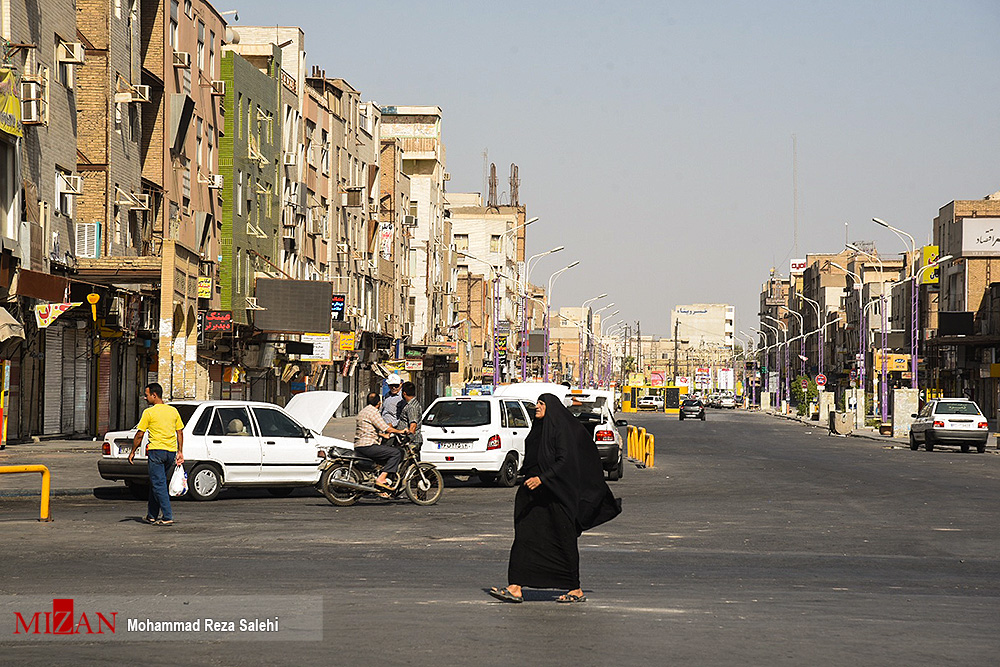
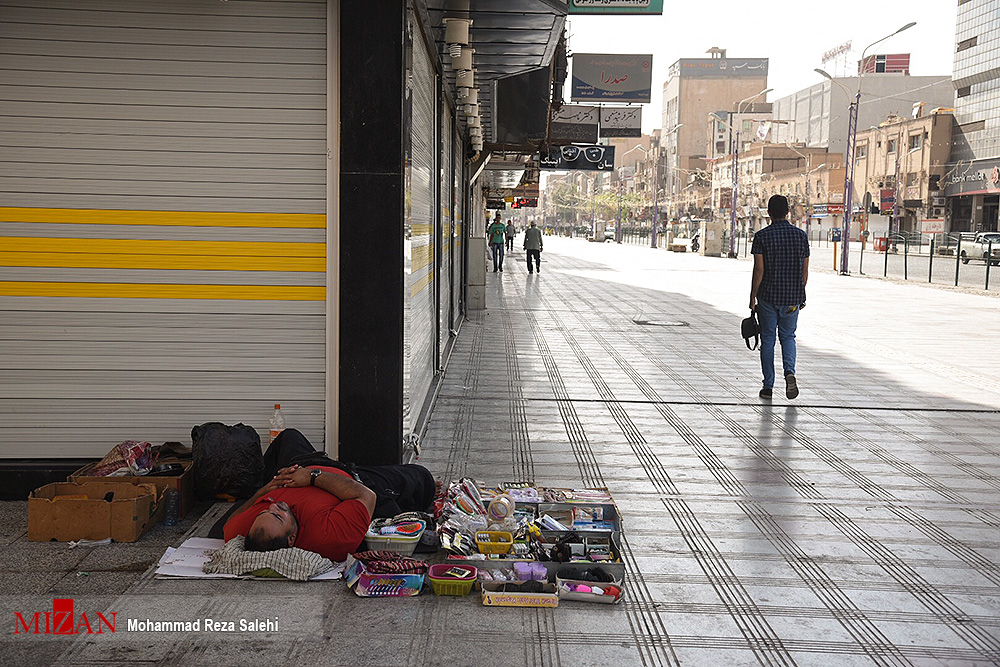
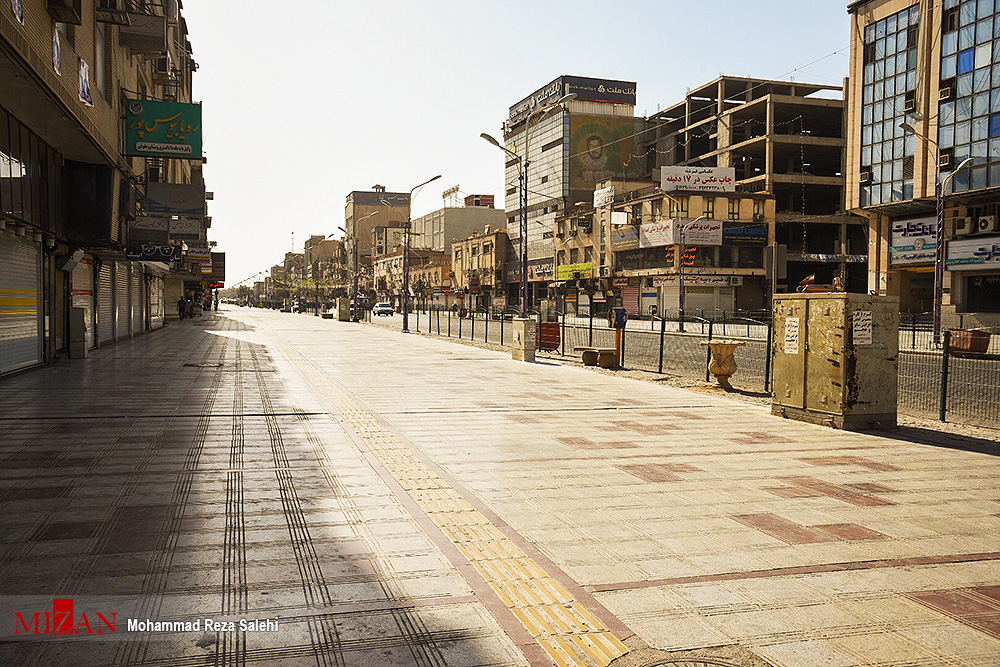
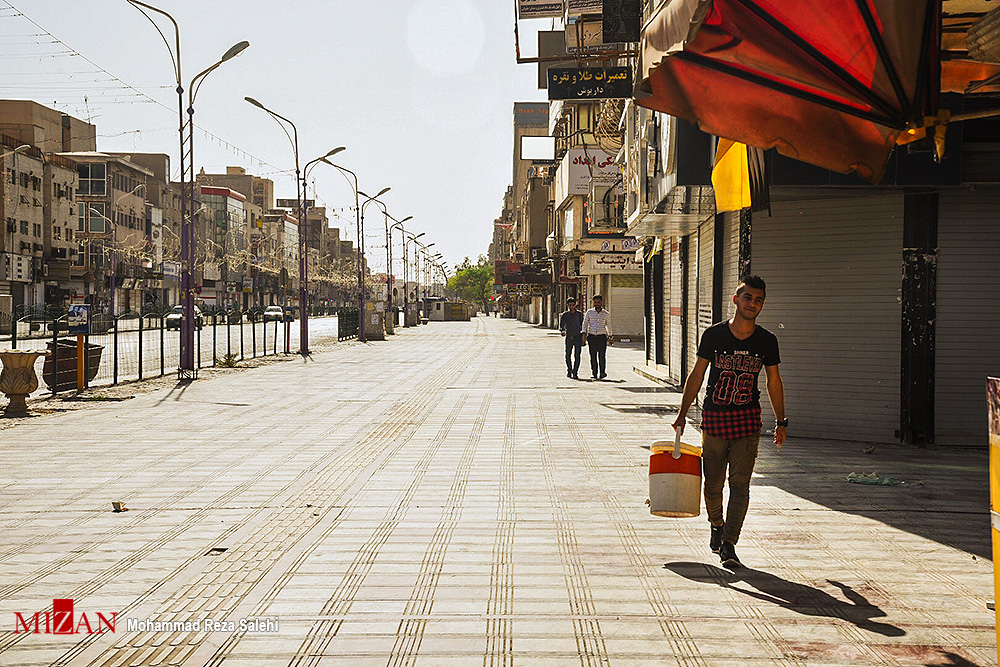
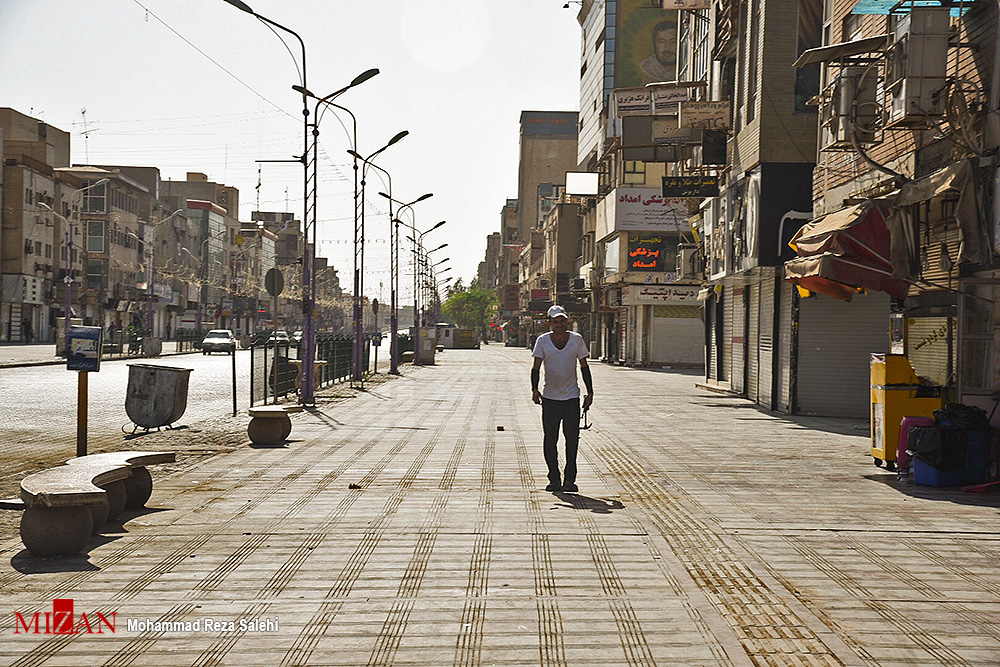
Iran’s Ahvaz Soars to Record-High Temperature of 54C (+Photos)

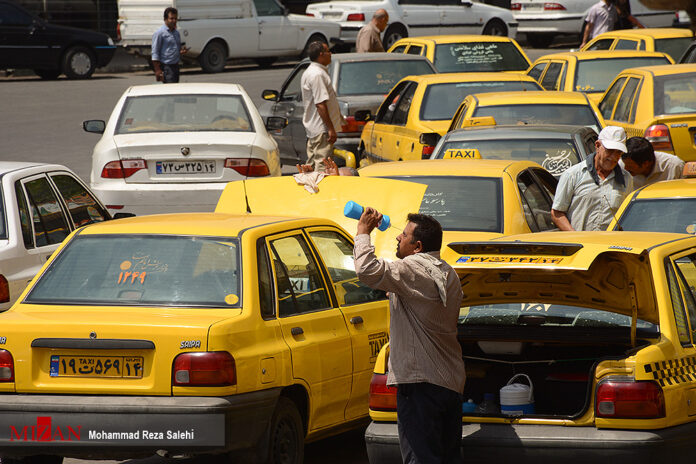
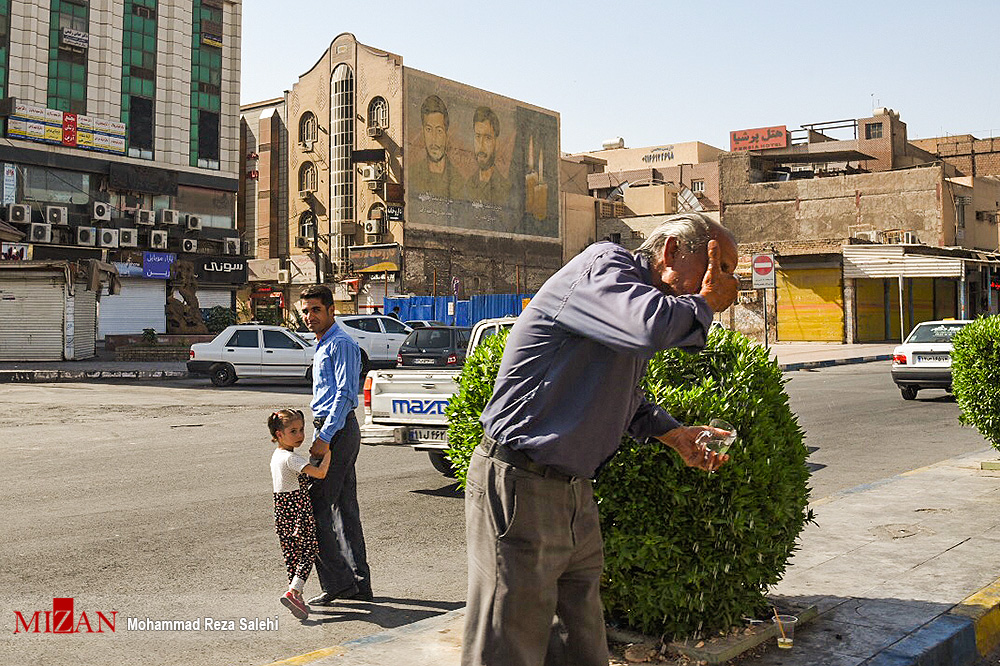
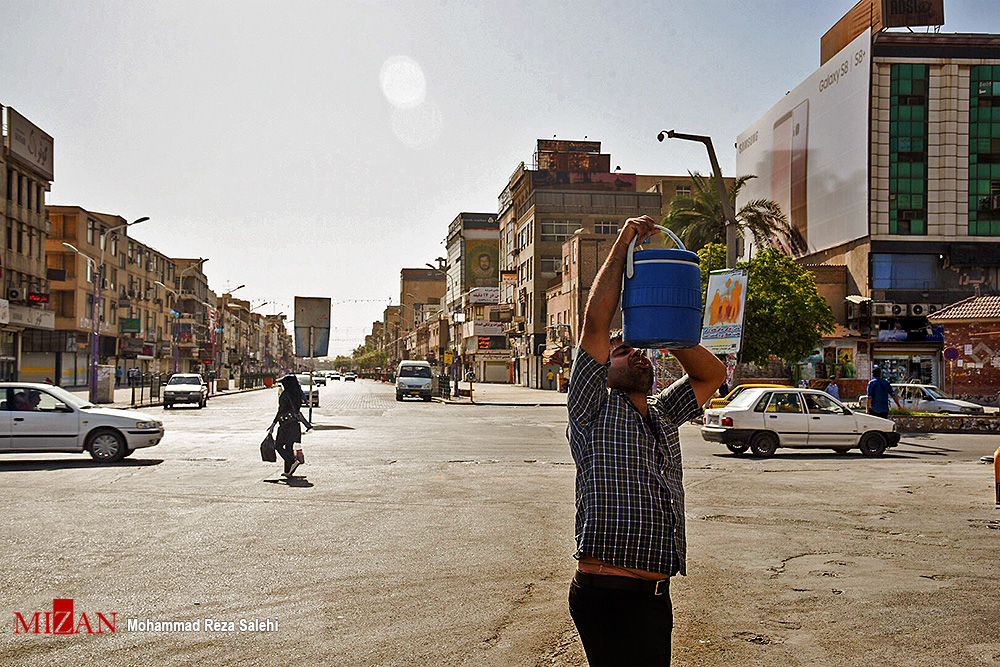
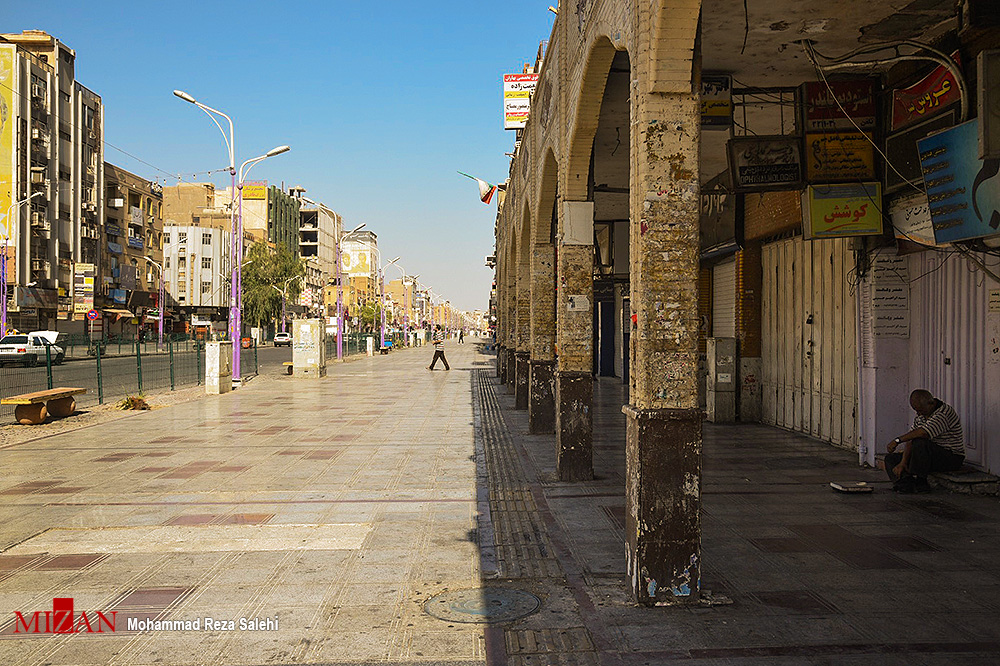
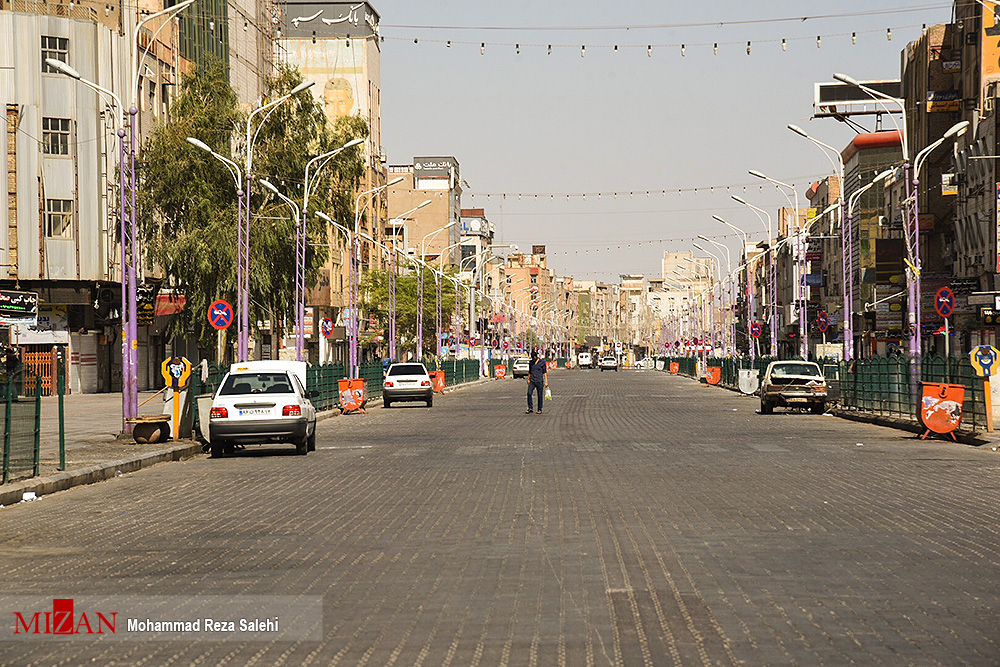
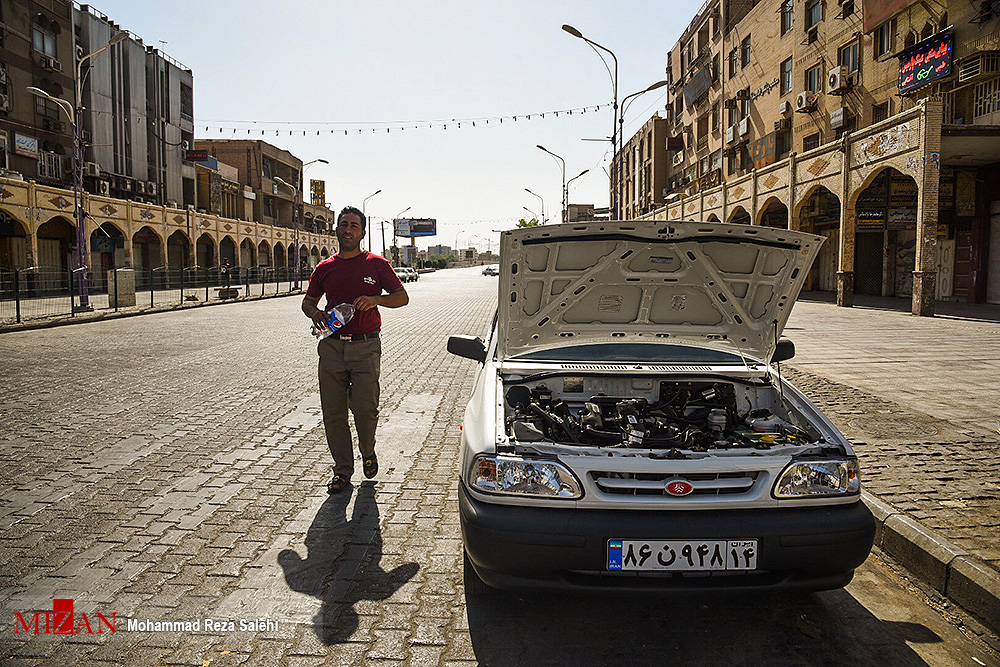
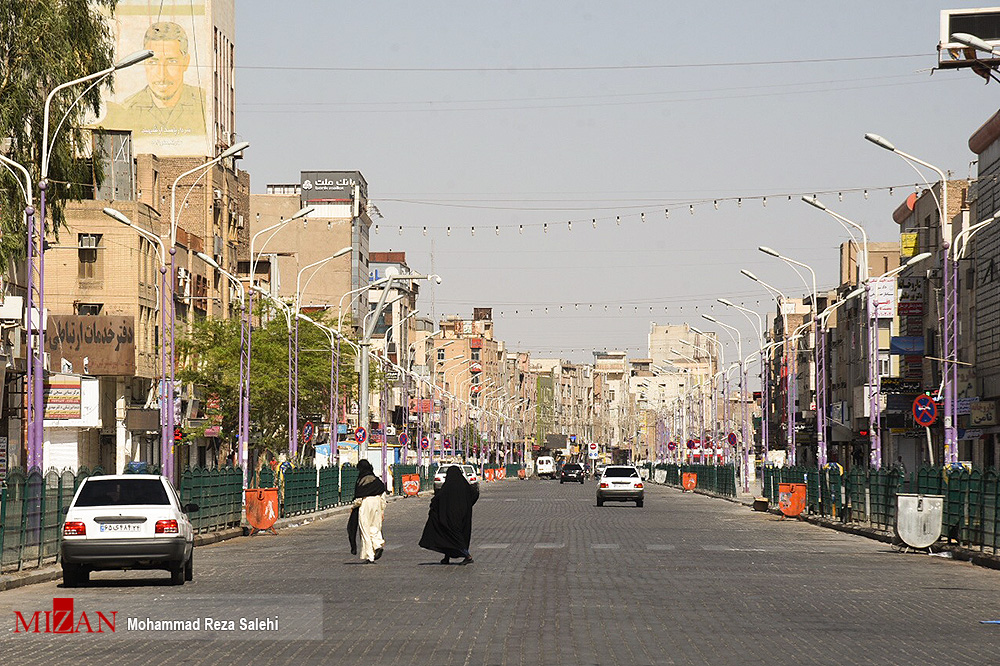
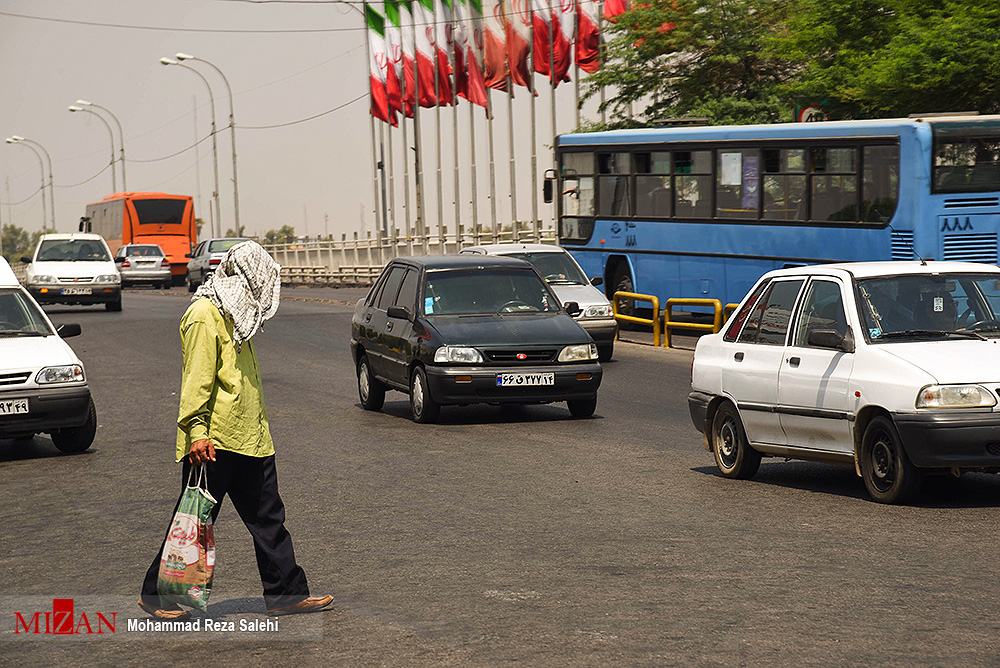
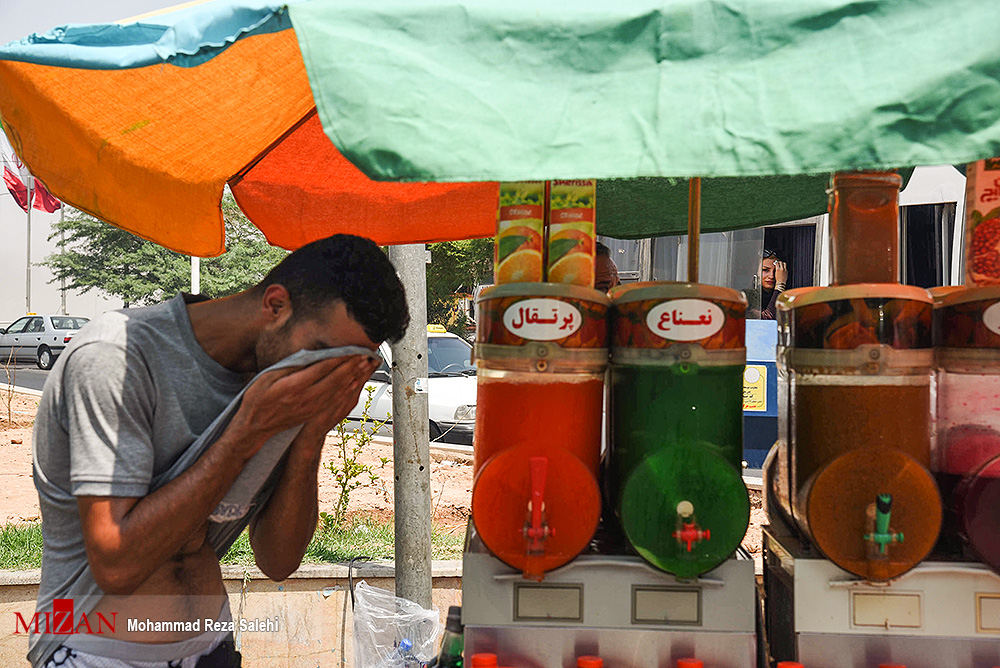
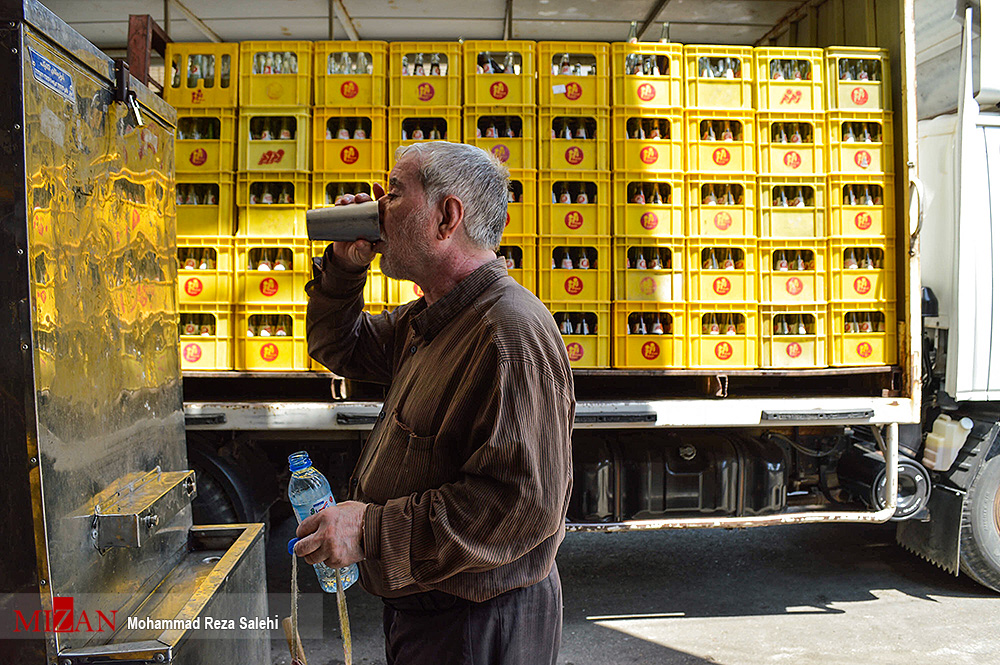
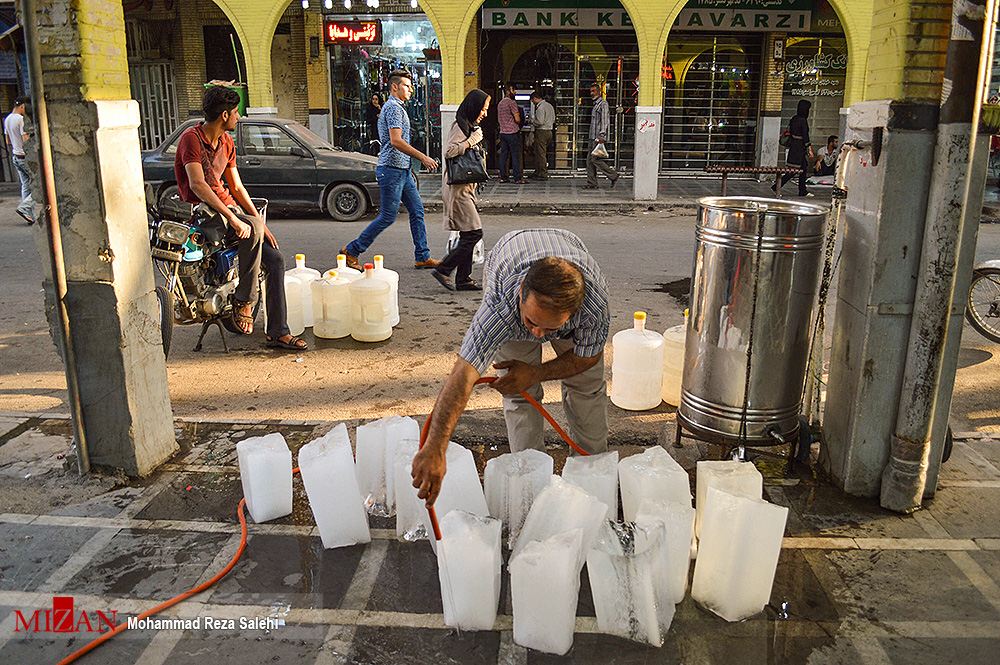
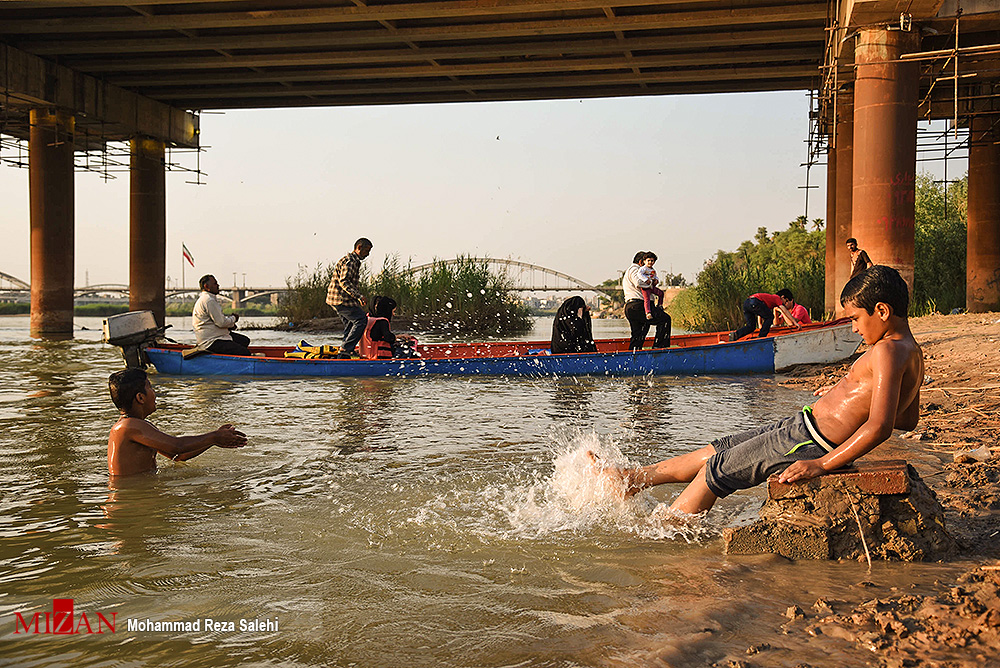
The scorching temperature reading in Iran’s Ahvaz was brought about by a dome of heat centred over the Middle East.

The excessively hot air over Ahvaz, a city of 1.1 million people, felt even more stifling due to high humidity. As the temperature climbed over 49C, the dew point, a measure of humidity, peaked in the low 70s; a high level for the desert location (due to air flow from the Persian Gulf, to the south).

The heat index – a measure of how hot it feels factoring in the humidity – exceeded 60C. This combination of heat and humidity was so extreme that it was beyond levels the heat index was designed to compute.

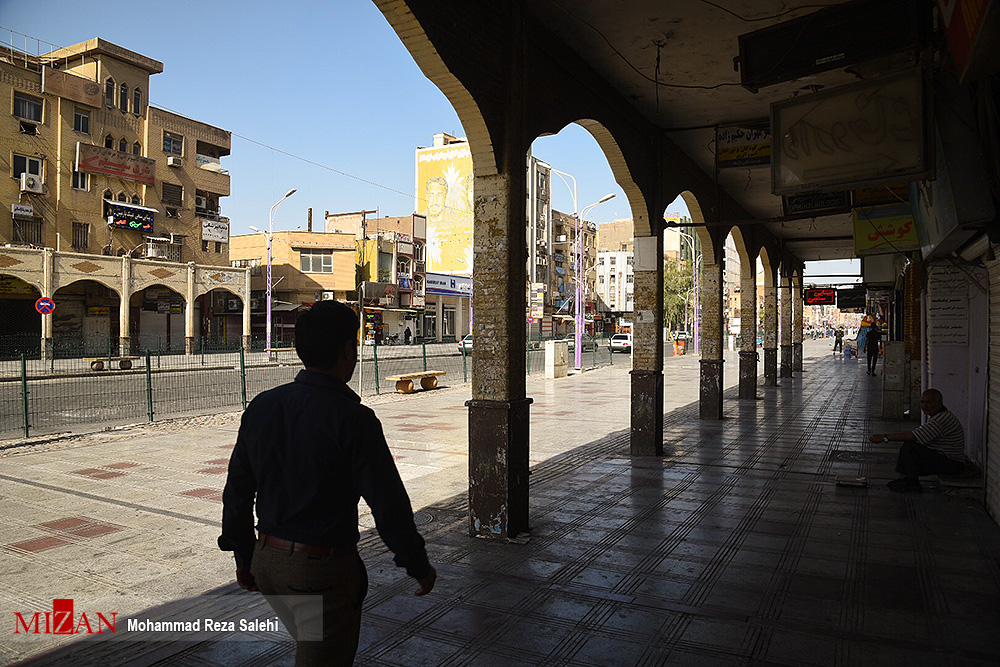
People in Ahvaz have been advised by the Iranian authorities to stay at home unless they have to go outside.

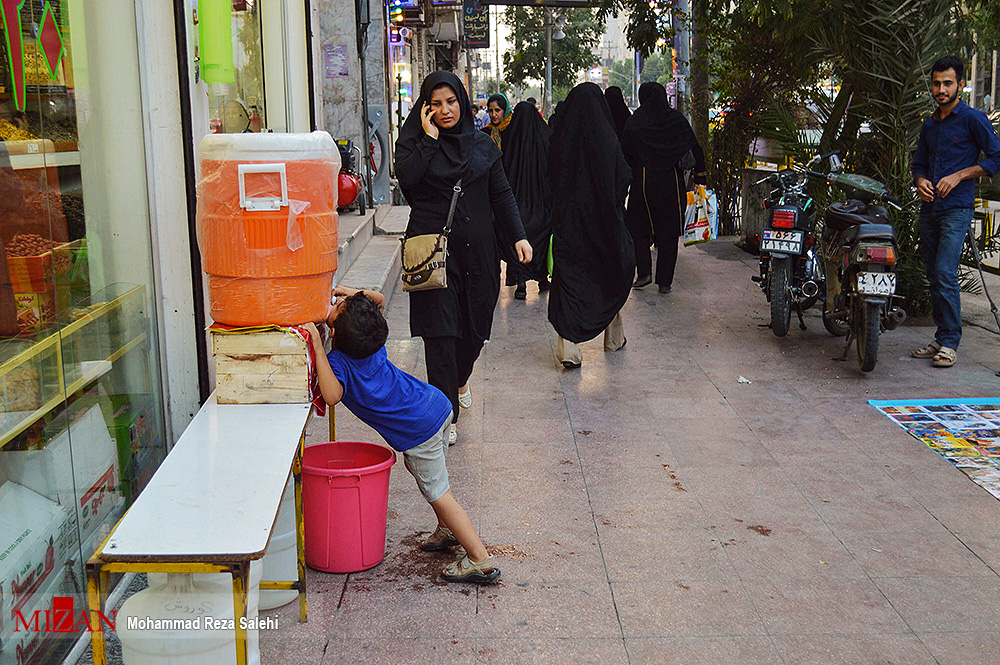
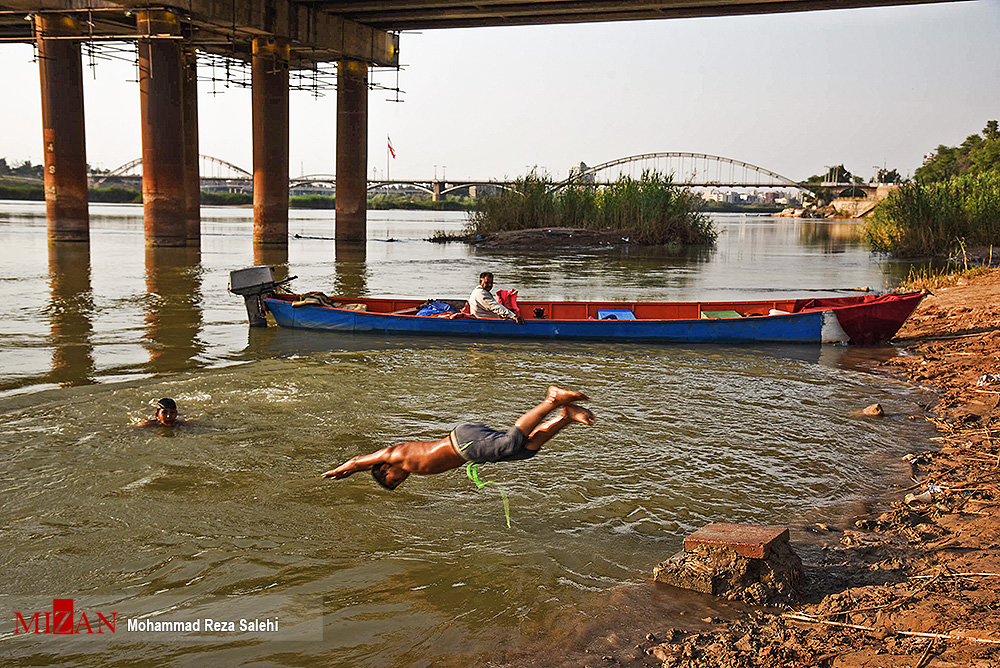
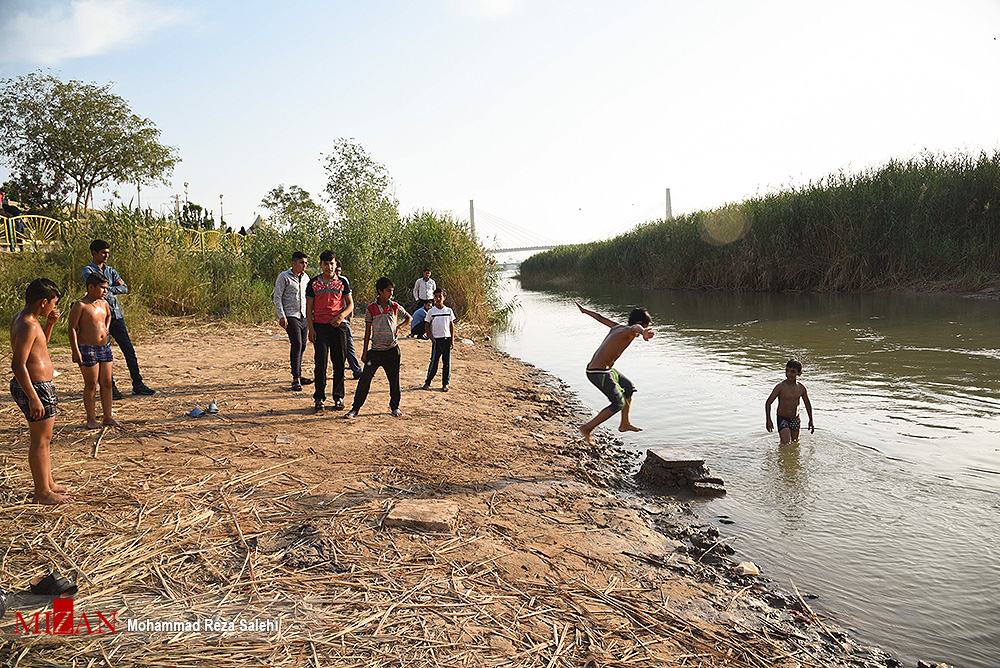
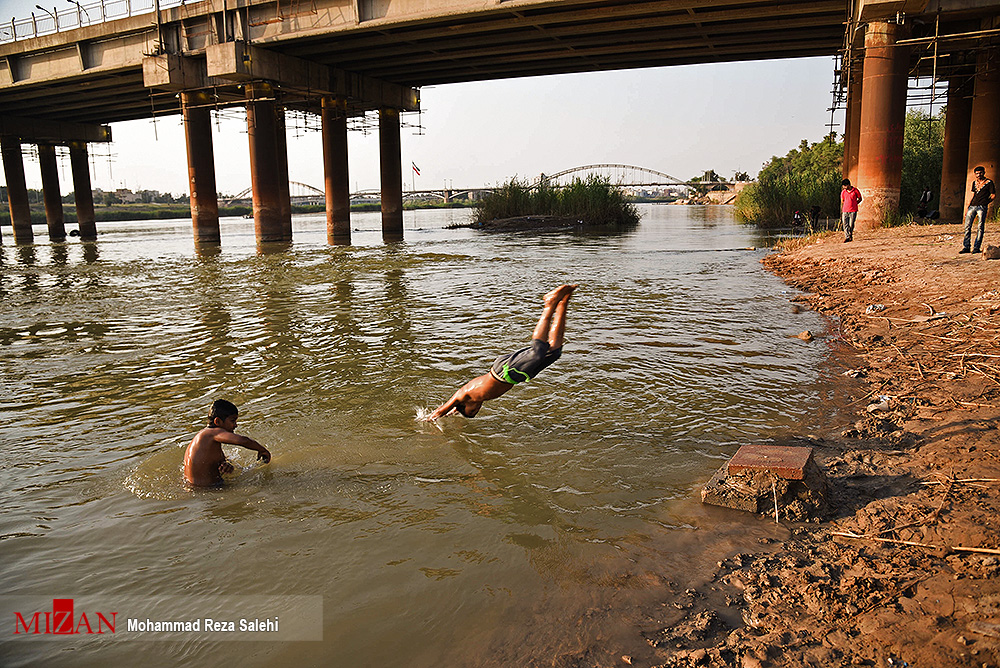
Here are Mizan’s photos of the extreme heat and the people facing it:


Iran Condemns Any Use, Threat to Use WMD: FM

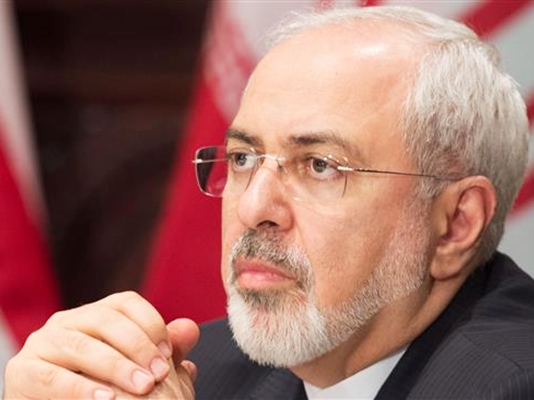
mohammad javad zarif

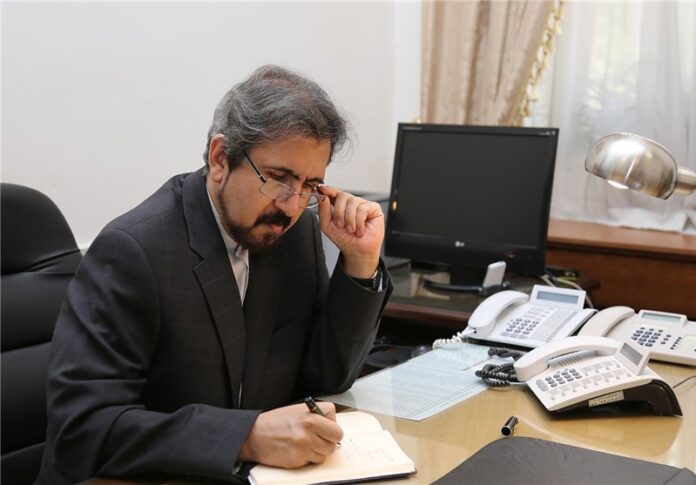
Foreign Minister Mohammad Javad Zarif on Saturday released a statement on the 30th anniversary of the deadly chemical attack carried out by the former Iraqi dictator Saddam Hussein against the innocent people of Sardasht in western Iran.

In this statement, he reiterated that Iran is against any use of Weapons of Mass Destruction, including chemical weapons, by anybody, anywhere and anytime.

“Iran also condemns resorting to such means as a pretext to prepare the ground for a set of illegal moves against the independent nations and governments across the world,” he noted, referring to the US allegations that the Syrian government is preparing for a chemical attack.

The full text of the statement follows:

In the Name of God

On the 30th anniversary of Saddam Hussein regime’s use of chemical weapons against the defenceless and oppressed people of Sardasht, we commemorate the memory of the victims of this crime against humanity. Meanwhile, our thoughts and prayers are with the pure souls of these loved ones. The attack was a bitter and heart-breaking crime which once again revealed the innocence of the great Iranian nation during the eight-year-old Sacred Defence. It also generated a key document in the history on the absurd and unfounded claims raised by the so-called human rights advocates.

The great nation of Iran resolutely resisted an unjust war imposed by the regime of Saddam with the direct military, economic and logistic support of some regional states as well as international powers. The nation also experienced various blatant violations of human rights as well as inalienable wartime rights. These violations include the use of Weapons of Mass Destruction against the Iranian military forces, missile strikes on the Iranian cities, and intentional and hateful demolition of cities like Khorramshahr by Saddam’s defeated army. All these crimes were carried out with either the support or amid the silence of the so-called advocates of human rights. The chemical attack against civilian and defenceless people of Sardasht was a clear example of war against humanity and war crime carried out by Saddam’s Ba’athist regime, which left hundreds of people martyred including women and children. However, we once again saw that the world’s superpowers did not take any decisive action or even send a message of regret and condemnation!

Today, those powers which put forth claims about the use of chemical weapons in Syria under a suspicious and dangerous scenario are the same powers which not only closed their eyes to the use of illegal chemical weapons and weapons of mass destruction against the Iranian civilians and troops but also got involved in the equipping process and providing support for the criminal regime of Saddam and therefore are complicit in Saddam’s crimes.

Unlike the hypocritical policies and double-standards of some so-called advocates of human rights including the US, the Islamic Republic of Iran vehemently condemns any use or threat to use weapons of mass destruction including chemical weapons. Iran also condemns resorting to such means as a pretext to prepare the ground for a set of illegal moves against the independent nations and governments across the world. Iran is against any use of such weapons by anybody, anywhere and anytime.

The Iranian foreign ministry commemorates the victims of Sardasht chemical attack and their relatives, and marks the National Day of Fighting Chemical and Biological Weapons while reiterating the Islamic Republic’s determination to fight against any use of chemical weapons of any kind. It also calls on the international community to use all available capacities to stop the production, proliferation and use of any chemical weapons and to become more sensitive to the use and the threat to use of such weapons by such terrorist groups as ISIS and their regional and international supporters.

“Bin Salman Too Indiscreet to Be Political Leader”

Political analyst Mohammad Mahdi Mazaheri has, in a Farsi interview with Fars News Agency, talked about the latest developments in Saudi Arabia’s political landscape. The full text of the interview follows:

Two years ago, the Saudi King removed then Crown Prince Muqrin bin Abdulaziz Al Saud from his position and designated Mohammed bin Nayef as the new heir to the throne before introducing his youngest son Mohammad bin Salman, who had just become the defence minister, as the deputy crown prince.

At that time, it dawned on everyone that Riyadh was going for new policies both in the domestic and international arenas. A country which had been used to having aging kings now had an heir to the throne who was just more than 50 years old and whose deputy was only 30 years of age. At that time, few people would have thought that Saudi Arabia wanted to push the trend of developments to a point where his young son would become the crown prince and finally the king. But it seems that the authoritarian dynasty in Saudi Arabia is likely to do anything.

In recent days, a person just 31 years old was designated as crown prince. However, he has led a major part of Saudi Arabia’s local and foreign policies as defence minister and head of the economy and development council over the past two years. On the home front, the young crown prince has been tasked with carrying out economic reforms, such as reducing Saudi Arabia’s dependence on oil revenues and privatizing the economy, in order to modernize the country. Only a crown prince like Mohammad bin Salman can devise and implement contentious plans in the social arena such as further opening up the social climate and giving more rights and freedoms to women and the youth.

But on the international front, he was the mastermind behind the Saudi aggression on Yemen. Also by taking a swipe at the Mahdavism ideology [reappearance of Imam Mahdi] in Iran, which is a Shiite-majority country, he believes Tehran and Riyadh have nothing in common, and that the Al Saud regime should not wait for Saudi Arabia to turn into a battlefield; rather, he believes Riyadh should try to spread war into Iran. He has tried to enhance his country’s relations with the US and push Trump away from his anti-Saudi position and accusing Riyadh of supporting terrorism toward friendship and alliance with Riyadh.

Mohammad bin Salman is a West-leaning, adventurous and hard-line young man who is too indiscreet to be a political leader. In the chaotic Middle East, this reality would amount to instability and warmongering. Saudi Arabia’s new heir to the throne is nursing the idea of turning his country into the number-one power in the region, seeking to realize the idea through subjugating Arab states and threatening other regional powers. This comes as countries such as Iran and Turkey have proved that they will not succumb to Riyadh’s authoritarianism. The Qatar crisis is a case in point. Only a few countries have got on board with Saudi Arabia in boycotting Qatar, which shows even Arab states are giving up their previous approaches and are no longer ready to capitulate to Saudi policies.

He has no understanding of soft power and the necessity of bringing legitimacy and popularity upon his country. He only thinks of gaining superiority through hard power and purchasing more weapons. This, for a country which is unable to ensure security at home, would result in the purchase of more weapons in the years ahead, the promotion of an arms race in the region and search for new locations to use these munitions. On the other hand, it can be predicted that arms-exporting countries, especially the US and Britain, due to the profit they make by selling weapons and interfering in the Persian Gulf’s security system, will continue to pursue their double standards: Ostensibly condemning terrorism on the one hand, and practically backing state sponsors of terrorism on the other.

Of course, there are some deterrent factors which might, in the long run, somehow moderate the policies of Saudi Arabia’s current crown prince and future king. On the home front, the unorthodox designation of Mohammad bin Salman as heir to the throne, his plans to make economic and social reforms in the country’s traditional atmosphere and the grave consequences of his current warmongering in the region, may trigger protests inside the country and harness this unruly prince.

Certain objections made to the designation of bin Salman as heir to the throne, some of which were not mirrored due to the restricted media climate in the country, indicate that if bin Salman becomes king, he will face challenges by rivals seeking power. By breaking with the traditions of the ruling system in Saudi Arabia based on which the elder child is picked as crown prince, he has sidelined many older cousins. Bin Salman is not even the eldest child of the current king. Such an approach in Saudi Arabia’s traditional political system will touch off tension. So, if his designation as crown prince is not reversed and he becomes king, most probably we will witness the king’s widespread illegitimacy, domestic protests and instability inside the country, a trend which would keep Saudi authorities busy with domestic issues and keep them from further regional interference.

On the international front, a drop in oil prices and rise in the costs of Saudi Arabia’s warmongering can deal a major blow to Riyadh’s hostile policies and keep its regional ambitions at bay. Therefore, although we will probably see Saudi Arabia’s regional policies moderated in the long run, the country will continue to pursue its hostile and aggressive approach in the short and medium terms.

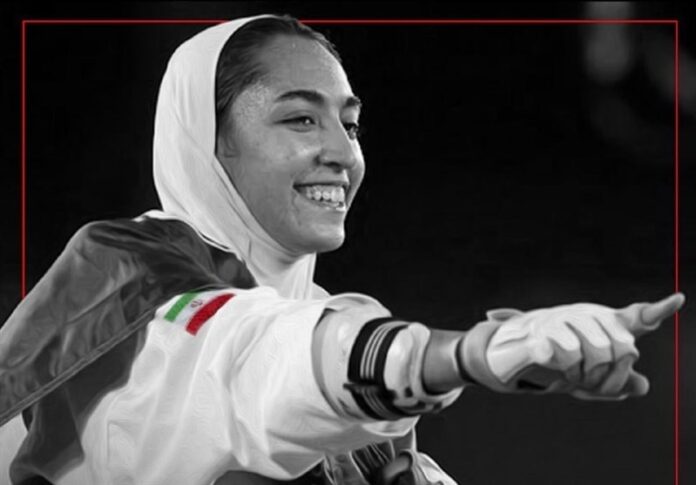
Kimia Alizadeh Wins Iran’s First-Ever World Medal in Women Taekwondo

Alizadeh

The Iranian taekwondoka lost to Ruth Gbagbi from Ivory Coast in the women’s -62 kg final match.

She is now the first Iranian woman who managed to win silver medal in the world championships.

The bronze medal went to Kim So-hee from South Korea and Russian Tatiana Kuzmina.

Iran’s Armin Hadipour (-54kg), Mirhashem Hosseini (-63kg) and Masoud Hajji-Zavareh (-74kg) had already won silver and bronze medals respectively.

It’s the largest world championships ever, with 971 athletes and 796 officials from 183 nations.

The 2009 event in Copenhagen had previously been the largest with 928 athletes from 142 nations. The WTF said 17 countries, including Togo, Tanzania and Malawi, competed for the first time.

The Real Security Threats on Iran’s Periphery

Seyyed Hossein Mousavian, a senior Middle East security and nuclear policy specialist at Princeton University and a former member of Iran’s nuclear negotiating team, says contrary to the Trump administration’s claim that Iran is destabilizing the Middle East and pursuing hegemony, the Islamic Republic has in fact been a victim of regional instability, and has legitimate security threats and needs.

“As one Iranian military officer has said, roughly 60 percent of Iran’s borders are “not controlled by the neighbouring country’,” he noted in a piece in LobeLog.

Here is the full text of his article:

Pressure has once again become the name of the game in regards to US policy on Iran. The Senate has passed sweeping new sanctions, and Secretary of State Rex Tillerson has declared that the US will “counter Iran’s aspiration of hegemony” and work towards a “peaceful transition” of the Iranian government. As US-Iran tensions increase in eastern Syria, murmurs are growing of a potential disastrous war on the horizon.

Tillerson’s call for regime change in Tehran violates international law and the 1981 Algiers Accords, which binds the US to non-intervention in Iranian affairs. It also stands to put US-Iran relations—which under President Obama were characterized by regular high-level diplomatic contact and the landmark nuclear deal—on the path to all-out confrontation.

In blaming Iran for sowing regional discord, the Trump administration has latched onto the self-serving narratives of Saudi and Israeli leaders, which amount to baseless scapegoating and the rewriting of contemporary history.

Iran has been a nation under siege ever since Iraqi dictator Saddam Hussein invaded the country shortly after the 1979 revolution. During the resulting eight-year war, the aggressor enjoyed support from the US and other western powers as well as regional states like Saudi Arabia, which provided Saddam roughly $97 billion over the course of the war. Since that time, Iran has struggled to establish security for itself and safeguard its borders, all the while subject to draconian US-led sanctions.

To its east, Iran shares a 921-kilometre border with Afghanistan, a country ravaged by war for decades. Since the 2001 US invasion of Afghanistan—triggered by the 9/11 hijackers, 15 of the 19 of whom were Saudis—the country has been host to a major US and NATO presence and plagued by terrorism. Nearly 16 years after the initial US invasion, the Taliban control almost half the country’s territory. In addition to these security concerns, Iran has also hosted roughly three million Afghan refugees for decades and has become a major destination for Afghanistan-grown narcotics.

On its 959-kilometre border with Pakistan, a strategic US and Saudi ally and a hub Saudi proselytization of its extremist Wahhabi ideology, Iran has long faced instability and attacks by Pakistan-based terrorists, such as Jundullah and Jaish al-Adl. Pakistan’s status as a nuclear-armed power wracked with domestic instability and anti-Shiite violence also represents an inherent security concern to Iran.

To its west, Iran shares a 1,600-kilometre border with Iraq, which has been war-torn since the 2003 US invasion and a source of hundreds of thousands of refugees to Iran. In recent years, the territorial integrity of Iraq has also come under serious challenge—threating Iran and other regional states—and large parts of the country have been occupied by the Islamic State, which recently launched a brutal attack in Tehran.

Iran also shares a 534-kilometre border with Turkey, the region’s only NATO country and home to the Incirlik airbase and its US-controlled nuclear weapons. In recent years, Turkey’s internal stability has come under question as the government has battled Kurds in its southeast, suffered a major uptick in terrorist attacks, and fended off a coup attempt. Increased turmoil in Turkey threatens regional security as a whole.

To its south, Iran borders the Persian Gulf and the Arab states opposite it. For decades, the Persian Gulf has been an area of massive US militarization at the behest of its local autocratic allies. It’s where the US houses its main regional military bases and frequently patrols Persian Gulf waters with aircraft carriers and nuclear submarines. The monarchies of the southern Persian Gulf have also been a major recipient of US weapons, with Obama selling more weapons to Saudi Arabia—totalling some $115 billion—than any previous US administration. President Trump, meanwhile, has already reportedly reached a $110 billion arms deal with the Saudis.

The Arab Persian Gulf powers have long toed a hard-line against Iran and pushed their US patron to go to war with Iran. Former US Secretary of States John Kerry has recently revealed that even during the period of the nuclear negotiations—as Iran and six major world powers were working towards a diplomatic resolution of the Iranian nuclear dispute—“leaders in the region” were telling Kerry and Obama that the US should “bomb these guys.”

Contrary to the Trump administration’s claim that Iran is destabilizing the region and pursuing hegemony, Iran has in fact been a victim of regional instability—which has largely been a legacy of US policies—and has legitimate security threats and needs. As one Iranian military officer has said, roughly 60 percent of Iran’s border are “not controlled by the neighbouring country.”

Rather than choosing to build on the nuclear deal and pursue cooperation with Iran on areas of mutual interest, such as combating terrorism, the Trump administration believes that Iran’s supposed regional activities, which Tillerson has termed “destabilizing,” are behind escalating tensions in the region.

President Trump should learn from the failure of past aggressive policies towards Iran. It should not take sides in regional rivalries by giving the Arab Persian Gulf states carte blanche to advance their narrow, sectarian agendas. Instead, Trump should acknowledge Iran as a geographical reality and foster regional cooperation by pushing US regional partners to reciprocate the Iranian foreign minister’s calls for dialogue.

A Look at Iranian Newspaper Front Pages on July 1

Almost all newspapers covered the full liberation of the Iraqi city of Mosul and the fall of ISIS’ caliphate in the Arab country.

Another top story was the move by several member states of the United Nations Security Council, including the EU states, to confirm Iran’s commitment to the nuclear deal. This came as the US and its allies were doing their best to persuade the others to take action against Iran.

Iranian Foreign Minister Mohammad Javad Zarif’s tour of European countries also received great coverage. Zarif left Paris for Tehran on Friday after holding talks with top European officials in Germany, Italy, and France.

The above issues, as well as many more, are highlighted in the following headlines and top stories:


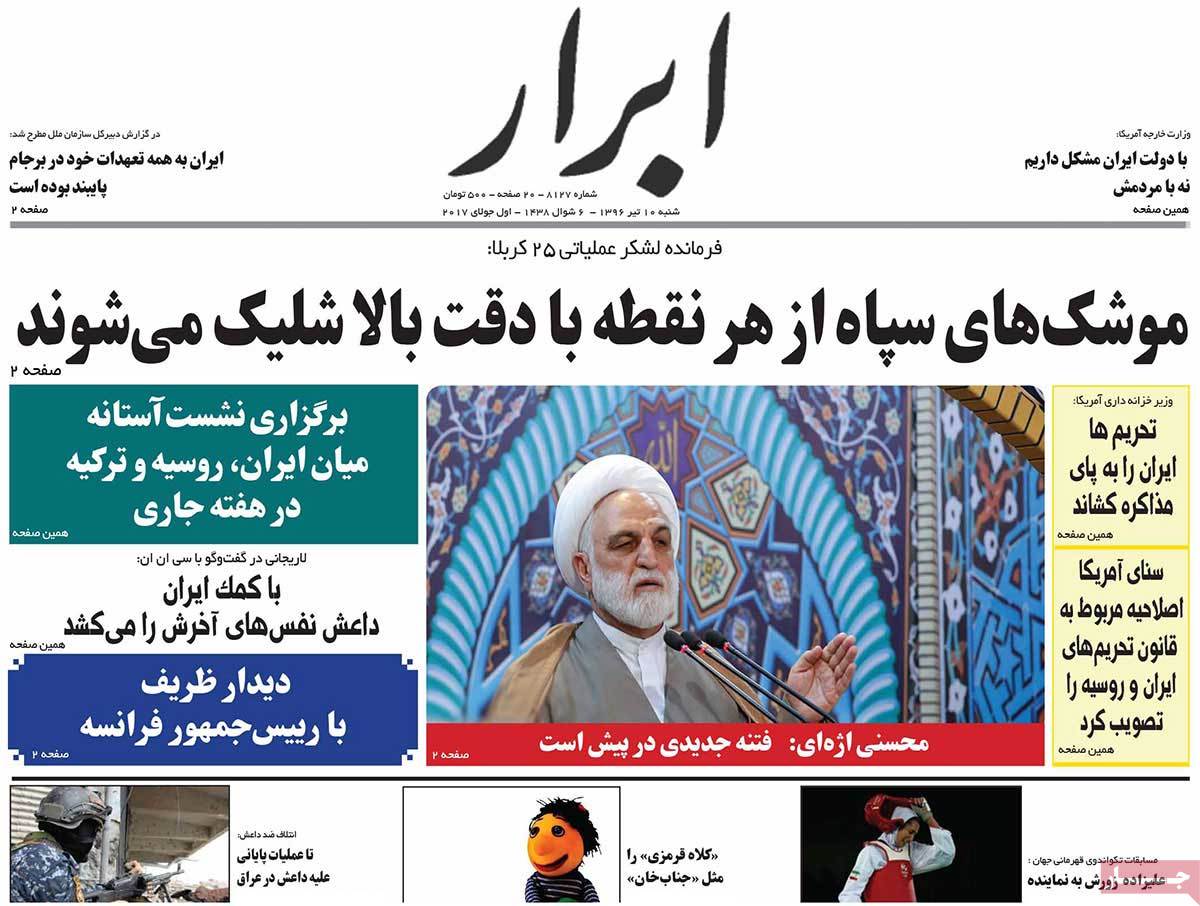
Abrar:

1- IRGC Missiles Fired with High Precision from Any Point: General

2- US Treasury Secretary: Sanctions Took Iran to Negotiating Table
A Look at Iranian Newspaper Front Pages on July 1 - abrar


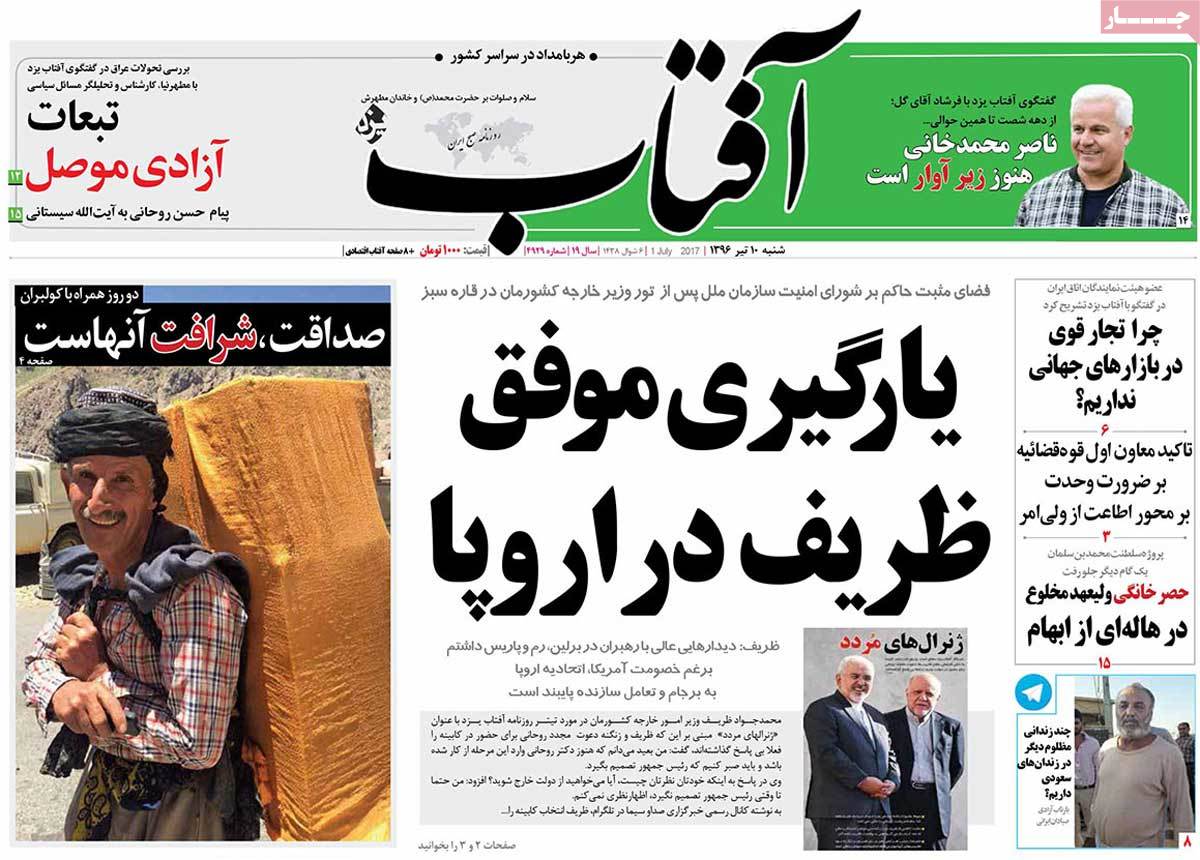
Aftab-e Yazd:

1- Zarif’s Successful Recruitment in Europe

  • UNSC Atmosphere More Positive after Zarif’s European Tour

2- Why Iran Does Not Have Strong Businesspeople in Global Markets

3- Consequences of Mosul Liberation

4- House Arrest of Sacked Saudi Prince Still Not Clear
A Look at Iranian Newspaper Front Pages on July 1 - aftab


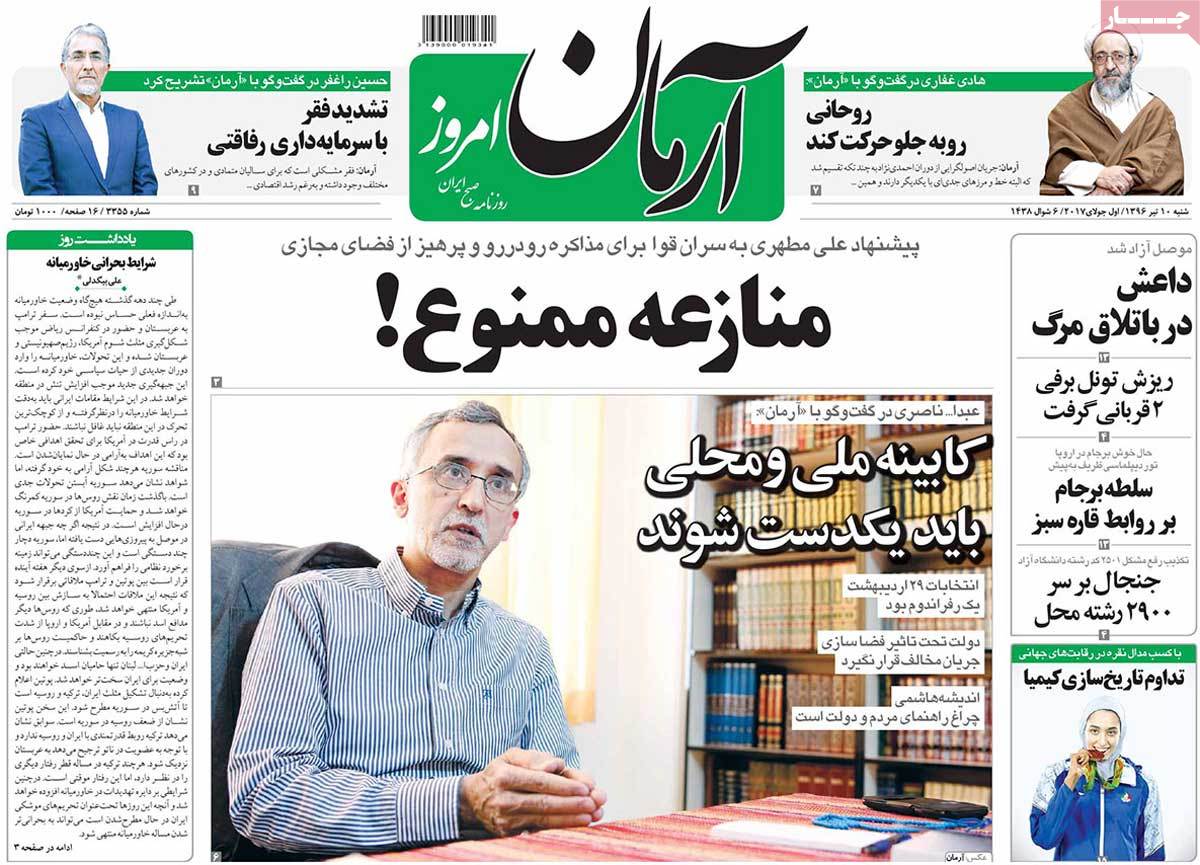
Arman-e Emrooz:

1- No Conflict! MP Motahari Advises Top Officials to Hold Face-to-Face Talks

2- ISIS in Quagmire of Death: Mosul Liberated

3- JCPOA’s Dominance over Europe Ties
A Look at Iranian Newspaper Front Pages on July 1 - arman


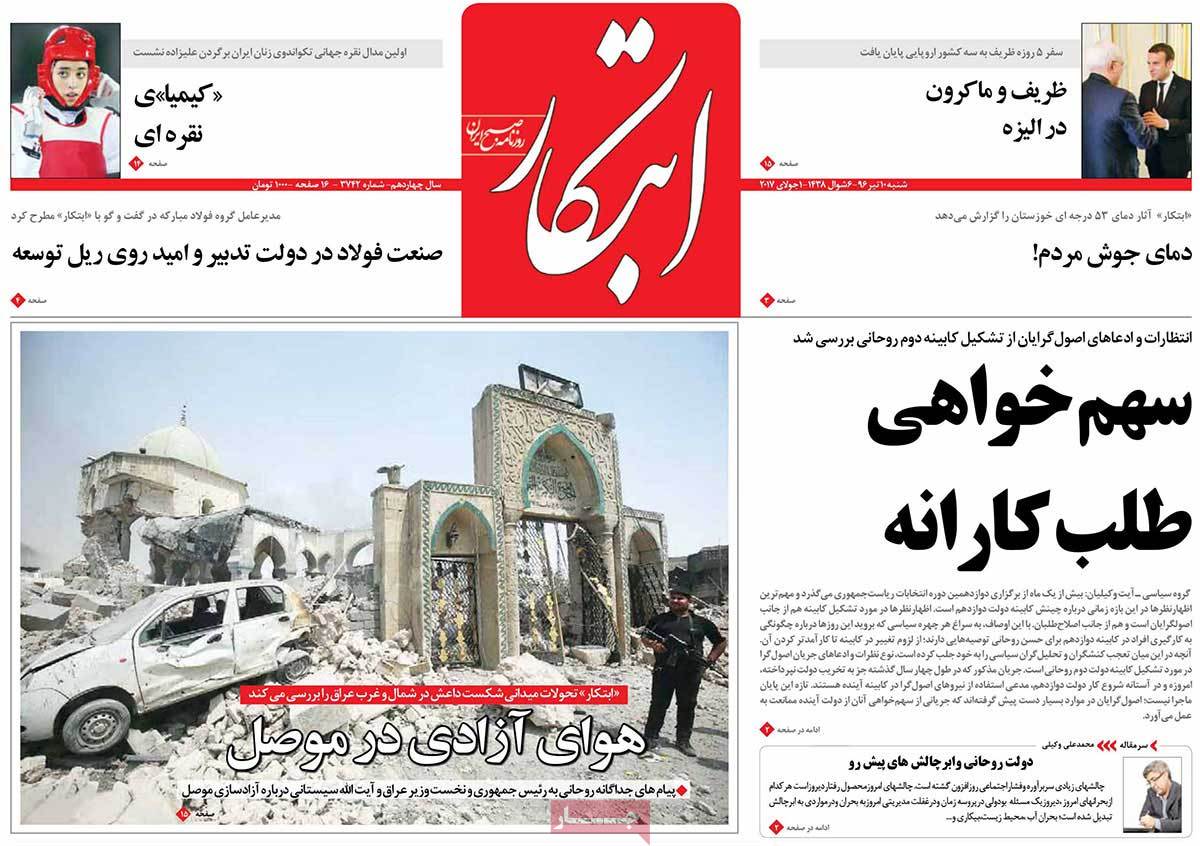
Ebtekar:

1- Zarif and Macron at Élysée

2- Kimia Alizadeh Wins Iran’s First-Ever World Taekwondo Medal

3- Air of Freedom in Mosul
A Look at Iranian Newspaper Front Pages on July 1 - ebtekar


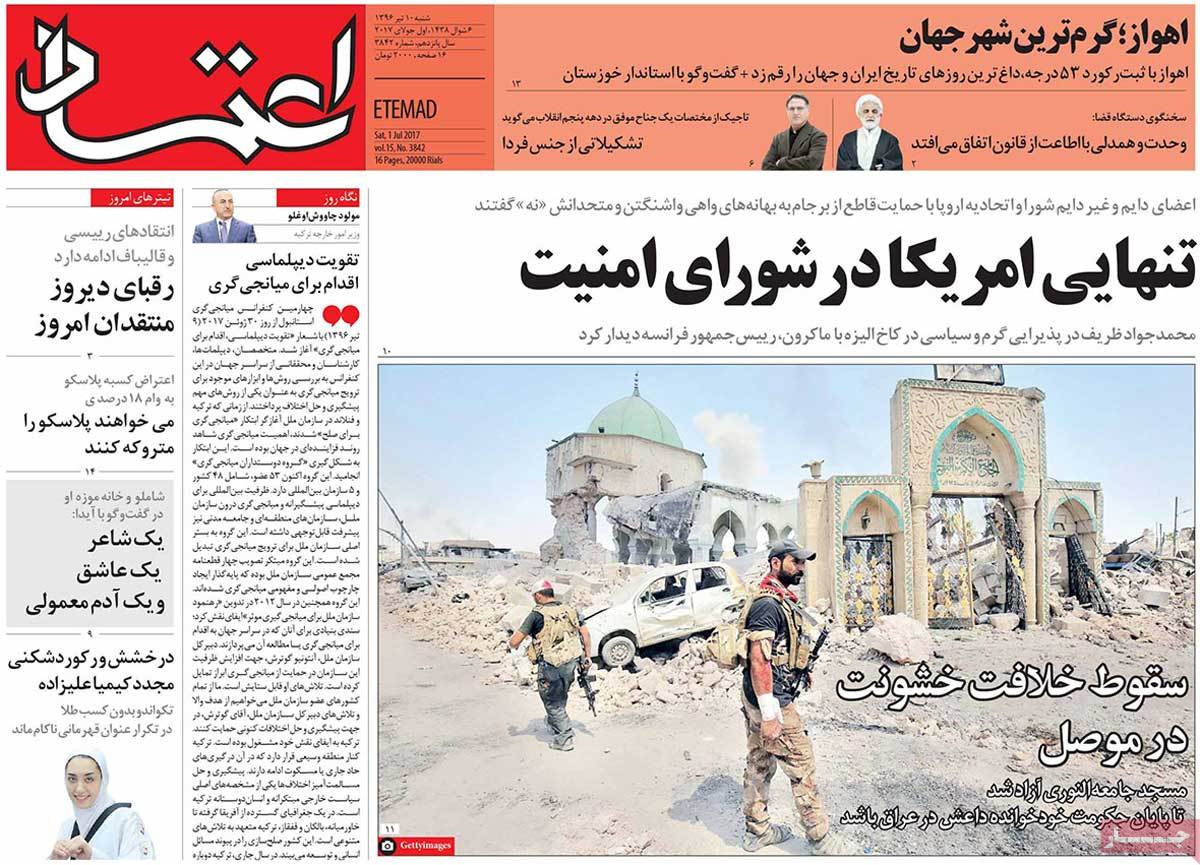
Etemad:

1- US Isolation in UNSC

  • EU, Other UNSC Members Strongly Support Iran Nuclear Deal

2- Ahvaz Becomes World’s Hottest City

  • Temperature Soars to 53 Degrees Celsius

3- Caliphate of Violence Falls in Mosul
A Look at Iranian Newspaper Front Pages on July 1 - etemada


Ettela’at:

1- Rouhani Congratulates Top Iraqi Shiite Cleric on Mosul Liberation

  • Iraqi People’s Victory Shows High Position of Religious Decrees to World

2- First VP: Next Gov’t to Use Combination of Young, Experienced Staff

3- US Army on Standby to Attack Syria

  • Syria Vows Appropriate Response

4- UNSC: Iran Has Complied with All Its JCPOA Commitments

5- Larijani: Without Iran’s Help, ISIS Would Have Occupied Baghdad
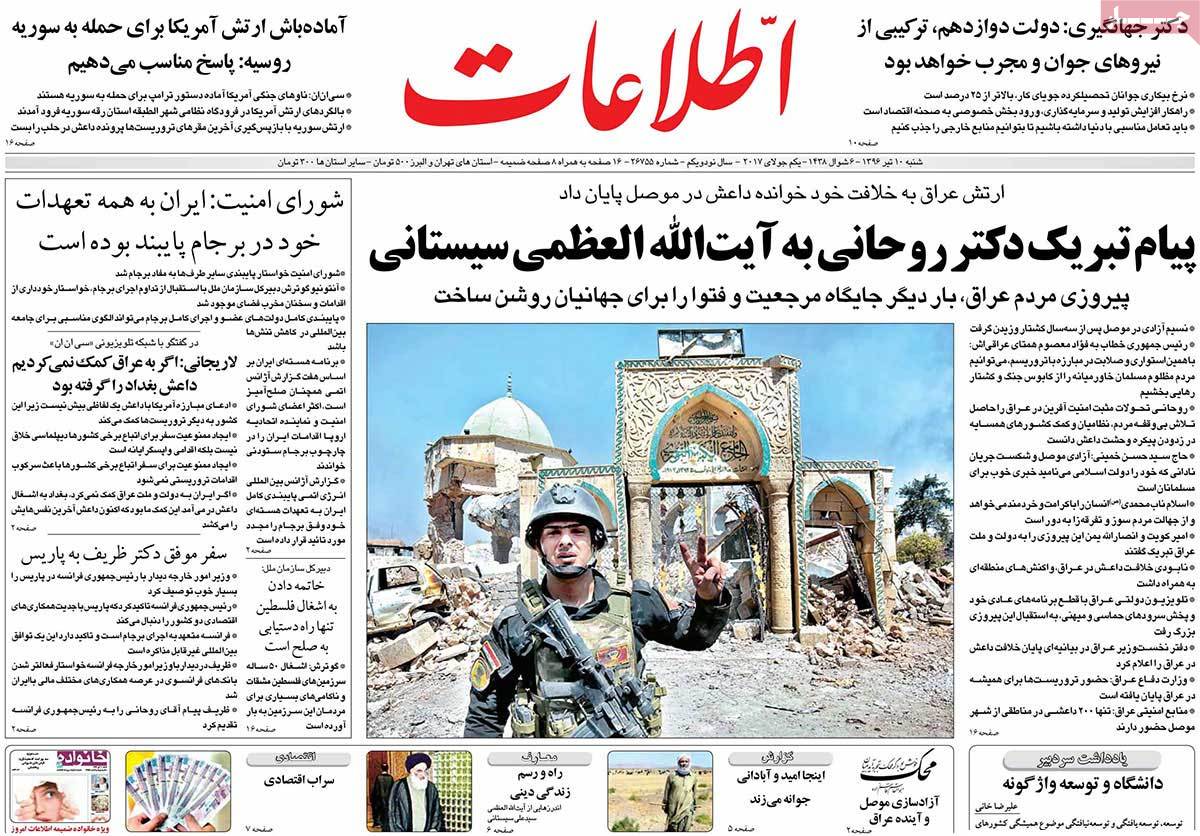
A Look at Iranian Newspaper Front Pages on July 1 - etelaat


Ghanoon:

1- Moderate Figures around One Table: Zarif Submits Rouhani’s Message to Macron
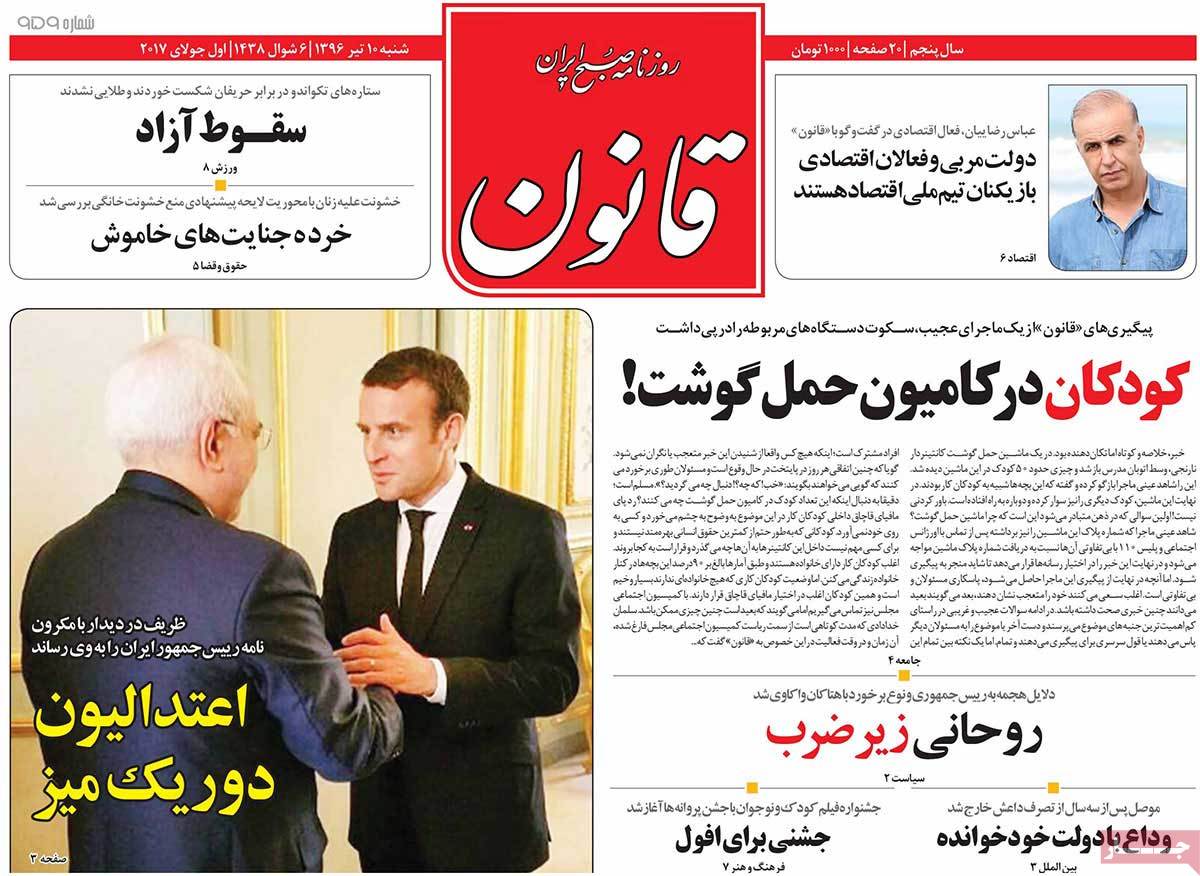
A Look at Iranian Newspaper Front Pages on July 1 - ghanoon


Hamdeli:

1- Qatar Ready to Discuss Legitimate Issues Only: FM

  • Doha Rejects Saudi Arabia’s Preconditions
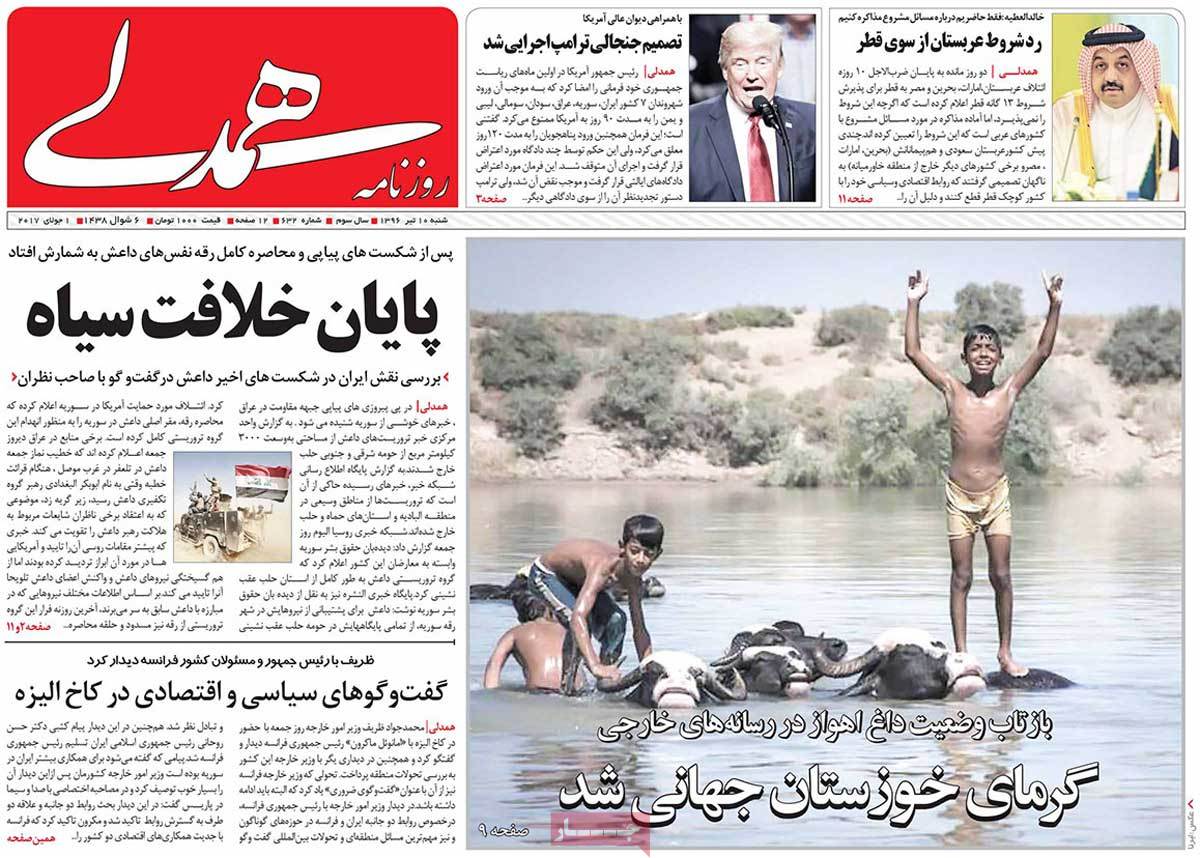
A Look at Iranian Newspaper Front Pages on July 1 - hamdeli


Iran:

1- UNSC: Iran, P5+1 Are Committed to Nuclear Deal

2- End of ISIS in Mosul

3- French President Hosts Zarif

  • Élysée Officials Underline Expansion of Ties with Iran
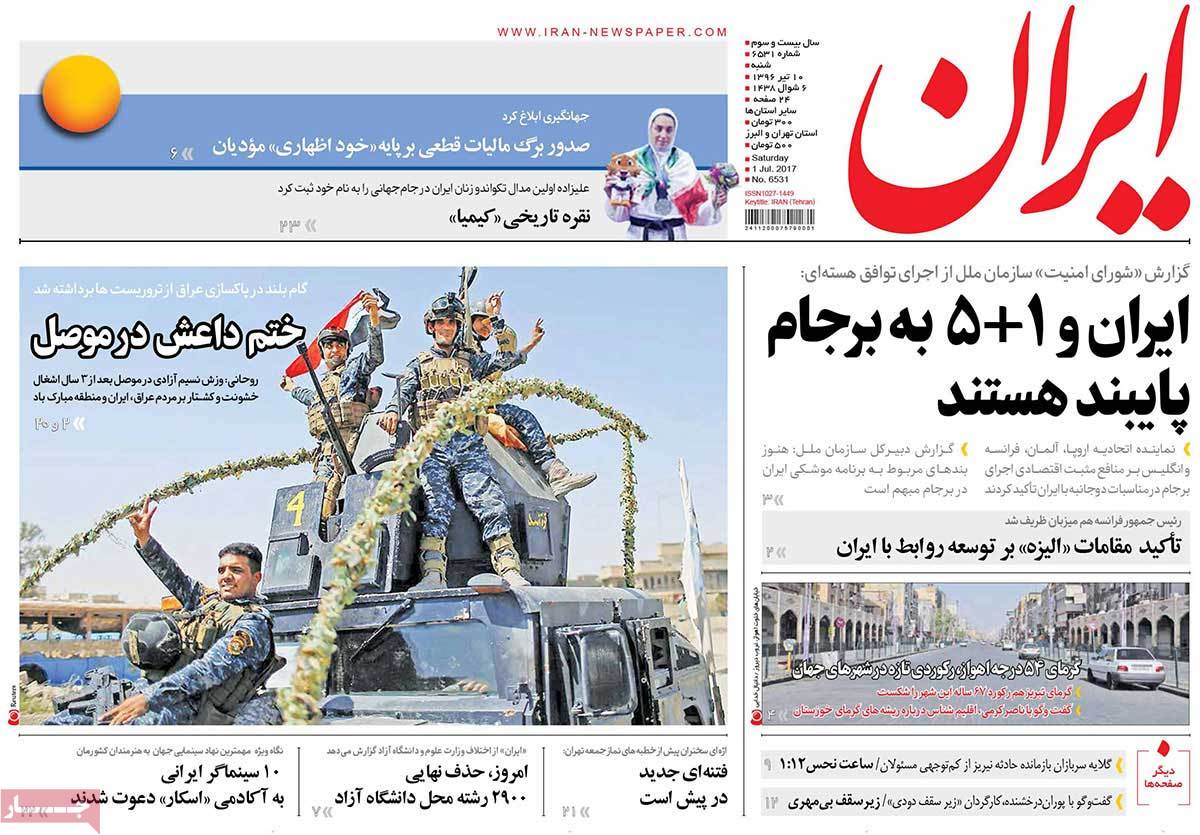
 A Look at Iranian Newspaper Front Pages on July 1 - Iran


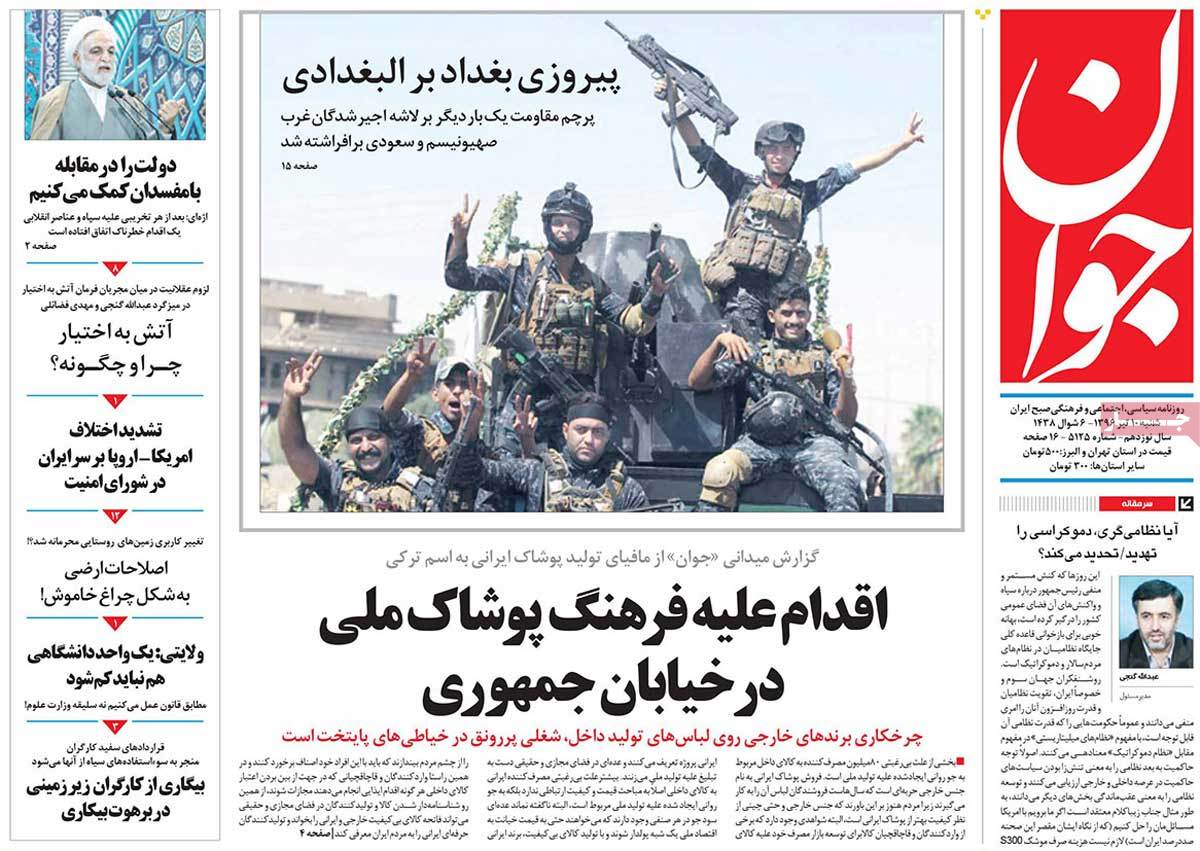
Javan:

1- Baghdad Overcomes al-Baghdadi

2- Thriving Business of Sewing Foreign Brands on Iranian Apparel

3- US-Europe Tension in UNSC over Iran
A Look at Iranian Newspaper Front Pages on July 1 - javan


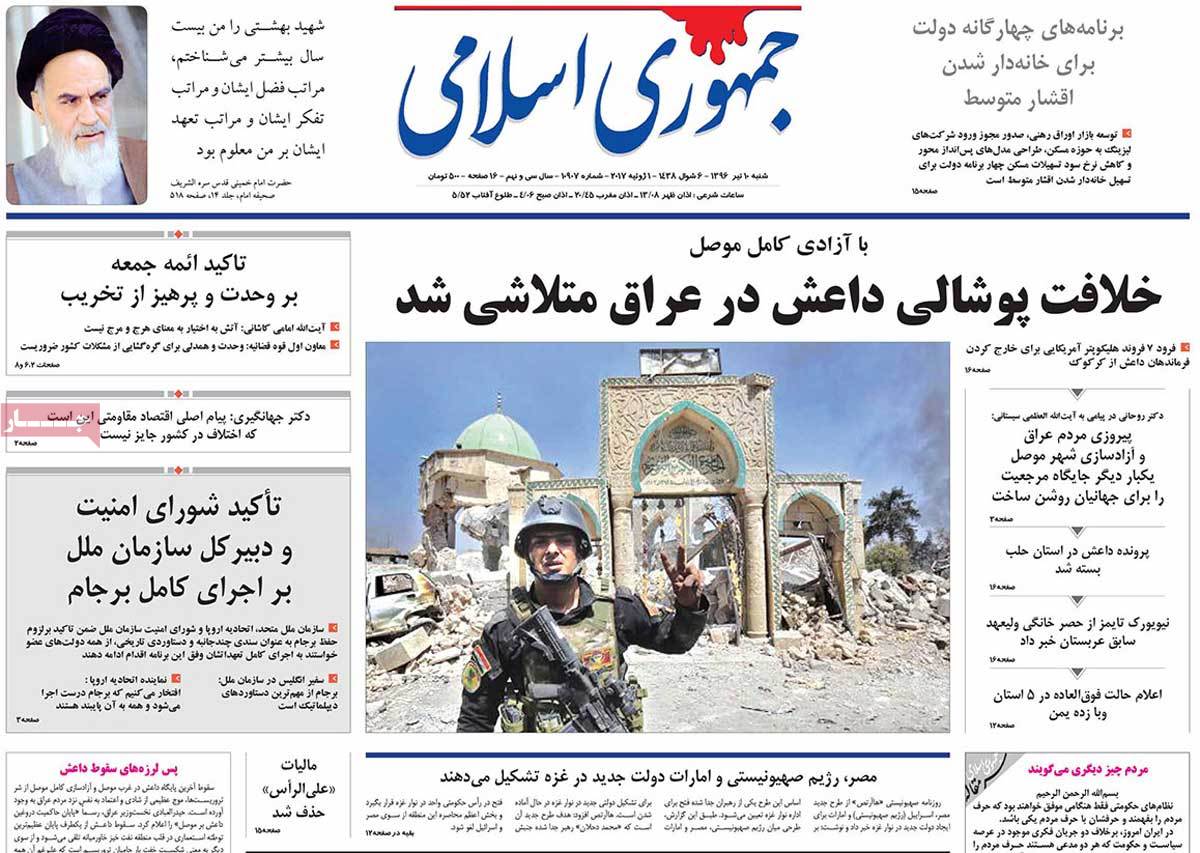
Jomhouri Eslami:

1- ISIS’ Shallow Caliphate in Iraq Destroyed after Full Liberation of Mosul

2- Egypt, Zionist Regime, UAE to Form New Gov’t in Gaza
 A Look at Iranian Newspaper Front Pages on July 1 - jomhori


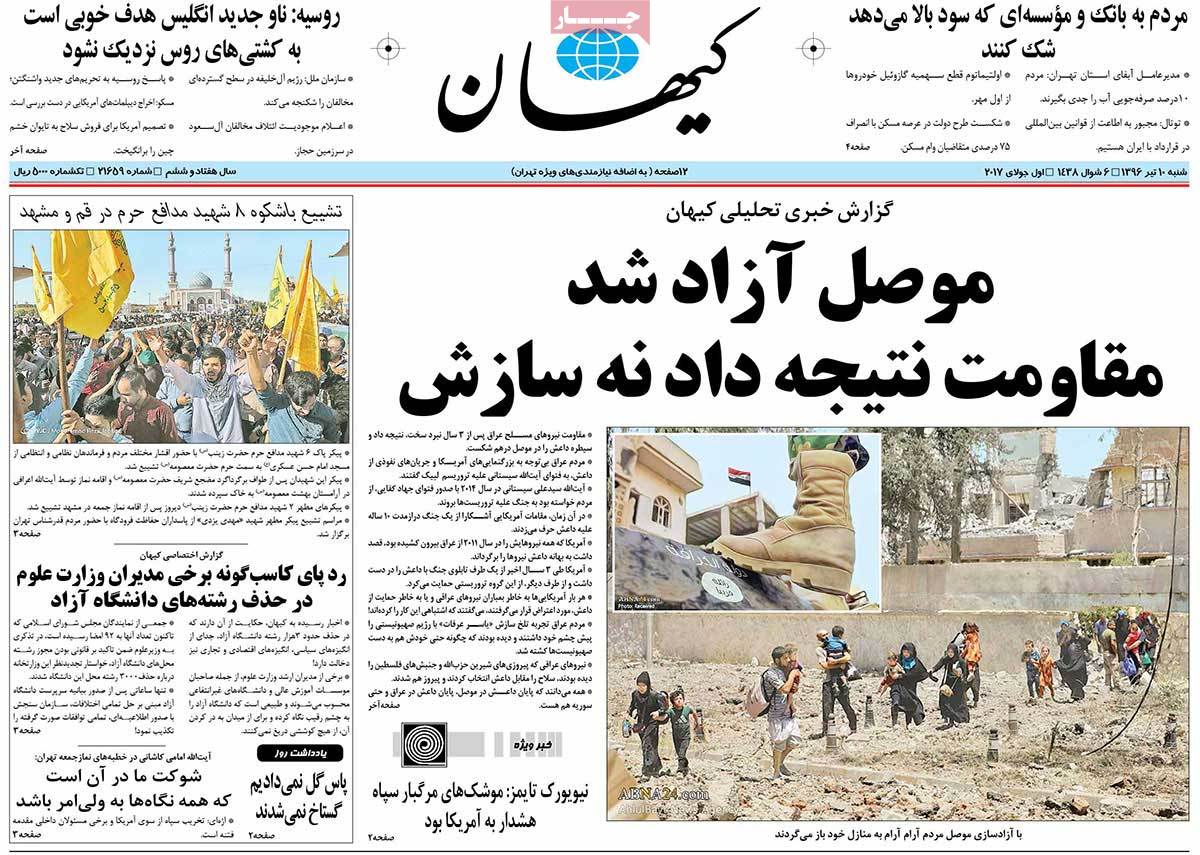
Kayhan:

1- Mosul Liberated: Resistance Works, Not Compromise
A Look at Iranian Newspaper Front Pages on July 1 - kayhan


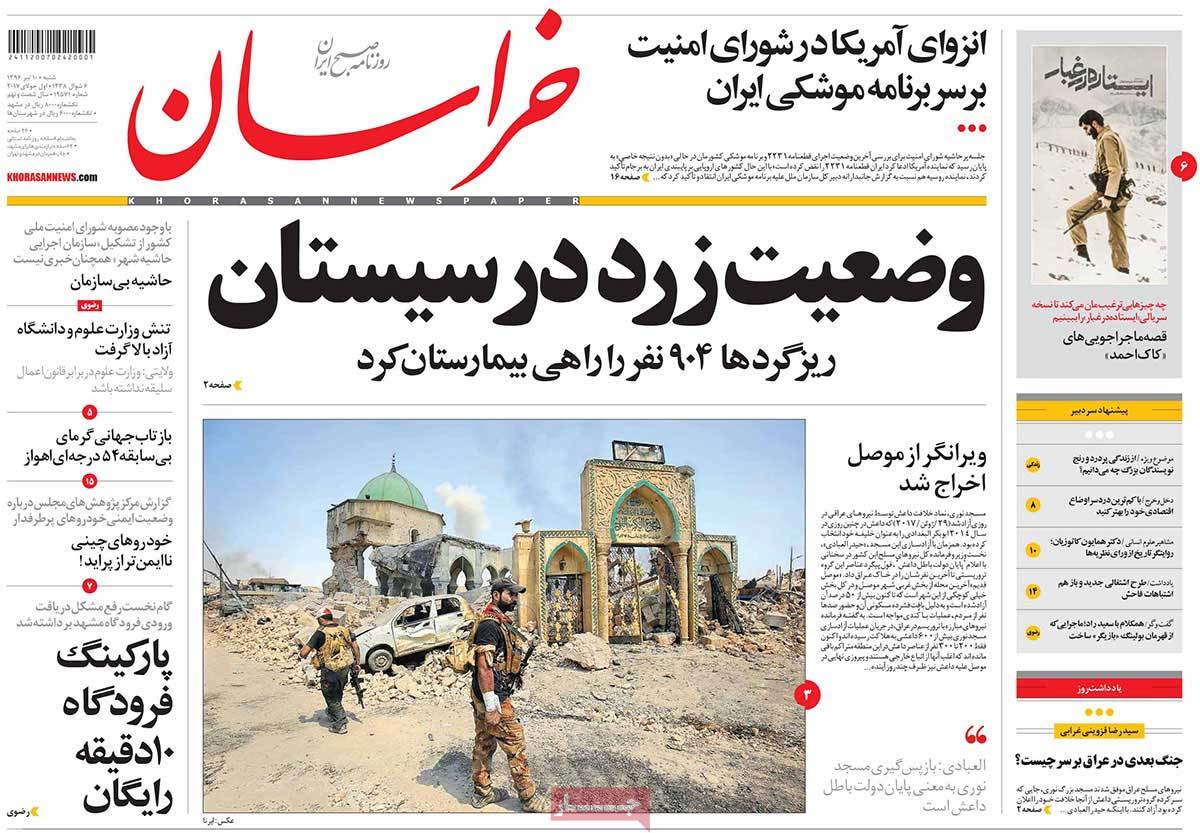
Khorasan:

1- Yellow Condition in Sistan: Dust Pollution Sends 904 to Hospital in SE Iran

2- Destroyer Expelled from Mosul

3- 54-Degree Temperature in Ahvaz Widely Covered in World
A Look at Iranian Newspaper Front Pages on July 1 - khorasan


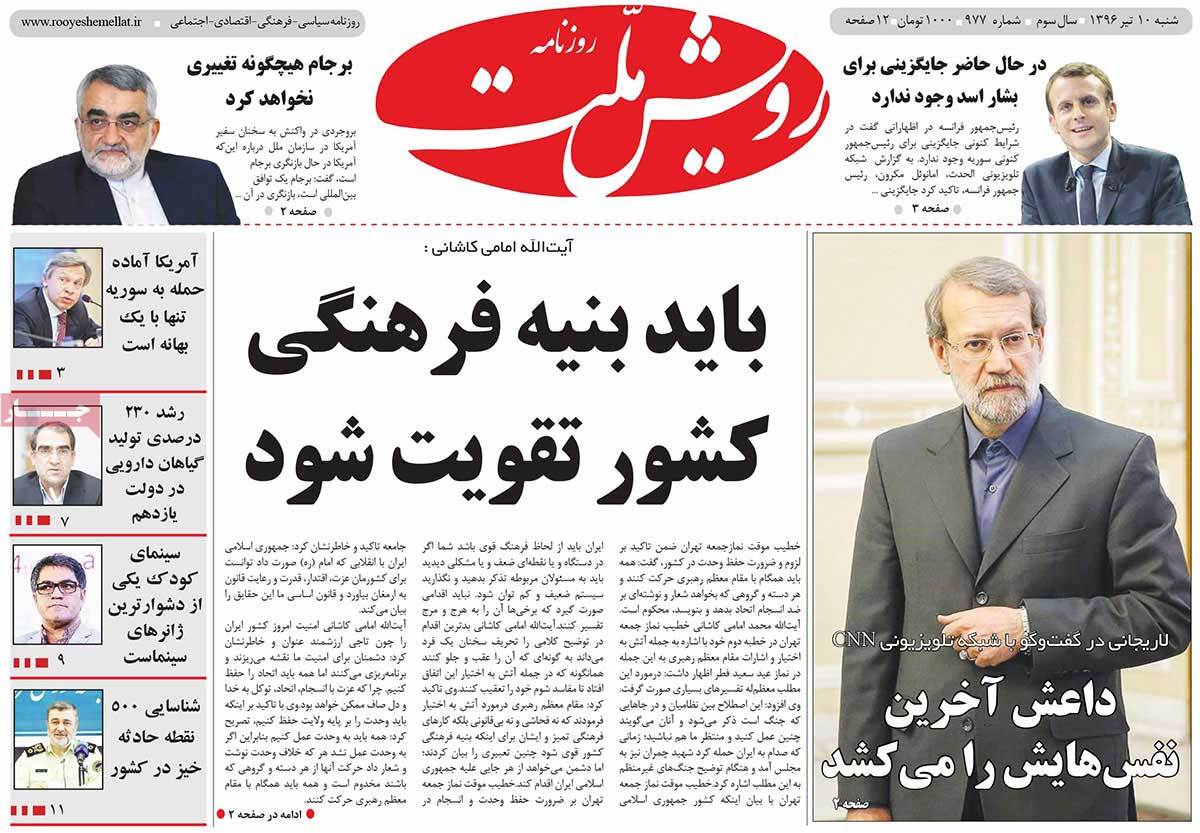
Rooyesh-e Mellat:

1- Larijani to CNN: ISIS Breathing Its Last Breaths

2- Senior MP: JCPOA Not to Undergo Any Changes

3- French President: No Alternative to Assad Right Now
A Look at Iranian Newspaper Front Pages on July 1 - royesh mellat


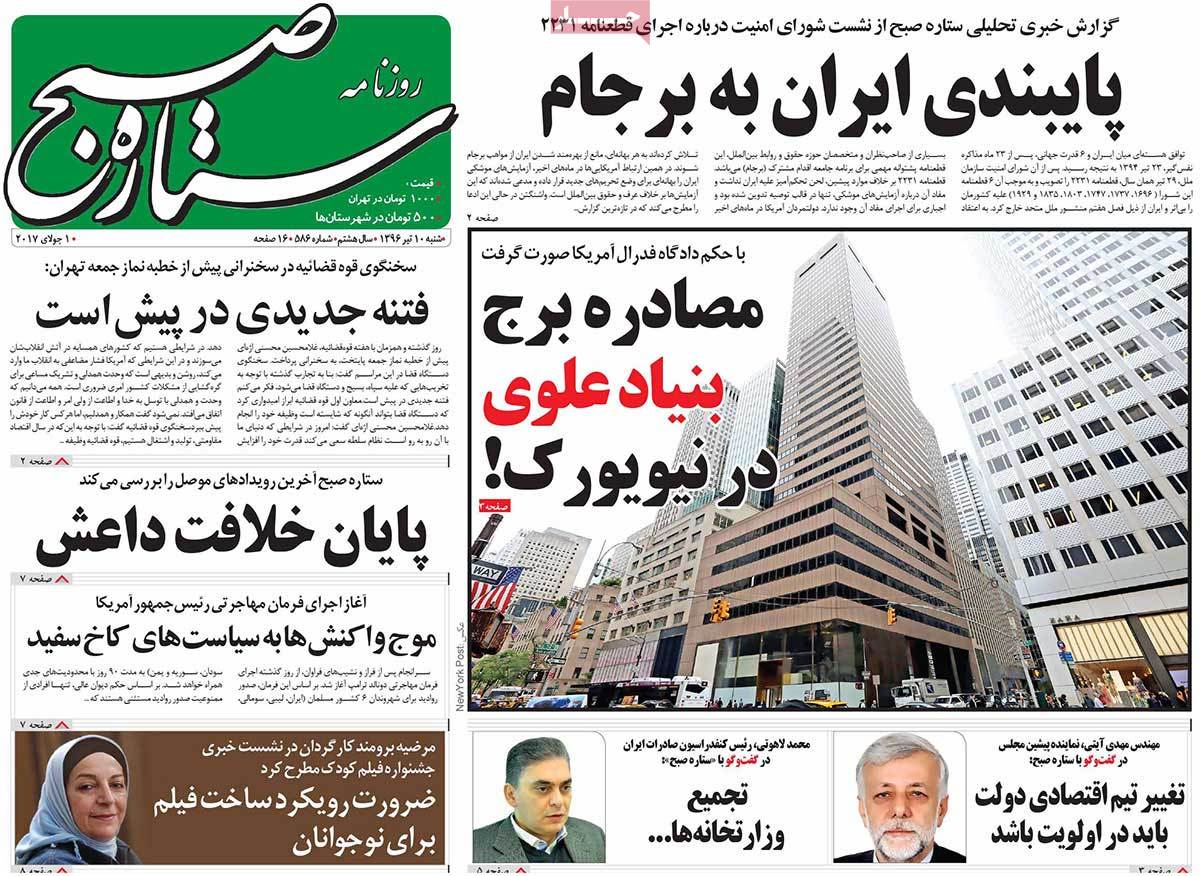
Setareh Sobh:

1- Alavi Foundation’s Tower in New York Seized by US after Court Ruling
A Look at Iranian Newspaper Front Pages on July 1 - setareh sobha


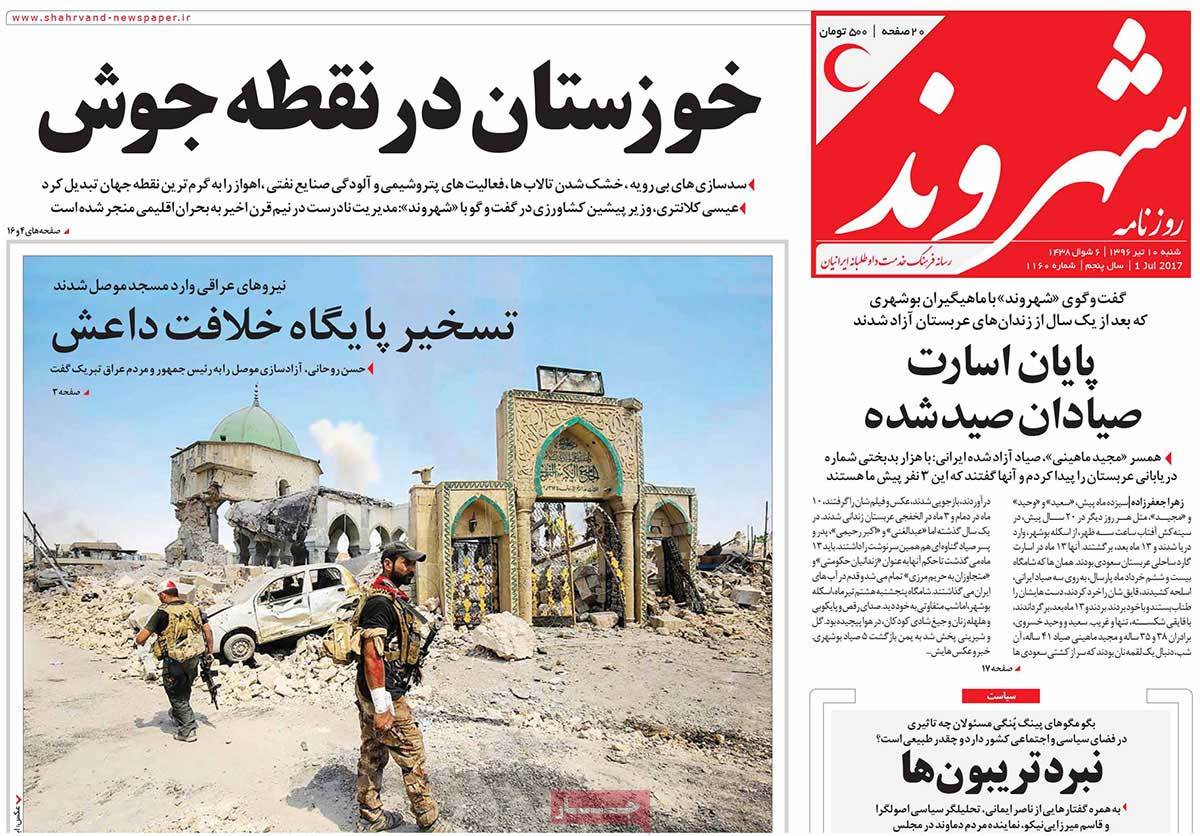
Shahrvand:

1- Khuzestan on Boiling Point

2- Iranian Fishermen Finally Released from Saudi Prisons
A Look at Iranian Newspaper Front Pages on July 1 - shahrvand


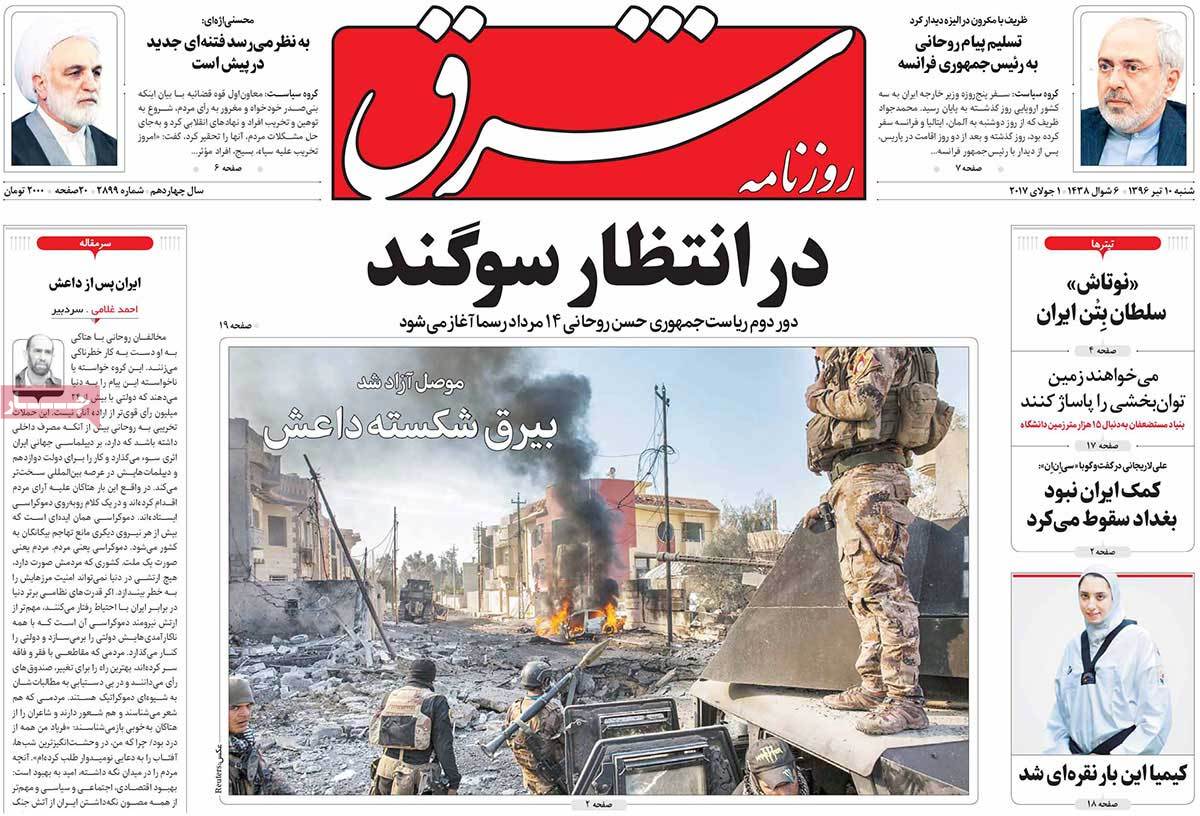
Shargh:

1- Waiting for Oath: Rouhani’s Second Term to Officially Begin on August 5

2- Iran after ISIS [Editorial]

3- ISIS’ Broken Banner: Mosul Liberated
A Look at Iranian Newspaper Front Pages on July 1 - shargh


Tejarat:

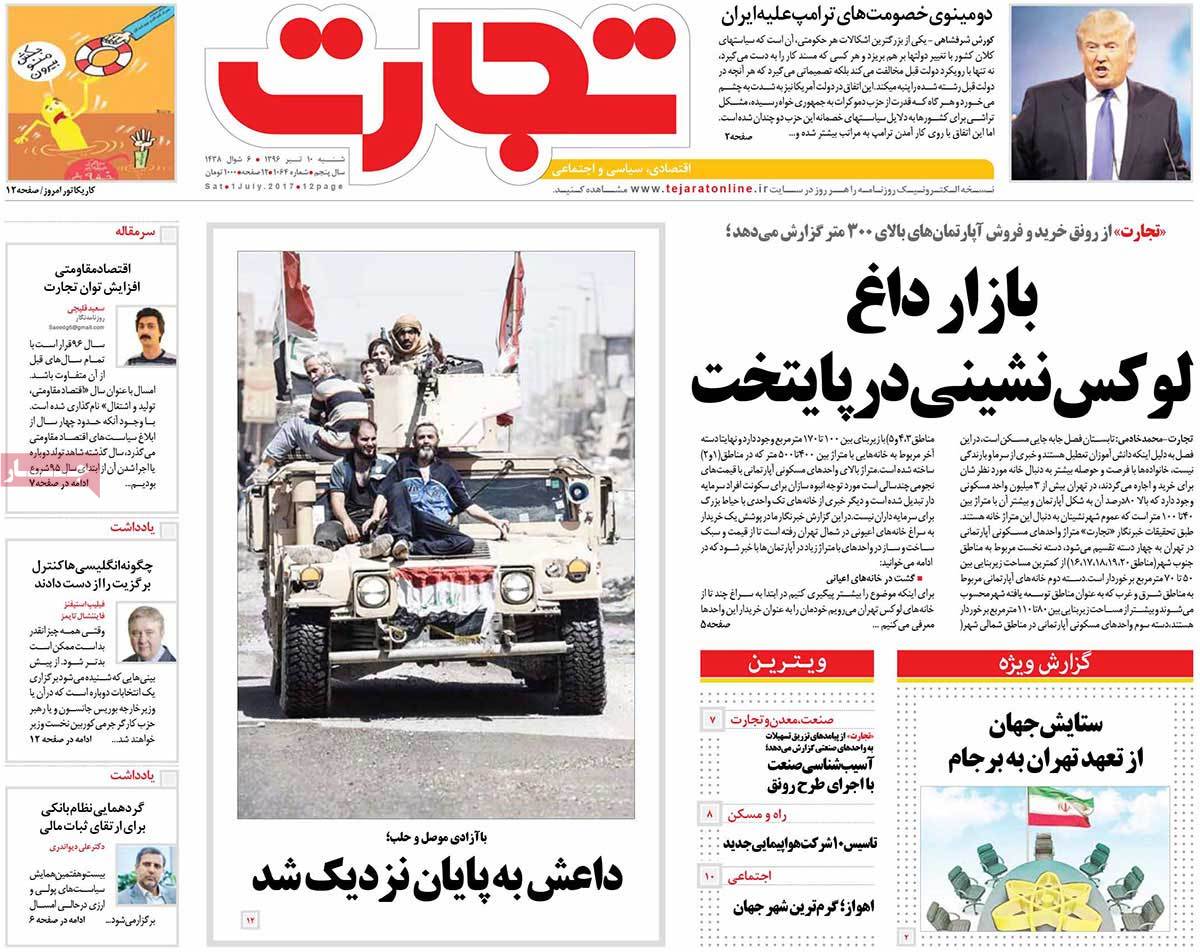
1- Flourishing Market of +300-Metre Luxury Houses in Tehran

2- ISIS Close to Its End after Aleppo, Mosul Liberation
A Look at Iranian Newspaper Front Pages on July 1 - tejarat

‘Iran Nuclear Deal Not to Undergo Any Changes’

Chairman of the Iranian Parliament’s National Security and Foreign Policy Commission Alaeddin Boroujerdi said the nuclear deal between Iran and world powers is an international deal and no single side is allowed to conduct a review of it without others’ consent.

He made the statements in reaction to the latest remarks of the US envoy to the UN, Nikki Haley, who said Washington was conducting a comprehensive review of the JCPOA.

“The government of Trump is inexperienced and doesn’t know that the JCPOA is an international deal signed between Iran and the six world powers,” he said, according to a Farsi report by ICANA.

The Iranian lawmaker went on saying, “We will respond accordingly to any move against Iran by the US administration and the Congress.”

He said the Iranian Parliament’s National Security and Foreign Policy Commission has already developed a plan on this issue and will offer it to the presiding board of the parliament this week.

“It goes without saying that the US can’t bully Iran,” he noted.

During the Thursday meeting of the United Nation Security Council, the US envoy slammed the UNSC for failing to take any action against Iran, which she claimed had “repeatedly and deliberately violated” sanctions imposed by the world body.

Tehran has likewise blamed US for preventing the accord’s full implementation.

Iran Congratulates Iraq on ISIS Defeat in Mosul

In a message on Friday, Foreign Ministry Spokesman Bahram Qassemi congratulated the Iraqi nation, government, the Shiite Marja’ and top clerics of all religions and sects, tribes, armed forces and volunteer popular forces on the heavy defeat sustained by ISIS in its self-proclaimed capital of Mosul.

The victory was achieved thanks to the resistance of the Iraqi nation and government as well as the courage shown by volunteer forces and the Iraqi Army, Qassemi noted.

The Iranian spokesman further expressed the wish that stability, security, peace and prosperity would be consolidated for the Iraqi people in a unified, democratic and coherent Iraq.

He also called for continuation of collective efforts in the region to eradicate the root causes of terrorism and its funding sources in Iraq and the entire Middle East.

Qassemi also voiced Iran’s readiness to help the regional nations and governments to completely eliminate the remnants of terrorists.

‘Multilateral Cooperation Facilitates Fight against Terror’
Ali Larijani -Jan Hamáček

It is regrettable that terrorism has already developed into a global plight, Larijani said, adding the establishment of multilateral relations can facilitate the regional states’ war on terror and drug trafficking.

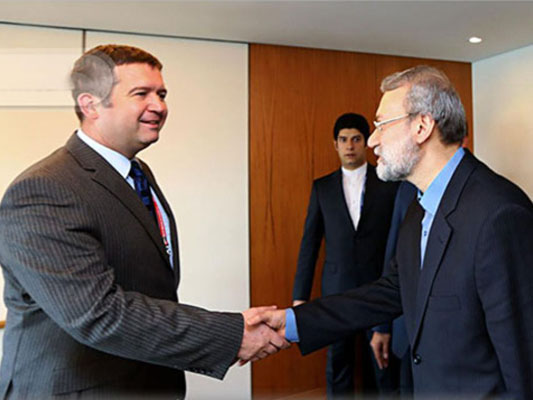
Speaking in a meeting with his Czech Republic counterpart Jan Hamáček, Larijani noted that the progress of terrorism is partly due to the behind-the-scene logistic support that the terrorists are receiving.

“The Islamic Republic of Iran has good experience in the war on terror, and has shared it with the Iraqi and Syrian officials to counter ISIS terrorists in their countries,” he added. 

Elsewhere in the meeting held on the sidelines of the Second Meeting of Parliament Speakers of Eurasian Countries in Seoul, he also expressed his thanks to Hamáček for extending the Czech Republic’s condolences to Iran over the latest terrorist attacks in Tehran claimed by ISIS.

Larijani said Iran and the Republic of Czech have historical relations and the Iranians’ attitude towards Czech Republic is positive.

“The two sides used to have mutual cooperation in truck production. Iran is now interested in developing cooperation with the European country in the field of energy,” he said.
The Iranian parliament speaker went on saying that establishing close cooperation in banking system is one of the main issues that can facilitate the two sides’ economic relations.
“Close cooperation will help the businessmen of Iran and some European countries establish new relations in the banking field. To this end, some good deals have been signed,” he said.
For his part, the Czech parliament speaker strongly condemned the recent terrorist attacks in Tehran. He also invited Larijani to have a visit to Prague and said the visit can pave the way for further cooperation between the two sides.
“Iran and Czech Republic have established their relations for about 90 years and I’m personally glad to take part in a ceremony to be held in Iran’s embassy in the Czech Republic to mark the anniversary of the bilateral relations’ establishment,” he said.

Hamáček also said the bilateral relations are growing day by day and the Czech companies are very interested in promoting cooperation with their Iranian counterparts.

“The Chambers of Commerce of the two sides are active and we are planning to raise our relations to the level of ambassadors in the near future,” he said.

Travel Ban Not to Keep Terrorists Out of US: Iran’s Larijani

Speaking in an exclusive interview with CNN, Speaker of Iran’s Parliament Ali Larijani argued that Trump’s travel ban is unlikely to work, because terrorists “seldom to never” enter a country under their own names or nationalities.

“President Trump and American officials are aware of this. The terrorists must be defeated at the source. Where are their sources? Where are they? They are in Afghanistan, in Syria, in Iraq,” he said.

He also lashed out at the Trump administration for putting Iran in the list of countries whose nationals cannot obtain the US visa, saying the Islamic Republic has led the fight against terrorism in the Middle East.

“Had we not assisted them, Baghdad would have been occupied by ISIS. It is with the help of Iran that ISIS is on its last breath in Iraq (and Syria),” Larijani said.

Larijani said “numerous Iranians” live in the United States, and called on the American administration to provide proof that any of them has been involved in terrorism.

“I have spoken about this before, so many Iranians live in the United States, study in the United States, engage in business in the United States, which one of them have engaged in terrorism?” he asked.

In addition to Trump’s travel ban, Larijani also criticized the ongoing boycott of Qatar by Saudi Arabia and its allies until a series of demands, including cutting ties with Iran, are met.

Larijani questioned whether Saudi Arabia had the right to “dictate” conditions to another independent nation.

“Is it logical, is it mature for one country to dictate to another and say you must do as I say? Well you must cease relations, for example, with Iran?” he said. “I do not believe that … the Saudis carry this sort of weight to say these sort of things.”

Saudi Arabia, the United Arab Emirates, Bahrain and Egypt sparked a rift with Qatar on June 5, accusing the country of supporting terrorism and destabilising the region.