Monday, December 29, 2025
Home Blog Page 3905

IAEA New JCPOA Report to Show Whether Agency Swayed by US

IAEA to Send Two Rapid Coronavirus Testing Devices to Iran: Envoy

Iran’s official news agency IRNA has, in a Farsi article, weighed in on the latest developments related to JCPOA, the deal signed between Iran and the six world powers over Tehran’s nuclear program. The highlights of the analytical piece follow:

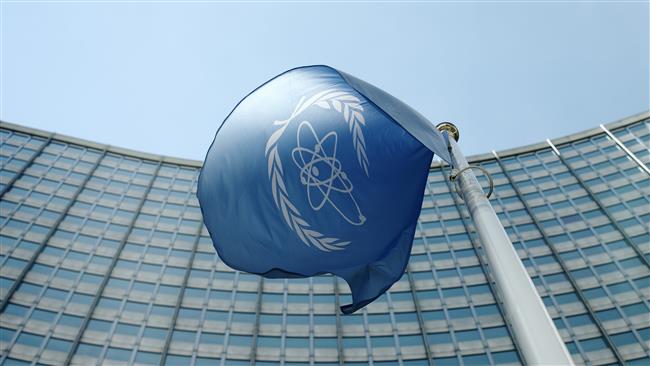
The eighth report on the JCPOA by the International Atomic Energy Agency (IAEA) likely to be published on August 31 will be a new touchstone of neutrality on the part of the UN nuclear agency.

This comes against the backdrop of a recent trip to Vienna by US Ambassador to the UN Nikki Haley and Iran’s warning about the adverse consequences of putting pressure on the IAEA.

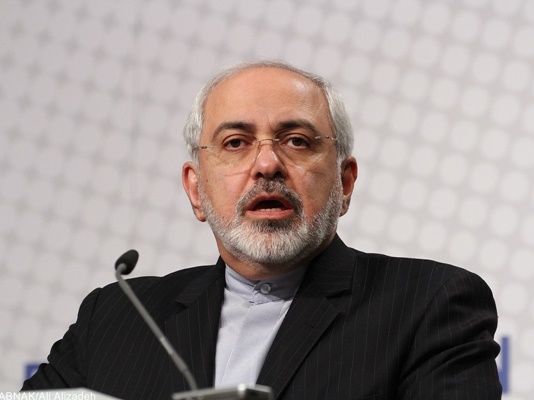
Haley recently travelled to the Austrian capital and met with IAEA Director General Yukiya Amano. Following the meeting, Iranian Foreign Minister Mohammad Javad Zarif, in a letter to Amano and EU Foreign Policy Chief Federica Mogherini, said, “The announced objective of Haley’s trip to Vienna raises serious concerns over a greater-than-ever violation of the letter and spirit of the JCPOA and UNSC Resolution 2231.”

In reaction to a statement by the US mission to IAEA, Iran’s mission to the UN nuclear watchdog warned against the adverse consequences of any illegal pressure on the agency.

“The Islamic Republic of Iran is well familiar with its duties and responsibilities as stipulated by the Nuclear Non-Proliferation Treaty (NPT), the IAEA’s Safeguards Agreement, the JCPOA and the Additional Protocol, has remained committed to those responsibilities, and will continue to do so,” said Iran’s mission to the IAEA.

However, it added, Iran will not allow any country to hijack these regulations to serve its own political interests.”

The statement by the Iranian mission also voiced content with the IAEA’s reports on Iran’s compliance with its obligations under the JCPOA, all of which prove Tehran has fully lived up to its commitments under the deal. The statement also highlights that Iran expects the IAEA chief, inspectors and experts to continue to professionally fulfil their duties and missions vis-à-vis the JCPOA.

IAEA Safeguarding “Pure Benefit” of Nuclear Verification System

Although Iran has had considerations regarding the UN nuclear agency’s reports, the IAEA’s reports on the JCPOA have, overall, been confirmed in terms of neutrality and technical matters. This time, too, given Iran’s transparent stances, the IAEA is unlikely to be swayed by the US pressure and mention points which would jeopardize the essence of the JCPOA and the verification system in Iran. The IAEA director general has also praised the JCPOA as a pure benefit for nuclear verification.

Anyway, this time, given the new US administration’s overt and covert pressures on the IAEA to inspect Iran’s military sites, there will be more sensitivity regarding the report.

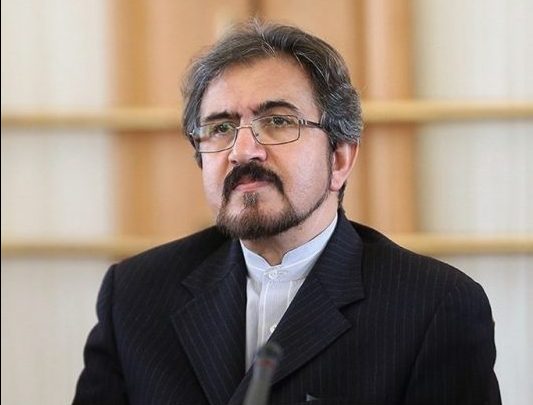
In the meantime, Iranian Foreign Ministry Spokesman Bahram Qassemi said in a press briefing that Iran will not allow others to enter sites which are off limits under the JCPOA, and that the IAEA’s inspections will definitely take place based on “our own domestic policies.”

Qassemi urged the IAEA to defend its independence and status against Washington’s illogical and unrealistic demands.

“We are confident that they cannot impose their demands. We have given the agency the necessary warnings and made the required recommendations, and we will continue the same approach in the future,” said Qassemi.

Therefore, we should wait for release of the IAEA’s new report to see to what extent the Agency has managed to maintain its independence in the face of Washington’s pressure.

As Iranian President Hassan Rouhani said in a televised interview on August 29, 2017, “Iran’s commitment to the world is clear; it is the regulations, not the US, that determine our relations with the IAEA; we won’t succumb to pressure and will engage with the Agency within the framework of regulations.”

Iranian Deputy FM, Syrian President Hold Talks in Damascus

Jaberi Ansari, who arrived in Damascus on August 30, discussed the latest developments in Syria and the region and the process of international talks on Syria peace with President Assad.

The Iranian diplomat, who is also the country’s top negotiator in Astana Process, briefed Assad on the process of diplomatic efforts made by Iran and its talks with various regional and international sides in relation to Syria.

Referring to the pace of incidents and developments, Jaberi Ansari also emphasized the need for continuous and close consultations between the two countries.

For his part, the Syrian president appreciated the support of the Islamic Republic of Iran’s Leader, nation, and government for Syria in the fight against terrorism.

Assad also touched upon the necessity of maintaining vigilance and providing coordination between Damascus and Tehran at the current stage.

During the meeting, the two sides also discussed the horizons ahead in addressing the Syrian crisis, especially in the context of Astana Process, by reviewing the latest political and filed developments.

Iranian Deputy FM, Syrian President Hold Talks in DamascusMeeting with Syrian FM Muallem

Later on Wednesday, Jaberi Ansari also held talks with Deputy Prime Minister and Foreign Minister of Syria, Walid Muallem.

During the meeting in Damascus, the Syrian Foreign Minister referred to the positive field developments in various parts of Syria, saying that these developments have made all the countries that were supporting the terrorists change their calculations.

In turn, Jaberi Ansari expressed satisfaction with the developments in Syria, the positive social atmosphere in the Arab country, the restoration of relative stability and the return of normal life to Damascus and other parts of the country.

He also said that it is necessary to take advantage of these developments in order to resolve the Syrian crisis.

Iran Calls for Int’l Action to Stop Ethnic Cleansing in Myanmar

“Global silence on continuing violence against Rohingya Muslims,” Foreign Minister Mohammad Javad Zarif said in a tweet on Wednesday.

“International action [is] crucial to prevent further ethnic cleansing,” Zarif went on to say, stressing that the United Nations “must rally” in this regard.

About 1,000 persecuted Rohingya Muslims from Myanmar’s Rakhine state have fled to neighboring Bangladesh after coming under fire from military soldiers.

Furthermore, the death toll from ongoing clashes between Myanmar’s troops and the so-called advocates of the persecuted Rohingya Muslims recently reached nearly 100.

Thousands of desperate Muslims recently entered Bangladesh, fleeing from intensified crackdown on the minority by Buddhist mobs and security forces over recent attacks on police outposts.

Yemen’s Army Attacks Abu Dhabi Using Ballistic Missile

The Yemeni TV channel Al Masirah quoted a Yemeni military official as saying that the Army has targeted Abu Dhabi using ballistic missiles.

The official declared that the missile has hit the target with a high precision.

Emirati officials have yet to comment on the attack.

The UAE is a member of a Saudi-led coalition which has been waging an air campaign against Yemen since March 2015.

The war was launched in an attempt to eliminate the Houthi Ansarullah movement and reinstall former Yemeni President Abd Rabbuh Mansur Hadi, who resigned in 2014 and fled to Riyadh before returning to Aden.

The Saudi-led war, which has been accompanied by a naval and aerial blockade on Yemen, has so far killed over 12,000 people in the impoverished state, left 70 percent of the country’s 27 million population in desperate need of humanitarian aid, and caused the worst cholera outbreak in the world there.


Serbia Agrees to Cancel Visa Regime for Iranian Citizens

A Farsi report by IRNA has quoted Serbian government’s website as announcing that the European country has approved the cancellation of visa requirements for Iranian and Indian citizens during a meeting on August 4.

As a result, tourists as well as investors from both countries of Iran and India can enter the territory of Serbia without any problems.

The government’s website has cited improvements in business ties and the promotion of bilateral relations with Tehran and Delhi as the main achievements of such a decision.

According to IRNA, the new Serbian ambassador to Iran, Dragan Todorovic, recently presented his credentials to Iranian President Hassan Rouhani and conveyed the congratulatory message of his country’s president on the re-election of Rouhani, saying that the Serbian government is ready to strengthen its all-inclusive cooperation with Iran and that it has taken early steps to establish a banking relation with the Islamic Republic.

The new Serbian ambassador to Tehran also submitted the official invitation of the president of his country to Rouhani in which he had asked the Iranian president to travel to Serbia. He also said that the Serbian parliament would look into the visa waiver for Iranian nationals in the near future.

Expressionist Artist Holds Exhibition in Memory of Late Wife

After losing his wife last August, Kiasat created 25 expressionist works focused on human suffering, with more than 20 of them on show in his ongoing exhibition.

Kiasat was born in 1948 in northwestern city of Tabriz. He is a member of the board of the Visual Arts Society of Tabriz.

He is teaching at several universities in Tabriz. He has held more than 50 exhibitions in Iran, Turkey, South Korea, Bulgaria, Austria, Yugoslavia, Japan, Germany, Italy and Belgium.

Kiasat’s gallery has been open to visitors at Sarban Gallery in Tehran as of Friday, August 18.

Here are ISNA’s photos of the exhibition:

Iran Urges UAE to End Destructive Regional Policies

“Unfortunately, Abu Dhabi in recent years has created many problems in the region by adopting adventurous policies beyond its capacities,” Qassemi said in a Wednesday statement.

The UAE’s participation in Yemen war and the cruel bloodshed there, its efforts to occupy parts of Yemen’s territories, its intervention in Libya, and its effort to provoke regional governments to blockade and boycott other countries are a few examples of such policies, the Iranian spokesman added.

“The UAE is required to end such destructive, inefficient, and provocative policies,” Qassemi added.

His statement came after UAE Foreign Minister Sheikh Abdullah bin Zayed Al Nahyan urged Iran and Turkey on Tuesday to end what it called their “colonial” actions in Syria.

“If Iran and Turkey continue the same historical, colonial and competitive behaviour and perspectives between them in Arab affairs, we will continue in this situation not just in Syria today but tomorrow in some other country,” Sheikh Abdullah said.

Bolton’s Plan to Exit Iran Nuclear Deal to Isolate US: FM Zarif

“I have read Bolton’s plan, which he apparently has failed to directly send to the White House; it would definitely (bring about) a major defeat for the United States, and will make America more isolated in the international arena,” Zarif said in remarks released on Wednesday.

“This is not the first time that Bolton is present in this field,” he said, adding that Bolton’s policy was followed by the US about 15 years ago, and the Americans are well aware of the result.

“If his policy had been successful, the US would not have needed to come to the negotiating table and reach an agreement with Iran 10 years (after pursuing the policy),” the Iranian top diplomat went on to say.

According to media reports, Bolton has proposed that the US administration “announce that it is abrogating the Joint Comprehensive Plan of Action (JCPOA) due to significant Iranian violations, Iran’s unacceptable international conduct more broadly, and because the JCPOA threatens American national-security interests.”

Iran and the Group 5+1 (Russia, China, US, Britain, France, and Germany) on July 14, 2015, reached a conclusion over the text of the JCPOA.

The accord took effect in January 2016 and was supposed to terminate all nuclear-related sanctions against Iran all at once, but its implementation has been hampered mainly due to US policies.

‘US Can’t Afford Costs of Fresh War in Afghanistan’

Senior Iranian parliamentarian Hossein Naqavi Hosseini has weighed in on the consequences of the US enhanced military presence in Afghanistan.

“A US military buildup in Afghanistan will fuel tensions and disputes inside the United States because the US cannot afford to pay the heavy price for another war,” said Naqavi Hosseini, the spokesman for the Iranian Parliament’s National Security and Foreign Policy Commission.

“An increase in the number of US troops in Afghanistan will have repercussions for the regional countries and stoke terrorist violence,” the MP noted, according to a Farsi report by ICANA.

He said US President Donald Trump has come down with “paradoxes” which will be problematic for the US and the president himself.

“In the 2016 US elections, Trump had claimed that the US shouldn’t suffer the expenses of war and lose more troops in US wars overseas anymore, but today he seeks to expand Washington’s military presence in Afghanistan.”

“Today, we are witnessing that Trump is challenging Obama’s policies. Trump asks why the US should not have a military presence in Iraq and Afghanistan. This is a clear sign of the US president’s paradox.”

“Paradoxes in Trump’s foreign policy is something which has more extensive dimensions inside the US,” the legislator said.

Iran Reviewing Bill to Protect Women against Violence

Pooran Valavioun, the Iranian Judiciary’s advisor on women and family affairs, touched upon a bill on protecting women against violence, saying, “The issue is being studied at the Judiciary.”

“Numerous proposals have been submitted to the parliament by the Judiciary, but unfortunately they have been shelved, and in many cases, motions and bills are changing hands between different legal authorities.”

She then underlined the need to enforce law pertaining to women and family affairs, according to a Farsi report by ISNA.

“If even 20% of the [provisions of] the Constitution related to women and the family are implemented, many of the problems in this domain will be solved,” she noted.

“This is while a lot of problems exist in this area, and there are a lot of laws which are not enforced,” she noted.

Valavioun said policies should be made and the existing potential should be tapped to solve the problems in that domain.

The official then described the activity of the National Women and Family Commission as an important step, but at the same time complained why the commission had not held a single meeting during the first four-year tenure of Rouhani’s administration.