Saturday, May 2, 2026
Home Blog Page 375

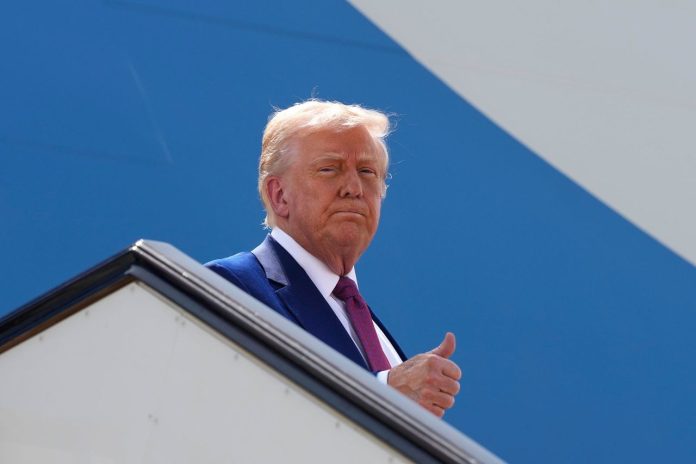
Trump vows sanctions on Russia if peace negotiations fail, claims Putin is ‘tired’ of war

Donald Trump

“Honestly, I will (impose sanctions), if we’re not gonna make a deal,” Trump told Fox News’ Bret Baier in an interview.

“This is turkey time, we’re talking turkey, and we’ll see what happens. This would be crushing for Russia because they’re having a hard time now with the economy, oil prices are low.”

Trump’s comments come as peace talks in Istanbul ended with no breakthrough, and Russia once again issued sweeping demands, including Ukraine’s adoption of neutral status, dropping claims for war reparations from Moscow and the recognition of its loss of Crimea and four occupied regions none of which Russia fully controls.

European leaders, who have been working in coordination with Washington to pressure the Kremlin, voiced frustration with Russia’s posture and confusion over Trump’s shifting signals in recent weeks. While the U.S. and Europe had appeared united in pushing for a 30-day unconditional ceasefire, Trump has since emphasized the need for direct engagement with Putin and has been non-committal on new sanctions.

“I always felt there can’t be a meeting without me because I don’t think a deal’s going to get through… There’s a lot of hatred on both sides,: Trump said, reiterating that he intends to meet Putin soon.

“I have a very good relationship with Putin. I think we’ll make a deal. We have to get together, and I think we’ll probably schedule it.”

He also claimed that Putin is ready to negotiate.

“Putin is at the table,” Trump added, although he was not physically present during the talks. “He wanted this meeting… I think Putin is tired of this whole thing. And he’s not looking good, and he wants to look good.”

Asked whether Putin was the main obstacle to peace, Trump instead pointed to President Volodymyr Zelensky.

“Look, I had a really rough session with Zelensky. He didn’t make it easy and I always said that he doesn’t have the cards (to win)… you are dealing with the massive army,” he stated.

Ukraine continues to insist on a ceasefire, supported by the U.S. and Europe, saying that a halt to active warfare must come before any real peace talks are possible. Russia has so far rejected a truce four times — on March 11, March 25, May 11 and the most recent one on May 16 in Istanbul.

US seeking to relocate up to 1 million Palestinians from Gaza to Libya: Report

Gaza War

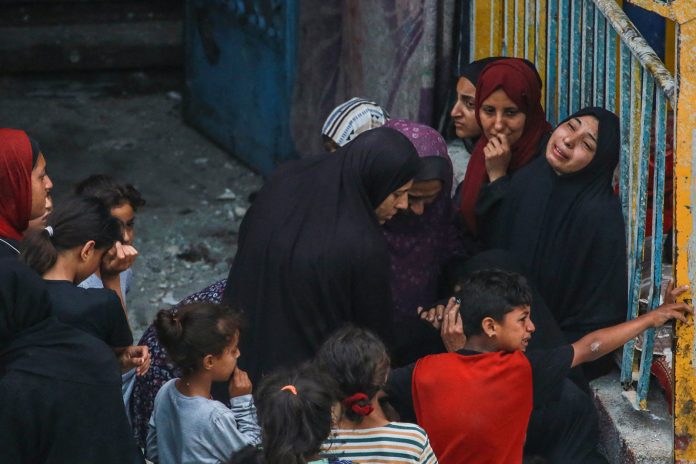
The plan would see up to 1 million Palestinians moved to the North African country, NBC News reported, citing five people familiar with the plan. Two of those individuals said the proposal has progressed far enough that it has been discussed directly with Libya’s leadership.

The US has offered to unfreeze billions of dollars in frozen Libyan funds if the country agrees to resettle the displaced Palestinians, said three of the sources. They said the Israeli government has been kept abreast of the talks, and emphasized that no final agreement has been reached.

Trump said Thursday that the US should “take” possession of Gaza and turn it a “freedom zone.”

“I have concepts for Gaza that I think are very good, make it a freedom zone, let the United States get involved and make it just a freedom zone. Have a real freedom zone, because it seems that Gaza, every time, every 10 years, it happens, and more than that. It really happens all throughout. It never solved the Gaza problem,” he told reporters in Qatar before departing for the United Arab Emirates, the final stop on his Persian Gulf tour.

Trump stated that “if it’s necessary, I think I’d be proud to have the United States have it, take it, make it a freedom zone.”

“Let some good things happen. Put people in homes where they can be safe, and Hamas is going to have to be dealt with,” he added.

A former US official told NBC news that the number of Palestinians who would voluntarily leave Gaza remains uncertain and said officials are contemplating offering financial incentives, including free housing and a stipend, to get them to relocate.

But there are significant logistical and financial challenges associated with the plan. Libya has remained in turmoil since 2011, when longtime ruler Muammar Gaddafi was ousted after four decades in power.

Armed clashes erupted again this week in the capital city of Tripoli, but a ceasefire was brokered Wednesday that ended two days of fighting. Attacks began Monday with the death of Abdel Ghani al-Kikli, the former head of the Stability Support Apparatus affiliated with Libya’s Presidential Council.

President Pezeshkian says Iran favors negotiation

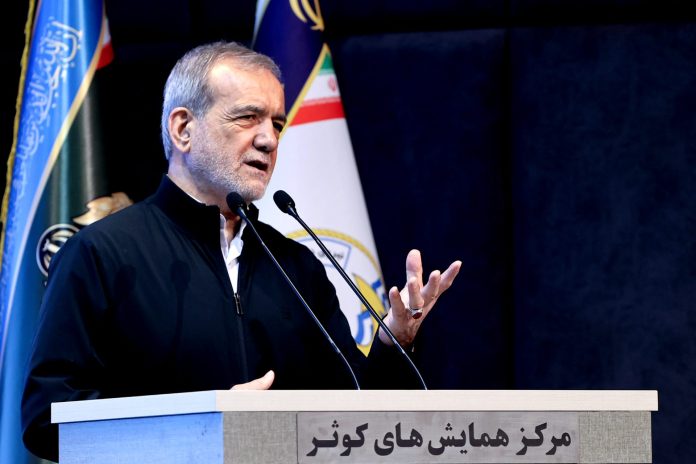
President Pezeshkian made these remarks on Saturday morning during a ceremony marking the second anniversary of the return of the 86th Naval Fleet of the Islamic Republic of Iran Army.

Referring to the indirect nuclear negotiations between Iran and the US, he stated: “We are not seeking war; we are open to dialogue and negotiation. However, we do not fear threats, and we will never retreat from our legal rights.”

President Pezeshkian also addressed recent remarks by the US president during his visit to regional countries, saying: “On one hand, he speaks of peace and stability, while on the other, he threatens others with the most advanced tools of mass killing. His contradictory statements simultaneously send messages of peace, violence, and insecurity.”

The President of the Islamic Republic added that no one except Trump himself believes his hostile rhetoric against the Iranian nation.

He further stressed that the Islamic Republic of Iran continues to strengthen brotherhood and friendship with regional countries and neighbors more than ever.

In another part of his speech, Pezeshkian emphasized the importance of national unity and solidarity, stating: “By avoiding division and discord, and through the wisdom of the Supreme Leader, we can overcome challenges and steer the country toward development and progress.”

Iran’s Leader slams Trump’s peace rhetoric as ‘shameful lie’

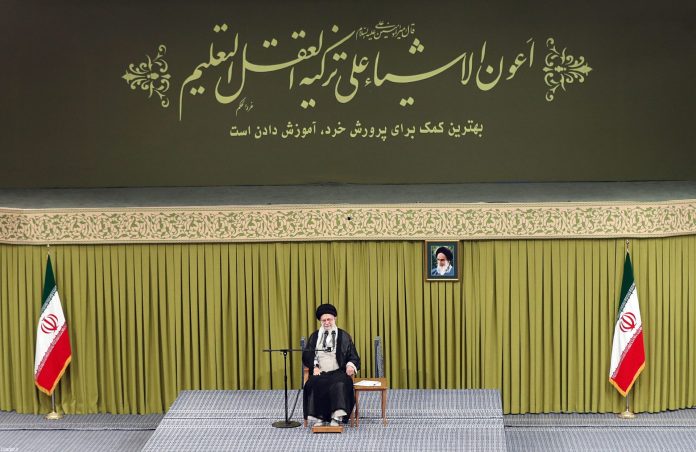
Speaking during a meeting with educators from across the country on Saturday, Ayatollah Khamenei described Trump’s statements during his recent regional visit as “beneath response” and “a source of shame for both the speaker and the American nation.”

“He claimed he wants to use power to create peace. That is a lie. When have they ever used power for peace?” the Leader asked. “They use these ten-ton bombs to give the Zionist regime a chance to drop them on the children of Gaza, hospitals, people’s homes, in Lebanon, and everywhere else.”

Ayatollah Khamenei added that while power can be used for peace and security, the US has used its might to deliver deadly weapons to allies like Israel, leading to civilian deaths in Gaza, Lebanon, and other conflict zones.

The Leader pointed out Iran’s stance, stating, “It is precisely for this reason that, to the dismay of our enemies, we will continue to strengthen our national power every day, God willing.”

Israel anxious about Trump striking a quick nuclear deal with Iran: NBC News

Trump Netanyahu

As President Donald Trump hopscotched around the Middle East this week, he was the star of elaborate ceremonies, announced new U.S. policies and unveiled billions of dollars in new economic partnerships.

He even visited a mosque, remarking on the pride for he felt for “my friends” as he took in its beauty.

“This is an incredible culture,” Trump said.

But one omission on the trip became more glaring with each stop: Israel.

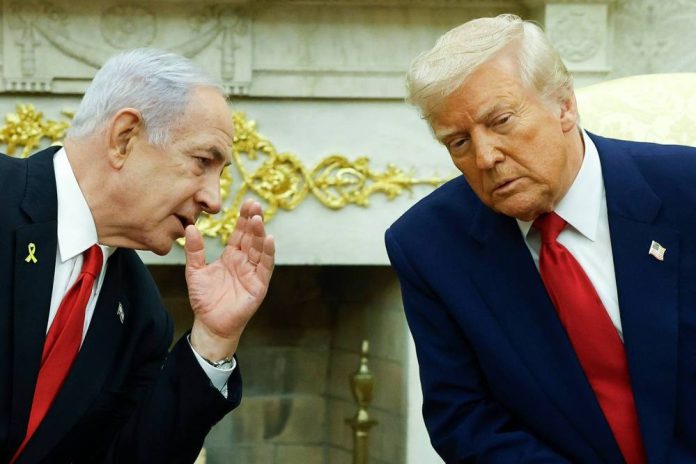
Tensions between Trump and Israeli Prime Minister Benjamin Netanyahu were already bubbling up before the president spent the week visiting three of America’s key Arab allies: Saudi Arabia, Qatar and the United Arab Emirates.

By the end of the trip on Friday, Trump seemed to put further strain on the relationship. He had spent the past few days meeting with Syria’s new leader — a former al Qaeda leader the U.S. had put a $10 million bounty on — and announced he was lifting sanctions on the country in a move Israel opposed but one that Crown Prince Mohammed bin Salman of Saudi Arabia had urged the president to take.

Trump told reporters he had discussed the sanctions decision with Netanyahu, framing it as widely supported by others.

“I think it’s been very popular, certainly in the Middle East,” Trump stated. He also cited conversations with bin Salman and Turkey’s Recep Tayyip Erdogan who, he claimed, saw the move as critical to its chance of survival as a country.

A day after promising to lift the sanctions, Trump praised Syrian President Ahmed al-Sharaa as a “young, attractive guy — tough guy,” and urged the former rebel fighter to join the Abraham Accords — the president’s signature foreign policy achievement from his first term that normalized ties between Israel and several Arab states.

During the trip, Trump also leaned into the notion of a deal with Iran being within striking distance, without putting forward any details to assuage some of Israel’s concerns. And on the eve of the president’s trip, his administration announced it had cut a unilateral deal with Hamas, the U.S.-designated terrorist organization that attacked Israel on Oct. 7, 2023, to secure the release of the last living American hostage in Gaza.

“Hopefully this is the first of those final steps necessary to end this brutal conflict,” Trump said of the release of Edan Alexander. He added on Friday that “we’re going to find out pretty soon” if Israel is able to free the nearly two dozen hostages believed to be alive in Gaza.

Netanyahu, meanwhile, bombed Gaza during Trump’s trip to the region, killing hundreds of people, according to local health authorities.

Asked about Israel’s plans for expanding the war in Gaza, as he pushes for a ceasefire, Trump struck a measured tone.

“I think a lot of good things are going to happen over the next month, and we’re going to see. We have to help also out the Palestinians,” Trump stressed, adding, “You know, a lot of people are starving on Gaza, so we have to look at both sides.”

Even so, Israel is increasingly anxious about Trump striking a quick nuclear deal with Iran and Arab leaders shaping the president’s thinking, one person familiar with the dynamic between Trump and Netanyahu noted.

“The trip hasn’t so much put distance between Trump and Netanyahu as it has exposed it,” this person added.

Trump, speaking to reporters, dismissed the notion that his trip marginalized America’s closest ally in the region. He stated on Wednesday that the U.S. having a strong relationship with Arab leaders is “very good for Israel.”

Across four breakneck days of deal-making, Arab leaders showed their ability to provide Trump with tangible economic wins he can showcase overseas as benefiting Americans back home, as well as the kind of warm welcome that resonates with the president.

“The job they’ve done in a fairly short period of time is just outstanding. They’re great people. Great leaders. Three great leaders,” Trump told reporters Friday as he headed back to Washington, D.C.

“And the respect shown to our country was incredible. Because nobody is treated like that.”

Trump’s relationship with Netanyahu, by contrast, is largely focused on national security concerns, from Iran to the war in Gaza to the shifting dynamics in Syria.

So far, Israel has largely kept those concerns behind the scenes — which has not been the case with previous presidents, specifically Barack Obama and Joe Biden, even as they vowed to protect America’s “unbreakable bond” with Israel. And the U.S. continues to strongly support Israel, with Trump sending military equipment the Biden administration had paused.

In a statement, National Security Council spokesman James Hewitt described Trump as Israel’s staunchest ally in its history.

“Israel has had no better friend in its history than President Trump,” Hewitt said, stating, “We continue to work closely with our ally Israel to ensure remaining hostages in Gaza are freed, Iran never obtains a nuclear weapon, and to strengthen regional security in the Middle East.”

Hewitt added, “As he has repeatedly stated in his first and second terms, the President is committed to ensuring Iran never obtains a nuclear weapon.”

As for where the dynamic between Trump and Netanyahu goes next, one ally of the president made the case that deepening ties with Arab leaders will ultimately protect Israel because of its close relationship with the U.S. At the same time, the ally noted Trump’s characteristic unpredictability, saying, “Trump does what Trump does.”

‘Time to increase pressure’ on Putin: Zelensky, European leaders speak with Trump following Istanbul peace talks

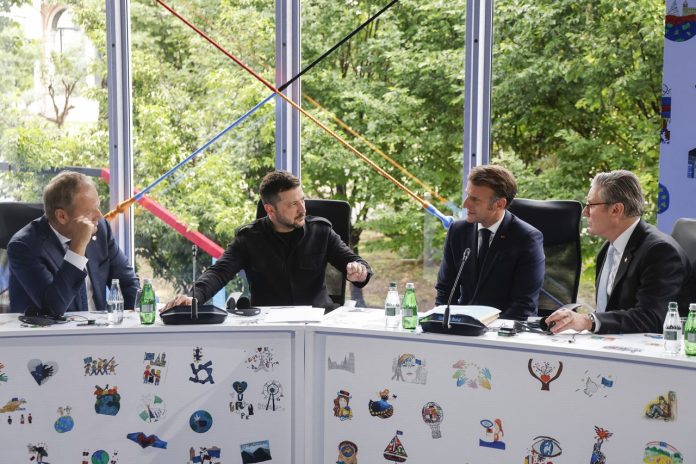
Zelensky European Leaders

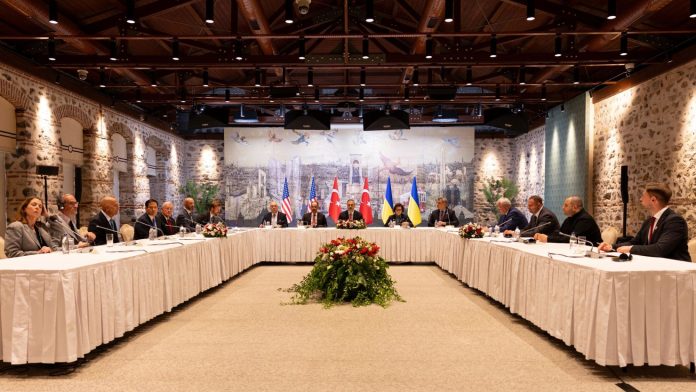
The conversation took place shortly after the conclusion of the Russia-Ukraine peace talks in Istanbul, which ended with little progress beyond an agreement on prisoner exchange.

French President Emmanuel Macron, German Chancellor Friedrich Merz, British Prime Minister Keir Starmer, and Polish Prime Minister Donald Tusk joined Zelensky during the call.

“Ukraine is ready to take the fastest possible steps for real peace, and it is important that the world holds strong positions,” Zelensky wrote.

“If the Russians refuse a complete and unconditional stop to the fire and killings, there must be strong sanctions. Pressure on Russia must be maintained until Russia is ready to end the war.”

Soon after, Polish Prime Minister Donald Tusk echoed the condemnation of Russia’s unwillingness to stop the fighting.

“The Russians in Istanbul have de facto broken off negotiations and refused to cease fire,” Tusk wrote on X. “Time to increase the pressure.”

Following the call, Starmer said that Russia’s negotiation position remained clearly unacceptable, noting that this was not the first instance of such a situation.

“We just had a meeting with President Zelensky and then a phone call with President Trump to discuss the developments in the negotiations today,” Sky News quoted the British prime minister as saying.

“So as a result of that meeting with President Zelensky and that call with President Trump, we are now closely aligning our responses and will continue to do so.”

Macron also said it was “unacceptable” that Russia again ignored a European and US call for a ceasefire in Ukraine.

It is “unacceptable that Russia and President Putin have not responded for a second time to the demands made by the Americans, supported by Ukraine and the Europeans,” Macron stated.

He was speaking alongside the leaders of the UK, Germany and Poland in the Albanian capital Tirana, after a call with Donald Trump.

In a post on X, Macron accused Russia of not wanting peace and “merely trying to buy time by continuing the war.”

No further details were provided about the content or duration of the call.

After Moscow proposed to hold peace talks in Turkey this week, Zelensky agreed and invited Russian President Vladimir Putin for a face-to-face meeting. The Russian leader declined to attend and appointed his aide, Vladimir Medinsky, to lead the talks.

The Russian delegation included deputy ministers and lower-level aides and excluded top officials like Foreign Minister Sergey Lavrov.

Zelensky commented that Moscow has dispatched a “sham delegation,” while Western officials presented the move as an indication that Putin is not serious about peace efforts.

A source in the Ukrainian President’s Office confirmed to the Kyiv Independent that Moscow’s delegation insisted that Ukraine retreat from Donetsk, Luhansk, Zaporizhzhia, and Kherson Oblasts, despite Russia not controlling any of them in their entirety.

The Kremlin illegally declared the annexation of the four oblasts following sham referenda in late 2022, incorporating them into Russia’s constitution — a move that holds no weight internationally.

In one positive development to come out of the talks, Russia and Ukraine reached an agreement for the exchange of prisoners of war (POWs) on a 1,000-for-1,000 basis, Defense Minister Rustem Umerov, who was leading Ukraine’s delegation, told reporters after the talks on May 16.

Iran has received no written US proposal: FM

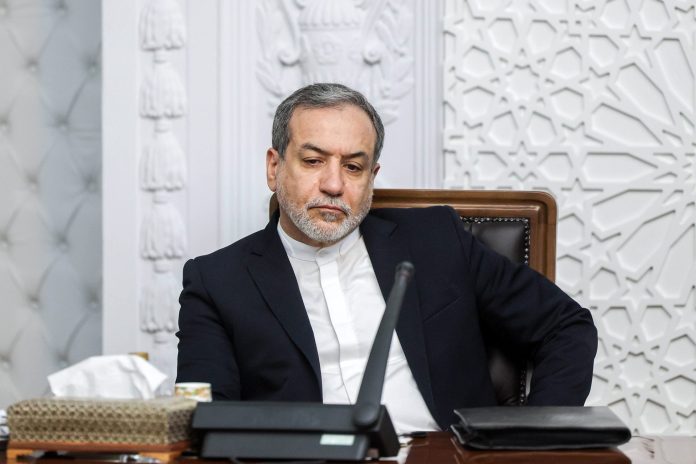
Abbas Araghchi

“Iran has not received any written proposal from the United States, whether directly or indirectly,” Araghchi said in a post on his X account on Friday.

The post comes after US President Donald Trump claimed that Iran had received an alleged proposal from his administration and cautioned about what he referred to as Tehran’s not heeding the urgency of a response.

“Yeah they have a proposal, but more importantly, they know they have to move quickly or something bad, something bad is going to happen,” Trump told reporters.

In his post, Araghchi stated that Iran and the world continue to receive “confusing and contradictory” messaging.

“Iran nonetheless remains determined and straightforward: Respect our rights and terminate your sanctions, and we have a deal,” the top Iranian diplomat added.

Throughout his previous tenure as the US president from 2017 to 2021, and his incumbency now, Trump has rarely abandoned his adversarial language concerning Iran.

He has maintained the discourse, although the two sides have been engaged in indirect talks since April.

Araghchi also responded to reports about Iran’s acceptance of temporary restrictions on how much uranium it enriches and to what level.

“Mark my words: there is no scenario in which Iran abandons its hard-earned right to enrichment for peaceful purposes.”

Enrichment, the Iranian foreign minister stated, is a right afforded to all other signatories to the Non-Proliferation Treaty (NPT), too.

Araghchi noted the great Iranian nation has shown its “power and fortitude” in the face of those who have attempted imposition.

“We ALWAYS welcome dialogue based on mutual respect and ALWAYS reject any diktat.”

Iranian authorities have unexceptionally rejected Washington’s intimidatory approach and warned about its contradiction with diplomacy.

On May 15, Araghchi said Iran would not dismantle any of its nuclear facilities — as repeatedly pursued by the US and some of its allies.

The top diplomat also asserted the nation’s right to enrich uranium, adding, “Defending the rights of the Iranian people in the nuclear field, including enrichment, is one of these principles and rights of the people that we will not compromise on.”

Iran has held four rounds of indirect talks with the US on a replacement for the 2015 deal, formally known as the Joint Comprehensive Plan of Action (JCPOA), which have been generally described as positive by the two sides.

In 2018, Trump walked out of the landmark agreement that gave it sanctions relief in return for confidence-building restrictions on its nuclear activities.

Iran now wants guarantees that the US will remove all the sanctions and won’t again unilaterally derail the new deal.

UN refutes US-backed Gaza aid plan

Gaza War

“This particular distribution plan does not accord with our basic principles, including those of impartiality, neutrality, independence, and we will not be participating in this,” deputy UN spokesperson Farhan Haq told reporters.

The US-backed Gaza Humanitarian Foundation will start work in Gaza by the end of May under a heavily criticised aid plan that the UN aid chief Tom Fletcher described as a “fig leaf for further violence and displacement” of Palestinians in Gaza.

Speaking to reporters in Antalya, Turkiye, US Secretary of State Marco Rubio acknowledged the criticisms and said Washington was open to any alternative plan to get aid to civilians “without Hamas being able to steal it”.

“We’re not immune or in any way insensitive to the suffering of the people of Gaza, and I know that there’s opportunities here to provide aid for them,” Rubio stated after speaking with Israeli Prime Minister Benjamin Netanyahu.

“There are criticisms of that plan. We’re open to an alternative if someone has a better one,” he added.

The UN Office for the Coordination of Humanitarian Affairs announced on Thursday that the UN “has a solid and principled operational plan to deliver humanitarian aid and life-saving services at scale and immediately across the Gaza Strip”.

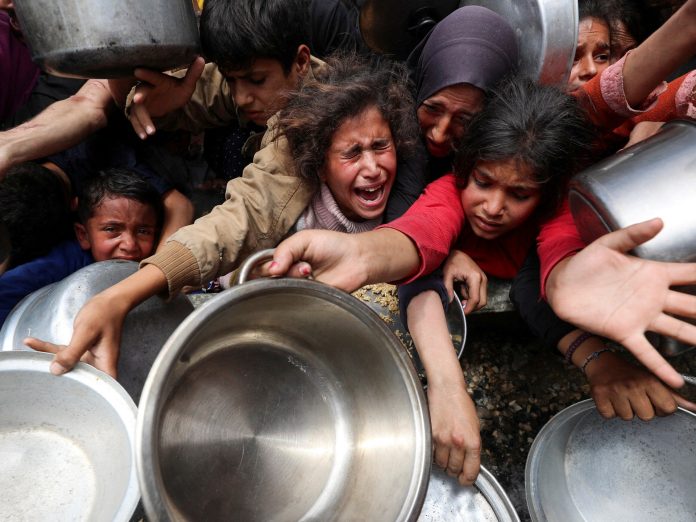
A report by the Integrated Food Security Phase Classification initiative released on Monday said the Gaza Strip “is still confronted with a critical risk of famine” after more than a year and a half of devastating war, with the vast majority of its approximately 2.1 million people at severe risk.

In a bid to address some concerns, the Gaza Humanitarian Foundation has asked Israel to expand an initial limited number of so-called secure aid distribution sites in Gaza’s south to the north within 30 days. It has also asked Israel to let the UN and others resume aid deliveries now until it is set up.

Israel and the US have urged the UN and aid groups to cooperate and work with the foundation.

It is unclear how the foundation will be funded. A Department of State spokesperson said no US government funding would go to the foundation.

A fact sheet on the foundation, circulating among the aid community last week, listed respected former UN World Food Programme chief David Beasley as a potential adviser. However, a source familiar with the effort said Beasley was not currently involved.

Russia, Ukraine agree to exchange 1,000 POWs from each side

Russia and Ukraine agreed to exchange 1,000 prisoners of war from each side, Defence Minister Rustem Umerov told Ukrainian TV on Friday as talks in Istanbul ended.

If the exchange goes ahead, it would be the biggest prisoner swap in more than three years since Russia’s invasion of Ukraine in February 2022.

Russia also announced on Friday that the first direct talks with Ukraine in more than three years had yielded a deal to swap 1,000 prisoners of war each soon and to resume talks after each side had set out its vision for a future ceasefire.

In a short statement shown live on Russian state TV after the negotiations in Istanbul had wrapped up, Vladimir Medinsky, the head of Russia’s delegation, said that Moscow was satisfied with progress made and was ready to keep talking to Kyiv.

“In general, we are satisfied with the result and are ready to continue contacts. In the coming days, there will be a massive thousand-for-thousand prisoner exchange,” said Medinsky.

That would be one of the largest exchanges of its kind since Russian President Vladimir Putin sent tens of thousands of troops into Ukraine in 2022 in what he called a special military operation.

“The Ukrainian side requested direct talks between the leaders of our states. We have taken note of this request,” Medinsky added.

Ukrainian President Volodymyr Zelensky had challenged Putin to fly to Turkey for direct talks with him on Thursday, but Putin – who had proposed the talks in the first place but had not said who was going for Russia – sent a mid-level delegation of experienced negotiators instead.

In the event, the talks took place on Friday, not Thursday.

U.S. President Donald Trump, who has tried to pressure both sides to move towards a peace settlement, has stated he wants a 30-day ceasefire in an attempt to end Europe’s deadliest conflict since World War Two.

Kyiv, which is on the defensive on the battlefield, has agreed to a 30-day ceasefire.

But Russia – which is slowly but steadily advancing on the battlefield and is worried that Ukraine will use such a pause to regroup and re-arm – has said it needs to nail down the terms of a ceasefire before signing up to one.

Medinsky noted Russia and Ukraine had agreed to go away and set out in detail and in writing their vision for what a future ceasefire would look like.

“After such a vision has been presented, we believe it would be appropriate, as also agreed, to continue our negotiations,” he added.

Iranian sports photographer dies of injuries after racing accident in Tehran

Iranian sports photographer dies of injuries after racing accident in Tehran

The incident occurred during the first round of Iran’s national speed racing competition on Friday when a high-speed vehicle veered off track and struck Darajati, who was behind a concrete barrier.

Initial reports after the incident said Darajati suffered multiple critical injuries, including internal bleeding, fractured ribs and legs and a severe head injury.
Despite continuous resuscitation efforts and intensive care by doctors, his condition remained unstable and he succumbed to his injuries hours later.
The crash caused the race to come to a halt. It has also renewed calls for stricter safety at motorsport events in Iran, particularly for media personnel. Tributes are pouring in from across the sports and journalism communities for Darajati, who was widely respected for his professionalism.