Monday, December 22, 2025
Home Blog Page 3701

Iran Rejects Macron’s Comments about Its Missile Program

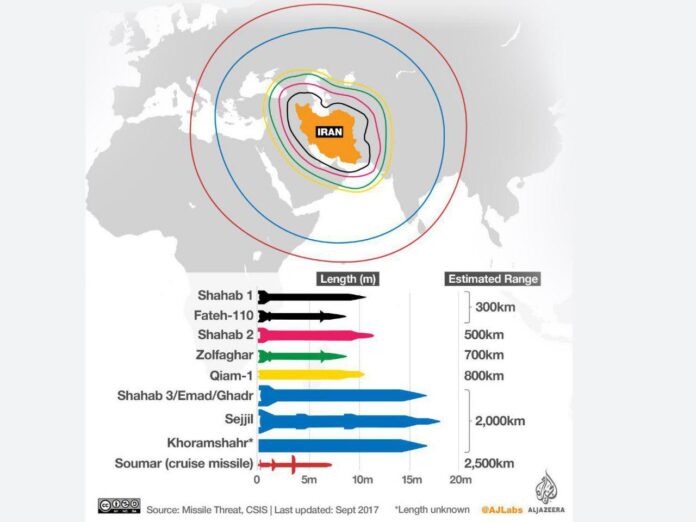
Macron on Wednesday said Iran’s ballistic missile program must be placed under international surveillance, adding that the use of Iranian-linked missiles in Yemen and Syria needed to be addressed because they were a security problem for French allies.

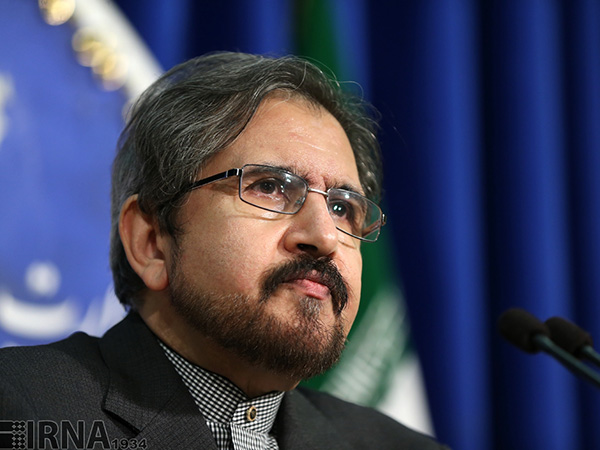
In a statement on Thursday, Qassemi rejected Macron’s remarks, saying the Islamic Republic of Iran favours the realization and consolidation of peace and security of [its] neighbours and in the sensitive and volatile Middle East region.

“To that end, and by observing its unchangeable principles of boosting stability and security for itself and its neighbours, Iran has been making every effort to fight security and destabilizing threats posed by terrorist groups,” said Qassemi.

He said the actions taken by Iran in fighting the ISIS terrorist group and Takfiri terrorism has been at the request of some governments with the cooperation of other regional states.

“These measures are not only not in violation of international regulations, but also contributed to the establishment of peace in the region and the maintenance of the national sovereignty and integrity of the governments facing ISIS threats.”

“Those actions also helped promote global peace and security and protect innocent people in other countries, including France. Undoubtedly, these countries should appreciate the efforts by the Islamic Republic of Iran,” the spokesman added.

Qassemi underlined that recent remarks by the French president are based on a sort of prejudgment and unrealistic view of the regional developments.

“Having such a biased approach will not help ameliorate the situation,” he said.

“With a logical and realistic view, and by understanding the situation in today’s Europe, and especially given the situation in France after Mr. Trump became president in the US, Iran expects Europe to be able to take more precise steps to promote peace and security in line with the path of convergence and independence while having a realistic understanding of developments in the world and in this sensitive region,” said Qassemi.

He further noted that Iran’s missile capabilities are within the framework of the country’s military doctrine, which is based on a policy of defence and deterrence, adding the real danger is posed by the race involving the US and some European countries to sell modern and sophisticated weapons to certain countries in the region.

“This (sales of arms) is a provocative move, and the stockpiling of these weapons and the reinforcement and expansion of numerous arsenals, insecurity and instability will increase in the region,” the spokesman noted.

“By drawing on historical experiences, especially the bitter experiences of the past several decades, including the aggression and military action by a dictatorial regime fully armed with weapons supplied by many world countries, especially certain European countries, which French officials are well aware of, the Islamic Republic of Iran will never allow others to make comments or efforts with double standards in order to undermine the peace-seeking defence and deterrence capability of Iran, and to rehash concerns about Tehran’s defence power while arming other regional countries with different types of ultra-modern weapons,” said the spokesman.

“For years, Iran has been the initiator of efforts to make security arrangements in cooperation with the Persian Gulf countries in a bid to establish stability and security within the framework of cooperation among all countries in the region, and rejects as unacceptable the fake and imaginary worries of transregional countries about Tehran’s defence capabilities,” said Qassemi.

Iran President Starts Three-Day Visit to India for Key Talks

Speaking to reporters before embarking on his first official visit to India since taking office in 2013, President Rouhani said Iran and India have strong historical relations in various fields.

“Till the recent centuries, Persian language was spoken by most people in the Indian Subcontinent,” President Rouhani was quoted as saying on Thursday in a Farsi report by IRNA.

He went on to say one of the main bilateral issues between Iran and India is transit system which will be discussed during his visit to India.

Rouhani added Iran’s Chabahar Port as well as connection to Afghanistan and Central Asia is highly significant for India. “To this end, we have already signed a trilateral agreement with Afghanistan and India.”

Based on the agreement India has pledged to invest $85 million in equipment of Chabahar port which opens up the transit route for the country to Iran and Afghanistan, bypassing Pakistan.

The Iranian president also said Iran and India have similar concerns about the latest regional developments including terrorism. “As two main members of Non-Aligned Movement, Iran and India will hold talks on terrorism during my visit to India.”

He said the visit has two aspects including cultural, and political and economic. “The first part of our visit begins with Hyderabad in which we will meet Indian Muslims including Shiite and Sunni scholars. We will also pay a visit to historic sites.”

Rouhani said the second part of the visit will take the Iranian delegation to New Delhi for economic and political talks with Indian high-ranking officials.

He noted the visit is made at the official invitation of the Indian Prime Minster Narendra Modi. “During the visit, in addition to holding talks with a number of high-ranking officials including India’s president in and prime minister, we will also sign several MoUs in different fields.”

In this visit, President Rouhani is accompanied by a number of Iranian officials including Vice-President for Economic Affairs, Mohammad Nahavandian, Foreign Minister Mohammad Javad Zarif, Oil Minister Bijan Zanganeh and many others.

Iran FM Says His Phone Tapped during Nuclear Talks

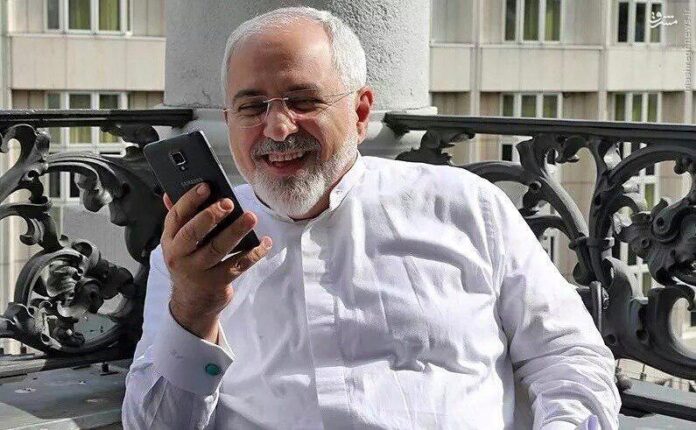
In a Farsi interview with the Persian-language Jame Jam newspaper, the top diplomat said his mobile phone grew hot during the talks, indicating his device was being tapped. The highlights of the interview follow:


  • I don’t use VPN apps. Due to its duties and responsibilities, the Foreign Ministry has special Internet facilities. Naturally, using VPN applications is coupled with security threats. Sometimes we ask how many spy agencies are seeking to encroach upon our system. In fact, we take spying for granted and focus on the number of times that spying attempts are made. When nuclear talks were underway, my mobile phone was as hot as an iron on some days during the negotiations, and other negotiators share the same problem. Such events show a lot of efforts are being made to spy on our domestic issues.
  • I do all my Twitter and Instagram postings myself. It’s been a long time I haven’t used the Facebook. I spend a long time, not continuously of course, on posting tweets. Between two to three hours for each tweet, on average.
  • If you read the JCPOA carefully, you will find out that it is drawn up based on mutual pessimism because an agreement written based on optimism wouldn’t be so voluminous.
  • We believe what has kept the US from pulling out of the JCPOA is not the country’s interest in the agreement, but fear of international isolation.
  • Iran’s regional and defence policy are completely defensible, and we bravely announce this policy in all international arenas. Today, we (Iran) have the least amount of arms costs in the region. This is while member states of the Persian Gulf Cooperation Council (GCC) ran a total $116 billion worth of weapons spending, but the figure was less than $16billion for Iran.

Iran Rejects US National Intelligence Director’s Baseless Claims

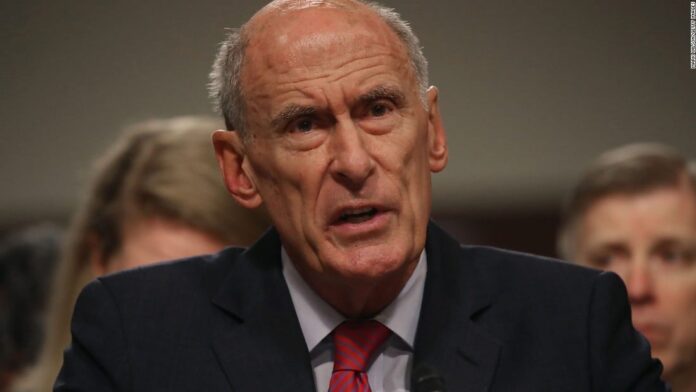
Director of US National Intelligence Dan Coats

In a Thursday statement, Qassemi slammed as “worn-out” and “baseless” the claims raised by Coats about the US concerns over Iran’s influence in the region, adding that no country has tried as much as Iran did to ensure stability and peace in the Middle East.

“Such remarks [by American officials] are rooted in the US policy and approach of creating and promoting false and self-fabricated threats and terror in different parts of the world, particularly in the Middle East,” he added.

“This is a profitable policy for Washington and a destabilizing one for the world and West Asia,” Qassemi noted, stressing that understanding and confronting such a policy requires the farsightedness and vigilance of all regional leaders and nations.

The Iranian spokesman’s statement came after Coats framed global cyber-security threats in stark terms on Tuesday, saying, “Russia, China, Iran and North Korea pose the greatest global cyber-threats.”


World Must Stop Israel’s Destabilizing Moves: Iran

In a statement early on Thursday, Qassemi described Iran as an ancient, rational, and stable country that gives stability to others as well, and stressed that the Islamic Republic basically sees no need for increased tension and conflict in the region.

“It is indeed the occupying and aggressive Zionist regime that has seriously jeopardized the region’s security, stability, and peace and must be blamed for doing so,” he added.

“In Iran’s view, it is the legal right of the legitimate government of Syrian to defend its territorial integrity and national sovereignty against any aggression,” he noted, once again dismissing the ‘baseless’ claims about Tehran’s role in the recent shoot-down of an Israeli jet fighter over the Syrian territory.

Qassemi said the Islamic Republic does not follow the policy of escalation in the region, but it deeply believes that the international community and all countries in the world must take a major and big step against the occupation, repeated aggressions and destabilizing moves of the Zionist regime.

“The international community needs to give a decisive and proper response to the false propaganda and warmongering of a regime that believes the continuation of its illegitimate and fake existence hinges on tension and conflict in the region,” he added.

The Iranian spokesman made the remarks in reaction to German government spokesperson Steffen Seibert, who claimed “Iran’s military engagement in Syria and Lebanon, in particular the militias it controls, is leading to a dangerous escalation in the Syrian civil war.”

The German spokesman also defended the Zionist regime’s airstrikes on Syria, describing them as a move to protect itself against attack.

On Saturday, the Israeli air force flew a series of airstrikes against Syrian positions, according to the Israeli military. However, on their way back, at least one of the Israeli fighter jets came under anti-aircraft fire over Syrian territory, and crashed on Israeli territory.

Russia Blasts US’ Unilateral Demands on Iran Nuclear Deal

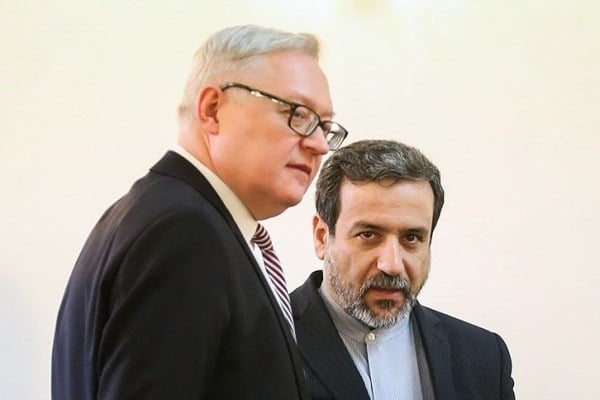
In a Wednesday meeting with Iranian Deputy Foreign Minister for Political Affairs Abbas Araqchi in Tehran, Ryabkov described Tehran-Moscow consultations as significant, and hailed Iran’s responsible approach in living up to its commitments under the Joint Comprehensive Plan of Action.

He underscored that no country should undermine the recognized principles of international law and diplomacy through unilateral interpretations and demands.

Araqchi, for his part, elaborated on Iran’s stances on regional and international developments and stressed the importance of continued consultations between the two sides. He also expounded on Tehran’s stand on the JCPOA, and rejected US rulers’ destructive and irresponsible move to disregard Washington’s multilateral and international obligations.

He also emphasized the Islamic Republic of Iran’s determination to safeguard its legitimate rights.

The meeting was held as part of regular consultations between Tehran and Moscow on the JCPOA and other issues of mutual interest.

Iraqi PM Praises Iran for Participation in Iraq’s Reconstruction

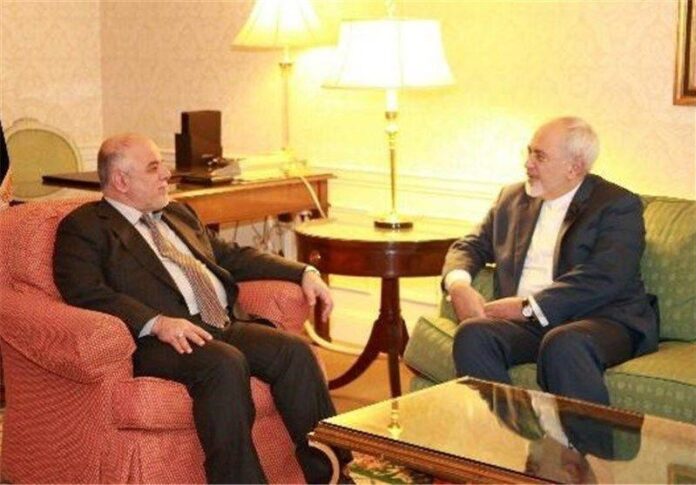
During the Wednesday meeting held on the sidelines of the International Conference for Reconstruction of Iraq in Kuwait, Prime Minister Abadi said the Islamic Republic of Iran played a significant role in fight against ISIS and liberation of the Iraqi territory from the menace of terrorists.

He also described as important and praised the participation of Iranian companies in the reconstruction of Iraq and launching construction projects in the country.

For his part, the Iranian foreign minister said as in the past years during which Iran stood firmly by the Iraqi government and nation in fight against terrorists, it will not spare any effort to work with the Iraqi government for the country’s reconstruction today.

He went on to say that Iran views Iraq as an important political and economic partner.

“Given the interest of the Iranian people and companies in playing a role in Iraq, we hope the relations between the two sides, especially in economic and commercial fields, would grow considerably,” he added.

The three-day International Conference for Reconstruction of Iraq came to an end on Wednesday. Tens of donor countries, including Iran, and around 2,000 organizations attended the conference to announce financial contributions at the meeting.

17 People Killed in Shooting at Florida High School (+Video)

The suspect was identified as Nikolaus Cruz, a former student who had been expelled from Marjory Stoneman Douglas High School in Parkland for disciplinary reasons, Broward County Sheriff Scott Israel said.

He said at least 14 other people were injured in addition to the 17 people killed.

Officials believe the gunman had one AR-15-style semiautomatic rifle, but it was unclear whether he had any other weapons. The gunfire began outside the school and continued inside, where 12 of the victims were killed, Israel said.

Cruz was taken into custody off campus about an hour after he “committed this horrific, detestable act,” Israel said. Federal and local authorities told NBC News there was no indication that he had an accomplice or accomplices.

Parkland, in north Broward County, is about 30 miles northwest of Fort Lauderdale. The shooting on the sprawling campus happened despite the presence of police officers at the school.

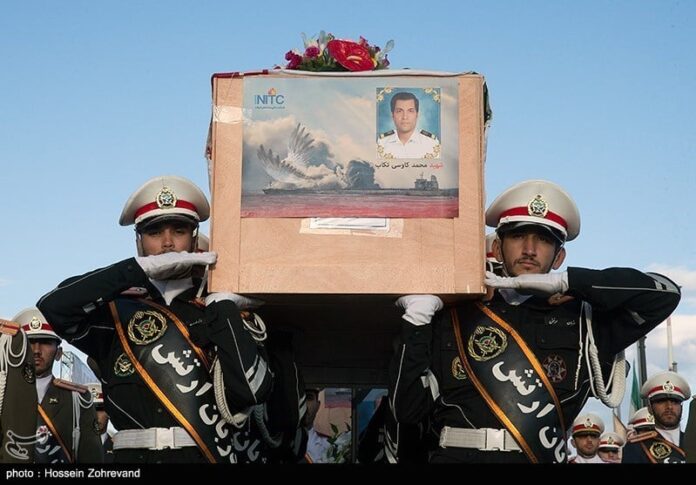
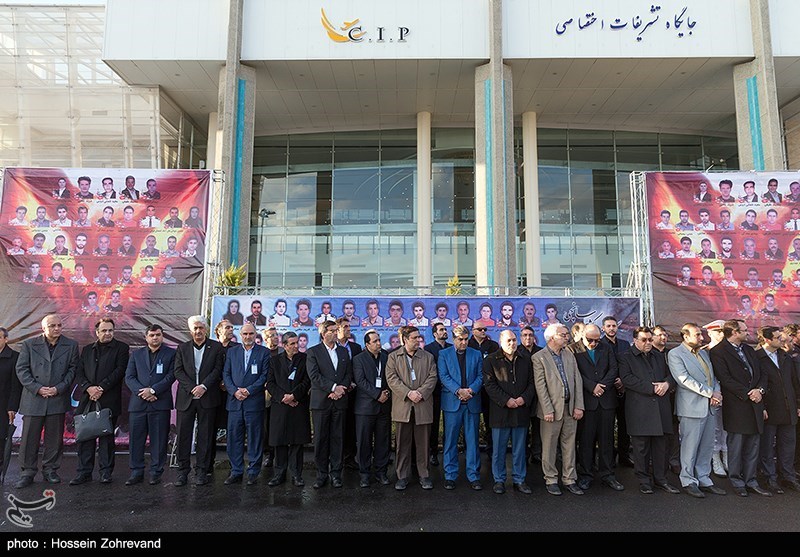
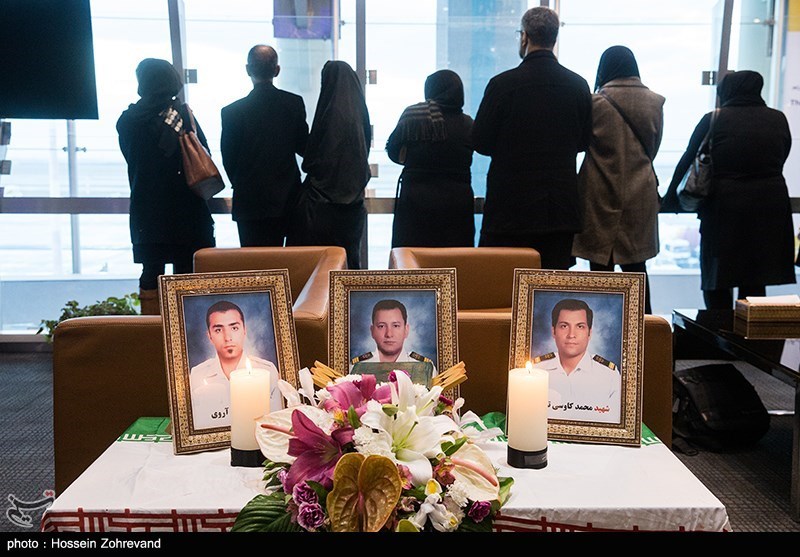
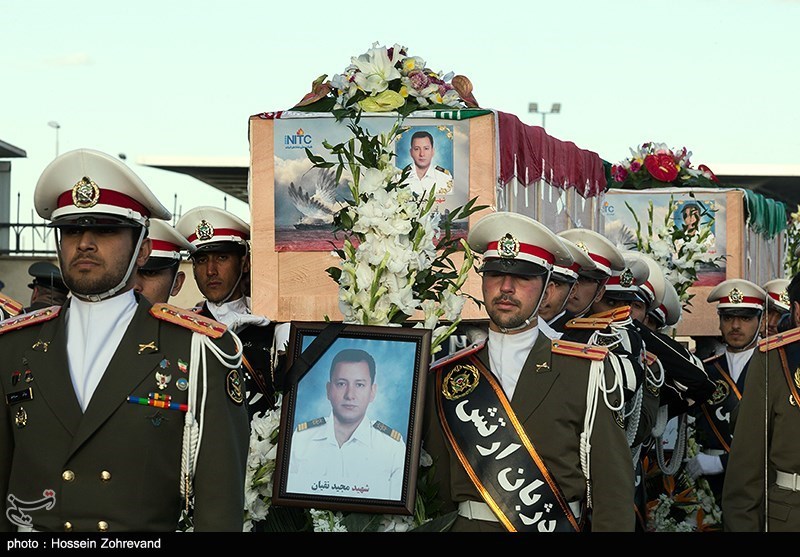
Bodies of Iranian Seafarers Killed in Tanker Tragedy Repatriated

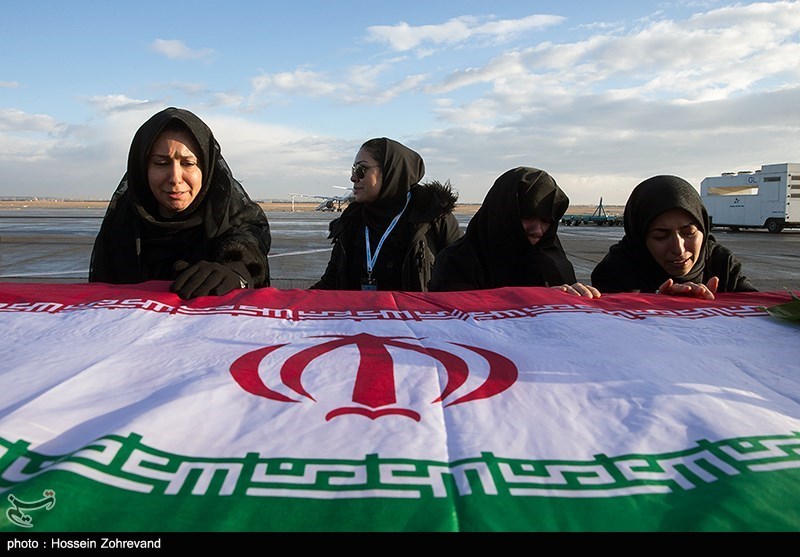
The remains of the three Iranian sailors were repatriated on Wednesday morning from China.

Officials from the Oil Ministry, the National Iranian Tanker Company, and the Ministry of Labor and Social Welfare attended the ceremony at Tehran’s Imam Khomeini International Airport to receive the Iranian-flag-draped caskets.

The bodies have returned home after China received the DNA samples taken from the families of the doomed vessel’s crew.

Bodies of Iranian Seafarers Killed in Tanker Tragedy Repatriated

Bodies of Iranian Seafarers Killed in Tanker Tragedy Repatriated

Bodies of Iranian Seafarers Killed in Tanker Tragedy Repatriated

Bodies of Iranian Seafarers Killed in Tanker Tragedy Repatriated

Sanchi, with 32 people -30 Iranians and two Bangladeshis- on board, collided with a Chinese freight ship in the East China Sea on January 6 and caught fire after a huge explosion.

The Panama-registered tanker was carrying 136,000 tons of condensate, an ultra-light crude that is highly flammable, to South Korea.

It sank on January 14 after the spread of fire to new oil condensate tanks created blazes as high as 100 meters and increased temperature to 350 degrees Celsius (660 degrees Fahrenheit).

IRGC Chief-Commander Praises Shiite-Sunni Unity in Iran

general-mohammad-ali-jafari

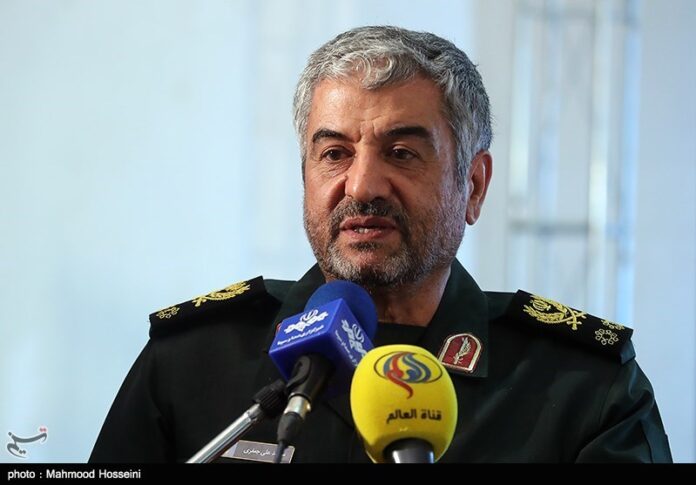
The enemies are making considerable efforts to harm the Iranian nation’s unity and solidarity, but all their plots have always been neutralized thanks to the guidelines of Leader of the Islamic Revolution Ayatollah Seyyed Ali Khamenei and the prudence of Iranians, Major General Mohammad Ali Jafari said on Tuesday.

He added that despite hostile acts by the global arrogance, “the Islamic Republic is still continuing its path with strength and dignity.”

The most important goal of enemies is to create insecurity across Iran; however, Shiite and Sunni Muslims are making joint efforts to boost the country’s security, the IRGC commander said.

During a recent meeting in Tehran with a number of officials in charge of a martyrs’ congress in Iran’s southeastern province of Sistan and Baluchestan, Ayatollah Khamenei has lauded the strong unity among Iran’s Shiite and Sunni Muslims despite all enemy attempts to sow discord among them.

IRGC Chief-Commander Praises Shiite-Sunni Unity in Iran

Ayatollah Khamenei further called for vigilance among Muslims against divisive enemy schemes.

Elsewhere in his remarks, Jafari pointed to the eight-year war imposed by Iraq with the backing of major global powers and said, “The biggest achievement of this war was that other nations accepted that they can stand up to the global arrogance’s bullying.”

He emphasized that Iran has also countered the cultural, political and economic aggression of the global arrogance aimed at harming the Islamic Revolution.

“Enemies of the Islamic Revolution tried to create distrust among the [Iranian] people of the Islamic establishment through the imposition of economic pressure and sanctions and the creation of certain economic problems but this plot was also thwarted through the vigilance of the people,” the IRGC commander said.

Iran’s Foreign Minister Mohammad Javad Zarif said in January the Islamic Republic’s security and stability depend on its own people, adding that “infiltrators” will not be permitted to violate the rights of the Iranians.

IRGC Chief-Commander Praises Shiite-Sunni Unity in Iran

“Iran’s security and stability depend on its own people, who — unlike the peoples of [US President Donald] Trumps regional “bffs”—have the right to vote and to protest,” Zarif said in a post on his official Twitter account.