Wednesday, December 24, 2025
Home Blog Page 3513

Iran, Land of Diverse Ramadan Traditions

The Muslim holy month of Ramadan is of special importance to Iranians, and there are different traditions and customs associated with this month in different parts of the country.

One of these traditions is cooperation of people and the clergy in cleaning mosques in different neighbourhoods in late Sha’ban (the month in the lunar calendar before Ramadan).

Another tradition is to invite family and friends for fast-breaking (Iftar) time and of course holding special prayers on Eid al-Fitr, a religious holiday marking the end of Ramadan.

Muslims celebrate Eid al-Fitr with joy and happiness, thanking God Almighty for having given them the opportunity to fast during Ramadan. Muslims also pay a certain amount of money to the needy as Ramadan ends.

In addition to above-mentioned traditions, which are common in almost all parts of Iran, there are other special traditions and customs in different Iranian cities. Some of these traditions are still practiced, and some are fading away or have slipped into oblivion altogether.

The present article elaborates on some age-old Iranian traditions and customs practiced in the provinces of Lorestan, East Azarbaijan, Semnan and Kerman.


Kasemsa: An Ancient Ramadan Tradition in Lorestan

One of the common traditions in Lorestan province which people pay more attention to during the holy month of Ramadan, is locally known as “Kasemsa” where people send their neighbours part of their meal at dawn (before the daily fasting period begins) and at fast-breaking time at dusk.

The custom is a reminder of the moral duty of fasting Muslims, who take it upon themselves to reach out to the needy and deprived families.

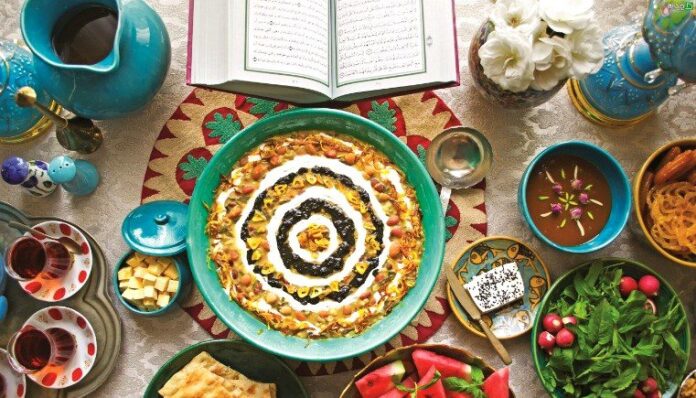
Among the traditional foods of Lorestan usually served at fast-breaking time during the holy month of Ramadan is “Chazanak-Roqoo,” which is a kind of sweet bread.

Another local meal is “Saqdoo,” which is rice mixed with prunes and cooked inside sheep’s rumen.

Broth, Shami Kookoo (a kind of cutlet), and Samanu are among other common items on the fast-breaking table during the holy month of Ramadan in Lorestan.

Also, women in Lorestan cook different types of broth and puddings to garnish their own and their neighbours’ fast-breaking tables.


Bag Sewing: A Special Ramadan Custom Practiced in Azarbaijan
Iran, Land of Diverse Ramadan TraditionsThe Muslim holy month of Ramadan in East Azarbaijan province is associated with traditions and customs which have their roots in the local religious beliefs and culture and cover a whole range of practices.

Provincial residents clean their homes a few days before Ramadan begins to welcome the arrival of the holy month.

Fast-breaking tables are associated with special traditions and are set with a larger variety of foods than other areas across the country. People in the province believe the fast-breaking meal is different from other meals as it is associated with a special spiritual mood.

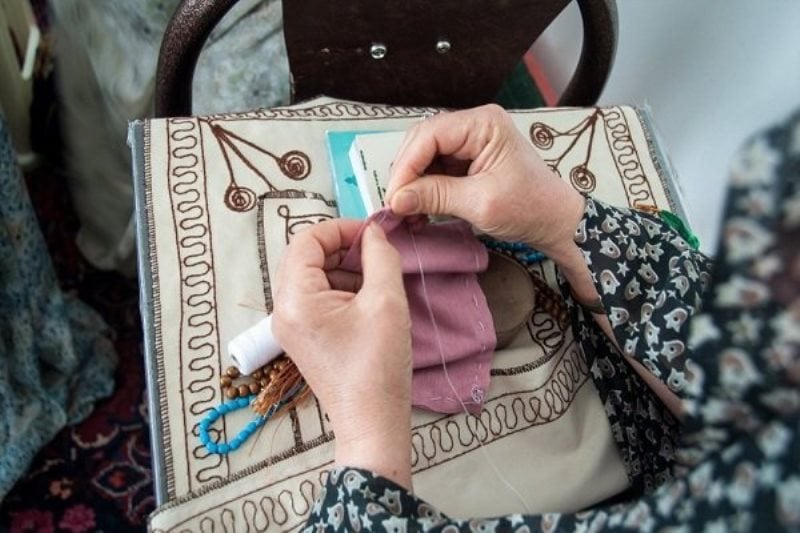
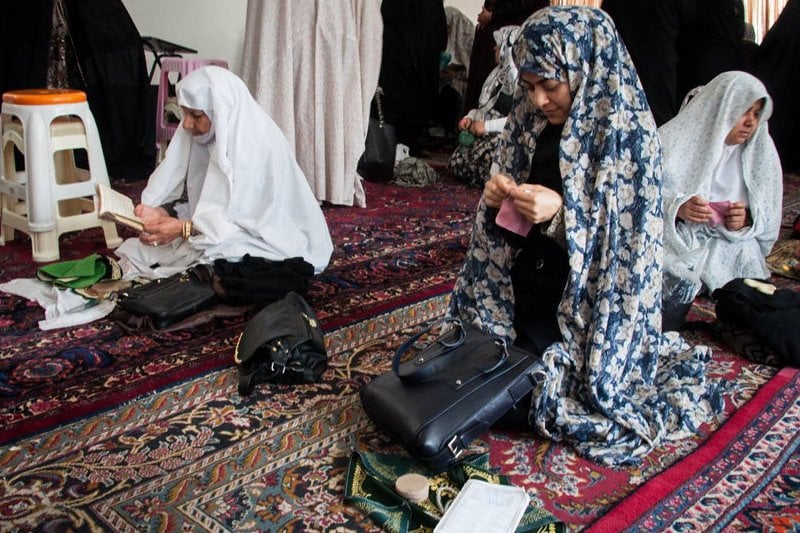
The 27th day of Ramadan, or the last Thursday of the month, is the day when women and girls get together from different parts of the province and sew a bag for themselves. They then put some money in their bags, say prayers and blow onto them, and keep the bags in their trunks until the next year. The bag is called the “bag of blessings.” Some believe if they practice the tradition, they will never suffer from poverty and destitution. The custom is practiced in Semnan, as well.


Memorable Ramadan Traditions in Semnan

Among the customs and traditions practiced during the holy month of Ramadan in Semnan province are night-time singing, sewing the wish bag, the henna ceremony, knocking on the doors of houses to receive broth and pudding, and cooking local foods.
Iran, Land of Diverse Ramadan Traditions
Bag Sewing

Henna Ceremony

People in parts of Semnan province believe God Almighty will definitely answer the prayers of anyone who worships him with henna-dyed hands. So, a group of women in town gather at one of the locals’ home and dye their toes, hands, palms and even hair with henna.


Night-Time Singing
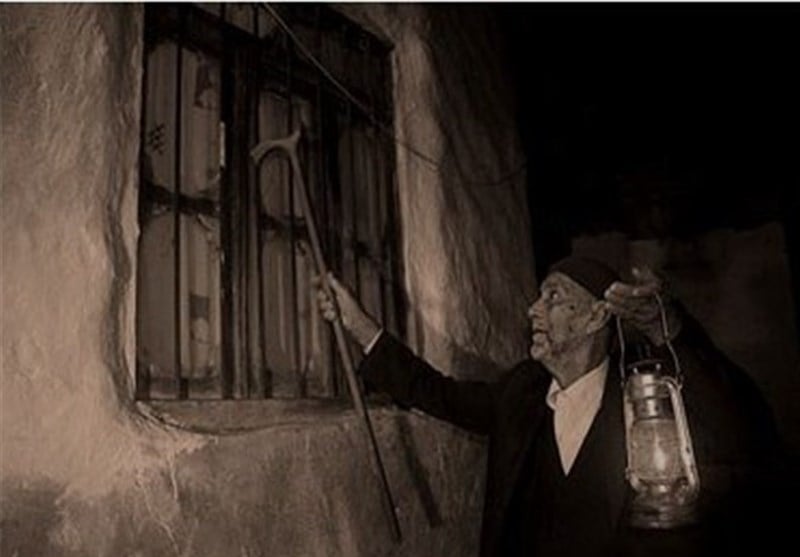
Iran, Land of Diverse Ramadan TraditionsIn some parts of the province, people go onto the rooftops of homes and mosques an hour before the sunrise, singing poems and reciting prayers to wake up others.

In the past, they would also play the drums and the trumpet in addition to singing hymns and reciting ancient poems.


Whitewashing Walls of Homes

The tradition of whitewashing the walls of houses used to be practiced in some of the provincial villages until not long ago. Based on the custom, locals would whitewash the walls of their homes with special soil before Ramadan began.


Key-Hitting Ritual in Kerman

“Key-Hitting” was one of the ancient traditions of people in Kerman during the holy month of Ramadan. The tradition was widely practiced by residents of the province, but was consigned to oblivion quite some time ago.

In this tradition, a woman would put a mirror, a sormeh (kohl) pot (sormeh was a material similar to mascara used as a cosmetic in the past), and a copy of the holy Quran inside a big strainer and go to houses in the neighbourhood. While keeping her face covered, the lady would keep hitting the strainer with a key. She would keep silent till the end of the ritual in order not to be recognised.

If the owner of the house would utter statements such as “Bring the lamp” or “Bring the sweets,” then the key-hitting woman knew that she would get some stuff. Afterwards, the owner of the house would grab the mirror inside the strainer, look at his/her face in the mirror, and then put some sweets, sugar cubes or money inside the strainer.
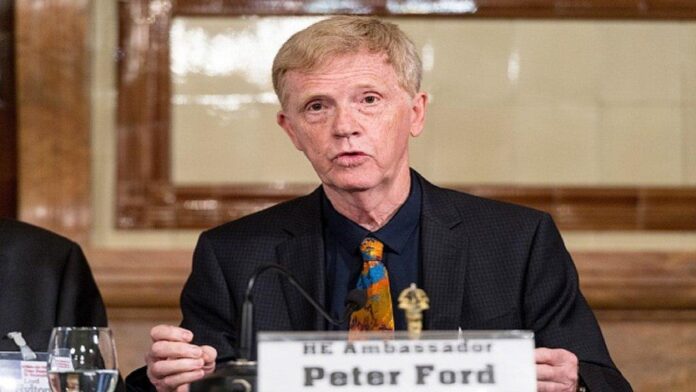
UK Diplomat Says Bahrain Has Turned into US, Saudi Colony

Speaking in an interview with Lebanon’s Al-Mayadeen television network, Ford said that Bahrain “[has] almost turned into a Saudi and American colony.”

According to him, such a transformation took place following the Arab Spring protests that broke out in the country, when Saudi Arabia and the US helped Manama cope with them, Sputnik reported.

The former envoy claims that Bahrain’s ruling royal dynasty is afraid that protests may re-emerge and is therefore sticking to the policies of the two states that helped it in the past.

Ford believes this explains why Manama is repeating Riyadh and Washington’s anti-Iran rhetoric and blames Tehran for fuelling the protests in Bahrain.

The ex-envoy also noted that Bahrain should stay away from regional disputes, since it would most likely suffer greatly if a conflict were to break out.

The popular protests began in Bahrain amid the events of the Arab Spring, mostly led by the local Shiite majority.

According to human rights activists, the clashes between demonstrators and police led to the deaths of 13 policemen and some 80 protesters. Bahrain’s government requested Saudi Arabia’s assistance in dealing with the riots and as of March 14, 2011, Saudi Arabia sent roughly 1,000 of its troops to the Arab state.

Manama has blamed Tehran for supporting the protesters, but Iran has strongly denied the allegations.

Iran Foils Terrorist Plots Hatched Outside Borders: IRGC Commander

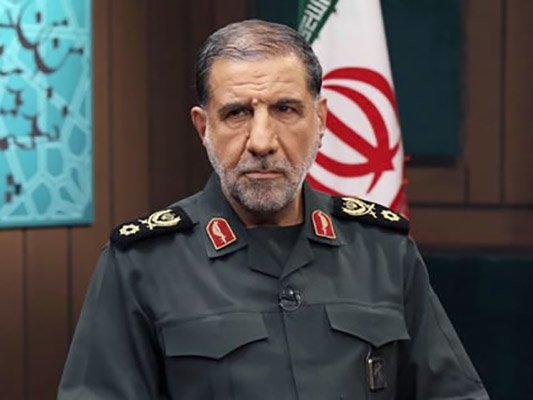
Brigadier General Esmail Kowsari, the second-in-command of an IRGC brigade responsible for the security of Tehran Province, says for the time being, all cities across Iran including the capital Tehran enjoy high security.

In an interview with Mizan News Agency, General Kowsari said all security forces in Iran are closely monitoring any terrorist move initiated from the outside to thwart nasty plans to destabilise Iran.

He also added the material and spiritual power of the Islamic Republic of Iran has endangered the status of the enemies including the US, Britain, the Zionist regime as well as a number of reactionary regional states.

The IRGC commander underlined that Iran is among the safest countries in the world.

Elsewhere in his remarks, General Kowsari downplayed the terrorist attack by five members of ISIS in Tehran last year and said the ISIS terrorists have been seeking to infiltrate into Iran for tens of times over the past two to three years to commit crimes in Iran but each time they ended up in failure after Islamic Republic security forces thwarted their plots.

“Today with effective and excellent coordination, Iranian security forces are closely watching the enemies’ moves outside the borders blocking their operations to destabilise the country,” he said.

Back in June last year, gunmen stormed Iran’s Parliament and the Mausoleum of the late founder of the Islamic Republic, Imam Khomeini, in two coordinated attacks. At least 17 people lost their lives and nearly 50 others were wounded in the assaults, which involved shootings and blasts. ISIS claimed responsibility for the attacks.

The individuals involved in carrying out the attacks were five elements with a history of past terrorist activities and linked to Wahhabi and Takfiri groups.

According to Iranian Intelligence Ministry, the attackers left Iran after being recruited by the ISIS and had participated in the group’s atrocities in the Iraqi city of Mosul and the Syrian city of Raqqah.

General Kowsari’s remarks came shortly after Brigadier General Mohammad-Reza Yazdi, the commander of IRGC’s Muhammad Rasuolollah Brigade, announced two teams of terrorists have been recently arrested before implementing their plot to attack the next week’s ceremonies to marks the death anniversary of Imam Khomeini in southern Tehran.

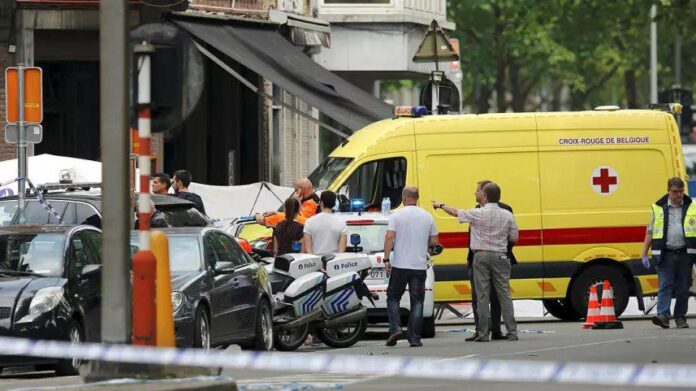
Four Killed in Suspected Terrorist Attack in Belgium

Four Killed in Suspected Terrorist Attack in Belgium

La Libre Belgique newspaper quoted a police source as saying the gunman shouted Allahu Akbar — God is greatest in Arabic — and RTBF said investigators believed the attacker may well have had a terrorist motive.

The man had taken a woman hostage at some point in the attack, the newspaper said.

The national anti-terrorist crisis centre, which Interior Minister Jan Jambon said on Twitter was monitoring the situation, said terrorism could not be excluded as a motive though it was also looking into other possible reasons.

“It (terrorism) is one of the questions on the table, but for the moment all scenarios are open,” a spokesman for the crisis centre said.

Two other police officers had been injured, Belga news agency said. A spokeswoman for the Liege public prosecutor’s office confirmed that two police officers had been shot dead and the gunman “neutralised” but could not confirm other details.

Images on social media showed people scurrying for safety on Liege’s central boulevard d’Avroy with shots and sirens being heard in the background.

Liege, an industrial city close to the German border in a French-speaking region, was the scene of a shooting in 2011, when a gunman killed four people and wounded more than 100 others before turning the gun on himself.

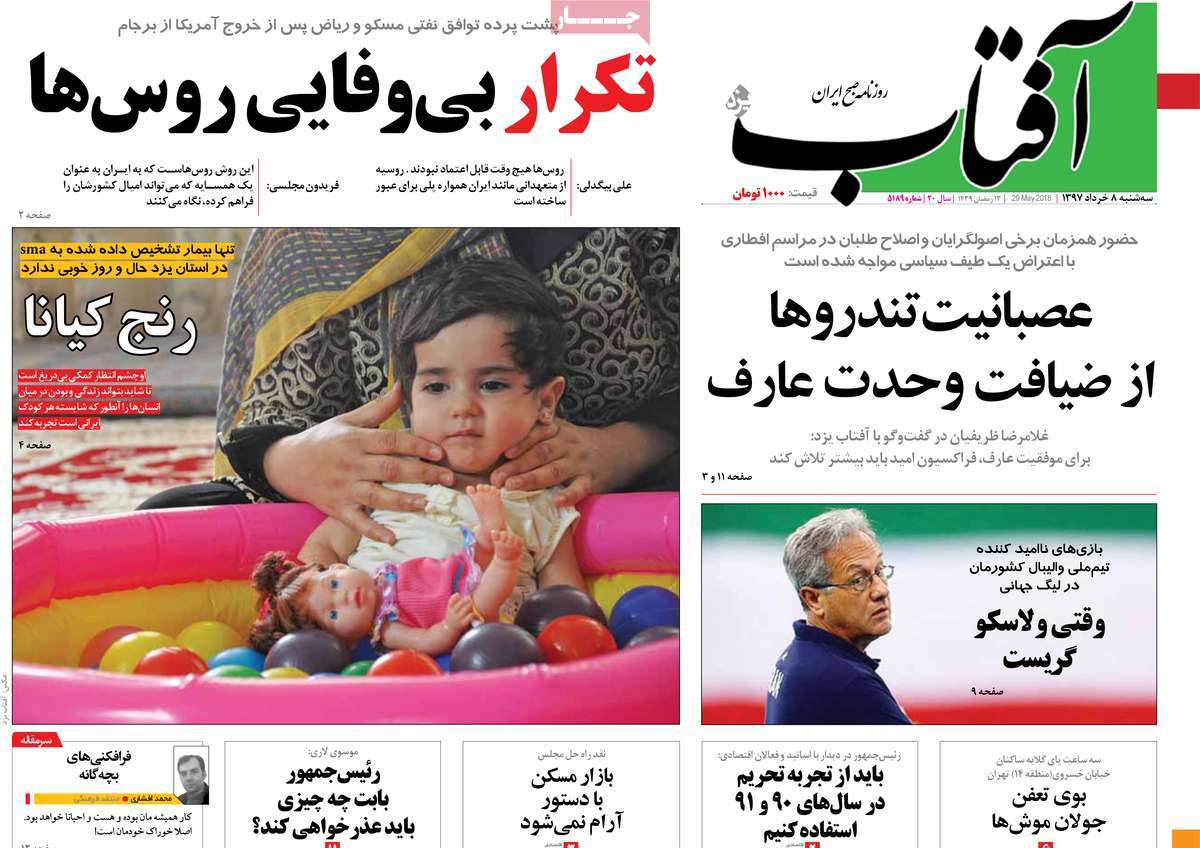
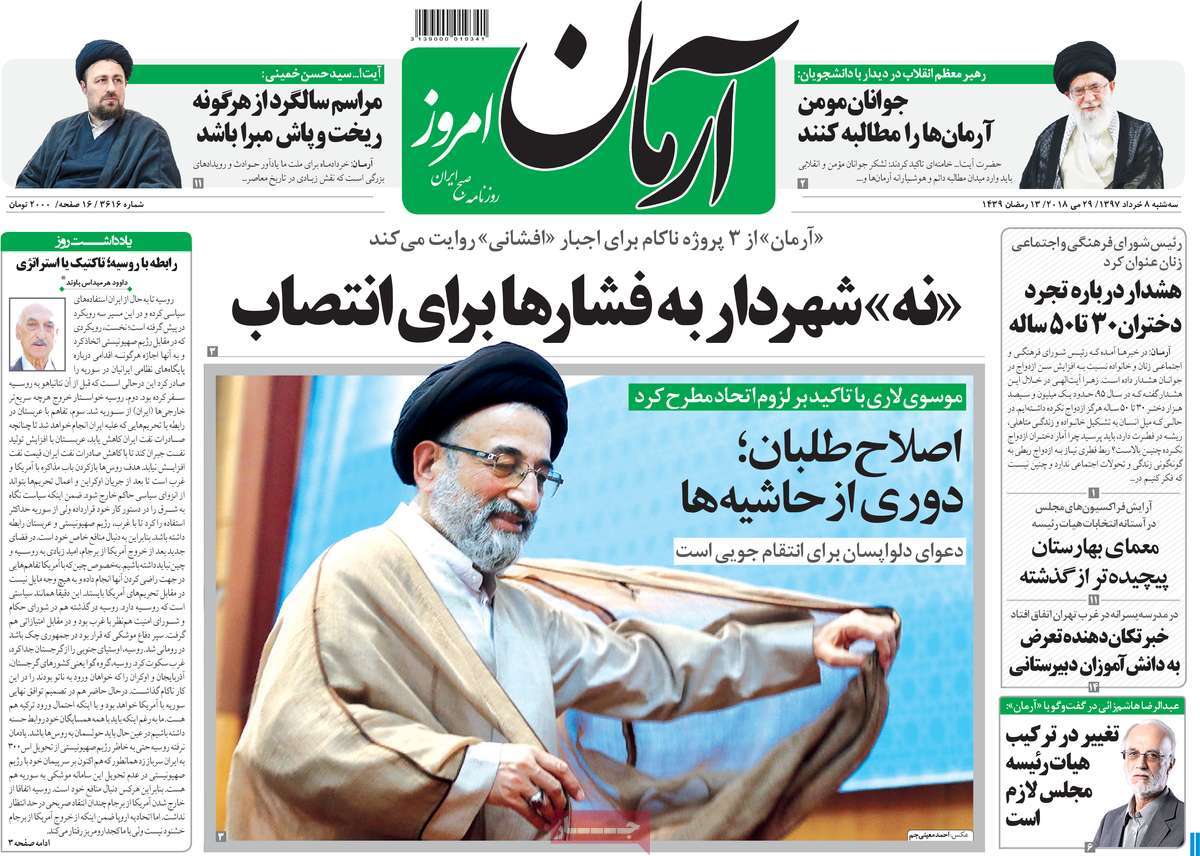
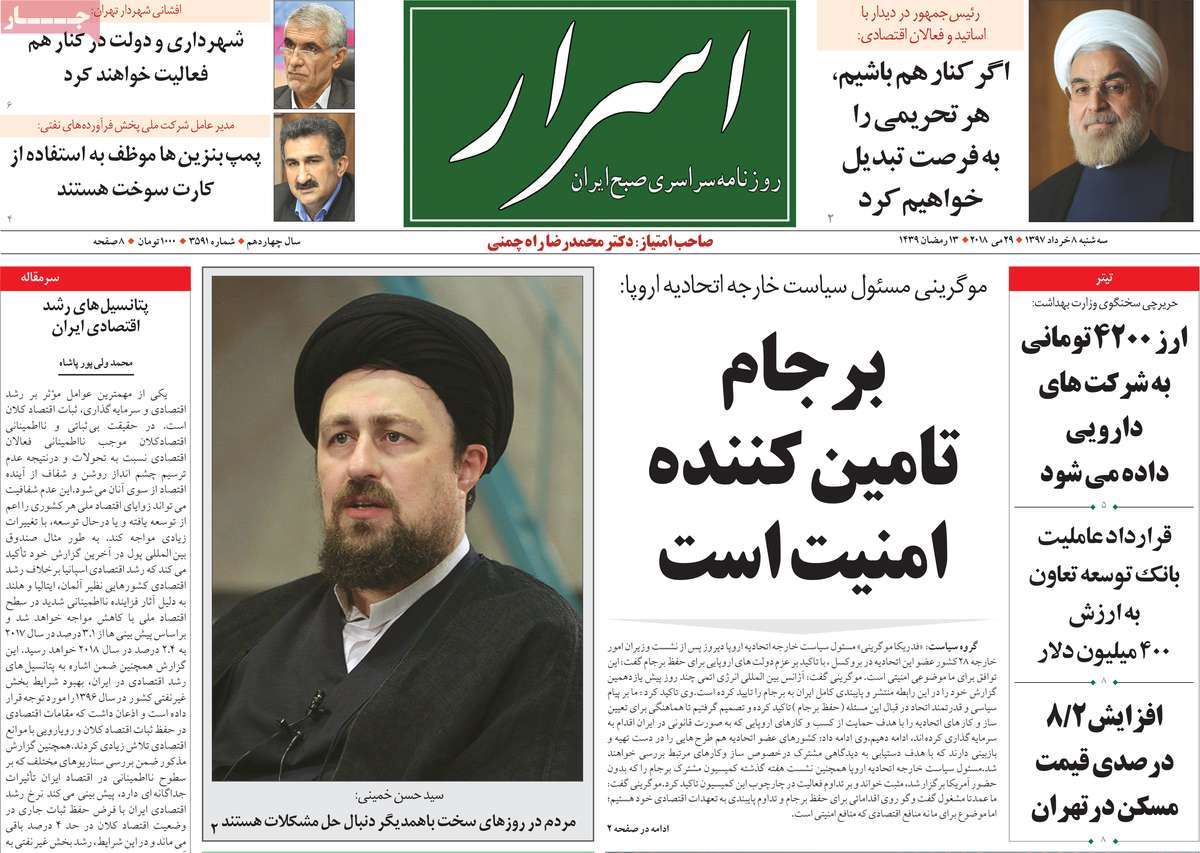
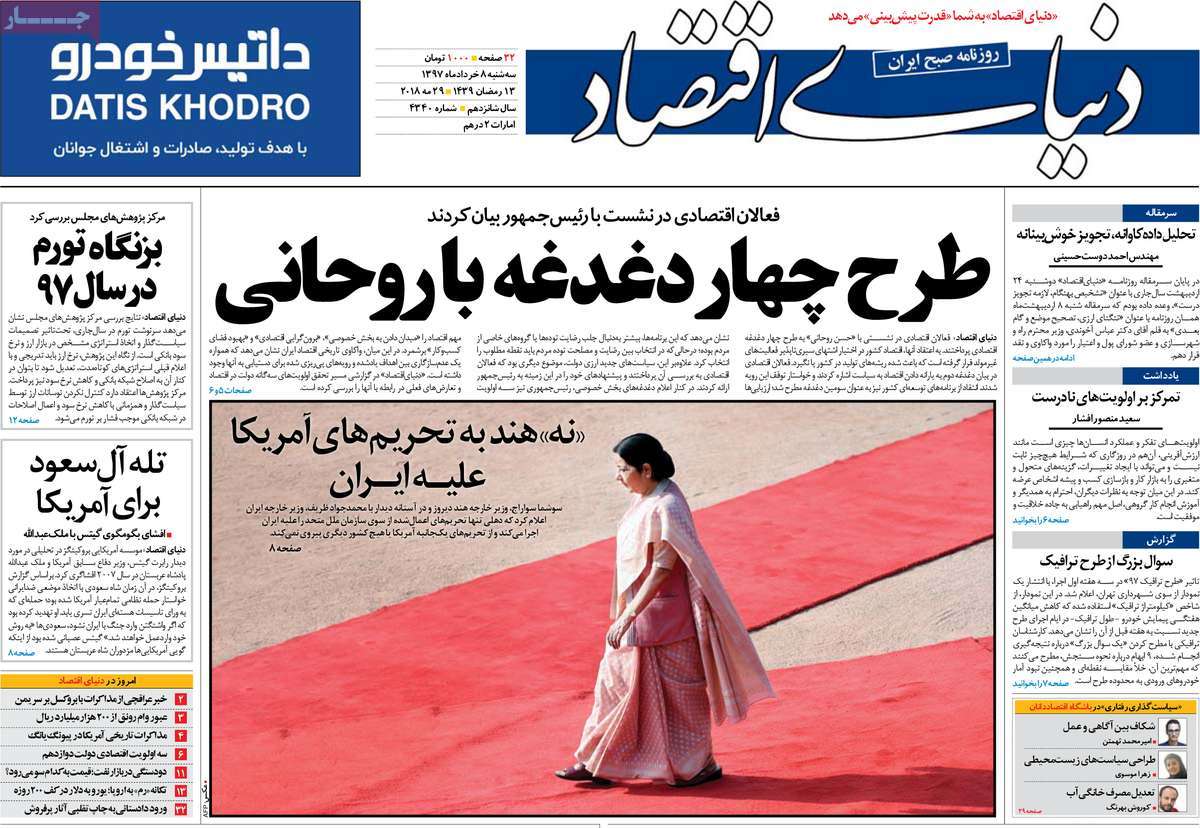
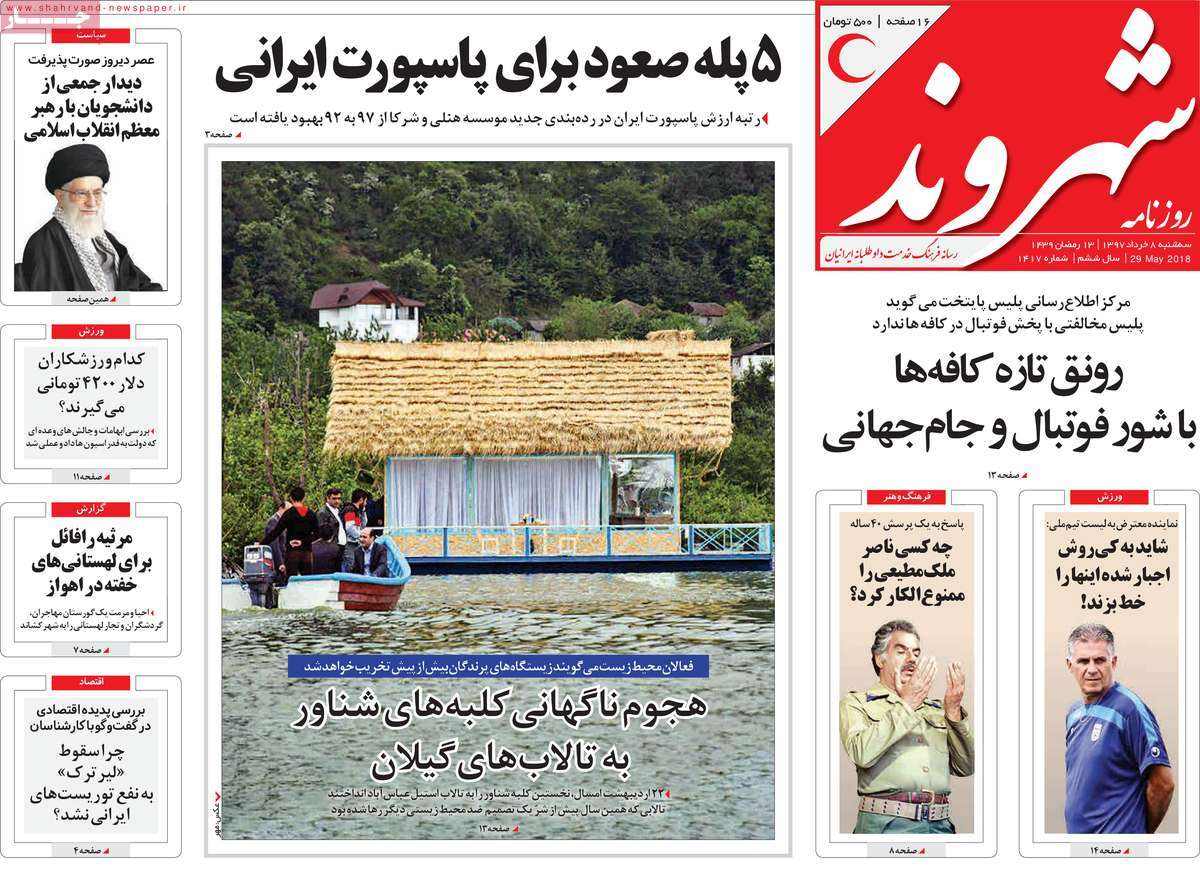
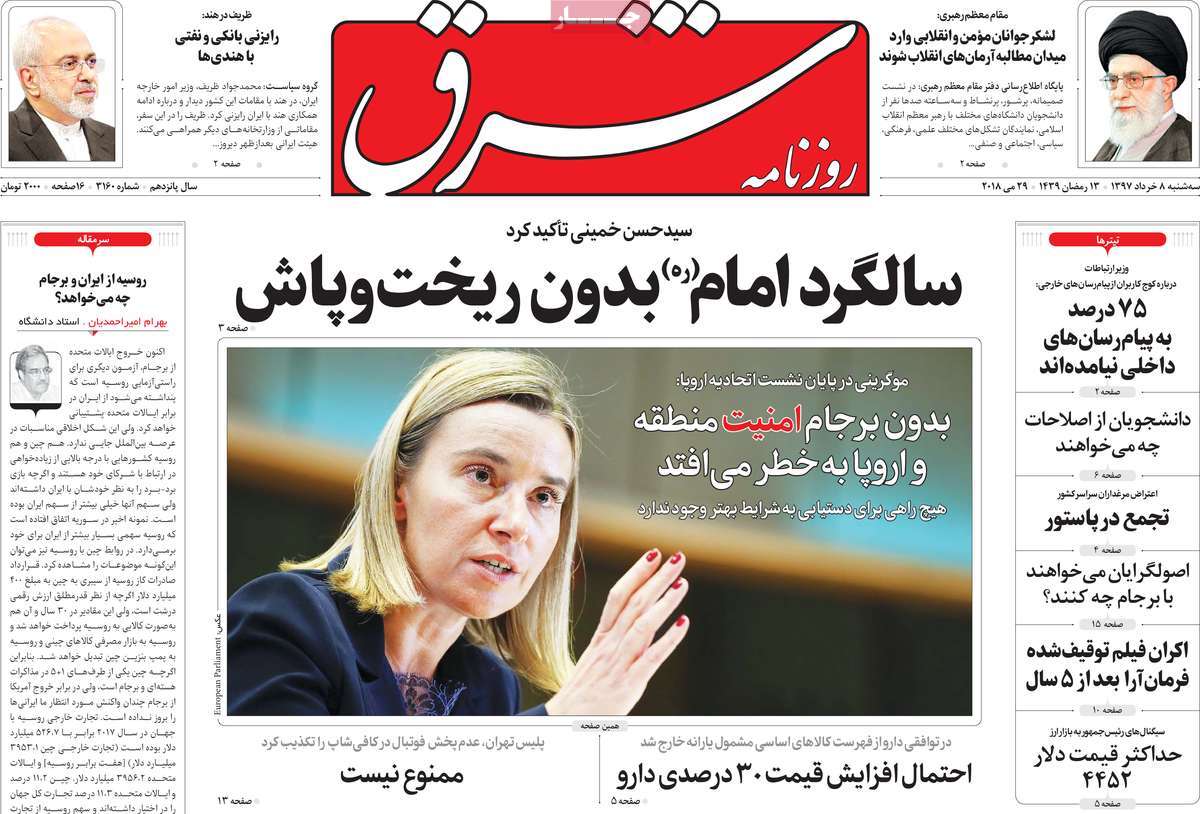
A Look at Iranian Newspaper Front Pages on May 29

A Look at Iranian Newspaper Front Pages on November 19

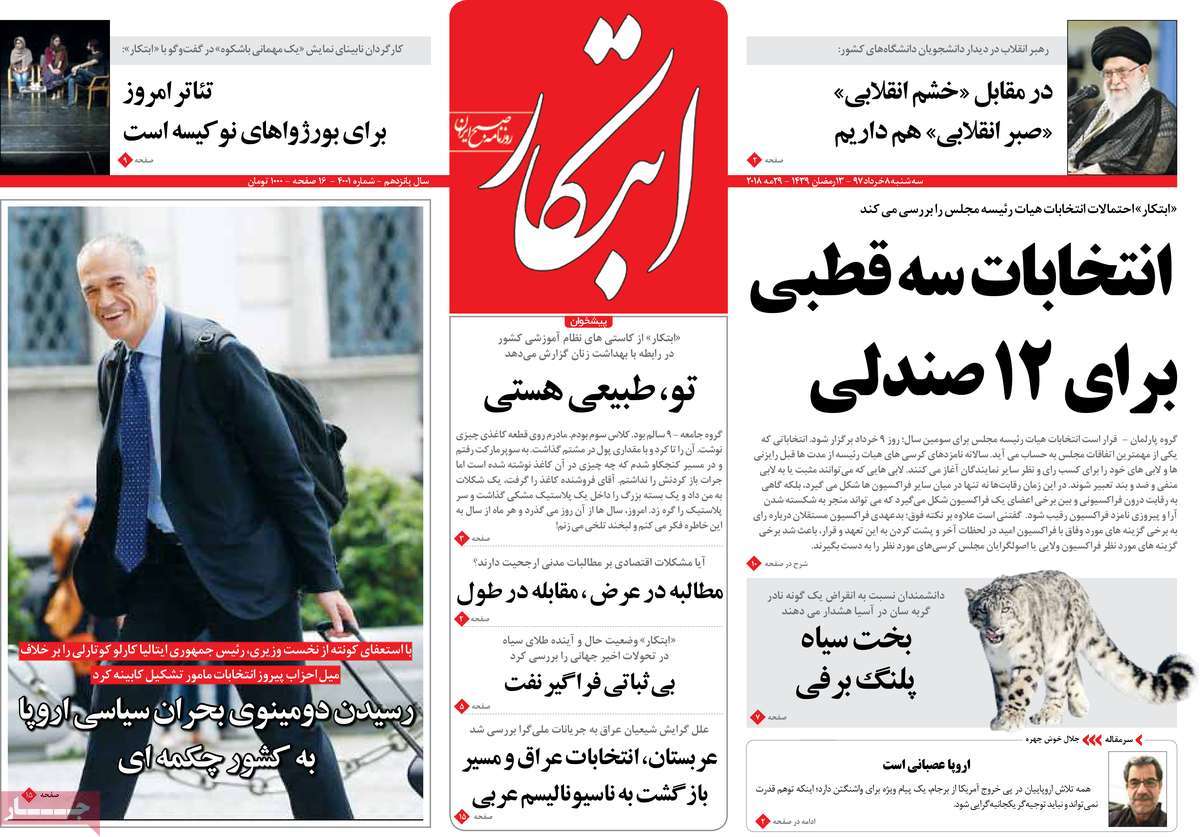
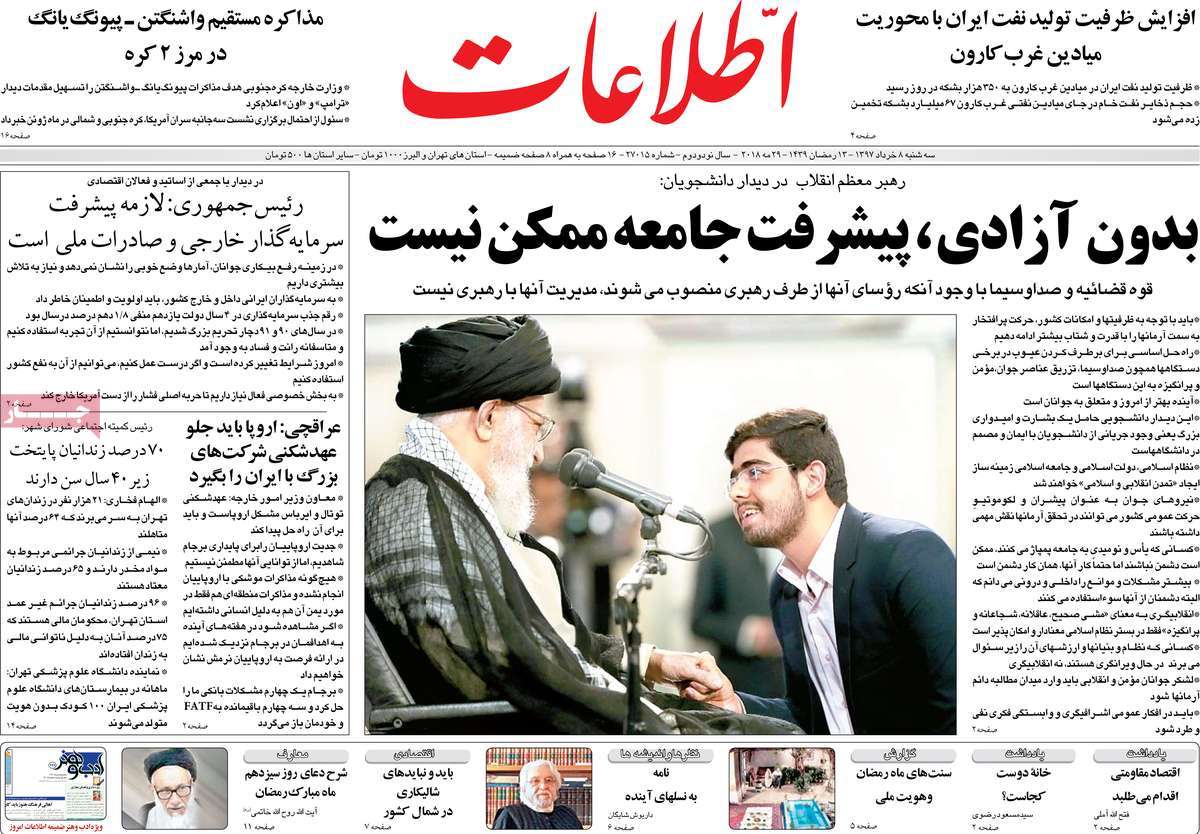
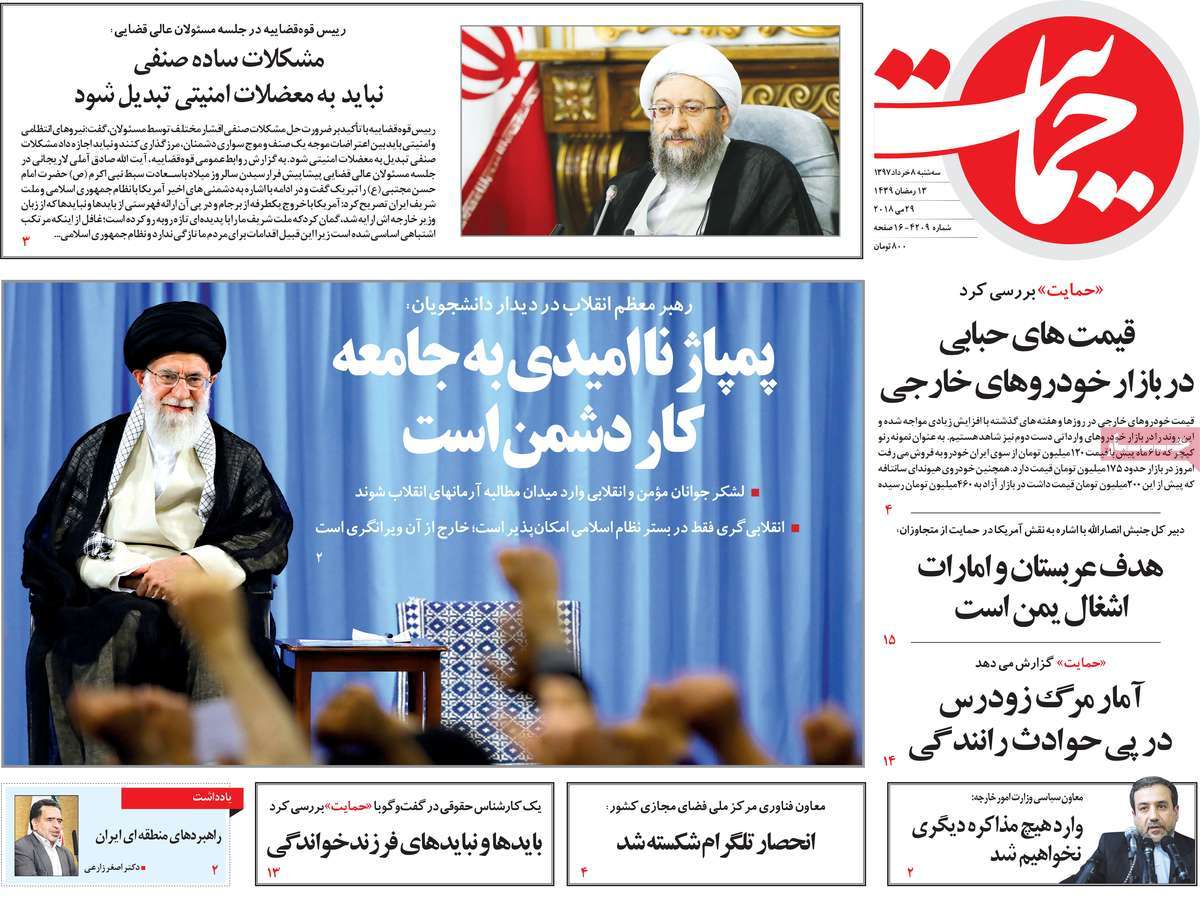
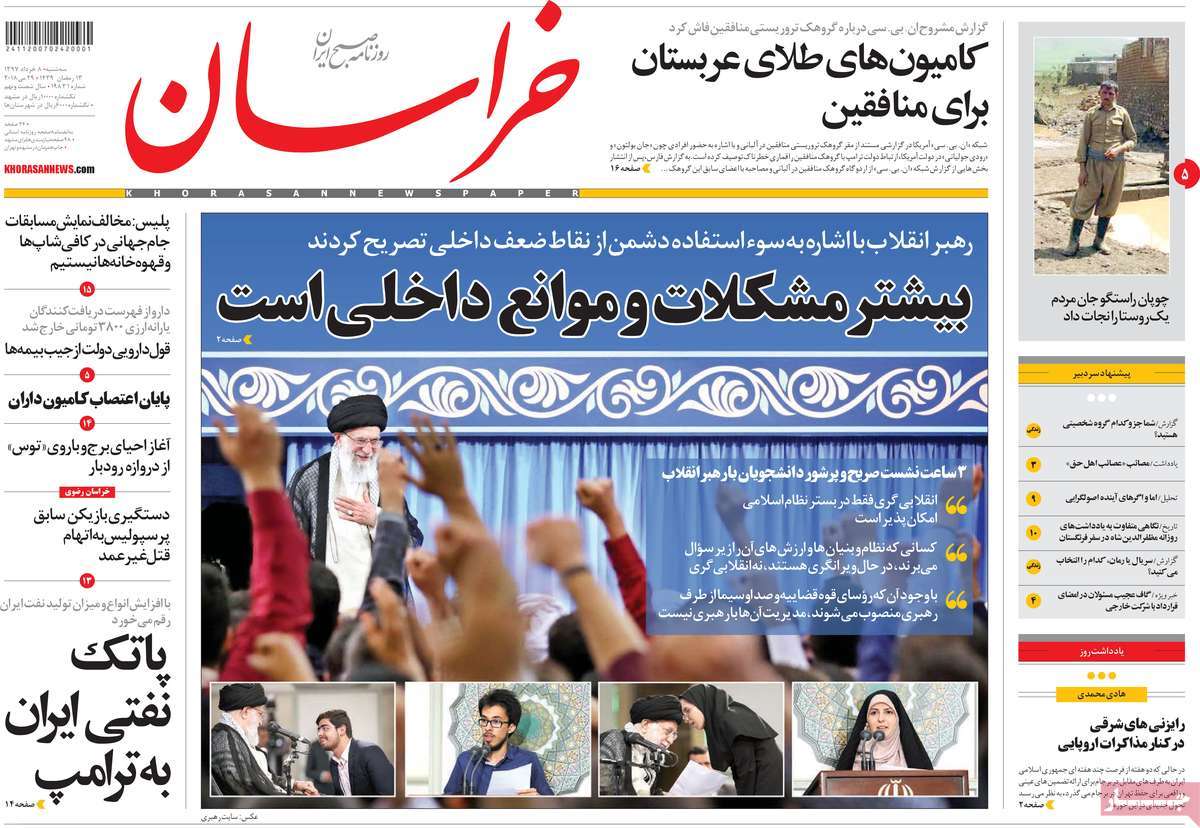
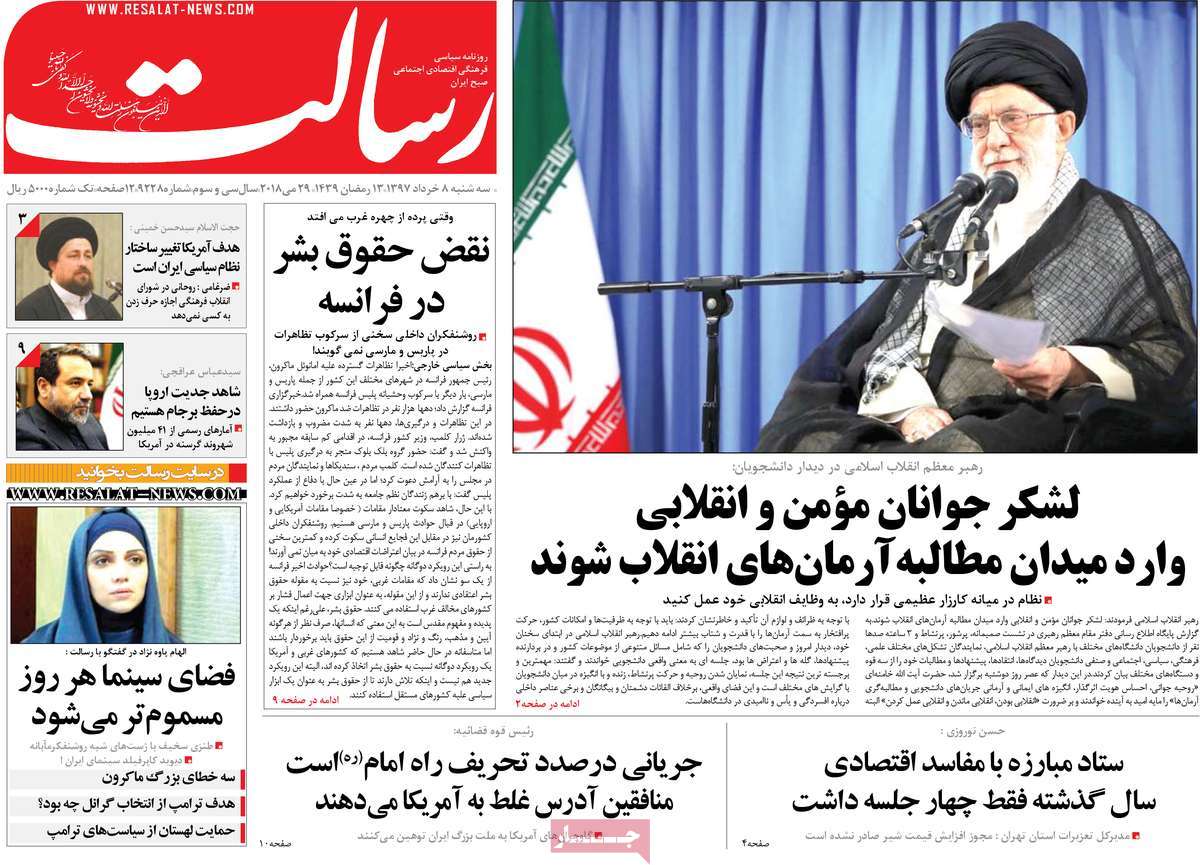
Almost all papers today highlighted the remarks made by the Leader of Iran’s Islamic Revolution Ayatollah Seyyed Ali Khamenei in a meeting with a group of university students in Tehran.

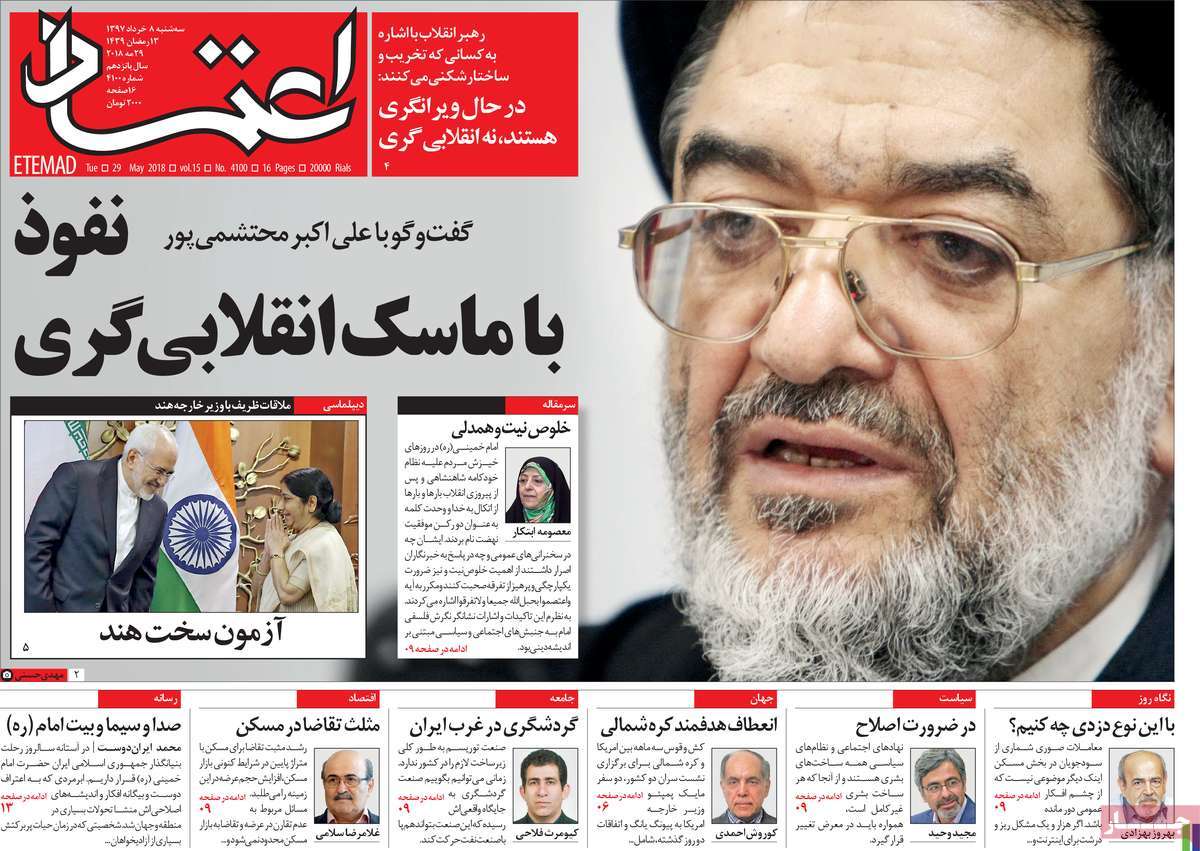
Iranian Foreign Minister Mohammad Javad Zarif’s visit to India and his negotiations with Indian officials also received great coverage.

Also a top story was the upcoming elections to choose the new speaker of Iran’s Parliament and other members of the presiding board. The three factions of the Parliament (reformists, independents, and conservatives) are expected to have a fierce competition to win the seats.

The above issues, as well as many more, are highlighted in the following headlines and top stories:


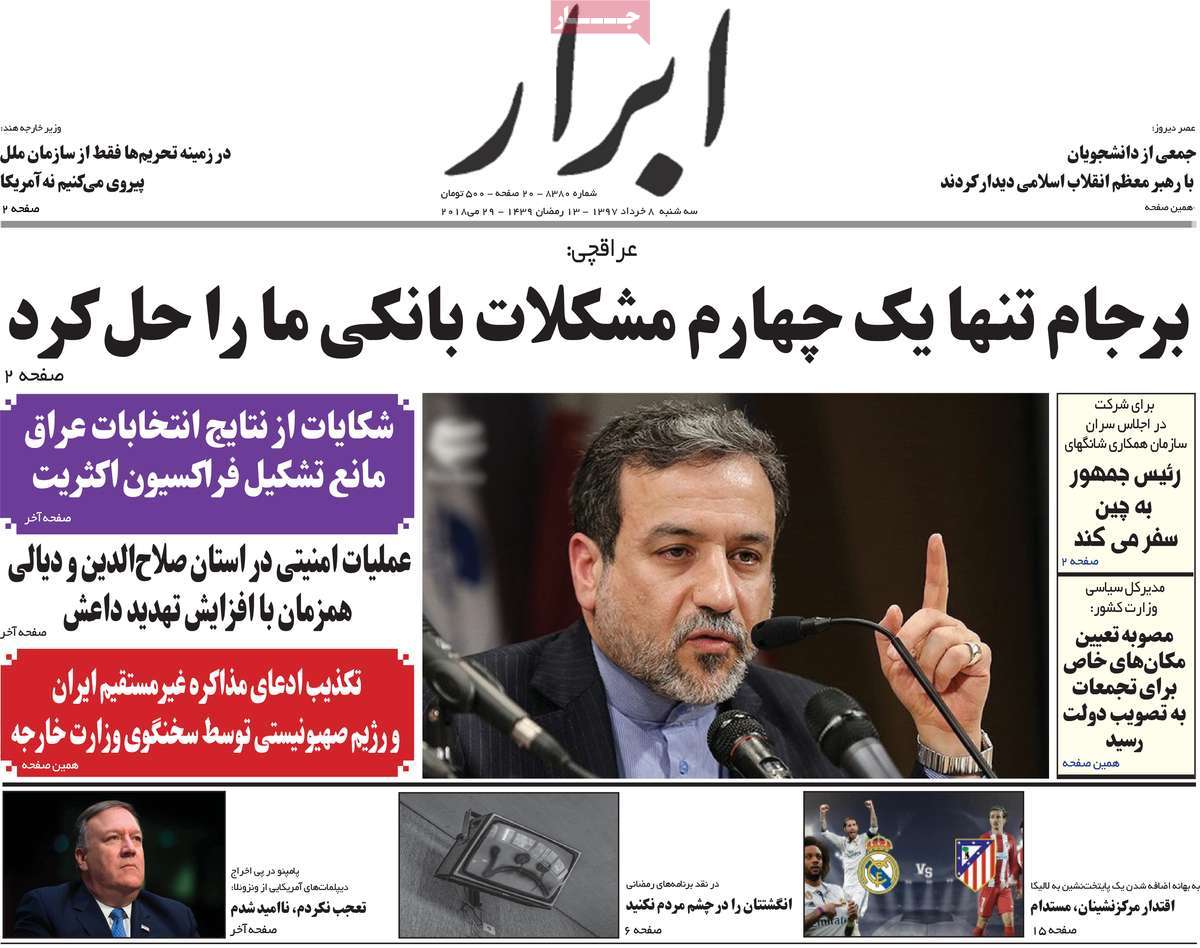
Abrar:

1- Iran Rejects Reports on Indirect Talks with Israel

A Look at Iranian Newspaper Front Pages on May 29


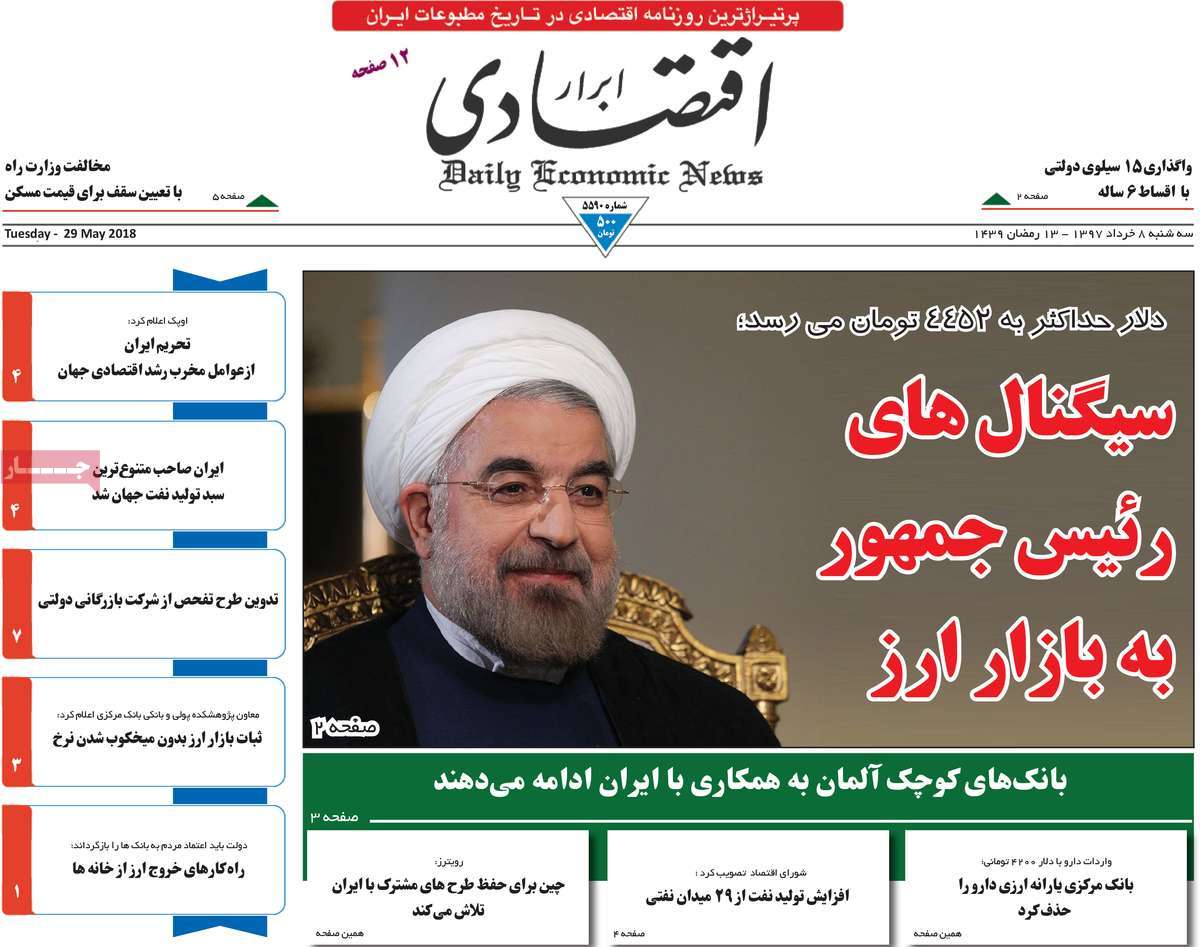
Abrar-e Eqtesadi:

1- Iran Now Has World’s Most Diverse Oil Production Basket

2- Small German Banks to Continue Cooperation with Iran

A Look at Iranian Newspaper Front Pages on May 29


Aftab-e Yazd:

1- Russians Once Again Betray Iran

  • Behind the Scenes of Moscow-Riyadh Oil Deal after US Withdrawal from JCPOA

A Look at Iranian Newspaper Front Pages on May 29


Arman-e Emrooz:

1- Shocking News: Schoolboys in Tehran High School Sexually Harassed

A Look at Iranian Newspaper Front Pages on May 29


Asrar:

1- Mogherini: JCPOA Ensures Security in Region

A Look at Iranian Newspaper Front Pages on May 29


Donya-ye Eqtesad:

1- India Says No to US Sanctions against Iran

A Look at Iranian Newspaper Front Pages on May 29


Ebtekar:

1- Italy Latest Destination of Domino of Europe’s Political Crisis

2- Three Factions Vying for 12 Seats of Parliament’s Presiding Board

  • All Speculations on Upcoming Elections

A Look at Iranian Newspaper Front Pages on May 29


Etemad:

1- India’s Hard Test: Zarif Meets Indian Top Diplomat

A Look at Iranian Newspaper Front Pages on May 29


Ettela’at:

1- Iran Leader: Society Not to Progress without Freedom

2- West Karoun Oil Fields to Help Iran Increase Oil Production Capacity

3- Washington, Pyongyang to Hold Talks at Korean Demilitarized Zone

A Look at Iranian Newspaper Front Pages on May 29


Hemayat:

1- Iran Leader: Injecting Despair into Society Is What Enemies Do

2- Yemen’s Ansarullah: Saudi Arabia, UAE Seek to Occupy Yemen

A Look at Iranian Newspaper Front Pages on May 29


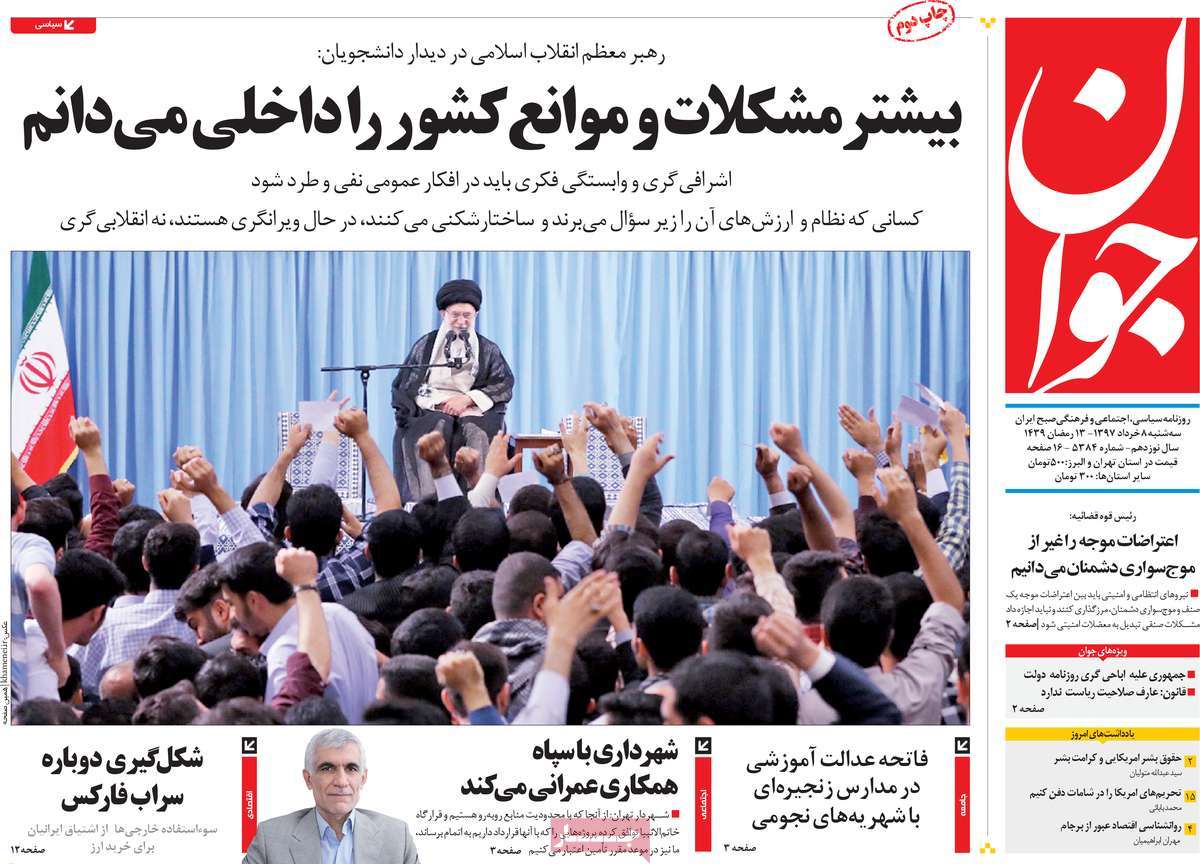
Javan:

1- Leader: Majority of Problems, Barriers Originate from Inside Iran

2- Tehran Municipality Cooperating with IRGC Construction Base

A Look at Iranian Newspaper Front Pages on May 29


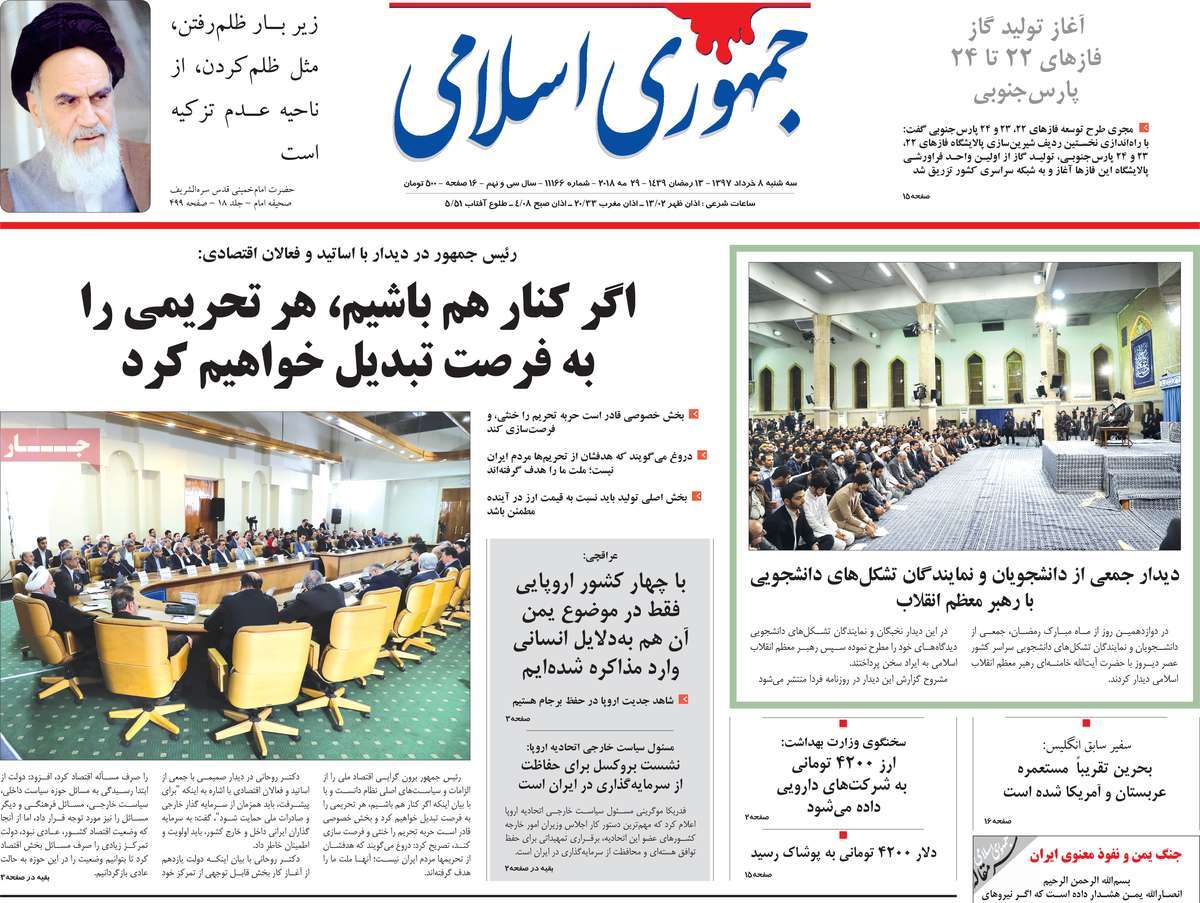
Jomhouri Eslami:

1- Araqchi: Iran Entered into Talks with Europeans Only on Issue of Yemen for Humanitarian Reasons

A Look at Iranian Newspaper Front Pages on May 29


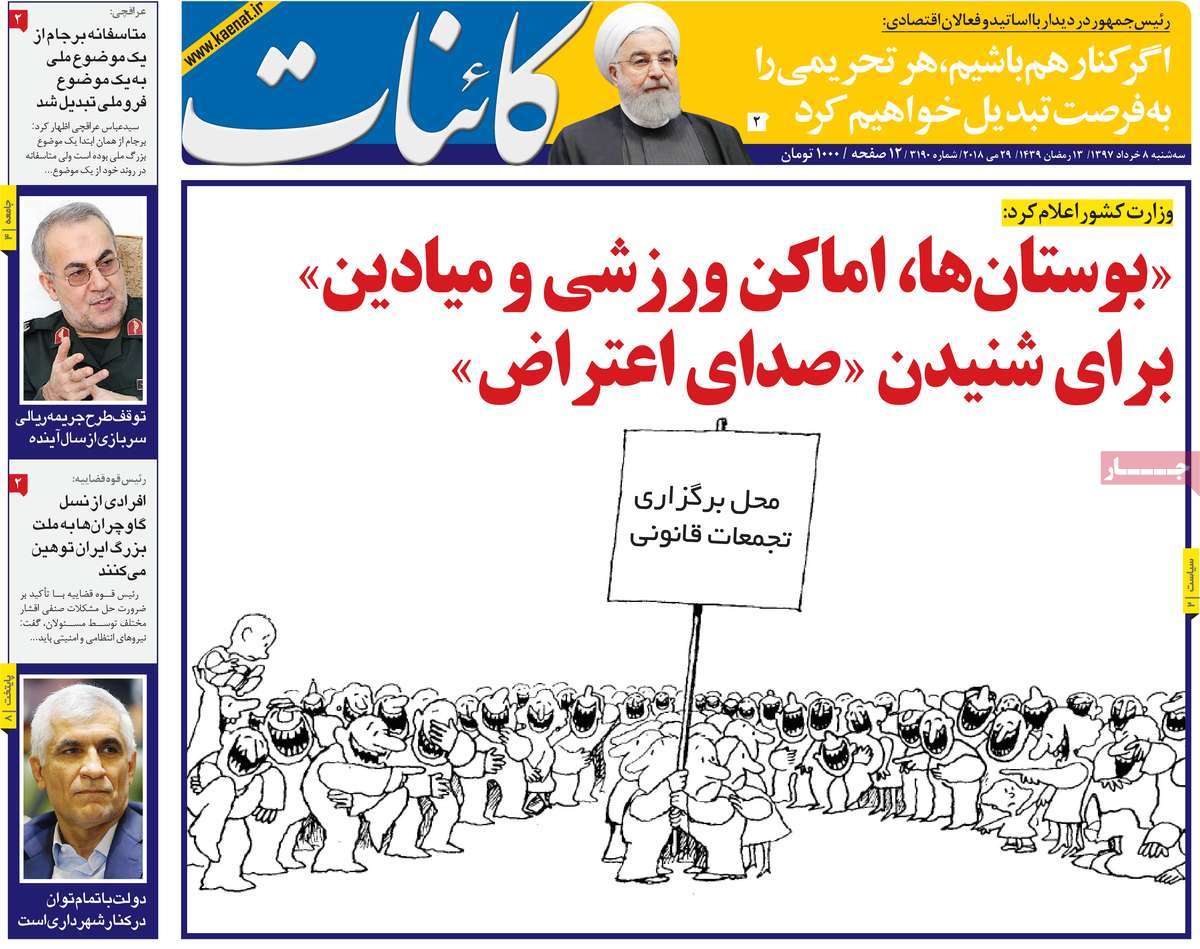
Ka’enat:

1- Interior Ministry: Parks, Sports Complexes, Squares to Be Dedicated to Protest Gatherings

A Look at Iranian Newspaper Front Pages on May 29


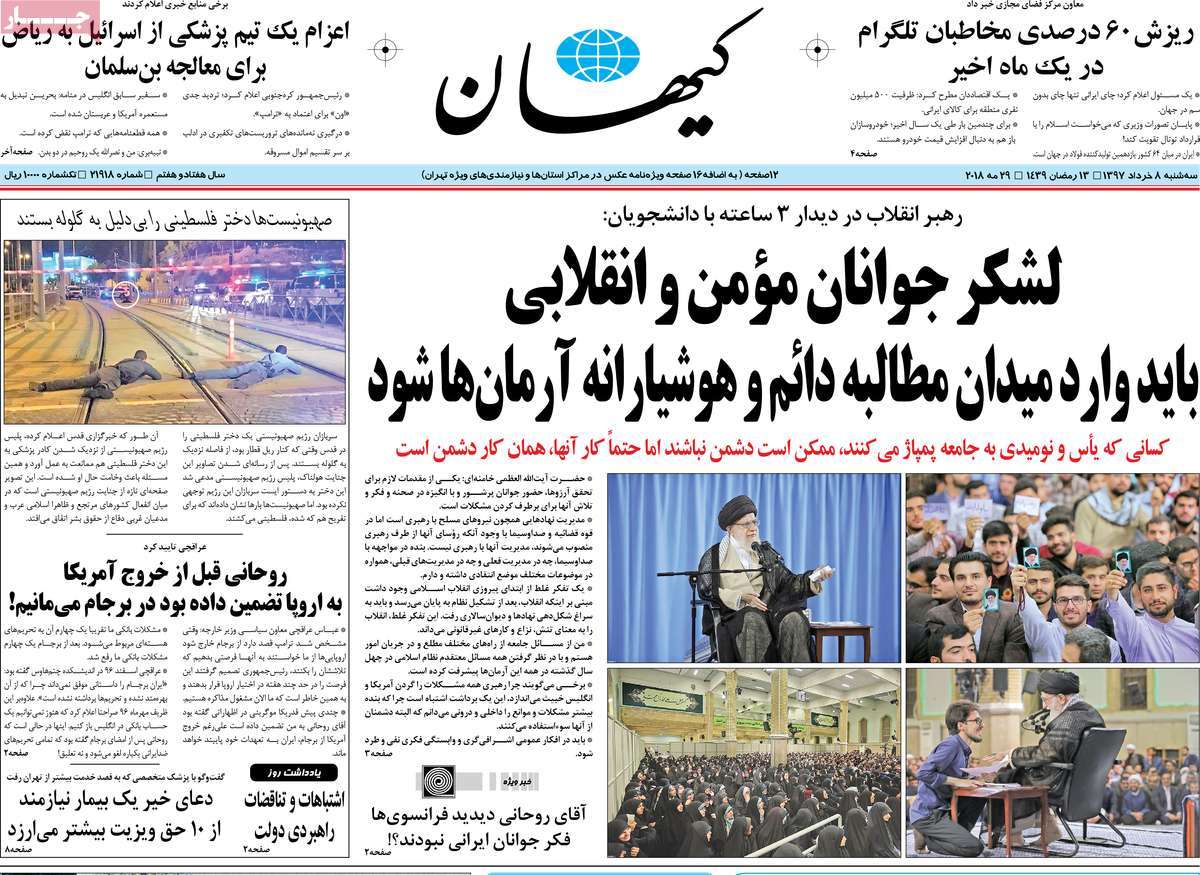
Kayhan:

1- Sources: Israeli Medical Team Dispatched to Riyadh to Cure Bin Salman

2- Israelis Shoot Palestinian Girl for No Reason

A Look at Iranian Newspaper Front Pages on May 29


Khorasan:

1- NBC Reveals: Saudi Arabia Giving Trucks of Gold to MKO Terrorists

2- Counterattack on Trump: Increase in Types, Amount of Iran’s Oil Output

A Look at Iranian Newspaper Front Pages on May 29


Resalat

1- Violation of Human Rights in France

  • Iranian Intellectuals Don’t Talk about Crackdown in Paris, Marseille

A Look at Iranian Newspaper Front Pages on May 29


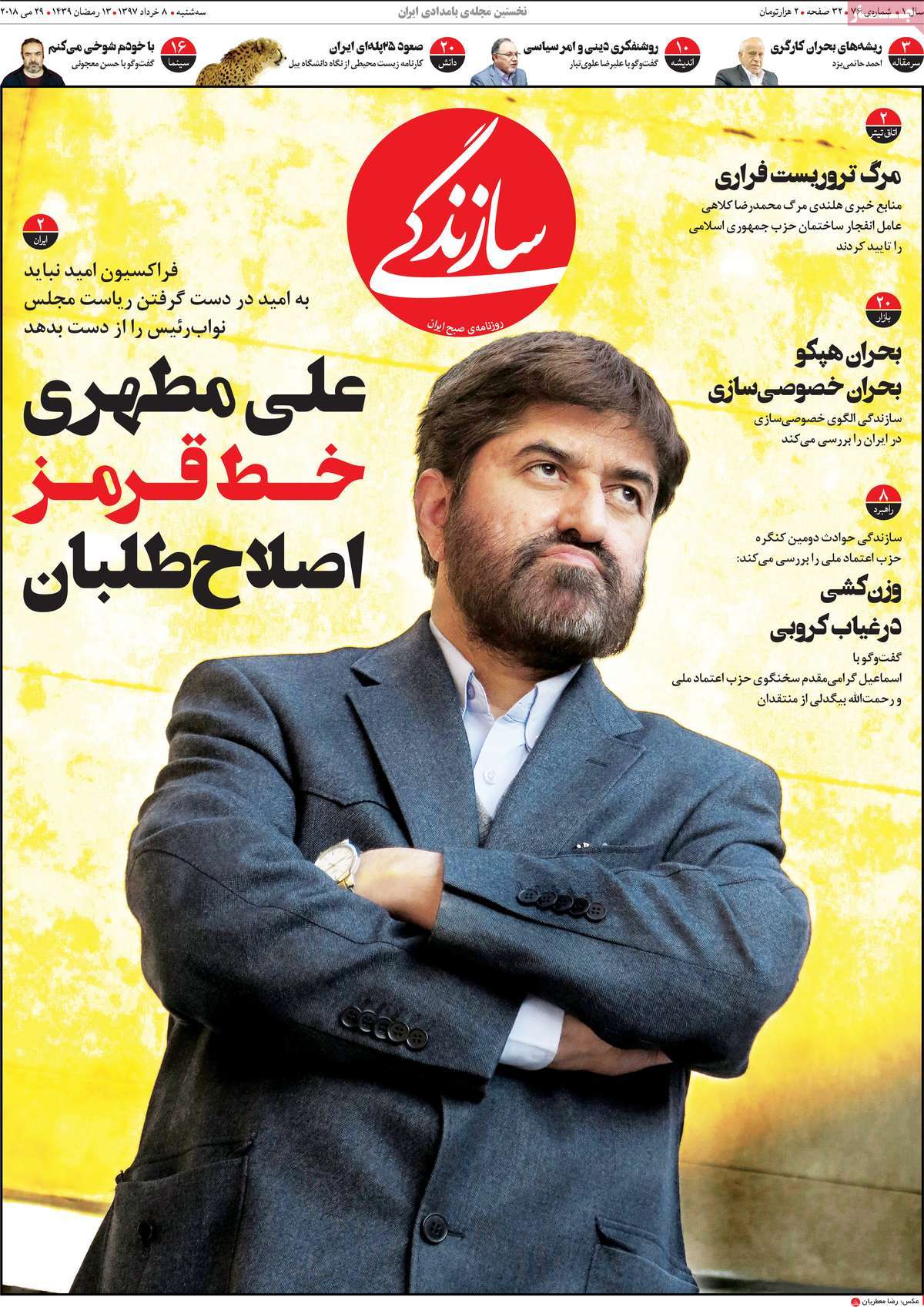
Sazandegi:

1- Ali Motahari Redd Line of Reformists

  • Reformist MPs Shouldn’t Lose Its Vice-Speakers in Hope of Winning Speakership

A Look at Iranian Newspaper Front Pages on May 29


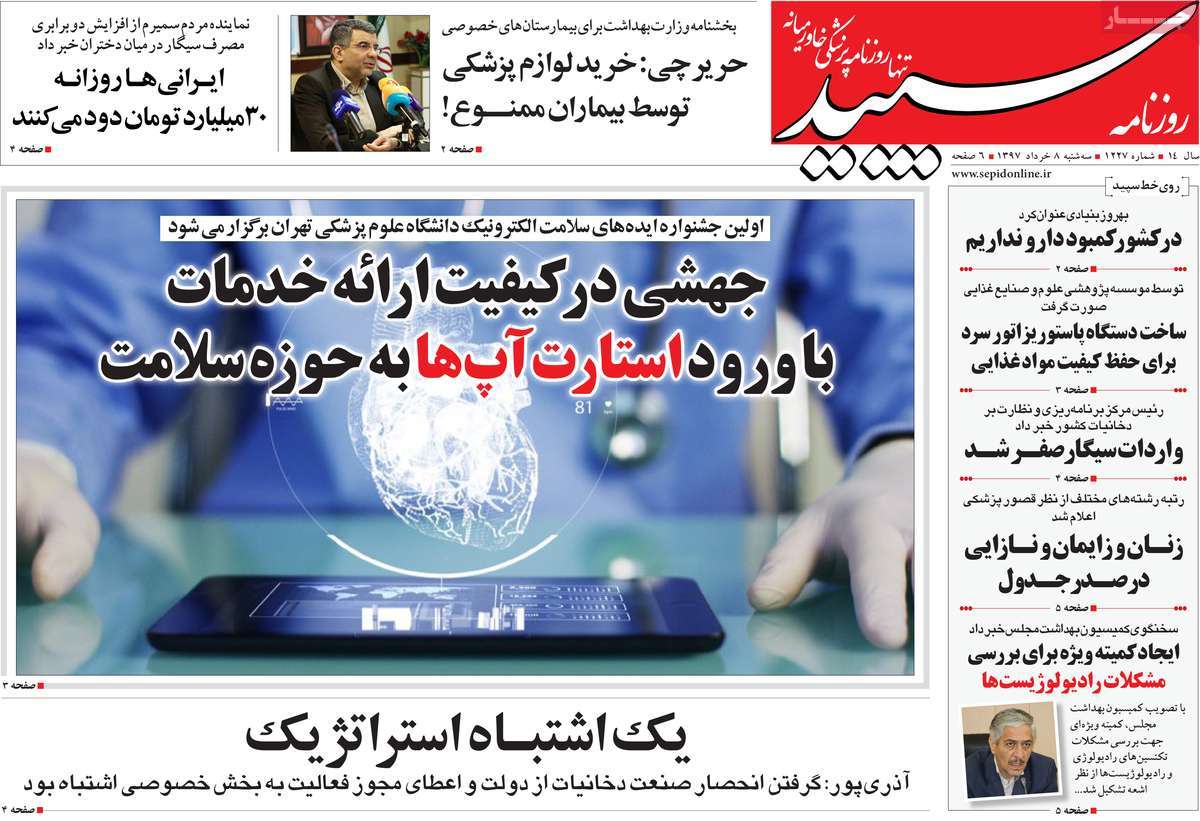
Sepid:

1- A Jump in Quality of Services after Emergence of Startups in Health Sector

A Look at Iranian Newspaper Front Pages on May 29


Shahrvand:

1- Value of Iranian Passport Up by 5 Positions

2- Iranian Cafes to Thrive Thanks to Passion of Football, World Cup

  • Tehran Police Not Opposed to Football Broadcast in Cafes

A Look at Iranian Newspaper Front Pages on May 29


Shargh:

1- Zarif in India: Consultations on Banking, Oil Issues

2- What Russia Wants from Iran, JCPOA (Editorial)

A Look at Iranian Newspaper Front Pages on May 29

Man behind Iran’s Worst Terrorist Attack Killed in 2015: Dutch Daily

Man behind Iran’s Worst Terrorist Attack Killed in 2015: Dutch Daily
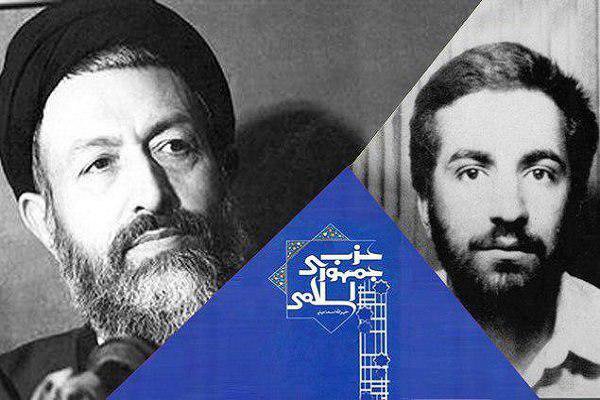
Ayatollah Beheshti (left), the Iranian Judiciary Chief who was killed in a 1981 bombing in Tehran by Mohammad-Reza Kolahi (right)

The Amsterdam-based newspaper Het Parool reported the news, citing a Dutch court investigating the case as the source.

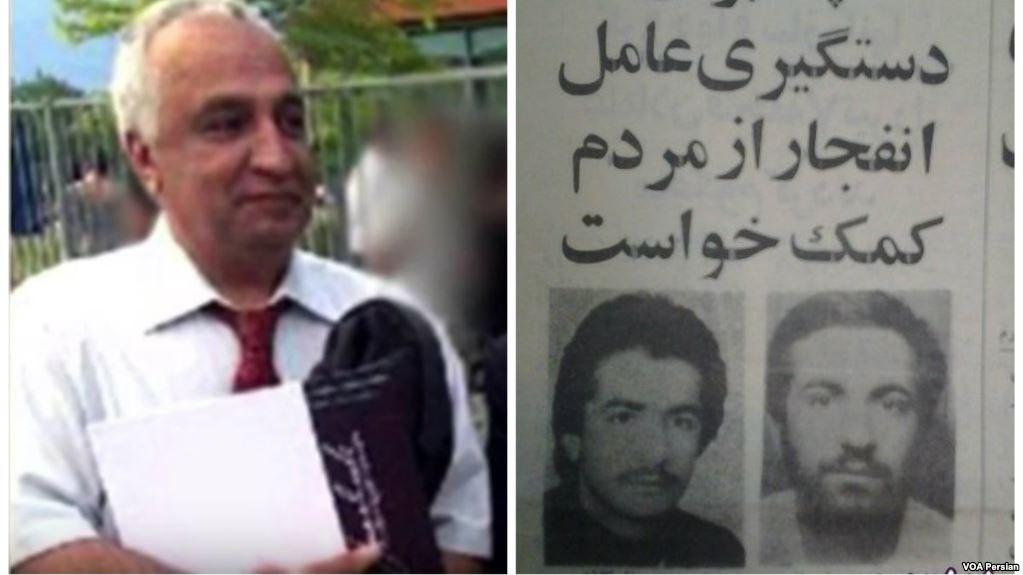
The court held its first hearing on Friday, where two Amsterdam citizens suspected of killing the 56-year-old guy named Ali Motamed in his apartment in the Dutch city of Almere in December 2015 defended themselves.

The report said Ali Motamed was in fact a new identity for Mohammad-Reza Kolahi Samadi, who is held responsible for the 1981 bombing of the headquarters of the Islamic Republic Party in Tehran.

The bombing killed 72 high-ranking politicians and party members, among them Chief Justice Ayatollah Mohammad Behesthi, who was seen as the number two figure after founder of the Islamic Republic Ayatollah Ruhollah Khomeini.

Kolahi, a member of the Mujahidin-e Khalq Organization (MKO) who was a student at the time of the terror attack, came to the Netherlands as a political refugee in the 1980s.

He started a new life in the country as an electrician and married a Dutch woman who brought him a son.

Kolahi was sentenced to death in absentia and was an internationally wanted criminal.

Man behind Iran’s Worst Terrorist Attack Killed in 2015: Dutch Daily

May 2018, Rainiest Month in Iran in 10 Years

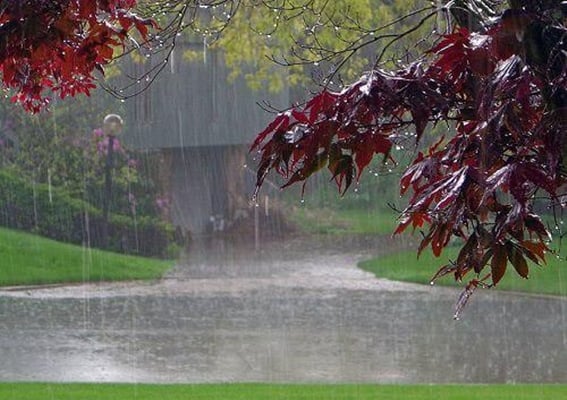
Out of the 158.4-mm precipitation across Iran over the past eight months, 38.6mm was poured only during April 21 to May 21.

According to a report by Tasnim News Agency, a review of the precipitation since the beginning of the water year (September 2017 till May 21, 2018) in Iran reveals that there was a 158.4mm precipitation across the country over the past eight months.

The figure reveals that Iran experienced a 29.7-percent and 31.4-percent drop in precipitation compared with the similar period of time in the previous year and the average long term, respectively.

Before this year’s April 21, the rate of rainfall during the current water year stood higher compared with the same period in the previous year and the past five decades.

In another word, by April 20, 2018, Iran experienced a 43.1 percent drop in precipitation compared with the same period in the previous year and the average long term but May compensated for the shortage.

In late March, the national climatological research institute announced that much of Iran should expect higher than average temperatures as well as less precipitation this spring.

However, the rainfall, affecting almost the entire country over the past two months of the spring (March 21-May 21) has compensated part of the shortages. Nevertheless, many still believe that the summer will be drier than ever especially in southern cities.

List of US Demands Testifies to Iran’s Growing Clout: IRGC

Speaking Monday night, Brigadier General Hossein Salami, the lieutenant commander of the Islamic Revolution Guards Corps (IRGC), said Iran is now so powerful that the US secretary asks it to end its presence in the region.

“This means we cannot [push Iran out] and the country itself should end its presence,” he said, according to a report by IRNA.

“Enemies cannot do anything but to impose sanctions,” Salami said, adding that Iran is wealthy country that cannot be isolated.

Iran’s adversaries have spared no chance since the 1979 Islamic Revolution to curb Iran’s influence in the region.

In a follow up to the early March withdrawal of the US from the nuclear deal, Pompeo last week threatened to impose the “strongest sanctions in history” against Iran that would ultimately destroy Iran’s economy unless it capitulated to a series of 12 “basic requirements”.

The list asks Tehran to halt its missile development, stop what the US believes are Iran’s interventions in the affairs of Iraq, Syria and Yemen and cease support for groups which the US considers terrorist but Iran sees as legitimate resistance forces.

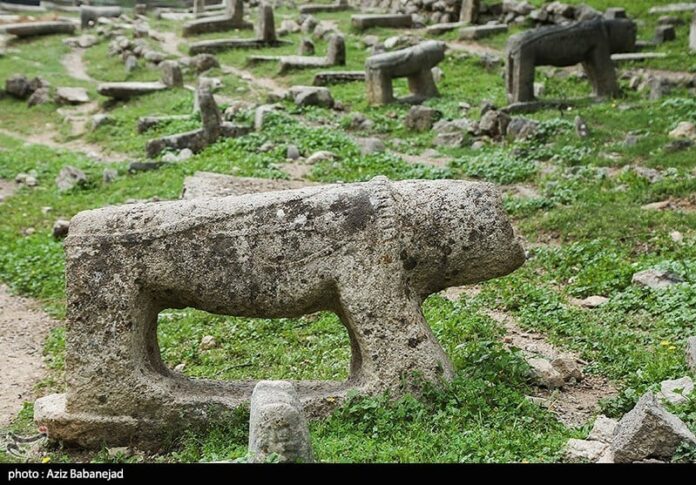
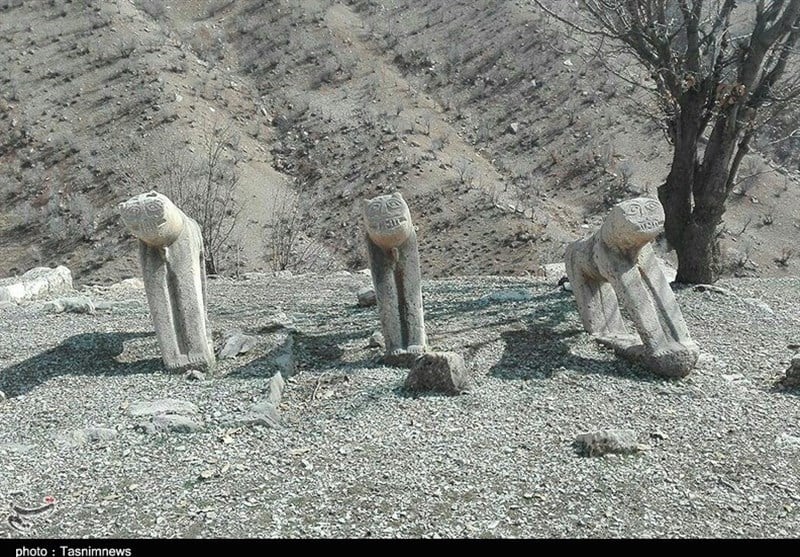
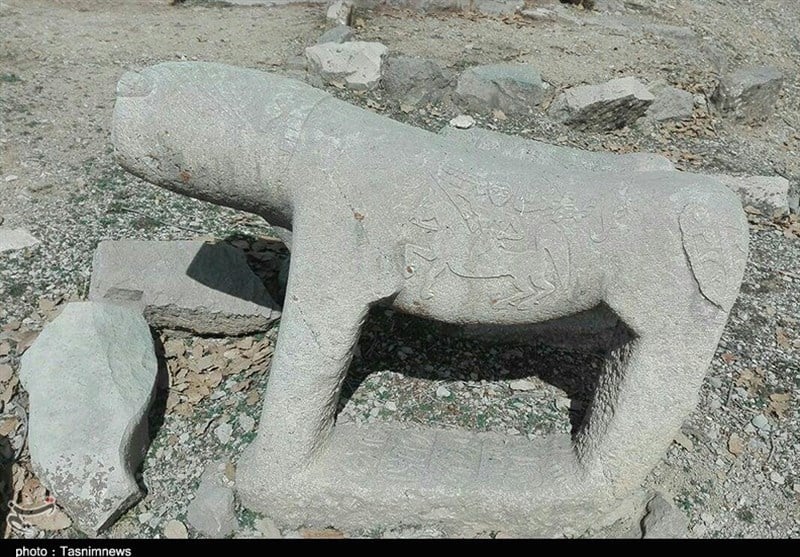
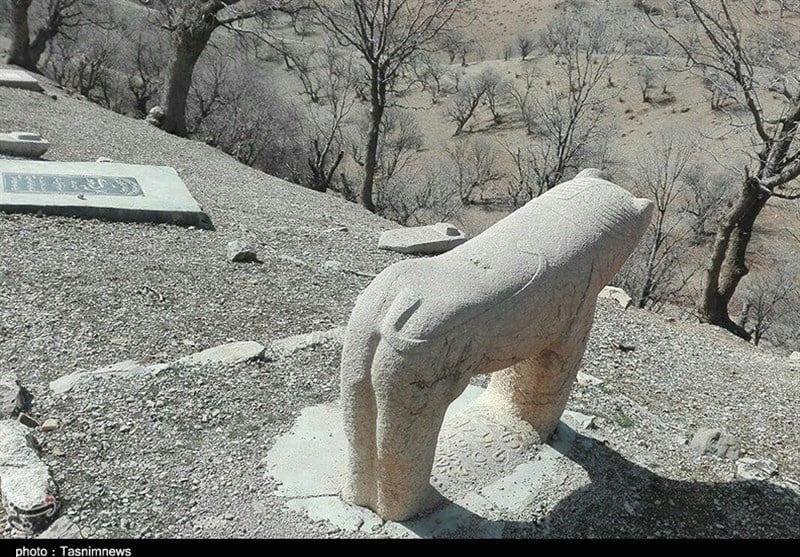
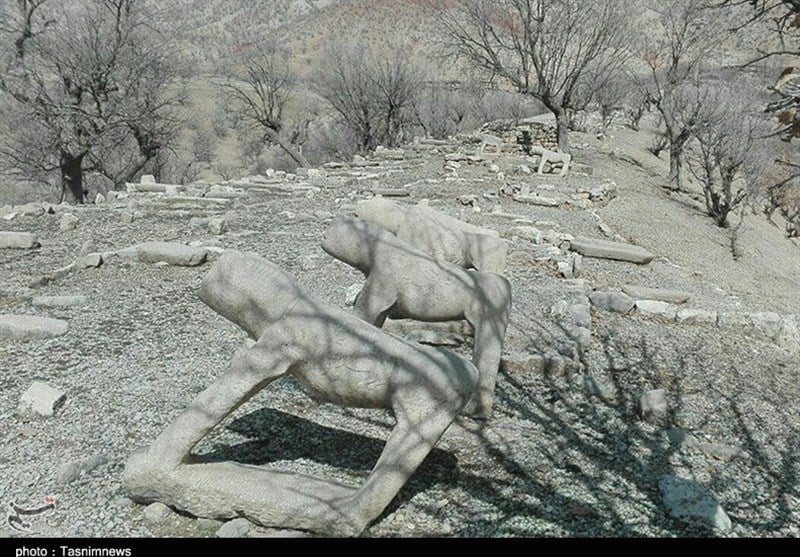
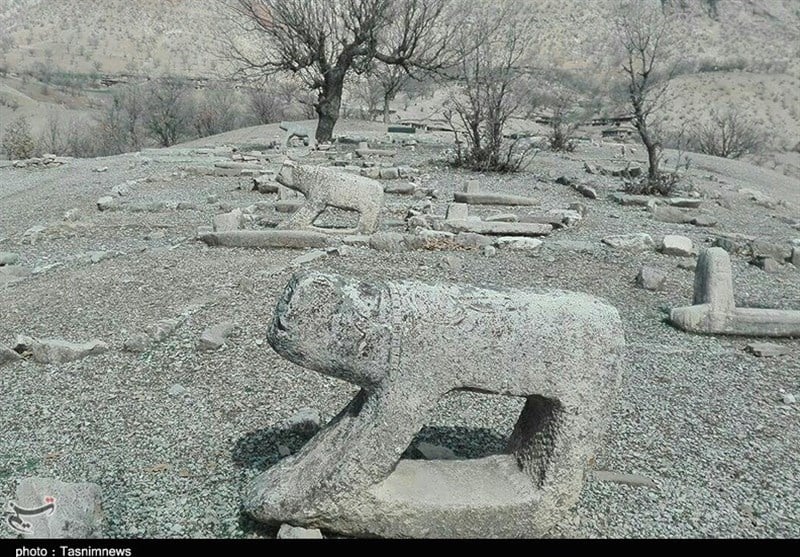
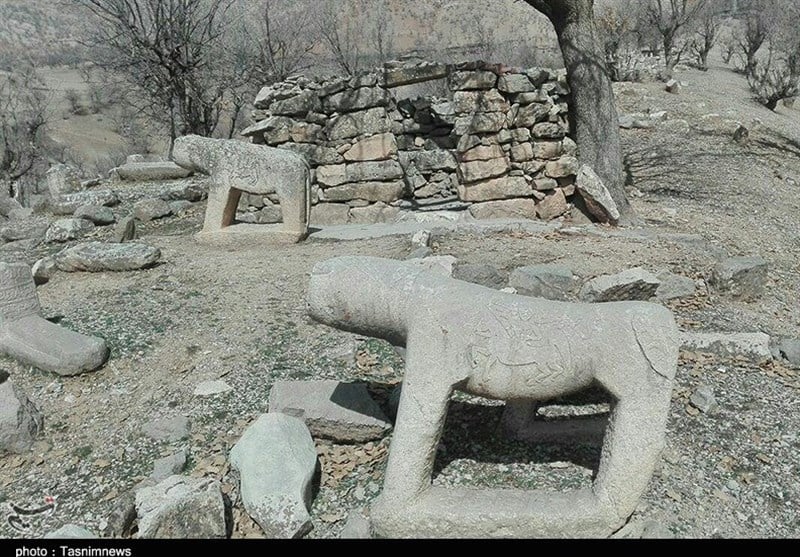
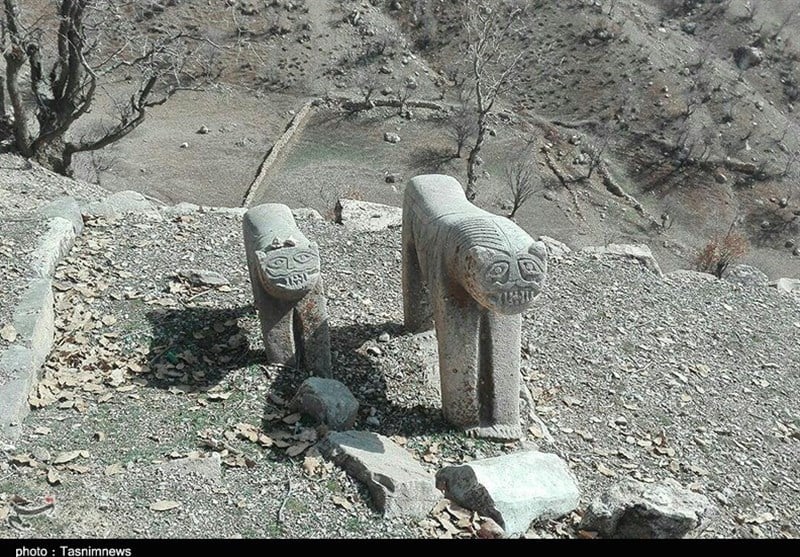
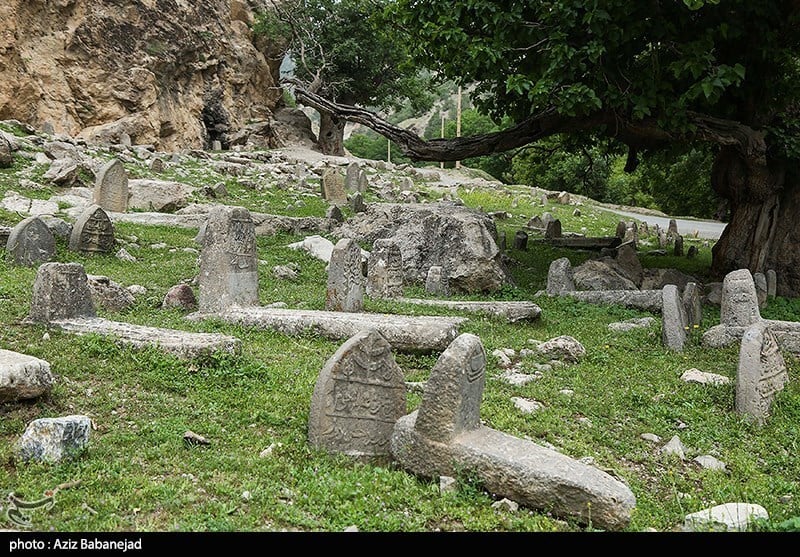
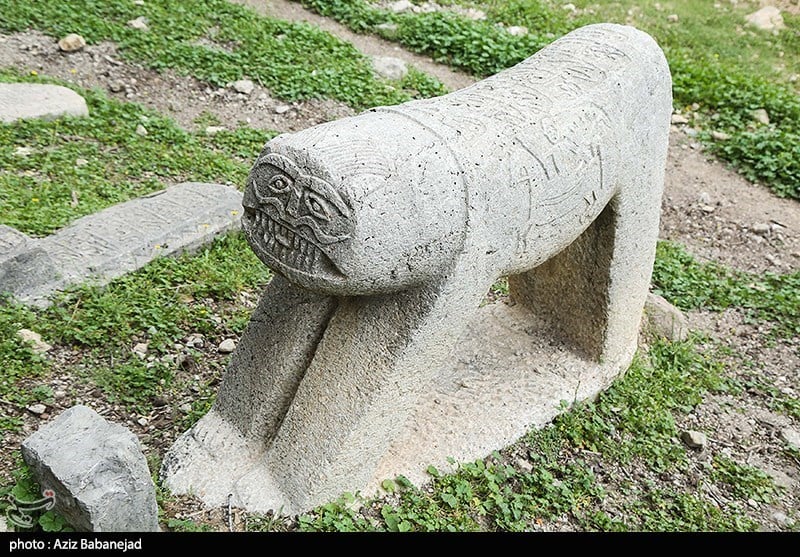
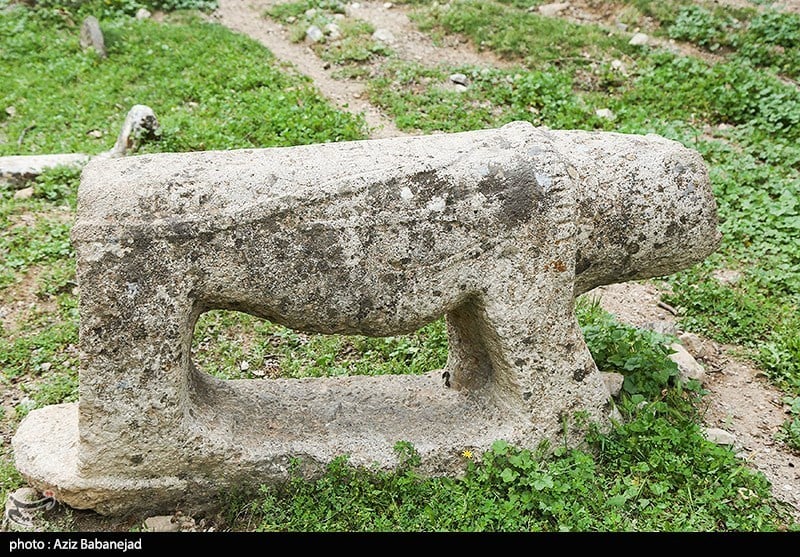
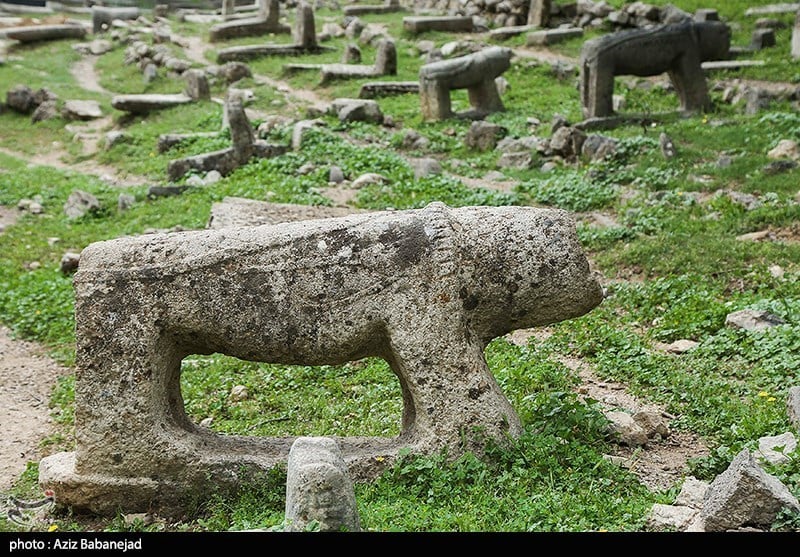
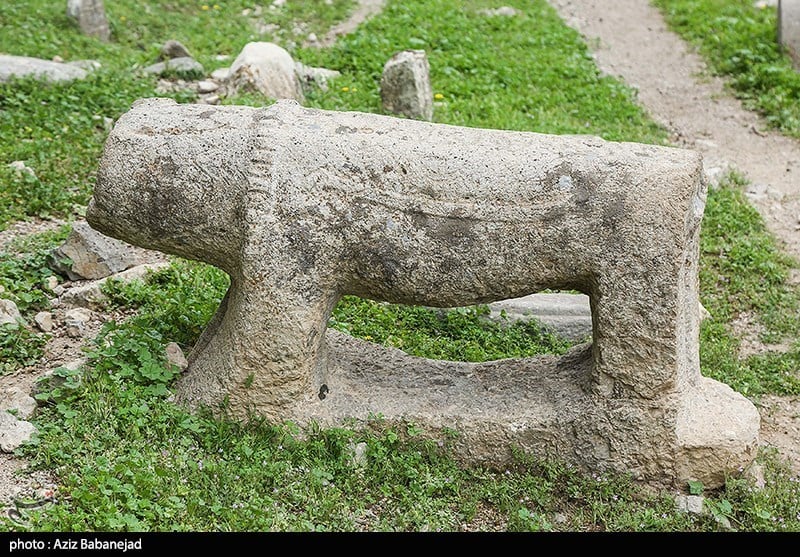
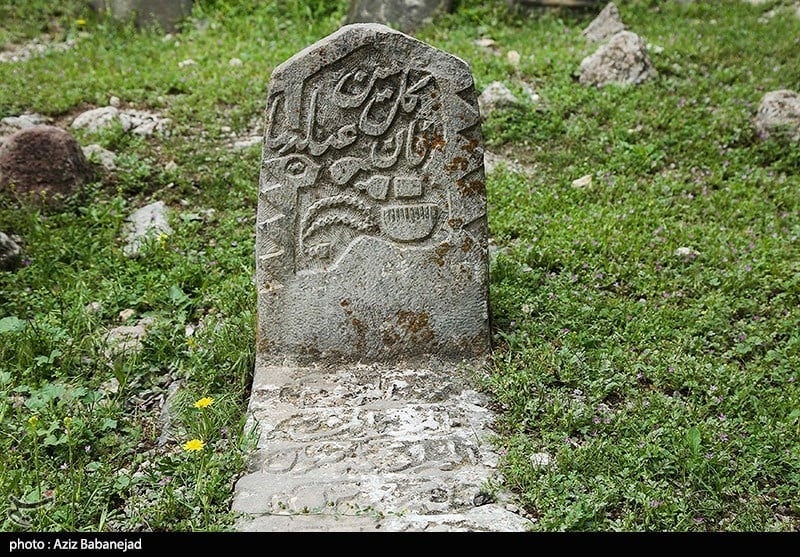
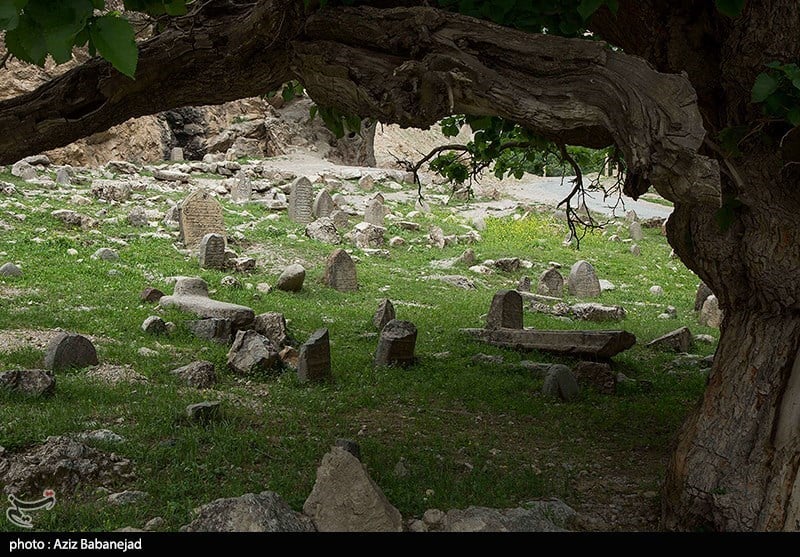
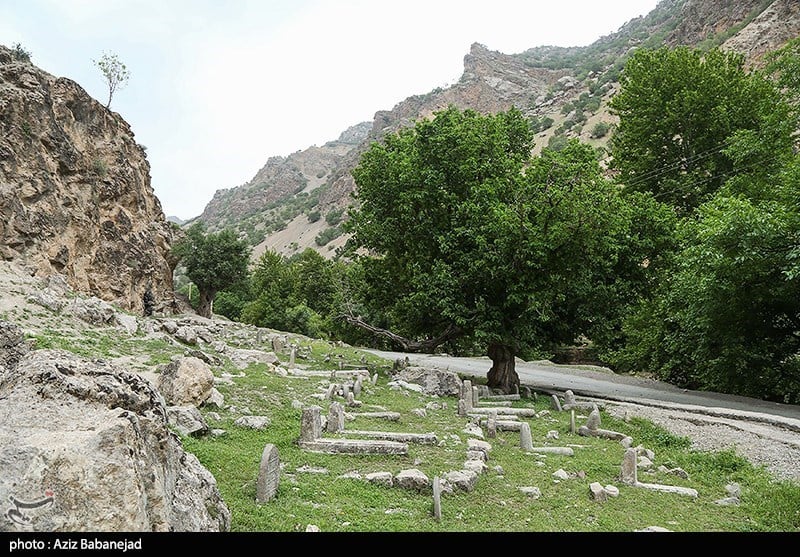
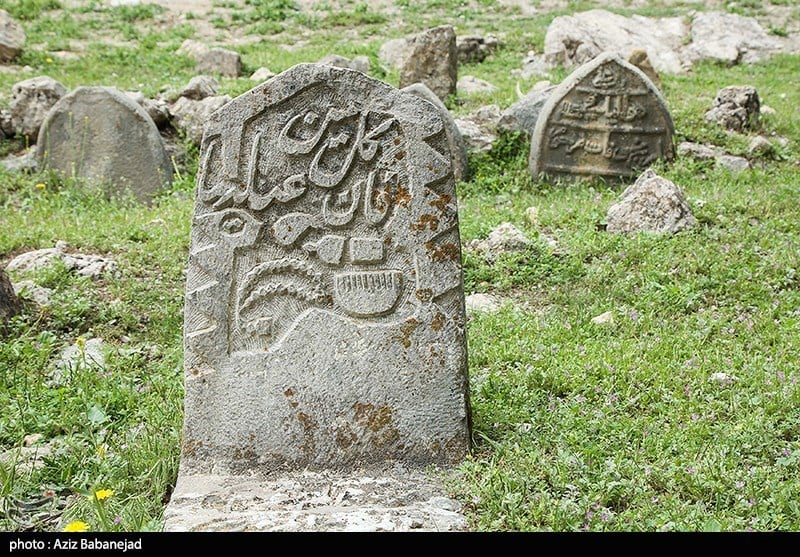
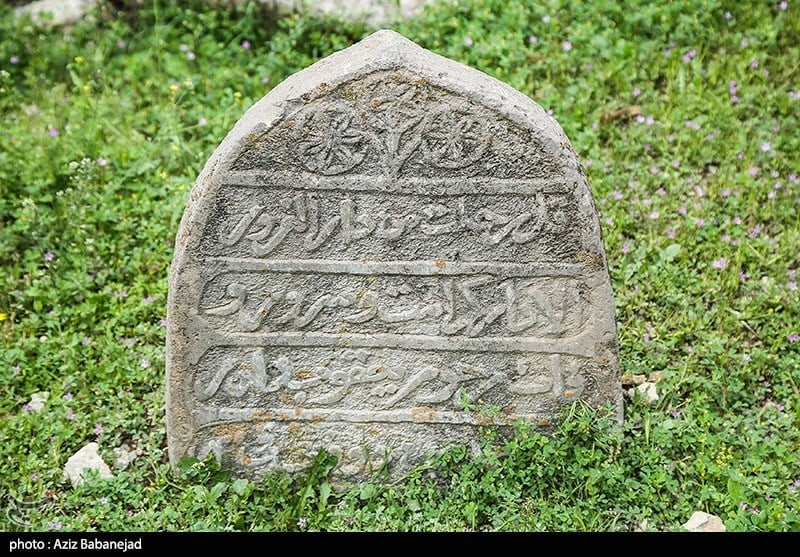
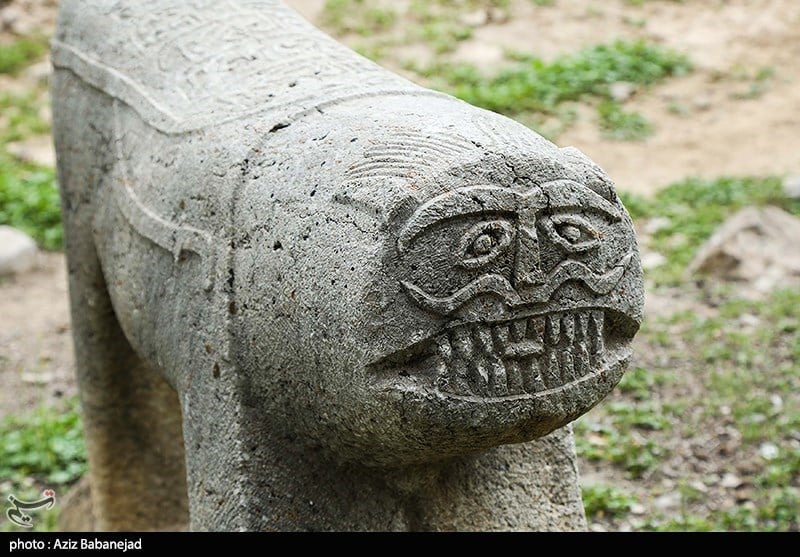
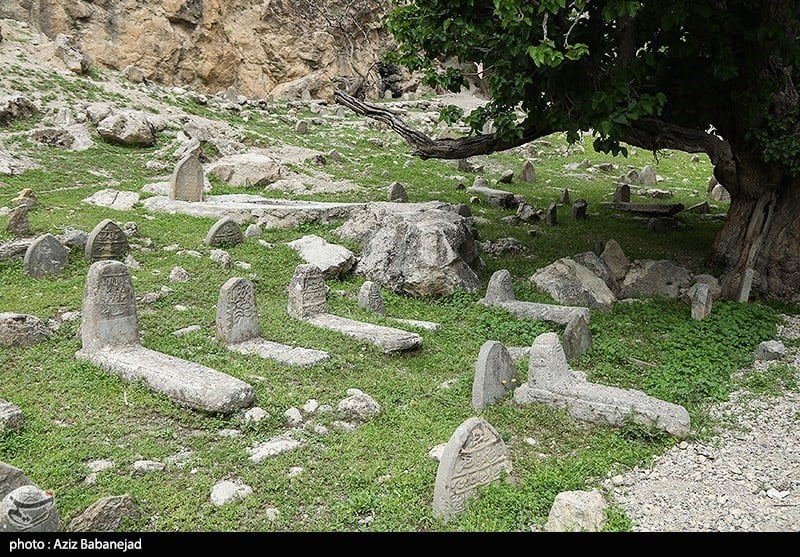
Ancient Iranians Used Stone Lions to Guard Their Graves

Use of lion tombstones is a Bakhtiari tradition, a tribute built for the great tribesmen of the area.

According to local people, some of the graves date back to four hundred years ago.

Following are Tasnim’s photos of the graveyards:

Iran Leader Warns against Attempts to Inject Despair into Society

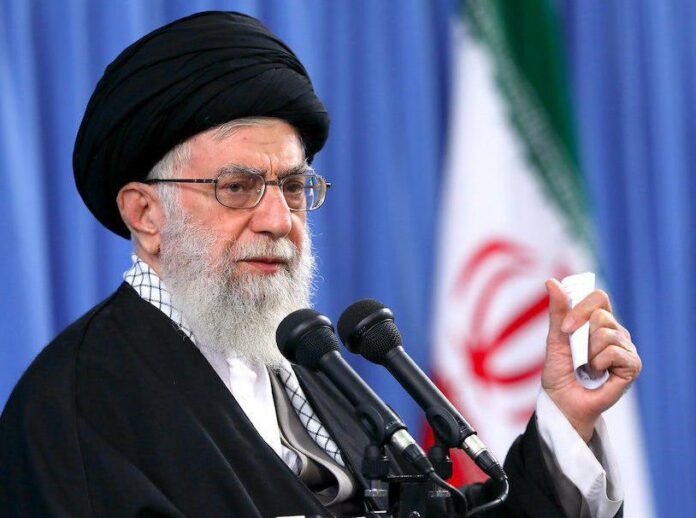
Ayatollah Seyyed Ali Khamenei

Ayatollah Khamenei on Monday said maybe these people [who inject despair] are not enemies, by what they do is exactly the same thing that enemies do.

Addressing a host of university students in Tehran, the Leader then touched upon the freedoms that Iranians enjoy.

He said the freedoms that Iranians have today in social, political and media arenas as well as in the cyberspace are a far cry from the climate of oppression that existed during the tyrannical rule of the former Pahlavi regime.

Elsewhere in his remarks, Ayatollah Khamenei underscored that Iran has made tangible and objective progress in the science and technology domain.

Ayatollah Khamenei underlined the necessity of making efforts to realize the ideals of the 1979 Islamic Revolution of Iran.

He said there are several strata of society, including academics, seminarians, artists and scientists, who are instrumental in attaining the ideals.

“The youth, as the driving force behind the general move in the country, can play an important role in realizing the ideals,” said Ayatollah Khamenei.

The Leader said among the hurdles to moving towards ideals are “a lack of proper understanding of the environment” and “mistaking the friend’s front for that of the foe.”

He said a lack of willpower, laziness and impatience will also impede the move toward the realization of ideals.