Sunday, April 12, 2026
Home Blog Page 3444

Trump’s Iran Strategy Dictated by Saudi Arabia, Israel: Expert

The US government has announced the re-imposition of all sanctions against Iran which had been cancelled within the framework of the nuclear deal known as the JCPOA. Donald Trump’s administration officially announced that all sanctions that had been lifted under the 2015 nuclear deal are re-instated. Meanwhile, the US Treasury Department announced that 700 individuals and entities would be included in the blacklist.

The United States however granted waivers to temporarily allow eight nations to continue importing the Iranian oil after it re-imposed sanctions on Tehran, Secretary of State Mike Pompeo said Friday.

Now, the question is that what would happen to relations between Tehran and Washington with the return of US sanctions? Would Iran be forced to negotiate with the United States after these sanctions? Or Iran will continue its interaction with the remaining parties of the nuclear deal until the Trump’s term ends?

Khabar Online has conducted an interview with political analyst Vahid Gharavi in this regard. What follows are excerpts of his answers:

The history of Iran-US relations over the past forty years has been full of tension and hostility. In the current situation, especially since the beginning of Trump’s term, and Iran’s emergence as a regional power, new dimensions of such hostility have unfolded. Meanwhile, Washington’s withdrawal from the nuclear deal has increased this hostility.

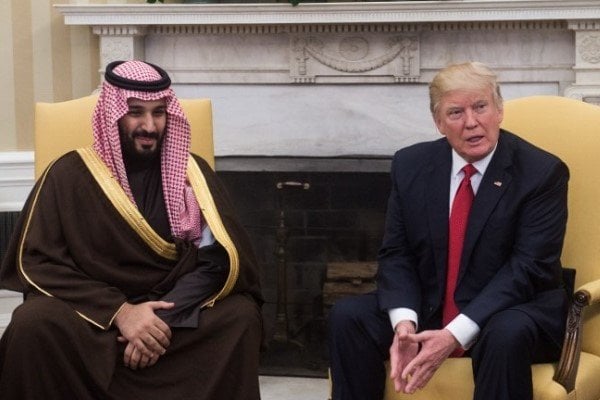
Iran’s successes in Syria, Iraq, Lebanon and, to some extent in Yemen, and the withdrawal of Takfiri terrorist groups, which were supported by Washington and the regional reactionaries, next to the defeat of the Saudi government’s wicked policies in this sensitive area, pushed Riyadh closer to the US. As a result, the anti-Iran policies of Americans took a new form. In fact, the pressures of the Trump administration on Iran and the intensification of sanctions, especially in the oil and gas areas, are now mainly ordered by Saudis and Israelis.

The re-imposition of US sanctions was put on the agenda as of May 2018. One can say there is nothing left to be implemented as of November 4. These days we are hearing that some giant western and even non-Western companies including Chinese oil firms are not willing to cooperate with Iran. Chinese macroeconomic benefits in trade with the United States have even led to a significant reduction in non-oil exports to China, and some Chinese banks have ended their banking cooperation with Iranian parties.

Of course, considering the need for fuel market in winter and the problem of oil price growth, it is not possible to cut down Iran’s oil exports to zero.

As Tehran is dealing softly with the US plan to paralyze the country’s economy, it seriously pursues diplomatic efforts to keep Europeans committed to the nuclear deal.

Over the past few weeks, there have been numerous consultations between the Iranian experts and EU officials in Vienna and Brussels to ensure they fulfill their promises.


Iran-US Row Big Test of Independence for Europe

Undoubtedly, the fulfilment of the European leaders’ promises would encourage Iran to stay in the nuclear deal, and it is very important for the EU. In fact, it is a test of independence for Europe as a powerful political-economic bloc against America’s Trump. This comes as the US president has not only withdrawn from the JCPOA, but also has broken his promises to his long-standing partners in Europe, and, in addition to leaving the Paris Agreement, he has imposed unusual tariffs on European goods to make the split deeper.

Iran No “Saviour” for Iran

According to Iran’s Central Bank governor, during the recent negotiations in Brussels, the financial channel proposed by Europe has been discussed in detail by the parties. Accordingly, the desired financial channel will work to facilitate and remove barriers to monetary exchanges between Iranian and European exporters. Iran’s potentialities and experiences throughout the past years have shown that we are not in a such a grave situation to be saved by Europeans [as mentioned in Khabar Online’s question] because they need to maintain their ties with Iran as well. Iran has never counted on Europe as a “saviour”. Iran relies on its domestic capacities to counter the effect of sanctions.

Naturally, Iran’s potentialities in various fields, of course, along with a clever diplomatic strategy, should resolve the problem of financial exchange between Iran and the European parties. China and Russia are also committed to be loyal to the JCPOA. China and Russia have agreed to satisfy Iran by fulfiling their commitments, especially the political ones. They are trying to fulfil all of their commitments.

One of the ways for the EU to comply with their obligations is, of course, to form a financial channel, which the central bank governor has called a “monetary treaty.”  Certainly, finalising and launching this channel could facilitate the process of payment for Iran. This comes as according to a statement by the Foreign Ministers of the JCPOA parties, this mechanism should not be restricted to Europe in the medium and long term because other Iranian economic partners must enjoy its benefits.

US to Moderate Mideast Policies after Khashoggi Case

Political developments after the murder of Jamal Khashoggi in Istanbul and its repercussions for the Saudi government, and to some extent for Trump as a supporter of Saudis and Crown Prince Mohammed bin Salman, makes me feel that US regional policies would be moderated. It is likely that the anti-Iran project developed by Saudi Crown Prince and Israelis to put excessive pressure on Tehran will be somehow weakened. However, the unpredictable behaviour of Trump could lead to other plots against Iran.

If we pay attention to the remarks made by US Congressmen and some powerful senators, we can understand that there exists a tendency in the US governing body to criticise Trump’s foreign policies in the Middle East; especially the anti-Iran policies that to a great extent are dictated by Saudis.
Iran Praises Guardian Correspondent’s Courage, Warns of Risks He Faces

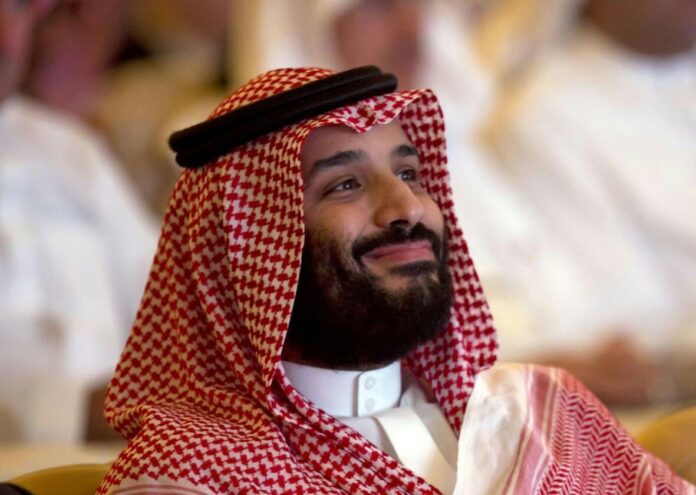
In a post on his Twitter account, Iranian Ambassador to London Hamid Baeidinejad said, “In a brave move, Mr [Saeid] Kamali Dehghan, The Guardian correspondent, said Saudi journalist Khashoggi revealed to him before his death that Saudi officials were the main sponsors of the [anti-Iran London-based TV channel] Iran International.”

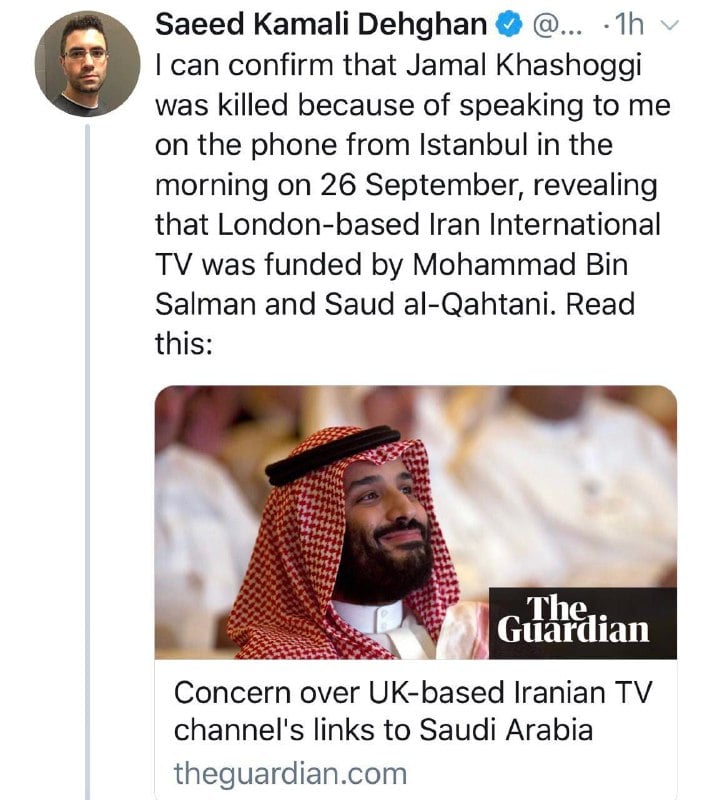
Kamali Dehghan had tweeted on Friday that Khashoggi, the slain Saudi journalist, had been killed for unveiling Saudi Crown Prince Mohammed bin Salman’s direct role in financing the anti-Iran TV channel.

“I can confirm that Jamal Khashoggi was killed because of speaking to me on the phone from Istanbul in the morning on 26 September, revealing that London-based Iran International TV was funded by Mohammed bin Salman and Saud al-Qahtani,” he said in a tweet, which he later deleted for unknown reason.

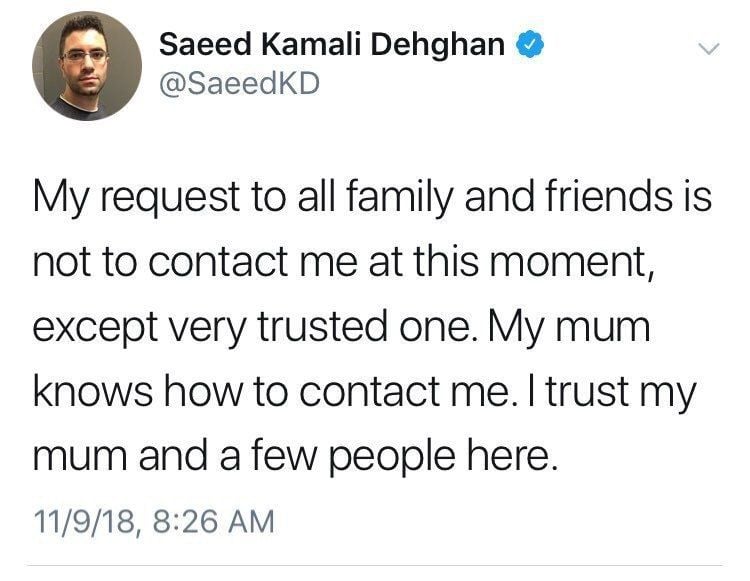
He later posted tweets that suggested he felt threats to his safety, but he deleted these tweets as well.

Iran Praises Guardian Correspondent’s Courage, Warns of Risks He FacesIn his two reports in the Guardian last month, Kamali Dehghan had quoted a source close to the Saudi government as saying Iran International was being funded through “a secretive offshore entity and a company whose director was a Saudi Arabian businessman with close links to bin Salman.”
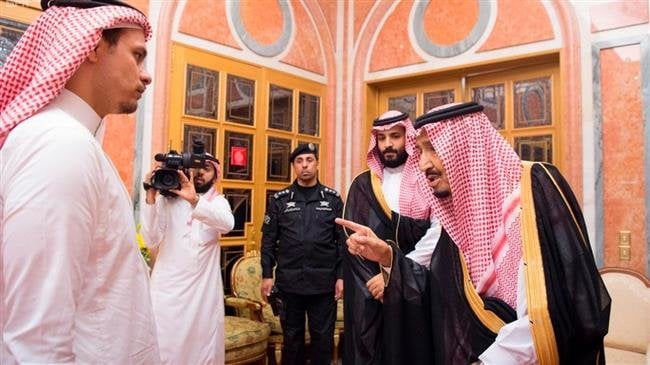
Khashoggi, an outspoken critic of bin Salman, entered the Saudi consulate in Istanbul on Oct. 2, but never came back. That was the same day when the Guardian’s report on the Saudi funding of the anti-Iran TV channel was published.

Iran Praises Guardian Correspondent’s Courage, Warns of Risks He Faces

Khashoggi Killed for Disclosing Saudi Funding of Anti-Iran TV Channel

In a report on Oct. 2, the Guardian cited a source close to the Saudi government as saying that the anti-Iran London-based TV channel Iran International received an estimated $250m (£192m) from the Saudi royal court each year.

Now the Guardian correspondent, in a Friday tweet, has revealed that his source was Khashoggi, the Washington Post columnist who was assassinated on the same day as the report was published in a premeditated murder in Turkey blamed on Saudi Crown Prince Mohammed bin Salman also known as MBS.

Khashoggi, an outspoken critic of bin Salman, entered the Saudi consulate in Istanbul on Oct. 2, but never came back.

The Saudi kingdom, after denying the murder for several days, finally admitted that Khashoggi had been murdered in the consulate during an interrogation by rogue operatives that had gone wrong after diplomatic pressure grew tremendously on Riyadh to give an account on the mysterious fate of its national.

However, Saudi Arabia said that it did not know the whereabouts of the body, which is widely believed to have been dismembered.

Turkish President Recep Tayyip Erdogan later announced the assassination had been ordered at the “highest levels” of the Saudi government.

Iran Pavilions Warmly Received at London Tourism Fair

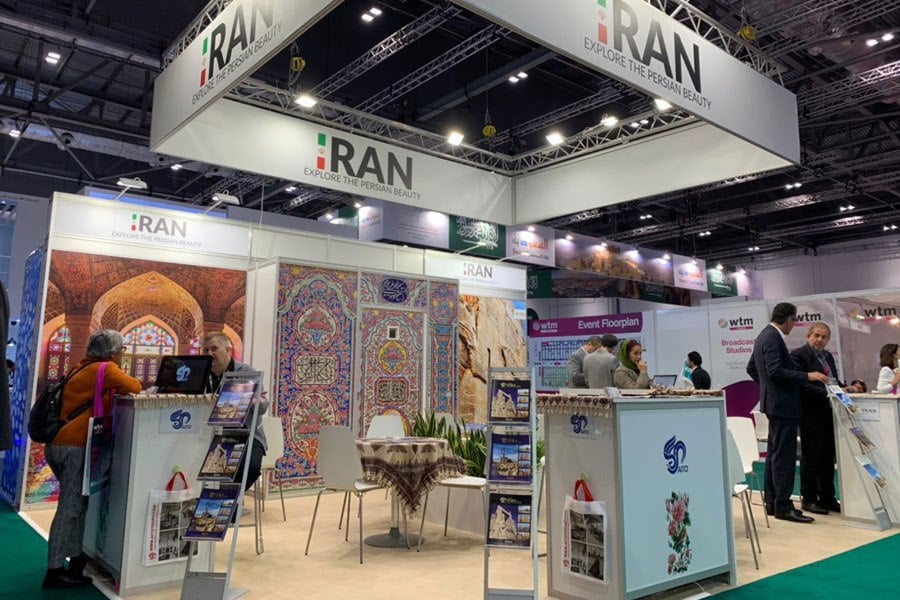
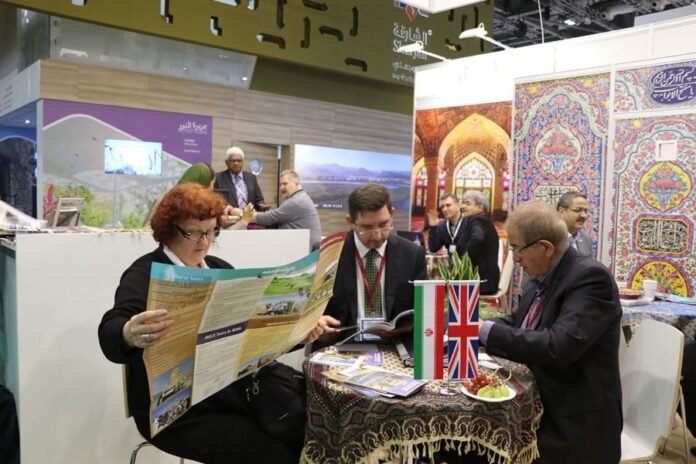
Foreign tourists and tour operators warmly welcomed Iran’s pavilions during the World Travel and Tourism Market Exhibition in London. This shows that the United States’ anti-Iran propaganda and unilateral sanctions have had no bearing on enthusiasts’ interest in Iran’s history and civilization.

The 39th International World Travel and Tourism Market Exhibit opened on Monday, bringing together those working in the tourism sector from around the world, including a number of Iranian tourism firms. The event opened at London’s international convention and exhibitions centre known as ExCel.

Like previous years, tourists and tourism fans visited the pavilions of some 182 countries from the Middle East, Asia, the United States, Latin America, Europe and Africa.

Based on reports, more than 50,000 participants take part in the exhibit every year.

Agreements worth £3.5 billion were expected to be signed in the tourism sector.

Like in previous years, Iranian tour operators made their presence felt in the exhibit and warmly received tourists and tour operators interested in working in the Iran domain. They put on show symbols of Iranian culture, displaying the grandeur of the Iranian history. They entertained visitors with different types of Iranian sweets and confectionary.

In an atmosphere not affected by political developments, many of those interested in Iran visited the country’s pavilions and inquired about how to travel to Iran as well as the tourist attractions in the country.

“We operate two to three Iran tours annually and we intend to increase its number. Places like mountains and deserts in Iran are attractive to tourists,” says a tour operator.

An author writing about events in the tourism sector, who also visited Iran’s pavilion, said he loved Iran and intended to travel to Iran soon, especially to Isfahan.

“Political developments have had no bearing on tourism activities, and this year I not only met our old customers, but met new customers as well,” said Ebrabim Poorfaraj, the chief of Iran tour operators.

“It’s been years that the US has maintained sanctions on Iran, and the world is well familiar with these games. From this perspective, many customers even do not ask about US sanctions and have got along with this issue,” he added.

Tourism experts believe Iran’s tourism industry will not affected by Trump’s sanctions.

“We attend key international tourism exhibitions each year … Fortunately, there were many enthusiasts interested to visit Iran in previous years, and the experiences that tourists shared on social networks and media all indicated the hospitality of Iranians and the delicious Persian cuisine as well as one of the most empires of the world,” said Hassan Ansari, a tour operator attending the exhibition.

“The high degree of the tourists’ satisfaction indicated Iranians’ good behaviour as well as the security and tranquility in our country, which encourages many tourists to choose Iran as their destination,”

“In addition to the attractions associated with Iranian culture, civilization and empire, there are so many internationally registered historical monuments and intellectual property in Iran that the tourists travelling to the country are usually interested to visit Iran for a second and third time as well,” he added.

“Basically, the companies that have worked with the Iranian market before are keen to continue their cooperation with Iran and would like to be present in the country’s market. The reason is that the tourism potential in Iran is such that they cannot have it in other countries,” he said.

Iran Pavilions Warmly Received at London Tourism Fair

US Sanctions on Iran Harm Environment: VP

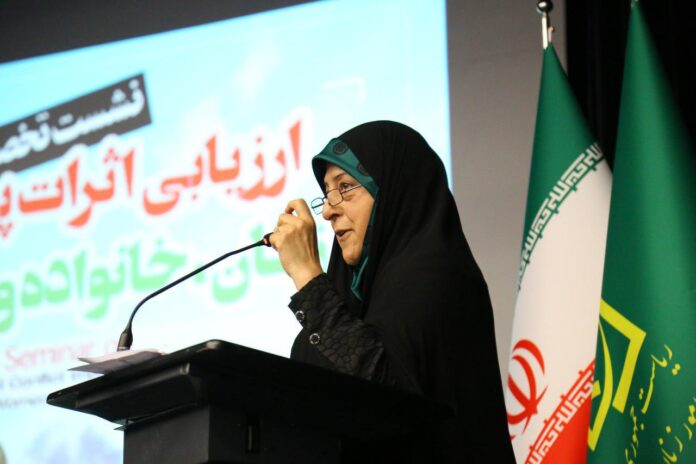
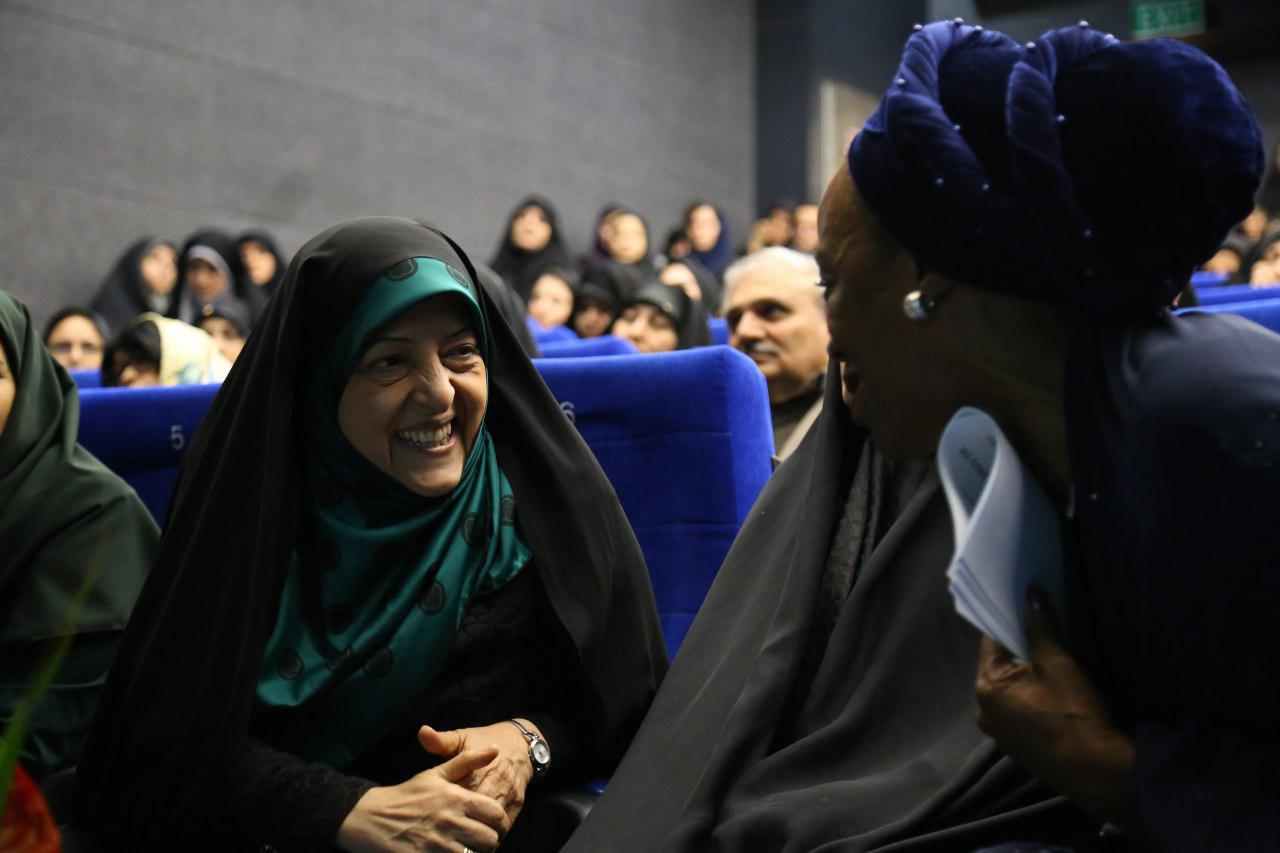
Ebtekar, the current VP for Women Affairs and a former chief of environment, made the remarks in an address to the International Seminar on Post-Conflict Effects on Women, Family and Environment held in Tehran Tuesday.

Besides physical wars, she said, other types of war could also have harsh consequences for women, family and environment, including the economic war waged by the US against Iran.

The vice president said the tightening of anti-Iran sanctions in 2011-2012 led to aggravated air pollution in some Iranian cities, due to lack of high-quality fuel inside the country.

Ebtekar said the latest wave of sanctions imposed by the US on Monday could have similar consequences.

The vice president further noted the long-term effects of the war on the environment and water resources are often overlooked, because the human toll is so saddening that we forget about other things.

Ebtekar said the Middle East is currently the scene of various conflicts, particularly Yemen, which is the most heart-breaking example of the devastating consequences of war.

The vice president said the Yemen war and its impact on environmental degradation, which has led to widespread famine and cholera in the county, has made life really difficult for millions of women and children.

She said the seminar seeks to inform the people of the effects of war on women and family and how degradation of the environment aggravates this situation, and the role women can play in promoting peace and protecting the environment.

US Sanctions on Iran Harm Environment: VP

Post-Conflict Situations

Barbara Rizzoli, the deputy head of the International Committee of the Red Cross’ delegation in Iran, also told the conference that the post-conflict situation presents a variety of situations that needs to be addressed in different manners.

One of the most dangerous situations is weapon contamination, when the land needs to get free of mines and other weapons so people can safely live on them, she said.

Rizzoli said another situation is the return of the displaced, when infrastructures and economic units needs to be created so the environment becomes conducive to those who have ran away.

The ICRC official said the family reunion is another situation that needs to be dealt with following the end of a war.

Rizzoli said the family separation, which happens during conflicts for a variety of reasons, is a plight that if not managed acts like a cancer that devours the fabric of the society.

“The plight of the missing does not only concern first degree family members, but also concerns a wider circle … the society in general,” she said.

“Out of my personal experience, I can tell you that to the families of the missing … the conditions of their loved ones is worse than death,” she said.

“So that’s why it’s very important to take initiatives to try to understand and investigate and give answers to these people. This is a scar that if not treated will never heal,” Rizzoli said.

The ICRC official said it is of utmost importance to provide people with ways to communicate with each other so they can locate their families and restore family links.

US Sanctions on Iran Harm Environment: VP

UN-Iran Cooperation Rising

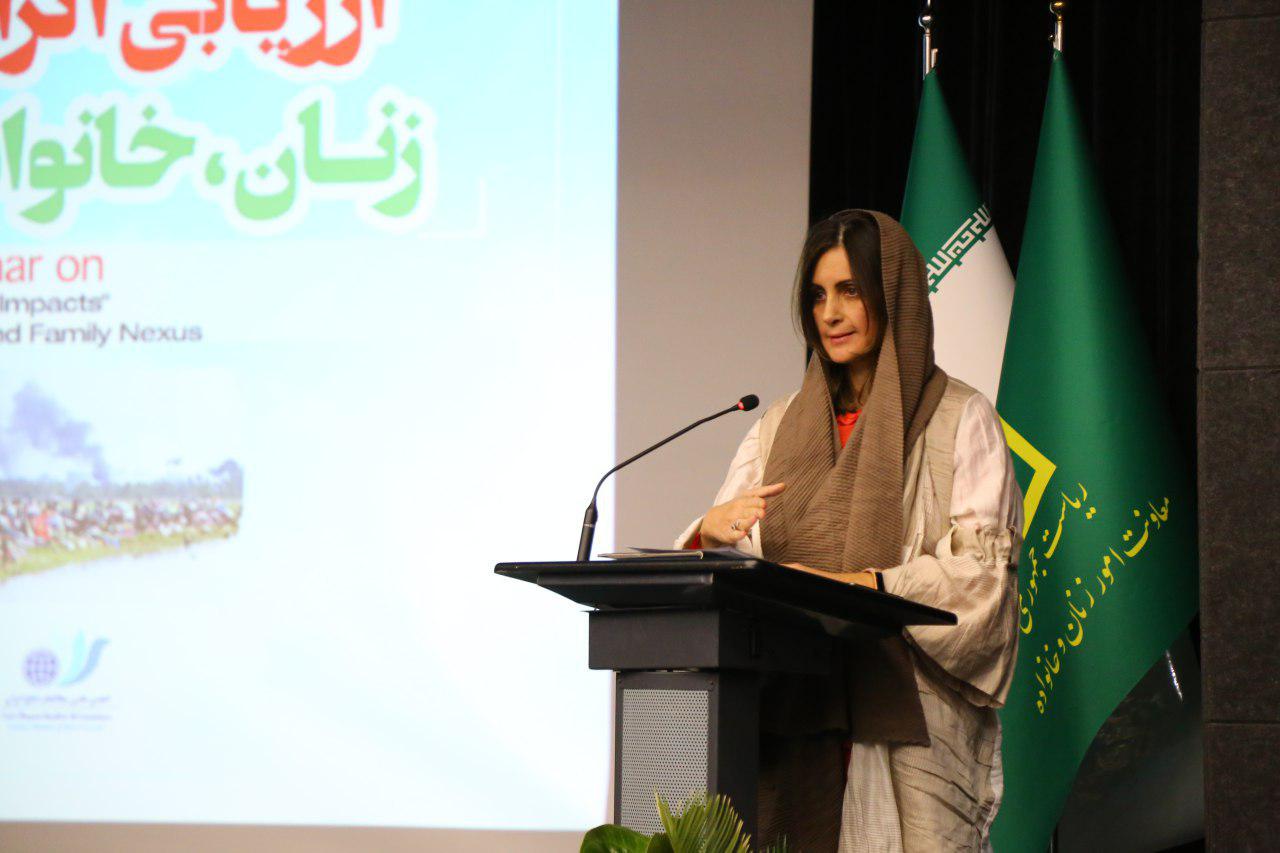
On the sidelines of the conference, Ugochi Daniels, the United Nations Resident Coordinator in Iran, told IFP News that she was pleased to attend the seminar, as it was an opportunity to raise very important and “heartrending” issues concerning families and environment.

The conference’s purpose was to sensitize people and urge officials to take action to prepare for post-conflict situations and prevent consequences from affecting the people, she said.

Daniels said she and Ebtekar have held talks about how the UN and Iran can cooperate to counter such issues in Iran and neighbouring countries.

“The UN is playing a very active role. We have a five-year partnership agreement and in that agreement one major area of focus is environment and working with the government regarding issues such as drought, water management, and sand and dust storms,” she said.

Daniels said there are also regional issues that Iran is dealing with along with its neighbours, which can lead to serious problems If not properly managed.

“That’s the UN’s role to bring together all the countries involved and to support dialogue and exchange of information on possible solutions,” he said.

US Sanctions on Iran Harm Environment: VP

Valuable Seminar

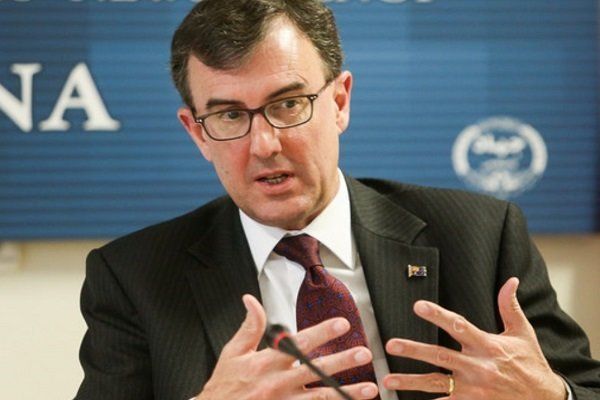
Ian Biggs, the Australian ambassador to Tehran, said he was pleased to know that several Iranian firms have cooperated to hold the valuable seminar.

“This seminar helped manage everything from wildlife protection to the role of women and children in post-conflict situations. These are all important topics,” he said.

“I hope it helps raise awareness among Iranians, if it receives enough media coverage in the Iranian media,” he said, pointing to environmental efforts by international organizations including the ICRC and UN.

Iran Refutes US Lies, Says Sanctions Targeting Iranian People

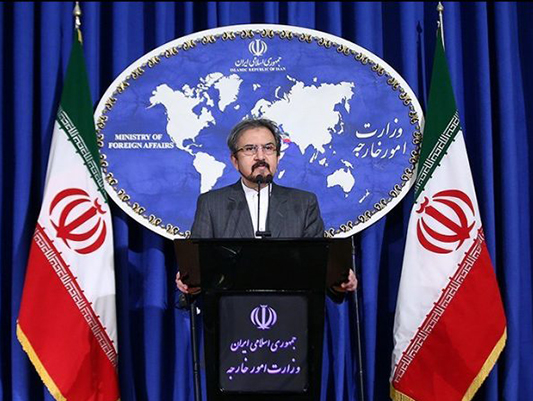
Bahram Qassemi

In an interview on Wednesday, Bahram Qassemi said many American authorities are suffering from ignorance, narcissism, and delusion, and resort to lies and deceptive measures to sanctify their hostile policies against the Iranian nation by claiming that the sanctions are in line with the interests of the Iranian people.

Deploring recent comments by US State Department officials that American sanctions would not hurt the Iranian people and would only target the government, Qassemi said such claims are raised by either a professional liar or somebody pretending to be unaware of the realities.

“I have no answer for such individual or individuals with such a level of unawareness, and I believe that silence on (comments by) these people would be the best thing to do,” the spokesman added.

In comments last week, US State Department’s Special Representative for Iran Brian Hook said the US sanctions against Iran have clear exceptions for the sale of food, medicine, and medical devices and that “the White House stands with the Iranian people and their aspirations for a better way of life.”

Elsewhere in his remarks, Bahram Qassemi said many US officials are used to making ill-advised and wrong comments about Iran, and resort to deception and delusive lies to glorify their hostile policies against the Iranian nation.

He further pointed to the US government’s growing political isolation in the international community, saying American officials will have to act more wisely sooner or later, because the world would no more approve of such behavior and policies.

US President Donald Trump has moved to snap back what he calls “crippling sanctions” on Iran that target the oil, banking and industrial sectors, and has threatened more action to change Tehran’s behavior.

A fresh round of US sanctions against Iran came into force on November 4.

Trump’s Iran Policy Mainly Aimed at Spoiling Obama’s Legacy: Expert

Undated photo of US President Donald Trump and his predecessor Barack Obama. / Photo by Getty Images

I believe that the main purpose of Trump’s withdrawal from the JCPOA was to spoil Obama’s most important foreign policy achievement,” Nasri said in an interview with Khabar Online.

However, he added, Trump announced after the withdrawal he was after returning Iran to the negotiating table by implementing a “maximum pressure” campaign against Tehran to resolve various issues, including regional ones.

What follows are highlights of his remarks in the interview:

The truth is that the Islamic Republic has never left the negotiating table, so no one can now force it to return to the table by re-imposing sanctions.

Today, Iran is negotiating with other countries over the issue of Yemen, Syria and the regional relations. What has actually happened with the exit of Trump is Washington’s departure from the negotiating table! The truth is that economic pressure will not make Iran negotiate over its security.

Nevertheless, over time, at best, the Trump administration – perhaps with the pressure of Europe and Democrats – will gradually become aware of this fact, as the Obama administration also agreed to compromise after reaching such an understanding.

The Trump administration has to constantly balance the “pressure on Iran” and the cost it creates for the US itself. That’s why he could not bring Iran’s oil sales to zero due to its fears of unnecessary rise in oil prices.

On the contrary, in order to prevent the intensification of pressures, it is imperative for the Iranian government not to allow this balance to be established. In other words, the Iranian government must always act in such a way that sanctions or increasing pressures would not be cost-effective for the US.

Adopting such a policy also requires that, firstly, the economic situation and the price of the currency be managed in such a way that the Trump administration does not assume its sanctions have been “effective”.

And secondly, the political stability within the country and the position of President Rouhani’s government should be in a way that the Trump administration does not take it for granted that it could endanger the peace and stability of the country by imposing sanctions.

Indeed, if the balance is not maintained and the above factors are well managed, it is possible that the Trump administration would realise the ineffectiveness of the sanctions against Iran, or before he can put more pressure on Iran, his term would end.

Since the Islamic Revolution, the cooperation between Iran and Europe has never been so good. Indeed, three factors have led Iran and Europe to jointly engage in a new strategic partnership against the United States: Promoting Iran’s status in the international arena, the EU’s determination to shape a new independent bloc, and the decline of US power.

Rouhani’s government and FM Mohammad Javad Zarif have been able to seize this opportunity on time to create and manage this cooperation.

How this cooperation will continue depends on many factors and the performance of the parties. The fact is that many currents and actors inside and outside the country are trying to disrupt this cooperation, and we must wait and see how well they will succeed in achieving their goals.

Thousands of Cranes Convene in Iran’s Meighan Wetland

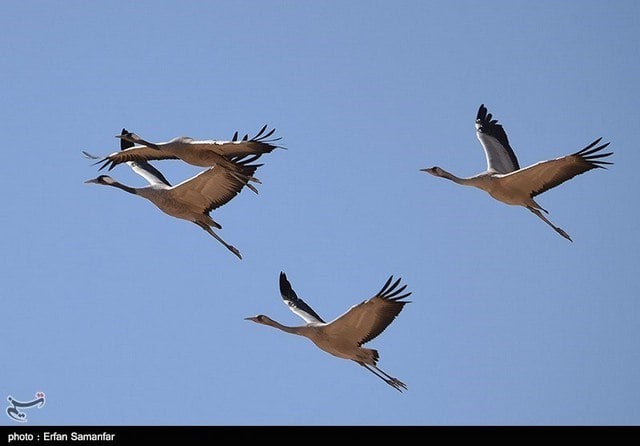
Cranes are dissociable, harmless, beautiful and lovely birds that collectively sing a stunning song while flying. They perform duet dance in the sky. They do not cause disturbances for people and farmers, nor do they expect humans to help them. They avoid people and die of sorrow when they cannot migrate because of diseases.

In recent years, these birds have been severely threatened and slaughtered by some Iranians. For this reason, the White Siberian Crane has been introduced as an internationally endangered species.

Various protection programmes are being implemented in 17 countries of the region, including Iran, to preserve them.

Reza Mirzaee, Director General for Environmental Protection of Iran’s Markazi province says “one of the most prominent environmental features of the Meighan wetland is that it is among 22 international famous wetlands. It has also been a habitat for many native and migratory birds in the past and present. The plains and lands around the lagoon are one of the most important gray crane habitats.”

“Every year, with the changing weather conditions in late October, migratory birds migrate from Siberia to the Meighan wetland of Arak. Arak’s Meighan wetland is now witnessing the presence of small and large bird species.”

“Some migratory birds remain in this lagoon until spring, but some leave the area with the first heavy snowfall and migrate to the tropical southern regions,” he added.

Thousands of Cranes Convene in Iran’s Meighan Wetland

Denmark Arrests 3 Terrorists Who Praised Ahvaz Attack

“Three people have been arrested suspected of violating the Danish law… on condoning terrorism,” a Danish police statement said on Wednesday.

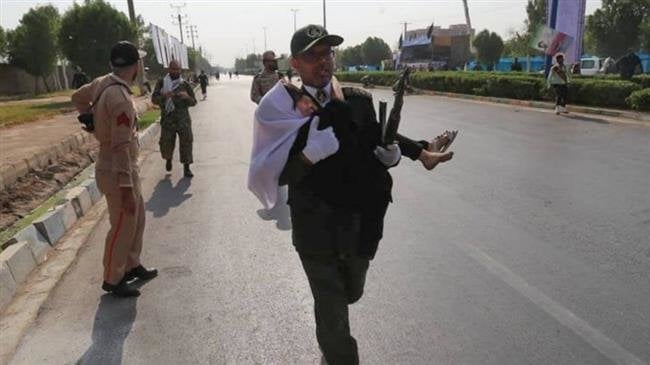
The trio is accused of praising the four gunmen who attacked a military parade in Ahvaz in Iran’s Khuzestan Province on September 22, sprayed the crowd with gunfire and killed 25 people while injuring some 70 others.

The men were held on preliminary charges. However, police spokesman Bjoerke Kierkegaard said they had violated Danish laws and could face fines or up to two years in prison.

Kierkegaard said all three were members of al-Ahwaziya — a terror group which claimed responsibility for the Ahvaz attack.

The group, which receives backing from Saudi Arabia, has a record of carrying out sabotage acts in Khuzestan province.

In addition to al-Ahwaziya, the Daesh terrorist group also claimed it was behind the attack and published online purported footage of the assailants.

Three of the four assailants involved in the attack were killed by Iranian security forces, and a fourth one was arrested but later died of the wounds he had sustained during a security chase.

Two days after the attack, the Iranian Intelligence Ministry said in a statement that its forces had found the hideout of the terrorists involved in the attack, and arrested 22 elements in connection with the incident.

Some explosives, firearms, military vehicles and communications facilities were also seized from the hideout, the statement added.

Iran also summoned the ambassadors of the Netherlands and Denmark as well as the chargé d’affaires of Britain over sheltering members of al-Ahwaziya.

Environment Must Be Protected Even in Wartime

Environmental experts say a small move in a secluded corner can impact the whole environment in the world because the environment is not restricted geographically. So, the impacts of war and hostile conflicts on the environment are irreversible and linger on for years.

Nasser Moqaddasi, a deputy head of Iran’s Department of Environment, says in 2001, the environment and resources of many countries involved in the numerous conflicts of the late 20th century had been damaged in wars mainly triggered by the hegemonic powers.

“Now restoring the damaged environmental areas seems highly difficult if not impossible,” he said.

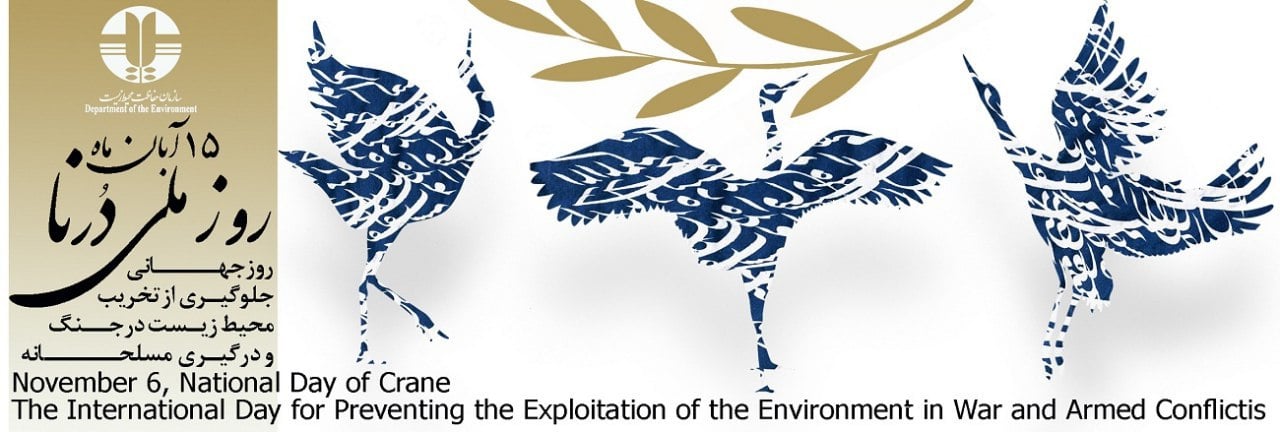
That’s why in 2001 the United Nations designated November 6 as the International Day for Preventing the Exploitation of the Environment in War and Armed Conflict, the official added.

Moqaddasi referred to the Israeli regime as a good example of an anti-environment regime in the world, saying the regime has occupied Palestine’s soil, water resources, natural eco-system, beautiful shores, olive and date gardens as well as large swaths of its farms over the past 60 years.

“The pollution of heavy metals used in Israel’s airstrikes against Palestinians has inflicted heavy blows on the region’s environment and natural resources. Meanwhile, the flow of sewage from Israeli settlements has polluted the rivers of the region as well as drinking water resources,” he said.

According to Moqaddasi, the former Iraqi dictator Saddam Hussein also damaged the environment in large parts of Iraq and Iran. “He dried parts of the regional lakes for military purposes and now we are suffering from the dust storms erupting from the dried parts.”

He said Saddam’s chemical bombardments of western regions of Iran and their longstanding fallouts have left most of the natural resources polluted, causing heavy costs on the Islamic Republic’s economy.

He then referred to the operations of terrorist groups in the region and said over the past years the ISIS militants have caused heavy damages to western Asia and left irreversible effects the natural resources of the region.

“The vegetation of most parts of the region has already been destroyed and other parts have turned into a hub for dust storms, which usually move towards Iran’s western and southwestern provinces after eruption. This leaves huge social and economic losses for us,” he noted.

Moqaddasi said the US unilateral sanctions against the Islamic Republic have anti-environment effects as well.

“The sanctions hamper cooperation underway between Iran and other states in environment areas and disrupt exchange of related technologies. All these, make it harder for us to protect our natural resources and prevent us from signing international treaties in this area.”

He described war as a nasty phenomenon imposed on others by arrogant powers on justice-seeking countries saying Islamic teachings require Muslims to protect natural resources amid conflicts.

“That’s why the international community should develop binding regulations to protect environment against wars and arrogance,” he concluded.