Tuesday, April 28, 2026
Home Blog Page 343

New anti-Russia sanctions ready, need to be approved by Congress, US President: Envoy

Oil

When asked by Fox News whether a new round of anti-Russian sanctions has already been drafted and ready, he replied: “I talked to [Senator] Lindsey Graham this last weekend, and I believe they are ready to go. They are called the Russian Sanctions Act 2025, and I think he’s got them set and ready to drop. And they’re pretty onerous.”

He emphasized that the restrictions are aimed primarily at Russian oil exports.

The above-mentioned draft was unveiled in mid-April by a bipartisan group of US Congress members. The bill, initiated by US Senators Lindsey Graham (Republican of South Carolina) and Richard Blumenthal (Democrat of Connecticut), provides for secondary sanctions on Russia’s trading partners. The document proposes import tariffs of up to 500% on goods from countries that purchase Russian oil, gas, uranium and other goods.

Axios reported on May 20, citing sources, that after a telephone conversation with Russian President Vladimir Putin, Trump told European leaders and Vladimir Zelensky that he did not intend to impose sanctions against Russia because, in his opinion, Moscow was serious about the Ukrainian settlement.
Iran’s deputy FM warns IAEA Board of Governors against any politically motivated act

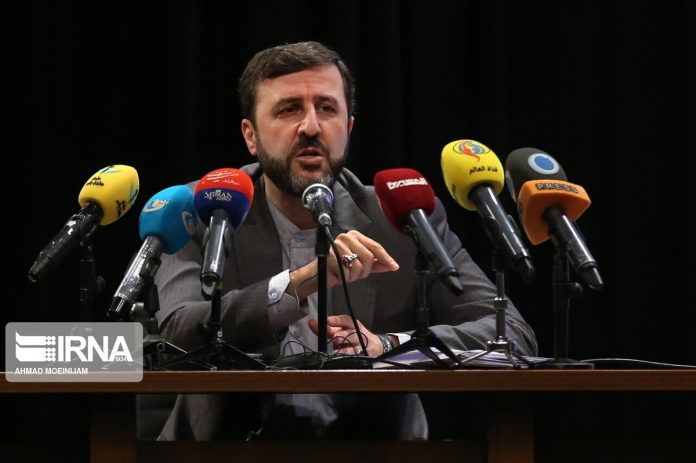
Kazem Gharib Abadi

Gharibabadi made the remarks in a post on his X account on Tuesday, following a politically-motivated report by the IAEA about the nation’s peaceful nuclear program.

“Any politically motivated action by some governments in the Board of Governors regarding two unproven alleged issues related to more than two decades ago could, despite Iran’s principled policy, pose serious problems for the full continuation of the path of cooperation between Iran and the Agency regarding Iran’s current activities,” Gharibabadi said.

“So far, Iran has not made any changes in the agency’s access based on safeguards obligations following the suspension of commitments of other parties under the Iran nuclear deal, known as the Joint Comprehensive Plan of Action (JCPOA),” he said, adding, “but this situation cannot continue.”

Gharibabadi further noted that he has held separate meetings with the ambassadors of the 17 member states of IAEA’s Board of Governors, and then with the ambassadors of Russia and China, and subsequently with the ambassadors of Germany, the United Kingdom, and France, and has answered the questions raised by them.

“In these meetings, I emphasized that Iran is a committed member of the Non-Proliferation Treaty (NPT), implements the Comprehensive Safeguards Agreement, and has extensive cooperation with the agency in order to fulfill its obligations under this agreement,” he said.

Gharibabadi further expressed hope that members of the IAEA’s Board of Governors adopt a constructive approach and oppose any political action that could disrupt the maintenance and expansion of cooperation between Iran and the agency.

On Sunday, the IAEA claimed in a confidential report to member states that Iran has failed to report its nuclear activities at three undeclared locations and raised concerns about the country’s stockpile of uranium enriched up to 60% purity.

Gharibabadi rejected the report, saying it is based on “a series of fabricated data provided by the Zionist regime” dating back more than two decades.

All accusations about Iran’s past nuclear activities were terminated under United Nations Security Council Resolution 2231, which formally endorsed the 2015 Iran nuclear deal, formally known as the Joint Comprehensive Plan of Action (JCPOA), he added.

Gharibabadi also noted that the report by the UN’s nuclear watchdog is once again raising old “unsubstantiated issues” intended for “new political exploitation against Iran.”

He further emphasized that the IAEA, under political pressure from certain states, has turned into a tool of pressure against the Islamic Republic.

Ayatollah Khamenei rejects US nuclear proposal, calls it contrary to Iran’s sovereignty

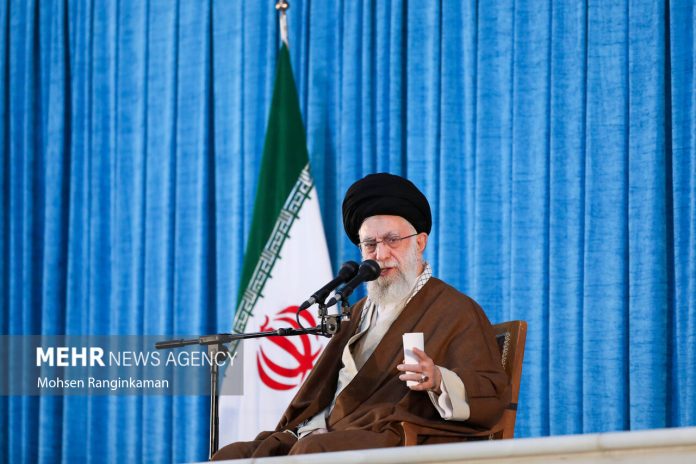
Leader of the Islamic Revolution Ayatollah Seyyed Ali Khamenei

The Leader made the remarks on Wednesday during a speech at the 36th anniversary of the demise of Imam Khomeini, the founder of the Islamic Republic.

Emphasizing national independence, resistance to foreign pressure, and technological self-sufficiency, Ayatollah Khamenei said Iran would not accept any agreement that undermines its ability to enrich uranium.

“A nuclear power plant without enrichment is useless,” he said. “It’s like owning oil but being banned from building a refinery.”

The Leader added the US is seeking to prevent Iran’s scientific progress and force dependency.

“They want us to need them for fuel and medical isotopes,” he added, referring to past failed negotiations over 20% enriched uranium in the 2000s, which he said “revealed the unreliability of Western commitments.”

The Leader also reiterated that the Islamic Revolution significantly reduced US influence in the region and globally.

“The sharp decline of America’s global standing is caused by Imam Khomeini’s revolution,” he said, adding that Iran’s political system has withstood unprecedented foreign plots.

Ayatollah Khamenei reaffirmed Iran’s commitment to increasing national power, including defense capabilities. “Resistance means not bowing to the will of global powers,” he said, saying, “We will continue to grow stronger.”

“The Iranian people must be aware of what is at stake,” the Leader concluded, clarifying, “Our answer to American demands is clear; they have no right to dictate what Iran can or cannot do.”

Ayatollah described Israel’s ongoing military campaign in Gaza
as “astonishing atrocities”, asserting that the regime is “collapsing by divine decree.”

The Leader said “Instead of bombs, they are now killing people with bullets. How depraved, petty, and wicked can human beings be?”

He also held the US responsible, saying Washington is complicit in the violence. “America is a partner in these crimes and must be expelled from the region,” he declared.

The Iranian Leader warned Islamic governments against siding with Israel. “Any government in the Islamic world that supports the Zionist regime in any form will bear eternal disgrace,” he said, calling for a decisive and unified stance among Muslim nations.

Russia says train sabotage was Ukrainian ‘terrorist attack’

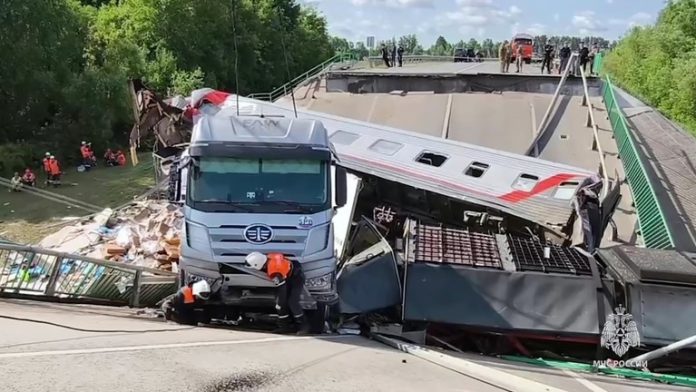
The two incidents took place on Saturday evening and Sunday morning, respectively. In the first case, a bridge fell in front of a moving passenger train in Bryansk Region. The second incident took place in Kursk Region when a railway bridge collapsed under a moving freight train. In total, seven people died and 113 were injured.

In a statement on Tuesday, the Investigative Committee said that Moscow is treating both sabotage acts as “terrorist attacks.”

“It is clear that the terrorists, acting under the direction of the Kiev regime, planned the attacks with maximum precision to ensure that hundreds of civilians would be affected,” a spokeswoman said.

The committee added that investigators had recovered explosive device fragments and other physical evidence from the scene and had questioned witnesses, injured passengers, and rail railroad employees.

Earlier, Russian business daily Kommersant reported that investigators believe the saboteurs were likely using a US-made C-4 explosive device. They reportedly came to this conclusion after retrieving a 10kg bomb that did not detonate.

Both attacks came shortly before the second round of Russia-Ukraine talks in Istanbul and amid a drastic increase in Kiev’s drone raids into Russia, which Moscow says are aimed at derailing the peace process.

The negotiations in Türkiye brought no breakthroughs, but the sides agreed to conduct the largest prisoner exchange to date and indicated that direct contact would continue. Moscow and Kiev have also exchanged memorandums containing drastically different visions for ending the conflict.

Russia insists, among other things, that Kiev withdraw all troops from the regions that have joined the country in public referendums, agree to bloc neutrality, disband nationalist armed groups, and limit its military capabilities. Ukraine, however, continues to oppose the neutrality principle, wants to have an opportunity to deploy foreign troops on its soil, and is against recognizing any territorial losses.

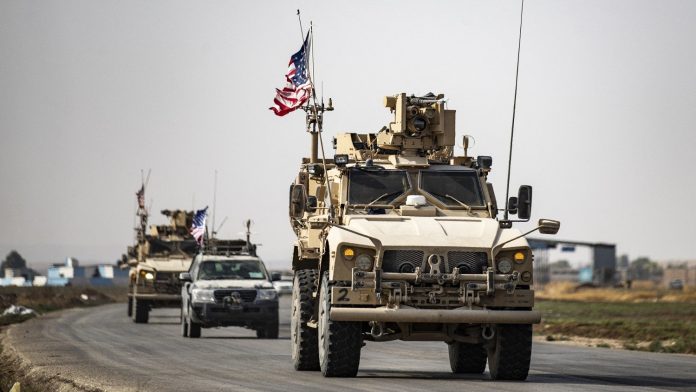
US says to scale down its military bases in Syria

US Syria

Thomas Barrack, who President Donald Trump named special envoy last month shortly after he unexpectedly lifted U.S. sanctions on Syria, made the comments in an interview with Turkish broadcaster NTV.

The U.S. military has about 2,000 U.S. troops in Syria, mostly in the northeast. They are working with local forces to prevent a resurgence of Islamic State, which in 2014 seized large swathes of Iraq and Syria but was later pushed back.

Since rebels ousted Syria’s former President Bashar al-Assad in December, the United States and other countries are re-engaging with Damascus under new leader Ahmed al-Sharaa.

Barrack, also U.S. ambassador to Turkey, raised the American flag over the ambassador’s residence in Damascus last week for the first time since 2012.

When asked how the Trump administration will shape its Syria policy and whether the U.S. is considering troop withdrawal from Syria, Barrack said: “What I can assure you is that our current Syria policy will not be close to the Syria policy of the last 100 years, because none of these have worked.”

Reducing the number of bases to one from eight was an important part of that shift, he stated, according to an interview transcript.

Two security sources in bases where U.S. troops are deployed told Reuters in April that military equipment and vehicles had already moved out of eastern Deir el-Zor and were being consolidated in the province of Hasakah.

One of the sources said the consolidation plan involved pulling all U.S. troops out of Deir el-Zor province.

A U.S. State Department official said separately that the military presence would be reduced “if and when appropriate” based on conditions, adding troops are routinely calibrated based on operational needs and contingencies.

Barrack said that the Kurdish Syrian Democratic Forces (SDF) were a U.S. ally and a “very important factor” for the U.S. Congress, and that directing them to integrate into a new Syrian government was also very important.

“Everyone needs to be reasonable in their expectations,” he added.

The SDF is the main ally in a U.S. coalition against Islamic State militants in Syria. It is spearheaded by the YPG militia, which Ankara sees as an extension of the outlawed Kurdistan Workers Party (PKK). The PKK decided to disband last month after a 40-year conflict with the Turkish state.

Turkish President Tayyip Erdogan said last week that the SDF was using “stalling tactics”, despite a deal with the Syrian government to integrate into Syria’s armed forces.

Russia says Iran has ‘right’ to peaceful nuclear program

Kremlin

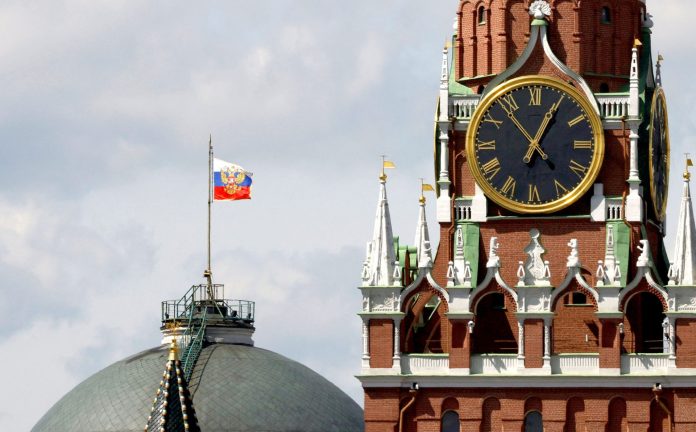
Peskov made the remarks at a press conference on Tuesday, a day after US President Donald Trump claimed in a post on his Truth Social network that Washington will not allow Iran to enrich uranium under any potential nuclear deal.

“We know that countries are entitled to peaceful energy, the use of peaceful nuclear energy. [This] is happening and should happen exclusively under the strict control of the International Atomic Energy Agency (IAEA) and the global community. It happens everywhere – in all countries around the world. Of course, we believe that nations should retain this right,” Peskov said when asked about Trump’s comments.

The Kremlin spokesman further noted that Russia believes official statements from Iran that the country has no plans to possess nuclear weapons.

“As for the accusations [against] the Iranian side that they are going to develop nuclear weapons, we primarily rely on Iran’s official statements that the republic has no wish or plans to possess nuclear weapons. This is what we primarily proceed from in this regard,” he added.

Peskov further stated that Moscow fully supports “a peaceful settlement of the Iranian nuclear problem” amid ongoing indirect nuclear talks between Iran and the United States.

The US has submitted a proposal to Iran via Oman to resolve the disagreement over Tehran’s peaceful nuclear program.

Iran and the US have held five rounds of such diplomatic process with Omani mediation since April.

A previous deal involving the Islamic Republic and other countries set out a 3.6-percent enrichment cap.

The US, however, left the agreement, officially known as the Joint Comprehensive Plan of Action (JCPOA), in 2018, and restored all the illegal and unilateral sanctions that it had lifted. The Islamic Republic exercised “strategic patience” for a year, but eventually began taking a series of countermeasures that increased the country’s enrichment levels.

Senior American officials such as regional envoy Steve Witkoff and Secretary of State Marco Rubio have insisted on “zero-level” enrichment on the part of the Islamic Republic.

Indian hostages rescued in Tehran following swift police operation

Iran Police

The individuals had reportedly been lured to Iran through an Instagram page offering fraudulent Australian visa services.

Upon arriving in Tehran for a supposed in-person meeting, they were abducted by a kidnapping ring.

The captors later contacted the victims’ families, demanding a ransom of 1.8 million Indian rupees for their release.

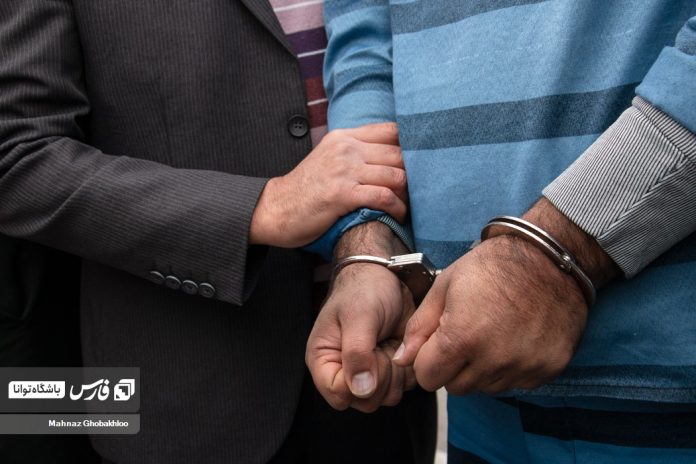
Through precise intelligence work and extensive tracking, Iranian police were able to identify and arrest the perpetrators—foreign nationals operating in an organized manner.

During the raid on the gang’s hideout in Varamin, several other hostages of various nationalities were also discovered.

These individuals had similarly fallen victim to the gang’s deceptive promises.

Gaza death toll tops 54,500

Gaza War

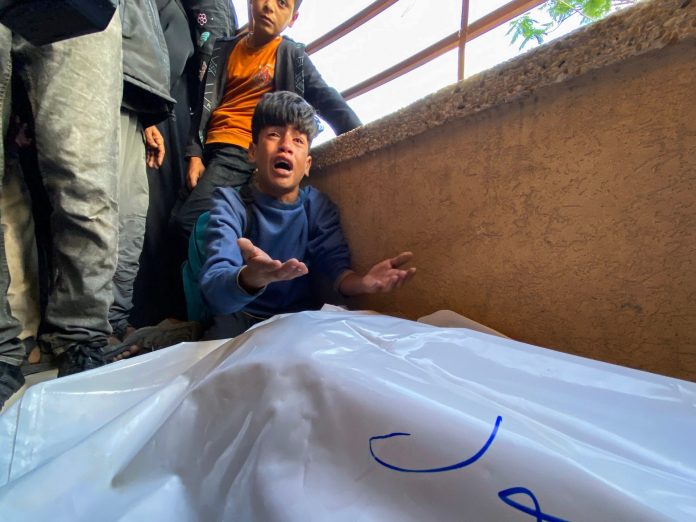
A ministry statement said 40 bodies were brought to hospitals in the last 24 hours, while 208 people were injured, taking the number of injuries to 124,901 in the Israeli onslaught.

“Many victims are still trapped under the rubble and on the roads as rescuers are unable to reach them,” it added.

The Israeli army resumed its assaults on the Gaza Strip on March 18 and has since killed 4,240 people and injured nearly 12,860 others, shattering a ceasefire and prisoner exchange agreement that took hold in January.

Last November, the International Criminal Court issued arrest warrants for Israeli Prime Minister Benjamin Netanyahu and his former Defense Minister Yoav Gallant for war crimes and crimes against humanity in Gaza.

Israel also faces a genocide case at the International Court of Justice for its war on the enclave.

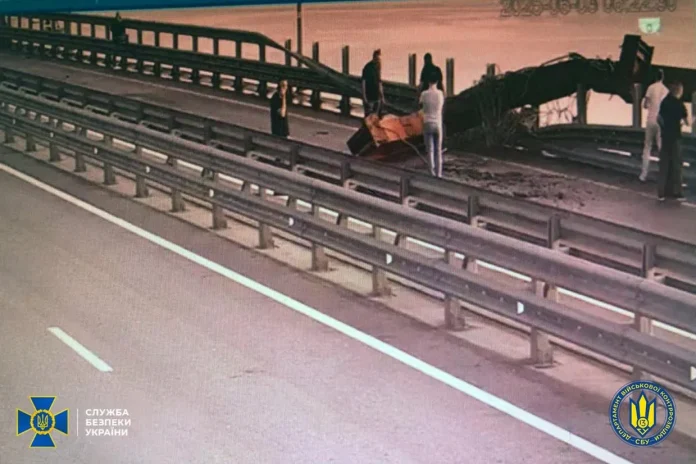
Russia’s Crimean Bridge rocked by blasts, Ukraine claims responsibility

“God loves the Trinity, and the SBU always brings what is conceived to the end and never repeats itself,” SBU Chief Vasyl Malyuk said in a statement posted on social media.

“Previously, we struck the Crimean Bridge in 2022 and 2023. So today we continued this tradition underwater,” he added.

The SBU announced that the operation “lasted for several months, with agents mining the “supports of this illegal construction.”

Constructed after Russia’s illegal occupation of Crimea in 2014, the Crimean Bridge is a critical supply and transport route for Russian forces to the occupied Ukrainian territories.

“And today, without inflicting any civilian casualties, the first explosive was activated at 4:44 a.m.,” the SBU said.

Underwater supports of the bridge’s piers were severely damaged at the bottom as 1,100 kilograms of explosives in TNT equivalent were detonated, according to the statement.

The operation, which follows the SBU’s mass drone strike against Russia’s strategic aviation on June 1, was personally supervised by the agency’s chief, Vasyl Maliuk.

A claimed “agent of Ukrainian intelligence services” has been detained in Crimea, Russia’s Federal Security Service said later on June 3, accusing the detainee of producing a “powerful explosive.”

The bridge suffered significant damage during two previous Ukrainian attacks in October 2022 and July 2023, though neither managed to take the bridge out of commission.

The construction of the bridge, also known as the Kerch Bridge, holds a significant symbolic value for Russia. The $4 billion project was a political statement designed to affirm the Kremlin’s illegal 2014 annexation of Crimea, as the peninsula is not connected by land to Russia.

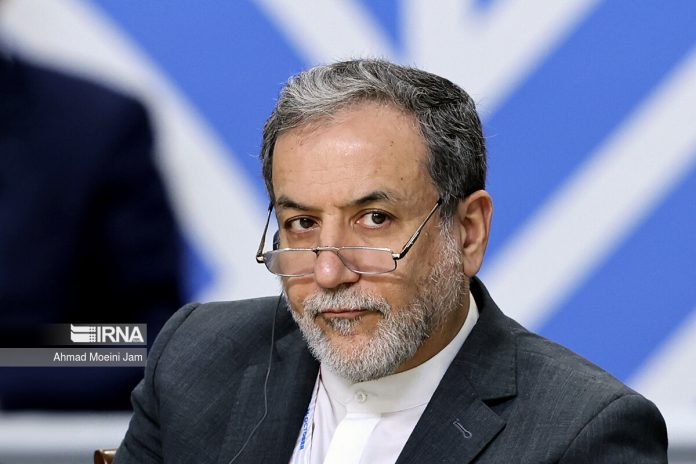
Iran FM Araghchi: U.S. proposal contains ambiguities

Abbas Araghchi

He added that the Islamic Republic of Iran will deliver an appropriate response in the coming days, guided by its core principles and national interests.

Araghchi underscored that Iran’s red line remains the continuation of uranium enrichment on its own soil—”a reality that all countries have now come to understand.”

Speaking at the signing ceremony of the book The Power of Negotiation in Lebanon, Araghchi noted, “Without power, one cannot enter any negotiation.”

He noted that the United States, while intensifying its military presence in Asia and exerting economic pressure, ultimately submitted a request to negotiate with Iran.

“These were not negotiations between equals,” he asserted, adding that Iran rejected the idea of direct talks under such conditions, which resembled negotiations for surrender. “We agreed only to indirect negotiations, within a framework defined by ourselves.”

He concluded, “Had we lacked scientific capability or defensive power, the U.S. would have had no reason to negotiate with us.”