Tuesday, April 28, 2026
Home Blog Page 335

Gaza health system ‘extremely fragile’ as aid point killings raise: ICRC

Gaza War

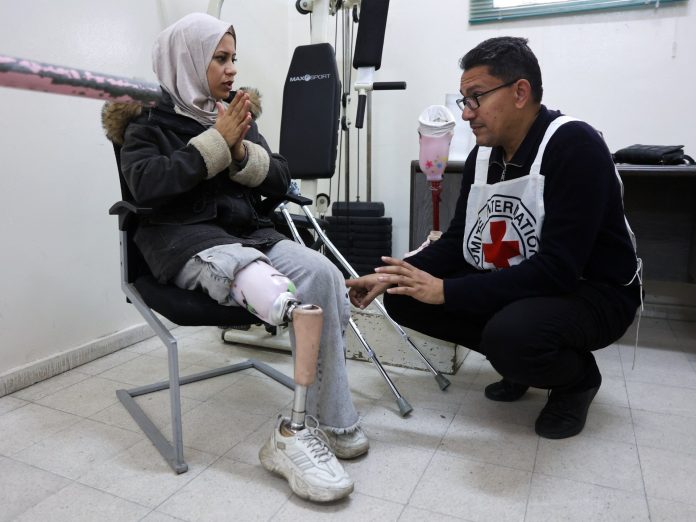
The organisation said in a statement that the enclave’s hospitals are in urgent need of protection and reinforcement amid Israel’s continued bombardment and blockade. It added that the system is facing growing pressure due to increasing casualty rates from Israeli attacks at aid points.

“In the last two weeks, the Red Cross Field Hospital in Rafah has had to activate its mass casualty incident procedure 12 times, receiving high numbers of patients with gunshot and shrapnel wounds,” ICRC announced.

“An overwhelming majority of patients from the recent incidents said they had been trying to reach assistance distribution sites,” it continued.

Hundreds of Palestinians have been killed by Israeli fire around aid distribution sites operated by the US- and Israel-backed Gaza Humanitarian Foundation (GHF) since it launched on May 27.

The organisation ousted the United Nations and other independent agencies from the aid distribution effort following an 11-week blockade of the enclave that prompted numerous warnings that many of Gaza’s people now face famine.

Gaza’s Government Media Office reported on Sunday that the death toll from events centred on the GHF aid sites had risen to 125. A further 736 are reported to have been wounded, with nine missing.

The Red Cross also expressed concern that the intensifying conflict is putting the enclave’s few functional medical facilities at risk.

“Recent days have seen an increase in hostilities around the few remaining and functional hospitals,” it said in the statement.

“This has made patient transfers between facilities increasingly challenging, and in many cases, patients cannot receive the intensive or specialized care they require.”

The ICRC warned that further loss of life is inevitable without urgent action and called for the protection of healthcare infrastructure and personnel.

“It requires taking all feasible steps to support their work, ensure their safety, and guarantee that they are not deprived of vital resources needed to carry out their work,” it added.
IAEA says Iran obtaining agency’s documents is ‘bad’, shows poor collaboration

The International Atomic Energy Agency said in a confidential report on Iran to member states on May 31 seen by Reuters that it had “conclusive evidence of highly confidential documents belonging to the Agency having been actively collected and analysed by Iran”.

The report added that “raises serious concerns regarding Iran’s spirit of collaboration” and could undermine the IAEA’s work in Iran, but Tehran announced in a statement to member states last week that the accusation in the report was “slanderous” and had been made “without presenting any substantiated proof or document”.

The IAEA’s 35-nation Board of Governors is holding a quarterly meeting this week. The United States, Britain, France and Germany plan to propose a resolution for the board to adopt that would declare Iran in breach of its non-proliferation obligations over other failings outlined in the report.

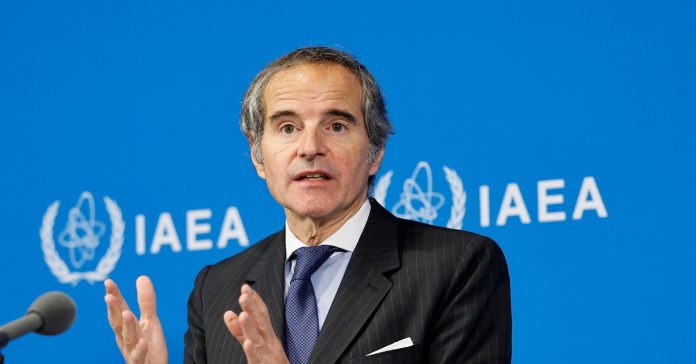
“Here, unfortunately, and this dates to a few years ago … we could determine with all clarity that documents that belong to the agency were in the hands of Iranian authorities, which is bad,” Grossi told a press conference.

“We believe that an action like this is not compatible with the spirit of cooperation.”

Asked about the nature of the documents and whether they were originally Iranian ones that had been seized by Israel and supplied to the agency, Grossi added: “No. We received documents from member states, and also we have our own assessments on documents, on equipment, etc.”

Ukraine says Russia launched biggest drone attack since onset of war

Russia Ukraine War

It was the latest in Russian onslaughts since Ukraine destroyed a number of Russian bombers in drone attacks on air bases deep inside Russia earlier this month.

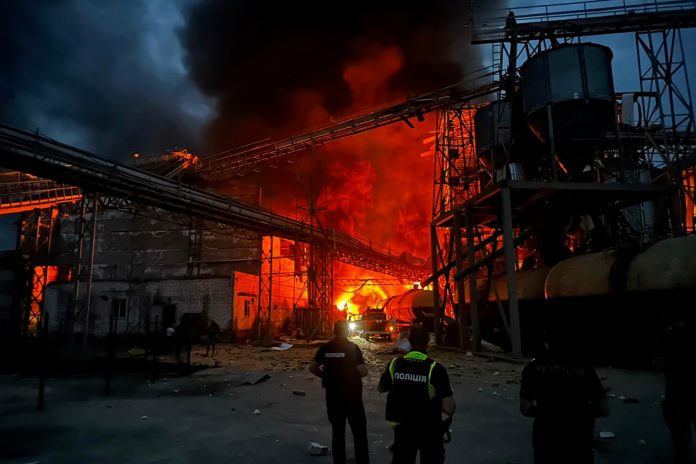
Ukraine’s air defence units downed 460 out of 479 drones and 19 out of 20 missiles launched by the Russian forces, the air force said in a statement.

A military airfield close to Ukraine’s western border was the key target, air force spokesperson Yuriy Ihnat stated.

“The main strike was targeting… one of the operational air fields. There are some hits,” Ihnat told Ukrainian TV, without elaborating on the damage.

The airfield is in the city of Dubno, about 60 km (40 miles) from Ukraine’s border with Poland, Ukrainian regional authorities announced.

Polish and allied aircraft were activated early on Monday to ensure the safety of Polish airspace, the Polish armed forces said.

Russia’s Defence Ministry said the attack was another strike in response to Kyiv’s attacks on Russian bases this month, adding that “all designated facilities” had been hit.

The more than three-year-old war in Ukraine has been escalating as the peace talks between Kyiv and Moscow have so far failed to yield any significant results.

The two sides remain deeply divided on how to end the war. Ukraine is pushing for an unconditional ceasefire as a first step, something Russia has repeatedly rejected.

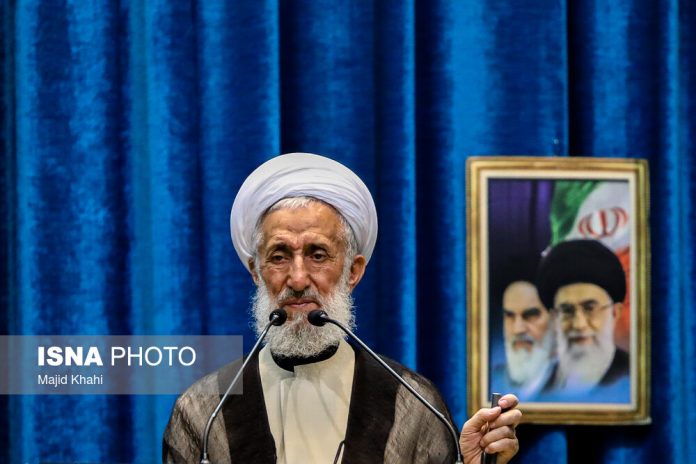
Senior Iranian cleric Kazem Seddighi confirms son’s arrest under judicial order

In an interview with Tasnim News Agency, Seddighi underlined his full respect for the rule of law, saying everyone must respect the law. The temporary Friday prayers leader of Tehran noted, “If the judiciary reaches a decision about my son, I will abide by it, as I have always considered myself a guardian of the law”.

He added that should the alleged charges are proven to be true, appropriate legal action must be taken.

Seddighi further said he has not intervened in the matter, nor has he attempted to follow up on his son’s situation.
“I have made no inquiries and have not sought him out,” he said.

The judiciary has not yet released details regarding the charges.

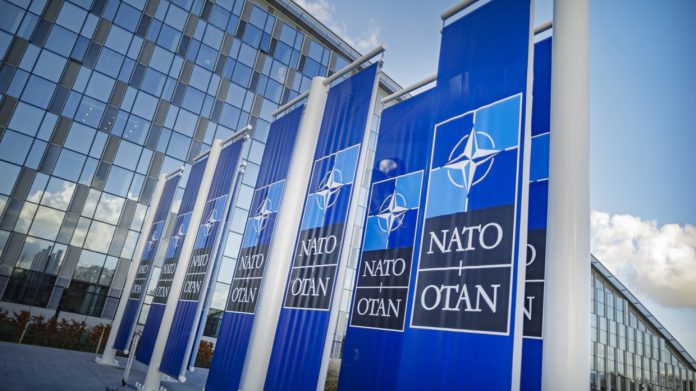
NATO urges 400% increase in air defenses to counter Russia: Bloomberg

NATO

“Danger will not disappear even when the war in Ukraine ends,” Rutte said in prepared remarks for a speech at Chatham House in London.

“We must have more forces and capabilities to implement our defense plans in full.”

Rutte urged NATO members to boost air and missile defense by 400%, citing lessons from Russia’s attacks on Ukraine.

Russia has been repeatedly targeting Ukrainian cities with missiles and drones of different types. Most recently, on June 9, Russia launched 499 drones and missiles during its massive overnight attack across Ukraine.

Kyiv has been consistently calling on its allies to boost air defense support.

“We see in Ukraine how Russia delivers terror from above, so we will strengthen the shield that protects our skies,” Rutte added, according to Bloomberg.

Rutte is pushing for NATO countries to adopt a new military spending target of 3.5% of gross domestic product (GDP) by 2032, alongside an additional 1.5% of GDP for security-related projects such as cyber defense and border control. The proposal comes after U.S. President Donald Trump called on allies to spend 5% of GDP on defense.

Rutte’s remarks follow his earlier warning during an April visit to the White House, where he met with Trump. There, he reiterated that NATO views Russia as a “long-term threat” to Euro-Atlantic security.

“We all agree, in NATO, that Russia is the long-term threat to NATO territory, to the whole of the Euro-Atlantic territory,” Rutte stated after those talks.

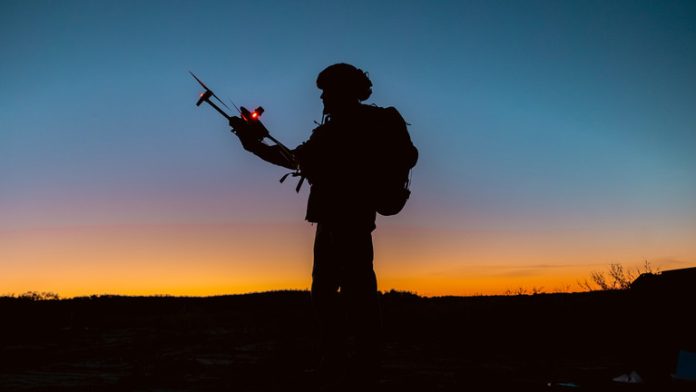
Ukraine planned drone attack on Russian ships in Asia: Washington Post

Ukraine War

Last Sunday, Ukraine targeted Russian airbases across the nation – from Murmansk in the Arctic to Irkutsk in Siberia – in a coordinated assault, which involved explosive-laden UAVs taking off from commercial trucks. Kiev claimed that its so-called ‘Operation Spiderweb’ damaged or destroyed several dozen Russian military aircraft, including Tu-95 and Tu-22 nuclear-capable long-range bombers. According to Moscow, most of the incoming drones were shot down, and none of the affected Russian planes were damaged beyond repair.

The Washington Post said in an article on Thursday that “Ukraine has considered a naval version of the sneak-attack tactic” it used against the Russian bases a week ago.

According to the paper’s sources, Kiev’s intelligence services “weighed sending sea drones hidden in cargo containers to attack ships of Russia and its allies in the North Pacific.”

“But, so far, they apparently have yet to launch these operations,” WaPo added.

Russia’s Pacific Fleet has its headquarters in the city of Vladivostok, which is located in the country’s Far East, some 45 kilometers from the border with China and 134 kilometers from the border with North Korea.

US President Donald Trump said on Wednesday that his Russian counterpart Vladimir Putin told him on the phone that Moscow “will have to respond” to all of Kiev’s attempts to target its strategic aviation.

This week, the Russian Defense Ministry reported several large-scale strikes using drones and long-range precision-guided weapons against Ukrainian defense industry enterprises; military airfields; drone production, storage and launch sites; arms depots as well as the deployment points of Ukrainian military units and foreign mercenaries.

However, Reuters reported on Saturday, citing unnamed US officials, that Washington believes that Moscow’s retaliation “has not happened yet in earnest and is likely to be a significant, multi-pronged strike.” One of the sources said that the Russian response is expected within days.

Since the escalation of the Ukraine conflict in February 2022, Kiev has repeatedly deployed its naval drones against the vessels and bases of the Russian Black Sea Fleet as well as against the 19 km Kerch Bridge, which connects Crimea with mainland Russia. Most of those unmanned surface vessels have been destroyed, according to the Russian Defense Ministry.

US travel ban barring citizens from 12 countries, including Iran, goes into effect

The new proclamation, which Trump signed last week, “fully” restricts the nationals of Afghanistan, Myanmar, Chad, Republic of the Congo, Equatorial Guinea, Eritrea, Haiti, Iran, Libya, Somalia, Sudan and Yemen from entering the US. The entry of nationals of Burundi, Cuba, Laos, Sierra Leone, Togo, Turkmenistan and Venezuela will be partially restricted.

Unlike Trump’s first travel ban in 2017, which initially targeted citizens of seven Muslim-majority countries and was criticized as an unconstitutional “Muslim ban”, the new ban is broader, and legal experts said they expect it to withstand legal challenges.

The announcement of the new travel ban was greeted with less outrage and protest than his initial 2017 ban. On Monday, the new ban appeared to be overshadowed by Trump’s other immigration battles, including furious protests in Los Angeles over Trump’s deportation raids, which were followed by Trump deploying the national guard to the city despite the opposition of California’s governor.

The newly instituted ban notably includes citizens of Haiti, a majority Christian country. Haitians in the US were demonized by Trump during his presidential campaign, with the president spreading the baseless conspiracy theory that Haitian immigrants in Ohio were eating people’s pets.

It also imposes heightened travel restrictions on citizens of Venezuela, who have been targeted repeatedly by the White House in recent months, as the Trump administration’s sudden deportation of Venezuelans in the US to a notorious prison in El Salvador sparked a massive legal battle.

The ban is also expected to have a disproportionate effect on African countries, with some citizens of targeted countries worrying about being cut off from opportunities for education, professional development, and networking.

While five of the countries on the new ban list are not majority-Muslim, including Republic of the Congo, Myanmar, Eritrea and Equatorial Guinea, as well as Haiti, the list does target citizens of non-white countries in the developing world, fueling criticisms that the ban is fundamentally racist and shaped by “bigotry”.

Trump’s first travel ban, in 2017, was widely criticized as a fulfillment of Trump’s campaign pledge to institute “a total and complete shutdown of Muslims entering the United States”. The Trump administration later added citizens of other non-Muslim countries to the banned list.

The new ban does not revoke visas previously issued to people from countries on the list, according to guidance issued Friday to all US diplomatic missions. However, unless an applicant meets narrow criteria for an exemption to the ban, his or her application will be rejected starting Monday. Travelers with previously issued visas should still be able to enter the US even after the ban takes effect.

In a video posted Wednesday on social media, Trump said nationals of countries included in the ban pose “terrorism-related” and “public-safety” risks, as well as risks of overstaying their visas. He also added some of these countries had “deficient” screening and vetting or have historically refused to take back their citizens.

Trump also tied the new ban to a recent attack in Boulder, Colorado that wounded a dozen people, saying it underscored the dangers posed by some visitors who overstay visas. US officials say the alleged perpetrator overstayed a tourist visa. The man charged in the attack is from Egypt, a country that is not on Trump’s restricted list.

New Russia sanctions bill ‘on hold’ over White House’s stance: Bloomberg

Donald Trump

The “bone crushing” legislation that would impose a 500% tariff on countries that buy Russian energy, uranium, and other raw materials has more than 80 co-sponsors in the Senate, which Bloomberg described as “veto-proof backing.” But lawmakers are still hesitant to challenge the president, the outlet claimed.

Earlier this week, Trump said he had not even looked at the bill and would only consider sanctions “at the right time.” His position “put the brakes” on a push to advance the measure as soon as this month, according to Bloomberg. Graham has previously said he planned to do so before the G7 summit scheduled for June 15-17 in Canada, but the effort is now “on hold,” Bloomberg reported.

On Thursday, the Republican senator wrote on X that he had “coordinated closely with the White House in this endeavor from day one,” adding that the bill was only aimed at giving Trump “more tools when it comes to Russia.”

The bill’s Democrat co-sponsor Richard Blumenthal told Bloomberg that he and Garaham were still working on making the bill “more acceptable” to the White House.

On Thursday, Trump told journalists he had a “deadline” in his “brain” and would decide when to act if it became clear that a peace deal between Moscow and Kiev could not be reached. He also stated that he was willing to impose sanctions against both Russia and Ukraine.

The president said that the Senate’s sanctions bill would be “guided by me,” but suggested it might be better to let Russia and Ukraine continue fighting “for a while” before “pulling them apart.” Trump also expressed his concern about recent Ukrainian drone attacks on long-range nuclear-capable Russian bombers, saying it had increased the risk of escalation by giving Moscow a reason to retaliate.

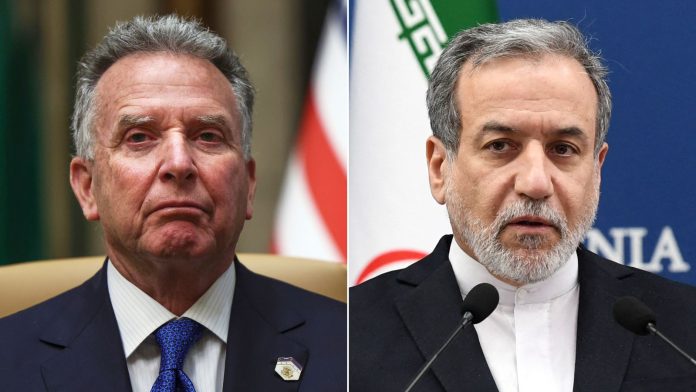
Tasnim: Iran to respond to US nuclear proposal soon

Araghchi Witkoff

As reported by Tasnim News Agency, Iran’s reply will be sent in written form through diplomatic channels.

The response is said to include Iran’s own proposal aimed at advancing the negotiation process, while reaffirming the country’s key demands, chief among them the continuation of uranium enrichment on Iranian soil.

In the proposed response, Iran is expected to outline certain measures to address US concerns, provided that there is a clear and effective path to sanctions relief. The initiative appears to reflect Tehran’s willingness to explore a compromise, without crossing its established red lines.

Additionally, Iran is reportedly open to participating in a new round of indirect talks with the US, provided that its core positions are respected.

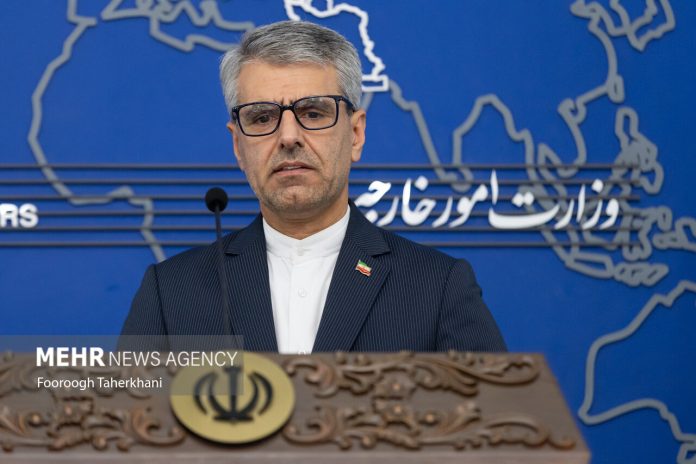
On Ministry, Iranian Foreign Ministry Spokesperson, Esmail Baqaei, said: “Iran’s response is a reasonable, logical, and balanced plan. We recommend the American side seize this opportunity, as it is certainly in their interest to seriously consider the proposal.”

He noted that Iran’s proposed plan will be submitted to the other side through Oman after it is finalized.

Iran spox: Europe’s involvement in Israel military nuclear program certain

Esmael baghaei

Speaking at his weekly press conference on Monday, Baqaei pointed to Iran’s acquisition of a vast amount of security-related information, including material related to the Israeli regime’s nuclear activities.

He stated, “What was already clear to us—and will now be clearer to others through these documents—is the active participation of these European countries in Israel’s military nuclear program.”

Baqaei added, “It is significant that the very parties who speak of nuclear non-proliferation are themselves actively involved in equipping and strengthening the nuclear military program of this regime.”

He also commented on the efforts by the UK, France, and Germany—backed by the United States—to pass an anti-Iran resolution at the Board of Governors of the International Atomic Energy Agency (IAEA).

Baqaei said, “Undoubtedly, the confrontational approach of these three European countries cannot serve as an incentive for cooperation.”

He continued, “The actions of the three European countries show that they are still beating the drum of confrontation and non-cooperation, and they should certainly expect proportionate and reciprocal steps from Iran.”

Bawaei also spoke on Iran’s response to the US proposal concerning the nuclear issue, saying: “Iran’s response is a reasonable, logical, and balanced plan. We recommend the American side seize this opportunity, as it is certainly in their interest to seriously consider the proposal.”

He noted that Iran’s proposed plan will be submitted to the other side through Oman after it is finalized.

Regarding the seizure of the Madeline ship and the attack on it and the arrest of its crew by the Israeli regime, he stated: “This act, having occurred in international waters, is considered a form of piracy under international law. This issue shows that the United Nations, the Human Rights Council, and the UN Security Council must take immediate action to break the siege of Gaza and prevent the continued massacre of innocent people.”