Thursday, January 1, 2026
Home Blog Page 3181

Europe Must Make Investments in Iran to Save JCPOA: Zarif

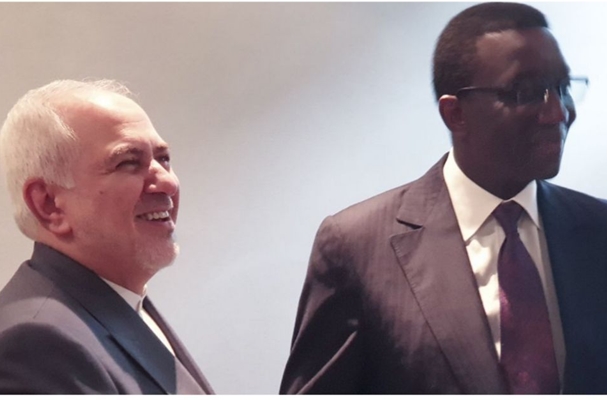
“The Europeans claim they were willing to maintain the JCPOA, but we have not seen Europe yet to be ready for an investment,” he told reporters upon arrival in New York, where he is going to attend a high-level UN meeting.

Expressing one’s interest and preparedness to save an international agreement “is totally different from being ready to make the investments required to save that deal and the Europeans have not done that yet,” Zarif said.

Britain, France, and Germany in January announced the establishment of a mechanism aimed at enabling non-dollar trade between the 28-nation bloc and Iran, officially called the Instrument in Support of Trade Exchanges (INSTEX).

The apparatus is supposed to circumvent the sanctions that the United States began re-imposing against Iran after leaving the 2015 nuclear deal with the Islamic Republic, the E3, and Russia and China.

Europe says 10 European states as well as some non-EU member states will join the trade instrument and use the apparatus for business purposes with the Islamic Republic.

The trade channel came into force after Iran complained why the European countries did not keep up their trade with the country as the nuclear deal mandates them to, and instead bow under the US sanctions targeting the Islamic Republic

Time for ‘isolated’ US to return to world community

In his Sunday remarks, Zarif also referred to the recent meeting of the UN Security Council and a meeting of the Board of Governors of the International Atomic Energy Agency (IAEA), and described them as a proof of the US’ isolation in the world.

“In all these meetings, the US’ unilateral policies have been condemned; now it’s time for Washington to return to the international community,” he added.

The UN nuclear watchdog’s special meeting was held on Wednesday at Washington’s request to win the Board of Governors’ support for its anti-Iran claims, but it finally turned into another failure for Americans.

The meeting was held a few days after Iran increased the level of its uranium enrichment to 4.5%, which is beyond the limit set by the JCPOA (the Joint Comprehensive Plan of Action).

The move was part of the second phase of the country’s May 8 decision to reduce its commitments under the multilateral 2015 nuclear deal in reaction to the US violations and Europe’s inaction.

NAS Award in Math Renamed after Iranian Genius Mirzakhani

The NAS Award in Mathematics has now been renamed the Maryam Mirzakhani Prize in Mathematics after the Iranian scientist and will be awarded biennially for exceptional contribution to the mathematical sciences by a mid-career mathematician.

Nominations for the inaugural prize are due by October 7, 2019.

The former NAS Award in Mathematics was established in 1988 by the American Mathematical Society in honor of its centennial.

Mirzakhani was born in Tehran in May 1977.

She won gold medals in the 1994 and 1995 International Mathematical Olympiads for high-school students.

Mirzakhani gained her bachelor of science degree in mathematics at Sharif University in Tehran. She moved to the US in 1999 and earned her PhD from Harvard University five years later.

She was assistant professor and then professor at Princeton University in 2004-08 before moving to Stanford University as professor in 2009.

In 2014, the Iranian professor won the quadrennial Fields Medal, which is the most prestigious award in mathematics, often equated in stature with the Nobel Prize.

Her honors also include the 2009 Blumenthal Award for the Advancement of Research in Pure Mathematics and the 2013 Satter Prize of the American Mathematical Society.
Mirzakhani specialized in theoretical mathematics that read like foreign words by those outside of the mathematics field: moduli spaces, Teichmüller theory, hyperbolic geometry, Ergodic theory, and symplectic geometry.
The math genius died of breast cancer in July 2017 at the age of 40.

At the 2018 World Meeting for Women in Mathematics in Rio de Janeiro, Brazil, Mirzakhani’s birth date — May 12 — was chosen for the celebration of women in mathematics.

‘Trump Phenomenon’ from Political Psychology Standpoint

None of Trump's Decisions Well-Thought: Iran Official

Donald Trump, the 45th US president, is one of the characters who have come to power in recent years and whose behavior bears a striking resemblance to that of leaders who have caused destruction through history. In order to get a better understanding of Trump’s psychological condition, IRNA has conducted an interview with Saeed Abdulmaleki, a faculty member at university and a political psychology development researcher. The full text of the interview follows:

IRNA: How do you analyze Trump from a psychological point of view?

Abdulmaleki: A sudden action by a leader can change the destiny of a nation and can even have an impact globally. For example, if Adolf Hitler had not existed, the Second World War would not have broken out. Harold Dwight Lasswell was a leading American political scientist and communications theorist. Based on his studies on the clinical cases of political activists, Lasswell arrived at the conclusion that political leaders present their hidden personal conflicts within the framework of public objectives and symbols and [present them] as something logical and rational which is beneficial to the general public. He also concluded that political movements are a product of making personal feelings flow into the current of public issues.

In 2007, Frederick Coolidge and Daniel Segal brought together five experts on Hilter and asked them to evaluate him base on DSM-IV psychopathological indicators and personality disorders. The experts reached the consensus that in terms of personality disorders, Hitler suffered from paranoia, sociophobia, narcissism and sadism to a great extent. In another study, Coolidge and Segal conducted the same survey on Saddam Hussein. There was a rather high correlation between the personality traits of the two men. Therefore, most political leaders have suffered from mental disorders, and, accordingly, they have been reflected in domestic and foreign political decision making. Freud believes the current trend in everybody’s life is affected by their unconscious self, which is made up of everyone’s past and childhood memories that constitute his or her character. Trump grew up in a family most of whose members were businesspeople and had a lot of property and tenants.

‘Trump Phenomenon’ from Political Psychology StandpointTrump’s view toward the outside world was formed by living in Queens and Brooklyn neighbourhoods in New York, which are basically dangerous environments and where people have always been armed. It seems Trump’s viewpoint vis-à-vis the world and international politics as well as his mentality emanates from his living in those areas, the mentality that the world is a jungle and is a dangerous place where one should always be fighting. This mindset forms Trump’s current approach on the international stage. On the other hand, Trump’s personality is affected by an American self-concept in the general sense of the word. Americans have always regarded themselves as first-world citizens and better than others and believe they enjoy a kind of greater potentiality.

IRNA: Trump has divided the history of the world into the era before his presidency and the one after his presidency. He also likes to shuck off the past heritage form a new order himself. How do you analyze his easing of complex international issues in order to satisfy his sense of megalomania and narcissism?

Abdulmaleki: As I mentioned earlier, we can generally describe Trump’s character as a “narcissist authoritarian.” Narcissist people seek power. Moreover, they have charisma as well. They come to power in times of crisis when people are looking for a powerful leader who can improve the situation. Trump was elected US president at a time when Obama had, before him, degraded the US in the minds of international circles and the US society itself by adopting a policy of leniency as well as downplaying the United States’ prestige and authority. Trump was somehow the symbol of the United States’ lost narcissism which needed to be revived. So, there is no doubt that Trump will definitely be re-elected president for a second term in the upcoming elections.

In the typology of political leaders, Lasswell categorizes political leaders into three groups: agitators, reformers and managers. In Trump’s estimation, the posture of an agitator is the same as an authoritarian’s. It seems Trump seeks to make a superman of himself and upset the current regulations ruling international regulations in such a way that it will bring him confirmation and respect to tackle his unsolved mental complexes.

IRNA: In dealing with Iran, Trump frequently uses the policy of carrot (talks) and stick (sanctions and psychological warfare). Is there a proper psychological analysis of Trump’s contradictory behaviour?

Abdulmaleki: Trump’s policy, especially toward Iran, is one of pressure and psychological warfare. Trump uses different options of talks as well as carrot and stick at the same time, so that one of them might work. He mostly uses techniques of psychological warfare and imposing his will on the other side, and continues doing so until the other side comes down with mental and spiritual collapse and is forced into submission. This is a technique that he uses.

IRNA: So, based on what you said, I think our standoff with Trump is more of a psychological rather than diplomatic and political nature. How should our officials deal with Trump as the key decision-maker in the United States.

Abdulmaleki: Look, the United States has a kind of historical mistrust and phobia vis-à-vis Iran. Due to the psychological wounds it has sustained over the past four decades, the US has adopted a policy of animosity and revenge. Moreover, from the standpoint of political psychology of international relations, the hegemony of the West, especially that of the US, hinges on the idea that no government, particularly those in the Middle East and Muslim countries, must not survive for more than 40 years because of the idealistic approach that exists. Because of these two reasons, the US is seeking a regime change in Iran.

‘Trump Phenomenon’ from Political Psychology StandpointIn my opinion, we should do two things under these circumstances, one on the domestic policy front and the other on the international stage. We should stop putting the blame on others for our shortcomings and weaknesses, and solve our problems ourselves. We should first tackle the identity crisis we are suffering on the political, cultural and social front. We should stop being scatter-minded, and stop preferring individual, ethnic and sectarian interests to national interests and identity.

On the international stage, especially in dealing with the US, we should turn to confidence-building and settling conflicts. To that end, it is necessary to adopt a policy of open dialogue and speech therapy in order to resolve both within and without. Speech therapy will bring with it cognitive behavioral therapy and the elimination of intellectual and perceptual errors of both sides. By speech therapy and elaborating on Iran’s intentions and explaining the fact that Iran’s nuclear activities have a deterrent nature, we may be able to put an end to this misunderstanding and gradually settle the conflict and tensions and the difficult security situation and get the heart and mind of the international community to get on board with us. Of course, it would be an arduous and time-consuming task. All in all, each policy belongs to its special period of time.

Tehran Ready for Talks If Sanctions Lifted: Iran President

Hassan Rouhani - President of the Islamic Republic of Iran

Hassan Rouhani made the comment while reiterating that Iran lived up to its commitments under the Iran nuclear deal known as the Joint Comprehensive Plan of Action (JCPOA) unlike Washington which withdrew from the agreement unilaterally.

“We did not breach our commitments under the JCPOA. In the Shanghai meeting, two of world leaders said Iran had secured a great political and ethical victory in history. The Americans failed to do anything and have been defeated in all international, political and legal circles. We, the Iranian nation, have managed to display our power,” said Rouhani.

He said Israel prompted the US to pull out of the JCPOA.

“It was wicked Israel that caused the US to withdraw from the JCPOA,” he said.

“Some reactionaries in the region also acknowledged that the US was under pressure to pull out of the JCPOA. Washington’s breach of commitments coupled with the animosity of some of our enemies was the reason behind Washington’s pullout from the JCPOA,” said the president.

He then touched upon Iran’s stance following the US withdrawal from the JCPOA.

“We have given the P5+1 countries time. Some of them have taken some steps. The Europeans either didn’t want to, or couldn’t take any steps. And the US is left alone as far as the JCPOA is concerned,” President Rouhani said.

“The world stood up to the US, and this is because of Iran’s strategic patience,” he noted, highlighting the importance of people’s resistance to tackle sanctions.

Shiite Muslims Celebrate Imam Reza’s Birthday Anniversary

The people gathered in Imam Reza’s Holy Shrine to engage in celebratory activities on the merry occasion.

Imam Reza (PBUH), the eighth Imam of Shiites, is of the progeny of Prophet Muhammad (PBUH) and his eighth successor.

Imam Reza’s (AS) birthday anniversary falls on the 11th day of the lunar Hijri month of Dhul Qaada, which falls on Sunday, July 14, this year.

The shrine of Imam Reza in north-east of Iran is visited by nearly 30 million people annually, turning Mashhad into one of the biggest pilgrimage destinations in the world and the holiest spot in Iran.

What follows are YJC’s photos of the shrine on Sunday:


Defense Ministry to Produce Auto Parts for Iranian Carmakers

Tehran Tells Warring Sides in Caucasus to Respect Iran’s Border Security

In comments on Sunday, Iranian Defense Minister Brigadier General Amir Hatami said his ministry has signed a series of contracts with the Iranian carmakers, worth around 15 trillion rials, to produce critical auto parts.

The Defense Ministry had already voiced readiness to assist the local carmakers in manufacturing the components whose production has been hampered after the withdrawal of foreign contractors from Iran, he added.

The minister also noted that the high-quality products the Defense Ministry is going to manufacture are required to complete the assembled cars, including engine control units.

General Hatami finally dismissed plans for manufacturing civil cars, saying the Defense Ministry has focused on military vehicles and is going to unveil a new one soon.

Defense Ministry to Produce Auto Parts for Iranian CarmakersIn comments in early June, the minister had announced that the military engineers were ready to help carmakers overcome problems caused by the US sanctions.

“The Defense Ministry with its committed and skilled workforce as well as its advanced industrial platforms is ready to address the needs of the domestic car part manufacturers,” Hatami had said.

While Iranian automakers Iran Khodro and Saipa have managed to nationalize the production of various models to some extent, there are still parts that need to be imported.

The dependence proved costly after French carmakers Peugeot Citroen and Renault, who enjoyed huge sales in Iran, abruptly left the country following US President Donald Trump’s decision in May last year to abandon the 2015 Iran nuclear deal and reimpose economic sanctions against Tehran.

Iranian Envoy Attends Bastille Day Ceremony

In a post on his Twitter account, Qassemi said he joined the other foreign ambassadors and heads of diplomatic missions in France to take part in the Sunday’s Bastille Day parade at the invitation of French President Macron.

He also praised the French people’s enthusiasm for holding national ceremonies in commemoration of the July 14, 1789 storming of the Bastille fortress during the French Revolution.

The “historic” Bastille Day has had far-reaching impacts on the contemporary world, the Iranian ambassador noted, congratulating the French government and nation on the National Day and wishing them prosperity in a world blessed with peace and stability.

Bastille Day commemorates the storming of the Bastille prison in 1789 by a mob of Parisians during the opening stages of the French Revolution. The anniversary became a national day in 1880 and is marked by parades, speeches, parties and fireworks.

Iranian MP Escapes Assassination, Bodyguard Shot

Unknown assailants on motorcycles attacked Salek’s car in Tehran on Sunday evening.

The 73-year-old cleric who represents the city of Isfahan in the Iranian Parliament has told Fars News Agency that he was in downtown Tehran at around 8:30 pm local time for a television program when he heard “suspicious” gunshots from the nearby streets.

Salek said when recording of the program was over, he once again heard gunshots near the building, and found out later that his bodyguard has been shot in the leg.

Eyewitnesses say two motorcycles, each carrying two riders, fled the scene after the shooting, he added, noting that his bodyguard has been taken to the hospital and is in good health.

Salek said there is no evidence about the motive behind the attack and it is not clear whether it was an assassination attempt.

Salek has been elected to the Iranian Parliament for five terms.

Woman Filmmaker’s Terrorism Thriller Tops Iran’s Box Office

After directing two films dealing with the Iran-Iraq war (Track 143 and Breath), in her latest movie Abyar recounts a true story of the life of the family of a terrorist ringleader.

The film revolves around Abdul-Hamid Rigi, the younger brother of Abdul-Malik Rigi, the founder and leader of the Jundallah terrorist group in of Sistan and Baluchestan province in southeastern Iran.

Abdul-Hamid marries Faezeh Mansuri, a beautiful girl from southern Tehran. He forces Faezeh to leave her homeland along with her brother to live in Pakistan where they find themselves involved in the Jundallah terrorist activities.

The movie grossed over 20 billion rials in its opening five weeks, turning into the most watched movie in Iran over the past month.

At first blush, the movie looks like a love story but it ends up in a bitter tragedy. The filmmaker has built upon a true story about Jundollah terrorist group to put together a dramatic and thrilling movie integrating elements of romance and horror genres.

The movie was highly acclaimed at the 37th Fajr International Film Festival in 2019. It won the Crystal Simorgh for best film. It also won awards in the sections of best film, best director, best actor, best actress, best supporting actress, best makeup and best costume design.

Iran, Russia Start Joint Production of Robot Surgeons

The deal was signed in a ceremony attended by the head of the Centre for Knowledge-based Enterprises and Companies at the Iranian Vice Presidency of Science and Technology, and the head of the Russian Centre for Research and Development.

Based on the agreement between Iranian knowledge-based companies and their counterparts in Russia, the robot will be constructed as SKD (semi-complete parts) in the Russian Federation.

The mass production of this robot is being carried out in collaboration with the Institute for Advanced Medical Technology, No Avaran Robotic Knowledge-based Company, the Sina Institute of Robotics and Medicine, and the Russian Research and Development Centre.

Sina robot was unveiled for the first time in the INOTEX 2015, and its commercialisation got underway at the fourth exhibition of laboratory equipment and materials.

For a brief review of Iran’s achievements in various fields of science and technology, check the book “Science and Technology in Iran: A Brief Review – 2019

The robot is designed and developed for remote surgery and is consisted of two parts. The first part is at the disposal of the surgeon, which can be installed in another building or city, and the second part, which is installed near the patient’s bed, is controlled by the remote surgeon.

Each move that the surgeon orders to the first robot is transferred to the second one and then it copies the same moves on the patient.

In addition to remote surgery, this device also offers other advantages to the surgery. It can eliminate surgeon’s hand tremours and minimise the surgeon’s movements.

Iran, Russia Start Joint Production of Robot Surgeons
Iran, Russia Determined to Expand Technology Ties

For example, a doctor in a surgical ward has a big stitch on patient’s body, but a robot copies one-fifth or one-tenth of it, so using this robot can make some movements possible that can never be done by human hands.

The joint meeting of Iranian and Russian knowledge-based companies was held on Friday in the presence of Iran’s Vice President for Science and Technology Sorena Sattari, and Ambassador of the Islamic Republic of Iran to the Russian Federation Mahdi Sanaie at the Azimut Olympic Hotel in Moscow. Representatives from more than 70 Iranian knowledge-based companies accompanied Sattari in this trip.