Saturday, April 25, 2026
Home Blog Page 3167

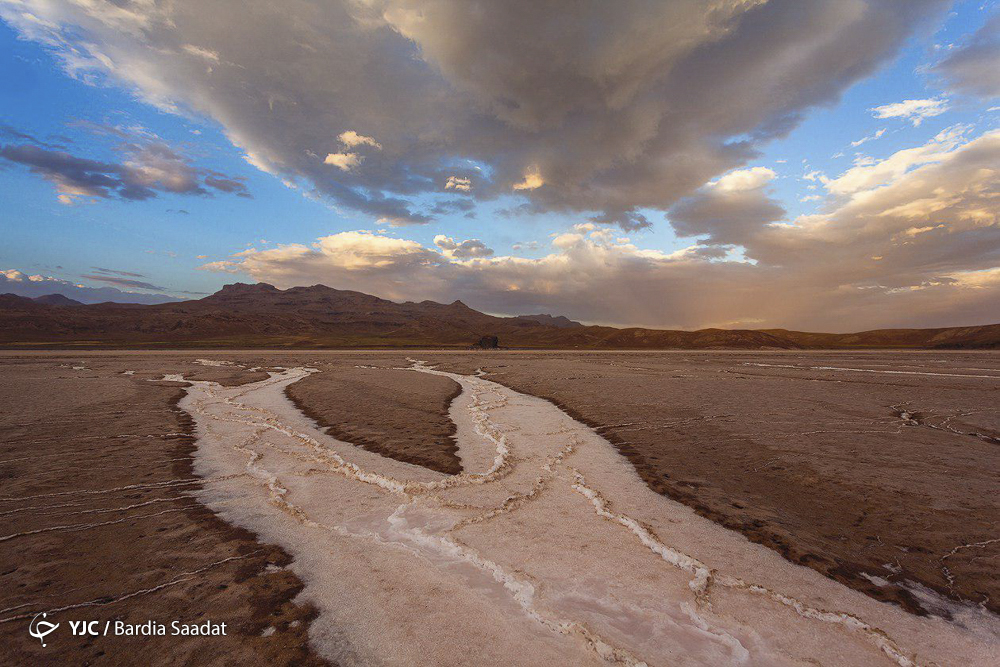
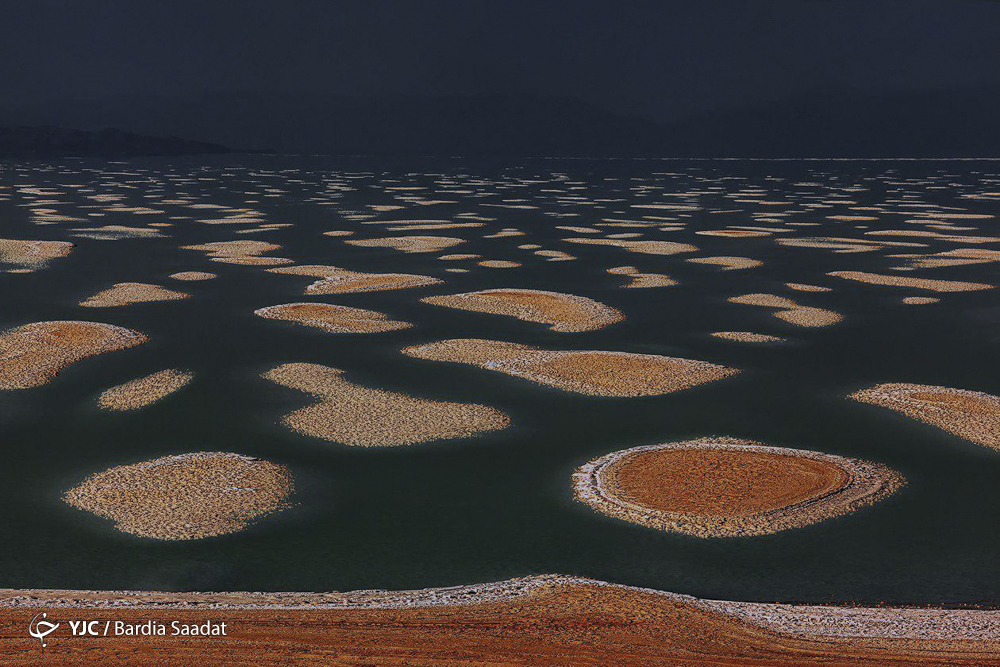
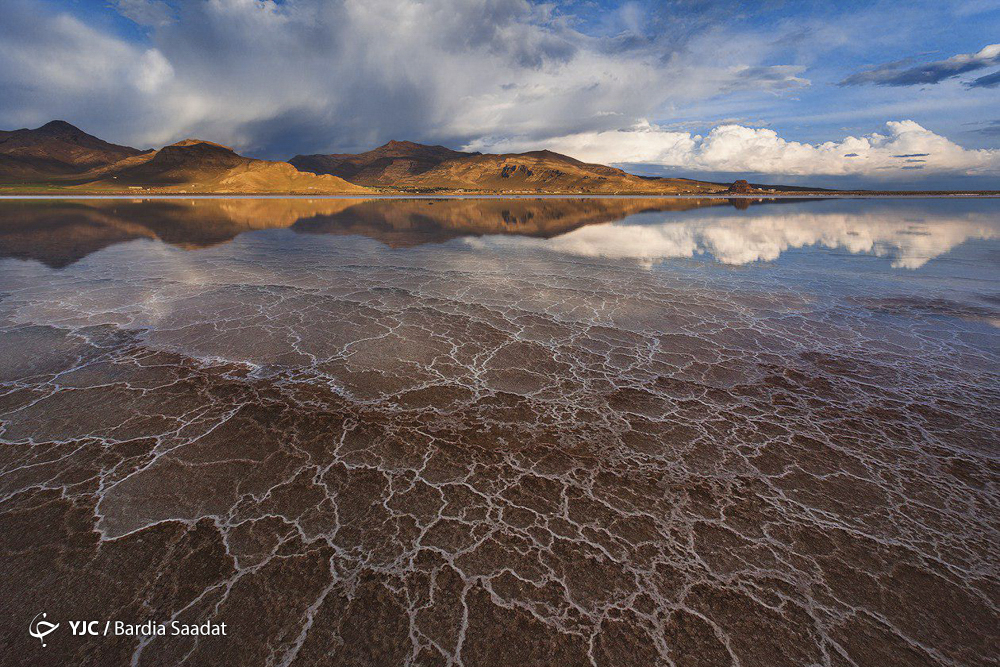
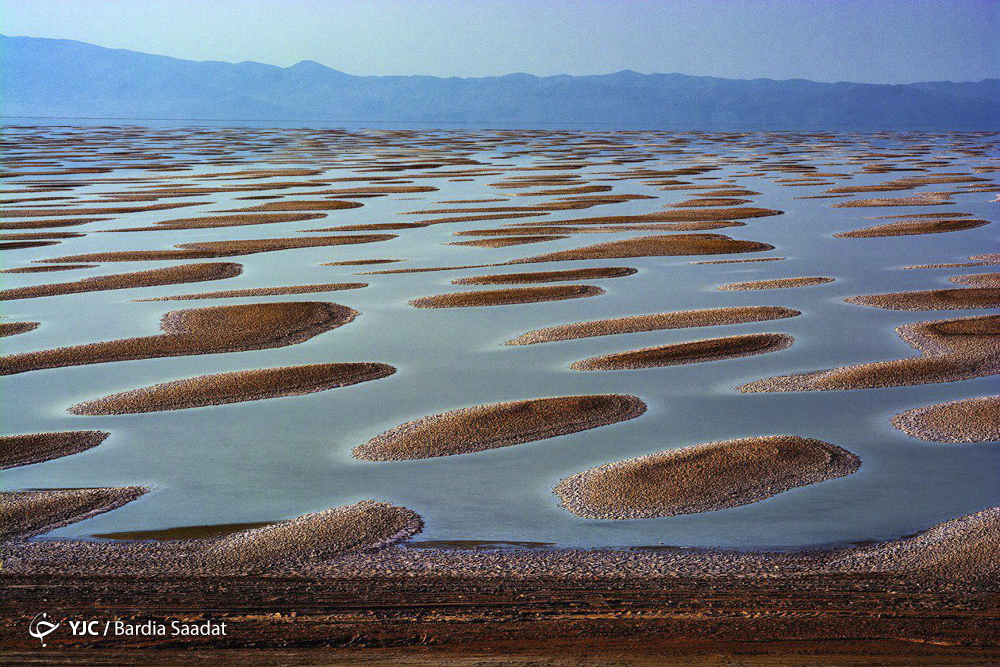
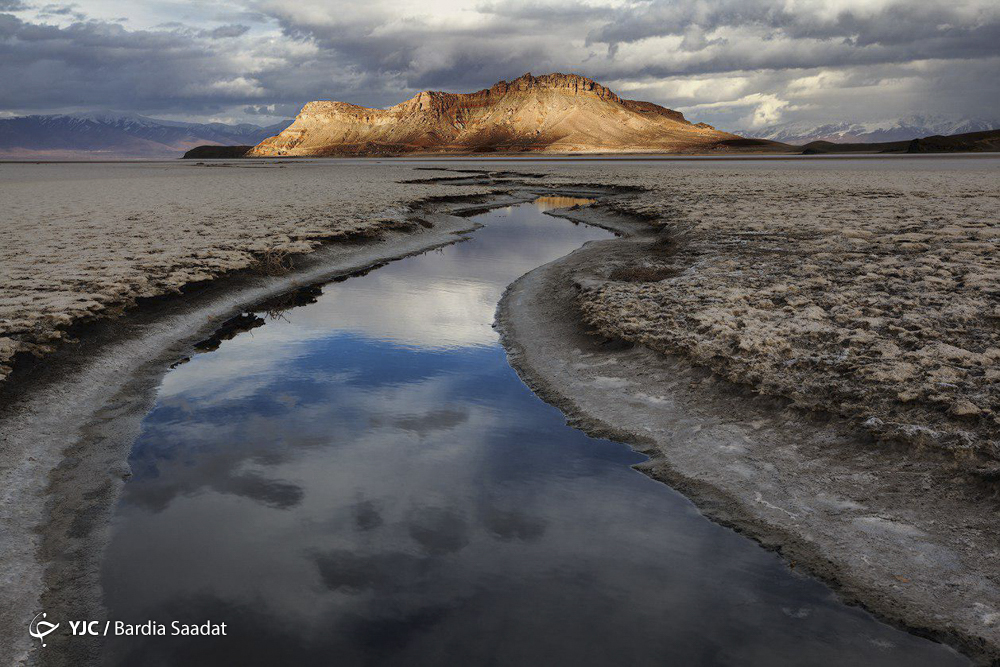
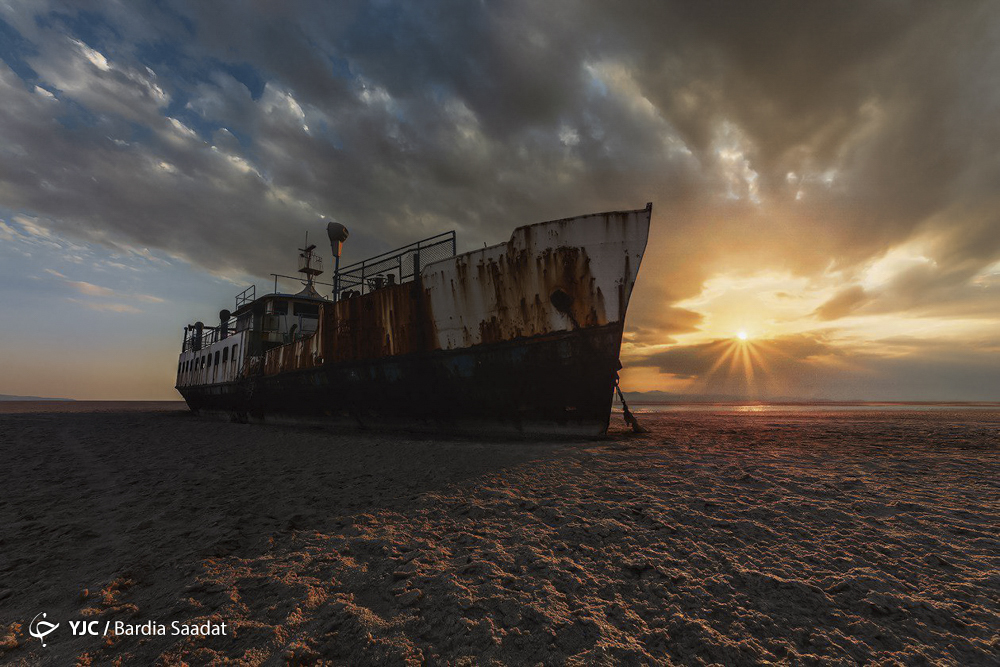
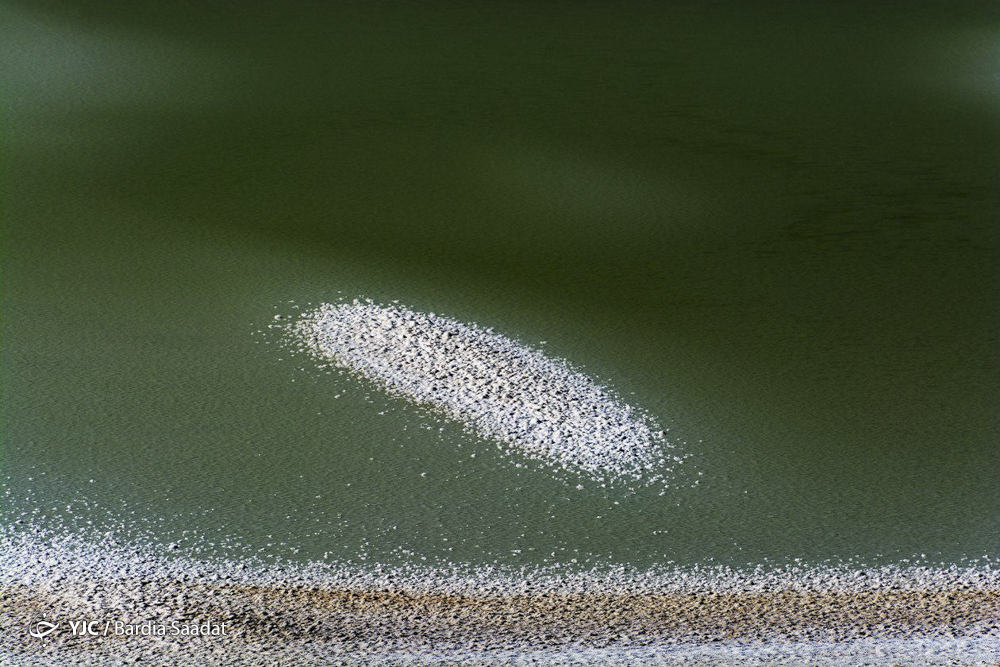
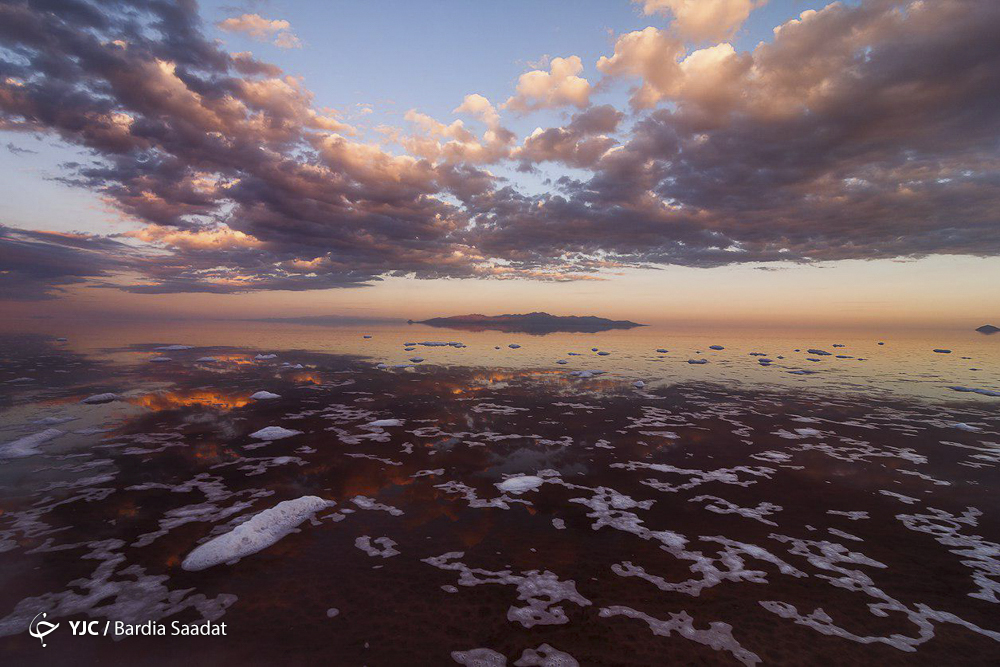
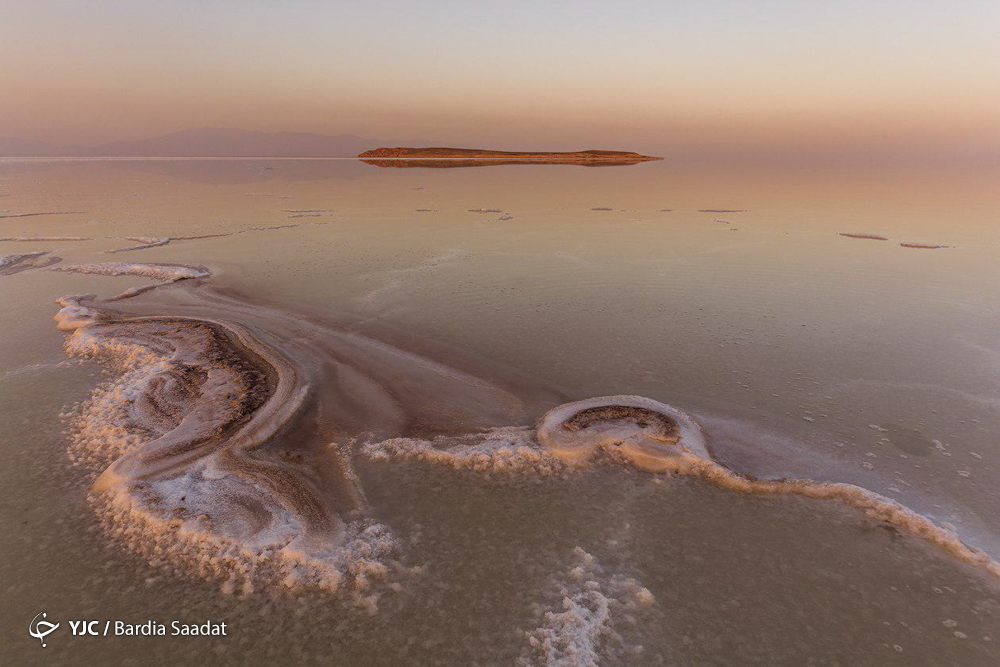
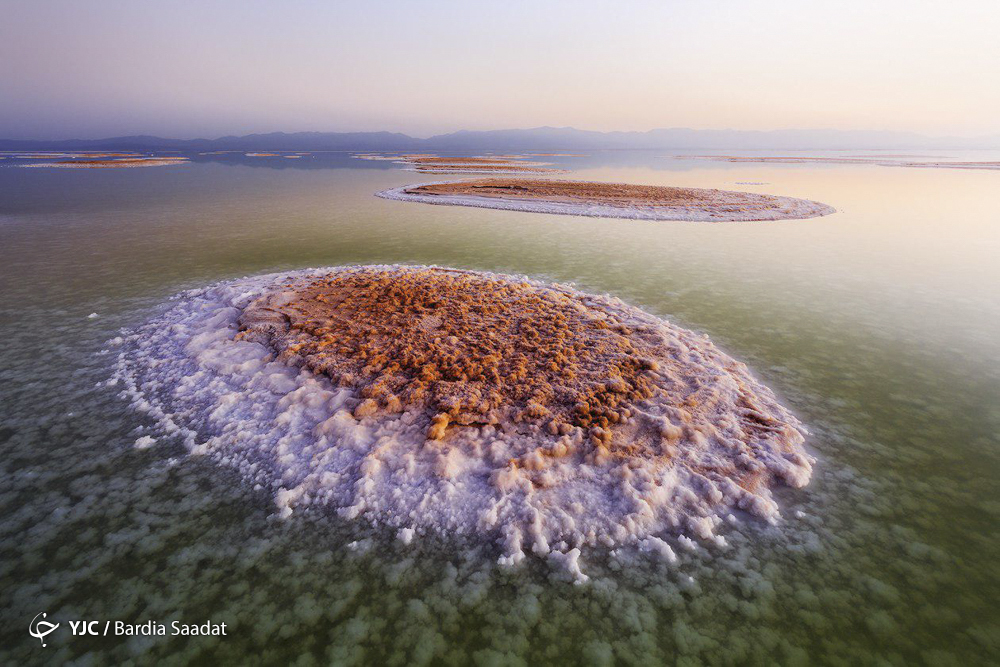
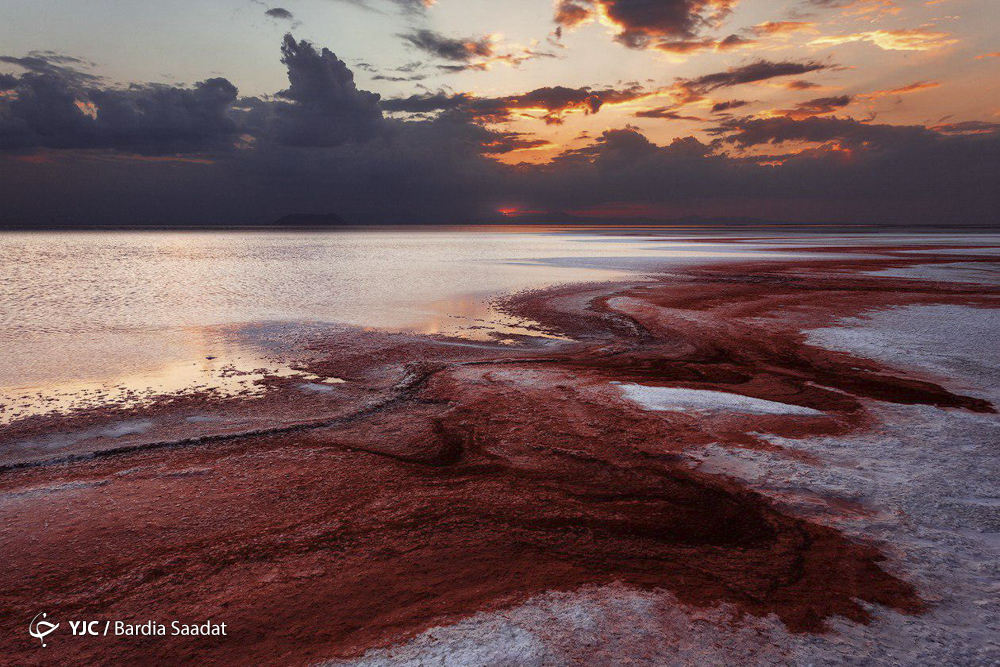
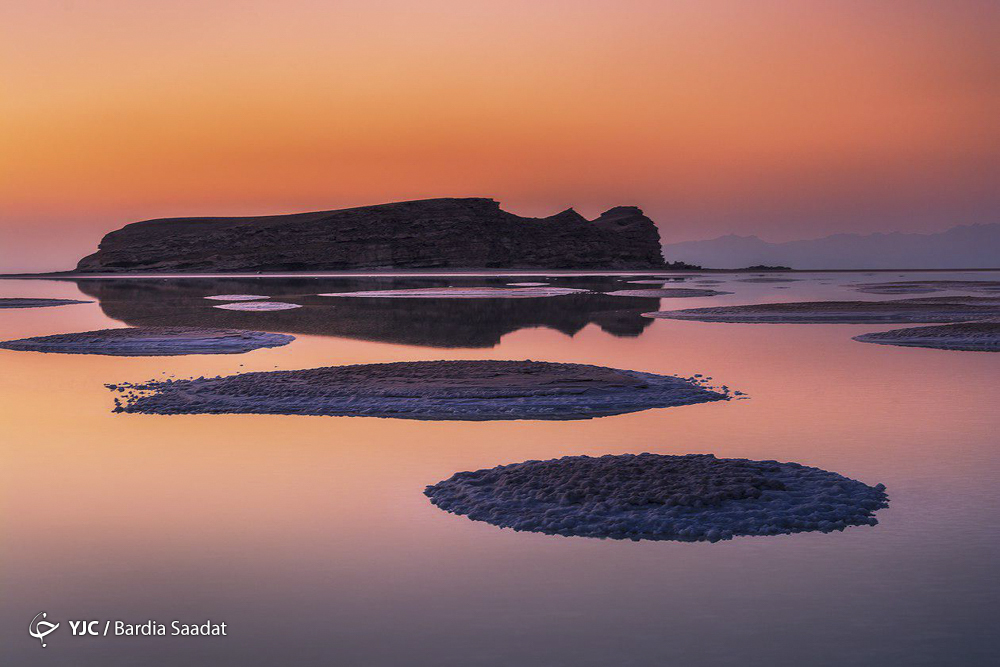
Lake Urmia in Photos: From Gradual Death to Revival

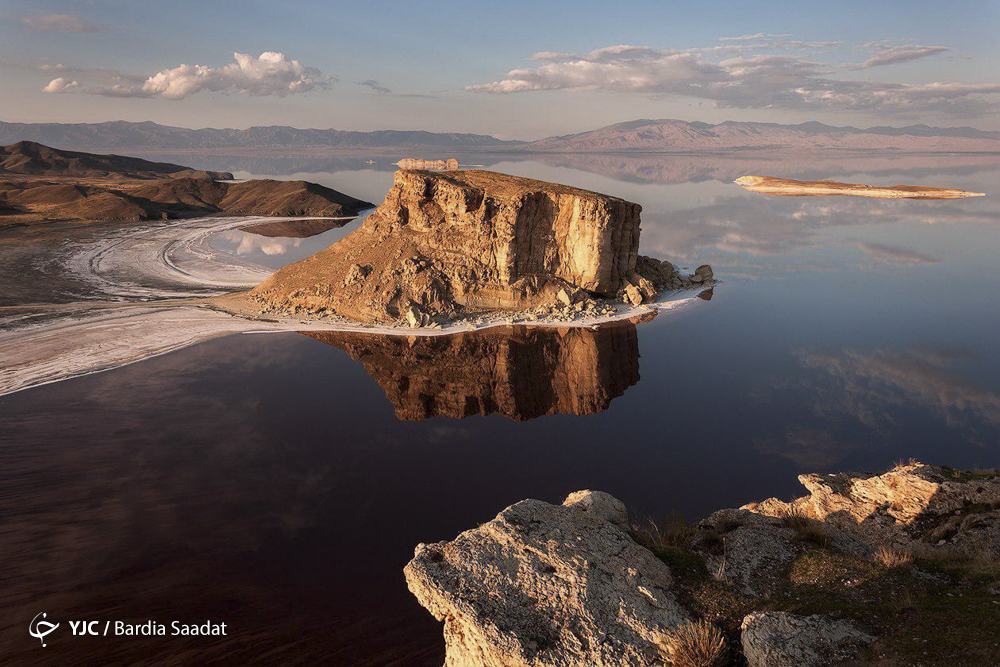
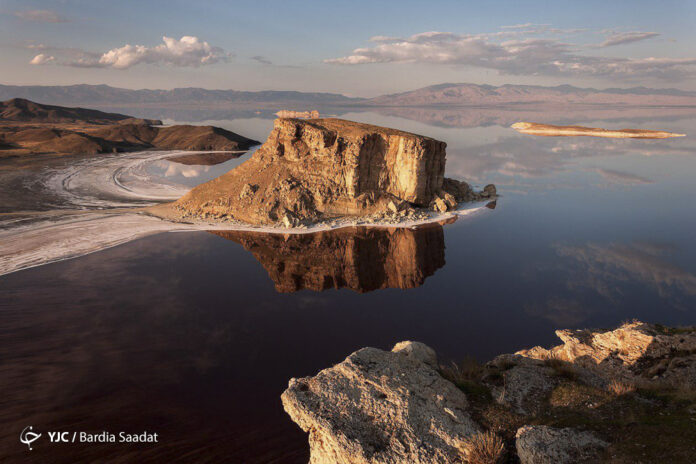
The lake is located between the provinces of East Azarbaijan and West Azarbaijan in Iran, and west of the southern portion of the Caspian Sea.

At its greatest extent, it was the largest lake in the Middle East and the sixth-largest saltwater lake on Earth, with a surface area of approximately 5,200 km2, a length of 140 km, a width of 55 km, and a maximum depth of 16 m.

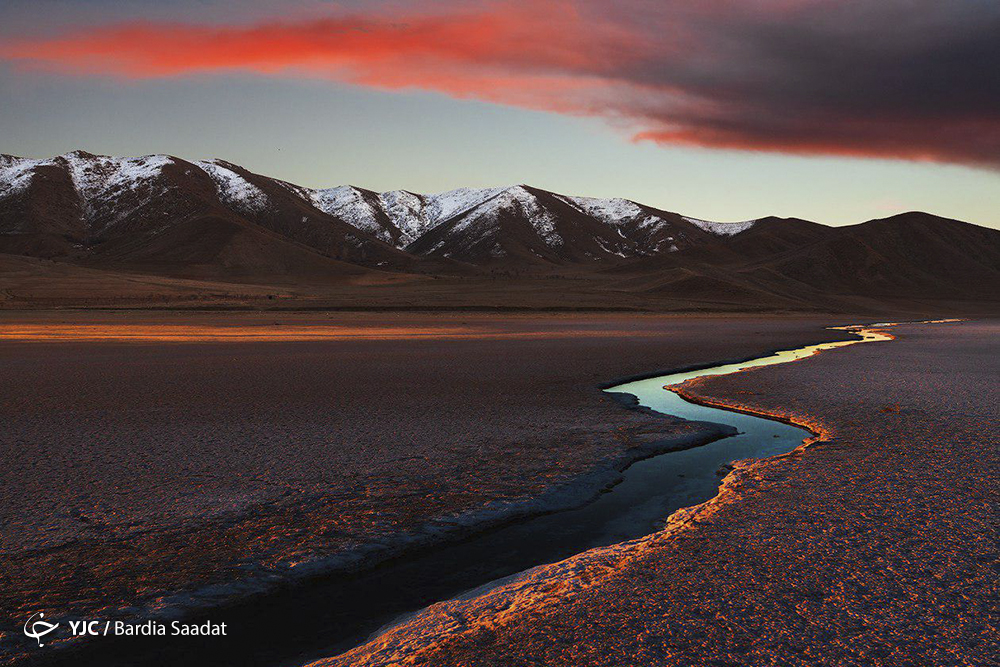
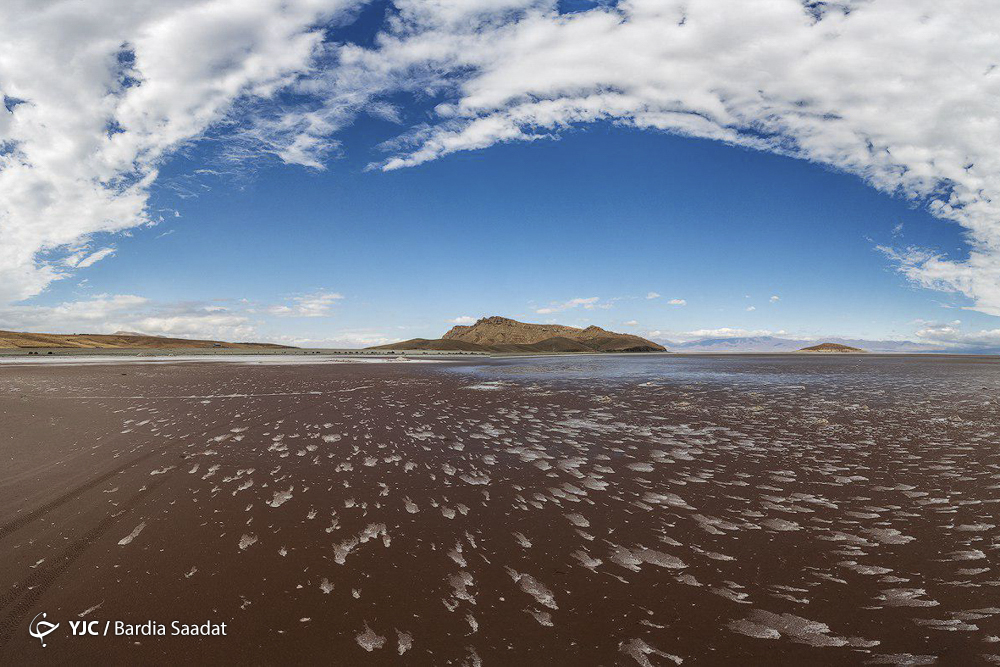
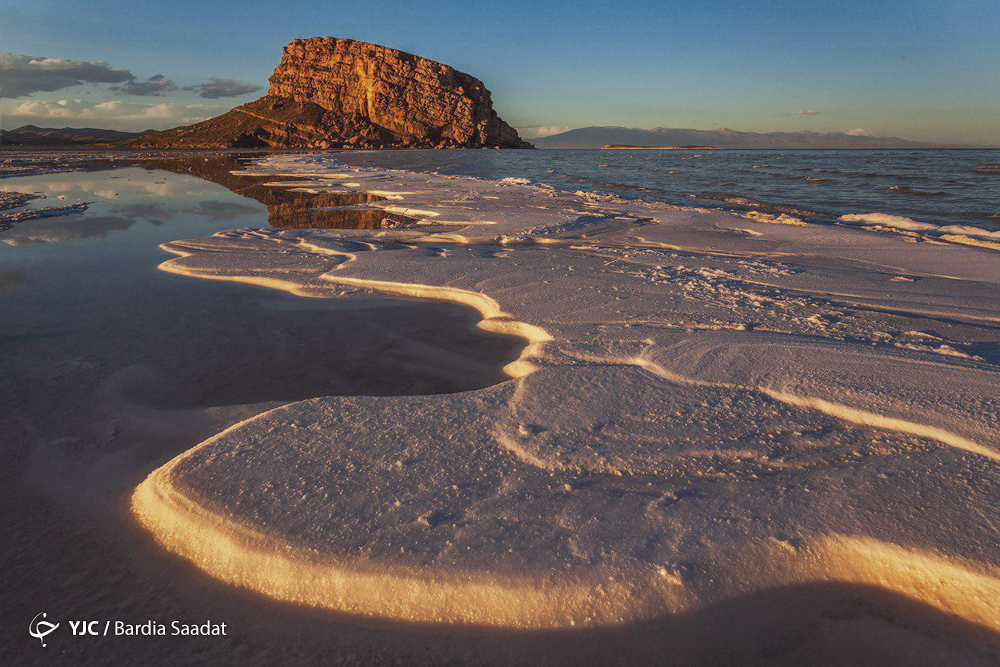
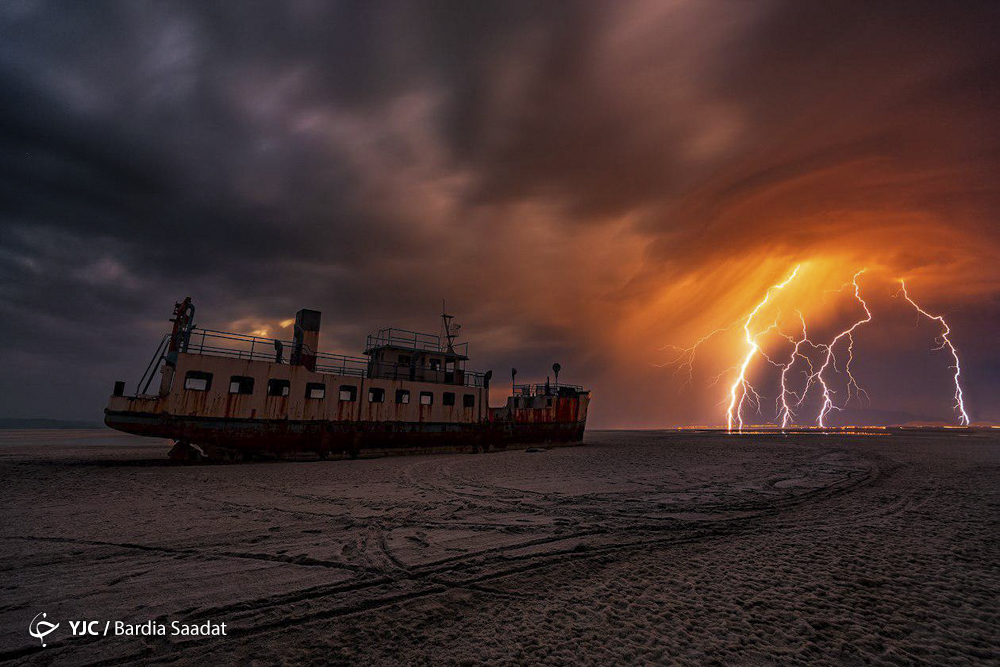
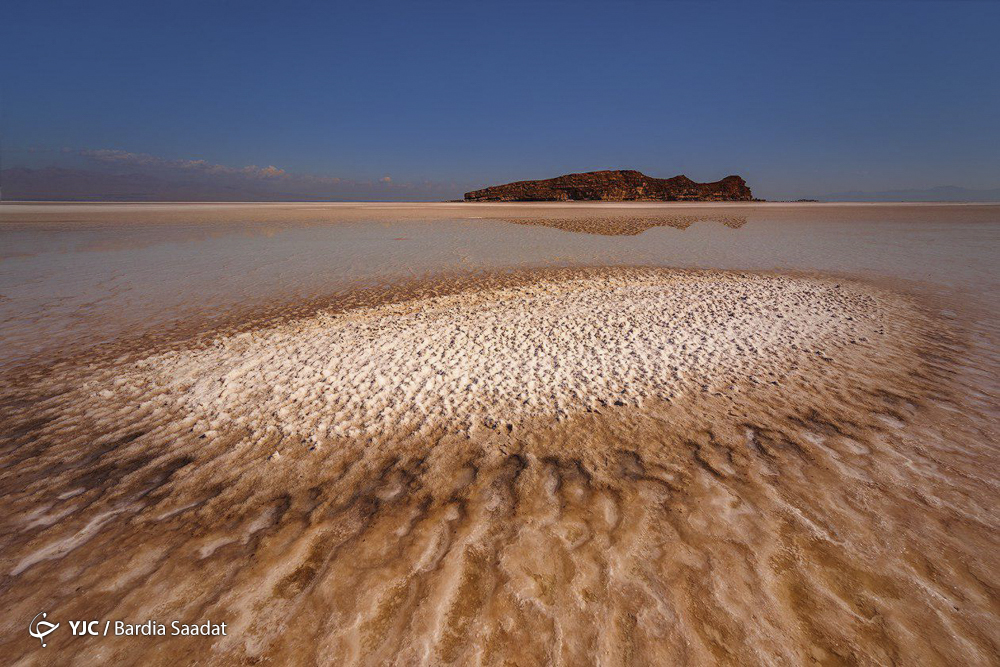
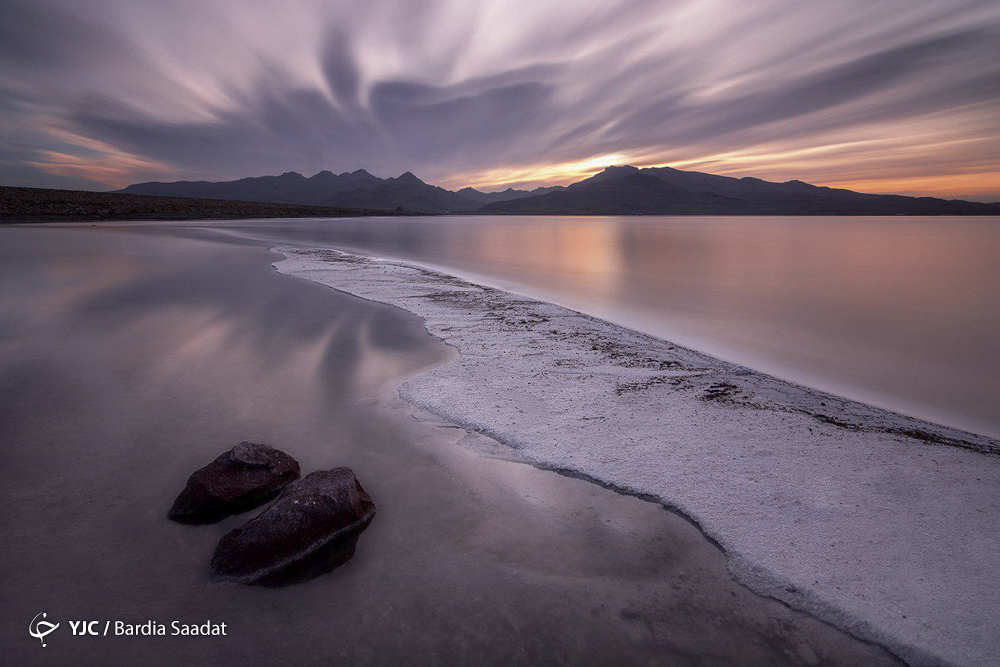
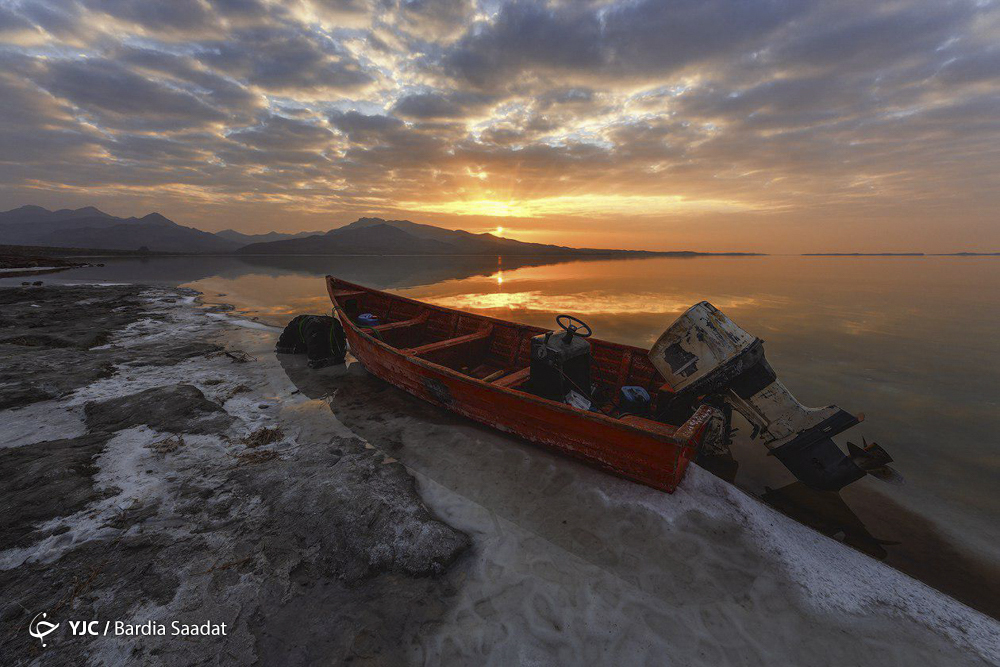
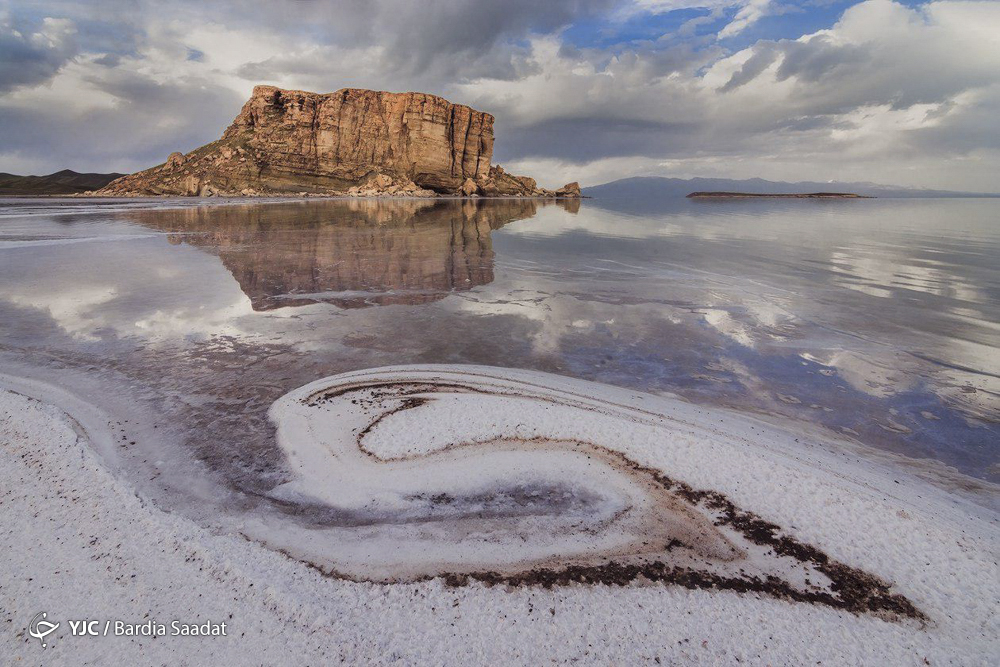
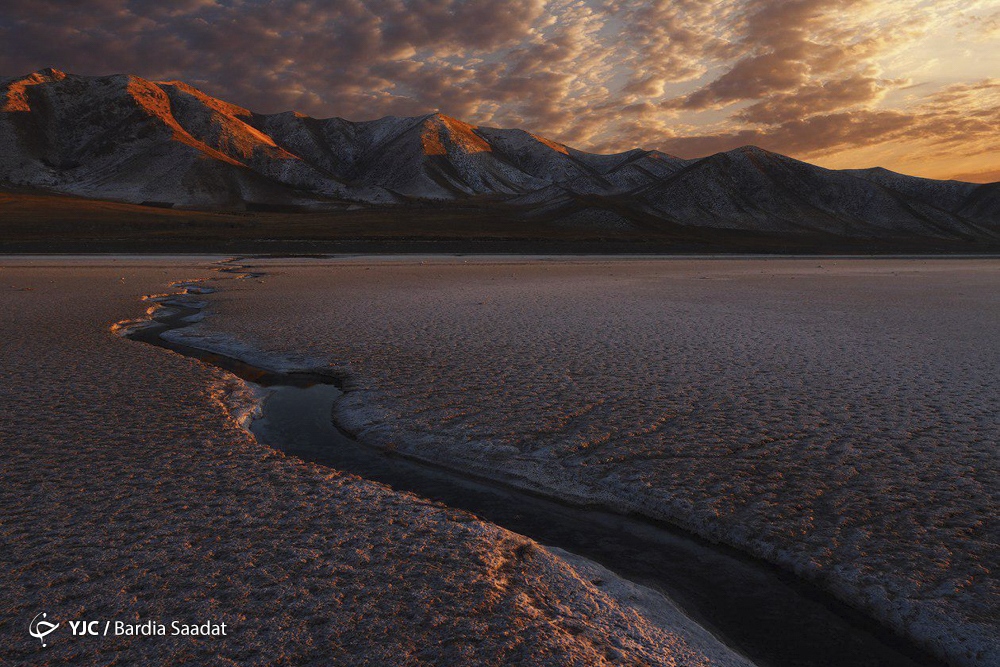
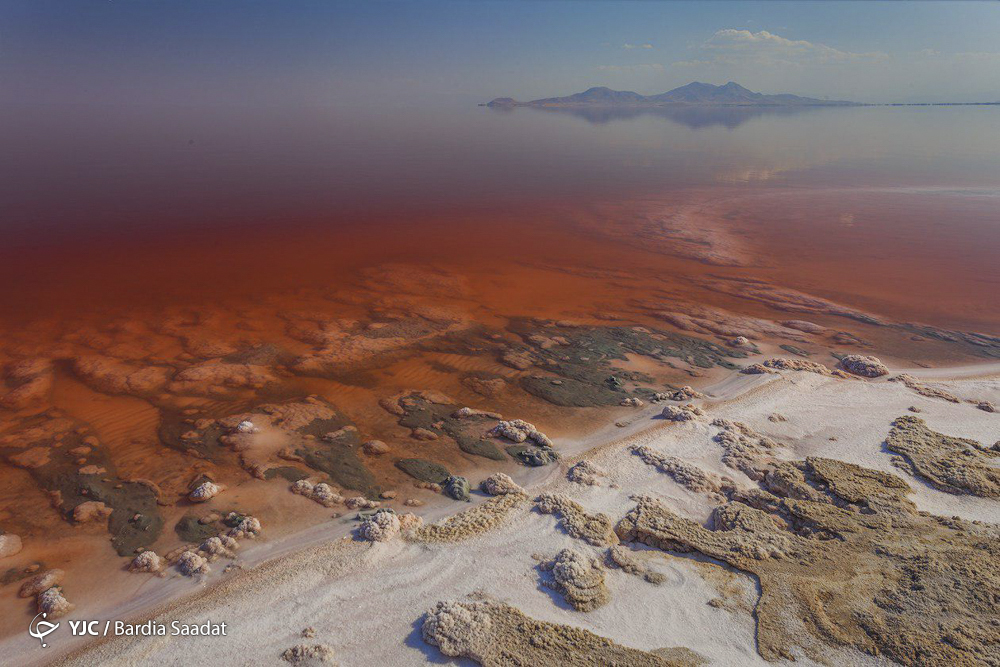
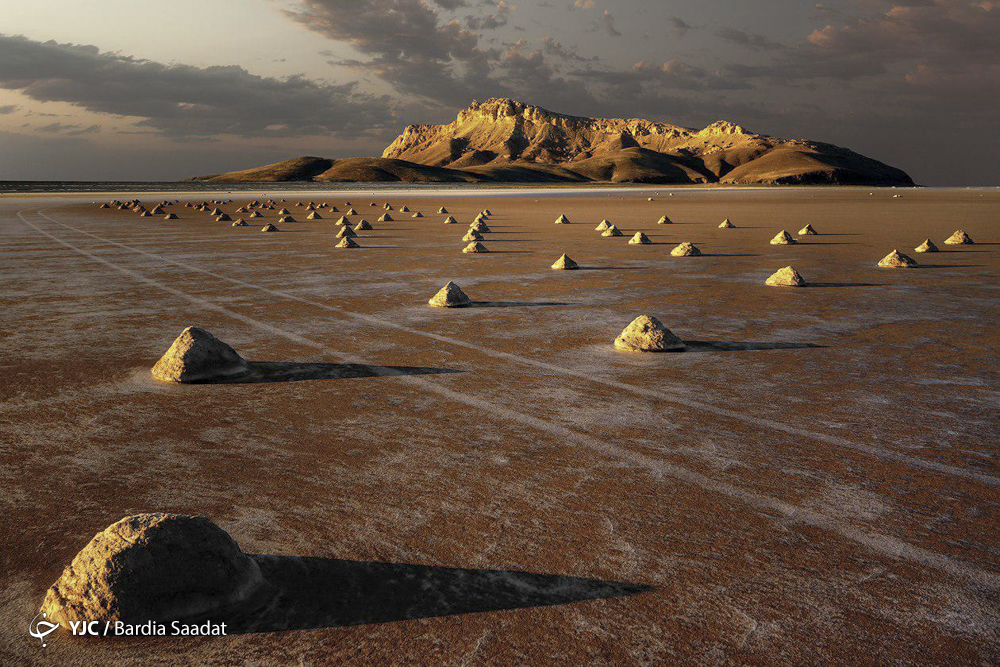
The lake shrank to 10% of its former size due to damming of the rivers that flow into it, and the pumping of groundwater from the surrounding area, but it’s been revived during the past couple of years thanks to the measures taken by the government and the good level of precipitation in the area.

Lake Urmia used to be a great wildlife refuge for 290 species of birds, 30 percent of which were indigenous and the rest were migratory. Following the decrease in the level of the lake’s water, many of those birds stopped coming to Urmia, but now with the revival of the Lake, they are once again being spotted.

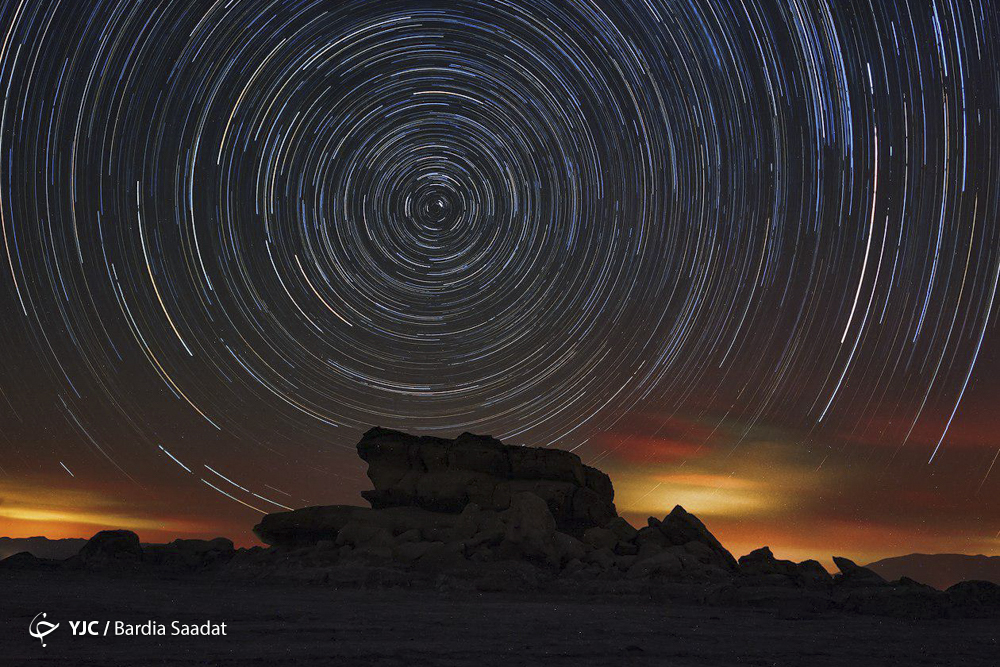
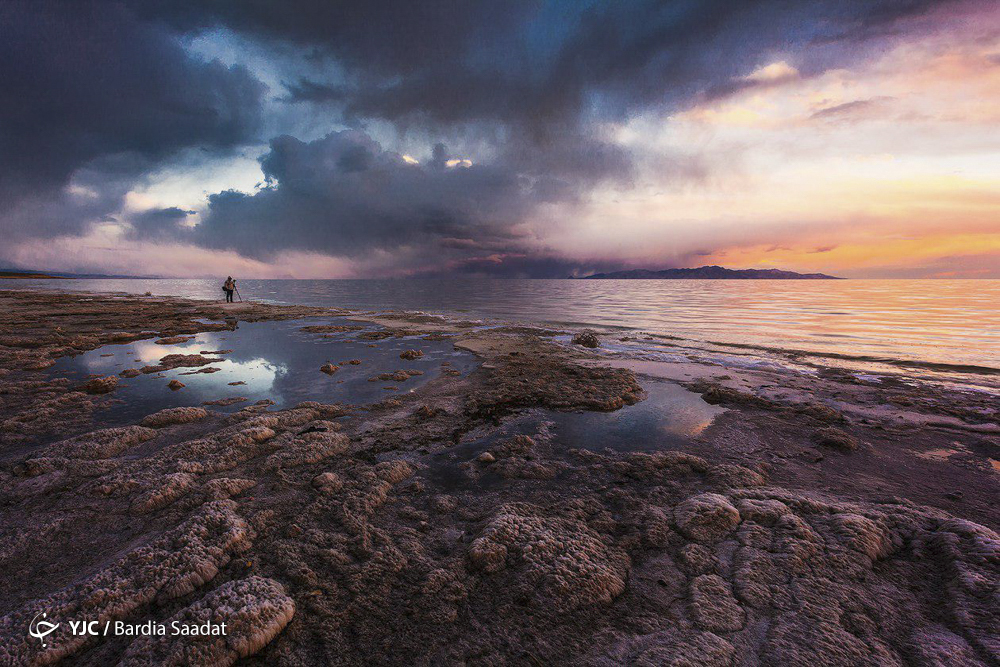
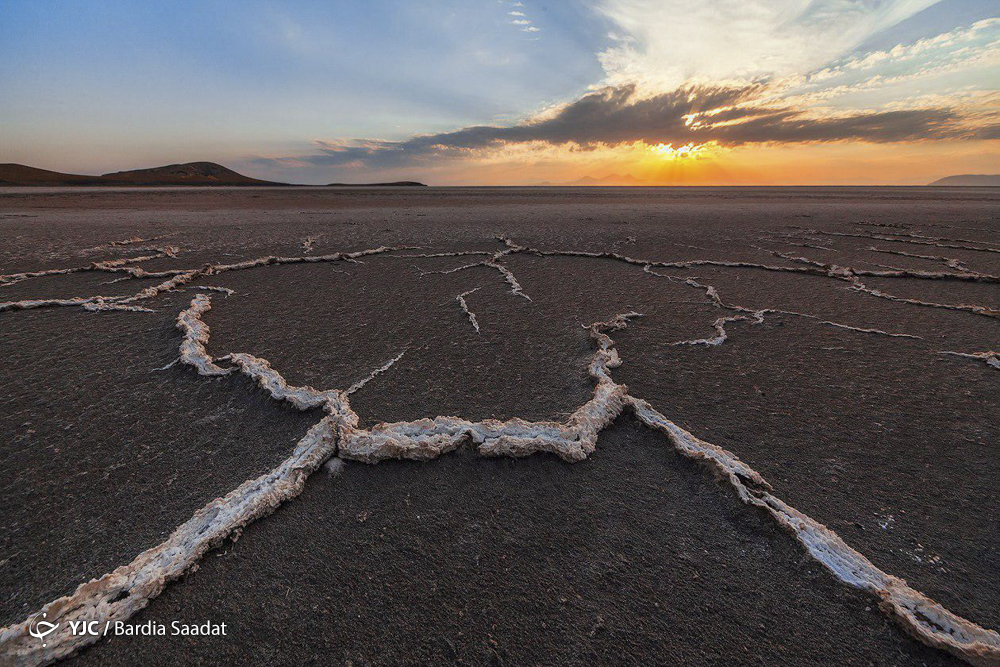
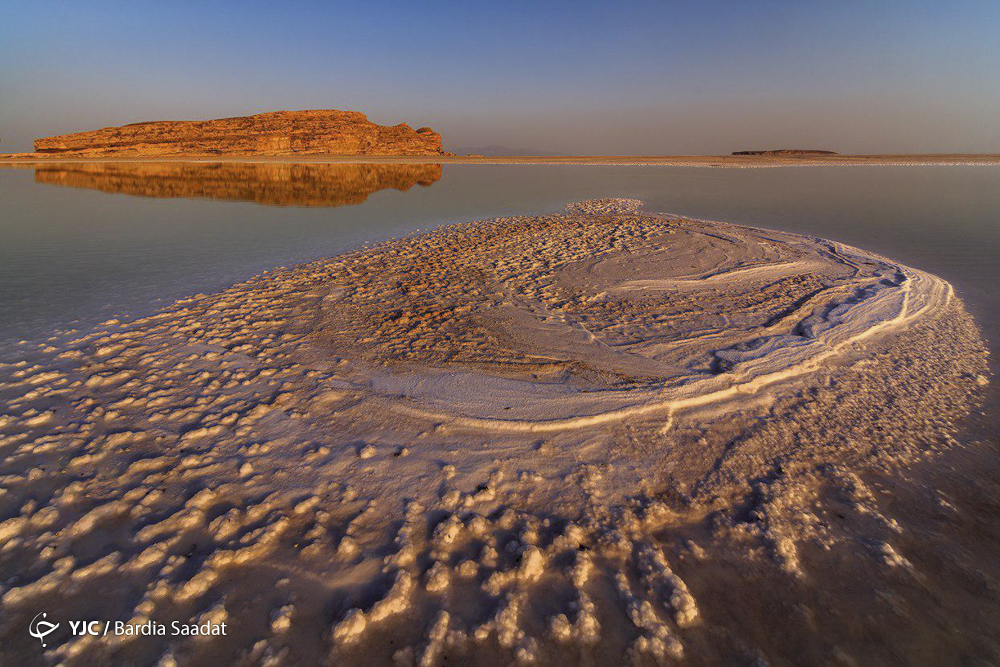
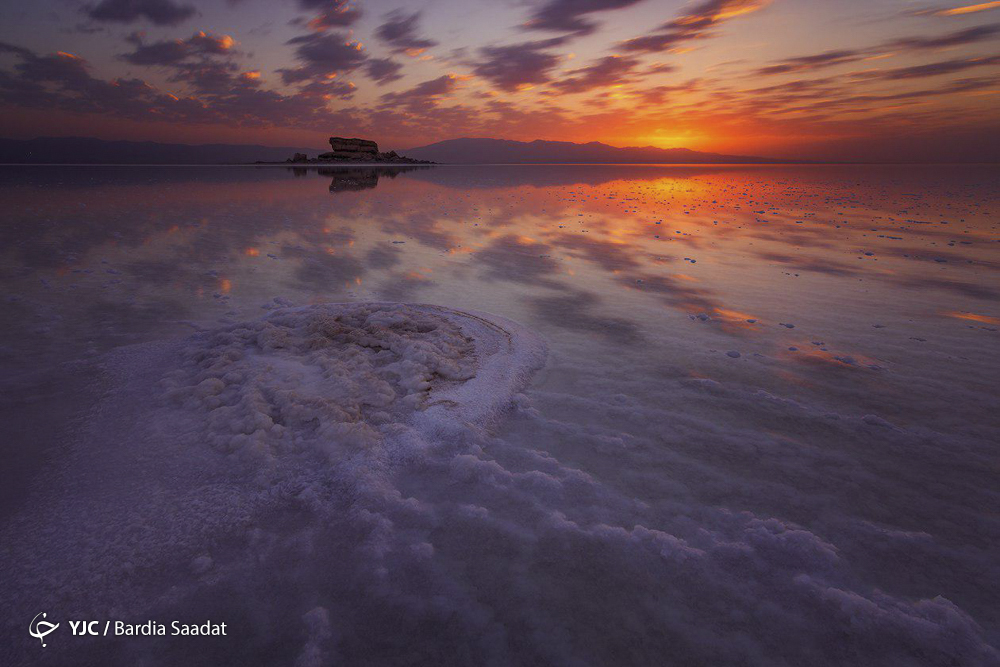
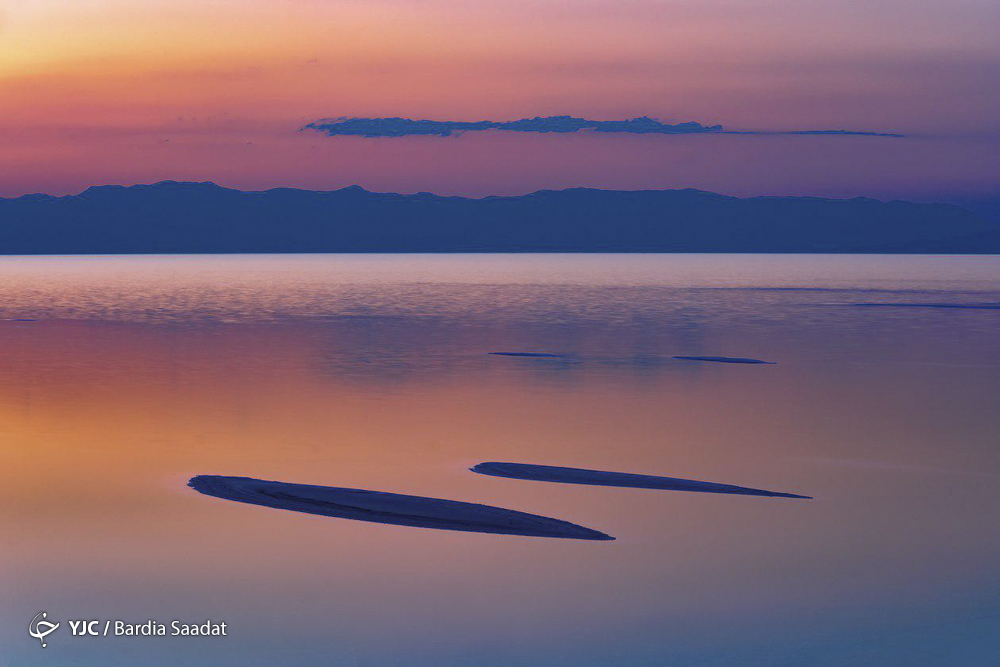
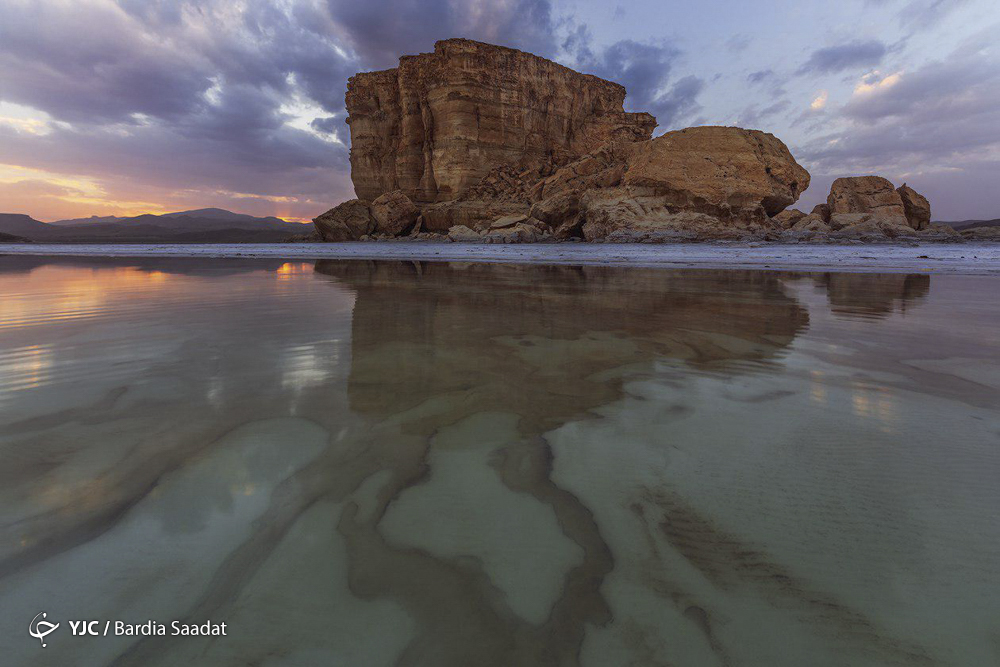
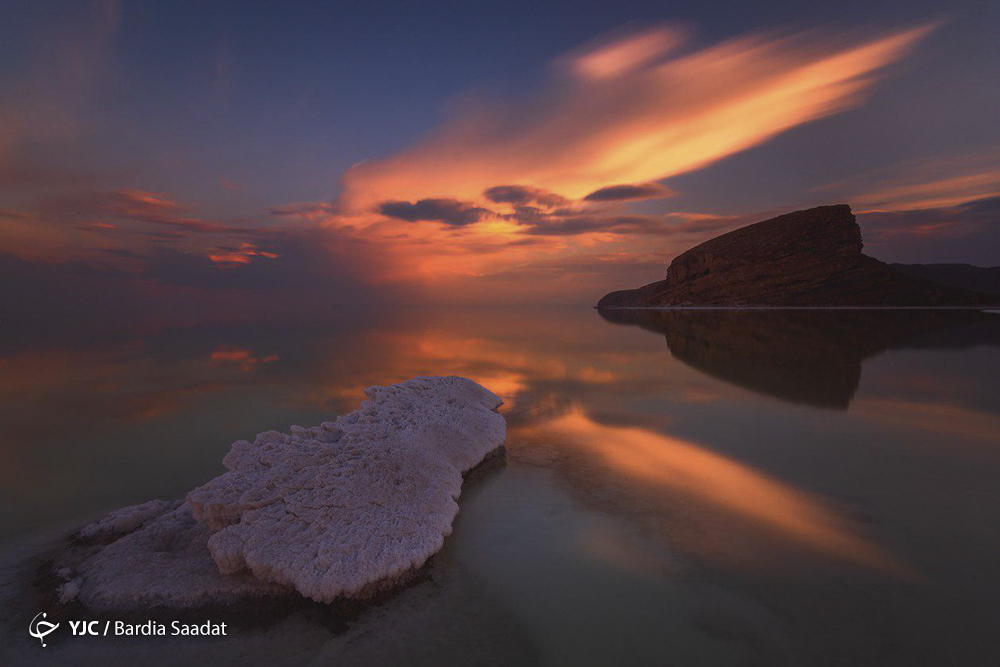
The following photos of the lake taken by Bardia Sa’adat and released by the Young Journalists’ Club, have captured various parts of the Middle East’s biggest salt lake, from the days when it was drying up, to the past few months when it’s been relatively revived.

A Look at Iranian Newspaper Front Pages on August 8

A Look at Iranian Newspaper Front Pages on November 19

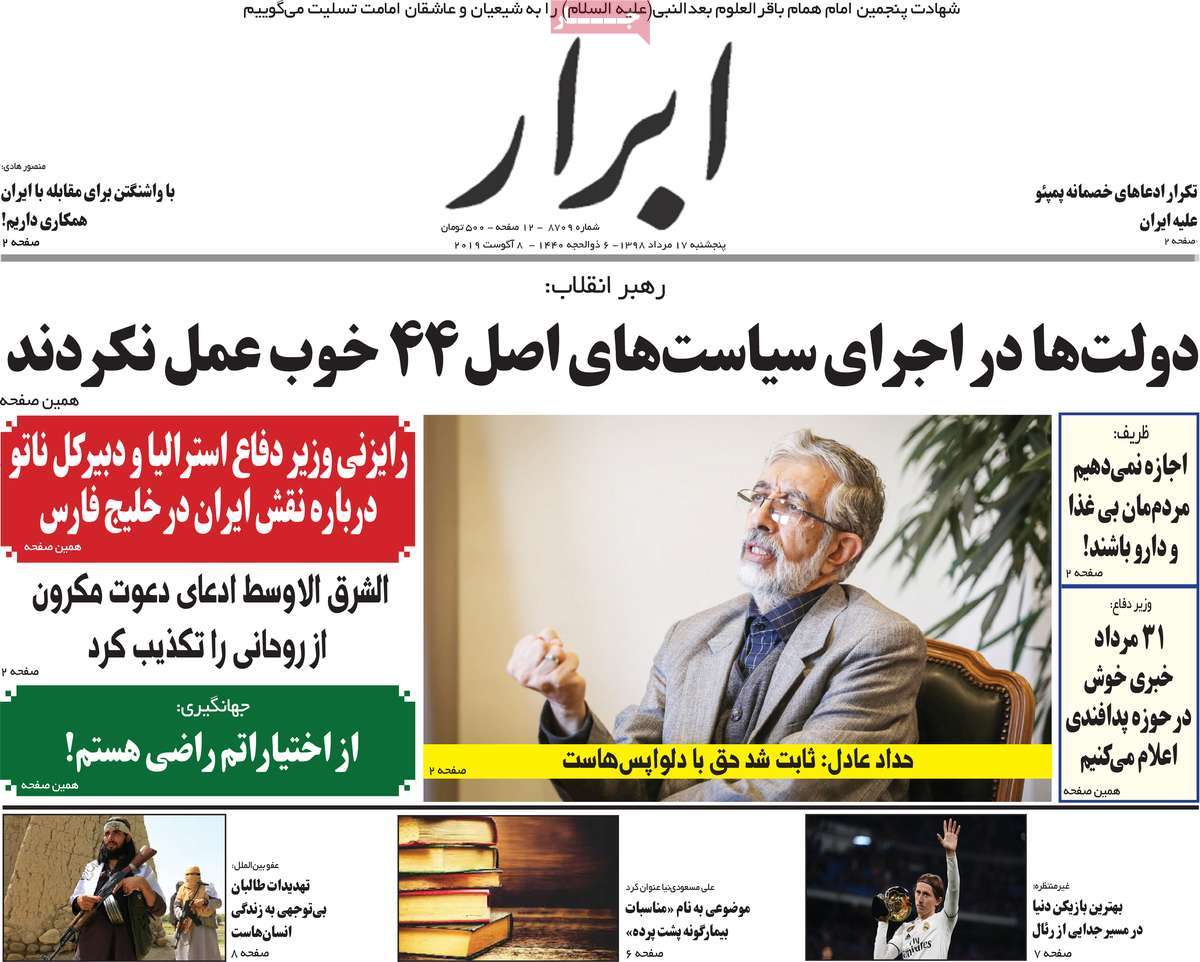
Abrar:

1- Zarif: We Won’t Let Our People Be Deprived of Food, Drugs

2- DM: We’ll Soon Announce Good News in Air Defence

A Look at Iranian Newspaper Front Pages on August 8


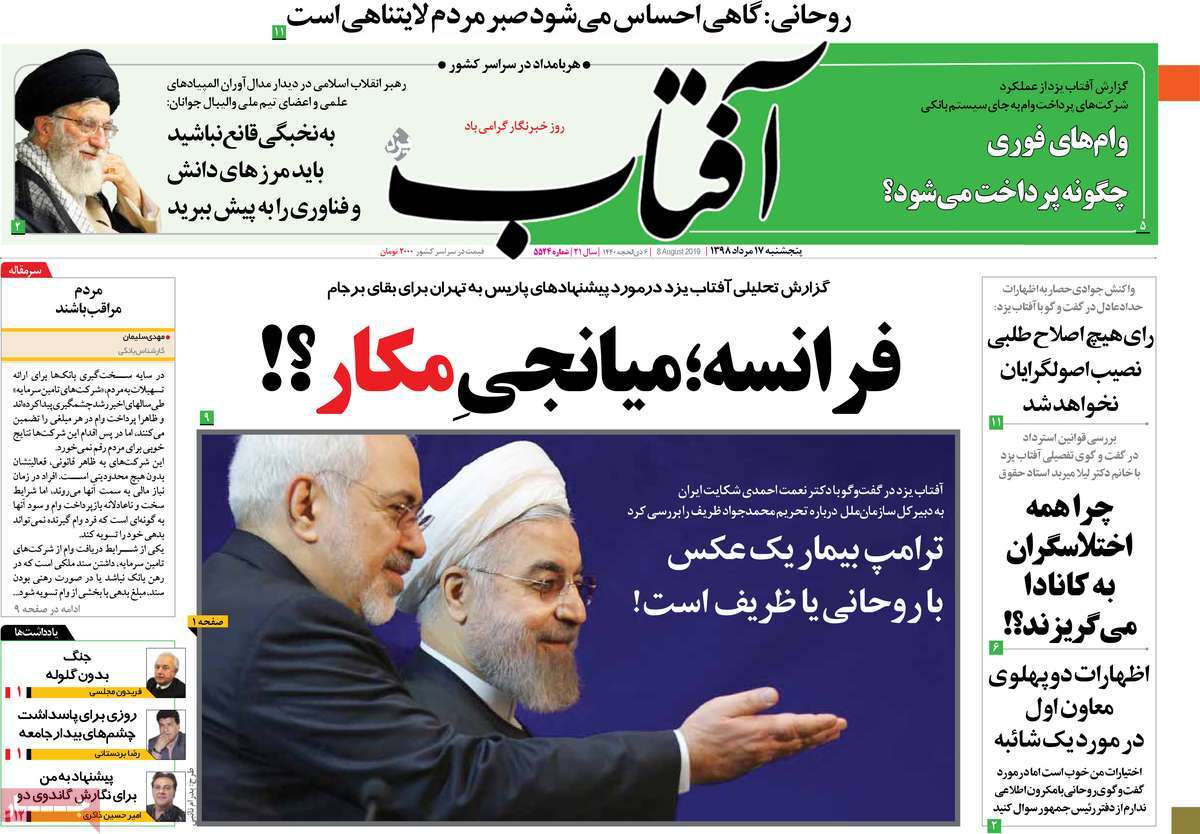
Aftab-e Yazd:

1- France the Cunning Mediator?

2- Trump Longs for a Photo with Rouhani, Zarif!

3- Why Do All Embezzlers Flee to Canada?


A Look at Iranian Newspaper Front Pages on August 8


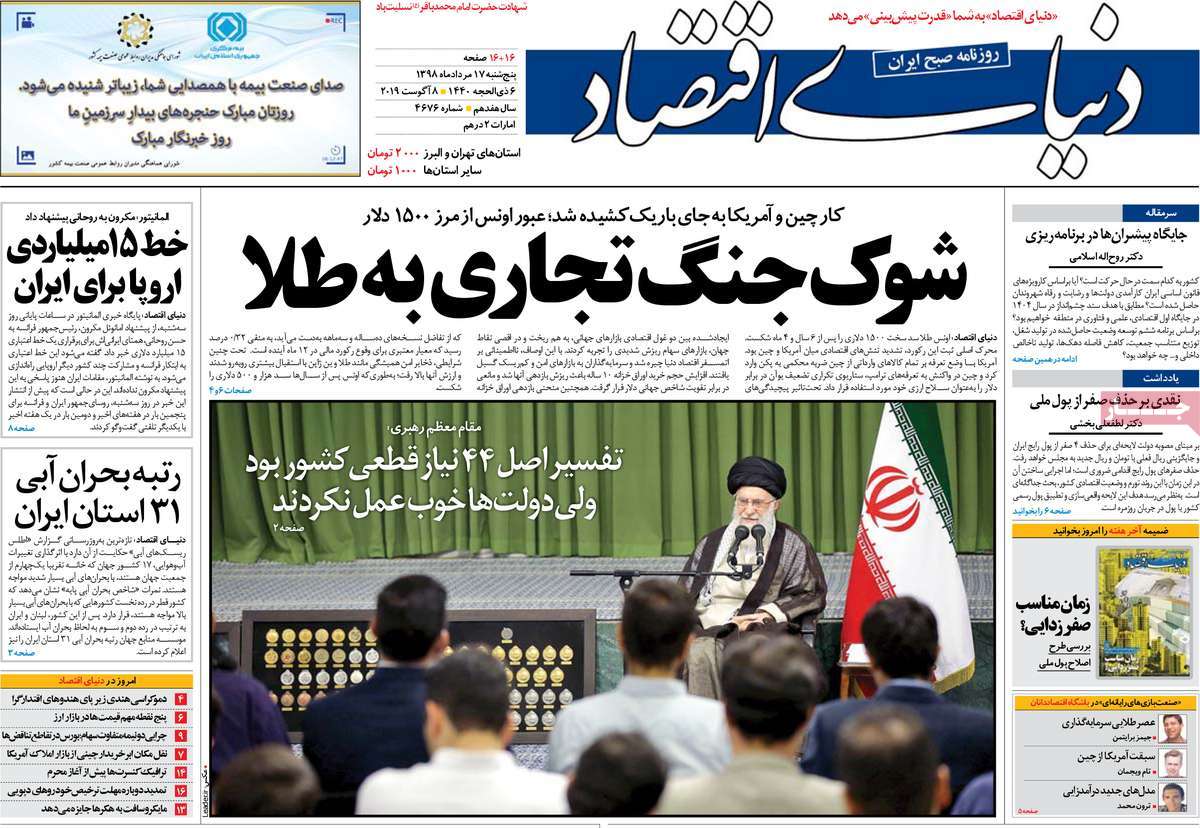
Donya-ye Eqtesad:

1- Shock of Trade War to Gold Market

2- US-China Tension Heightened

A Look at Iranian Newspaper Front Pages on August 8


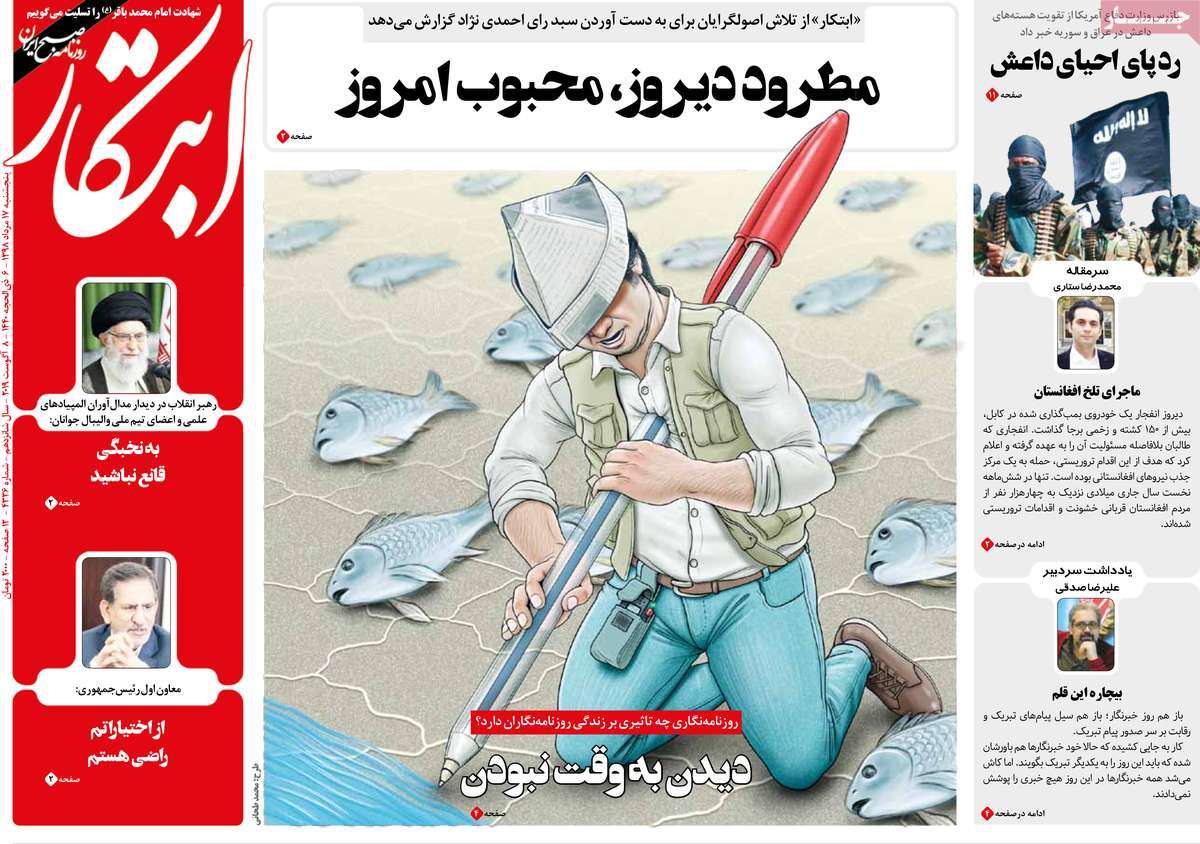
Ebtekar:

1- ISIS Seems to Be Reviving

* Pentagon: ISIS Reinforcing in Iraq, Syria

A Look at Iranian Newspaper Front Pages on August 8


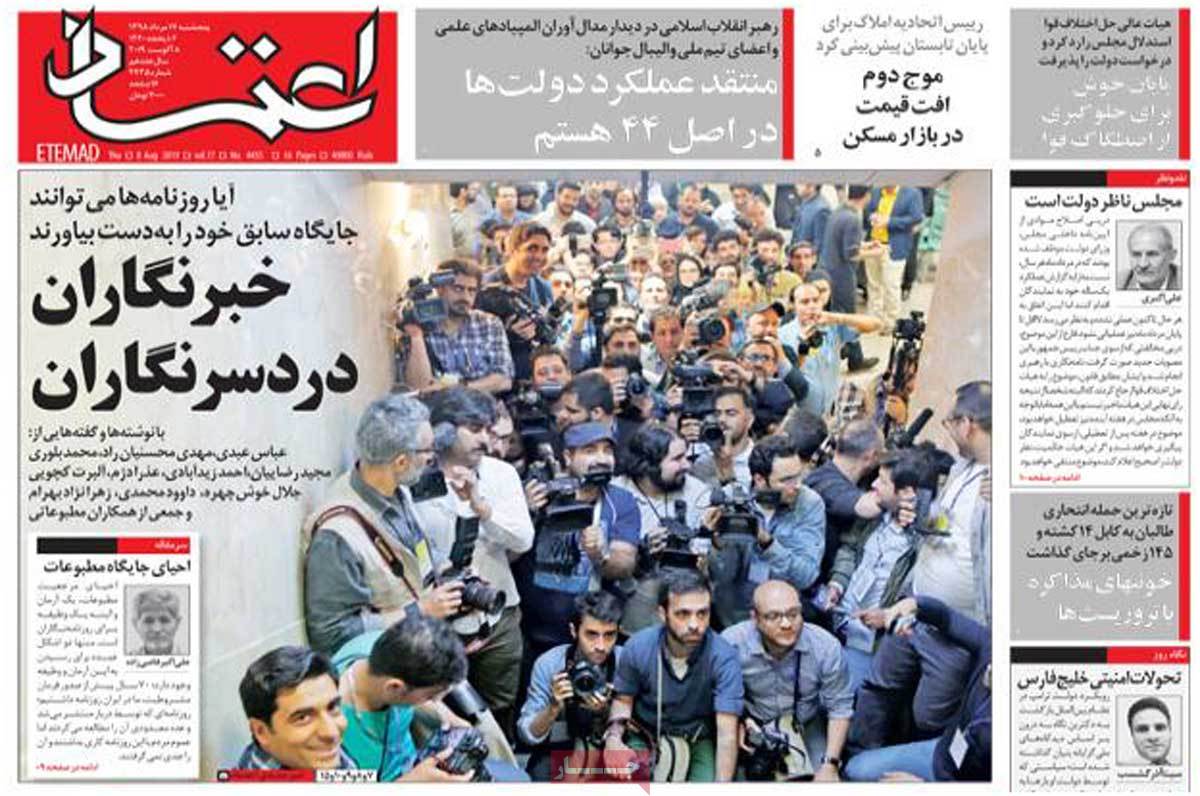
Etemad:

1- Iran Leader Criticizes Government’s Poor Performance in Privatization

2- Blood Money for Talks with Terrorists

* Latest Taliban Suicide Attack in Kabul Kills 14, Wounds 145

A Look at Iranian Newspaper Front Pages on August 8


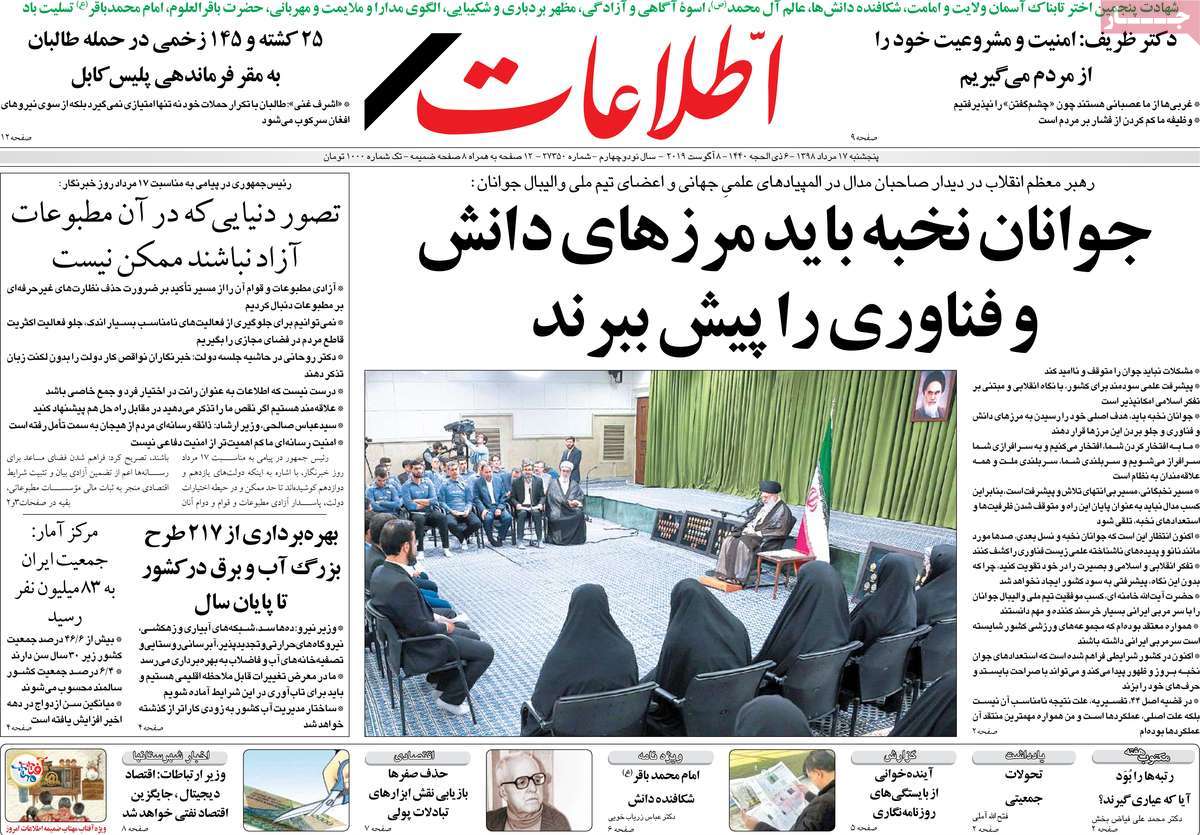
Ettela’at:

1- Iran Leader: Elite Youths Must Promote Iran’s Science, Technology

2- Zarif: We Take Our Security, Legitimacy from People

3- Rouhani: It’s Not Possible to Imagine a World without Free Press

A Look at Iranian Newspaper Front Pages on August 8


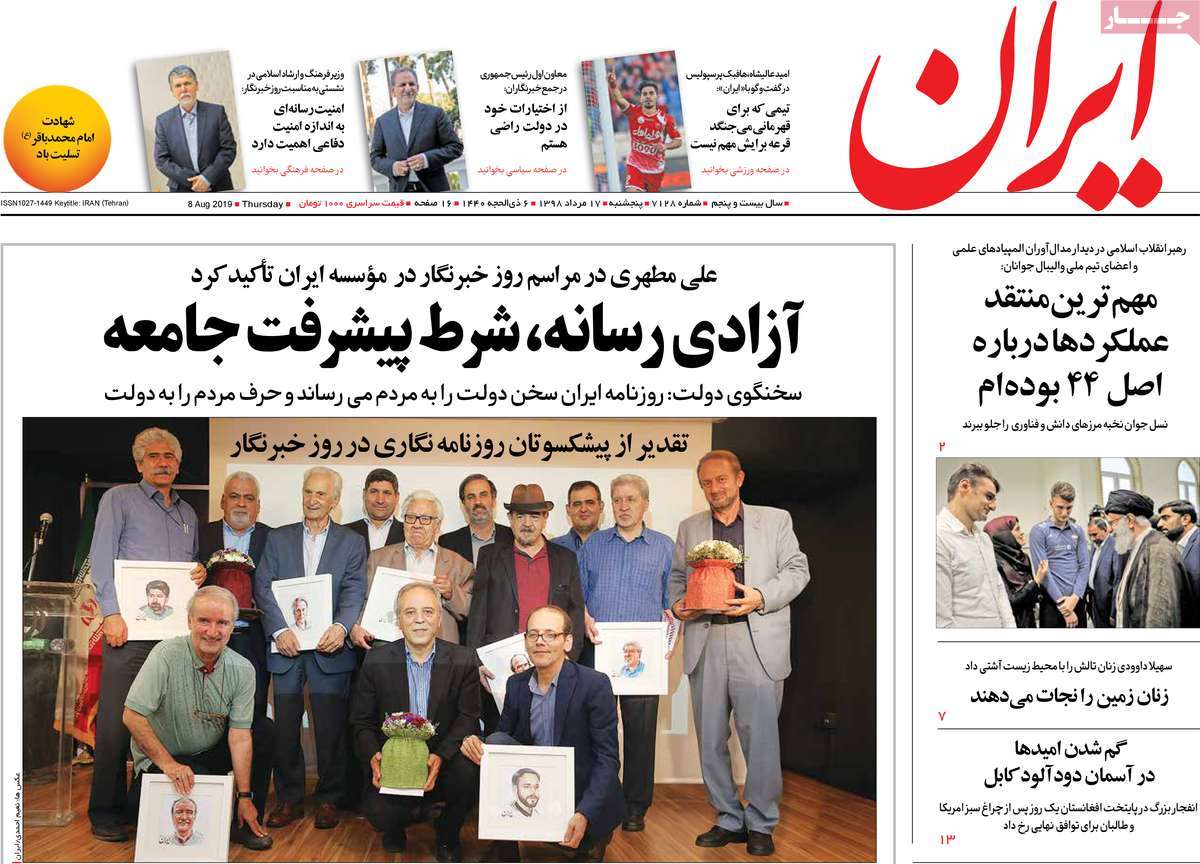
Iran:

1- Freedom of Media Precondition for Society’s Progress: MP

A Look at Iranian Newspaper Front Pages on August 8


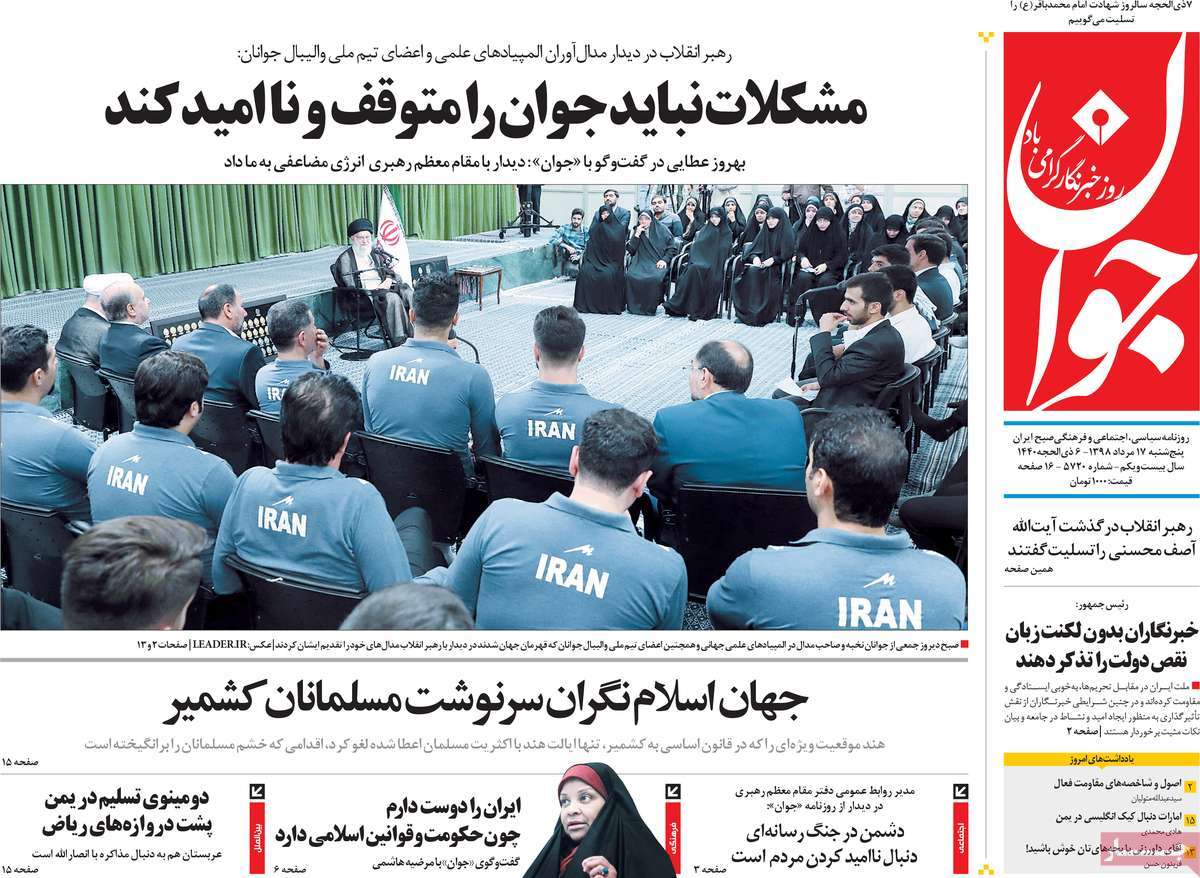
Javan:

1- Iran Leader: Problems Shouldn’t Frustrate, Stop Our Youths

2- Muslim World Worried about Fate of Kashmir Muslims

3- Rouhani Urges Journalists to Remind Government of Its Flaws without Hesitation

A Look at Iranian Newspaper Front Pages on August 8


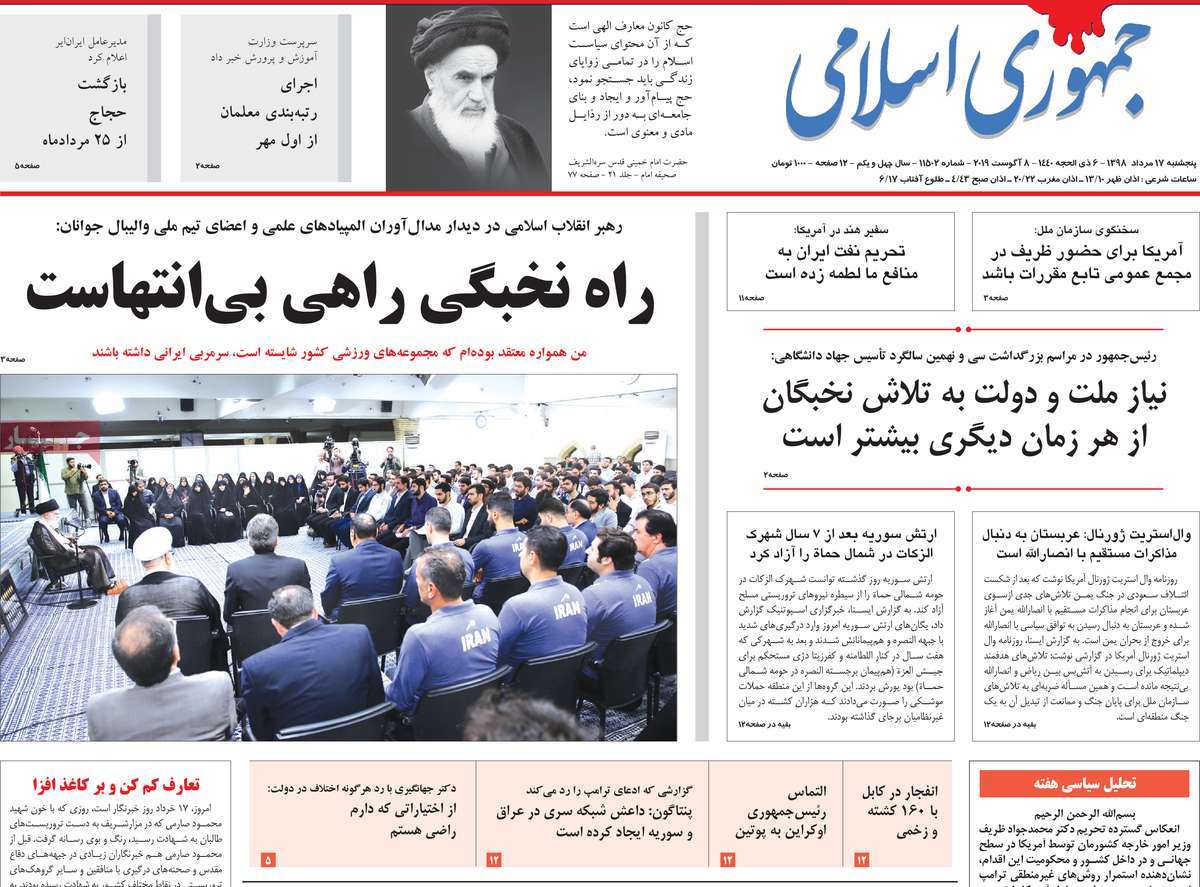
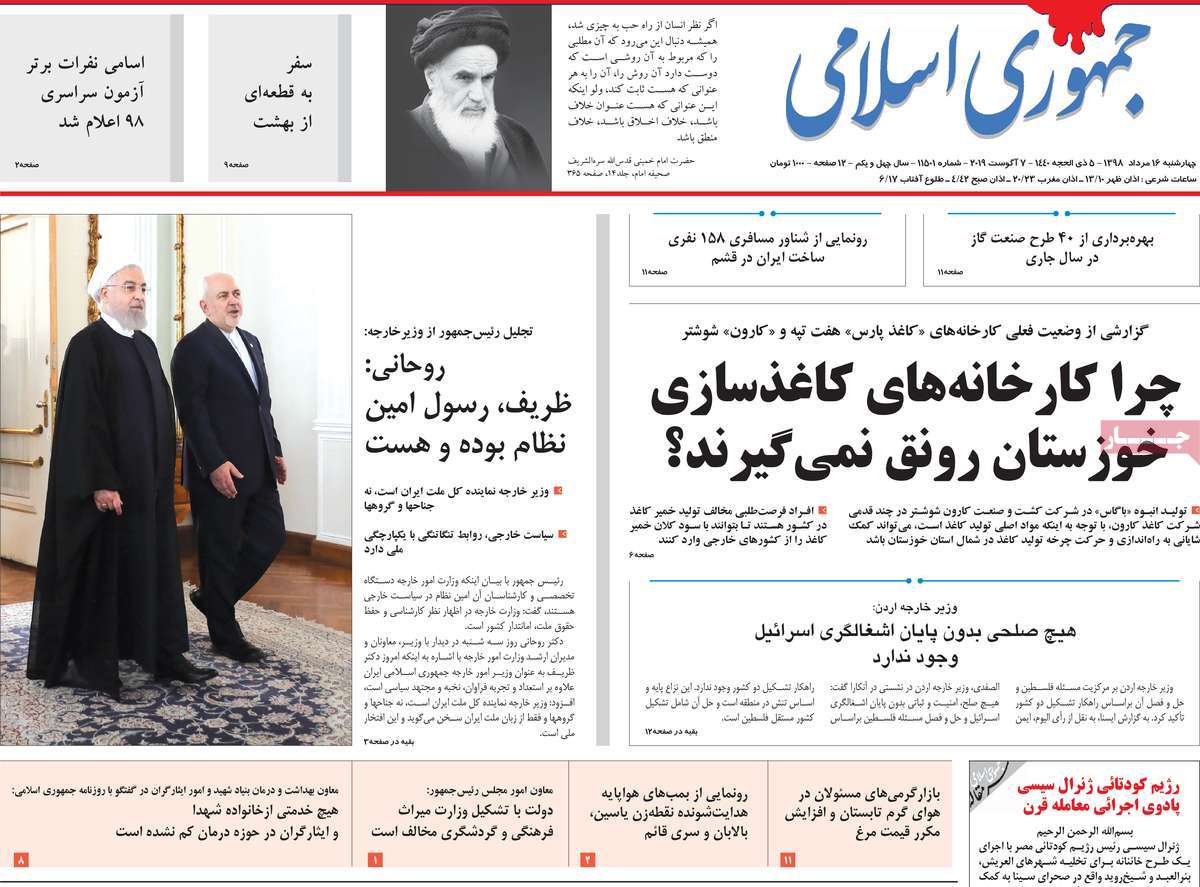
Jomhouri Eslami:

1- UN Spokesman: On Zarif’s Visits to UN HQ in New York, US Must Comply with UN Regulations

2- India Envoy to US: Iran Oil Sanctions Harming Our Interests

A Look at Iranian Newspaper Front Pages on August 8


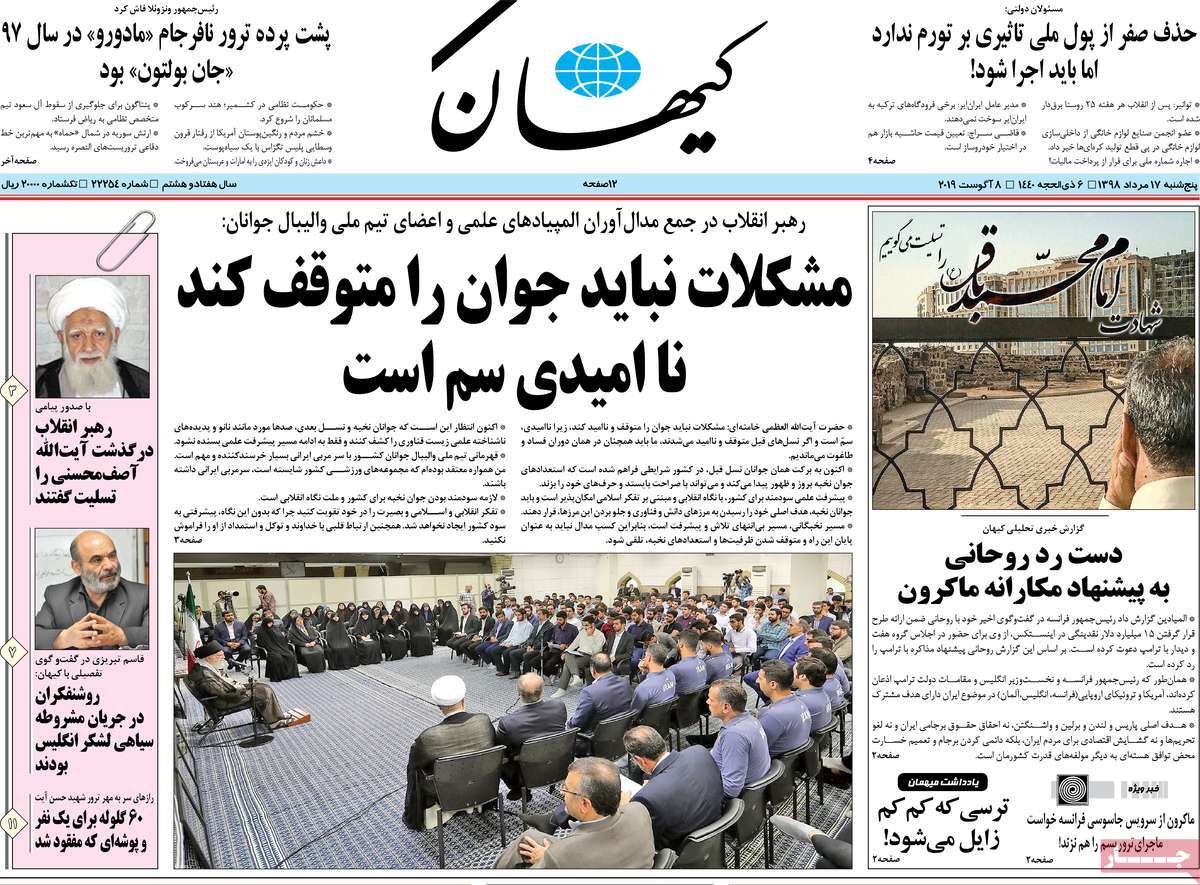
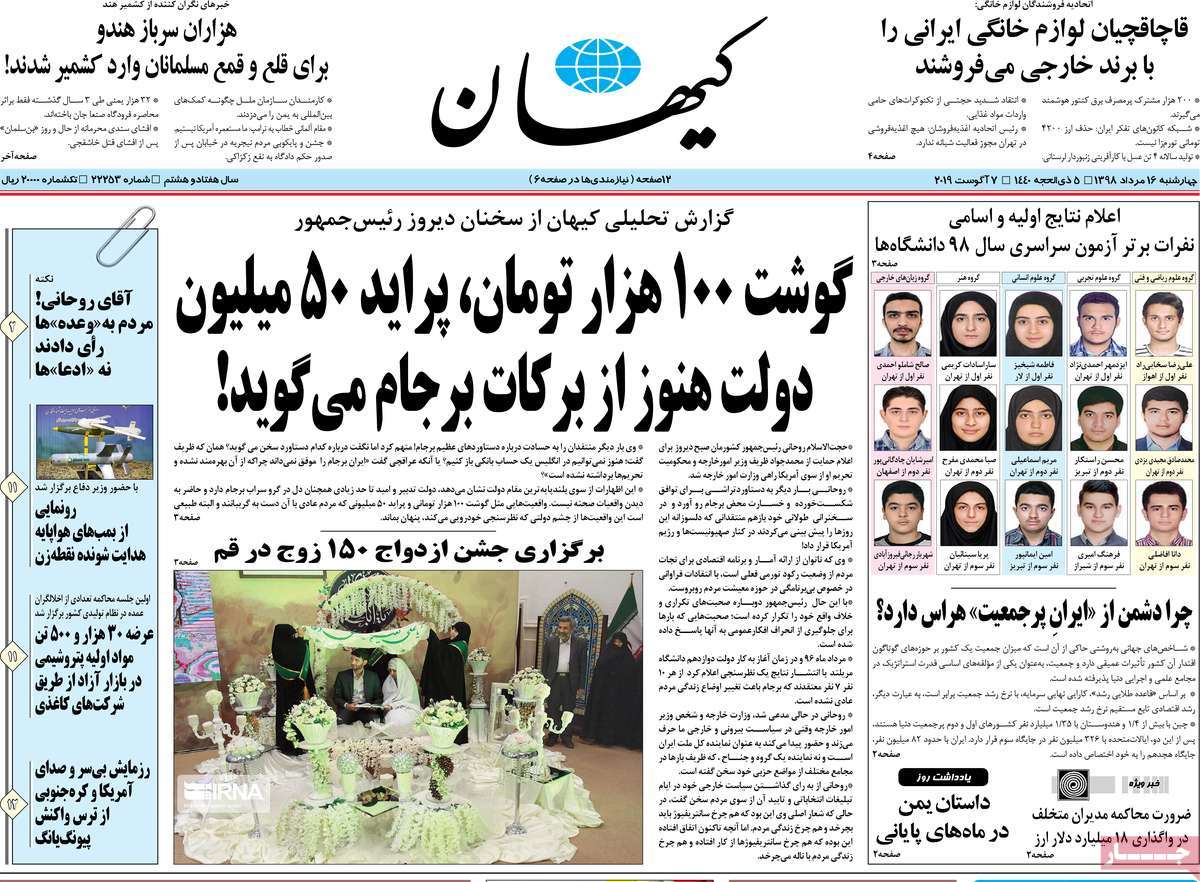
Kayhan:

1- Venezuela President: Bolton Was Behind Last Year’s Assassination Attempt against Maduro

2- Rouhani Rejects Macron’s Deceitful Offer

A Look at Iranian Newspaper Front Pages on August 8


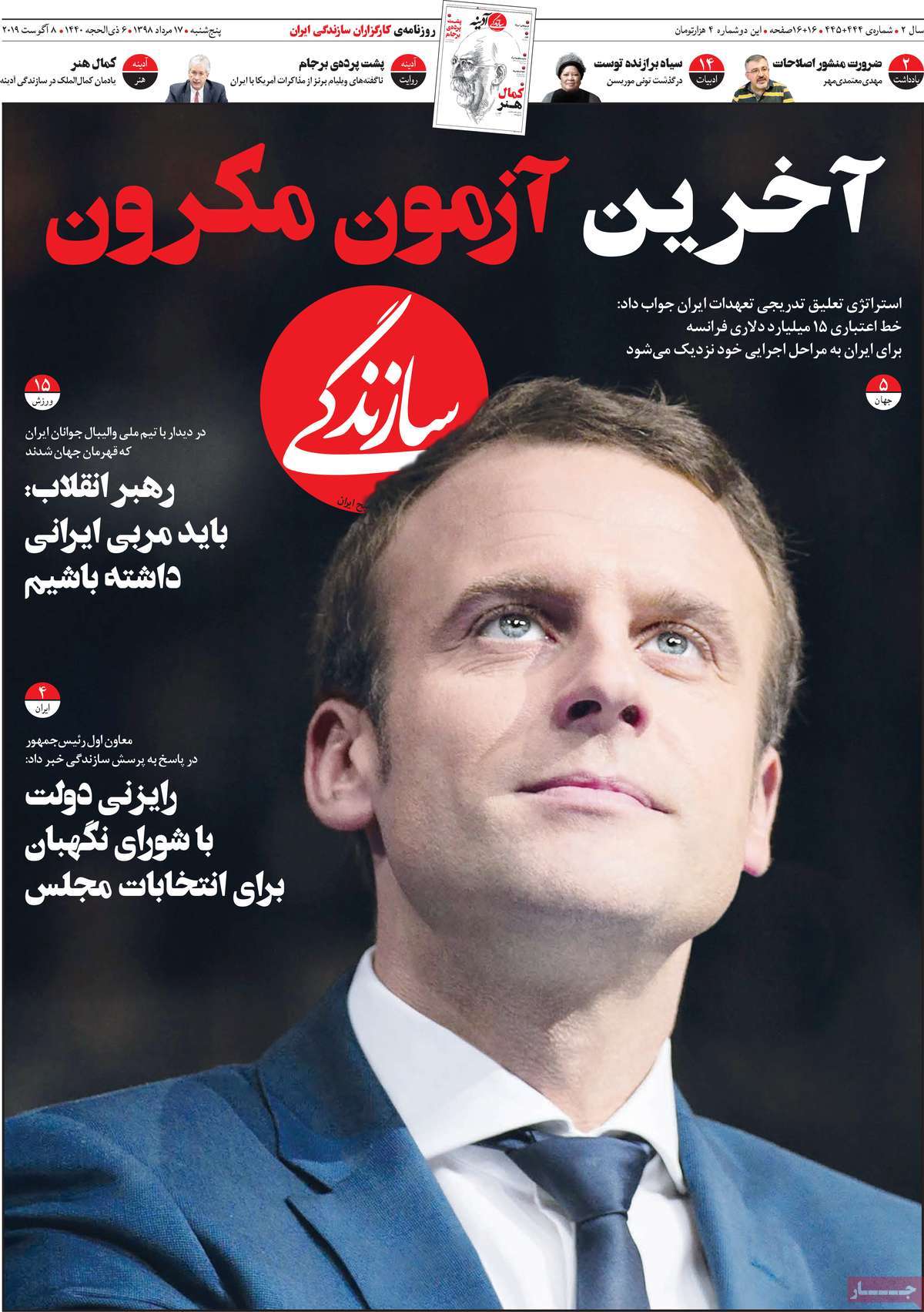
Sazandegi:

1- Last Test of Macron

2- Iran Leader: We Should Use Iranian Head Coaches in Sport Teams

A Look at Iranian Newspaper Front Pages on August 8


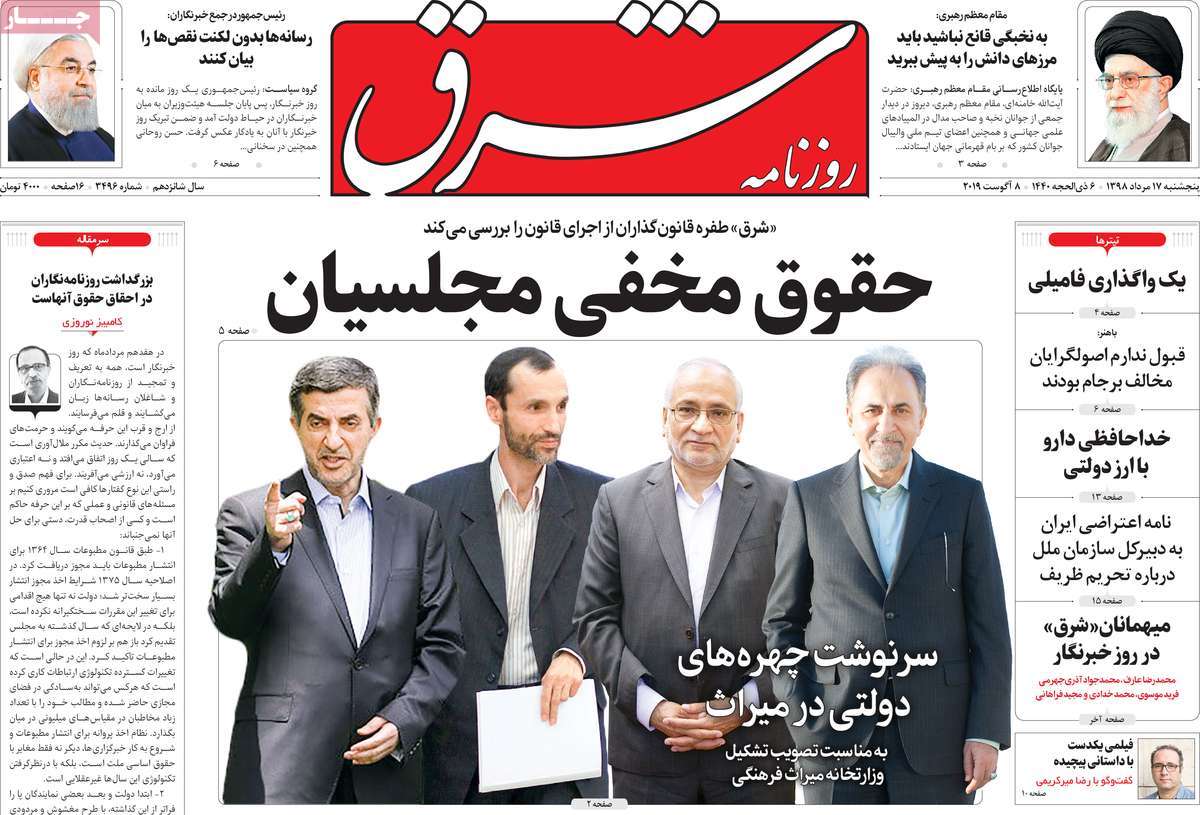
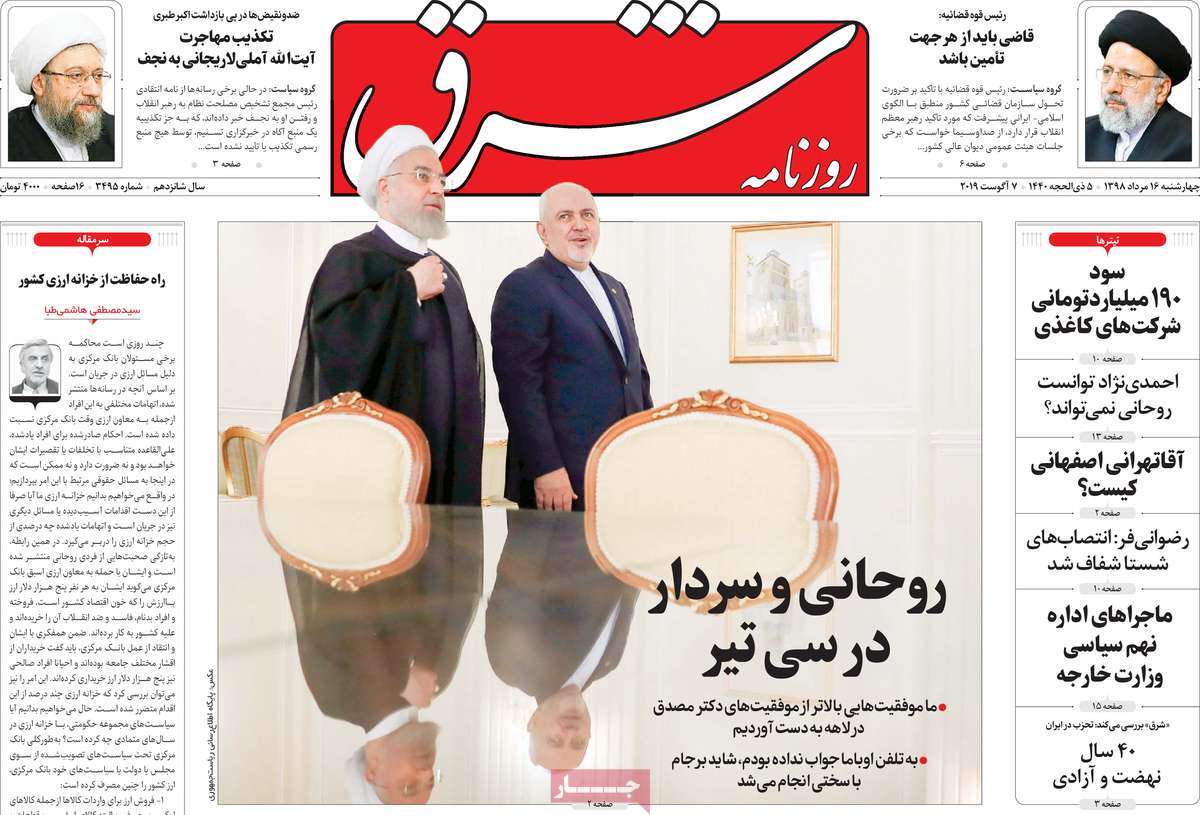
Shargh:

1- Conservatives Were Not against JCPOA: Politician

2- Iran Writes Letter of Protest to UN Chief over Zarif Ban

A Look at Iranian Newspaper Front Pages on August 8

Iranian Artist Carves Statues on Dried Trees

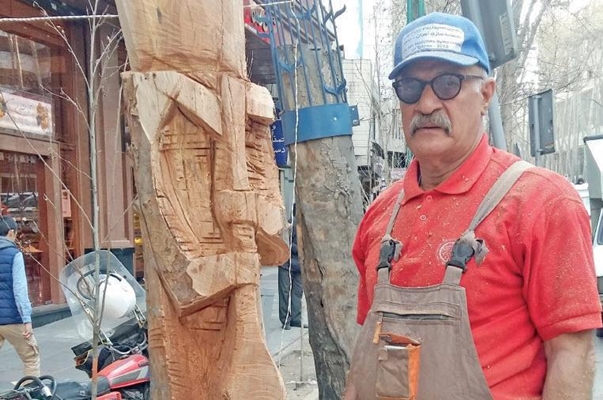
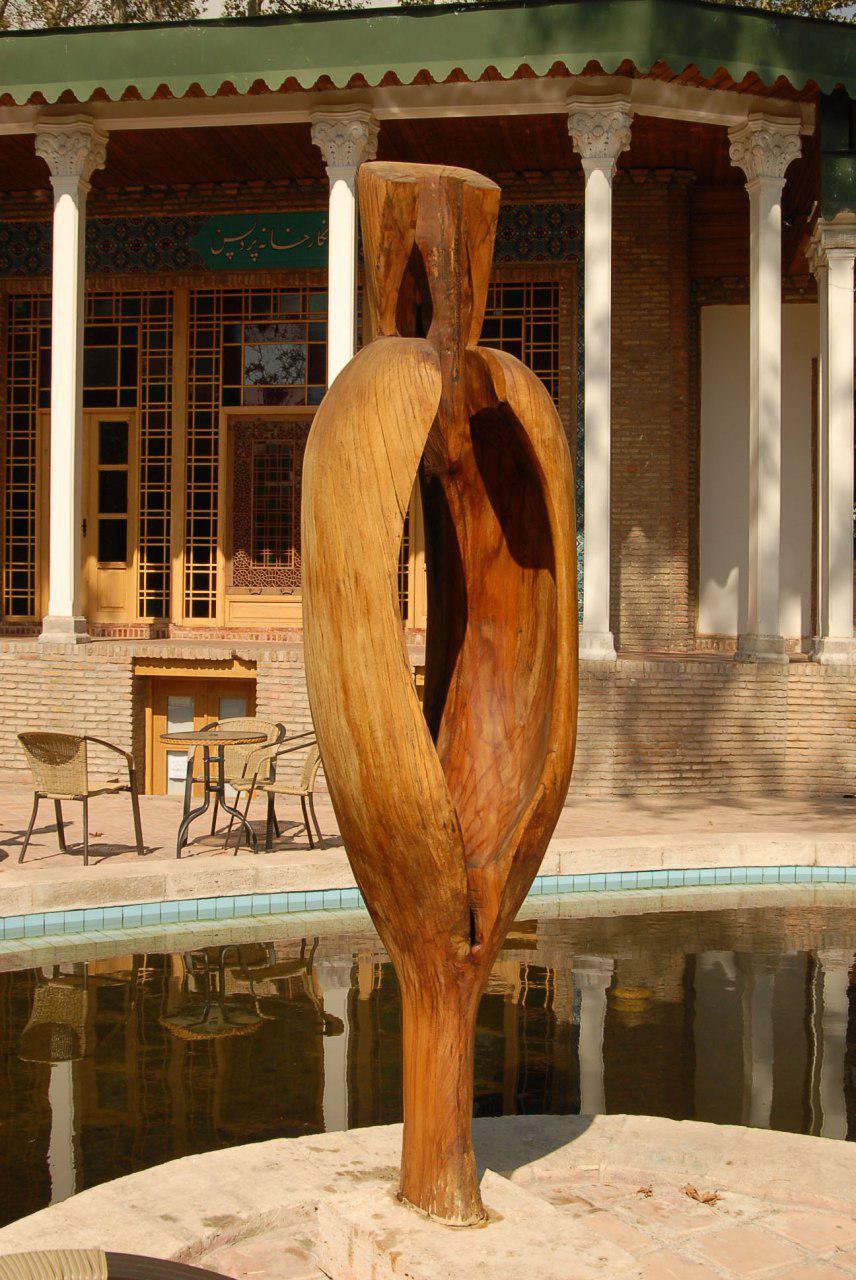
Jamshid Moradian is a sculptor who has worked on wood and trees for many years and believes that the trees must not be cut down.

Iranian Artist Carves Statues on Dried TreesThe artist creates his works in the presence of people, and intends to convey a certain message. Moradi has recently transformed a tree in Tehran into a work of art, and hopes the move would turn into a national and even global one.

As the final stages of creating the statue were being performed, ordinary people would stop and watch as they passed.

The artist says it is not necessary to add something to the city to make it beautiful; sometimes getting something from it makes the city calm.

“I believe that being close to art reduces behavioural violence. On the other hand, turning a tree into a sculpture where it stands can be a unique environmental recycling move.”

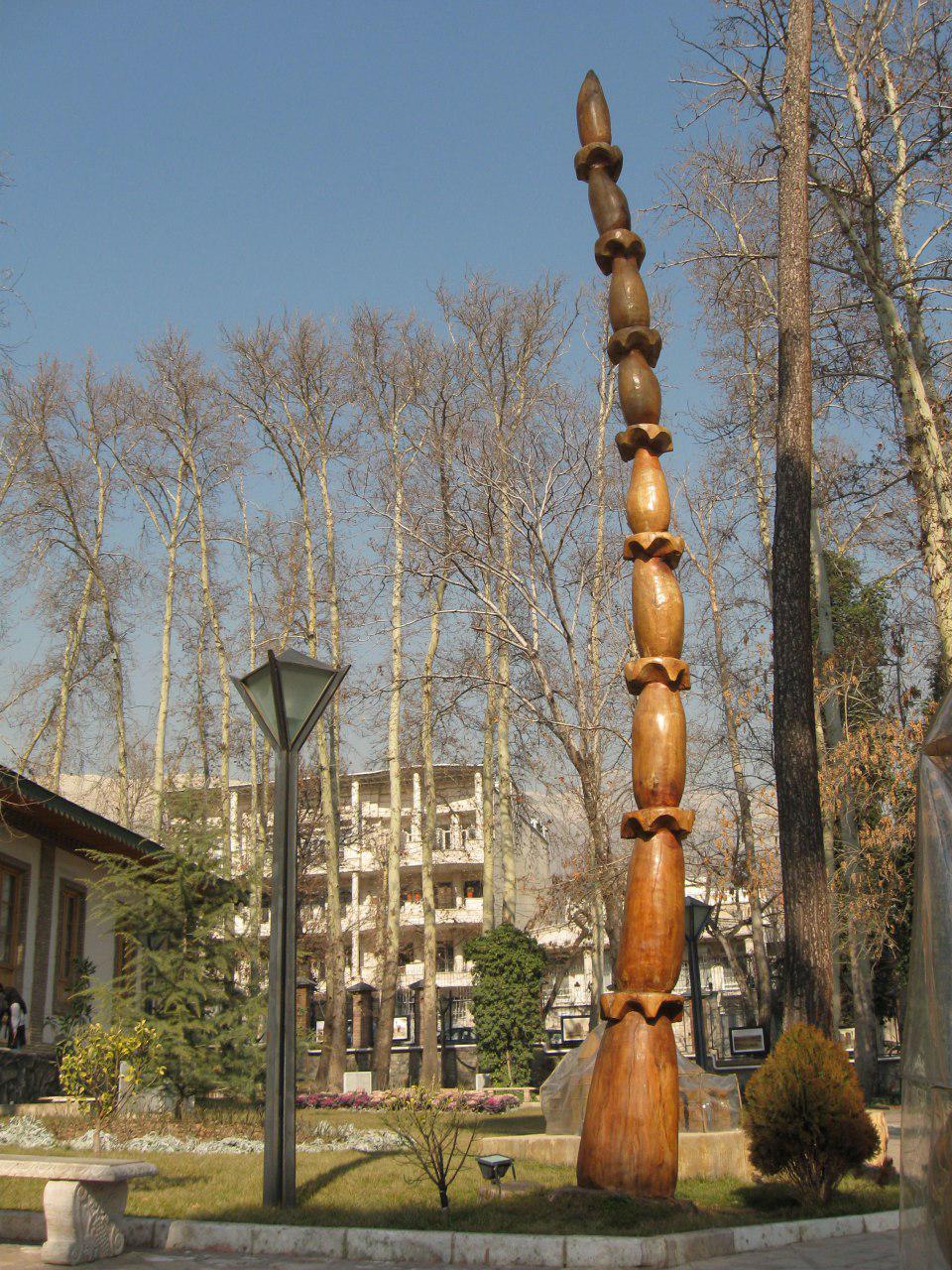
Iranian Artist Carves Statues on Dried TreesIranian Artist Carves Statues on Dried Trees“Now, with the help of laser technology, I can isolate the wood of these trees very well. My works have been standing for 15 years at the Iranian Art Museum Garden,” says Moradian.

The artist has participated in several symposiums around the world, including Italy, France, Japan and China.

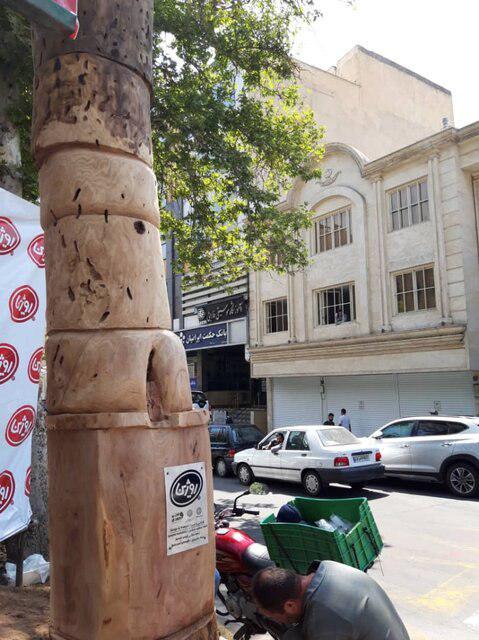
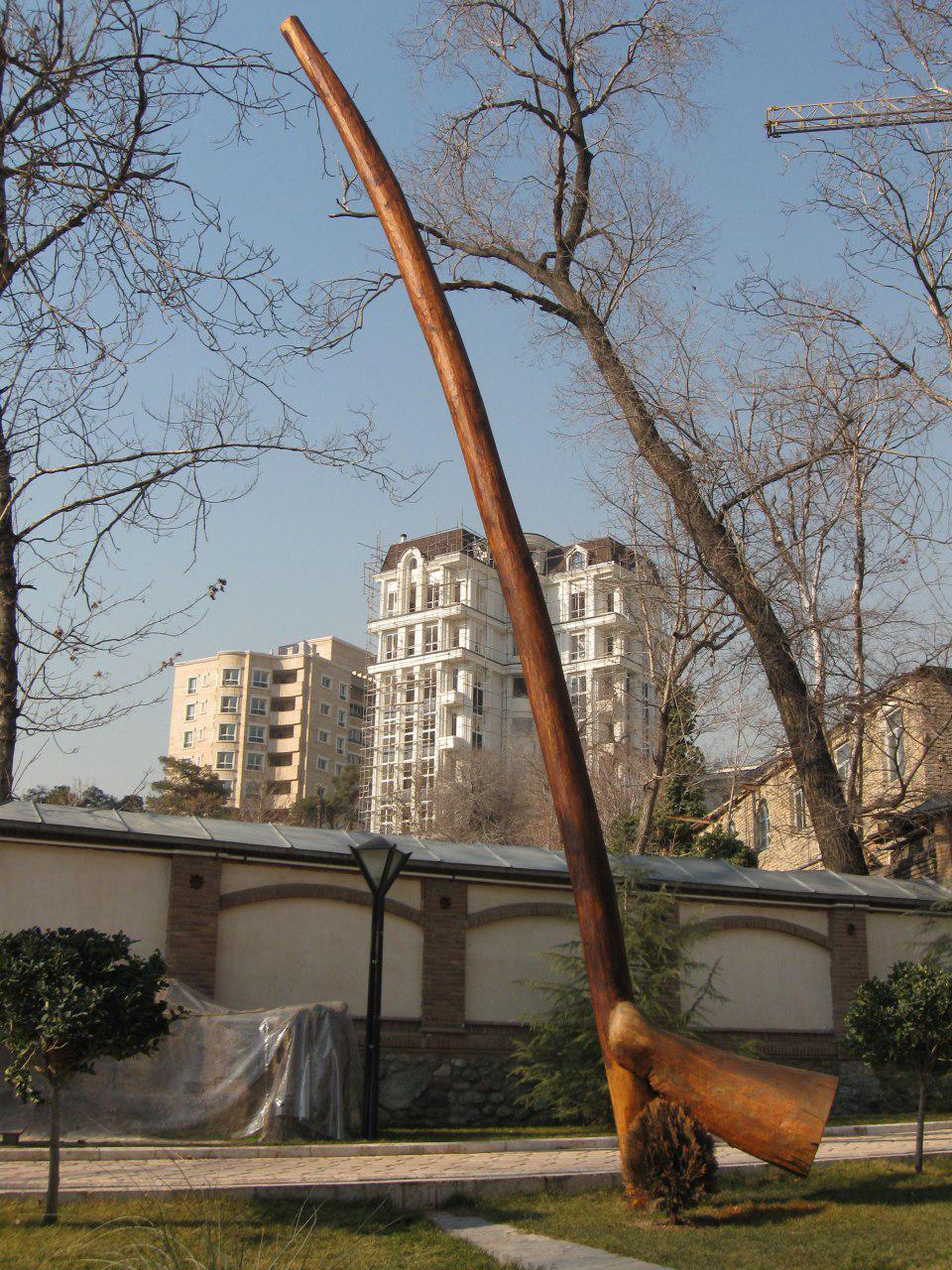
About the statue he recently created in northern Tehran, he explains that it is six metres high and hangs on an old elm tree that had dried up many years ago.

“This tree was dried by a special type of insect and worm. I sprayed this tree and injected it with antibacterial so that the insects that dried the tree will not spoil the statue. I also preserved the tree with different layers of petrochemicals and I do promise it will be shown to the public for many years. In fact, I relaxed the wood and then sculpted it.”

Iranian Artist Carves Statues on Dried TreesAsked why he chooses dried trees in the city as the material of his work, he said, “When the viewer sees the work of art made in the studio, he/she thinks that it can only be done by the creator of the work. But when an artist walks down the street and starts working in front of people, they believe that it is not difficult for them to become an artist with a little training.”

“On the other hand, the creation of art brings joy. When an artist creates a work in a studio, that joy will be for him alone and he cannot share that with people; in fact, sharing that joy with people is one of the goals of art.”

Tehran Condemns Bahraini Regime’s Anti-Iran Moves

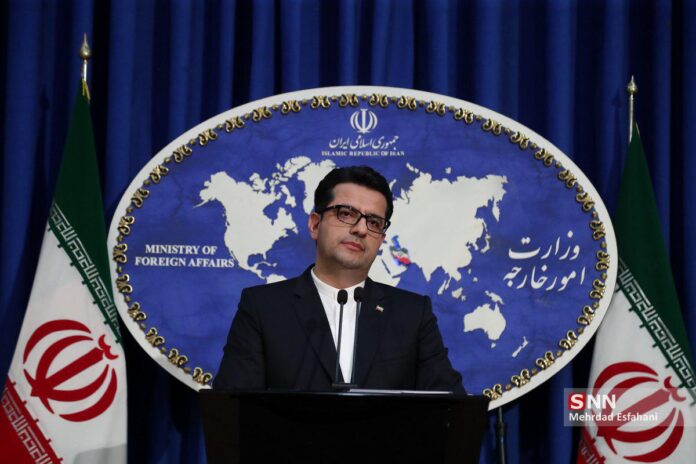
In a Thursday statement, Mousavi denounced the Bahraini government’s anti-Iran measures, including holding suspicious and provocative meetings as well as the accusations levelled against the Islamic Republic of Iran in recent statements issued by Bahrain’s Foreign Ministry.

He said such meetings are a move to disrupt stability and security and pave the way for interference in the Persian Gulf region by trans-regional powers and the Zionist regime of Israel.

The spokesman urged Bahraini officials to stop their injudicious moves and adopt a constructive approach rather than paving the way for the realization of common enemies’ demands and schemes.

He said security in each regional country is closely intertwined with that of others in the region.

“It would not be possible for some [countries] to enjoy security by compromising the security of others,” he noted.

“Regional countries are expected to ward off tension-provoking foreign interference in the region with prudence and far-sightedness.”

His remarks came after Bahrain hosted a meeting on maritime security in the Persian Gulf, addressing what it called Iran’s targeting of international maritime navigation in the region.

Tehran-Ankara Train on Track again after 4 Years

n claimed by the outlawed PKK militant group which damaged a wagon but left no casualties.

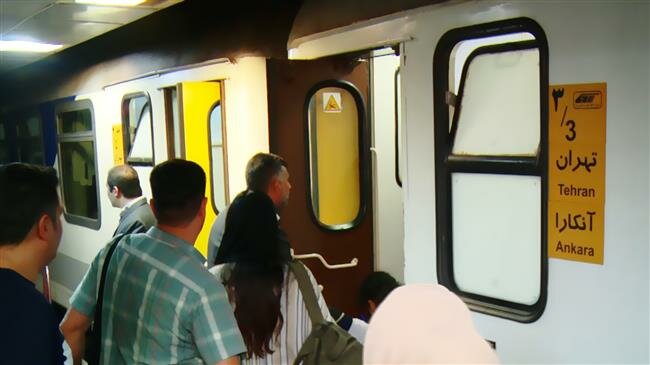
Turkey is one of Iran’s major trade partners. The inauguration of the new train is part of the two sides’ 30-billion dollar annual trade target, which comes despite pressure by the US aimed at isolating Iran’s economy.

Each year, around 2-and-a-half million tourists commute between the two countries, mostly by airplanes.

Already having strong economic and cultural ties, Tehran and Ankara will take their relationship to the next level by launching this passenger train. Officials say this railway will diversify transportation modes between the two states, which will significantly improve tourism in both countries.

What Are Five Parts of Argumentative Essay?

Be it History or English, the odds are good you’ll need to write dozens of argumentative papers. Lots of students get annoyed because of the quantities of papers they need to produce while studying in college.

Professional essay writers often note that students complain of their inability to handle piles of homework and constant falling behind their academic schedule. Trustworthy essay writing companies, such as PapersOwl, tend to receive a lot of requests and create tons of essays and research papers for thousands desperate students from all around the world.

When you order essay assistance from PapersOwl you can be sure to receive high-quality services. Your argumentative essays will definitely stand out from the crowd. First, argumentative essays are aimed at developing such important and valuable skills as the ability to analyze, synthesize, and critically evaluate data.

Second, argumentative papers should be written in accordance with quite rigid cannons and rules you should familiarize yourself with before you get down to your paper. In our article, we’re going to walk you through all the stages of writing a strong argumentative essay, a research paper type considered so important at schools and colleges.

Some History…

The argumentative essay dates back to the 5th century B.C, when some learned men of Ancient Greece decided to teach ordinary farmers how to defend their interests in court. As you know, Ancient Greeks were brilliant orators who attached much importance not only to eloquence and ability to clearly express their thoughts, but also to clear and accurate presentation of an argument to the audience. Greek thinkers and rhetoricians invented the classical argument that served as a model to speakers in Ancient Greece and remains the basic form of persuasive arguments used in position papers. In its traditional form, a classical argument consists of five main parts we’ll discuss further in our article.

Introduction

If you’re aiming to create an impressive position paper, it’s crucial that you come up with a catchy and informative introduction. In this first part of your argumentative paper, you should present the topic of your writing to your audience. Once you announce the theme, make sure to draw your readers’ attention to your thesis where you’re voicing your stand and name the reasons behind it.

Narration

What Are Five Parts of Argumentative Essay?

Once you warm up your audience, you can proceed to summarizing the background material pertaining to your argument. Your assay is intended to reach not only knowledgeable readers, but also the audience that has no prior knowledge of the topic being discussed. Make sure to familiarize your readers with the environment, as well as the factors that produced your argument. Don’t forget to describe different views on the problem discussed and mention what it is at risk in the question.

Confirmation                 

The third part of your argumentative paper is called the confirmation. The given section is very important in terms of presenting your claims and substantiating them. Be sure to appeal to credible, trustworthy sources and findings when supporting your claims. It’s a good idea to connect your claims and confirmations in a logical chain of presenting inartistic proofs.

Refutation or Concession

What Are Five Parts of Argumentative Essay?

There is no such thing a one-sided argumentation in strong position papers. It’s always necessary to consider and analyze both sides of the coin to find out where the truth lies.  Therefore, it’s critical that you look at counterclaims, or viewpoints opposed to your own claims. At the same time, you need to refute the counterclaims cited, diffuse the opposition without weakening your thesis. Thus, you’ll convince your targeted audience of your credibility as a writer and researcher.

Summation

The summation, which is a classical constituent of any essay, creates the sense of finality and closure, summarizes what has been said in your essay, and leaves no room for further questions.

Alarm for Abdul-Mahdi’s Gov’t: Time Running Short in Land of Political Executions

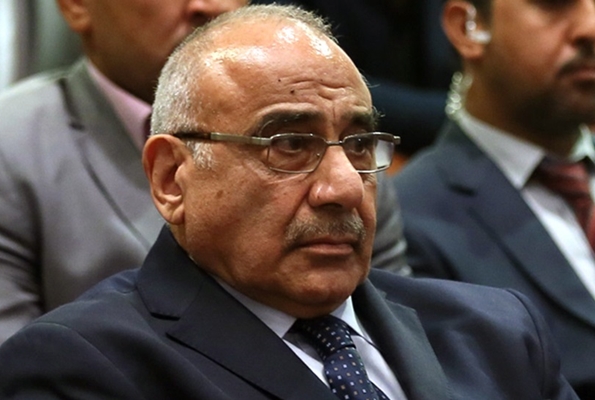
Nonetheless, and although only the ministries of defence, interior, education and justice had remained vacant and the rest of ministers had been already appointed, a review of the government’s performance gives warnings to Abdul-Mahdi’s cabinet.

The Iraqi government’s performance over the past one year could be evaluated in the internal and foreign sectors.

Foreign Policy: Developing Initiatives and Active Regional Policy

Since the formation of government, the prime minister and the president have been performing their tasks with calculated separation of authorities. The president, whose power as a figure in Iraq’s parliamentary system is much lower than the prime minister, has been trying to enhance the foreign relations, attending international meetings, and visiting various countries, particularly the regional ones, in order to clearly explicate Iraq’s new policy in the post-ISIS era.

The main topic of negotiations in all of Barham Salih’s trips have been Iraq’s policy of non-involvement in the regional clashes and factionalism, its refusal to allow the Iraqi soil to be used for attacks and aggression against the neighboring states, and Iraq’s regional initiatives for regional cooperation.

Barham Salih’s foreign policy doctrine is called “regional system”, which includes Iran, Iraq, Turkey, Jordan, Syria, the Persian Gulf Cooperation Council, and the five members of the UN Security Council. The meetings would revolve around Iraq, and the participants would boost their political, security, and economic relations.

In this course, Iraq is a bridge connecting Iran to the regional Arab countries. Iraq can take advantage of its strategic position to reduce the tensions and crises among the countries.

Such a doctrine has received support from Iraqi Prime Minister Adil Abdul-Mahdi, who has more authority than the president, as Abdul-Mahdi has a complementary role in Barham Salih’s activities during his regional visits.

In terms of foreign policy, one can say that Iraq’s new government has been much more active and is gradually going to preside over Iraq’s special position in the region.

In the meantime, the two top Iraqi leaders have been paying multiple visits to the regional and foreign countries, and the senior officials of different countries have also made major visits to Iraq, something seen as diplomatic traffic.

Moreover, Iraq is given certain roles to play in the course of its regional activities, one of which is the role of a mediator between Iran and Saudi Arabia, or between Iran and the UK amid the oil tankers row.

Domestic Policy: Alarm Goes Off

The Iraqi government has emerged successful with initiatives in the foreign policy arena, but faces problems in the domestic sector that are gradually deepening.

Some examples are the performance of government in handling the infrastructural affairs and providing social services, which has not been acceptable.

Although the prime minister and the members of his cabinet are technocrats with a good knowledge of economy, it seems that turning such economic knowledge into economic development and overcoming the current unsuitable conditions has encountered problems and has failed to materialize.

One of the reasons for that failure is the prime minister’s old age that has forced him to make decisions slowly and with a high degree of conservatism. While the Iraqi society is faced with tough crises whose settlement requires rapid action and initiatives, the prime minister prefers to carry out his economic ideas patiently, which may be too late.

In particular, the shortage of water and power in the hot seasons, which exhaust public patience gravely, as the bulk of demonstrations and riots over the past decades have taken place in the summertime.

The very subject has been even mentioned by Saddam Hussein, who had told his investigator that people of Iraq would rise up against the government in the hot season, because it is extremely difficult to tolerate such intense heat.

It also appears that Abdul-Mahdi’s economic team is unable to operate in the current circumstances, in which decades of economic and industrial underdevelopment has been exacerbated by the civil war and a devastating war against ISIS. It is necessary to reconstruct the devastation with strong, serious and immediate measures.

Given Abdul-Mahdi’s spirit and the demands for a share of power from all parties, the rate of corruption and discrimination under the current government has risen remarkably, and the relative order in Abadi’s tenure has gone away.

The situation has been further complicated in Iraq by the great influence of the parties and groups. While a minister is practically unable to take any specific measure, the parties and groups controlling various ministries seek to fulfill their own interests.

The most recent polls on the government’s performance indicate that Abadi’s government had a 10 percent approval rating among people of Iraq, and the other people polled said they despaired of the ongoing situation and of the future, and had no positive outlook.

Such disapproval of the government prevails also among the clerics and even the parties and factions. It is believed that only a few parties and movements, including the Sadrist Movement, the Kurdistan Democratic Party of Masoud Barzani, and the Fatah Alliance pursue their own interests, and the other groups have no role in the government.

This forced a number of groups such as the National Wisdom Movement and the Victory Alliance to announce formally that they had no role in the government and to join the opposition.

The occasional popular demonstrations in different cities of Iraq, the religious authorities’ dissatisfaction with the government’s performance, and the discontent from political groups and movements indicate unsuitable internal situation in Iraq. The persistence of the current circumstances in Iraq could trigger social crises.

Known as the biggest supporter of the government, the Sadrist Movement has announced that it has given Abdul-Mahdi a period of only one year, not four years, to prove his success. Only a couple of months from that period is now remaining.

However, Abdul-Mahdi has pledged that he will be ready to resign if his performance is unsatisfactory, a move he has made twice in the past as the minister of finance and as a vice president.

Iraq is the “land of political executions”, and its people can no more experience a lengthy period of trial and error or sluggish enforcement of policies for addressing the problems, a point that Abdul-Mahdi needs to take into account.

US No More Qualified to Host UN Headquarters: Iran’s Envoy

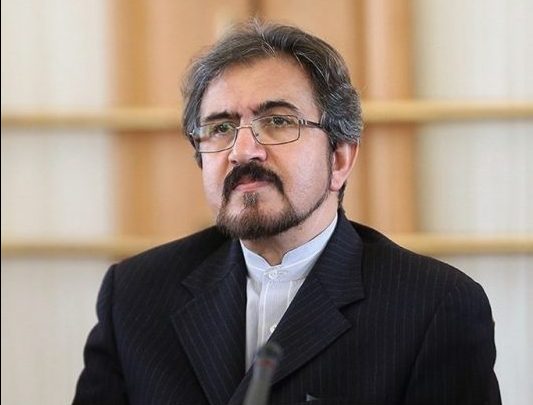
In a statement on Wednesday, Iranian Ambassador to Paris Bahram Qassemi lambasted the US administration for imposing sanctions on Zarif.

What makes the US decision even more catastrophic is that sanctioning a world renowned diplomat like Foreign Minister Zarif is nothing like the unfair and illegal economic, pharmaceutical or medical sanctions, but translates to an attempt to suppress the freedom of speech and diplomatic dialogue, Qassemi said.

The ambassador also noted that blacklisting the foreign minister of Iran reflects the “bullying, unilateral and despotic policies” of the US, which, sadly, is a self-proclaimed “cradle of freedom and democracy” and, more regrettably, hosts the UN Headquarters.

Qassemi also noted that Washington’s push to silence the great Iranian nation’s voice and the imposition of extraterritorial sanctions on the other states, even on its own allies, reveals the true face of the US and its hypocrisy.

People of the world would not tolerate such “childish and angry” behavior by the US, the Iranian ambassador stated, adding, “The modern US is no more an appropriate venue for the United Nations Headquarters.”

Last week, the US Department of State said Washington has designated Zarif for acting on behalf of Leader of Iran’s Islamic Revolution Ayatollah Seyyed Ali Khamenei. The US president had issued an executive order on June 24, imposing sanctions on the Leader and his office and authorizing sanctions on others associated with Ayatollah Khamenei.

A Look at Iranian Newspaper Front Pages on August 7

A Look at Iranian Newspaper Front Pages on November 19

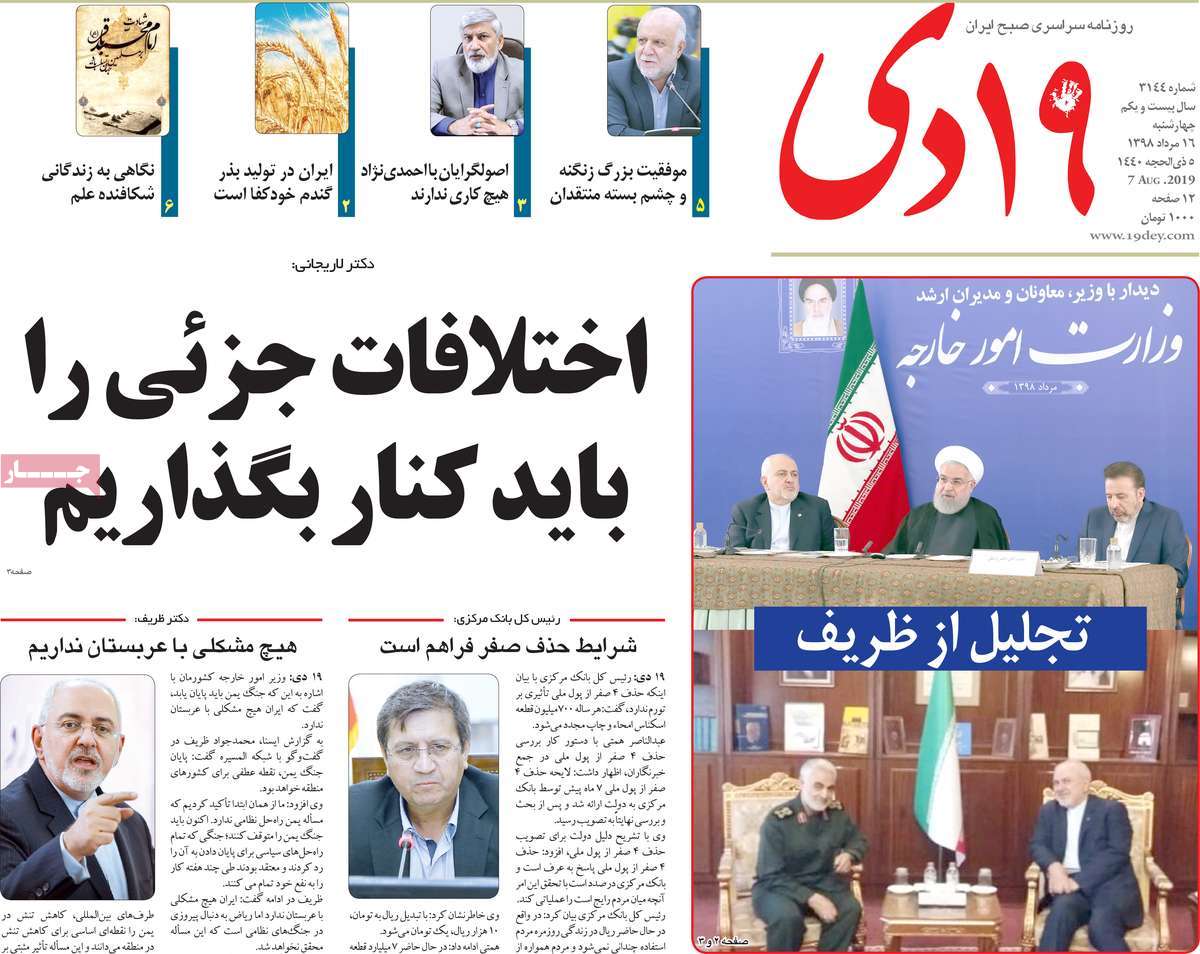
19 Dey:
1- Zarif: We Have No Problem with Saudis
2- Rouhani Praises Zarif in Meeting with Him, His Deputies

A Look at Iranian Newspaper Front Pages on August 7


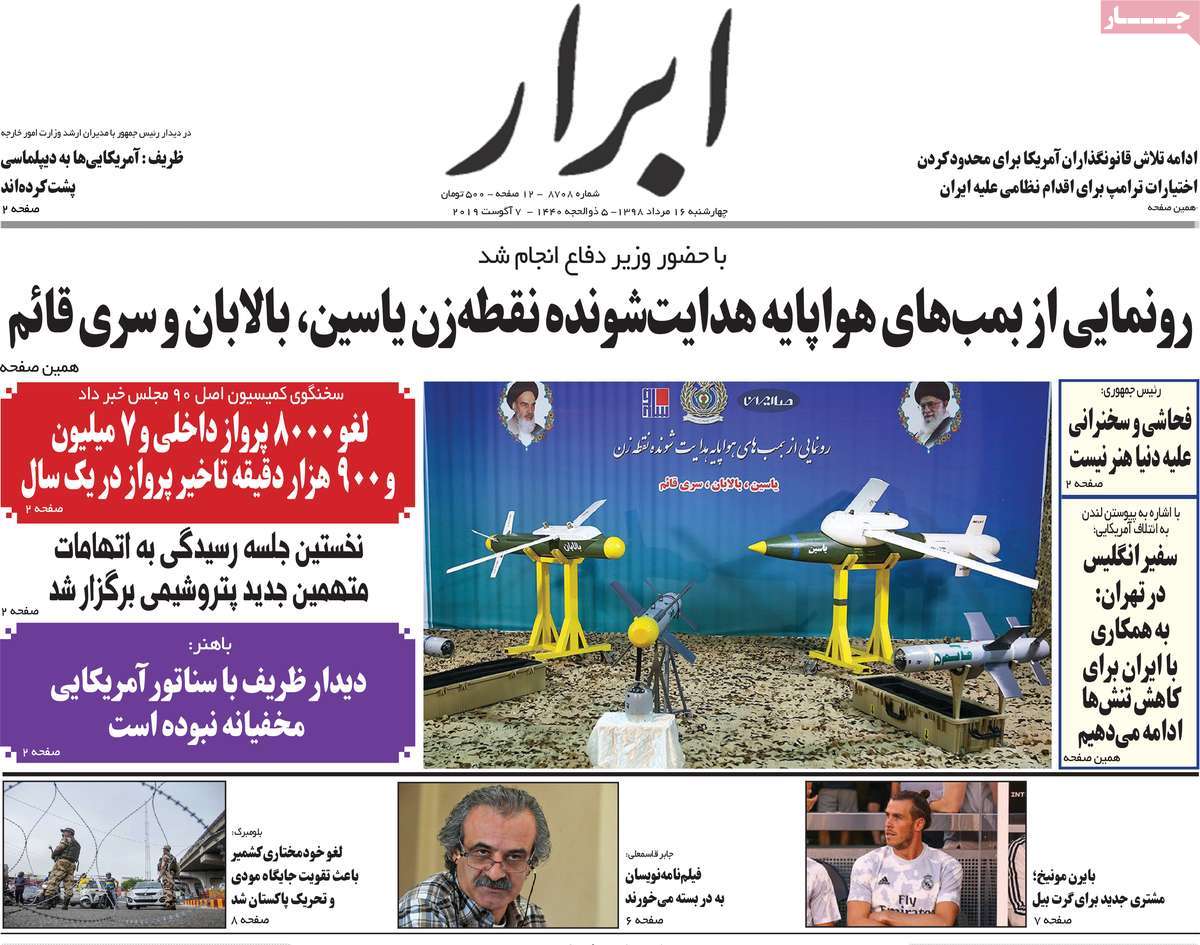
Abrar:
1- DM Unveils Precision Guided Bombs Yasin, Balaban, Qaem
2- UK Envoy: We’ll Keep Cooperation with Iran to Ease Tensions
3- Zarif’s Meeting with US Senator Was Not Secret

A Look at Iranian Newspaper Front Pages on August 7


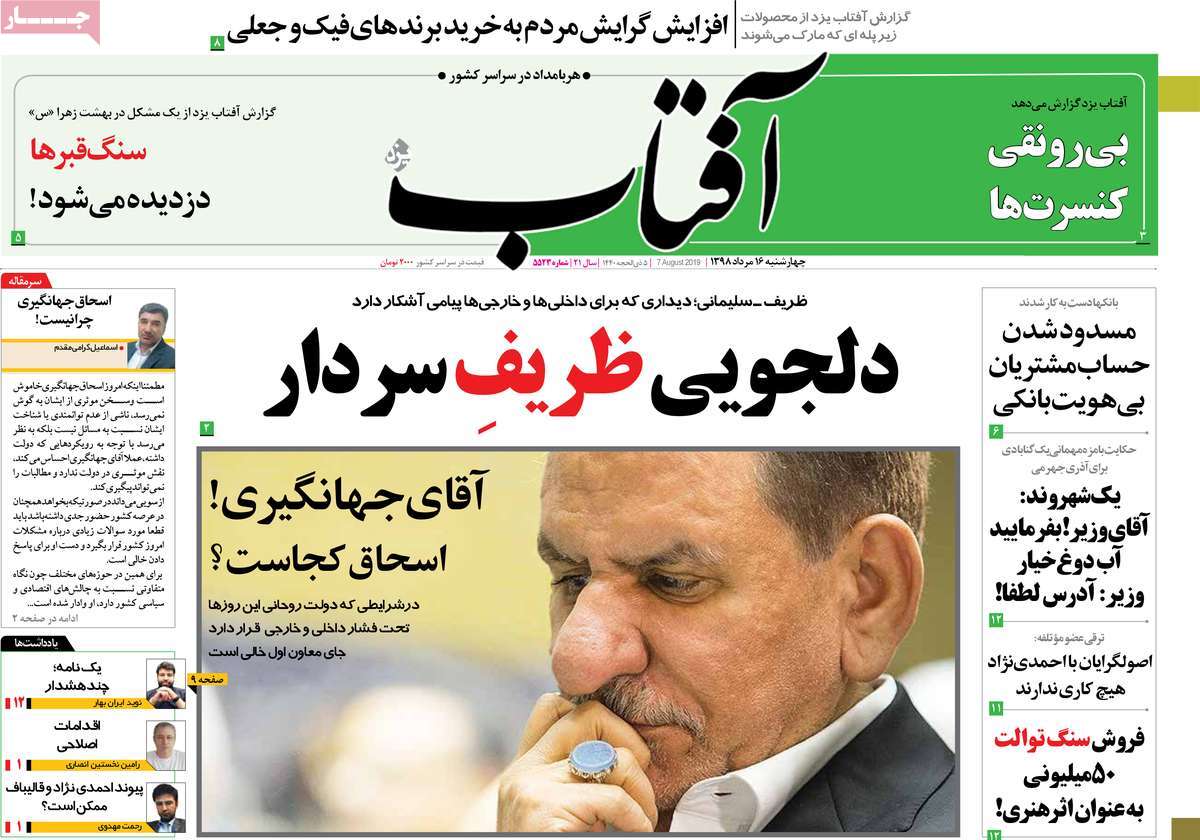
Aftab-e Yazd:
1- General Soleimani’s Meeting with Zarif Has Clear Message for Domestic, Foreign Observers

A Look at Iranian Newspaper Front Pages on August 7


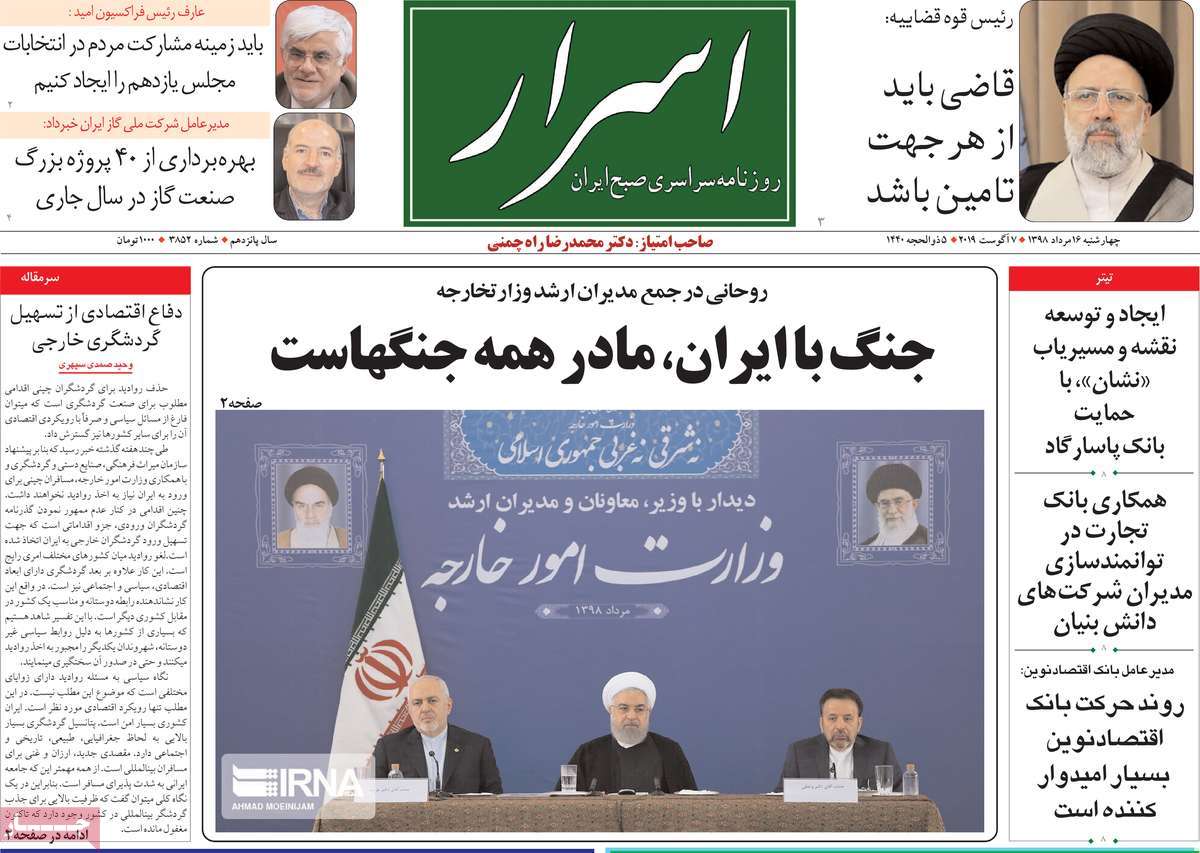
Asrar:
1- Rouhani: War with Iran Mother of All Wars

A Look at Iranian Newspaper Front Pages on August 7


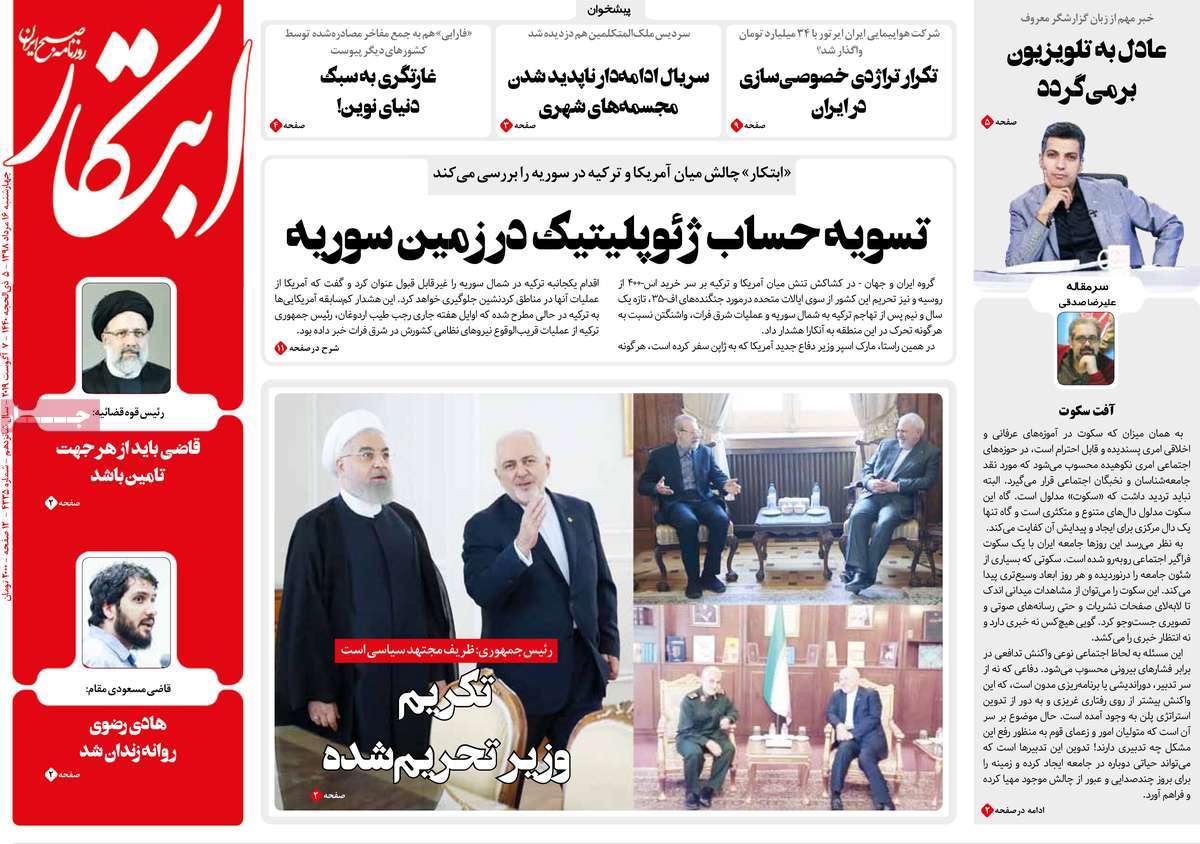
Ebtekar:
1- Praising Sanctioned Minister
* Rouhani: Zarif Is Political Mujtahid (Scholar)

A Look at Iranian Newspaper Front Pages on August 7


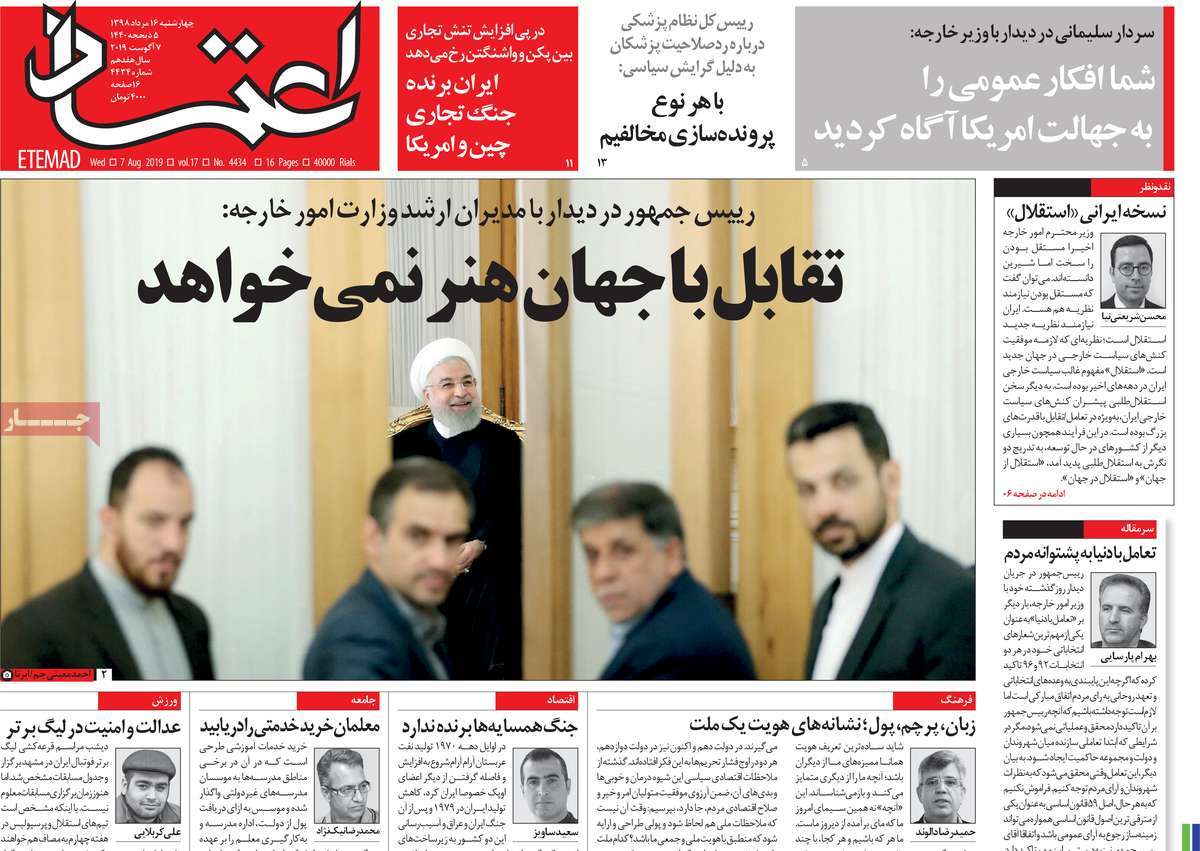
Etemad:
1- Rouhani: It’s No Art to Clash with World
2- Iran Winner of US-China Trade War
3- Gen. Soleimani: Zarif Makes World’s Public Opinion Aware of US Ignorance

A Look at Iranian Newspaper Front Pages on August 7


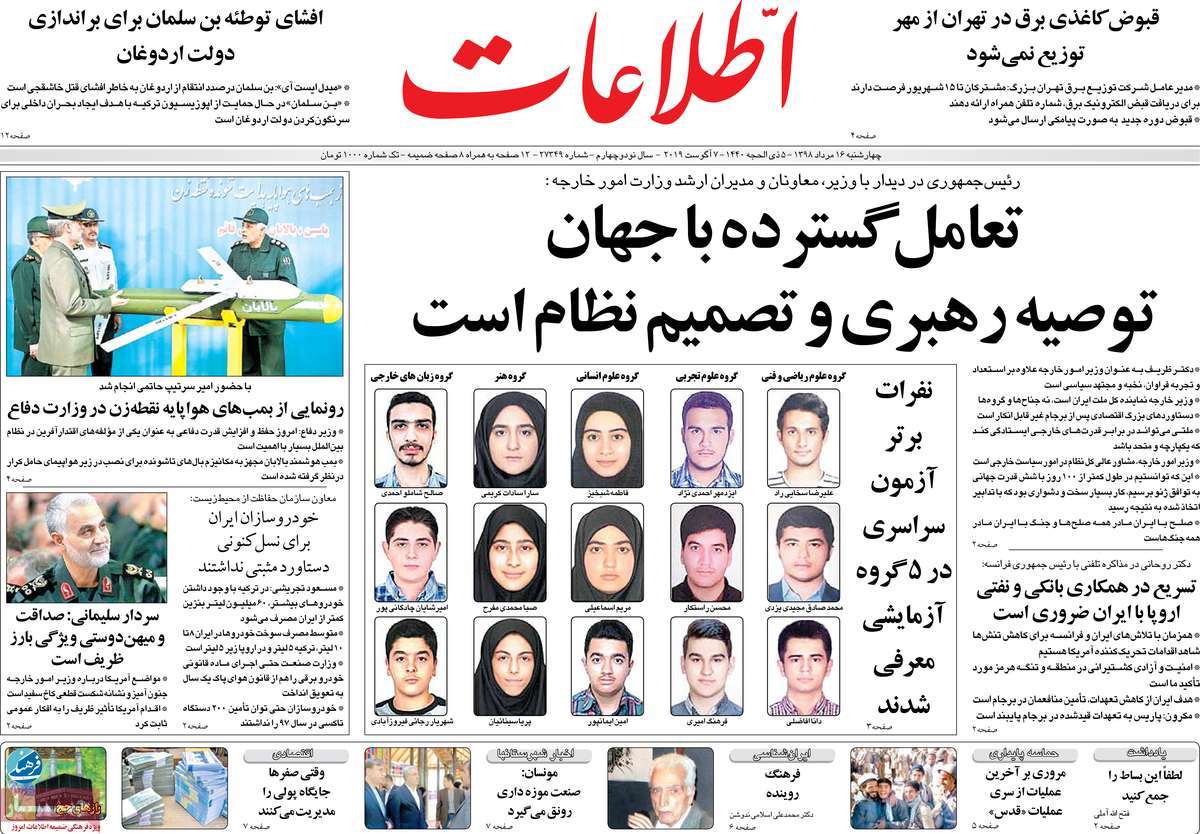
Ettela’at:
1- Rouhani: Extensive Interaction with World Recommended by Leader
2- Bin Salman’s Plot to Overthrow Erdogan Revealed
3- Gen. Soleimani: Honesty, Patriotism Main Features of Zarif

A Look at Iranian Newspaper Front Pages on August 7


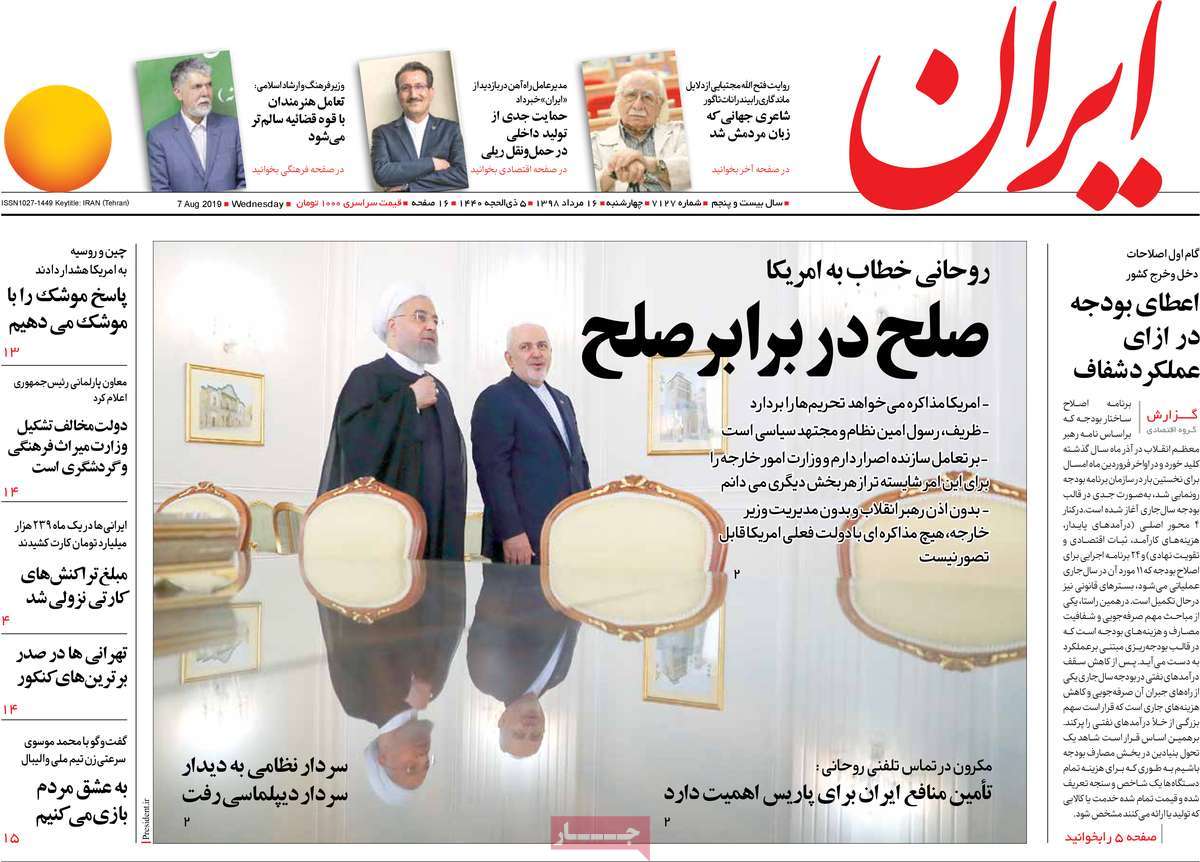
Iran:
1- Rouhani to US: Peace in Return for Peace
2- Macron to Rouhani: Paris Attaches Importance to Meeting Iran’s Interests
3- Military Commander Meets Diplomacy Commander

A Look at Iranian Newspaper Front Pages on August 7


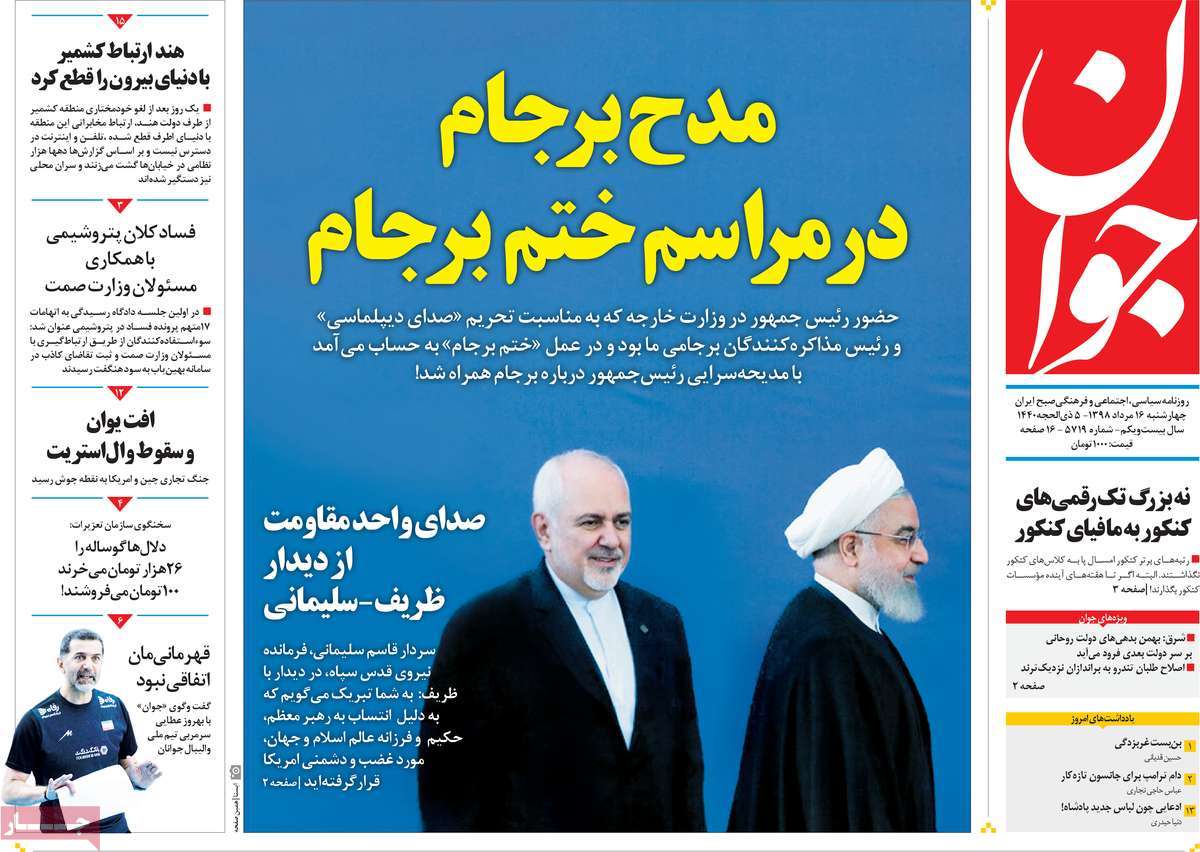
Javan:
1- Praising JCPOA in Funeral Ceremony of JCPOA
2- United Voice of Resistance from Zarif-Soleimani Meeting
* Soleimani: I Congratulate Zarif for Being Sanctioned by US over His Affiliation with Leader
3- India Cuts Kashmir’s Link to Outside World

A Look at Iranian Newspaper Front Pages on August 7


Jomhouri Eslami:
1- Jordan FM: No Peace Before End of Israeli Occupation
2- Rouhani: Zarif Is Trustworthy Messenger of Iran’s Establishment

A Look at Iranian Newspaper Front Pages on August 7


Kayhan:
1- Thousands of Hindu Soldiers Enter Kashmir to Slaughter Muslims
2- US, South Korea Hold Silent Drills for Fear of Pyongyang’s Reaction

A Look at Iranian Newspaper Front Pages on August 7


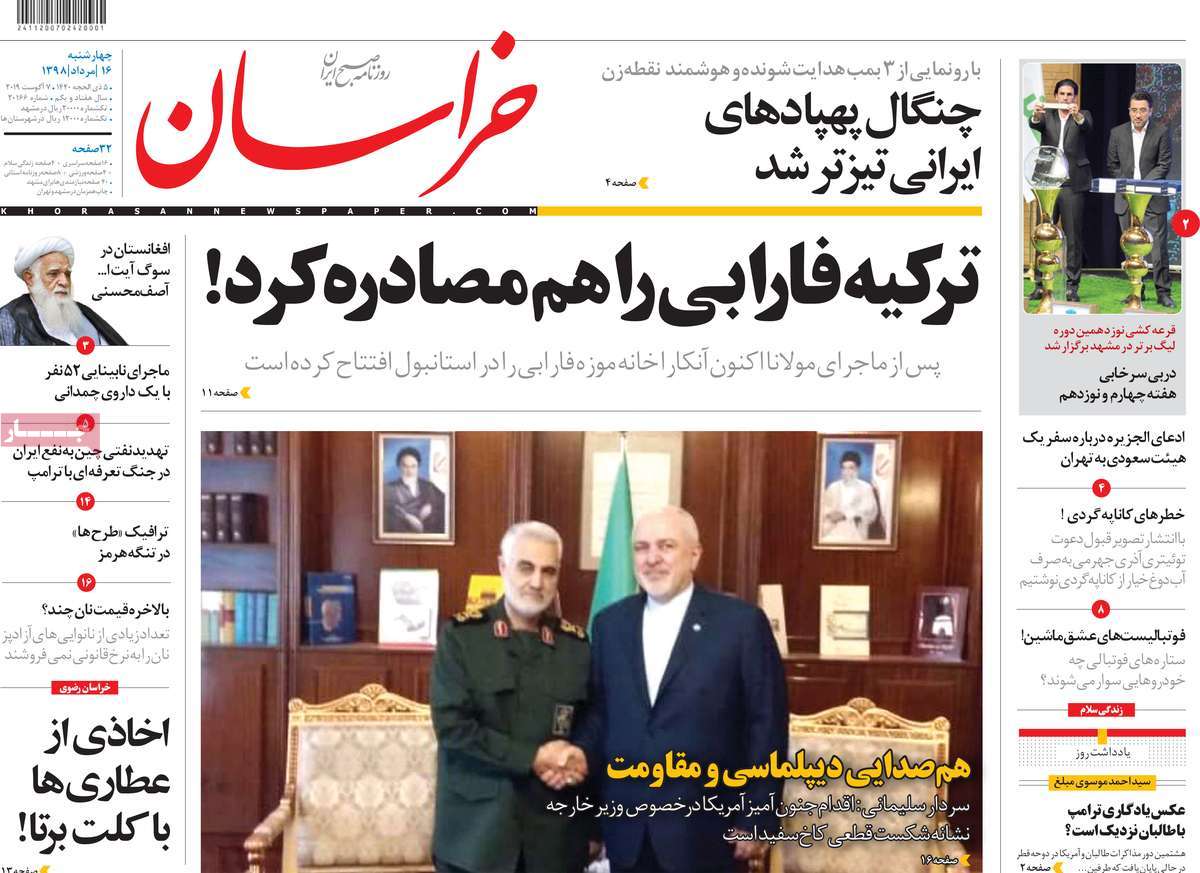
Khorasan:
1- Turkey Opens Farabi House-Museum in Istanbul!
* Another Theft of Persian Scholars after Rumi

A Look at Iranian Newspaper Front Pages on August 7


Sazandegi:
1- General Commends Diplomat

A Look at Iranian Newspaper Front Pages on August 7


Shargh:
1- Rouhani and General Soleimani Visit Foreign Ministry
2- President: Iran Achieved Successes at The Hague Even More Important than Mosaddegh’s

A Look at Iranian Newspaper Front Pages on August 7

Rouhani Gifts 1-Year Free Internet to Iranian Journalists

President Rouhani announced the gift on Wednesday, highlighting the important role social media play in easier dissemination of information.

“I have asked Communications Minister Mr Jahromi to provide journalists with high-speed internet,” Rouhani told reporters.

“As a present to journalists on Journalists’ Day, the government will provide them with free internet for one year,” said the President.
Earlier, Rouhani’s Chief of Staff Mahmoud Vaezi also praised the efforts made by Iranian journalists, and urged the cabinet ministers and officials to have more interaction with the media.

“The government of President Rouhani attaches special importance to the country’s media community,” he said on Tuesday night in a meeting with journalists.

Iran commemorates the National Journalists’ Day on August 8 in memory of Mahmoud Saremi, the Afghanistan bureau chief for the official Iranian news agency, IRNA, who was martyred when Taliban militia seized the northern city of Mazar-i-Sharif and attacked the Iranian consulate.