Saturday, December 27, 2025
Home Blog Page 3140

Victory Belongs to Yemen: Ayatollah Khamenei

A delegation representing Yemen’s Ansarullah Movement met with Ayatollah Khamenei in Tehran on Tuesday evening and submitted a letter from leader of the movement, Abdul-Malik Badreddin al-Houthi.

In the meeting, Ayatollah Khamenei praised the Yemeni nation’s resistance, vigilance and high morale in the face of a barbaric and broad aggression, stressing that faith in God Almighty will definitely result in victory, which is why the Yemeni nation will undoubtedly emerge victorious in the war.

The Leader also hailed Yemen’s rich history and strong resistance to aggression over the past five years, saying the Yemeni nation has a bright future, will form a strong government, and will achieve progress under that government.

The Saudis, Emiratis, and their sponsors who have committed terrible crimes in Yemen will definitely get nowhere, Ayatollah Khamenei underlined, saying, “They (Saudi-led coalition) seek to disintegrate Yemen, while such plot must be vigorously opposed; and an integrated and united Yemen with territorial integrity must be supported.”

“Preserving integrity of Yemen, considering the religious beliefs and ethnic diversity of the country, requires Yemeni-Yemeni talks,” Ayatollah Khamenei added.

The Leader further took a swipe at the Saudi-led coalition for its heinous crimes against Yemeni people, even on the Muslim festive occasion of Eid Al-Adha, saying what happens in Yemen is reflective of the modern world’s realities and the true face of the self-proclaimed advocates of human rights.

Ayatollah Khamenei then reiterated that the Islamic Republic of Iran’s stances against the US and the West are not based on fanaticism, but are adopted on the basis of the facts and the performance of the US and Western officials who commit the most heinous crimes under a civil guise.

Denouncing the West’s muted response to the crimes against Yemen and Palestine, the Leader underscored that resistance and faith in God is the sole way to counter the criminal powers.

Ayatollah Khamenei also pointed to the sanctions and pressures that Iran has been facing since the victory of the Islamic Revolution, particularly the sanctions on the defense equipment during eight years of Iraqi imposed war in the 1980s, stressing that the Iranian nation has gained major achievements in the defense industry despite forty years of sanctions.

The Leader finally expressed support for the Yemeni nation’s resistance and fortitude.


Iranian, Azeri Presidents Hold Phone Talks after Sochi Summit Postponed

The meeting was due to be held in the Russian Black Sea resort city of Sochi on Wednesday.

“Technical reasons” has been cited as the reason for the change in the plan, and the meeting is to be held at an appropriate time.

The Iranian president’s account of Rouhani-Aliyev phone call do not cite anything related to the meeting, and just report that the two sides have discussed expansion of bilateral relations between Tehran and Baku in all spheres.

In the phone call, President Rouhani hailed “friendly, brotherly and developing” relations between Iran and the Republic of Azerbaijan, highlighting the efforts of the two countries’ authorities for further development of relations.

“Fortunately, the progress of relations and cooperation between the two countries is developing and positive,” Rouhani said.

He also described visits by Iranian and Azerbaijani authorities and ministers as effective in deepening relations between the two countries and expressed hope that the process of implementing previous agreements would increase.

“The Republic of Azerbaijan has always been a friendly and brotherly country for Iran and this friendship between the two nations will further deepen,” he said.

Rouhani also offered congratulations to the Azerbaijani government and nation on Eid al-Adha.

Aliyev, in turn, felicitated the Iranian government and nation on Eid al-Adha, saying, “Close Iran-Azerbaijan relations are the result of both sides’ efforts and relations.”

He added, “There is no doubt that relations between the two countries and nations will be better than before and developing.”

Iranian Herbal Medicine Effective in Treating Parkinson’s Disease

According to Public Relations Department of Iran’s Vice-Presidency for Science and Technology, Parkinson’s disease is one of the most common public health problems worldwide. The chronic disease is characterised by the gradual death of dopamine-producing neurons at the base of the brain resulting in a dopamine imbalance in the brain. Symptoms include disorders such as muscle stiffness, tremor, sluggishness and severe physical loss.

A drug called Levodopa is one of the main drugs used to treat Parkinson’s symptoms.

There are many chemical and herbal medicines produced in various countries containing this substance, but in Iran the medicine could not be produced locally until researchers at Tehran University of Medical Sciences managed to produce it using a natural herb.

Research into the medicine’s production began with a project sponsored by the Vice Presidency’s Fund for Researchers and Technologists.

Samira Rahmani, a researcher of this project, says “this study extracted and standardised Levodopa from a plant native to India. It contains up to 15% natural Levodopa, is used in traditional medicine and is mainly used to relieve Parkinson’s symptoms.”

“Extraction and formulation were performed for drug production and we were able to localise the medicinal plant for this disease for the first time in Iran. Levodopa is converted to dopamine by the enzyme in the body, and it has also positive effects on Parkinson’s symptoms,” she added.

“The search for new, economical synthetic methods and the use of plant resources to produce pharmaceutical raw materials needed by the pharmaceutical industry (especially Levodopa) is one of the priorities in the country and if one obtains technical knowledge of producing self-sufficient facilities in the country, the way will be paved for its production.”

“Given the increasing trend of Parkinson’s disease among the elderly, access to herbal medicines containing Levodopa with less side effects and effective improvement of the disease is of particular importance,” she added.

“On the other hand, screening of selected plants of the Leguminosae family to introduce the valuable herbal resources containing Levodopa for the production of pharmaceutical raw materials creates new opportunities for the pharmaceutical industry,” she concluded.

New Homegrown Armoured, Tactical Vehicles Unveiled in Iran

From uneven terrains to man-made roadblocks are part of the tests these Iran-made hudge tactical cars have to go through to be introduced into service in Iran’s military.

Iran’s defence ministry says the vehicles are produced from A to Z by experts at the ministry.

“The defence ministry spares no effort to bolster the military might of the Islamic Republic by relying on the expertise of its engineers,” said Brigadier General Amir Hatami, the Iranian defence minister.

“We felt the need to strengthen our mobility on land and therefore produced advanced military vehicles that can ensure the safety of our personnel during their missions.”

“This armoured vehicle is named Raad. The driver of this car is absolutely safe in case of an explosion, as its producers say it is mine-resistant and ambush-protected,” he said, elaborating on one of the vehicles produced.

Aras-2 is another tactical vehicle built by the defence ministry. The high mobility personnel carrier is capable of passing through water canals with the depth of 1.5 metres, as well as vertical obstacles as high as half a metre.

The defence minister says the ministry can act as an auxiliary arm to Iran’s automotive industry in the supply of auto parts that are in the list of the US sanctions.

“Given our human and scientific resources at the defence ministry, we are ready to support other sectors such as the automotive industry with our technology, which spares us the need to rely on foreign supply,” noted the Iranian defence minister.

Iran has been under forty years of arms embargo imposed by the United States.
The sanctions have made the country able to build up its defence industry by relying on domestic knowhow.

Tehran says it has become self sufficient in production of the majority of its defence arsenal, from drones to missiles and now tactical vehicles.

Reports say in the next few weeks, the Iranian military will introduce its upgraded version of Bavar-373 air defence system.

According to the Russian aviation sources, this upgraded air defence system will not only replace the Russian-supplied S-300, but also surpass the latter.

According to the data presented, the Iranian Bavar-373 radars can detect air targets at distances of up to 300 kilometers, and, in addition to aircraft, the radar is able to detect cruise and ballistic missiles, as well as small drones.

The Iranian military previously acquired the Russian S-300 in 2015, but the country’s engineers had already begun working on a new air defence system to improve their capabilities.

A Look at Iranian Newspaper Front Pages on August 13

A Look at Iranian Newspaper Front Pages on November 19

19 Dey:

1- First VP: Iran’s Red Line Is Stability, Security of Hormuz Strait

2- Rouhani to Qatari Emir: Ultra-Regional Measures to Make Region More Dangerous

3- Zarif to Qatari FM: Foreign Forces Causing Insecurity in Region

A Look at Iranian Newspaper Front Pages on August 13


Abrar:

1- UK: Our Stance on JCPOA Has Not Changed

2- Iraq Opposed to Any Israeli Presence in Persian Gulf

3- Rouhani, Erdogan Stress Iran-Turkey Cooperation in All Areas

A Look at Iranian Newspaper Front Pages on August 13


Aftab-e Yazd:

1- Number of Iran’s Empty Houses Twice that of World Average

2- No Rush to Discuss CFT Ratification: Expediency Council

A Look at Iranian Newspaper Front Pages on August 13


Ebtekar:

1- Proxy War in Yemen: Consequences of UAE-Saudi Confrontation in Yemen

2- Rouhani, in Phone Calls, Underline Importance of PG Security

A Look at Iranian Newspaper Front Pages on August 13


Etemad:

1- Iran FM Warns from Doha: Persian Gulf on Verge of Blowing Up

A Look at Iranian Newspaper Front Pages on August 13


Ettela’at:

1- Rouhani to Qatari Emir: PG Security Can Only Be Ensured through Joint Cooperation

2- Muslim People’s Glorious Presence in Arafah Prayers in Tehran’s Mosalla

A Look at Iranian Newspaper Front Pages on August 13


Javan:

1- Last Blow Dealt to Anti-Yemen Coalition

* Le Monde: Saudi-led Coalition in Yemen War on Verge of Collapse

2- Palestinians Make Public Call for Defending Holy Quds

3- Academy Awards to Legitimize Homosexuals’ Cult

A Look at Iranian Newspaper Front Pages on August 13


Jomhouri Eslami:

1- Region’s Security, Key Focus of Talks between Iran, Turkey, Qatar, Pakistan Leaders

2- Zarif: Military Coalitions a Nonstarter

A Look at Iranian Newspaper Front Pages on August 13


Kayhan:

1- Saudi Jet Fighters Bomb UAE-Led Forces in Southern Yemen

2- American Athlete Kneels and Raises Fist on Podium in Protest

A Look at Iranian Newspaper Front Pages on August 13


Sazandegi:

1- Conspiracy Theory in Washington

* Suspicious Death of US Businessman Increase Dem-GOP Conflicts

A Look at Iranian Newspaper Front Pages on August 13


Shargh:

1- Trilateral Recruitment

* Zarif Meets with Qatari Emir

* UAE Accepts King Salman’s Offer for Talks

* Bolton Meets Johnson in London

A Look at Iranian Newspaper Front Pages on August 13


Sobh-e Now:

1- Iranian Oil Tanker in Gibraltar May Be Released Soon after Five Weeks

A Look at Iranian Newspaper Front Pages on August 13

Gibraltar to Release Iranian Tanker Soon: Sources

A senior Iranian official said on Tuesday that Britain might free its oil tanker Grace-1 soon, after some documents were exchanged that would help the seized ship’s release.

“Britain is interested in releasing Iran’s oil tanker Grace-1,” the deputy head of Iran’s ports and Maritime Organisation, Jalil Eslami, said.

“Following the exchange of some documents, we hope the release will take place soon,” he said.

In another sign of de-escalation, Gibraltar also said it was seeking to de-escalate issues arising with Iran since the detention of the Grace-1 tanker.

“We continue to seek to de-escalate issues arising since the lawful detention of Grace 1,” a spokesman for Gibraltar said.

The current detention order on the vessel expires on Saturday night, the spokesman said.

British Royal Marines seized the Iranian oil tanker on July 4 off the coast of the British Mediterranean territory of Gibraltar on suspicion of violating EU sanctions by taking oil to Syria, which Tehran denies.

Meanwhile, the Turkish news agency EHA announced on Tuesday that Gibraltar will release the Iranian tanker later in the day.

However, sources have told the Iran Front Page that Iran has no information about the release of the tanker on Tuesday.

Meanwhile, the Persian service of the British Broadcasting Corporation (BBC) says sources have confirmed that the tanker will be released soon.

The UK Foreign Office, however, says “the investigations being conducted around the Grace 1 are a matter for the Government of Gibraltar.”

“As this is an ongoing investigation we are unable to comment further.”

The tanker’s release is expected to facilitate Tehran’s reciprocal release of the UK tanker it seized last month on charge of violating international maritime rules.

Sky-Gazers Enjoy Perseids Meteor Shower in Southwestern Iran

The meteor shower is caused by the passing of particles left over from Swift-Tuttle comet with Perseus constellation as their axis.

Many amateur astronomers and ordinary people can watch this phenomenon because it is visible with naked eye and doesn’t require any observational tools. This year, however, the dimmer meteors weren’t visible due to the moonlight.

What follows are IRNA’s photos of the Perseids meteor shower, taken during several nights in different parts of Chaharmahal and Bakhtiari Province in south-western Iran:

Iran Says Concerned about India Restrictions against Kashmir Citizens

Kashmiri men wait before Eid-al-Adha prayers in Srinagar. / Photo by Reuters

In a statement on Tuesday, Mousavi also called on Indian officials to take measures to return the people’s lives to normal as soon as possible, and let them enjoy all their natural and recognized rights.

Earlier, Pakistan also condemned the Indian government’s curtailment of religious freedom of Muslims in Indian-administered Kashmir.

In a statement on Monday, Pakistan’s Foreign Ministry accused that India has curtailed religious freedom of millions of Kashmiri Muslims on an important festival of Eid al-Adha.

Restrictions and curtailment of this fundamental religious freedom of millions of Kashmiri Muslims constitute a serious violation of applicable international human rights law, to which India is a party, Mohammad Faisal, spokesman for the Foreign Ministry, said.

Indian troops imposed tight restrictions on mosques across Kashmir for the Eid al-Adha festival, fearing anti-government protests over the stripping of the Muslim-majority region’s autonomy, according to residents.

The Himalayan region’s biggest mosque, the Jama Masjid, was ordered to be closed and people were only allowed to pray in smaller local mosques so that no big crowds could gather, witnesses said.

Tensions between Islamabad and New Delhi, the two long-time rivals, have further escalated following India’s move to revoke the special status of Jammu and Kashmir — which allowed Kashmiri citizens to enact their own laws and prevented outsiders to settle and own land in the territory.

Kashmiri leaders and citizens fear this step is an attempt by the Indian government to change demography of the Muslim-majority state, where some groups have been fighting against Indian rule for independence, or for unification with neighbouring Pakistan.

FM Zarif Warns US about Triggering Arms Race in Mideast

In an exclusive interview with Al Jazeera on Monday, Zarif said more warships in the Persian Gulf would only lead to more insecurity.

“The US [sold] $50bn worth of weapons to the region last year. Some of the countries in the region with less than a third of our population spend $87bn on military procurement,” Zarif told Al Jazeera in Qatar’s capital, Doha.

“Let’s make a comparison; Iran spent last year $16bn on all its military with almost one million people in the army. The UAE with a total population of one million spent $22bn, Saudi Arabia spent $87bn,” he continued.

“If you are talking about threats coming from the region, the threats are coming from the US and its allies who are pouring weapons in the region, making it a tinderbox ready to blow up.”

Zarif’s comments come after the United States announced it is working to form a military coalition to protect commercial shipping in the Persian Gulf following suspected attacks on oil tankers near the Strait of Hormuz.

Tensions have soared in recent months around the strategic waterway, where about 20 percent of the world’s oil passes through.

The friction is rooted in US President Donald Trump’s decision in May 2018 to unilaterally withdraw Washington from a landmark nuclear deal signed in 2015 between world powers and Iran.

Since then, the US has reinstated sweeping sanctions against Tehran as part of a “maximum pressure” campaign and has also increased its military presence in the region.

Tensions between the two nations escalated again in May, when Washington accused Iran of sabotaging tankers in the shipping route, allegations denied by Iran.

In June, Iran downed a US military spy drone in the Persian Gulf with a surface-to-air missile. Iran says the drone was in its airspace, but Washington says it was in international skies.

At the time, Trump said he had been prepared to attack three Iranian targets in retaliation but called off the operation at the last minute because such a response would not have been “proportionate”.

In his remarks to Al Jazeera on Monday, Zarif said the presence of US and foreign naval fleet never produced “security”.

“This is a tiny body of water and the more foreign naval vessels you have in this body [of] water the less secure it is for everybody. Based on experience, the presence of US and foreign naval fleet in the Persian Gulf has never produced security,” he said.

“We have sad memories of a US ship downing an Iranian airliner in 1988 [and] killing 290 passengers.

“We believe the best the Americans can do for protection of maritime navigation is to just leave people alone. Don’t interfere, this is a hostile act against Iran and I don’t believe any other impact other than insecurity,” Zarif added.

Iran’s relations with the United Kingdom have also been strained since British authorities early last month seized an Iranian tanker off the coast of Gibraltar on suspicion it was transporting oil to Syria in breach of European Union sanctions. Tehran denied the allegation, accusing the UK of acting at the behest of the US and demanding the immediate release of the ship.

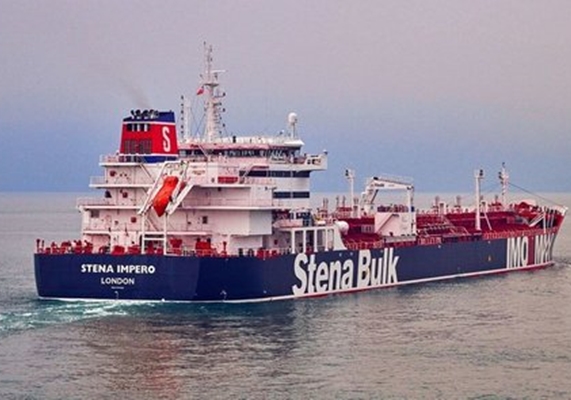
On July 19, Iran seized a British-flagged tanker in the Strait of Hormuz, claiming that it had collided with a fishing boat and violated international law.

The Iranian top diplomat was in Qatar for bilateral talks with the country’s emir, Sheikh Tamim bin Hamad Al Thani, and its foreign minister Mohammed bin Abdulrahman bin Jassim Al Thani.

Iran Lauds Sheikh Zakzaky’s Visit to India for Treatment

“We hope the presence of Mr Zakzaky abroad will provide a better opportunity for the resolution of the recent years’ problems between the Islamic Movement in Nigeria (IMN) and the government in order to protect the Shiites’ rights, remove restrictions on the Movement, and secure the release of prisoners,” Mousavi said in a statement on Tuesday.

“While supporting the process, the Islamic Republic of Iran expresses its preparedness for any assistance,” Mousavi added.

Sheikh Zakzaky, a top Nigerian Muslim cleric, has headed for India to receive treatment as his health condition is deteriorating after spending four years in detention along with his wife, who was also injured during a crackdown by Nigerian authorities in 2015.

According to Nigerian media reports, the 66-year-old cleric, along with his wife Zinat, embarked on a journey to India on Monday.

Iran Lauds Sheikh Zakzaky’s Visit to India for TreatmentThe reports say earlier in the day, the couple was heavily escorted by armed security forces of Nigeria’s domestic intelligence agency, Department of State Services (DSS), from their residence in the city of Zaria to the airport in the capital Abuja, where they could fly to India.

Sheikh Zakzaky, the leader of the Islamic Movement in Nigeria (IMN), is also being accompanied by some officials of security services as well as medical personnel, while travelling to India, the reports further said.

The top cleric has been in detention since December 2015 after his home in Zaria was brutally raided by Nigeria’s forces, during which he was beaten and lost his left eye.

Three of his sons lost their lives, his wife sustained serious wounds and more than 300 of his followers were killed during the violent crackdown.