Friday, December 26, 2025
Home Blog Page 3126

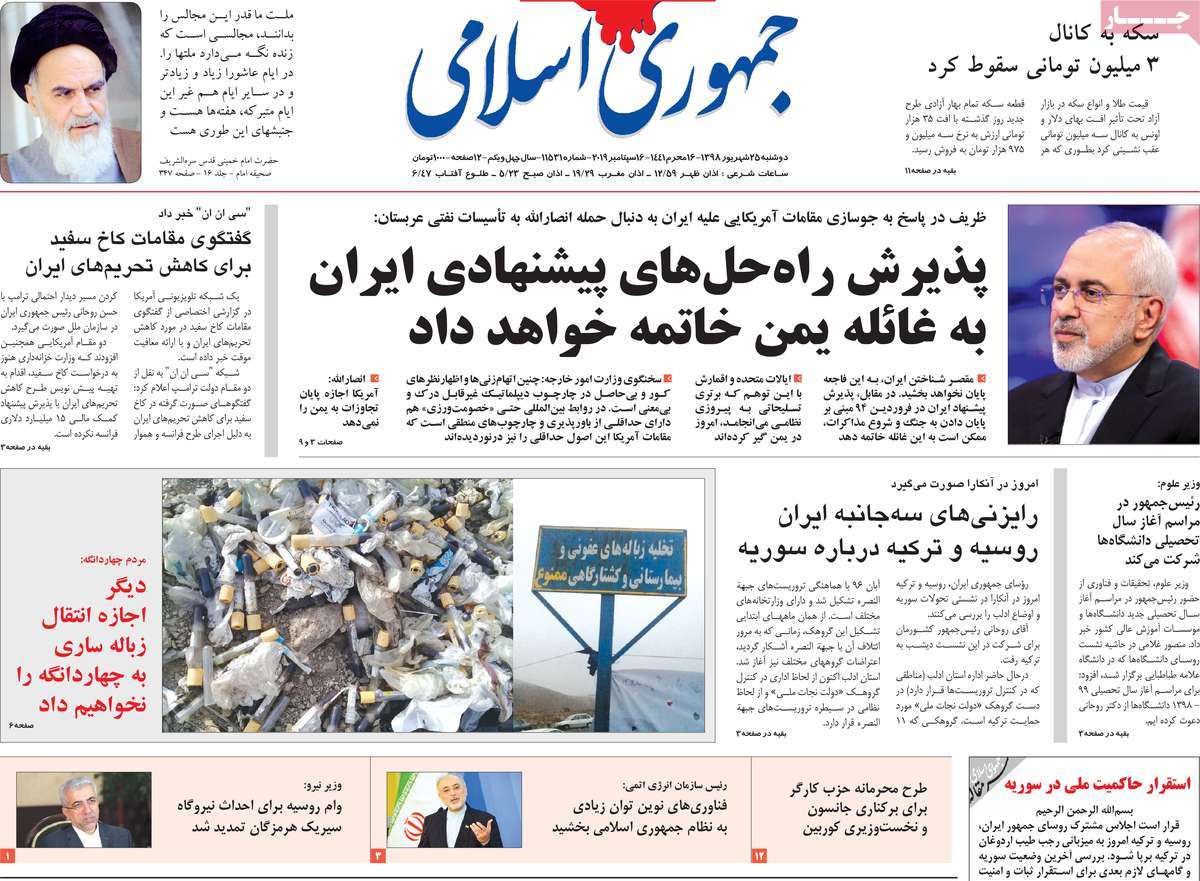
‘No Rouhani-Trump Meeting in Sight Unless US Returns to JCPOA’

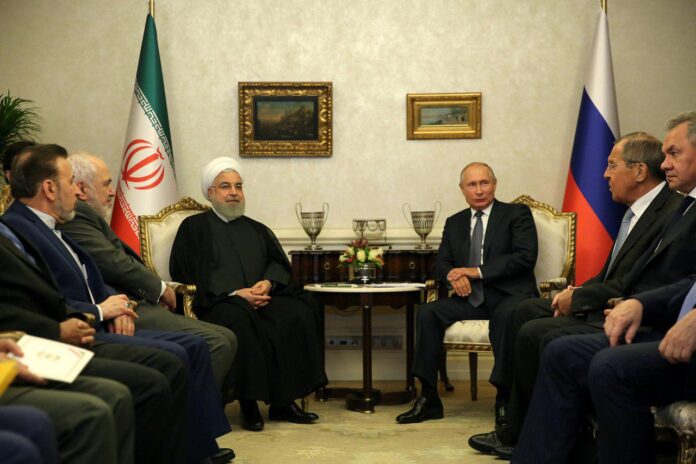
Zarif said on Tuesday any bilateral meeting between Hassan Rouhani of Iran and his opposite number Donald Trump hinges on the US rejoining the P5+1 and fulfilling its commitments.

He also touched upon French President Emmanuel Macron’s expressing his readiness to host a meeting between Rouhani and Trump.

“We said clearly that the US government and Mr Trump had violated the agreements reached following marathon talks between the two countries, and that what needs to be done is to implements past agreements,” Zarif told reporters before leaving the Chinese capital, Beijing, for Japan.

Iran’s top diplomat noted he has already discussed with Macron in Paris ways of preserving the Iran nuclear deal known as the Joint Comprehensive Plan of Action (JCPOA) through the fulfilment of obligations by both sides.

Zarif said he reiterated in Paris that Iran had complied with its obligations under the JCPOA, and that the US had illegally pulled out of the JCPOA and that Europe had not taken any action to put the trend of the implementation of the nuclear deal back on track.

His comments came shortly after Rouhani said there will be no development in Tehran-Washington relations unless the US lifts its sanctions on Iran as a “first step”.

President Rouhani said the key to bringing about a positive change in Iran-US ties is in the hands of Washington.

He said the United States should rectify its behaviour and return to the right path before there could be any positive developments in mutual ties.

Iran Upholds Jail Terms for Three Convicts Linked to UK, Israel

Addressing a Tuesday press conference in Tehran, Gholam-Hossein Esmaeili said the first convict is Aras Amiri, an Iranian woman linked to the British Council who used art as a means of making cultural infiltration into the Iranian society.

She was also engaged in efforts to overthrow the Iranian Establishment, he said, adding that Amiri has been sentenced to 10 years in prison and a two-year deprivation from social rights.

The next convict is Ali Johari, a spy working for the Zionist regime of Israel who had long-time ties with Mossad, Esmaeili said.

According to the spokesman, Johari had meetings with Mossad agents in Sri Lanka, India, Macau, and Laos, and even visited the occupied territories to apply for the regime’s citizenship.

“He was tasked with providing Mossad service with intelligence, especially in the fields of construction and tunnel-building and the IRGC’s Khatam [al-Anbia Construction] Base,” the spokesman added.

He said Johari has received a 10-year prison term for espionage and a two-year term for acquiring illegitimate assets, and must return the money he received from the spy service.

The third convict, Esmaeili said, is Anousheh Ashouri, a dual Iranian-British citizen who was linked to Mossad and had received many facilities from them.

“She transferred abundant intelligence from our country to the Mossad service,” he noted.

Ashouri has received a 10-year prison term for espionage and another two-year term for acquiring illegitimate assets. She should also return 33,000 euros seized from her, Esmaeili noted.

Iran Says Its Tourism Industry Booming Despite US Bans

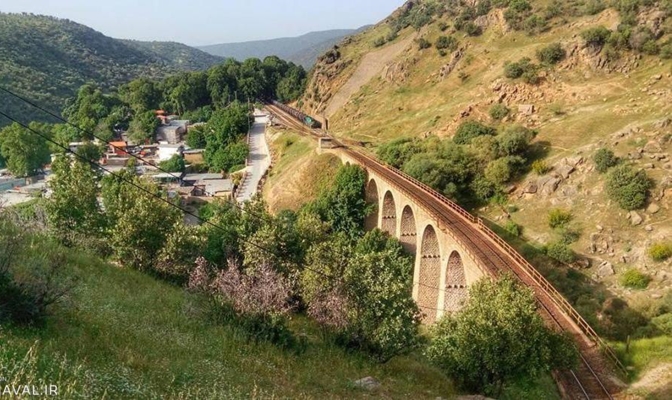
Caretaker of the newly-established Ministry of Cultural Heritage, Tourism, and Handicrafts Ali-Asghar Mounesan says the situation for tourism is good in Iran as the tourism industry is booming with regards to both local and foreign tourists.

“Once, historical buildings used to be destroyed and our budget wasn’t enough for all [ancient] monuments, but now, they are protected thanks to people’s contribution and [the tourism industry] has turned into an atmosphere for business,” he said.

He said demand is growing in the tourism industry, and thousands of memoranda of understanding on investment in the tourism industry have been signed, “which is a harbinger of boom” in this industry.

He said Iran hosted as many as 7.8 million incoming tourists in the one year to March 2019, generating a revenue of between 18-20 billion dollars.

“Each foreign tourist generates 1400 dollars in earnings, and this trend further strengthens economy,” he noted.

The official also said there has been a 40-percent rise in the number of tourists in the second quarter of 2019 year on year.

IRGC General Slams FM Zarif’s Trip to France

In comments at a Monday congress in Tehran, Brigadier General Gholam-Hossein Gheibparvar expressed the hope that such foreign visits by Iranian officials have not been made out of frustration.

The top adviser said he did not make any judgment about the foreign minister’s short visit to France and the G7 summit, but wished that such visits do not result from a sense of “frustration or lack of self-esteem”.

“God forbid that the knees of our officials would be shaking,” the general added.

Highlighting the international admiration for Iran and its position, Gheibparvar said no country has dared to criticize the US, but the Iranian forces shot down an American drone courageously.

His comments came a day after Zarif made an unexpected arrival in Biarritz, where the G7 summit was taking place, and met with French President Emmanuel Macron on Sunday.

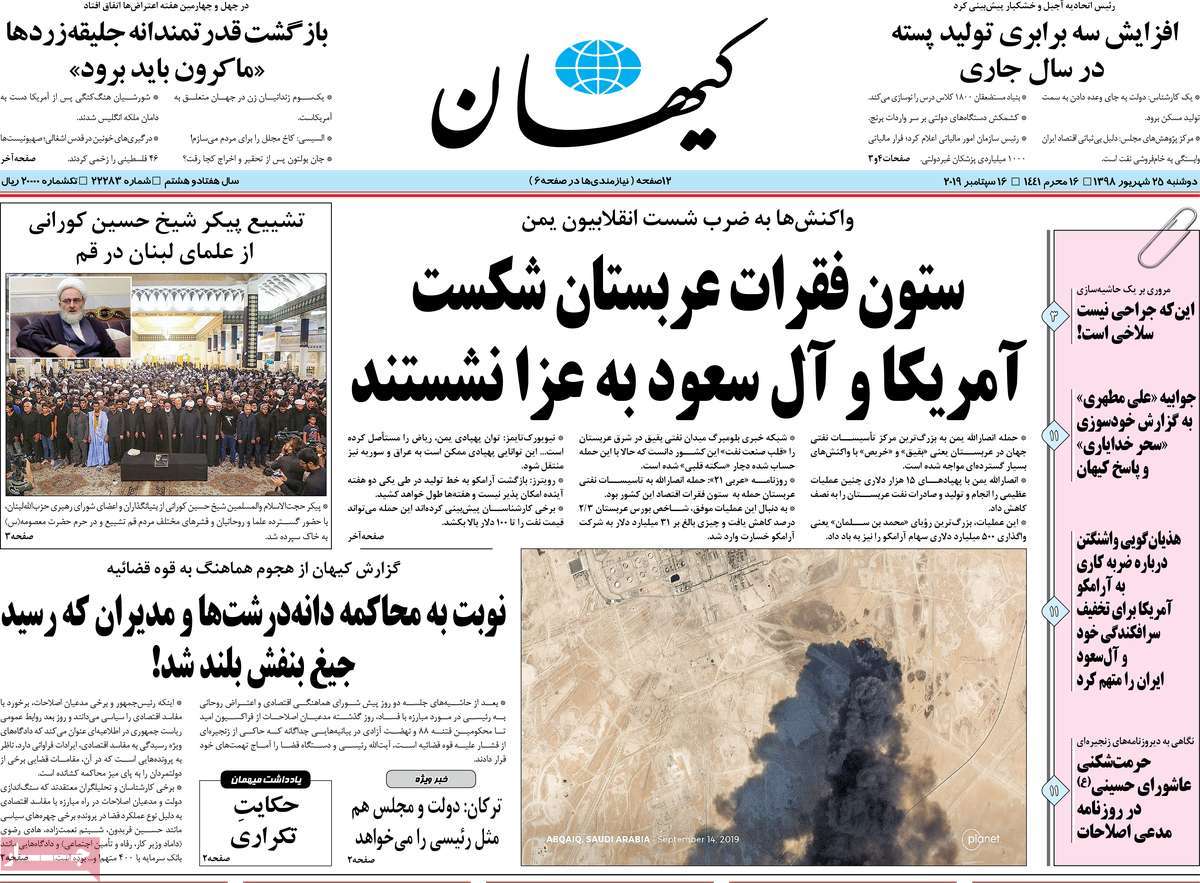
In an article published on Monday, Iranian conservative newspaper Kayhan took a swipe at Zarif for the “inept visit” to France, warning that the West is only seeking to mount pressures on Iran.

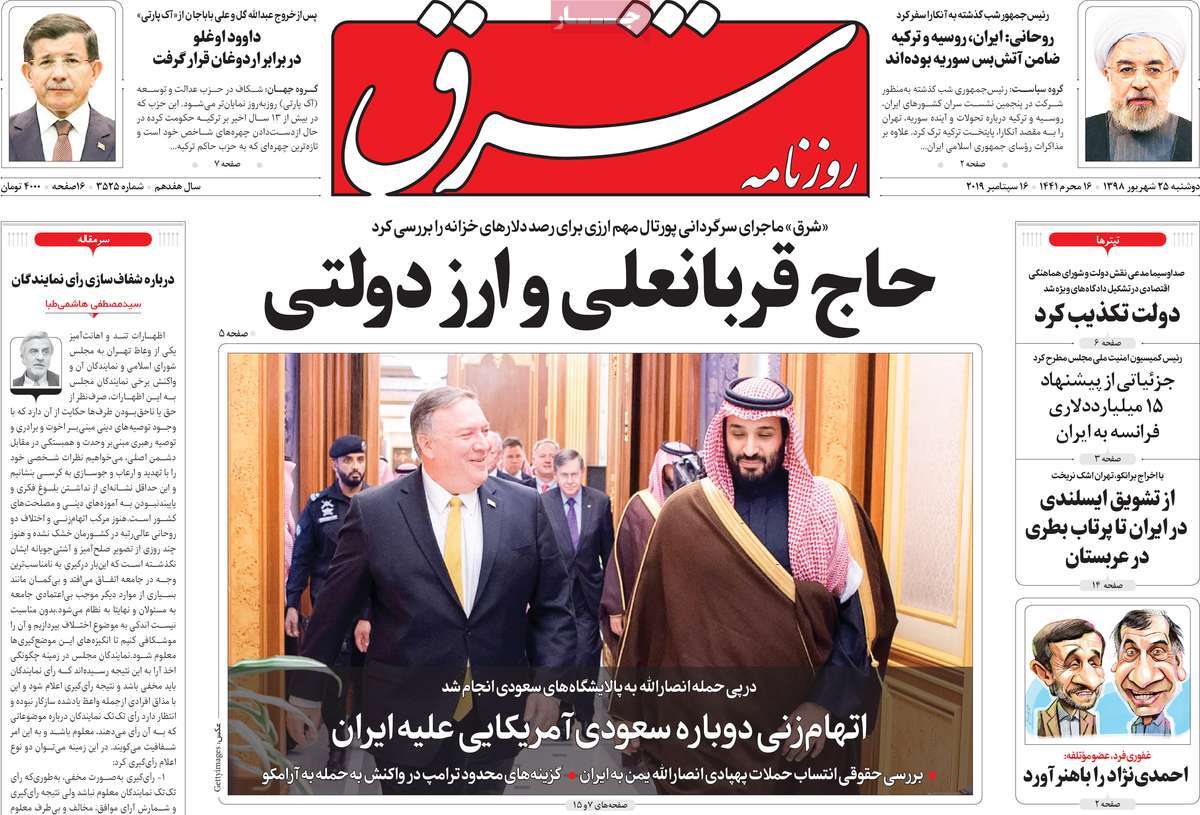
In a speech on Monday morning, Iranian President Hassan Rouhani suggested that he would meet even his American counterpart Donald Trump if such talks would secure Iran’s interests.

“If I know my country’s problem will be resolved in case I meet someone at a meeting, I’d definitely do it, because the country’s national interests come first,” Rouhani said.

11 Countries Demanding to Buy IRDS Medication from Iran

The director general of a knowledge-based company said the medicine used to treat IRDS is so much in demand that some 11 countries have asked to buy the drug from Iran over the less than a year since news broke that the country was producing the medication.

“Beraksurf (the first pulmonary surfactant produced by Iran) was officially unveiled in a ceremony on August 25 attended by the ministers of health and medical education and vice president for science and technology at the knowledge-based pharmaceutical company,” said Ahmad Asseminia.

For a brief review of Iran’s achievements in various fields of science and technology, check the book Science and Technology in Iran: A Brief Review – 2019

He said the medicine has been produced after seven years of research, laboratory and pilot work and now is being produced on an industrial scale.

“The medication has had completely effective and good results,” he added.

11 Countries Demanding to Buy IRDS Medication from IranHe noted contracts have been signed with several companies to export Beraksurf, “and soon we will see this medicine exported.”

He said plan is underway to increase the production of this drug given that it is much in demand by other countries.

The infantile respiratory distress syndrome, also called the respiratory distress syndrome of newborn, or the increasingly surfactant deficiency disorder, and previously called hyaline membrane disease (HMD), is a syndrome in premature infants caused by developmental insufficiency of pulmonary surfactant production and structural immaturity in the lungs.

It can also be a consequence of neonatal infection and can result from a genetic problem with the production of surfactant-associated proteins. IRDS affects about 1% of newborns and is the leading cause of death in preterm infants. The incidence decreases with advancing gestational age, from about 50% in babies born at 26–28 weeks to about 25% at 30–31 weeks. The syndrome is more frequent in males, Caucasians, infants of diabetic mothers and the second-born of premature twins.

No Development in Iran-US Ties Unless Sanctions Lifted: Rouhani

Hassan Rouhani said the key to bringing about a positive change in Iran-US ties is in the hands of Washington.

He said the United States should rectify its behaviour and return to the right path before there could be any positive developments in mutual ties.

The president noted Iran has never sought tension with the world and has always favoured regional and global security as well as cooperation with friendly countries.

“We are ready to move in line with all international regulations within the framework of our national interests and security, and we have opted for a path based on making Iran more powerful and securing national might,” he said at a ceremony in Tehran.

“The more our national power increases, the more the enemy will lose hope of hatching plots against Iran, and at the same time, the more our power declines, the more it will raise the enemies’ hope of [plotting against] and greed toward Iran,” he added.

Rouhani said what is important for Iran is security, national interests and achieving the ideals of the Islamic Revolution.

He underlined that Iran will work to secure its people’s rights and will stand up to ill-wishers.

Rouhani had earlier suggested that he would meet even his American counterpart Donald Trump if such talks would secure Iran’s interests.

Addressing a ceremony in Tehran on Monday, Rouhani said the government would use any means to resolve the country’s problems under the current circumstances.

“If I know my country’s problem will be resolved in case I visit someone at a meeting, I’d definitely do it, because the country’s national interests come first,” Rouhani said.

Medical Tourism in Iran Hits New Record in Four Months

Mohammad Panahi, the deputy head of the Health Tourism Promotion Association of Iran, says medical tourism had yielded $1.2 billion in revenue for the country in the last year, a figure that shows a 20-30% increase only in the first four months of the current year.

In an interview with Donya-ye Eqtesad, Panahi said these medical tourists were mainly from the Persian Gulf littoral states, Iraq, Syria, and Azerbaijan, as well as Iranian expatriates residing in Canada and Germany, who travelled to Iran to receive various healthcare services such as plastic surgery, open heart surgery, orthopedic surgery, and fertility treatments.

He cited the depreciation of Iranian rial against foreign currencies as the main reason for the tremendous growth in the number of medical tourists visiting Iran, as it has greatly decreased the cost of traveling to and medical services in Iran, which alongside the great skill and expertise of Iranian doctors has made the healthcare service market of Iran very attractive to foreigners.

Touching on the challenges facing the medical tourism of Iran, Panahi referred to the unlicensed traditional middlemen working in this field as a threat to the industry, who often connect patients with inferior medical facilities and charge them unreasonable fees, damaging the reputation of the whole market in Iran.

“To curb the detrimental effects of these activities, a memorandum of understanding was signed between the Health Ministry and the Iranian Cultural Heritage, Handicrafts and Tourism Organization on May 14, 2019. The document defines the general policies of health tourism in the country,” Panahi said.

Meanwhile, the secretary of the Strategic Council for Health Tourism of Iran, Amin Haqiqat, told Donya-ye Eqtesad that the memorandum of understanding had led the relevant authorities to tighten the supervision on medical tourism activities and consider providing the necessary training for the actors in this area in order to prepare the ground for receiving medical tourists in Iran.

Granting permits of operation to qualified medical tourism companies in Iran and permits for setting up international patients departments (IPDs) to hospitals who have the necessary requirements for admitting foreign medical tourists, setting fees for healthcare services for foreign patients, monitoring the implementation of relevant regulations, and taking immediate measures to cut out unlicensed middlemen are among the commitments of the Ministry of Health as per the this agreement, Haghighat added.

Rise of Professional Medical Tourism Facilitators in Iran

Iran has been a favorite medical tourism destination for people from the neighbouring countries for a long time because of the low cost surgery and other medical services Iran offers and the abundance of proficient doctors in the country. This popularity has soared recently mainly due the devaluation of the Iranian currency against foreign currencies, which is in large due to the economic sanctions imposed on Iran by the U.S., especially after President Donald Trump decided to scrap the landmark nuclear deal, known as the Joint Comprehensive Plan of Action (JCPOA) and impose inhumane sanctions on Iran.

While having adverse effects on the country’s economy, this has also created an opportunity for Iran to take advantage of this situation to attract health tourists from around the world and provide them with affordable services. This has also given rise to private startup companies, which specialize in offering professional medical tourism services. One of these companies is AriaMedTour, which was established in 2016 as is currently one of the biggest and most reputable health tourism agencies in Iran. Last year, the company introduced two new services under the brands of AloMedical and MedTour Logistics.

 Medical Tourism in Iran Hits New Record in Four Months

AriaMedTour runs two websites to introduce Iran’s medical tourism services to people from around the world who want to receive quality yet affordable treatments abroad. They include comprehensive information about the hospitals, clinics, doctors, and prices for medical services in Iran to help candidates find the best options for their treatment.

While the traditional medical tourism actors in Iran focus on the markets of the neighboring countries, AriaMedTour has managed to attract tourists from a much wider range of countries, including European countries and Australia. The company publishes videos of the patients it provided services to on its website, which shows that it provided do-dietary-supplements-work.com to patients from countries such as Sweden, Norway, France, Germany, Spain, Belgium, Romania, Australia, New Zealand, India, and Russia, among others, as well as Arab countries.

What Treatments Do Foreign Medical Tourists Seek in Iran?

Medical tourists visit Iran for a wide variety of services, including various types of plastic surgery, dental procedures, and medical treatments. Given that the cost of cosmetic procedures in Iran is considerably lower than that in many other countries, people seeking such services are very inclined to make a trip to Iran to get their procedures done. Furthermore, the extensive expertise and experience of Iranian cosmetic surgeons also contributes to the growing appeal of Iran for foreign patients.

Iranian hospitals also draw many patients, mostly from neighboring countries, for medical treatments including eye surgery, orthopedic surgery, and heart surgery.

According to the head of Medical Tourism Department of Iran’s Ministry of Health, Saeid Hashemzadeh, there are currently 169 hospitals in Iran with the necessary permits to admit foreign patients. Many of these hospitals enjoy IPDs and in-patient accommodations for patients and their companions who need to stay in the hospital for a few days after their treatment.

Medical Tourism in Iran Hits New Record in Four Months

Iran has also become a hot destination for people with infertility problems. With the considerable progress the Islamic Republic has made in this field and the reasonable cost of fertility treatments in Iran compared to other countries, couples from around the world are increasingly traveling to Iran to receive such treatments, including IVF and IVM. Given that infertility patients often require several cycles of treatments to achieve the desired result, the overall cost of their treatments would be prohibitive in countries where prices are high, making such services in Iran very budget-friendly.

‘Deal of Century’: Removing Palestine from World’s Map

Several resolutions and agreements have been signed between Israel and Palestine since 1967 in the process of Peace Talks, so that solution of two states, one government and even confederation have been included in these agreements. In this regard, each of former presidents of the United States presented a peace plan to solve the problem and this time, it was Trump’s turn.

The family of Donald Trump and Jared Kushner formulated and compiled the ‘Deal of Century’ Plan according to the family agreement since Palestinian and Israeli sides have different imaginations of the Deal. In the process of formation of the ‘Deal of Century’, they [Trump and Kushner] considered the Palestinian issue as a personal and family issue. By calculating that Jared Kushner is Jewish and his wife is also Jewish and U.S. President Donald Trump is also interested in Israel. So, Palestinian issue can have a family solution. It is not important that the differences between Palestinians and Israelis are a difference in the width of history and in the extent of ideological differences.

In formulation of the ‘Deal of Century’, both Trump and Kushner did not pay attention to this issue that resolving problem of Israel with the Islamic countries is not the problem that is confined or limited only to the United States or Israel. From the political point of view, the issue is not even comprehensible for them [Trump and Kushner] that, despite all international efforts and political initiatives taken in the recent decades, resolving this crisis has become more complicated every year.

The Trump family should understand this issue that situation in Palestine is tied with the Resolution 242 of the United Nations inked in 1967, stipulating that Israel must withdraw from the Golan Heights, Jordan River, Gaza Strip and the West Bank. On the other hand, the resistance of Palestinian people, which began with the throwing of stone, has now been turned into a resistance with the power of deterrence that owns pinpointing rockets and missiles.

Even if the Palestinians relinquish their inalienable rights [that will not ignore it definitely], the future of Bait Al Muqaddas (Jerusalem), as the first Qibla of Muslims and the Ascendant of the Holy Prophet of Islam (S) as well as Palestinian citizenship within a ‘geographical area under Israeli mandate’ will turn the Palestinian problem from a territorial problem into an ideological and trans-regional problem. Such a situation would add to the desire Palestinians for more resistance and also would confront Israel with new trans-regional political and armed groups as well.

Jared Kushner unveiled the plan of ‘Deal of Century’ for representatives of Arab and European countries in Manama, capital of Bahrain, on June 25, 2019. In this initiative plan, Kushner considered economic solution as ‘alternative’ of political solution for ending the conflict between the two parties [Palestine and Israel]. In the opening remarks of the ‘Deal of Century’, he clearly put the value of land and territory of Palestine and its identity at $52 billion. By insulting the Palestinians and their struggles, he [Kushner] called Palestinians as people who have lived without understanding what the peace means.

In the plan of ‘Deal of Century’, Kushner defines Palestine as a land and territory which is confined to a geographical area without a nation, government, army and also conceptual boundaries. Moreover, in his defined project, Kushner said that Palestine is an area in the West Bank and Gaza Strip that are connected with each other through railway. This area is supposed to be managed and administered by multinational companies whose staff are from the people of Palestine under the strict supervision of the United States and Israel.

Iran, China Weigh Plans to Broaden Strategic Ties

Iranian Foreign Minister Mohammad Javad Zarif and his Chinese counterpart Wang Yi held two rounds of meetings in Beijing in a single day on Monday.

Zarif has travelled to China for a working trip, as part of a tour of Asia that will take him later to Japan and Malaysia.

In the Monday’s negotiations, the two foreign ministers discussed various issues relating to the bilateral relations between Iran and China, the latest developments in the implementation of the JCPOA as well as the Iranian and French presidents’ initiatives, the road map to Iran-China ties in the next 25 years, the security of the Persian Gulf and the strategic Strait of Hormuz, and the illegal and unilateral sanctions imposed by the United States on independent countries.

Highlighting the necessity for the expansion of the strategic and millenniums-old ties between Iran and China in all fields, Foreign Minister Zarif condemned the US’ economic pressures and sanctions against China and the meddling from the US and certain Western states in China’s internal affairs, and reaffirmed the Islamic Republic of Iran’s support for the One-China policy.

The Chinese Foreign Minister, for his part, stressed the need to uphold multilateralism, to honor the international agreements, and to respect the authority of the UN Security Council, saying, “China supports any measure leading to reduction of tensions and growing stability and security in the region, and also supports Iran’s legitimate rights under the JCPOA and the resulting economic interests.”

The two diplomats also described Iran-China ties as comprehensive and strategic, and emphasized the need to promote and deepen the relations in all fields.

The regional issues, particularly the developments in Afghanistan, were among the other topics discussed in the meetings.

Iran President Introduces Two New Ministerial Picks to Parliament

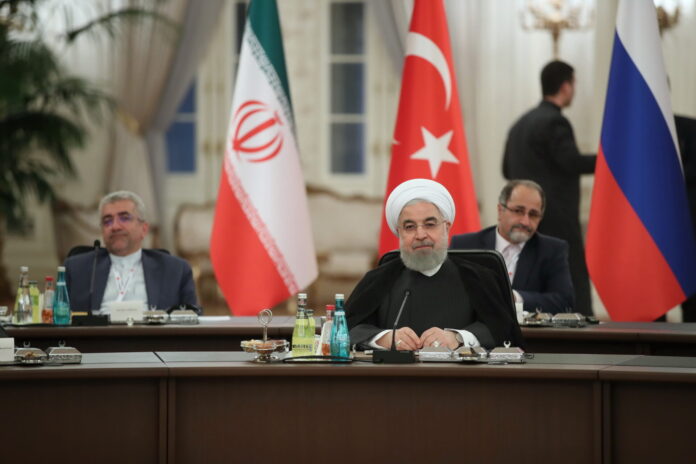
Hassan Rouhani - President of the Islamic Republic of Iran

The Iranian president on Monday introduced Mohsen Haji-Mirzaei as his pick for the Ministry of Education, and Ali-Asghar Mounesan for the newly-established Ministry of Cultural Heritage, Handicrafts, and Tourism.

Former Iranian Minister of Education Seyyed Mohammad Bat’haei had earlier resigned in June, allegedly for running in parliamentary elections.

The other ministerial pick, if elected by lawmakers, will be tasked with establishing the new Ministry of Cultural Heritage, Handicrafts, and Tourism, which is to replace an organization with the same name, currently headed by Mounesan.

The plan for establishing the ministry was ratified by the Parliament and approved by the Guardian Council earlier this year, and now Rouhani has to establish it as soon as possible.

The change is expected to further enhance and boost the tourism industry, and increase employment and investment opportunities in this field.