Wednesday, December 31, 2025
Home Blog Page 3085

Several Iranian Companies to Attend China’s Hi-Tech Fair

The team would be headed by Sorena Sattari, the Iranian vice-president for science and technology. A group of executives from knowledge-based companies would also accompany him in this trip.

The visit is aimed at marketing and exporting “Iran-made” knowledge-based products abroad.

Visiting the China High Technology Fair (CHTF) is one of the most important plans of the delegation, an advisor to Sattari said.

“It is the largest and most influential science and technology exhibition in various fields such as the new generation of information technology, new fuel and energy electronic systems, biotechnology, and environmental protection.”

The presence of Iranian knowledge-based companies in this prestigious international exhibition is an effective contribution to introduce Iranian products and capabilities to the world, which can have a global market.

Attending B2B meetings with Chinese companies in Shanghai and Shenzhen, visiting Suzhou Industrial Park, setting up an Iranian national pavilion, and visiting China’s Advanced Technology Fair are among the programs scheduled for this trip.

The exhibition is hosted annually by the ministries and government commissions of China and the city of Shenzhen. After years of advancement the exhibition has turned into one of the most important technology events in the world. It plays an important role in promoting scientific, economic and technological cooperation between different countries around the world.

IRGC Chief Says Enemy’s Retreat Sign of Iran’s Victory

“The enemy is retreating and leaving the ground while the Islamic Revolution is advancing. This is a sign for victory,” Major General Hossein Salami said at a conference on the role of media in Tehran Sunday.

The enemy, he added, possesses a “spider net” of media that “seems sophisticated but is actually very flimsy.”

“The enemies tell lies and commit oppression, but whoever other than you would transmit to the world the voices of the oppressed Palestinian and Yemeni children from beneath the rubbles?” Salami told representatives of the Iranian media.

The media could echo the voices of the oppressed, he said, noting that although the media war is “unequal,” those telling the truth will emerge the winner.

“The physical power is not important. The philosophy behind the power is what needs to be recognized. Look at the American philosophy; it is elegant outwardly but it is totally oppressive in concept and content,” he said.

“Today, they themselves confess that they have reached the point where the more they advance, the more they go downwards. Lack of strategy is the beginning of a gradual death and this is what has happened in the US.”

However, Salami said, the Iranian media’s philosophy is “defending the oppressed and putting ourselves in trouble to save the lives of others. This philosophy will definitely emerge victorious.”

The event also featured honoring Press TV news anchor Marzieh Hashemi, who was jailed in the US without charge for two weeks in January and later freed amid a public outcry.

Abdol-Ali Ali-Asgari, the head of the Islamic Republic of Iran Broadcasting (IRIB), said the Islamic Republic has today turned into a great and uncontested power.

He stressed that the enemy’s policies in the region have reached a deadlock and that the United States is in decline.

Azarbaijan Cycling Tour Underway in Northwestern Iran

The representative of International Cycling Union in this round of competitions has come to Tabriz. 36,000 euros has been allocated for the awards of this tournament; an amount dropped by $14,000 from last year.

Iran and Malaysia have respectively sent four and two teams to the Cycling Tour; Russia, Kazakhstan, Bahrain, South Africa, Hong Kong, China, Belarus, Turkey and Belgium also each have one team in the contest.

The tour’s first round began at 9 am on Wednesday, October 2, in Tabriz’s El Goli historic garden, with pedallists crossing the 148-km road of Tabriz-Aras Free Zone and finishing in front of the Imperial Jolfa Hotel on the city’s church Road.

In the second round, the cyclists pedalled along the 180-km road of Aras Free Zone to Khoy to reach the finish line in Khoy’s Mellat Park. They then pedalled the 163-km route from Urmia to Tabriz in the third round.

The cyclists took the 198-km route from Tabriz to Sarein in the fourth round on October 5, which finished in front of Iranian Water Treatment Complex.

The tournament will end with the cyclists pedalling the 188-km road of Sarein-Tabriz and finishing in front of Tabriz Laleh Park.

What follows are photos of the event retrieved from various sources:

Iran Develops Nanoparticle to Remove Microbial, Chemical Contaminants

The new nanoparticle, which has a silver core and iron cladding, has special properties and can remove chemical and microbial contamination from the environment simultaneously.

The Iranian researchers have managed to develop the nanoparticle through biological synthesis and use them for wastewater treatment.

“Providing New and Facilitated Methods in Designing and Manufacturing Nanostructures” is the title of this project carried out by researchers at the Shiraz University of Medical Sciences.

It has been sponsored by the scientific research fund of Iran’s Vice-Presidency for Science and Technology.

Nanotechnology is one of the most pristine fields of modern science. Nanotechnology is paving the way to solve problems through nanostructures production.

Nanostructures are used in various industries for their special physio-chemical properties, and have been able to remove many barriers in the industry.

However, one problem in producing them is the use of chemical and physical methods that, in addition to the high cost, brings toxins into nature. So researchers are looking to replace biological methods with these old methods.

Achieving nanostructured manufacturing technology could significantly increase the country’s ability to produce nanotechnology-based products.

For a brief review of Iran’s achievements in various fields of science and technology, check the book “Science and Technology in Iran: A Brief Review – 2019

Anyhow, prior to conducting any applied research in the field of nanotechnology or nanotechnology-based product development, the required nanostructures must be obtained in an economically feasible way. Therefore, acquiring the knowledge of nanostructures is the basis for the expansion of the country’s nanotechnology knowledge and growth in this field.

Considering the increasing interest in using nanotechnology in new products, it is anticipated that the knowledge of nanostructures on an industrial scale will in the future acquire a substantial proportion of patents.

Mazandaran Named Tourism Capital of ECO Countries in 2022

Bam-e Sabz Hotel of Ramsar in Iran's Mazandaran province

A tourism official said the move followed a proposal by the provincial tourism authority.

“The proposal for Mazandaran to be the tourism capital of ECO member states was presented to the then head of the country’s Tourism Organization by the Tourism Department as well as Governor General’s Office of Mazandaran Province around 6 months ago,” said Seifollah Farzaneh, the director general of the provincial Cultural Heritage, Handicrafts and Tourism Department.

He said choosing Mazandaran as the hub of tourism is a major development in the province’s tourism industry.

According to the official, Mazandaran’s potential and actual tourist attractions as well as its pleasant climate can contribute to absorbing more visitors.

He said ECO countries not only share political-geographical boundaries, but have common cultures as well.

The Economic Cooperation Organization or ECO is an Asian political and economic intergovernmental organization which was founded in 1985 in Tehran by the leaders of Iran, Pakistan, and Turkey.

It provides a platform to discuss ways to improve development and promote trade and investment opportunities.

The ECO is an ad hoc organisation under the United Nations Charter. The objective is to establish a single market for goods and services, much like the European Union.

The ECO’s secretariat and cultural department are located in Iran, its economic bureau is in Turkey and its scientific bureau is situated in Pakistan.

Iran’s Petropars to Develop South Pars 11 Alone after CNPC’s Pullout

In 2015, National Iranian Oil Company (NIOC) signed a contract with a consortium of Total, CNPC International and Petropars to develop the offshore project in Persian Gulf waters.

Following US’s withdrawal from the Iran nuclear deal back in May 2018 and imposition of new sanctions and restrictions for foreign companies working in Iran, Total pulled out of the contract.

On Sunday, Zangeneh told reporters that CNPC International had also exited the project, meaning that Petropars would deal with the project alone.

“The fate of the South Pars Phase 11 has been determined and Petropars will continue developing the project alone and by the end of the this [Iranian calendar] year (by March 20, 2020), the first jacket will be installed in the phase for a platform with 500 mcf/d of gas production capacity,” Zangeneh said during a visit to MAPNA Group’s turbine workshop near Tehran.

He further said that the issues concerning the pressure booster platform in the project would depend on the ongoing talks between MAPNA and other companies, SHANA reported.

Asked why the project was not initially awarded to Petropars Co., Zangeneh said: “We had intended to attract foreign capital for developing the project, besides the fact that the pressure booster platform was very important for us and Petropars was supposed to learn from other companies in the consortium.”

Asked whether CNPC International had pulled out of the project, he said, “Yes. It is no longer in the project.”

Iran Suing US for Cyber Attacks: Security Official

In an interview with Tasnim, Brigadier General Gholam Reza Jalali said the US has made cyber threats and launched cyber attacks against Iran several times.

The US is held legally accountable for the anti-Iran moves, the general said, adding that the country’s judicial bodies and the Ministry of Foreign Affairs were seriously pursuing those cases.

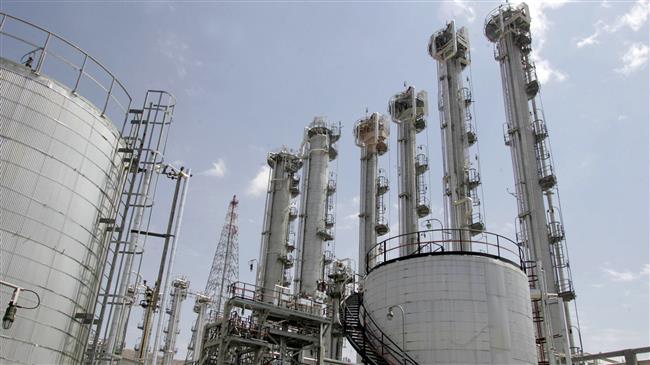
Jalali also highlighted the preparatory work his organization has done to boost Iran’s cyber defense capabilities, saying more than 120 drills have been held over the past 6 months, with around 70 percent of which exercising tactics to counter cyber attacks against the energy sector, including oil refineries, petrochemical plants, and gas and petroleum transport installations.
In comments in May, Jalali said Iran has become the top power in the region in terms of cyber security.

In 2018, Iran’s Civil Defense Organization made a series of arrangements to counter the US hostile strategies and its potential move to block Iran’s access to the Internet.

Iran launched the first phase of its national data network in 2016 after a gap of eleven years.

The national network offers a new internet system with higher security which officials say would be up to 60 times faster than the best speeds currently available. It is also designed to be more secure to potential cyberattacks.

Iran Set to Further Cut Commitments under 2015 Nuclear Deal

Iran to Scale Back JCPOA Commitments ‘Step by Step’

Deputy Director of the Atomic Energy Organization of Iran (AEOI) Behrouz Kamalvandi said “next steps are in the offing if the other parties fail to take action.”

He recalled that Iran’s reduction of its obligations under the Iran nuclear deal, officially known as the Joint Comprehensive Plan of Action (JCPOA), was in response to the United States’ illegal withdrawal from the agreement and aimed at “striking a balance between the rights and obligations” of the signatories.

Speaking at a ceremony in Tehran, Kamalvandi highlighted Iran-Europe cooperation with a focus on nuclear safety and relevant projects. He also referred to the holding of three high-level Iran-EU seminars.

“Despite all problems and predicaments, cooperation continues in a bid to improve cooperation and exchange information in line with the implementation of projects related to the third annex to the JCPOA,” he noted.

He also said holding specialized and legal courses will be a turning point.

“Holding such courses is of great significance as such a move is in keeping with the exchange of relevant legal information, especially with regards to the issue resolving the problem of disarmament,” he said.

Iran Plans to Send Astronauts to Space, Launch High-Resolution Imaging Satellite

Addressing a Saturday conference on World Space Week, held in Tehran, Minister of Communications and Information Technology Mohammad Javad Azari Jahromi said efforts are underway to send Iranian astronauts to space in cooperation with the other countries, “whether US President Donald Trump likes it or not”.

He also noted that an Iranian imaging satellite capable of taking images with a resolution of one metre will be put into orbit by 2021.

For a brief review of Iran’s achievements in various fields of science and technology, check the book “Science and Technology in Iran: A Brief Review – 2019

Highlighting the importance of the space industry in the contemporary era, the minister said Iranian start-ups in the space industry have made great advances under the auspices of the Iranian Space Agency.

Azari Jahromi said his ministry managed to carry out a detailed assessment of damages from the last spring’s floods across Iran with space technology and to save a lot of costs.

The young minister finally noted that Iran’s progress in the space industry has been so unbearable for the US that it imposed sanctions on three Iranian space centres on a single night, which are engaged in civilian and peaceful activities.

Last month, the Trump administration announced the first-ever sanctions against the Iranian Space Agency.

US Secretary of State Mike Pompeo has said the sanctions target both the space agency and two of its research institutions.
Curfew in Baghdad Lifted as Life Returns to Normal after Unrest

Reuters reported on Saturday that traffic ran as usual in Baghdad, with streets and main squares being otherwise quite.

Iraqi Prime Minister Adil Abdul-Mahdi had announced the curfew on Thursday.

The country’s National Security Council had issued a statement on Thursday saying that the measure was required to “protect citizens and public and private properties”.

Affirming the demonstrators’ “right to protest”, the council condemned “acts of vandalism that accompanied the protests.”

The curfew came after several days of Iraqi protests against mismanagement and corruption, with certain elements turning to acts of violence.

A number of protesters and security personnel have been killed as a result of the provocations.
On Friday, Iraqi police said in a statement that “unidentified snipers” killed two security forces and two civilians across the capital Baghdad earlier in the day.

Washington’s plan

Arab media outlets and observes have published reports revealing that the US seeks to drive recent anti-corruption protests in Iraq into chaos in a bid to install a pro-US regime.

“Despite the legitimate demands of the Iraqi people in fighting corruption”, recent developments in Iraq have been a “manifestation of an American plot to abuse such grievances,” the Lebanese Arabic-language daily newspaper al-Akhbar reported.

The paper added that Iraqi security officials have uncovered a plan that seeks to provoke major clashes between Iraqi protesters and security forces.
The clashes, hyped with provocative media coverage, are meant to produce a major security vacuum that can set the stage for the emergence of a US-affiliated Iraqi military commander who can take on the leadership role of a “savior government”.

The plan will seek to ultimately strengthen US control over the country.

The report, however, added that the Iraqi government was well aware of the plan and had adopted several policies to counter it.

Security sources speaking to al-Akhbar earlier this year had said that 2019 would be a tense year for the “people of Iraq”.

Writing for the Arabic-language al-Ahd news website, Ali Matar, an analyst in Arab political affairs, said that Washington sought to create insecurity in the country so that Iraq would remain “hostage” to the US in a bit to exploit its resources.

Matar added that Washington sought to revive ISIS Takfiri terror cells and sabotage the protests.

The Arab analyst said that Washington had always sought to undermine Iraq when it was close to attaining certain points of political and economic breakthrough.

Matar highlighted that the tensions came shortly after the Abdul-Mahdi government reopened the country’s Al-Qa’im crossing with Syria and accused Israel of orchestrating a string of recent drone strikes on Iraqi popular mobilization forces.

Abdul-Mahdi had also entered talks with Beijing and Moscow in a bid to acquire air defenses against the attacks, he noted.

The US seeks to “get revenge” from Abdul-Mahdi’s government, he added.

Seyyed Reza Sadr-alhoseini, an Iranian Middle East analyst, also echoed Matar’s analysis.

“The American’s thought that Baghdad would be more cooperative with them. However, the policies of Abdul-Mahdi, the Iraqi parliament and its president did not allow Washington to achieve its goals,” he said.

Hossien Sheikholeslam, another political analyst, highlighted that Iraq’s current troubles are largely rooted in the “corrupt system set up by the Americans in the country following the overthrow of Saddam”.

Sheikholeslam added that current tensions in the country were a product of American plans seeking to weaken “the Resistance”, an alliance that has gradually formed in the region in a bid to counter foreign-backed intervention in the Middle East.