Monday, December 22, 2025
Home Blog Page 3046

Guarantors of Astana Process Issue Communique after Geneva Talks

Guarantors of Astana Process Issue Communique after Geneva Talks

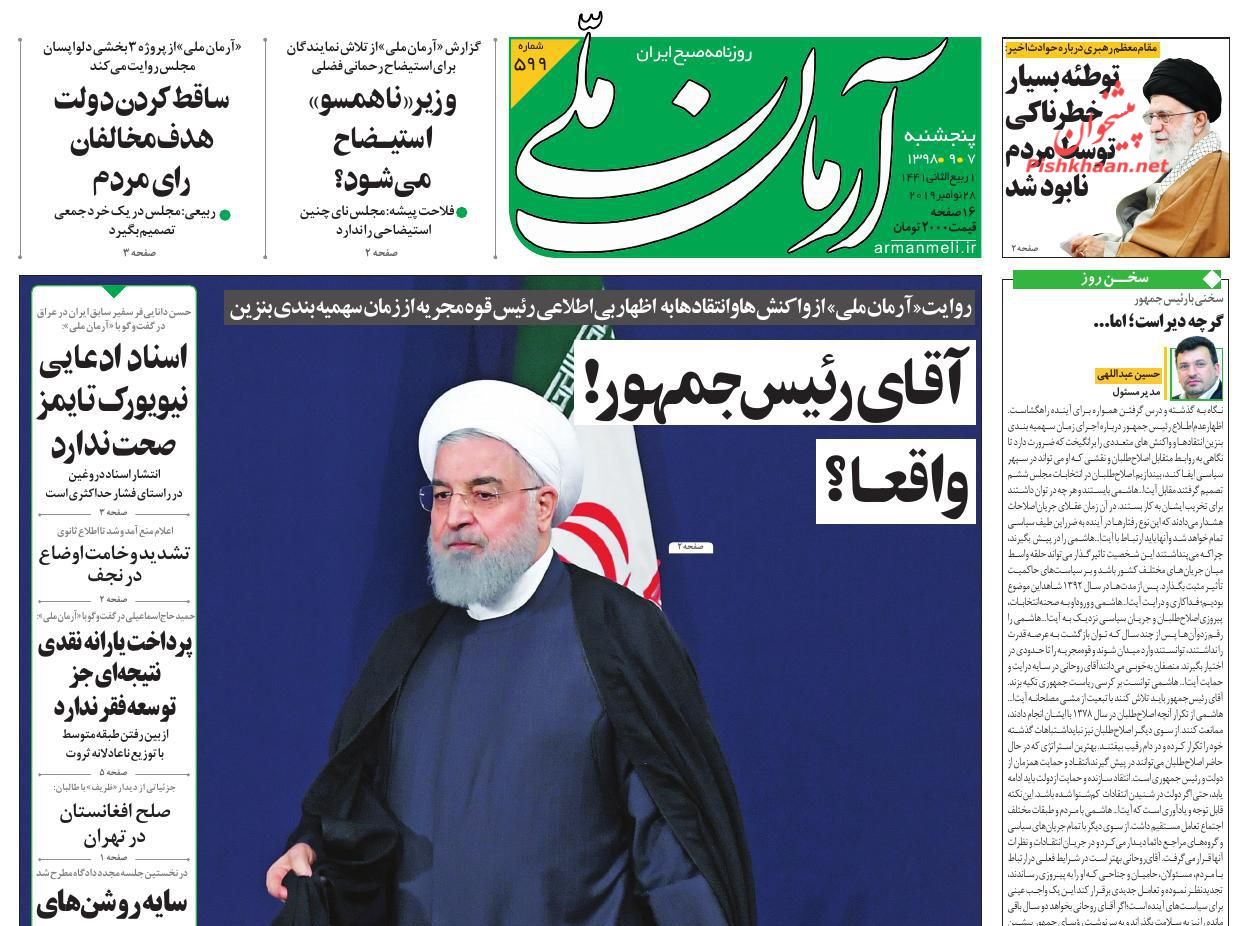
The statement was released at the end of a trilateral meeting and consultations with the UN Secretary-General’s Special Envoy for Syria Mr. Geir O. Pedersen in Geneva on 29 October 2019.

In the statement, the Ministers:
  1. Reaffirmed the strong commitment of the Astana guarantors to the sovereignty, independence, unity and territorial integrity of the Syrian Arab Republic and emphasized that these principles should be respected by all sides. They reiterated their strong determination to combat terrorism in all forms and manifestations and to disrupt separatist agendas in the Syrian territory;
  2. Welcomed the formation the Constitutional Committee and its convening in Geneva on 30 October 2019 as a result of the decisive contribution of the Astana guarantors and the implementation of the decisions of the Syrian National Dialogue Congress in Sochi and appreciated in this regard the efforts of the UN Secretary‑General’s Special Envoy for Syria;
  3. Expressed their conviction that the launch of the Constitutional Committee proves that there could be no military solution to the Syrian conflict and reaffirmed their commitment to advance viable and lasting Syrian-led and Syrian‑owned, UN‑facilitated political process in line with the UN Security Council resolution 2254;
  4. Reaffirmed their determination to support the work of the Constitutional Committee through continuous interaction with the Syrian parties and the UN Secretary-General’s Special Envoy for Syria in order to ensure its sustainable and effective work;
  5. Expressed their view that the work of the Constitutional Committee should be governed by a sense of compromise and constructive engagement without foreign interference and externally imposed timelines aimed at reaching general agreement of its members that would enable the outcome to receive the widest possible support by the Syrian people;
  6. Stressed the importance of the broader settlement process moving forward to increase humanitarian assistance to all Syrians throughout the country without preconditions and discrimination, to facilitate safe and voluntary return of refugees and internally displaced persons (IDPs) to their original places of residence in Syria as well as to build confidence and trust between the Syrian parties.

Kish Island Great Choice for Family Vacations in Autumn

Kish Island Great Choice for Family Vacations in Autumn

The Italian head coach of Iran’s popular football team Esteghlal travelled to Kish Island earlier this month along with his family to enjoy his time and take a rest.

Andrea Stramaccioni says he did not know there exists such a beautiful island in Iran. “With the support of Esteghlal Club, my family and I spent our vacation in a well-equipped hotel in Kish.”

Kish Island Great Choice for Family Vacations in Autumn“When I arrived in Kish I was really taken aback as we were at a magnificent hotel on a beautiful island,” he said. “Luckily we were received warmly and I am very happy to come to this island with my family on a holiday in Iran.”

“I’m in Kish to see the beauties of Iran. It is very significant to me to spend time with my family when I am not working. I thank the officials of Esteghlal Club for providing this opportunity. Kish is exactly where I should have been on holidays, and I hope to experience it again in the future.”

The wide, palm tree-lined boulevards that circle the island of 100 square kilometres attract any tourist, especially during the autumn season when the weather is very pleasant. If you are energetic, walking is one of the best activities on this island, which is often called the Pearl of the Persian Gulf.

The Kish coastline is one of the least dangerous coasts in the world. Kish has gorgeous white sandy beaches for relaxing walks. The number of Kish visitors has leapt from 2.2 million a year in 2009 to 5.2 million in 2015, and an even bigger increase is expected.

New Vaccine Made in Iran to Save Rainbow Trout

New Vaccine Made in Iran to Save Rainbow Trout (2)

The Infectious Hematopoietic Necrosis virus (IHN) vaccine has been developed for the first time in the country with the support of Vice-Presidency for Science and Technology at the Institute of Biotechnology of Isfahan University of Technology to prevent one of the most important viral diseases of the rainbow trout.

According to the research deputy of the Institute of Biotechnology of Isfahan University of Technology, “IHN is one of the most important viral diseases of rainbow trout that has caused severe damage to cultivation centres in recent years along with other viral diseases.”

“This vaccine, produced under standard laboratory conditions, has been able to demonstrate the efficacy and strength of very effective exposure to IHNV in trout, and is in the process of obtaining the necessary marketing authorisation,” he added.

Production of this vaccine could be an important step in the production of other similar vaccines and will allow the development of other biotechnology fields in the country.

The rainbow trout is a species of fish whose consumption has increased in the global market in recent years. This type of fish, after the common carp, is the main species of farmed fish.

New Vaccine Made in Iran to Save Rainbow TroutThe cultivation of rainbow trout has been booming since several years ago in Iran. Breeding this fish has become widespread in the country, and it is now one of the strategic species of rainbow trout cultivated in the country.

The reason for the development of such species of fish compared to other ones is their adaptation to captivity, good resistance to fluctuations and adverse environmental factors, proper growth, adaptability to handmade food, and the market request for them.

Iran has won the first place for producing rainbow trout in the freshwater in the world. Iran’s top ranking is an advantage that sometimes faces problems. One of these problems is the disease that causes these fish to die. Infectious Hematopoietic Necrosis is one of them.

Iran Says Ready for Talks with US on Nuclear Program

Mohammad Javad Zarif says Iran is not afraid of deals or meetings, but it will not take part in discussions that do not take into account the Iranian interests. 

He further noted that the Islamic Republic will not accept a zero-sum game approach to solve a worsening crisis following the US withdrawal from the 2015 nuclear deal. 

Zarif said Washington sanctions against the Islamic Republic have failed and that Washington’s policy to exclude Iran from regional arrangements will not work. 

He also described as “unacceptable” Saudi Arabia’s efforts to isolate Iran, Turkey and Qatar from regional security equations. Instead, he called on all regional players to come together.

The top Iranian diplomat stressed Tehran’s own initiative to resolve regional crises. He referred to Iran’s initiative dubbed the Hormuz Peace Endeavour, or HOPE, for regional cooperation between the Persian Gulf states, including Iran, stressing that it is a plan to resolve energy, security and political differences.

The Iranian foreign minister made the comments on the sidelines of the regional meeting of the Munich Security Conference in the Qatari capital, Doha.

Iran Urges Unity, Rapport in Lebanon after PM Hariri Quits

Iran Condemns Expansion of EU, US Sanctions on Syria

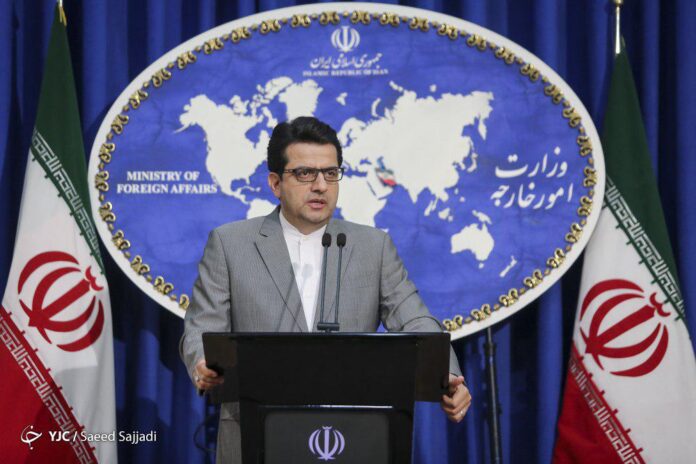
In a statement a few hours after Hariri’s resignation, Spokesperson for the Ministry of Foreign Affairs of the Islamic Republic of Iran Seyyed Abbas Mousavi said, “We hope the Lebanese nation and government would successfully get through such serious and sensitive juncture with rapport.”

He also stressed the need for stability and constancy of the friendly and brotherly country, Lebanon, adding, “The Islamic Republic of Iran emphasizes the need for the solidarity, unity and rapport among all Lebanese clans, parties and characters in order to maintain the country’s stability and security and to respond to the legitimate demands of the Lebanese people at a calm atmosphere.”

Hariri turned in his resignation to Lebanon’s President Michel Aoun on Tuesday, satisfying one of the main demands of the country’s protest movement.

The resignation came against a backdrop of 13 days of mass protests demanding the departure of the country’s entire political elite amid growing anger over official corruption, poor public services and years of economic mismanagement.

“We have reached a deadlock and we need a shock in order to brave through the crisis,” Hariri said in a televised statement from Beirut.

Zarif Goes to Geneva for Syria Peace Talks

Foreign Minister Zarif arrived in the Swiss city of Geneva on Tuesday evening to take part in a meeting of foreign ministers of member states of the Astana Process.

The top Iranian diplomat is going to attend a trilateral meeting with his Russian and Turkish counterparts and to hold a meeting with the United Nations Secretary-General’s Special Envoy for Syria Geir O. Pedersen on Tuesday night.

The meeting of foreign ministers of the three member states of the Astana Process is coinciding with the inaugural meeting of the Syrian Constitutional Committee.

According to the Foreign Ministry, the formation of the Syrian Constitutional Committee is the outcome of constant efforts by the Islamic Republic of Iran and the other partners within the framework of the Astana Process.

Announcing the plan for discussions with Iran’s Foreign Minister Zarif, Turkey’s Mevlut Cavusoglu, and Russia’s Sergei Lavrov, Pedersen said on Monday that the fighting in northeast Syria and Idlib province was “just another proof of the importance to get a serious political process under way”.

The meeting of Syria’s Constitutional Committee will begin with a plenary session involving 50 delegates each from three blocs – Syrian President Bashar al-Assad’s administration, the Turkish-backed political opposition movement and civil society representatives.

Ancient Illustrations Celebrating Prophet Muhammad’s Life

Ancient Illustration Celebrating Prophet Muhammad’s Life

Prophet Muhammad is a figures much under the spotlight in the Iranian art and literature. Many ancient illustrations, therefore, show concepts such as the prophet’s participation in past wars, his contribution to victories by Muslims, his birth and his Ascension in different ways.

Nevertheless, it is not only Iranian Muslims that have drawn different images related to the prophet. Muslims in other countries, too, have, for centuries, illustrated stories associated with Prophet Muhammad in different books and created illustrative religious works marked by specific features of their countries.

What follows are examples for depiction of Prophet Muhammad’s different stages of life in ancient illustrations:
Prophet Muhammad in Historical Paintings

The Prophet’s Birth:

A tableau depicting the birth of Prophet Muhammad from the book Siyar-i Nabî, which is a Turkish epic about the prophet’s life. The creation of the book began at the time of the rule of Murad III, the Sultan of the Ottoman Empire from 1574 until his death in 1595, and ended when his successor came to power. The book’s purpose was to be the most complete collection of Prophet Muhammad’s life’s ancient illustrations. The book comes in several volumes, which are kept at the Topkapi Palace Museum in the Turkish city of Istanbul, the Museum of the City of New York and the Museum of Turkish and Islamic Arts in Istanbul.

Prophet Muhammad in Historical Paintings

Conversation with Saints and Angels:

An image depicting the conversation between Prophet Muhammad, Moses and Gabriel exists at the Islamic Arts Section of the Pergamon Museum in the German city of Berlin. This work of art dates back to the late 16th. The illustration probably dates back to the reign of Murad III. The image was made using ink, gouache and goldwork. The sheet is part of a handwritten manuscript depicting prophets Muhammad and Moses and Gabriel talking together in Paradise.

Prophet Muhammad in Historical PaintingsProphet Muhammad is meeting prophets Ishmael, Isaac and Lot in Paradise. It belongs to a book written in Afghanistan’s Herat in 1436 and kept at a museum in Paris.

Ancient Illustrations Depicts Prophet Muhammad Preaching

Preaching:

The tableau shows Prophet Muhammad preaching. It is part of an illustrated, handwritten book dating back to the late 16th century, in Turkey or Iraq. This work was made using ink, matte watercolor and gold on paper. The image shows the prophet preaching, with Imam Ali, Imam Hassan and Imam Hussein sitting on his left side. The Metropolitan Museum of Art is keeping this work of art.

Ancient Illustration Celebrating Prophet Muhammad’s Ascention

Ascension:

The tableau depicts the Ascension of Prophet Muhammad riding on the Burāq. This is an image in a page of a version of Iranian poet Saadi’s Boostan book dating back to 1514.

Ancient Illustration Depicting Prophet Muhammad

Revelation:

The image depicts the revelation of first divine statements to Prophet Muhammad; where God Almighty’s appoints him as Prophet. The illustration belongs to a book called The Collection of Histories dating back to around 1425. It probably originates in Herat, Afghanistan. The work of art is drawn with watercolour, silver and gold on matte paper. The tableau depicts Gabriel telling Prophet Muhammad the first divine revelations which later turned into Muslims’ holy book, the Quran.

Foreign Ministry Urges Iranians to Delay Trips to Iraq amid Violence

In a statement, the ministry touched upon the recent outbreak of violence in Iraq, and urged Iranian nationals, especially pilgrims heading to visit holy shrines, to delay their trips until further notice.

The announcement comes as Iraq has been the scene of violence in recent days.

Thousands of people have staged anti-government protests to vent their anger over corruption and less-than-optimal living conditions.

The protests turned deadly as armed elements opened fire on both protesters and security guards. Iraqi security agents have so far arrested a few gunmen and the country’s elite Counter-Terrorism Force has been deployed to the streets to prevent damage to sensitive centres.

So far, dozens of Iraqis have been killed and hundreds more wounded in the second bout of unrest targeting PM Adel Abdul-Mahdi’s government.

More than 150 people, including security forces, were killed when the protests first erupted earlier this month.

Iraq’s most prominent Shia cleric Grand Ayatollah Ali al-Sistani has also called on Baghdad to probe the deaths in the previous round of unrest and address people’s demands.

Riyadh Afraid to Start Talks with Tehran: Analyst

Morteza Mousavi Khalkhali, an expert on Arab world issues, has weighed in on the reasons why Tehran and Riyadh have not started talks yet. In an interview with the Iranian Labour News Agency (ILNA), the analyst elaborated on the role of regional challenges in that regard.

“Unfortunately, the period of crisis in our relations with Saudi Arabia has become too long, and if this tension and a lack of relationship between the two key regional countries continues, it will definitely be detrimental to Riyadh because Saudi Arabia is a dependent country which has no democracy, parties, free newspapers and a parliament,” said the analyst.

“Moreover, Saudi Arabia has not taken a lesson from history and has got involved in a war which even Gamal Abdel Nasser, the then leader of one of the most powerful countries in the Middle East, could not win some 20 years ago,” he added.

“Egypt, which had stepped into this arena in a bid to bring about reforms in Yemen, pulled out of it after a year after 30 thousand Egyptian soldiers were killed,” added the commentator.

He said Saudi Arabia has not taken a lesson from the past and has inflicted a lot of damage on impoverished Yemen during this conflict which has taken almost 5 years.

“Riyadh has killed many innocent people and destroyed vital centres,” he said.

Still, he added, Saudi Arabia has not officially announced its readiness to help establish peace and official declare an end to the war.

“Saudi Arabia is facing problems in Yemen; still, it created the ISIS in Iraq in order to topple the Baghdad government, but Iran came to Iraq’s help,” the commentator noted.

“If Iran hadn’t helped Iraq, the Iraqi government would have been ousted. However, both the ISIS was destroyed in this country and Saudi Arabia pulled out of Iraq,” said the analyst.

He said Riyadh even failed in Syria.

“And now, it is Lebanon’s turn as Saudi Arabia seeks to secure its interests there,” he added.

“Also, Saudi Arabia and the United Arab Emirates made every effort to get Iran involved in a war with the United States, but to no avail,” said the commentator.

“We see that Saudi Arabia has involved itself in proxy wars at the regional and international levels and has taken many countries on board, but failed to achieve any results,” he said.

“Saudi Arabia was under pressure on all sides, and is afraid to enter into talks with Iran lest it will be put in position of weakness,” the analyst noted.

“Iran has, over the past years, announced its readiness, time and again, for talks with Saudi Arabia to ease tensions with Riyadh, but Riyadh is in a position of weakness and is not prepared to ease tensions,” he said.

“Saudi Arabia is looking for a ray of hope in or der to score a point and victory in the region, so that it will not be seen as a weak country when talking to Iran,” the analyst noted.

“On the other hand, Saudi Arabia is proud of being supported by the United States and is not in a hurry to establish friendship with Iran and restore cordial ties,” he added.

“The Al-Saud dynasty has ruled this vast territory for 80 years; the current group is the most incompetent of all,” he said.

“Today, the Saudi crown prince has lost enough credibility for being notorious, committing a crime and ordering the murder of Khashoggi,” he said.

“Meantime, Pakistan is one of the regional countries that have gone into action after the mediation of Oman, Iraq, Japan and other countries because it is harmed by Iranian-Saudi divisions,” he said.

Opiozi; A Traditional Dish from Southern Iran

This food is prepared very quickly and is the best option if you have little time to cook.

After a few minutes a hot, delicious meal is ready. Walnut, sugar, turmeric, pomegranate paste, onions, eggs, salt, pepper, and dried bread are used to make this dish.

Ingredients:

Oil: 3-4 tbsp

Onions: 2 medium-sized

Pomegranate paste: 1 cup

Pepper, salt, turmeric: As much as needed

Water: 2 cups

Directions:

Chop onions and fry. Add the pepper, turmeric, spices and salt and sauté more. Pour the water and after a few minutes of boiling, add the pomegranate paste. After some minutes the food is ready, pour the stew on the dried bread and eat it after mixing.

Opiozi; A Traditional Dish from Southern Iran