Monday, December 22, 2025
Home Blog Page 3039

‘Dress Code, Alcohol Ban Not Keeping Tourists from Visiting Iran’

The remarks were made by Mohammad Beheshti, who served for many years as head of Iran’s Cultural Heritage and Tourism Organisation and head of the Farabi Cinema Organisation, but stepped down from public and executive posts last year following the enactment of the Pensioners Act.

In an interview with IRNA and in response to a question about the number of tourists that we expect in the country, he said despite many legal and religious restrictions, the Islamic Republic has more capacities to attract tourists.

“Hijab and ban on alcohol in Iran does not prevent tourists from entering Iran,” he noted.

‘Dress Code, Alcohol Ban Not Keeping Tourists from Visiting Iran’“We have two stances on tourism; that of the opponents and the supporters. Both agree that tourism is an entertaining industry, but Iran is not attractive in terms of entertaining industry at all, and travellers must know about it.”

However, he added, statistics show people do not go to a country to be entertained. For example, they do not go to Paris to visit the nightclubs; they go there to visit the Louvre. The growth of cultural tourism has been remarkable in recent years and Iran is very attractive to this group of tourists.

“As a result, foreign tourists come to Iran to visit the country’s unique features,” underlined Beheshti.

Iranians Know How to Win Hearts!

“Many tourists have visited many parts of the world and have not travelled to Iran for four decades, due to negative propaganda. Many governments prevent their people from travelling to Iran. Nevertheless, tourists are coming to Iran every day. This means that Iran has a large capacity to attract tourists and it is natural that many people will come to Iran if things get better.”

“Of course, one of the conditions is the distribution of facilities throughout the country, and secondly, we must understand what tourists are coming to Iran for. They come to see our unique features. Foreign tourists in Iran are not looking for shopping and entertainments like Dubai. Those who have hosted foreign tourists for decades believe that these tourists generally leave Iran in surprise. Why? Ironically, what we do causes them to complain, so what causes them to wonder? Foreign tourists are visiting Iran with the motivation that we didn’t plan for. They come for the things that are unique to Iran and Iranians; tourists come to Iran to experience the Iranians’ hospitality,” pointed out Beheshti.

‘Dress Code, Alcohol Ban Not Keeping Tourists from Visiting Iran’“It is important for the Iranian people to know how the guest assesses his/her stay at their home, and this is a unique characteristic of Iranians that you cannot find anywhere else. Outside Iran, for example, hotel staffs are only obliged to provide services while they are on duty, rather than being a host. However, Iranians do not miss a second to serve their guests. That’s why the foreigners are fascinated by all the Iranian tribes including Kurds, Lurs, Mazandaranis, Sistanis and Baluch people.”

Beheshti added that if Iranians recognise their unique attributes and values, then nothing can prevent tourists from visiting Iran.

“But as we look around, some Iranian hosts are familiar with these features and they offer a good description of Iran to travellers. There are people who started this procedure before the revolution and continue to do so. Even the revolution and the war did not stop them,” highlighted Beheshti.

He finally concluded that it is wrong to say tourism is just important for increasing income.

“The benefit of tourism for our country goes far beyond the economic benefit and can guarantee our security and authority in the world. Our current problem in the world is the propaganda against Iran during the past forty years. From the perspective of foreign tourists, our land is like the land of criminals. However, the visit of tourists can erode this image which is a wrong one,” reiterated Beheshti.

Massive Anti-US Rallies Held in Iran on Anniv. of Embassy Takeover

Massive Anti-US Rallies Held in Iran on Anniv. of Embassy Takeover
During the anti-US rallies held in Tehran on Nov. 4, 2019, there was a hypothetical prison with US President Donald Trump and Saudi Crown Prince Mohammed bin Salman in jail. There was also a hypothetical court trial beside the prison, where people were asked why they think these people are in jail. / Photo by ISNA

Iranian people, mostly school and university students, staged demonstrations on Monday morning all over the country to express their opposition to the arrogant policies and attitudes of the enemies, particularly the US.

The demonstrations are annually held on the anniversary of the seizure of the US embassy in Tehran, which was later known as the ‘den of espionage’.

On November 4, 1979, and in less than a year after the victory of the Islamic Revolution that toppled a US-backed monarchy, Iranian university students who called themselves “students following the line of (the late) Imam (Khomeini)” seized the US embassy, which they said had become a centre of espionage and was planning to overthrow the newly established Islamic system in Iran.

Massive Anti-US Rallies Held in Iran on Anniv. of Embassy Takeover
Photo of anti-US rallies in Tehran on Nov. 4, 2019 / Photo by ISNA

The students who seized the embassy later published documents proving that the compound was indeed engaged in plans and measures to overthrow the Islamic Republic.

Every year on the 13th day of the Iranian month of Aban (which this year falls on November 4), the Iranian nation, particularly the students, hold rallies across the country to mark the day.

In the capital city of Tehran, the rallies to mark the anniversary of the landmark move are held at the venue of the former US embassy in Taleqani Street.

Iran Says Will Target US Interests Anywhere in Case of War

Iran will target interests of US, allies anywhere in case of war Commander

Brigadier General Abolfazl Shekarchi made the remarks in an exclusive interview with Fars News Agency on Sunday, emphasizing that the power of the Islamic Republic of Iran is not limited to Iran’s geographical borders and is transregional in nature.

Asked about Iran’s reaction in case of an aggression by the United States and its allies, Shekarchi said, “Any place and any territorial point sheltering the interests of the United States and its allies would be threatened [in case of aggression against Iran] and the Islamic Republic of Iran has proved that it is capable of doing this.”

“Even if a country is not directly involved in a possible war [against Iran], but its territory is used by the enemy, we would consider that country hostile territory and treat it like an aggressor,” the top Iranian military official noted.

Iran has repeatedly announced that it has never launched and will never wage a war, he said, adding, “If an aggressor commits a strategic mistake, the aggression will be answered with the highest and toughest force to make them regret [their act of aggression and Iran’s response would be given] over a geographic expanse beyond what the ill-wishers of the Islamic Republic could imagine.”

Shekarchi said the hollow nature of the power of the US and Britain has become clear to the world.

He noted, “Radar equipment, arms and air defense systems, for whose sale the resources of Muslim countries and nations of the region had been plundered, failed their test in a shameful manner in the case of Yemeni forces’ attack on Saudi Arabia’s Aramco and the world came to realize extreme weakness and humiliation [of the Western countries] in this field.”

Chairman of the Chiefs of Staff of the Iranian Armed Forces Major General Mohammad Baqeri on October 22 underscored the Islamic Republic’s deterrent power, warning that enemies will have to pay heavy costs if they carry out any act of aggression against the country.

“The enemy should know that if an act of aggression is launched against the borders of the Islamic homeland, it will face a united nation which follows Leader [of the Islamic Revolution Ayatollah Seyyed Ali Khamenei] and has strong and powerful Armed Forces,” Baqeri said.

Elsewhere in his interview, the Iranian commander emphasized that Yemen’s attack on Saudi Arabia’s Aramco oil processing plants in September brought disgrace on the US and Britain.

On September 14, Yemeni armed forces conducted a large-scale operation against two Aramco installations, knocking out half of Saudi Arabia’s oil production.

The Yemeni Houthi Ansarullah movement took credit for the attacks and stressed that they came in response to the Saudi-led war on their country. However, Riyadh and Washington — the main sponsor of the war on Yemen — pointed the finger at Iran, without providing any evidence.

A report by the Financial Times said in October that Saudi Arabia has lost $2 billion worth of its oil production after Yemen’s retaliatory attacks on the kingdom’s vital energy infrastructure.

The country’s output fell by nearly 1.3mn barrels a day in September, from the previous month, according to data submitted to the Organization of Petroleum Exporting Countries (OPEC) by analysts and consultants, which is used by the cartel to set official production targets.

Iranian Foreign Minister Mohammad Javad Zarif has lashed out at the United States for playing a blame game over the Yemeni drone attacks on Saudi oil facilities, saying this will never stop Yemeni victims from giving a response.

The US “is in denial if it thinks that Yemeni victims of 4.5 yrs of the worst war crimes wouldn’t do all to strike back. Perhaps it’s embarrassed that $100s of blns of its arms didn’t intercept Yemeni fire,” Zarif said in a post on his Twitter account.

Iran Mass-Producing Submarine Missiles: Army Commander

Rear Admiral Hossein Khanzadi said on Sunday that Iran today has achieved the technology to launch missiles from under the sea and all its equipment, including the missile, its capsule, and the submarine are completely made by Iranian experts.

The sea is one of the great capacities that the country has, as it is the cheapest way to transport goods, he added.

The Iranian commander also added that Iran has joint marine borders with 12 neighbouring countries, which means that, Iran shares maritime border with almost 80 percent of its neighbours.

“The sea is the largest source of raw materials and food. A 400,000-tonne ship is equivalent to 20,000 twenty-tonne trucks, which shows that it is impossible to transport oil supplies by road. The Navy commander said that out of nine strategic crossings at sea from which the goods must pass, two crossings are in our country.

He further pointed out that [most of] the world’s energy reserves are located in the Persian Gulf as the region is home to over 60 percent of oil and 45 percent of the world’s natural gas.

Khanzadi stressed that today Iran has the largest fleet after Russia in the Caspian Sea, adding that the Islamic Republic has the largest logistics fleet in the Middle East that with one time of fuelling can travel around the globe once.

“Delegations from Chinese and Russian naval forces are here in Iran today and joint military drills are to be carried out in the near future to show the power of the Islamic Republic,” he underscored.

Iran’s President: US Aware of Futility of Sanctions

rouhani

Speaking at a Sunday session of the cabinet, President Rouhani highlighted Iran’s success to deal with the US plots over the past decades.

“The Americans have now clearly realized that (imposing) sanction in not the path to victory,” the president noted, stressing that Washington’s policy of slapping harsh sanctions on Iran is doomed to failure.

Commemorating the Iranian students on the anniversary of the 1979 takeover of the US embassy in Tehran, President Rouhani said the anniversary has been designated the national day of fight against the global arrogance in order to enlighten the Iranian generations on the long history of resistance and popular struggle against foreign plots.

Different US administrations have tried various methods to harm Iran over the past decades and have interfered in Iran’s internal affairs, the president added, saying such acts of interference became a concern for the Iranian students who followed the teachings of late founder of the Islamic Republic Imam Khomeini, and triggered a reaction from them.

Every year in early November, the Iranian students mark the anniversary of the takeover of the American embassy with anti-US demonstrations.

Former Star of Netherlands, Ajax, Real Madrid, Milan Due in Iran

Seedorf, known as one of the top-notch midfielders of his generation, is expected to arrive in Iran in coming days.

According to Khabar Online, the Dutch player will be visiting Iran at the invitation of one of his friends, and there are no plans related to football in his schedule during the trip.

Barring a change in his flight and schedule, Seedorf will arrive in Tehran on Wednesday noon, local time. He has already received a two-week Tourist-type online visa.

Seedorf, 43, is one of the most highly acclaimed Dutch footballers who played for clubs in the Netherlands, Spain, Italy and Brazil.

He is the first player to have won the Champions League with three different European clubs: AFC Ajax in 1995, Real Madrid CF in 1998, and twice with AC Milan in 2003 and 2007.

Seedorf played for the Netherlands national team in 87 matches.

He signed a four-year deal to take charge of Cameroon in August 2018, but was sacked in July 2019 after the Indomitable Lions failed to defend their Africa Cup of Nations title.

Iran, Armenia Discuss Energy Trade

In a meeting with Armenia’s Minister of Territorial Administration and Infrastructures Suren Papikyan, held on Sunday, Iran’s Oil Minister Bijan Namdar Zangeneh described the energy sector as the most important field in the relations and exchanges between Iran and Armenia.

“Iran’s export of gas to Armenia in exchange for importing electricity (barter trade between Iran and Armenia on gas and power) is part of the mutual cooperation,” Zangeneh said.

Iran and Armenia in 2004 signed a barter deal on trading gas for electricity for 20 years, according to which the Iranian exported gas is consumed by the power plants in Armenia, and Iran in exchange imports electricity from Armenia.

Armenia has started to import gas from Iran since mid-2009.

Lebanon Crisis May Get Worse after Hariri’s Resignation: Expert

Lebanon

Abdolreza Faraji Rad, a geopolitical analyst and former Iranian ambassador to Norway, said in an interview with Fararu news website that after the resignation of the Sunni prime minister, people have imagined it is an introduction to future changes and therefore they are happy with the current situation.

“Hariri is a symbol of opposition to the Resistance Front in Lebanon and the people who are happy about Hariri’s resignation, once were supporting him. Now, after Hariri’s resignation, President Michel Aoun may be pressured to resign, then there may be pressures to change Lebanon’s constitution, in which case sectarian power division will be abolished,” he noted.

This Iranian university professor went on to say that the next scenario for the Lebanese political leaders is to come to an agreement and then each of these leaders will talk to their supporters in the streets, to gradually reduce the number of demonstrators. Moreover, some guilds in Lebanon have recently been unhappy with the continuation of protests because of disruptions in their business and livelihoods.

“In this scenario, the protests may slightly fade away, but will not completely stop, exactly like the yellow vest protests in France that took months. It should also be noted that Lebanon is taking over France in many issues, and they may be treading the same path like the French.”

About Sa’ad Hariri’s condition and his political future, Faraji Rad said it depends which scenario will work, but with his resignation, Hariri wanted to show he is standing with the people.

Given Hariri’s ties with France and Saudi Arabia, he seems to have taken the green light to leave the government, noted Faraji.

“Previously, the Saudis and Westerners have tried not to form this government because Hezbollah has so many representatives in the government, and they had trouble with Hariri’s government despite his being selected as prime minister.”

“It seems that the Saudis and the West believe by ousting Michel Aoun they can weaken Hezbollah. Aoun is a Christian ally of Hezbollah and critics of Hezbollah think they can weaken the movement by removing Aoun,” this Iranian international affairs analyst added.

The constitutional change is definitely in compliance with what the West, especially France, wants, Faraji Rad underlined, saying that once it was for the benefit of Shiite groups such as Hezbollah and the Amal movement that the constitution was based on sectarian divisions, but now with the influence of Hezbollah in Lebanon, the West is seeking to remove that influence.

“Westerners believe that the previous trend in this country is not working and should change. However, in the current situation, this is not easily possible to change the constitution,” he said, adding that with the intensification of pressures, it is unlikely that Hezbollah will oppose the constitutional change.

Each sect will definitely insist on the contents of the new constitution, however, changing the law is not an easy task, but it can be done if all people want it, maintained Faraji Rad.

“He will probably make changes and give people concessions, and the whole process of Aoun’s resignation will not be like Hariri’s, and it will certainly take a long time if there is an effort. It should also be noted that the demonstrations in Lebanon are at the peak, and the protests may calm down from now on.”

However, there seems to be a need for change in Lebanon because the new generation does not accept the current system, he concluded.

Nationwide protests in Lebanon began over new taxes being examined as part of the country’s 2020 budget.

Protesters demand that politicians provide serious solutions to solve the country’s faltering economy and corruption in government.

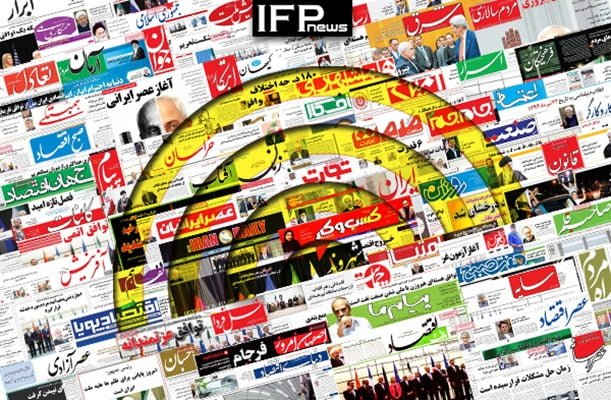
A Look at Iranian Newspaper Front Pages on November 3

A Look at Iranian Newspaper Front Pages on November 18

Abrar:

1- Ayatollah Sistani: No Party, Foreign Country Allowed to Exploit Iraqi Nation’s Protests

2- Protecting Security of Hormuz Strait among Iran’s Sovereignty Rights: VP

3- US GOP Senators Trying to Stop Extension of Iran Sanction Waivers

A Look at Iranian Newspaper Front Pages on November 3


Aftab-e Yazd:

1- Reformists May Choose Woman as Their Leading Candidate for Parliamentary Votes

2- Closure of Iranians’ Bank Accounts in Malaysia under Pressure of Zionist Stakeholders of Bank: Source

A Look at Iranian Newspaper Front Pages on November 3


Ebtekar:

1- Iran’s Neighbours Buying Vast Areas in North of the Country

2- Trump: ISIS Created by Obama

3- IRGC Chief: We’ve Stockpiled Missiles More than We Need

A Look at Iranian Newspaper Front Pages on November 3


Etemad:

1- Even Our Friends Warn Us about Necessity of FATF: Deputy FM

2- JCPOA Survival Hinges on Iran’s Enjoyment of Its Economic Dividends: First VP

A Look at Iranian Newspaper Front Pages on November 3


Ettela’at:

1- 100,000 Killed after 4 Years of Saudi Aggression against Yemen

2- World Order Has to Use Multilateralism against Emerging Issues: Iran VP

A Look at Iranian Newspaper Front Pages on November 3


Javan:

1- IRGC Chief: US Has Taken 8.5 Millions of Lives in World

2- Zionist Christians Praying for Trump’s Favours

3- IRGC Chief: Those Who Stormed US Embassy in 1980 Did It at Their Own Will

A Look at Iranian Newspaper Front Pages on November 3


Jomhouri Eslami:

1- CNN: Most US Citizens Want Trump Out of White House

2- Increased Protests in Iraq

A Look at Iranian Newspaper Front Pages on November 3


Kayhan:

1- Rouhani Administration, Trump Both Want FATF Ratification

2- Christians Pray for Trump’s Impeachment Survival

3- 40 Years after US Embassy Takeover: Iran Still Revolutionary, US Still Villain

4- IRGC Chief: Americans in Downward Spiral

5- Italian Government Decides to Ban Iranian Airline

A Look at Iranian Newspaper Front Pages on November 3


Khorasan:

1- No Withdrawal: IR6 Centrifuge on Verge of Uranium Gas Injection

A Look at Iranian Newspaper Front Pages on November 3


Rooyesh-e Mellat:

1- US Pressure Neutralized with Our Maximum Resilience

2- IRGC Chief: World Not Witnessing US Victory

A Look at Iranian Newspaper Front Pages on November 3


Shargh:

1- Kuwaiti Media Claims Rouhani Has Sent Letters to Saudi, Bahraini King

2- Clash of Kurds, Turkey in History [Editorial]

A Look at Iranian Newspaper Front Pages on November 3

Historical Mansion; Popular Tourist Site in Western Iran

Historical Mansion; Popular Tourist Site in Western Iran

Khosroabad Mansion is located in the city of Sanandaj in Kurdistan province and dates back to the Zand-Qajar era. The building boasts exquisite and fantastic Persian architecture.

The historical mansion is called Khosroabad as it was the hub of the Ardalan rule, especially ruler Khosrokhan Ardalan.

This impressive mansion measures around 6,000 square metres. The main building is constructed in the middle of a beautiful and unique garden. It draws the attention of any viewer with its fabulous Iranian architecture.

Historical Mansion; Popular Tourist Site in Western Iran
First Festival of Kurdish Fashion, Costumes Held in Iran

Khosroabad Mansion was built in 1905 by the ruler of Sanandaj, Amanollah Khan; and is very beautiful and one of a kind.

In addition to the main part, i.e., the monarchial palace with its pillars at the entrance, the garden of the mansion is of special significance, too. The garden was surrounded by four moats and streets as well as different kinds of trees on all sides of the mansion, giving the building special beauty. The garden was practically divided into four gardens. At the moment, only the trees and parts of the surrounding streets have remained.

Today, the historical mansion is host to large numbers of domestic and foreign tourists as well as different ceremonies and concerts.