Thursday, April 30, 2026
Home Blog Page 285

Iran calls out US hypocrisy

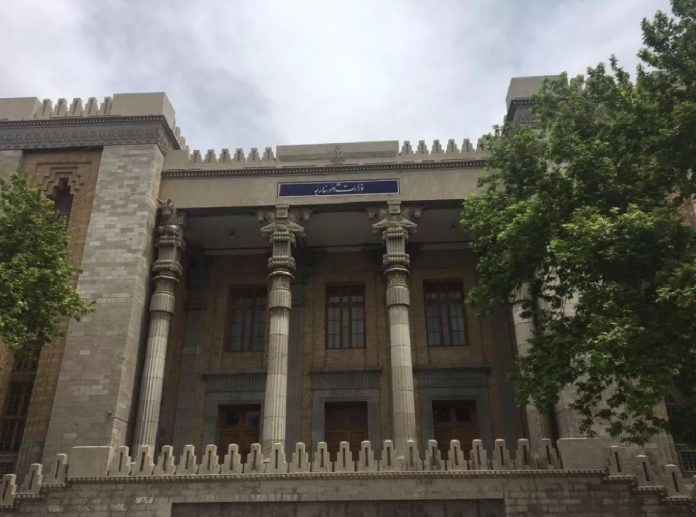
The Iranian Foreign Ministry

The ministry released the fact sheet, which included a whole host of US violations concerning Iran, such as reinstatement of its so-called “maximum pressure” policy towards the Islamic Republic, on Wednesday.

The US initiated the policy under Donald Trump’s former tenure as president and relaunched it under his current incumbency, with the American chief executive signing a new “Presidential National Security Memorandum” on February 4, through which he ordered intensification of economic and political pressure against the Islamic Republic.

The ministry described the policy as an extension of Washington’s long-standing adversarial attitude towards Tehran.

It, meanwhile, asserted that “maximum pressure” was never truly halted after Trump’s former term wound down, as the previous US administration of Joe Biden not only retained the country’s sanctions against Iran, but also imposed hundreds more.

The ministry reiterated the Islamic Republic’s commitment to resisting such coercive measures, emphasizing that no nation should be subjected to illegal and unjust economic pressure.

The US was deploying the policy, while simultaneously calling for negotiations with Iran on the nuclear issue, the ministry said, noting that such attitude contradicted Washington’s rhetoric.

Iran underlines that it has always supported diplomacy and engaged in negotiations in good faith. However, it reminds at the same time that pressure and intimidation tactics have never yielded results as far as dealing with the Islamic Republic is concerned.

Iranian authorities, meantime, warn that such contradictory approach only deepens distrust and undermines any possibility of meaningful diplomatic engagement.

The fact sheet further highlighted the United States track record regarding the Joint Comprehensive Plan of Action (JCPOA), an agreement backed by the United Nations Security Council (UNSC), which was signed between Iran and world countries, including the US, in 2015.

The former Trump administration withdrew from the deal in 2018 in a unilateral and illegal move, despite its endorsement by the UNSC. It then returned the sanctions that the accord had lifted, and ramped up even more economic pressure on the Islamic Republic.

Washington’s departure came despite Iran’s full compliance with the agreement as confirmed by the International Atomic Energy Agency (IAEA), the document highlighted.

“Over the past four years, despite intensive negotiations to revive the JCPOA, Washington, while expressing a desire to return to the agreement, has never been willing to fulfill its JCPOA commitments or lift sanctions against the Iranian nation, and under various pretexts, it prevented, on different occasions, the negotiations from reaching a final conclusion,” it added.

The document also recalled the long history of other aggressive American actions against Iran, dating back to the CIA-orchestrated 1953 coup.

It listed numerous examples, including Washington’s military support and other instances of backing for former Iraqi dictator Saddam Hussein during his 1980-88 imposed war on Iran, freezing of Iranian assets, and military provocations.

It also reminded the US’s ordering the assassination of Lieutenant General Qassem Soleimani, Iran’s former top anti-terror commander and a strongly revered national and regional personality, in early 2020, and its facilitating the targeting of Iranian nuclear scientists by the Israeli regime — which has so far assassinated at least seven of the scientists.

Additionally, the fact sheet challenged US allegations that Iran supported “terrorism,” asserting that the Islamic Republic was, in fact, the primary victim of terrorism in the region.

It pointed to the sacrifices that had been made by Iranian servicemen in the fight against the Daesh Takfiri terrorist group in the region and other similar outfits.

Meanwhile, the ministry reiterated Iran’s condemnation of the US’s fueling regional instability by backing groups like Daesh, al-Qaeda, and al-Nusra Front, currently Hay’at Tahrir al-Sham, to serve its geopolitical interests.

Furthermore, the statement argued that Washington would try to brand Iran’s continued support for regional resistance movements, which fight against deadly Israeli occupation and aggression, as fostering “terrorism” as a pretext to shield the Israeli regime from accountability for its atrocities against the regional peoples, including members of the resistance factions.

“Labeling Iran’s support for resistance groups and Muslim nations in the region – who are fighting for the liberation of their land and human dignity against an occupying regime – as “support for terrorism” does not change the reality,” it underscored.

“Blaming the Islamic Republic of Iran, is a futile US attempt to protect the Zionist regime from accountability and to evade from US responsibility for full-fledged and absolute support for the crimes of this regime,” it added, pointing to Washington’s all-out political, military, and intelligence support for Tel Aviv’s military aggression.

The ministry also condemned Washington’s claims of championing human rights, highlighting its full support for Israeli atrocities in the Gaza Strip and the devastation that had been caused by economic sanctions on the Iranian people.

It reminded that during the COVID-19 pandemic, the US even intensified its sanctions, worsening humanitarian conditions in Iran, and asserted that the American policies directly targeted the Iranian people, contradicting Washington’s self-proclaimed concern for human rights.

Amid the American attitude, Iran’s leadership, guided by the principles of “dignity, wisdom, and expediency,” would refuse to negotiate under pressure, the document underscored.

Leader of the Islamic Revolution Ayatollah Seyyed Ali Khamenei has reiterated that engaging in talks under coercion was irrational and would undermine Iran’s sovereignty.

Tehran, however, remains open to diplomacy that safeguards its national interests.

While committed to diplomatic solutions, Iran warns that any aggression against its national security would be met with a decisive response, the ministry stressed, pledging to continue pursuing the Islamic Republic’s interests from a position of strength, and ensuring that the country’s sovereignty and regional stability remained non-negotiable.

The ministry finally reaffirmed that Iran has never pursued acquiring nuclear weapons, citing a binding religious decree (fatwa) against such prospect that had been issued by the Leader.

It called on the US, the only country to have ever deployed nuclear weapons, to refrain from using the nuclear issue as an excuse for confrontation.
Putin, Trump agree on Ukraine negotiations

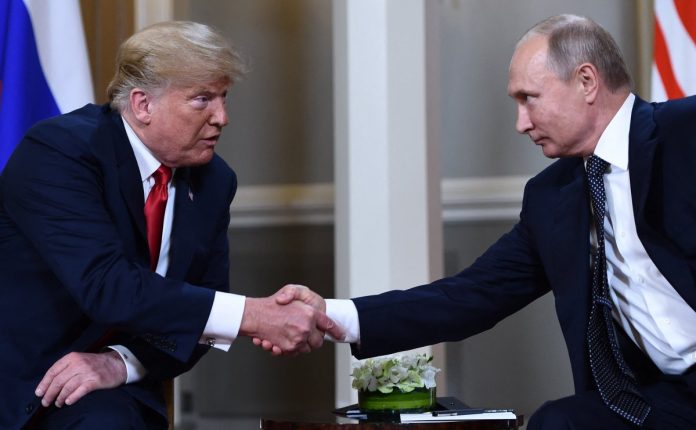
Putin and Trump

The talk lasted for about an hour and a half, during which the two leaders discussed a broad range of issues, primarily the Ukraine conflict, Kremlin spokesman Dmitry Peskov has stated.

The phone call turned out to be “lengthy and highly productive,” Trump said in a post on his Truth social media platform.

“We discussed Ukraine, the Middle East, Energy, Artificial Intelligence, the power of the Dollar, and various other subjects,” the US president wrote.

The two leaders have agreed they “want to stop the millions of deaths taking place in the War with Russia/Ukraine,” Trump added, announcing an “immediate” start of negotiations to resolve the Ukraine conflict.

Wednesday’s call represents the first official top-level contact between Moscow and Washington since Trump took office in January. While phone conversations between Trump and Putin have been rumored for weeks, none have been officially confirmed, with both sides stating only they had been maintaining contact through various unspecified government channels.

The official Kremlin readout of the Putin-Trump phone conversation emphasized the need to eliminate the “root causes” of the Ukraine conflict in order to reach a “sustainable settlement.”

The leaders discussed issues related to the prisoner exchange between Russia and the United States. The US President assured the President of Russia of the American side’s commitment to fulfill all the agreements reached.

The leaders also discussed a possible Ukraine settlement. Trump spoke in favour of stopping the hostilities as soon as possible and solving the crisis peacefully. In turn, Putin pointed out it was necessary to eliminate the root causes of the conflict and agreed with Donald Trump in that a sustainable settlement could only be reached via peaceful negotiations.

Additionally, the President of Russia expressed support for one of the US President’s key arguments, which was that it was time for both countries to work together.

The issues of Middle East settlement, Iran’s nuclear programme, and bilateral economic relations between Russia and the United States were also brought up during the conversation.

The President of Russia invited the US President to visit Moscow and expressed willingness to receive visiting officials from the United States to discuss topics of mutual interest, including a possible Ukraine settlement.

Putin and Trump agreed to maintain personal contact in the future, involving in particular in-person meetings.

Syria’s new president, Russia’s leader make first contact since al-Assad’s fall

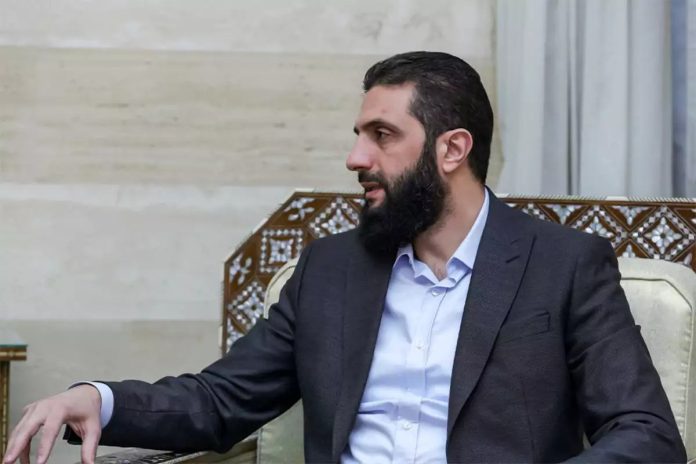
Abu Mohammed al-Jolani

Rebels led by al-Sharaa’s Hayat Tahrir al-Sham group ousted Moscow’s close ally in December after a lightning offensive, and questions have remained over the fate of Russia’s two military bases in the war-torn country.

During the phone call on Wednesday, al-Sharaa emphasised “the strong strategic ties between the two countries and Syria’s openness to all parties” in a way that serves “the interests of the Syrian people and strengthens Syria’s stability and security”, a statement by the Syrian presidency said.

It also said Putin extended “an official invitation to Foreign Minister Asaad al-Shaibani to visit Russia”.

“The Russian side emphasised its principled position in support of the unity, sovereignty and territorial integrity of the Syrian state,” the Kremlin said in a statement.

Moscow helped keep al-Assad in power when it intervened militarily in Syria’s war in 2015, launching devastating air strikes on rebel-held areas.

When rebels swept into Damascus in December, Russia granted the former president asylum, angering many Syrians, including the country’s new rulers.

Russia is seeking to secure its naval base in Tartus and its airbase at Khmeimim – both on Syria’s Mediterranean coast and Moscow’s only military bases outside the former Soviet Union – with the new Syrian authorities.

Last month, there were reports that Syria had demanded the return of al-Assad in exchange for allowing Moscow to maintain its military bases.

The bases have proven vital to Russia’s international ambitions, serving as a launchpad for operations in support of al-Assad as well as staging grounds for Moscow to project influence across the Mediterranean region and Africa.

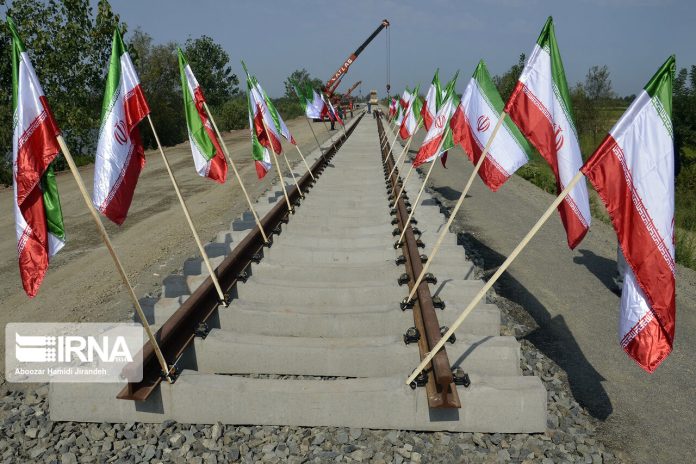
First Indian rail transit shipment arrives in Afghanistan via Iranian territory 

Iranian transit routes

That’s according to CEO of the Afghanistan Rail Development Consortium Mostafa Rezaei.

He said the shipment consists of six containers of almonds and oilseeds. After crossing the Shamtigh rail border in the northeastern Iranian city of Khaf, the shipment reached the Roozanak station in Herat, Afghanistan.

Rezaei said the cargo was initially transported from India by ship to Bandar Abbas, southern Iran, and then transferred via Iran’s rail network to Afghanistan.

He noted that since the operational launch of the Khaf-Herat rail corridor earlier this year, the consortium has facilitated the transit of over 30,000 tons of export and transit cargo between Iran and Afghanistan by rail.

He underlined that following the launching of this rail corridor, trade balance between the two countries has improved with enhanced security, and transportation costs for traders and producers have been reduced.

Iran president says Tehran not to back down from any threat

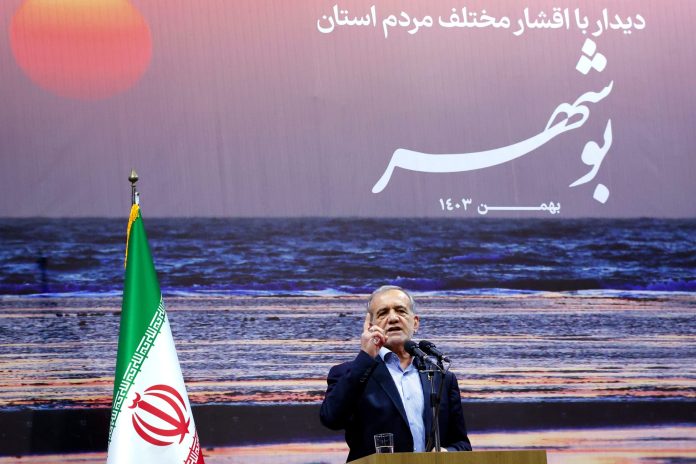
Speaking to the people of Bushehr in Southern Iran on Wednesday afternoon, President Pezeshkian said If the Americans are truly seeking negotiations, why don’t they halt their hostile policies? Those who now pay lip service to dialogue have imposed the harshest sanctions against the Iranian people and blocked all avenues for engagement.

President Pezeshkian highlighted the martyrdom of thousands of Iranian officials and civilians since the 1979 Islamic Revolution, asserting that these individuals were killed by the Americans, yet the US President accuses Iran of terrorism. Those who are themselves the primary perpetrators of terror in the region are pointing fingers at others.

Addressing Western support for the Zionist regime, he stated before the eyes of the world, that Israel has massacred over 50,000 women, children, elderly, and youth in Gaza, razing their homes to the ground. It has committed similar atrocities in Lebanon and Syria. Yet the same nations backing this regime seek to deny Iran the right to defensive capabilities. They should know that the Iranian people will never surrender to such pressures.

In closing, Pezeshkian emphasized If we all join hands and rely on our domestic capacities, we will elevate this nation to the peaks of dignity and pride.

Deputy youth minister: 205 licensed matchmaking centers operating in Iran to increase marriage rate

Ali Reza Rahimi explained that the initiative is rooted in parliamentary legislation, aimed at facilitating marriage among young people, adding a specialized task force has been formed to evaluate the effectiveness of the centers and websites in increasing marriage rates.

The deputy minister stressed the importance of preventing misuse on these platforms, noting that rigorous monitoring is in place to address any issues. He also highlighted the global prevalence of matchmaking services, stating that such platforms provide a valuable opportunity for young people seeking marriage.

He suggested leveraging domestic social media networks to enhance the effectiveness of these services.

In a separate discussion, Rahimi touched on the concerning rise in teenage suicide, describing it as a serious issue requiring immediate attention.

A dedicated task force, led by government officials, is working to address the root causes, including social and psychological factors.

US says won’t send soldiers to Ukraine

US Forces

Hegseth’s remarks come amid ongoing discussions among Western countries about the possible deployment of peacekeeping forces if a ceasefire is negotiated.

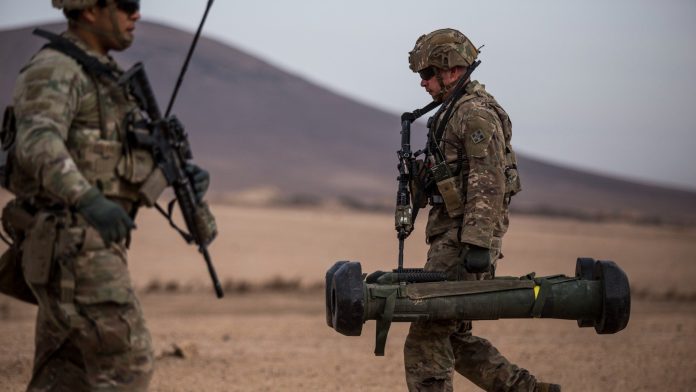
“We are not sending U.S. troops to Ukraine,” Hegseth told reporters in Stuttgart, Germany, during his visit to U.S. European Command and U.S. Africa Command headquarters.

Hegseth added that Washington currently has no plans to reduce the U.S. contingent abroad but will review its deployment by President Donald Trump’s strategic vision.

The U.S. Defense Secretary also expressed hope for a swift peace agreement in Ukraine, which Trump has pledged to conclude.

“With hopefully a rapid peace deal in Ukraine, which the President (Donald Trump) is committed to delivering, we can then review force posture and encourage as you’re going to see at the Ukraine contact group and the NATO ministerial, we’re going to have straight talk with our friends,” Hegseth added.

Hegseth is expected to attend the Ukraine Defense Contact Group (UDCG), also known as the Ramstein summit, as part of a tour of Germany, Belgium, and Poland, according to a Pentagon statement.

At the summit, the defense secretary aims to “reiterate President Trump’s commitment for a diplomatic end to the war in Ukraine as quickly as possible,” the statement read.

However, this time, Hegseth is not likely to announce new military aid supplies, which was a regular occurrence during the Joe Biden administration, according to the Washington Post (WP).

The Pentagon chief will not hold separate meetings with his Ukrainian counterparts but will rather be a “listener” at the Ramstein and at the meeting of NATO defense ministers on Feb. 13, an unnamed U.S. official told WP on condition of anonymity.

The transition of power in Washington and expected changes in U.S. policy on Ukraine cast doubt on the future of the Ramstein summit. In February, for the first time since the establishment of the Ramstein format, the meeting was convened by the U.K., not the U.S.

Poll shows most Europeans see US under Trump as more a necessary partner than ally

Donald Trump

The polling, of 11 EU member states plus Ukraine, Switzerland and the UK, found most people now regarded the US as merely a “necessary partner” – even in countries such as Poland and Denmark that barely 18 months ago had considered the US an ally.

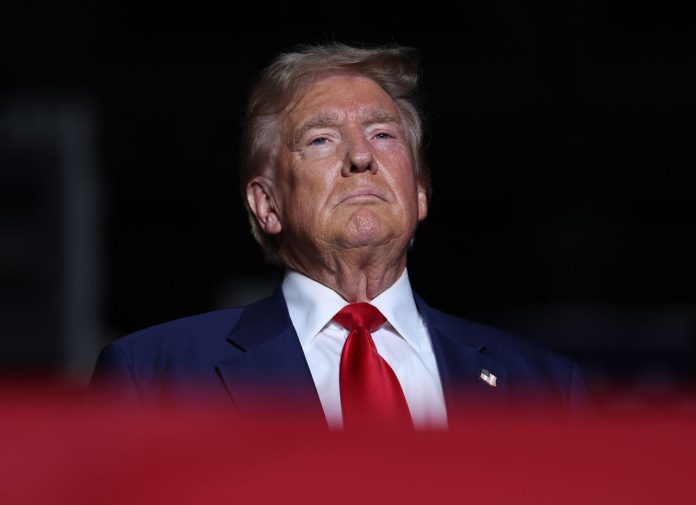
An average of 50% of Europeans across the member states surveyed viewed the US this way, the study revealed, with an average of only 21% seeing it as an ally, leading the report’s authors to urge a more “realistic, transactional” EU approach.

The figures “speak to a collapse of trust in Washington’s foreign policy agenda” and heralded “the potential death knell of the transatlantic alliance” said Arturo Varvelli, co-author of the report, by the European Council on Foreign Relations (ECFR).

“This finding alone should really sharpen minds about the need for Europe to embrace greater pragmatism and autonomy in its global dealings, as a means of protecting its citizens and its values in the coming period,” Varvelli added.

Those seeing the US as a “necessary partner” rather than an ally were most numerous in Ukraine (67%-27%), Spain (57%-14%) and Estonia (55%-28%). But even in the UK, which boasts of a “special relationship” with the US, the ratio was 44% to 37%.

But while Europeans were essentially aligned on their view of US foreign policy, there were significant differences on other issues, suggesting scope for Trump’s “America First” administration to play member states off against each other.

While on average EU citizens thought Trump’s return as US president was a “bad thing” for Americans, for their own country and for world peace, Hungarians, Bulgarians and Romanians were considerably more positive than Danes and Germans.

Far-right supporters across Europe proved Trump’s biggest fans, with fewer than one-fifth of voters for Fidesz in Hungary, Law and Justice (PiS) and Konfederacja in Poland and Brothers of Italy believing his re-election was a “bad thing” on all three counts.

Respondents who voted for Alternative für Deutschland (AfD) in Germany and the National Rally (RN) in France stood out, nonetheless, in having a plurality (37% and 35%, respectively) who believed Trump’s return to power was a bad thing for their own countries.

There was disagreement, too, over Ukraine. Majorities or pluralities in all countries, including 55% in Denmark, 49% in the UK and 44% in Poland, said a “compromise settlement” was the likeliest outcome of Russia’s war on Ukraine.

Some, however, including Estonia, Denmark, the UK and Portugal, felt considerably more strongly than others that continuing support for Kyiv, rather than pushing for peace, must nonetheless remain the EU’s priority.

And views on what should happen after the war varied widely: 47% of French and 50% of Italians said they struggled to see Ukraine as European, and in Bulgaria and Hungary, many saw Russia as an EU ally or necessary partner, not a rival or adversary.

The EU’s engagement with China was another topic of divergence. Half or more of respondents in southern and south-eastern Europe, including Spain, Italy, Bulgaria, Hungary and Romania, said they saw Beijing as a “necessary partner” or ally.

However, in countries in northern and western Europe, roughly similar percentages – 55% in Germany, 52% in Denmark, and 45% in the UK and France – held the opposing view, seeing China instead as a rival or adversary.

The report’s authors argued there was no reason to believe Trump had changed his opinion of the EU from his first term in office, during which he called the bloc a “foe” for the US and referred to Brussels as being “like a hellhole”.

With the new president opposed to Europe’s green transition, alleged “wokeism” and social media regulation, the bloc must expect “strategic, economic and political challenges” and understand that US and European interests were diverging, they said.

European leaders will need to work across the bloc’s faultlines, entertain new forms of flexible cooperation among member states and, above all, resist establishing privileged bilateral relations with Trump at the expense of other European allies.

“The Atlantic community is no longer underpinned by shared values,” stated the ECFR’s Jana Puglierin.

“In a world of Trump 2.0, transactionality reigns. For EU leaders, this will require a positional shift away from the Washington-led status quo.”

Paweł Zerka, another co-author, noted the “Trumpisation of Europe” was evident in rising support for far-right parties, a growing readiness to adopt a transactional approach and acceptance of the need for peace negotiations in Ukraine.

But there were still “opportunities for the EU to learn pragmatism in foreign policy; for its leaders to clarify the stakes to their voters; and for pro-European parties to differentiate themselves from the Trumpian far right”, he continued.

Govt. spokeswoman says Iran has active plan to counter US maximum pressure campaign

Fatemeh Mohajerani

Fatemeh Mohajerani said that it was anticipated the Trump administration would employ maximum pressure tactics against Iran, though this strategy would ultimately prove ineffective.

Regarding the government’s stance on negotiations with the US, she said negotiation is a strategy Iran has always pursued. Iran is open to dialogue, but talks require specific conditions. Tehran will not yield to coercion. You cannot pursue a maximum pressure policy while smiling.

Referring to the experience of the Iran nuclear deal negotiations (JCPOA), the spokesperson added the reason we reject negotiations with the opposing side is that they do not understand the language of dialogue. Iran is well-versed in diplomatic discourse and has consistently used it as a tool of diplomacy, as the world witnessed during the JCPOA. However, the other party abandoned the agreement.

When asked about Iran’s plans to update its contingency strategies against the US, Mohajerani responded Iran’s predefined scenarios must be updated according to current circumstances. This process is being prioritized by the government and relevant institutions.

Russia releases jailed US national Marc Fogel

The deal to release Fogel, who was designated as wrongfully detained by the US State Department, was negotiated by President Donald Trump, Special Envoy for the Middle East Steve Witkoff, “and the President’s advisers,” according to a statement from national security adviser Mike Waltz.

The statement did not provide any details about the “exchange,” other than to say it was “a show of good faith from the Russians and a sign we are moving in the right direction to end the brutal and terrible war in Ukraine.”

“We were treated very nicely by Russia, actually,” Trump said in the Oval Office later Tuesday.

“I hope that’s the beginning of a relationship where we can end that war and millions of people can stop being killed,” he added.

The White House posted a photo late Tuesday of Fogel stepping off a plane at Joint Base Andrews with an American flag draped across his shoulders.

In an extraordinary move, Witkoff personally went to Russia to bring back Fogel, Waltz’s statement indicated. There has been no known high-level US travel to Russia since the start of the war in Ukraine in February 2022.

Witkoff, who is Trump’s Middle East envoy and didn’t have previously known official dealings with Russia, was involved in part because he leveraged relationships in the Middle East to further the agreement, according to two people briefed on the discussions.

Witkoff has crisscrossed the region in recent months working on the Gaza ceasefire accord, notably in Qatar, a primary mediator. Doha was involved in helping Witkoff and the administration with Tuesday’s exchange deal through introductions Qataris made to Russian intermediaries, the people briefed said.

“By tonight, Marc Fogel will be on American soil and reunited with his family and loved ones thanks to President Trump’s leadership,” Waltz’s statement read.

Fogel worked for nearly a decade as a history teacher at the Anglo-American School in Moscow, where children of US diplomats were among his students.

He was arrested in August 2021 at an airport in Moscow after he was found carrying cannabis. He had traveled into the country with about 17 grams of cannabis, which his family and lawyer said was recommended by a doctor to treat “severe spinal pain.”

In June 2022, he was found guilty in a court just outside Moscow of committing “large-scale drugs smuggling” and given a 14-year sentence at a Russian hard labor camp. The same court held the trial of detained WNBA player Brittney Griner, who was released in a prisoner swap in December 2022.

Fogel was not included in multiple prisoner swaps under the Joe Biden administration, including one in August that saw the release of journalist Evan Gershkovich and former Marine Paul Whelan.

Secretary of State Marco Rubio stated that while Fogel’s release and an end to the war in Ukraine are not linked, he thinks it’s a good sign that Russia was willing to cooperate.

“It’s a long way to go between here and there. It’s not going to be easy,” Rubio said of ending the war.

“And again, I don’t want to claim that what’s happening here tonight is in any way the first step towards that, but I do think it’s a good sign that the Russians were willing to do something in this regard, and hopefully we can build on that in the days to come.”

Rubio added he didn’t think anybody can assign a timeline to the nearly three-year war ending.

“We don’t just want to see it end. We want to see it end in a way that’s sustainable.”

The news of the “exchange” with Moscow comes as Trump has suggested he could try to bring about an end to the war in Ukraine in ways that are unsettling to Kyiv.