Friday, January 9, 2026
Home Blog Page 2639

Iran Calls on Portugal to Play Active Role in Tehran-EU Relations

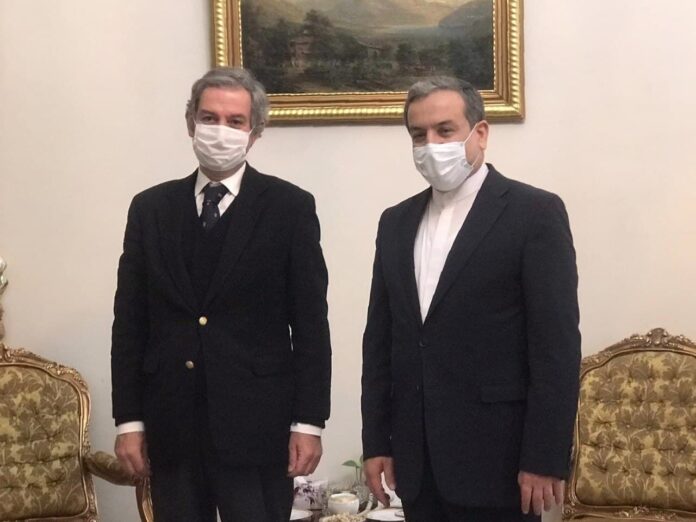
Iran’s Deputy Foreign Minister for Political Affairs Seyyed Abbas Araqchi made the comment in a meeting with Portuguese Ambassador to Tehran Carlos Antonio Rico Da Costa Nos while describing Tehran-Lisbon ties as cordial.

The top Portuguese diplomat, in turn, expressed his country’s readiness for and enthusiasm to boost and expand mutual relations with Iran as well as Iran-EU ties.

Portugal will assume the European Union’s rotating presidency as of January 2021.

Iran Welcomes Peaceful Settlement of Qatar-Saudi Row

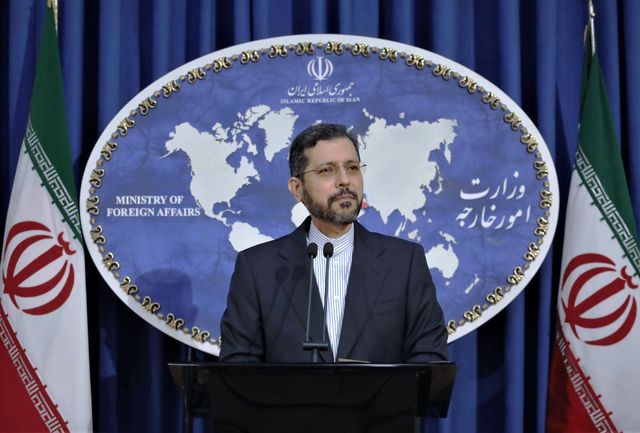
Saeed Khatibzadeh said Iran pays due regard to good relations with neighbours.

“We straightforwardly and promptly welcomed any settlement of tensions in the Persian Gulf region. The Iranian foreign minister adopted a stance on the issue and said that within the framework of the good-neighbourliness policy, we embrace any move at any level to politically resolve the crisis in the Persian Gulf,” he noted.

The spokesman then criticized Riyadh and Abu Dhabi for their stances on Doha.
“We believe the path that Saudi Arabia and the United Arab Emirates have taken to lay siege to Qatar was one of bullying,” he said.

“The issue should be resolved through political means and the situation in the Persian Gulf should return to normal as soon as possible,” the spokesman said.

“Iran-Qatar relations are not affected by third elements; they are cordial ties. The Islamic Republic of Iran has stood by its neighbours both in times of hardship and in times of joy,” said Khatibzadeh.

Iran Won’t Negotiate, Compromise on National Security: Spokesman

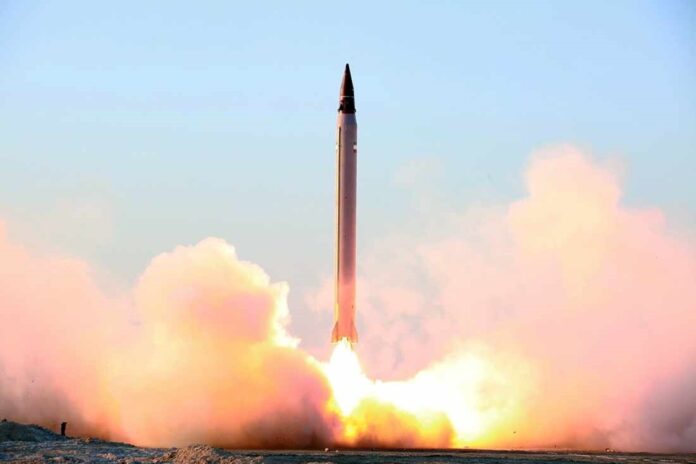
Iran to Boost Range of Homegrown Missiles
This photo released by the Iranian Defence Ministry shows an Emad long-range ballistic surface-to-surface missile launch in an undisclosed location.

Speaking to reporters on Monday, Saeed Khatibzadeh noted Tehran’s position on the 2015 Iran nuclear deal, officially known as the Joint Comprehensive Plan of Action (JCPOA), has not changed.

“We spent tough years negotiating the JCPOA and the deal was the result of the Iranian nation’s resistance. The JCPOA was finally singed and inserted in UN Security Council Resolution 2231. So, all those who are familiar with international law know that neither will Iran re-negotiate something it has already negotiated, nor will these words change the binding nature of UNSC Resolution 2231 which also applies to the JCPOA.,” said Khatibzadeh.

“We hope Europe will get to know its status and potential and consider the floor and ceiling of relations,” he noted.

“In the years following the conclusion of the JCPOA, the European signatories to the deal unfortunately failed to make good on their commitments. As you know, the EU coordinator has been the guarantor of the implementation of the JCPOA,” said the spokesman.

He slammed Europe for failing to deliver on its obligations under the nuclear deal.
“In fact, it fell upon the Europeans to coordinate the enforcement of the JCPOA. The European countries, including Germany, failed to live up to its obligations even during the years when the US had not yet pulled out of the JCPOA,” he noted.

“Europe’s failure to fulfil its commitments has been mentioned in the numerous letters Iran has sent to the joint committee tasked with implementing the JCPOA,” the spokesman said.
He underlined Europe should come to realize that Iran is well familiar with its rights and responsibilities.

“Moreover, Iran has always reminded the other side of its rights and responsibilities,” he stressed.

He once again highlighted the failure of Washington’s policy of pressuring Iran to make the country submit to its demands.

“The Europeans, including Germany, should know the objectives which were not achieved through the United States’ ‘maximum pressure’ policy will not be gained by any other means, either,” he said.

“Our policy is a fundamental one. We know our interests. We have both interests and legitimate concerns, which we ask Europe to respect,” he noted.

Iranian, Syrian FMs Discuss Latest Developments in Tehran

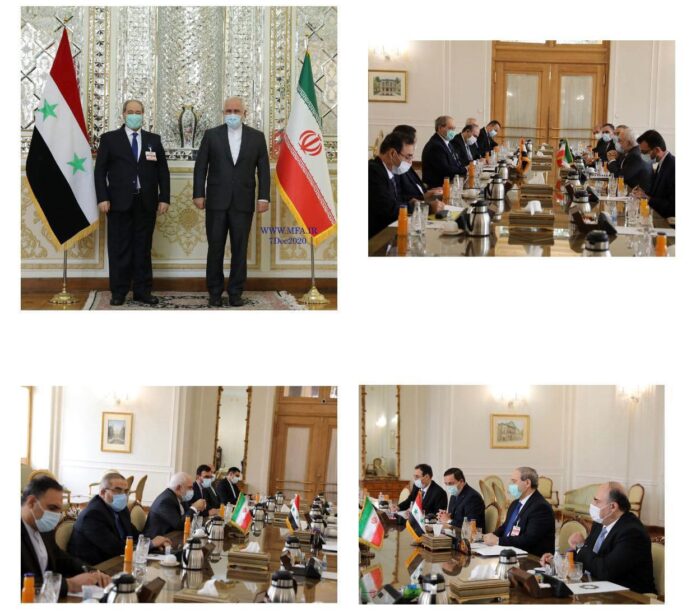
In the Monday talks, the two ministers discussed bilateral, regional and international issues as well as the joint battle against terrorism.

Hailing the broad and strategic relations between Iran and Syria, the two senior diplomats reaffirmed commitment to enhancing and strengthening bilateral ties and weighed plans for promotion of bilateral and multilateral economic relations.

At the beginning of the meeting, Foreign Minister Zarif paid tribute to the late foreign minister of Syria Walid al-Muallem, congratulated Foreign Minister Mekdad on his new post, and expressed readiness for cooperation with the new Syrian foreign minister.

Zarif also expressed satisfaction with the continuation of the political process in Syria, reaffirmed Iran’s support for the Astana Process, and said he was positive about a recent conference on the return of Syrian refugees.

Expounding on the situation and the recent developments in the region, Foreign Minister Zarif stressed the need for vigilance and consultations among Iran, Syria and other countries.

For his part, Foreign Minister Mekdad conveyed condolences from Syrian President Bashar al-Assad and the Syrian people to the Iranian government and nation for the martyrdom of Iranian scientist Mohsen Fakhrizadeh and top commander Lt. General Qassem Soleimani, paying tribute to the two revered martyrs.

The visiting foreign minister also expressed gratitude to the Islamic Republic of Iran for the constant supports for Syria in the fight against terrorism and extremism.

Mekdad then denounced the US’ anomalous activities in the region that have escalated the tensions, saying they reveal that the Zionist regime’s interests have priority over the US’ interests in the region.

He finally underlined the Syrian government’s determination to keep fighting against terrorism, saying mutual cooperation between Damascus and Tehran is significant in this approach and is considered as a basic step in restoration of peace and calm to Syria.

US Blocking Iran’s Purchase of COVID-19 Vaccine: Top Banker

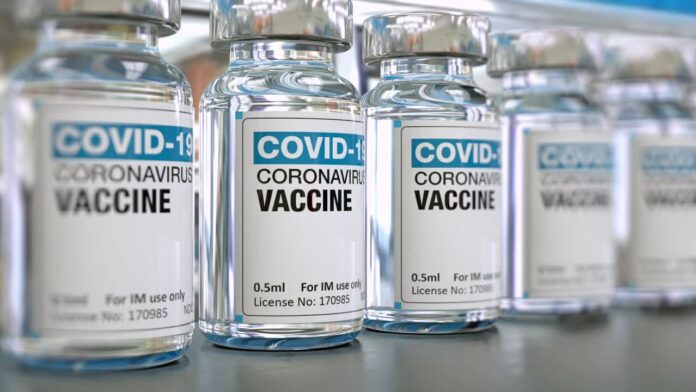
In a post on his Instagram account, Hemmati said while the purchases of the coronavirus vaccine should be made officially through the World Health Organization (WHO), Iran has faced obstacles in every single way that it has tried to make payments and transfer currency for the purchase of vaccine “because of the US government’s inhumane sanctions and the need for permission from OFAC”, the Office of Foreign Assets Control of the US Treasury Department.

“South Korea could not guarantee that the CBI’s fund will not be confiscated by the US government in the course of transaction of money via a dollar U-turn path for humanitarian purchases,” Hemmati added.

He also noted that the International Monetary Fund did not even dare to raise the issue of Iran’s application for a loan under the US pressures and threats, although there was no legal or economic obstacle to granting the humanitarian loan.

Iran, however, is working on other ways for money transactions to buy the vaccine, he added.

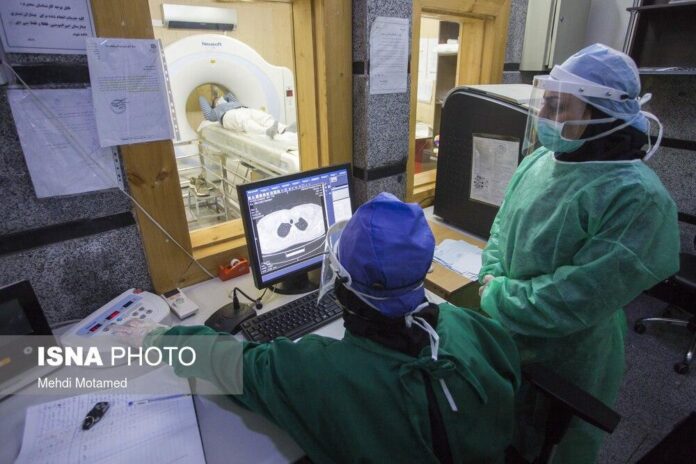
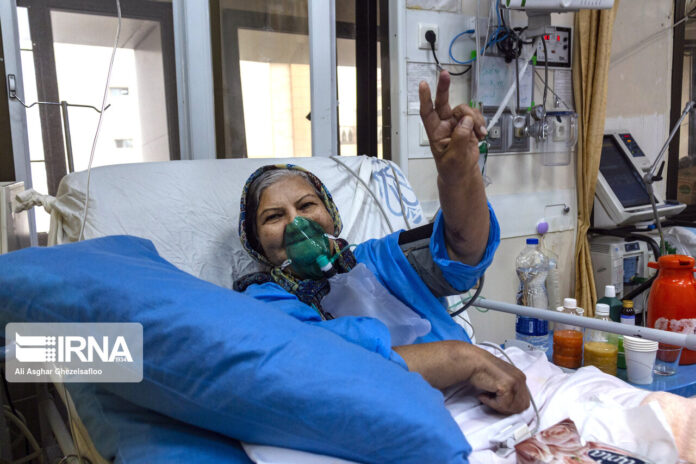
Over 1,050,000 Iranians Contract Coronavirus: Ministry

Iran COVID-19

In a press briefing on Monday, Sima-Sadat Lari said the virus has also killed 284 patients since Sunday noon, increasing the overall death toll to 50,594.

She said so far 742,955 patients have recovered from the disease or been discharged from the hospital.

Lari went on to say that 5,796 patients are also in critical conditions caused by more severe infection.

The spokeswoman noted that 6,432,228 COVID-19 tests have been taken across the country so far.

She said currently 64 cities are in the “red zone”, 278 in the “orange zone”, and 106 in the “yellow zone” in terms of coronavirus outbreak.

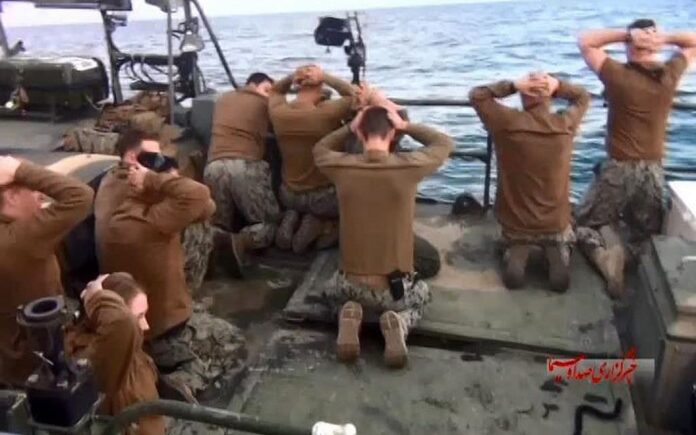
US Navy Acting with More Respect in Persian Gulf: Iran

This photo released by the Iranian state-run IRIB News Agency on January 13, 2016, shows detention of American Navy sailors by Iranian naval forces in the Persian Gulf, Iran. / Sepah News

“Iran has always shown a totally professional behaviour in its territorial waters and in the Persian Gulf. Unfortunately, the US has in many cases made unprofessional calculations,” Khatibzadeh said in a weekly press briefing on Monday.

“The Iranian Navy and its fleet in the Persian Gulf have always given the necessary warnings, and made note of all the cases,” he added.

He said in Iran’s view, the United States has basically nothing to do several thousand miles away from its territory.”

“The US’ hawkish and military behaviours and its disrespectful presence are the main source of unrest in the region,” the spokesman noted.

“We think our message has always been a clear one in all encounters. We are happy to see the other sides has received the message and made its behaviour more respectful,” he added.

IRGC General Claims Artificial Intelligence Used to Slay Iranian Scientist

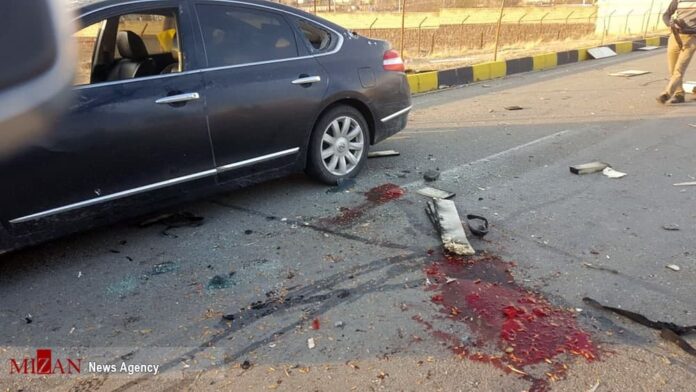
No Assassins Present at Scene of Iranian Scientist’s Slaying: New Report

Addressing a cultural event in the University of Tehran on Sunday, IRGC Deputy Commander Rear Admiral Ali Fadavi said the distinguished figure was assassinated in an unmanned operation on November 27.

No hit man was present at the scene of the strike, he noted, saying a machine gun equipped with a “satellite-controlled smart system” and installed on a pickup had fired a total of 13 shots in the attack.

All other bullets have been fired by the security guards, Fadavi noted.

The smart system controlling the machine gun had zeroed in on Fakhrizadeh and utilized artificial intelligence, the general stated.

He said the purpose of exploding the gun-laden pickup after the shootout was to kill the 11 IRGC servicemen accompanying the late scientist.

Follow the latest on the assassination of Mohsen Fakhrizadeh through this link.

The head of the security team has been shot after shielding Fakhrizadeh from bullets, Fadavi added, saying the nuclear scientist was ultimately martyred due to a gunshot wound in his back and spinal cord amputation.

Asked about Iran’s response to the American assassination of top commander Lt. General Qassem Soleimani in early January, the IRGC deputy chief said, “We will choose how to take revenge.”

The IRGC has gained such great power that the enemy is seeking deterrence in the face of Iran, he added.

Fakhrizadeh, a senior nuclear and defense scientist, was assassinated in a small city east of Tehran on November 27.

Last week, Secretary of Iran’s Supreme National Security Council Ali Shamkhani said Fakhrizadeh was assassinated in a complicated operation that involved electronic equipment without any assassin at the scene.

Daily Rise in Iran’s COVID-19 Fatalities Down to Lowest Since Oct. 20

In her press briefing on Sunday, Sima-Sadat Lari said the new deaths increase the overall death toll to 50,310.

Lari also reported 11,561 new cases of COVID-19 infection, the lowest since Nov. 16, raising the total number of cases to 1,040,547.

So far, she added, 730,798 patients have recovered from the disease or been discharged from the hospital.

Lari said 5,809 patients are also in critical conditions caused by more severe infection.
The spokeswoman noted that 6,387,019 COVID-19 tests have been taken across the country so far.

She said currently 64 cities are in the “red zone”, 278 in the “orange zone”, and 106 in the “yellow zone” in terms of coronavirus outbreak.

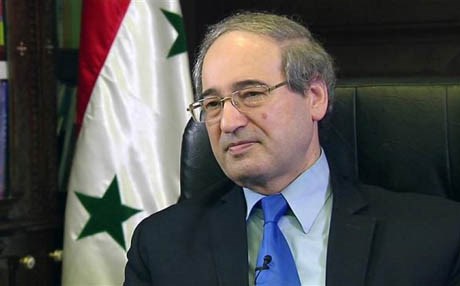
Syrian Foreign Minister to Visit Tehran in Maiden Foreign Trip

According to Iranian Foreign Ministry Spokesman Saeed Khatibzadeh, Mekdad will hold talks with his Iranian counterpart Mohammad Javad Zarif on Monday, December 7, 2020.

He will also hold talks with other Iranian officials during his stay in Tehran, Khatibzadeh added.