Tuesday, April 28, 2026
Home Blog Page 2623

Switzerland Returns 2800-Year-Old Smuggled Glazed Bricks to Iran

Switzerland Returns 2800-Year-Old Smuggled Glazed Bricks to Iran

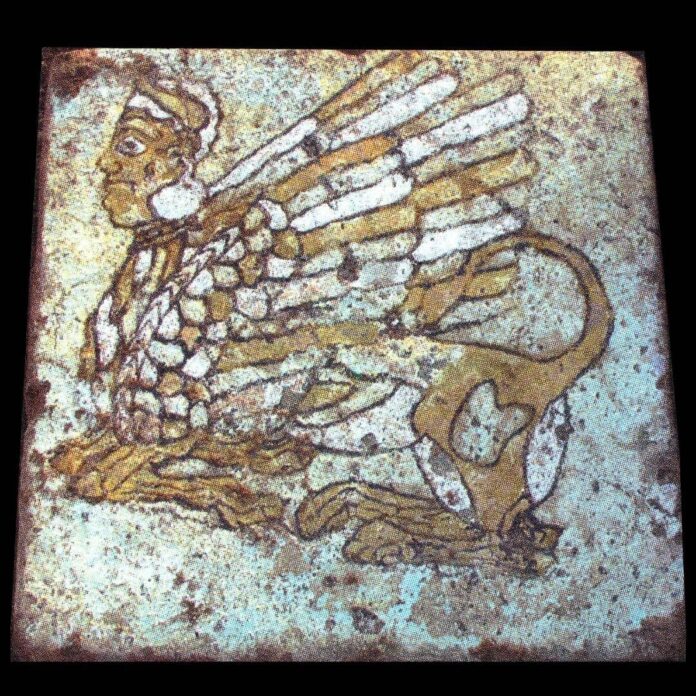
“A collection of glazed bricks, which are attributed to Qalaichi [archaeological site] in Bukan, dating back to the 7th or 8th centuries BC, have been returned home from Switzerland,” Cultural Heritage, Tourism and Handicrafts Minister Ali-Asghar Mounesan said on Sunday.

“49 pieces of glazed bricks, which were smuggled out of Iran on the advent of the Islamic Revolution, were recuperated with a great deal of efforts made by the cultural heritage ministry, and the ministry of foreign affairs,” Mounesan explained.

The official noted that the cultural heritage ministry was informed in [the Iranian year] 1391 that an Iranian family, residing in Switzerland, was inclined to sell 49 pieces of glazed bricks….

“The cultural heritage ministry in close collaboration with the ministry of foreign affairs, filed a lawsuit… as it presented relevant documents and evidence to the competent international authorities. And ultimately, the historical objects were returned to the country after years of follow-up.”

Elsewhere in his remarks, Mounesan congratulated Iranian people over the “blessed” event.

“I congratulate this blessed event to the dear and heritage-loving nation of Iran… Undoubtedly, under appropriate circumstances, an exhibition of these works will be held at the National Museum of Iran.”

Situated about nine air km north-west of Bukan in West Azarbaijan province, Qalaichi (or Ghalay-chi) is an ancient settlement so far yielded a large number of glazed objects. Some of which are monochrome and the others show complex compositions. The glazed objects from the regular excavations were curated in Urmia Museum and Tehran National Museum.

The artifacts are connected to the Mannai civilization, which was once flourished in northwestern Iran in the 1st millennium BC. Mannai, also spelled Manna, was an ancient country surrounded by three major powers of the time namely Assyria, Urartu, and Media.

According to the Encyclopedia Britannica, the Mannaeans are first recorded in the annals of the Assyrian king Shalmaneser III (reigned 858–824 BC) and are last mentioned in Urartu by Rusa II (reigned 685–645 BC) and in Assyria by Esarhaddon (reigned 680–669 BC). With the intrusion of the Scythians and the rise of the Medes in the 7th century, the Manneans lost their identity and were subsumed under the term Medes.

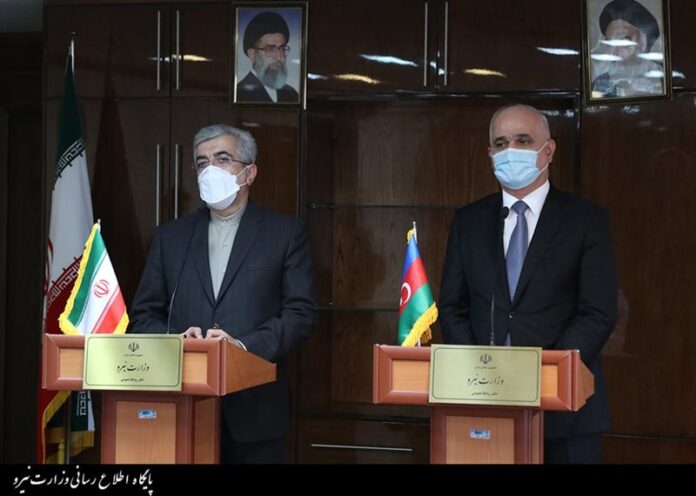
Iran, Azerbaijan Discuss Closer Cooperation in Energy Sector

Iranian Energy Minister Reza Ardakanian says the Azerbaijan Republic is an important neighbour for Iran and there are a whole range of areas for mutual cooperation.

“In terms of electricity and water, we are a country which has implemented one of the world’s best-established projects to utilize a border river with the Azerbaijan Republic,” said the minister on the sidelines of a meeting with the Azerbaijan Republic’s Deputy Prime Minister Shahin Mustafayev Abdulla oglu.

“By next year, Iran and the Azerbaijan Republic will have been exploiting the dam on the Aras river for 50 years,” added the Iranian minister.

Ardakanian said the two countries have also agreed to run joint ventures on the construction of more dams and hydroelectric power stations related to the Aras project.

He said Iran and the Azerbaijan Republic also decided to renew a contract on energy exchanges between the two sides.

The Azeri official, in turn, said his country attaches great importance to relations with Iran.

He said Iran has stood by the Azerbaijan Republic since the early days of the conflict with Armenia, and always supported the Azerbaijan Republic’s territorial integrity with international law and sought to help resolve the conflict.

He noted energy is a key area of cooperation between his country and Iran, adding key agreements have been signed between the two countries over the past several years.

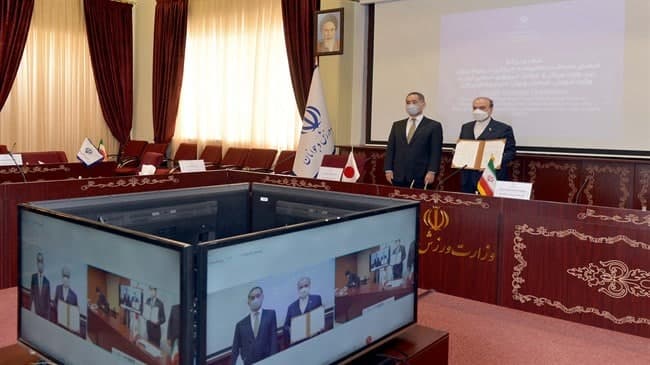
Iran, Japan Sign MoU to Expand Sports Cooperation

The MoU was inked in an online ceremony attended by Kōichi Hagiuda, the Japanese minister of education, culture, sports, science and technology, and Japanese ambassador to Iran Aikawa Kazutoshi.

“Sport has always been a perfect opportunity to cherish and promote global values such as respect, collaboration, and common objectives among nations,” said Soltanifar.

“As history would tell, sporting events lay the grounds for positive changes in the societies,” added the Iranian minister.

“The ties between Iran and Japan have been based upon friendship and mutual understanding for the past 90 years,” Soltanifar told his counterpart, as he wished the agreement would contribute to “further cooperation between sport federations of the two countries”.

Hailing the Japanese efforts for the 2020 Tokyo Olympics, the Iranian official wished the organizers a successful experience in holding next summer’s Games.

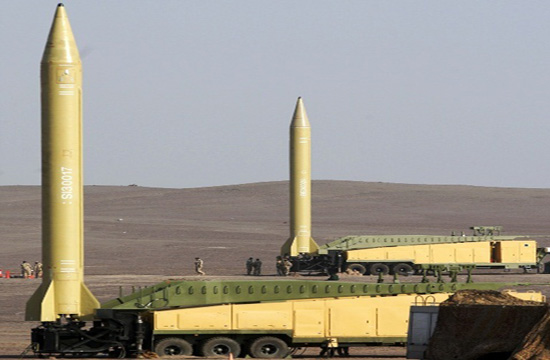
Iran’s Ballistic Missile Program Not Open to Negotiation: Envoy

Majid Takht Ravanchi said at a virtual UN meeting that Iran’s defence policy is crystal clear.

“On numerous occasions, we have made our position on the country’s defence capabilities completely clear,” he noted.

“Under the international law, every country is essentially entitled to develop a conventional missile program, and Iran is not exception,” said the official.

“Hence, Iran will not negotiate on its legitimate ballistic missile program,” he underlined.

Iran Determined to Preserve National Security, Defence Might

He said Iran pays due regard to its national security.

“As Iran is located in a sensitive region such as the Middle East, we will not allow our security and conventional defence might to be compromised, restricted or undermined,” he said.

“Iran won’t be intimidated into abandoning its legitimate defence tolls by the bullying policies of certain powers,” said Takht Ravanchi.

He said the only source of instability and insecurity in the region is the presence of a large number of American troops in almost all countries neighbouring Iran and the ones in the Persian Gulf and the Sea of Oman region.

Another source of instability and insecurity, he said, is the flow into the region of the most sophisticated weapons made by the US and other Western countries.

“The Persian Gulf has been suffering from foreign interference and unfair rivalries for years. Due to the unrestrained inflow of dangerous Western weapons, this region has turned into a powder keg. In order to sell more arms, these countries fuel differences in the region and have adopted the ‘divide and rule’ policy,” he said.

He expressed hope countries in the region will soon welcome Iran’s peace initiative known as the Hormuz Peace Endeavour (HOPE).

Any Talk of Renegotiating JCPOA Unacceptable

He further noted the 2015 nuclear agreement, officially known as the JCPOA, was the outcome of marathon talks and there is no point putting it on the negotiating table again.

Takht Ravanchi said that under UN Security Council Resolution 2231, the JCPOA was concluded as a comprehensive, long-term and appropriate solution to the Iran nuclear issue in order to establish a new relationship with Iran and facilitate and boost trade and economic cooperation and transactions with Tehran.

“The conclusion of the JCPOA was the result of marathon talks, including difficult tit-for-tat arrangements, and any offer of revising, renegotiating or extending the deal runs counter to UNSC Resolution 2231, and will definitely be not acceptable for Iran,” the top official added.

“After withdrawing from the JCPOA on May 8, 2018, the US re-imposed all of its nuclear sanctions, and ever since, has adopted a hostile approach toward the JCPOA and Iran, covertly and overtly bothering Iran’s trade partners constantly and extensively,” he added.

“With these measures, the US has committed blatant violations of the JCPOA and has systematically and constantly breached its legal obligations under UN Security Council Resolution 2231, the UN Charter and the international law,” he explained.

“Moreover, by impudently threatening to punish other governments if they refuse to violate Resolution 2231, the US has both reneged on its commitments under that resolution and practically prevented other state parties from living up to their obligations,” he said.

Takht Ravanchi also touched upon Washington’s breach of a ruling by the International Court of Justice (ICJ).

“The United States has also refused to abide by a quia timet injunction issued by the unanimous vote of judges of the International Court of Justice on October 3, 2018 which obliges the US to remove impediments to the sales of humanitarian supplies to Iran,” he said.

“Still, instead of adopting remedial measures authorized under the JCPOA, Iran exercised maximum restraint and strategic patience for one year at the request of the three European countries,” he said.

Iran’s Remedial Measures Reversible

However, he explained, Iran’s restraint was met with the United States’ so-called “maximum-pressure” policy and ever-increasing illegal sanctions as well as the three European countries’ absolute failure to deliver on their commitments.

“Under such circumstances, we had no choice but to take remedial steps in full compliance with paragraphs 26 and 36 of the JCPOA which stipulate that Iran has every right to stop the implementation of its commitments, in whole or in part, if new sanctions are slapped on the country or if previous sanctions are re-imposed,” he said.

“So, Iran’s measures are in full compliance with our rights and obligations under the JCPOA, and more importantly, they are reversible,” said the top official.

“It must have become clear by now that the policy of intimidating and pressuring Iran has been, and will be a non-starter.”

He said Iran will return to its obligations under the JCPOA only if the other signatories begin fulfilling their commitments under the deal unconditionally, effectively and fully.

US Imposed Over 1,500 Sanctions on Iran in 4 Years

Takht Ravanchi underscored that the United States has slapped more than 1,500 sanctions on Iran targeting all of the country’s economic sectors and destroying almost all benefits of the JCPOA for Iran.

“Such sanctions, which are expected to increase even until the last minutes the current US administration is in office, amounts to a full-scale war where weapons have been replaced by an economic tool.

“Based on US officials’ comments, the sanctions are aimed at starving Iranian people using food and medicines as a weapon, a practice which is even forbidden during wartime,” said Takht Ravanchi.

He said Washington’s claim that sanctions do not include humanitarian supplies is a “sheer lie.”

He noted Iran is unable to import vital drugs and medical equipment for patients at a time when Iran, like the rest of the world, is gripped by the coronavirus pandemic.

“Sanctions do not only result in economic hardship; rather, in many cases, they cause the deaths of innocent people in society from different walks of life,” said the official.

US Assassination of Top Iranian Commander “Gross Breach of Intl. Law”

He said Washington’s sanctions amount to economic terrorism.

“By any standard, the United States’ sanctions are illegal, illegitimate, immoral, inhuman and cruel, and can be aptly named ‘economic terrorism and crime against humanity’,” said the official.

“Moreover, sanctions are only part of the United States’ bullying and destructive behaviour and policies toward my country, including systematic Iranophobia, bellicosity, military adventurism in the Persian Gulf, interference in Iran’s internal affairs and many other illegal and provocative acts,” he added.

“A clear example of this failed policy is the brutal assassination of [Lieutenant General] Qassem Soleimani around a year ago. This terrorist act which was committed on direct orders by the US president amounts to flagrant violation of international law,” he said.

“There are also new clues suggesting the assassination of top Iranian scientist Mohsen Fakhrizadeh on November 27, 2020 was the handiwork of the United States’ closest ally in the region, i.e., the Israeli regime, which has a long and dark record of committing such acts of terror against Iranian nuclear scientist in the past,” he said.

Iran Congratulates Christians on Jesus Christ’s Birthday

Ali Rabiei said on Tuesday, “With pleasure, I’d like to congratulate all Christian around the world, including Christians in Iran, on the anniversary of the birthday of Jesus Christ, who was a harbinger of monotheism, peace, moderation and altruism, and who heralded the salvation of mankind from carnal desires.”

He said Iran is a place where followers of all divine religions live side by side in peace and harmony.

“Throughout its civilizational and Islamic periods, Iran has always been the hub of peaceful coexistence among Muslims, Christians and all monotheists as well as all followers of divine faiths,” Rabiei noted.

“Iran has made a call to the UN for a world free from violence and extremism and reliance on human values the first promoters of which were the great prophets of God,” he said.

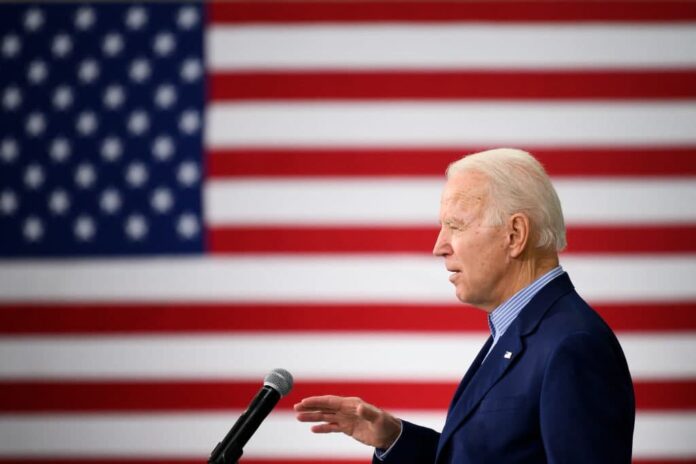
Iran Says Exchange of Message with Biden Team ‘Mere Speculation’

Biden’s Return to Iran Deal Prelude to Talks on Other Areas

Speaking in a weekly press conference on Tuesday, Ali Rabiei said, “The new US administration hasn’t taken office yet, and such issues are merely media speculation.”

“Officials of the new US administration have openly made comments, which cannot bring much credit upon them as long as the new administration hasn’t taken office. The Islamic Republic of Iran will not pay attention to remarks, but actions by the next US administration with regards to returning to its commitments under the JCPOA and UN Security Council Resolution 2231,” the spokesman added.

He said what is important to Tehran is the deeds, not words of officials in the new US administration.

He further reiterated Iran’s demand that other signatories to the Iran nuclear deal return to their obligations under the agreement.

“The policy of the Islamic Republic of Iran on the JCPOA and the possibility of the other signatories returning to the deal has been clearly announced by the Supreme Leader and the president,” he said.

“The Islamic Republic of Iran’s viewpoints have been announced on [the other signatories] returning to the JCPOA at the same point where it was left off,” he said.

Knowledge-Based Economy Pivot of Iran’s Development: Official

Mahmoud Vaezi, the chief of staff of the President’s Office, said the concept of “universities” has been closely intertwined with “innovation” in recent years.

“Until a decade ago, companies were mostly formed based on money, but in recent years, firms empowered by ideas and capabilities created by the brain have the upper hand,” he noted.

“Although, in the past, countries with military power were ahead [of other countries], today countries in possession of creative human assets have that power,” he added.

Vaezi noted universities are shifting from the education-based trend to one aimed at producing wealth from knowledge.

“Many of knowledge-based companies have contributed to the production of not only wealth, but also science in different countries,” he explained.

“The issue of knowledge-based economy is a must in the minds of the country’s decision-makers as one of the pivots of development,” he said.

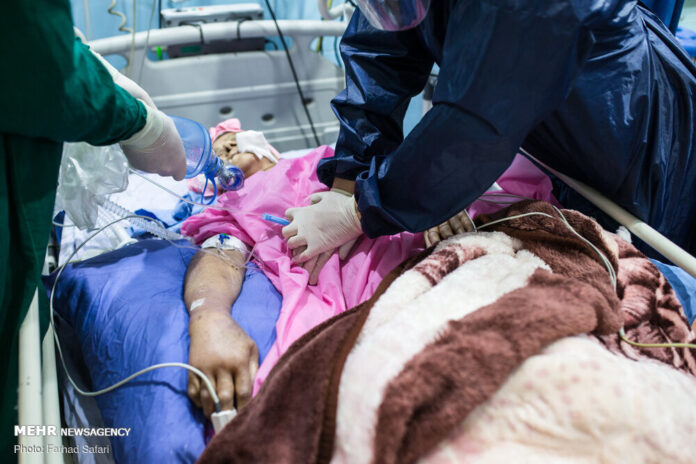
Iran’s COVID-19 Death Toll Hits 54,000: Health Ministry

In a press briefing on Tuesday, Health Ministry spokeswoman Sima-Sadat Lari reported 6,208 new cases of COVID-19 infection, raising the total number of cases to 1,170,743.

So far, Lari added, 903,998 patients have recovered from the disease or been discharged from the hospital.

Lari said 5,467 patients are also in critical conditions caused by more severe infection.

The spokeswoman noted that 7,149,357 COVID-19 tests have been taken across the country so far.

She said currently 205 cities are in the “orange zone” and 243 are in the “yellow zone” in terms of coronavirus outbreak.

A Look at Iranian Newspaper Front Pages on December 22

Iranian Newspapers

Aftab-e Yazd Newspaper:

1- #Buy_Vaccine

2- Danger of British Virus

3- Shanghai-NATO Confrontation or Bypassing Iran?

A Look at Iranian Newspaper Front Pages on December 22


Arman-e Melli Newspaper:

1- Ali-Akbar Salehi’s Untold Stories about JCPOA and Fakhrizadeh

2- Biden’s Opportunity Won’t Be Repeated

A Look at Iranian Newspaper Front Pages on December 22


Ebtekar Newspaper:

1- Rouhani: There’s No Problem with Revising Constitution

2- Oil Minister: Iran Reached Agreement with Russia on Expansion of Technical Oil and Gas Cooperation

3- Judiciary Chief: Neutralizing Sanctions Shouldn’t Be Delayed Even for One Hour

4- Iranian People Still Being Hurt by Sanctions: Will Iran’s Failure to Adopt FATF Standards Keep It from Buying COVID-19 Vaccine?

A Look at Iranian Newspaper Front Pages on December 22


Etemad Newspaper:

1- Considering Request for US Return to JCPOA with Positive View

A Look at Iranian Newspaper Front Pages on December 22


Ettela’at Newspaper:

1- Iran’s President, Parliament Speaker, Judiciary Chief Discuss Ways to Resolve Economic Woes

A Look at Iranian Newspaper Front Pages on December 22


Iran Newspaper:

1- Discussing Possibility of US Return to JCPOA

2- UK Flights to Iran Cancelled after Outbreak of Mutated Coronavirus

A Look at Iranian Newspaper Front Pages on December 22


Javan Newspaper:

1- P4+1 Ministers Tamed by Iran Parliament’s Bill

A Look at Iranian Newspaper Front Pages on December 22


Jomhouri Eslami Newspaper:

1- Iran Nuclear Chief Harshly Slams Parliament, Guardian Council, Ahmadinejad Governments on Nuclear Issue

A Look at Iranian Newspaper Front Pages on December 22


Kayhan Newspaper:

1- Senior MP: FATF Complements Sanctions; Expediency Council Won’t Pass It

2- It’s Good Europeans Are Ashamed before Us, Though It Doesn’t Give Us Anything: Salehi

3- 18,000 American Institutions Hacked

4- US Terrified of Iran’s Harsh Revenge

A Look at Iranian Newspaper Front Pages on December 22


Khorasan Newspaper:

1- World Shocked by New Coronavirus Outbreak

2- Reactions to Rouhani’s Account of Constitutions

A Look at Iranian Newspaper Front Pages on December 22


Mardom Salari Newspaper:

1- It’s Vital Priority to Import Coronavirus Vaccine

2- Oil Market Key Topic of Iran-Russia Discussions

3- P4+1 Once Again Stress Maintaining JCPOA

4- Third Republicanism: From Possibility to Practice

* Rouhani Talks of Changing Constitution after 31 Years

A Look at Iranian Newspaper Front Pages on December 22


Shahrvand Newspaper:

1- Will COVID-19 Turn into COVID-20?

A Look at Iranian Newspaper Front Pages on December 22


Shargh Newspaper:

1- Proponents and Opponents of FATF against Each Other

2- Rouhani Longs to Implement His Favourite Law: Talk of Referendum Once Again

3- Rocket Attack Hits US Embassy in Iraq

4- Salehi Slams Parliament: Who’s Going to Pay for Building IR-6 Centrifuges?

A Look at Iranian Newspaper Front Pages on December 22

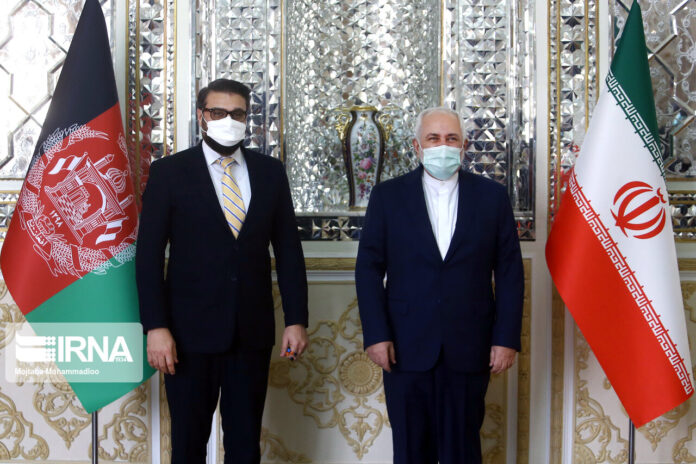
Iran’s Zarif, Afghan National Security Advisor Meet in Tehran

Iran's Zarif, Afghan National Security Advisor Meet in Tehran

In the meeting, Foreign Minister Zarif said supporting the Islamic Republic of Afghanistan is the principled policy of the Islamic Republic of Iran.

He highlighted the necessity for the US withdrawal from Afghanistan, said, “We believe a comprehensive political solution with the presence of all Afghan groups will be the best guarantee for lasting peace in this country.”

He urged both Tehran and Kabul to enhance consultations at bilateral, regional and international levels.

Zarif expressed satisfaction with the inauguration of the Khaf-Herat railway which came on stream recently, and added the project will pave the way for closer cooperation between the two countries and facilitating connections with regions in the East.

“The Dogharoon crossing should be refurbished in order to boost mutual border cooperation,” Zarif underlined.

The Afghan official, in turn, presented a report on the latest developments pertaining to peace talks in his country, and appreciated Iran’s backing for the Afghan government and people.

He stressed the necessity of boosting political, economic and security cooperation.
The Afghan official also expressed hope linking routes such as the Khaf-Herat railway will further boost regional cooperation.

Among other topics on the agenda during the meeting were mutual cooperation on political, economic and security fronts, holding a meeting of the Iran-Afghanistan Joint Committee and following up on other ongoing projects as well as closer cooperation in the water sector.