Tuesday, January 20, 2026
Home Blog Page 2601

Borsaq: A Yummy Iranian Kurdish Bread

The bread is made with ingredients such as milk, sugar, flour, oil and eggs. In order to make the Borsaq bread, these ingredients are mixed to form a dough, which is then formed into a flat, round-shaped piece and fried.

It is noteworthy that the people of Kurdistan make this bread in two forms: the type filled with things like walnut powder, fennel power, dried mulberry powder, etc., and the plain type.


Ingredients for the plain Borsaq bread

Milk: One litre

Sugar: One glass

Eggs: One egg

Flour: Around one kilogramme

Solid oil: One spoonful

Salt and turmeric: Very little

Frying oil or solid oil: As much as needed

Recipe

Mix all the ingredients to get a dough. If the dough sticks to your hands, add enough flour to keep it from sticking to the hand. Then keep kneading the dough until you get a consistent mixture.

Wrap the dough in cellophane bags and let it stand in a rather cool place for one day until it rises. If room temperature is so high that the dough may turn sour, you can put the dough in the bottom floor of the fridge.

Take pieces as big as walnuts from the dough, which has risen fully, put them on the backside bottom of a copper frying pan already covered in flour, and make the pieces flat, but not too thin, using a rolling pin or your hands. Then fry them in rather hot oil.


Ingredients for filled Borsaq bread

Flour: Eight glasses

Sugar: One glass

Animal oil: Half to two thirds of a glass

Baking powder: Two dessert-spoonfuls

Turmeric: One to one-and-a-half teaspoonfuls

Milk: Two glasses

Walnut powder: One glass

Dried mulberry powder: Three to four spoonfuls

Half-crushed fennel: Two spoonfuls

Egg yolk: one or two

Recipe

Mix flour, salt, sugar, baking powder, fennel and turmeric in a deep container. Then add oil to the mixture and rub the ingredients with the palms of your hand well to prevent them getting lumpy.

Then fold in milk and knead the dough well (10 to 15 minutes) until you get a consistent dough. If the dough is hard, add some milk. Cover the dough with cellophane and put a clean handkerchief on it before letting the dough stand for two hours.

Take some dough the size of a small apple, put in on the palm of your hand, fill its inside with two to three spoonfuls of walnut powder, cinnamon and dried mulberry powder. They bring the edges of the dough together and move the dough on your palm a little bit to make the dough round-shaped. Afterwards, spread the dough on a cooking board using a rolling pin until the dough is 1.5 to 2 centimetres thick. Rub whisked yolk, or sprinkle fennel or Sesame seeds on it before putting the dough in the oven and leaving it at a temperature of 180 degrees centigrade for 15 to 20 minutes. Then put it in the oven’s warmer until its surface gets golden in colour.

As with the recipe for the plain Borsaq bread, here you may also fry the bread instead of using the oven.

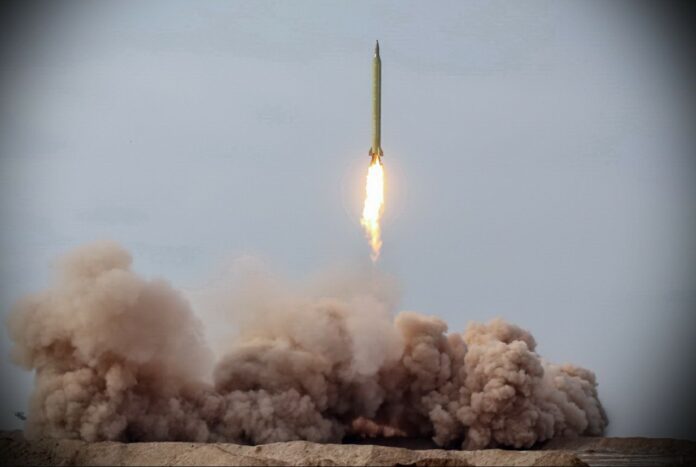
IRGC Releases Footage of 2020 Missile Attacks against US Base in Iraq

The missiles, fired upon the order of IRGC Aerospace Commander Brigadier General Amir-Ali Hajizadeh, struck the American-occupied base in retaliation for the US assassination of Iranian anti-terror commander Lieutenant General Qassem Soleimani, who had been killed in a drone strike on January 3, 2020, near Baghdad International Airport.

In the video released on Friday, Hajizadeh is seen in the operation room saying that the Iranian missiles are fired one by one so as to give the American troops a chance to escape and take shelter, as Iran is not after claiming their lives and committing a crime, as the US president did by killing Soleimani.

Iran Stayed in JCPOA to Have US Sanctions Lifted: Official

Iran Says New US Sanctions Show Trump’s Desperation

Mahmoud Vaezi, the chief of staff of the Iranian president’s office, said Tehran remained in the JCPOA to secure the Iranian nation’s rights as well.

“The Iranian government knew from the outset that it should not play in the United States’ court in order to both disgrace the US politically in the world and allow us to do our job,” he said.

“Since Trump came to power, the US had been seeking to make Iran pull out of the JCPOA by exerting different types of pressure on the country,” said Vaezi.

“To that end, the US first pressured the Europeans into not fulfilling their JCPOA commitments. Finally, when the Americans failed to achieve all of their objectives, the US itself withdrew from the JCPOA,” he added.

“The United States pulled out of the JCPOA, hoping that Iran would immediately follow suit,” said Vaezi.

“But based our analysis and understanding of the world, we didn’t get involved in that game,” Vaezi noted.

He underlined that Iran scaled down its obligations under the JCPOA in five stages at two-month intervals, but, at the same time, preserved the agreement.

“We maintained the JCPOA in case global conditions changed, so that we would be able to try to restore our rights, i.e., the lifting of sanctions, and also to secure Iranians’ rights in other areas within the same framework,” he said.

“Accordingly, we did not pull out of the JCPOA. And today, we are seeing that the JCPOA provides good grounds for us to achieve our set goals in the short run,” he said.

IRGC Starts Missile, Drone Drills in Central Iran

The military exercises, codenamed Great Prophet 15, were started with massive ballistic missile launches and combat drone operations.

During the first phase of the drills held on Friday, ballistic missiles of Zolfaqar, Zelzal and Dezful classes with detachable and guided warheads were fired, and combat drones dropped bombs.

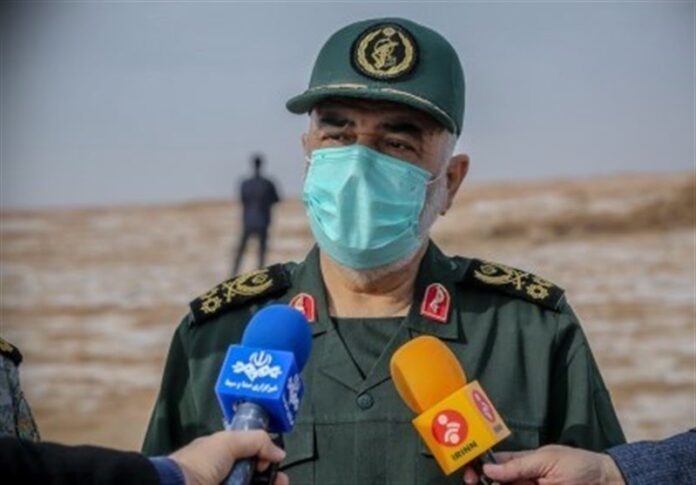
IRGC Chief Commander Major General Hossein Salami and Aerospace Commander Amir-Ali Hajizadeh, among other top commanders, were attending the drills.

Iran Inaugurates 60 Projects in Its Free Trade, Industrial Zones

In a videoconference on Thursday morning, President Rouhani ordered the inauguration of the 60 economic and infrastructural projects in the free trade-industrial zones and the special economic zones.

The projects are situated in six free and special trade zones across the country, including four industrial plants in the Sahlan Special Economic Zone, a steel production factory, and four other industrial plants in the Salafchegan Special Economic Zone in Qom Province.

The other projects that came into operation on Thursday include an extra-heavy crude oil refinery and 26 economic and infrastructural projects in Qeshm Free Zone, four pier construction projects at port complexes and coastal areas, 14 industrial and infrastructural projects, energy and industrial plants in Pars Special Economic Energy Zone in Bushehr Province, as well as three logistical and industrial development projects in Kaveh Special Economic Zone in Markazi Province.

Carried out with a total fund of 9.46 trillion tomans, the sixty projects have created employment for over 3,200 people.

Iran, Pakistan Discuss Closer Trade Cooperation

Iranian Minister of Industry, Mines and Trade Alireza Razmhosseini held a phone conversation with Pakistani Minister of Commerce, Textile, Production and Investment Abdul Razak Dawood.

During their talks, the Iranian minister said he was pleased to see the Rimdan-Gabd border crossing opened, and said activities at that border point should be boosted to further enhance mutual trade transactions.

The Ridman-Gabd border point is the second official border crossing between Iran and Pakistan.

Razmhosseini also invited the Pakistani official to take part in the ninth meeting of the Iran-Pakistan Joint Trade Committee to be held in Tehran.

The Iranian minister said talks on a free trade agreement will be finalized at the planned meeting.

He expressed hope bilateral tiles will further expand with the conclusion of joint agreements and memoranda of understanding.

He also invited Pakistani investors to work in Iran.

The Pakistani official, in turn, said he was happy to see the Rimdan-Gabd border crossing opened, expressing his country’s readiness to boost mutual trade ties.

He also announced that his country would be keen to take part in the ninth meeting of the Iran-Pakistan Joint Trade Committee.

He said Islamabad seeks long-term trade with Tehran, adding mutual trade will definitely increase in the future.

He then stressed the importance of mutual investment in both countries.

Iran Launches Int’l Cooperation Program on Technological Development

Under the cooperation plan, non-Iranian experts and entrepreneurs can hand in their applications to receive support and loans from the International Interactions Centre of the Science and Technology Department of the Iranian president’s office.

The move is aimed at promoting the recruitment mechanism and utilizing the potentialities of scientists, researchers, technological experts and entrepreneurs.

Officials say the program facilitates the establishment of links between international experts and local knowledge-based and innovative companies.

A program is also underway to facilitate conditions for Iranian expats who have returned home.

Iran, Iraq Sign MoU on Boosting Bilateral Economic Cooperation

The deal was clinched at the close of the fourth meeting on Iran-Iraq economic cooperation at the Iranian Energy Ministry.

“The meetings featured very fruitful discussions for both sides, and they are predicted to serve the interests of both countries,” said Iranian Energy Minister Reza Ardakanian.
“Technical committees were formed in various trade areas and they exchanged view on technical and engineering services as well as other issues of mutual interest,” the minister added.

Ardakanian added a commercial committee will soon meet as part of these meetings.
“The industrial and financial affairs committees will also be formed to follow up on issues of mutual concern,” he added.

The minister underscored proper frameworks have also been set up for cooperation between the private and state sectors.

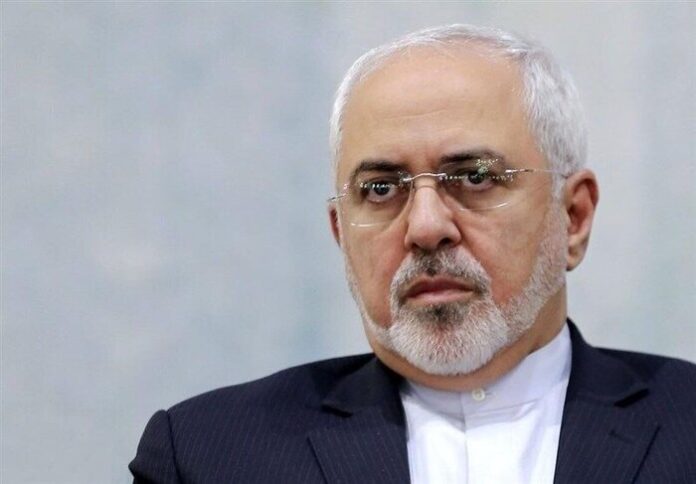
Iran Pushing for UN Condemnation of US Killing of General Soleimani: Zarif

“Iranian and Iraqi courts are where legal proceedings should take place on the assassination of General Soleimani,” he said.

Zarif also touched upon a statement by the Supreme Judicial Council of Iraq on the issuance of an arrest warrant for US President Donald Trump for his crime of assassinating the commanders of the resistance front.

“This warrant was issued following much effort by the Iranian foreign ministry and other institutions to pursue the matter,” he said.

What Matters Is Lifting of Sanctions, Not US Rejoining Nuclear Deal: Iran

Saeed Jalili, a member of the Supreme National Security Council, echoed statements made by Leader of the Islamic Revolution Ayatollah Seyyed Ali Khamanei regarding the sanctions, and said what is important for Iran is the lifting of sanctions.

“We are not insisting that the US return to the JCPOA, nor are we in a hurry for the US to do so,” he said in an exclusive interview with Khamenei.ir, the official website of Iran’s Leader.

“Whether the US will return to the JCPOA or not is not our issue,” he added.

“Our logical and rational demand is that sanctions be lifted,” Jalili noted.

“Iran has every right to see sanctions lifted,” the official stressed.

Jalili added the JCPOA was basically a tool to have the sanctions lifted.

“The objective was to have the sanction lifted,” he explained.

As the Leader has stressed, Jalali said, sanctions must be “lifted,” not “suspended.”

“Two important [categories of] sanctions include banking and oil sanctions,” which must be lifted, he said.