Saturday, April 18, 2026
Home Blog Page 2584

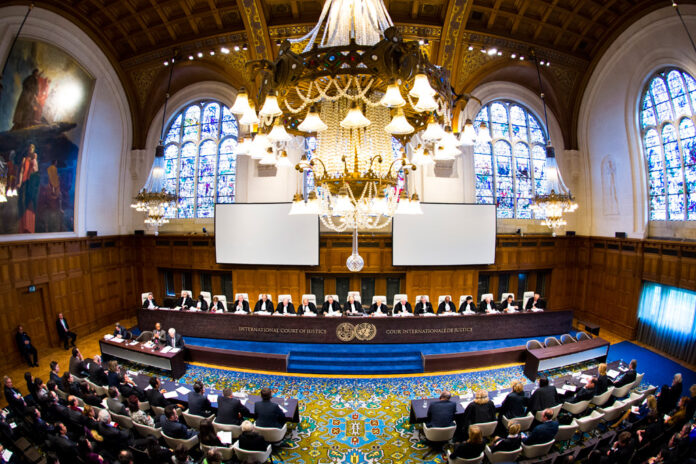
ICJ Ruling ‘Legal Victory’ for Iran: President Rouhani

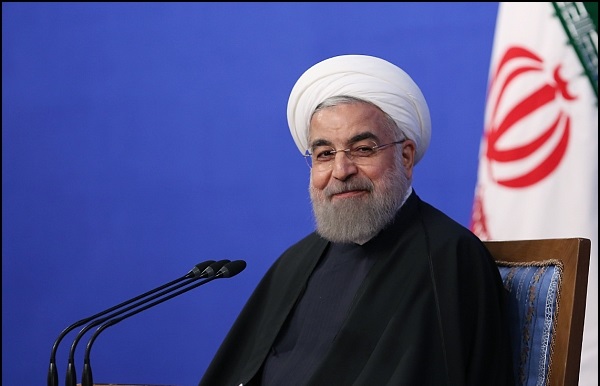
President Hassan Rouhani said Thursday the ICJ has made it clear that it has jurisdiction over Tehran’s lawsuit which calls for the lifting of the US sanctions against Iran that affect humanitarian issues.

“The Americans had said the ICJ was not competent enough to look into Iran’s lawsuit,” he added.

The president said US leaders tried hard to create the impression that the ICJ had no jurisdiction over the case, but to no avail.

President Rouhani also said the court had already issued an injunction obliging the US to remove all the sanctions.

“The International Court of Justice issued a verdict in favour of Iran despite the fact that the US had mobilized thousands of well-known legal experts [against Iran],” He said.

“The ruling was that the court issued an injunction requiring the United States to immediately lift all sanctions in the humanitarian domain,” the president said.

“Of course, the US refused to comply with the court order, which was a new violation in its own right,” said the president.

“All senior judges in the court overwhelmingly ruled against the US, which was a major victory for Iran,” he noted.

World Order Must Be Re-Engineered Based on New Emerging Powers: Iran DM  

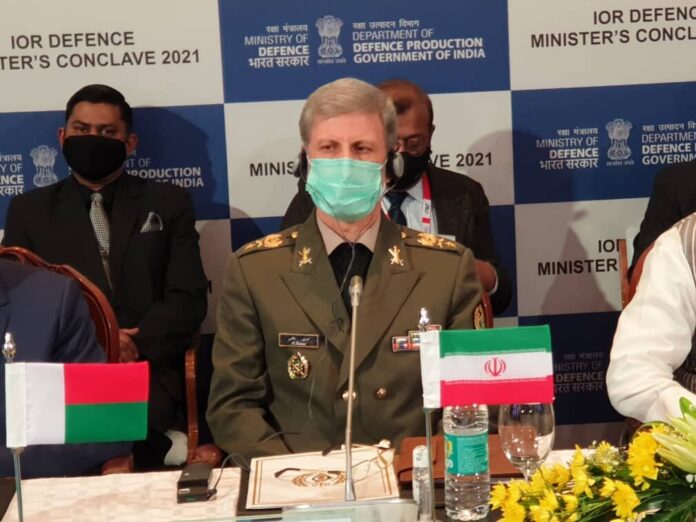
Brigadier General Amir Hatami, the Defence Minister of the Islamic Republic of Iran, made the remarks in a speech at the IOR Ministerial Conclave held in India’s Bengaluru on 4 February 2021.

What follows is the full text of his speech:
In the name of God, the most beneficent, the most merciful

At the outset, I would like to extend my sincere regards towards the distinguished guests, high ranking officials, commanders and senior officers and to I express my heartfelt happiness to be in such an august gathering.

It is necessary for me to thank the government of Republic of India and the Hon’ble Defence Minister H. E. Rajnat Singh for inviting me to this forum and thereby giving me the opportunity to share my viewpoints with you.

Hon’ble Chairperson,
Dear guests, ladies and gentlemen,
The security developments and events in the past recent decades reminds a crucial point to the world and that is the necessity to re-engineer the world order on the basis of the new emerging powers and to dismiss the conventional polarizations. The bitter events in the past decade has proven to us that the prescribed patterns and models of the hegemonic powers result only in violence, extremism, terrorism, bloodshed, border disputes, conflict, insecurity and destruction.

We have clearly witnessed how the world could become more dangerous and subject to more insecurity as a result of incompetent, ignorant, unruly and hate-spreading rulers coming into power, in particular in the large and influential countries of the world. The unilateral dismissal of international treaties, dishonoring of significant treaties involving the future of the planet and the environment on account of being not economical, pulling out of security agreements due to their costliness, onslaught on the UN and the WHO because of them not complying with an individual state’s interests and last but not least departure from the 5+1 unclear agreement with the Islamic Republic of Iran in order to force Iran for more concessions are all examples that indicate that the big powers or their commitments and accountability may no longer be trusted.

The most disastrous and heinous act in dastard assassination of Iran’s national hero and the international champion of fighting against terrorism, martyr General Ghasem Soleimani, and Iraq’s national hero, martyr Abu Mahdi Muhandis, and their companions and also the recent dastard assasination of noted Iranian defence and nuclear scientist Martyr Dr. Mohsen Fakhrizadeh, disclosed that the prepetrators and sponsors of state terrorism are not only untrustable but also they betray the high objectives of humanity like combating terrorism and saving the oppressed people. Rather, the entire world saw how the grateful people of Iran, Iraq, Syria and many other nations held such glorious memorial functions for those who had sacrificed their lives for them.

Hon’ble chairperson, ladies and gentlemen,
The Islamic Republic of Iran considers the Indian Ocean as gateway towards the world through the sea and we deem the Indian Ocean states entitled to all the blessings of this vast body of water including security and progress. Iran, due to its unique geopolitical and geostrategic position through its vast coastal line along the Persian Gulf, Sea of Oman and control over the strategic strait of Hormouz enjoys a distinguished position in the Indian Ocean as this vast body of water is the gateway towards Caucasus, Europe and West Asia and Iran is willing to use this advantage for the benefit, progress and security of itself and other regional countries. Therefore, we believe that this region must be governed via progressive and advanced security standards and the Hormuz Peace Initiative has respectively been proposed by the Islamic republic of Iran.

The Islamic Republic of Iran does not welcome militarization of the region and is concerned about unconstructive arms races, accumulation of weapons and transformation of the region into a weapons arsenal. Indeed such a phenomenon is a result of a malevolent and ominous conspiracy of some extra-regional hegemonic powers in order for them to sell more arms to regional countries for their own economic advantage and to prevent countries in the region from internal development as their limited resources would be wasted away by making extravagant military expenses.

Therefore, the regional countries must use more caution and we are of the opinion that by joining forces and strengthening our empathy we may collectively control and manage insecurity.
We believe that the Indian Ocean has high potentials for the global peace and it may serve as a role model for the rest of the world and this is achievable as a result of mutual cooperation and commitments, making initiatives and by use of logics and courageous acts.

Ladies and gentlemen,
What is important today for the region is collective security and progress on the basis of regional potentials, capabilities and strengths which must result from participation of all regional countries. It is a matter of criticism that why in spite of this vast, large and rich oceanic water, some littoral countries are facing underdevelopment because this would spark insecurity in the region as there is an undoubtable relation between development and security.

To overcome this challenge, we must benefit from the rich civilizational potential of littoral countries and involvement of affluent states for the management of this situation and resolution of the difficulties which would necessitate sociological, economic and cultural studies at the regional level besides foreseeing possible crises, harms and threats ahead of the region in the future, and thus they need to be pursued along with security and defense agendas.

Ladies and gentlemen,
We should not be indifferent towards the security developments in the region involving the Indian Ocean States as the insecurity in one place would impact the surrounding areas and beyond. For example the imposition of sea blockade on Yemen which is a stark case of maritime terrorism has stopped the arrival of pharmaceuticals and food stuff to the innocent people of Yemen and we are witness in the 21st century to a humanitarian catastrophe there. It is regrettable and history never forgets that this oppression against the people of Yemen is supported by some international organizations and this criminal act is perpetuated by taking recourse to a Resolution of the United Nations which is supposed to be safeguarding and ensuring global peace and security. This is while some big powers turn a blind eye to this crime in order to sustain their financial gains from selling arms and weapons.

It is duty of all of us to condemn such criminal acts and to bring an end to this blockade at the earliest and to facilitate reaching of humanitarian aids to the people of Yemen. It is expected that this subject be stressed and pursued in tandem with with other high objectives of this association or forum.

The experience of the Islamic Republic of Iran in fighting against terrorism shows that terrorism is like a contagious disease which would grow and develop anywhere it finds a breeding ground and powers like the US or the Zionist Regime would take advantage of terrorism as an instrument for imposing their influence or will on others.

While warning agianst the expansion of terrorism in this region and highlighting the necessity to foresee such crises, we express our readiness to share our experience and knowledge to other countries in the Indian Ocean region.
Ladies and gentlemen,

The Islamic republic of Iran, in order to further benefit from its maritime potentials and to ensure security in the Persian Gulf, Sea of Oman, and Indian Ocean region, has prioritized development of its maritime industry.

Besides, it has made huge investments along its southern coastal lines such as the Makran and Chabahar. On other hand, Iran intends to tie the potentials of this region in the South with the potentials existing in the Caspian sea in the North and to help to development of the latter region as well. In this journey, we hope to benefit from the experience and investments of other countries.
At the end, I once again declare the readiness of the Islamic Republic of Iran for active participation in the subjects concerning the Indian Ocean.
Thanks for your attention.

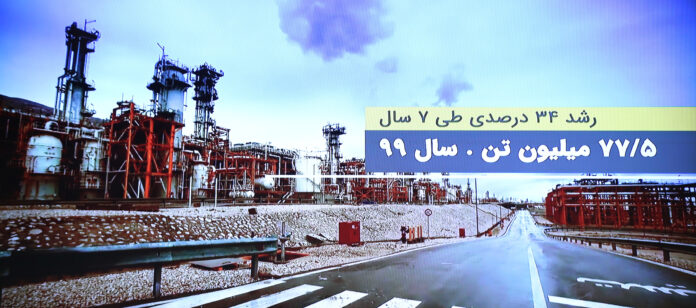
Iran Puts into Service Five Major Industrial Projects  

The projects came on line in western Zanjan province in a virtual ceremony attended by President Hassan Rouhani.

The projects include a steel complex, phase two of a factory producing industrial wires, an iron ore concentrates factory, a textile facility and a factory turning out different types of plastic containers.

The projects have come with a price tag of Rls. 70 trillion combined.

When the facilities become fully operational, they will create more than 1,700 jobs.

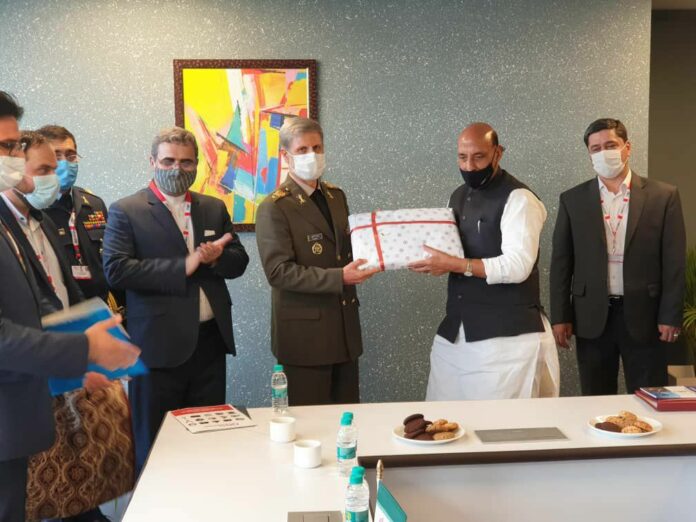
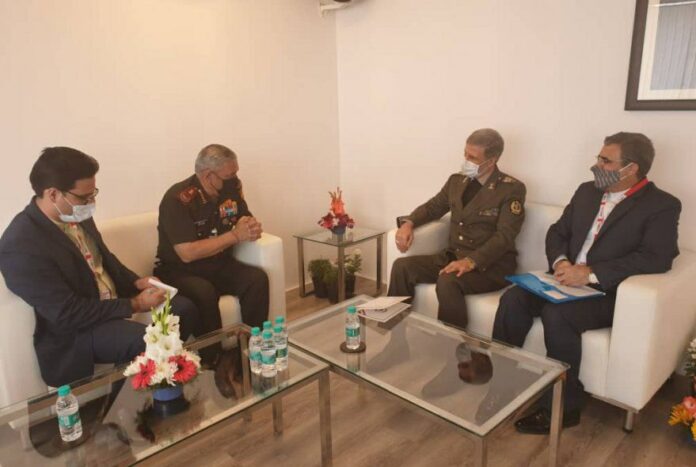
Iranian, Indian Defence Ministers Call for Closer Mutual Security Cooperation

In the meeting, the two sides discussed mutual cooperation as well as regional and international issues.

The visiting Iranian defence chief underlined that part of historical and cultural commonalities between the two nations is their struggles against colonialism and tyranny.

General Hatami stressed the need to draw on the numerous potentialities in both countries to further expand bilateral cooperation on all fronts, namely in the defence and security sector at bilateral, regional and international levels.

He said such cooperation will serve the interests of both countries.

General Hatami said the Chabahar port in southern Iran could be an opportunity for both sides to forge closer regional cooperation.

For his part, the Indian defence chief expressed his gratitude to the high-ranking Iranian defence delegation for visiting his country.

The top military official touched upon the age-old relations between the two countries, and underline the importance of maintaining the growing ties between Tehran and New Delhi, which include relations in the defence domain.

Iran Congratulates Sri Lanka on Independence Day

In a message on Thursday, President Hassan Rouhani expressed congratulations on the arrival of the anniversary of the Democratic Socialist Republic of Sri Lanka.

The president said he was confident that given the political will that leaders of both countries have, the two sides can further enhance mutual cooperation on different fronts to serve the interests of both nations.

Iran’s Defence Chief Meets Indian Top General

In the meeting, the Iranian defence chief touched upon the historical and cultural commonalities between the two countries.

He said Tehran and New Delhi have common grounds on many regional and international issues, including the geographical potential that the two countries have at seas and in the Indian Ocean Rim region.

“The existence of these potentialities can play a key role in the promotion of relations between the two countries, especially in the defence and military domains.

The top Indian general, in turn, expressed his gratitude to the senior Iranian defence-military delegation for visiting his country and taking part in the opening ceremony of an aviation exhibition in Bengaluru.

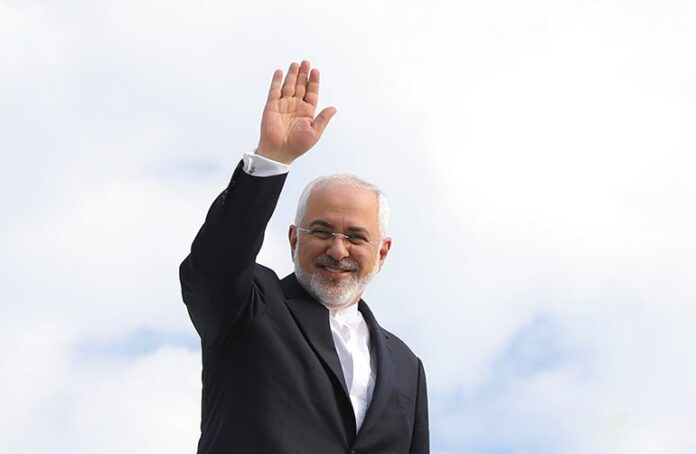
ICJ’s Rejection of US Objections Another Legal Win for Iran: Zarif

“The ICJ just dismissed all US preliminary objections in the case brought by Iran over unlawful US sanctions,” said Mohammad Javad Zarif in a tweet.

“Another legal victory for Iran following 3 Oct. 2018 Order,” he added.

Zarif then called on the United States to deliver on international commitments.

“Iran has always fully respected int’l law. High time for the US to live up to int’l obligations,” he said.

ICJ Dismisses US Objections on Iran Sanctions Case: Spokesman

In a statement on Wednesday, Saeed Khatibzadeh said legal proceedings will be launched into the case based on the ICJ ruling.

“Today at 3 pm the Hague local time, the International Court of Justice announced it has jurisdiction to look into the case on breaches of the 1955 Treaty of Friendship [Cooperation and Mutual Assistance],” he said.

“Based on conclusive evidence and documents as well as the documented statements of defence presented to the court by the Islamic Republic of Iran’s legal team in cooperation with the Centre for International Legal Affairs, the Ministry of Foreign Affairs and other lawyers and counsellors, the court rejected the initial objections by the US and announced it is competent to review the lawsuit filed against the US government,” Khatibzadeh said.

“Accordingly, substantive proceedings will be launched into the case,” he explained.

“With the issuance of this ruling (ICJ announcing it is competent to review the case), Iran secured its second legal success during the proceedings into the case,” he said.

“Its subject concerns the United States’ reimposition and tightening of inhumane sanctions against our country since May 8, 2018,” Khatibzadeh noted.

“Earlier on October 3, 2018, the ICJ issued an injunction in favour of Iran, obliging the US to remove whatever impediments caused by sanctions in the domains of medicine and medical equipment, foodstuffs and agricultural produce, and parts and services related to civil aviation safety,” he explained.

“However, in line with their ‘maximum pressure’ policy and economic war against the Iranian government and nation, the Americans have refused to abide by the ICJ’s verdict so far,” he said.

Khatibzadeh underscored that Iran has duly informed the International Court of Justice of the necessity of compliance with the injunction and Washington’s violation of it.

Now, he noted, with the court announcing its jurisdiction over the case, an opportunity has emerged for the court to also look into the United States’ refusal to abide by the injuction while the court is moving forward with substantive proceedings into the case.

“Although the ruling issued today pertains to the court’s competence to look into the case, it indicates Iran’s demands are rightful at this stage of the proceedings, and with this success, the final phase of proceedings, i.e., substantive proceedings will be launched into the case,” he said.

“Using international mechanisms is part of the policy of the Islamic Republic of Iran’s government and Ministry of Foreign Affairs to secure the rights of Iranian people on the international stage, which has always been on the agenda of this ministry,” he added.

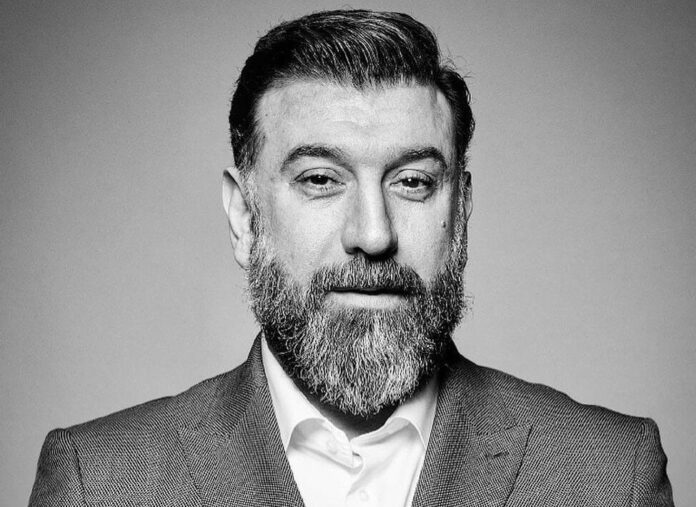
Another Popular Footballer Dies of COVID-19 in Iran

Ansarian passed away on Wednesday at Farhikhtegan Hospital of Tehran after weeks of battling with the virus.

He started his footballing career in Fajr Sepasi in 1996 and joined Persepolis two years later.
Ansarian also represented the Iranian national football team from 1998 to 2007.

In the past few years, he had become an actor and two of his latest movies were to be screened at this year’s Fajr Film Festival, which is right now underway.

Last week, Mehrdad Minavand, a member of Iran’s national team in the 1998 FIFA World Cup, died of COVID-19 in Tehran.

Minavand was also a member of Persepolis football club.

Iran Opposed to Any Foreign Interference in Iraq’s Affairs: Rouhani

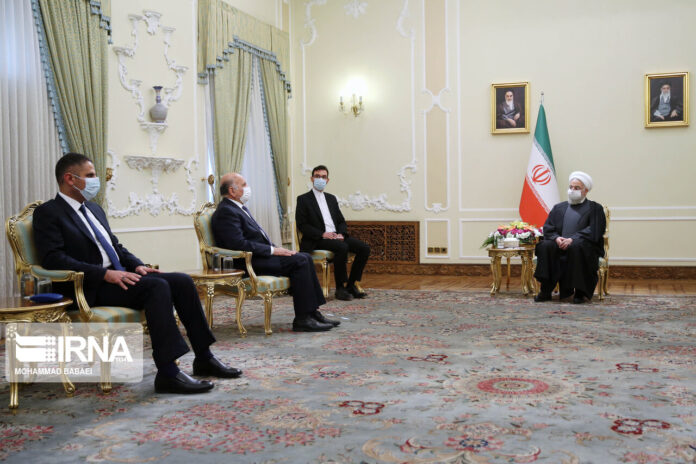
“The Islamic Republic of Iran opposes any foreign interference in the internal affairs of Iraq and considers it to be to the detriment of the Iraqi people and the whole region,” President Rouhani said in a Wednesday meeting with Iraqi Foreign Minister Fuad Hussein in Tehran.

“The cowardly assassination of Martyr Qassem Soleimani and Abu Mahdi al-Muhandis was an example of the most shameful foreign intervention in Iraq’s internal affairs, which was carried out in the form of a state terrorist operation and targeted the heroes of the victory over ISIS,” he noted.

Rouhani welcomed the deepening of Tehran-Baghdad relations, and emphasised that the Islamic Republic of Iran and the Republic of Iraq have strong commonalities which connect the two countries to such an extent that the results and fruits of this brotherly and strategic bond have gone beyond the two countries and ensures the security and stability of the whole region.

The Iranian president said, “Regarding their economic potential, Iran and Iraq can complement each other as two economies, and the volume of trade should reach $20 billion a year.”

Referring to the holding of a joint commission between the two countries, the President said, “By following up and implementing the agreements of this commission, an important step can be taken in the development of economic relations between the two countries.”

Referring to solving the problems of the Shalamcheh-Basra railway, Rouhani said, “We believe that this project is completely economic and commercial, and is diversifies the transportation routes between Iran and Iraq.”

The President also stressed that for Iran, supporting stability, security, independence, territorial integrity, as well as dignity and authority of Iraq, and promoting its regional and international status are of special priority.

“Cooperation of the two countries during the invasion of ISIS forces is a great example of strengthening bilateral relations to save the region from Takfiri terrorists.”

The President also stressed that Iran supports Iraq’s presence in regional interactions and believes that Iraq is an important party in the region’s political and security interactions.

Rouhani expressed hope that the new US administration would reach the conclusion that its presence in the region is detrimental to security and would reconsider this policy.

In turn, Iraqi Foreign Minister Fuad Hussein described the Iranian President’s visit to Iraq as historic and unforgettable, saying, “In addition to deepening bilateral relations, this visit creates more opportunities for cooperation and speeds up the implementation of agreements.”

The Iraqi Foreign Minister said, “According to various agreements reached by the officials of the two countries, interactions and relations in various economic and trade fields are being pursued, and Iraq seeks to expand and fully develop relations with Iran.”

The Iraqi Foreign Minister added, “The Iraqi people and government are always grateful for Iran’s support and cooperation in the fight against terrorism in Iraq, especially ISIS, and will never forget this.”

“Baghdad is persistently pursuing the withdrawal of foreign troops from Iraq and this is being done through negotiations and actions that have been taken,” he noted.