Friday, December 26, 2025
Home Blog Page 2492

Remains of 12,000-Year-Old Infant Discovered in Hotu Cave in Northern Iran

The director general of Cultural Heritage, Tourism and Handicrafts Department of Mazandaran Province said the exploration team, led by Hassan Fazeli Nashli, found the skeleton of a child while scanning the lower layers of the Hotu cave. Seifollah Farzaneh said the child is buried in a sitting position and has a necklace of wolf teeth around her neck, which is the first archaeological discovery with such adornments.

“The discovered skeleton belongs to a six to eight-months-old infant and dates back to the epipaleolithic period, which goes back more than 12,000 years,” Farzaneh said.

“Based on the report by the head of the archaeological team all main parts of the infant’s skull are painted red with ocher and a necklace seems to be wrapped around its neck twice. Three teeth belonging to a predator, probably a wolf, are also discovered among the neck vertebrae, which in terms of precedence in Iran, are among the oldest archaeological finds on hunter gatherers with such adornments.”

The official also said the research team believes no such rich evidence on hunter humans has previously been found in Iran. He further explained that two archaeologists, Hamed Vahdati-Nasab and Hassan Fazeli Nashli, each had previously found a single wolf bone during exploration of Komishan cave and its archaeological site. But he said these were not obtained from inside graves and were spotted on their own within cultural layers.  

Farzaneh also said the noble burial should apparently be considered a manifestation of one of the most sentimental episodes of the life of hunter humans in Mazandaran Province. 

Hotu and Kamarband caves are among the most famous archaeological caves of Iran. They are located near the city of Behshahr and next to Shahid Abad (Trojan) village, which lies on the slopes Alborz mountain range. These caves were first discovered and explored by a team of American archaeologists from Pennsylvania University, headed by Carlton Kon. The caves are significant as they put on display the dwellings of the last cave dwellers in Iran just before the ruralism period began. Hotu and Kamarband caves contain archaeological layers from Epipaleolithic, Neolithic, Chalcolithic periods as well as the Stone Age and Iron Age and Parthian Period.

Some Key Issues Remain to Be Settled in Vienna Talks: Iran

Iran has reacted to comments by Mikhail Ulyanov, Russia’s representative at the JCPOA Joint Commission, who has indicated that the current negotiations in Vienna could be the last and final round of talks.

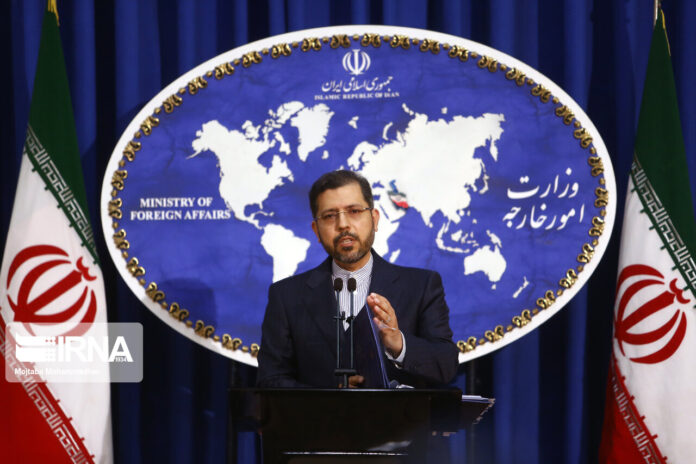
“We once again announce the position of the Islamic Republic of Iran; we carefully move forward with the talks we are holding in Vienna,” said Iranian Foreign Ministry Spokesman Saeed Khatibzadeh.

“Any round of talks could have been the last one, but the negotiations continued as some issues had still remained [unresolved],” said the spokesman in a press conference on Monday.

“If the outstanding key issues are settled, the talks could be the last round, but otherwise, they will continue,” he said.

“Basically, we shouldn’t rush to judgement about which round of talks could be the last one,” he noted.

“Good and considerable progress has been made with the negotiations in all three working groups, but key issues remain. These issue should be settled carefully, too,” the spokesman added.

He noted all US sanctions should be lifted and Iran should verify that the sanctions have actually been removed.

“This verification will take place within the framework of the formulas being discussed in Vienna,” he said.

After that, he added, Iran will roll back the measures it has adopted in response to the US and other parties’ failure to live up to their commitments.

“There are no deadlocks in the Vienna talks, and we have come to reviewing key issues,” said Khatibzadeh.

“Neither are we in a rush to reach an agreement, nor do we allow the talks to drag on,” he said.

“If decisions need to be made in Tehran with regards to the talks, the issue will definitely be brought up in the capital,” said the spokesman.

He said people’s rights and interests are the yardstick against which to measure other things.

“Accordingly, the Iranian negotiating team has moved forward with the talks based on the executive instructions of the capital,” he added.

He reiterated that all sanctions imposed on Iran by former US President Donald Trump are aimed at depriving Iranian people of the benefits of the JCPOA.

Negotiation Not Sole Way Forward: Presidential Candidate Jalili

Jalili

Jalili, who once led Iran’s negotiating team in nuclear talks with world powers, believes success hinges on holding leverage and planning to effectively neutralise sanctions.

Jalili also touched on his role as the Iranian negotiator in the pre-2013 talks with western powers, saying he does not oppose negotiations. 

However, he said it would be wrong to put all eggs in one basket and wait for negotiations to resolve all problems. Jalili said the same is true “if we give ground and get unwarranted promises, in exchange.” 

“Our country should not be awaiting blessings by murderers of Qassem Soleimani,” Jalili said, in a reference to the assassination of the former commander of the Quds Force of the Islamic Revolution Guards Corps by the US in Iraq.

“A wrong approach and a weak performance cannot raise the country to the apex it expects. A wrong approach means we settle for the minimum, say we resolve today’s problems and do not have a plan for the future.”

 The former secretary of the Supreme National Security Council also said enemies should be divested from sanctions, which they use as leverage. He said he has plans to neutralise sanctions, including by the power of advanced technology. Jalili stressed that enemies should come to regret imposing sanctions on Iran.

Iran Fully Cooperating with IAEA to Help Vienna Talks Bear Fruit: Salehi

“In this letter, it is mentioned that Iran has decided not to extend a joint technical agreement, but the country will continue to register and keep data for another month in order to help Iran-IAEA talks come to fruition,” said Kazem Gharibabadi, Iran’s permanent representative to international organizations in Vienna.

The letter also underlines that Iran has, so far, cooperated with the IAEA by offering the necessary explanations and answers.

“We welcome the IAEA’s readiness to have active interaction with Iran aimed at settling a number of issues pertaining to the Safeguards Agreement without delay,” added Gharibabadi.

“We expect this mutual interaction will soon lead to practical results in this area,” he noted.

Iran Says Vienna Talks Ongoing in Serious, Intensive Way

The meetings have been held even on holidays without any change in the schedule, and have lasted even until late night.

In one of these meetings, the heads of the Iranian, Chinese, and Russian delegations held a trilateral meeting on Monday at Vienna Grand Hotel to discuss and exchange views on the latest status of the talks and to coordinate their stances.

In this meeting, the Iranian delegation explained to the Chinese and Russian sides Tehran’s viewpoints regarding the draft text and the remaining issues.

The Chinese and Russian delegations, in turn, provided explanations and shared certain comments, and once again underlined their full support for Iran’s stances.

All the three delegations stressed the significance of continuing the work in a serious way and free from any haste or unnecessary delay.

Immediately after the trilateral meeting with China and Russia, Iran’s chief negotiator Seyyed Abbas Araqchi started a quadrilateral meeting with the delegations of the European Union and the E3 (Germany, Britain, and France).

Coronavirus Death Toll in Iran Hits 80,000: Ministry

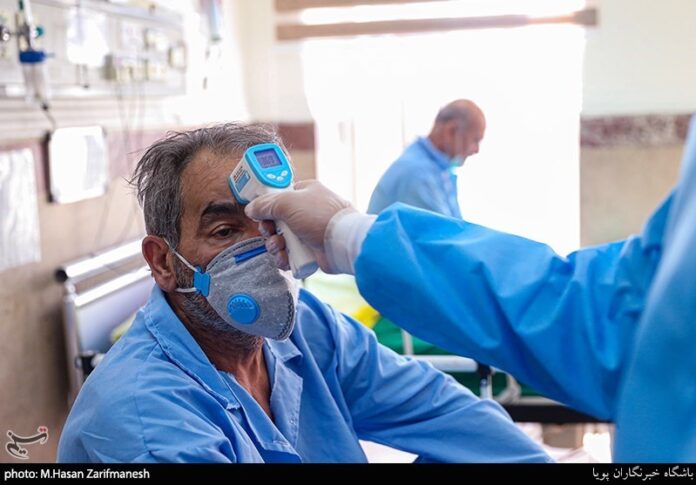
In a press briefing on Monday, Sima-Sadat Lari reported 11,042 new cases of COVID-19 infection, raising the total number of cases to 2,913,136.

So far, Lari added, 2,458,684 patients have recovered from the disease or been discharged from the hospital.

Lari said 4,160 patients are also in critical conditions caused by more severe infection.

The spokeswoman noted that 19,936,548 COVID-19 tests have been taken across the country so far.

She said 3,643,356 people have so far received the first dose of COVID-19 vaccine, and 522,707 have received the second dose.

Iran Sympathises with Canada’s Indigenous Community

“It is a big human tragedy in Canada’s history, which cannot be named anything but genocide,” Khatibzadeh told reporters on Monday.

“It is a source of regret that a country which tries to hide itself behind the humanitarian mask has such disasters in its history,” he added.

Khatibzadeh sympathised with the Indigenous community of Canada, and said, “The Canadian government should always remember that whenever it seeks to portray itself as an advocate of human rights, it had better first think of its dark days in the past and try to compensate for those dark days at home.”

The remains of 215 Indigenous children were recently found on the land of a former boarding school that was created to forcibly assimilate children of First Nations origin into Canadian culture.

The discovery was confirmed at the former Kamloops Indian Residential School near the city of Kamloops, some 354 kilometres northeast of Vancouver.

Chief Rosanne Casimir of the Tk’emlups te Secwepemc First Nation on Friday described “an unthinkable loss that was spoken about but never documented by the Kamloops Indian Residential School,” and noted that some of the children were 3 years old.

The cause of the deaths is unknown.

Ground-penetrating radar devices were used during the search and researchers think a wider search may well turn up more bodies.

IHTECC Creating Competitive Atmosphere for Iranian Knowledge-Based Firms

IHTECC Creating Competitive Atmosphere for Iranian Knowledge-Based Firms

“One of the duties of this centre in recent years has been to offer support to boost the export capability of, and develop markets for knowledge-based, technological and innovative companies through offering various services,” says Mahdi Ghalenoei, the head of the Centre for International Science and Technology Interactions of the Science and Technology Department of the Presidential Office.

“Policies currently adopted to support knowledge-based firms have, so far, involved the creation of platforms to offer services (such as corridors as well as the Exports Promotion and Technology Exchange Fund), and each company has been able to use the existing bylaws depending on its needs and at its own discretion,” he adds.

“To be successful in the exports arena requires the development of approaches and upgrading of the current programs,” he says.

“The programs of IHTECC serves as an effective step toward adopting an active approach and offering specific support to boost the exports potential of top companies,” Qalenoui says.

“Competition in the domain of high-tech products in international markets is very serious and tough due to the presence of well-established and popular brands,” he underlines.

“So, we will need to pick top companies and adopt precise strategies for offering services at this centre in order to further develop the exports of high-quality and competitive products,” Ghalenoei says.

“By evaluating knowledge-based companies based on indicators in the three domains of technical issues, corporate infrastructure and the amount of domestic and foreign sales, the IHTECC ranks and chooses top knowledge-based firms offering goods and services for exports and divides them into 5-star, 4-star, 3-star and talented companies,” he explains.

Supported by the Centre for International Science and Technology Interactions, this program kicked off a year ago with the evaluation of companies, he says.

According to him, the responsibilities of the club of high-tech firms exporting commodities and services include:

1. Identifying, choosing and reinforcing top companies capable of exporting goods and services

2. choosing companies to accompany Iranian officials in foreign trips

3. establishing specialized consortiums of companies

4. creating brands, guaranteeing the quality, offering warranty and after-sales services for products

5. absorbing incentives and support in order to facilitate exports trends

“So far, more than 1,100 companies have undergone technical assessment,” he says.
“513 of them have been fully assessed. Of this number, 4 firms have been evaluated as 5-star companies, 48 firms as 4-star ones and 227 companies as 3-star ones,” Ghalenoei explains.

“Moreover, 103 companies are identified as talented firms,” he says.
It is noteworthy that the list of the companies’ rankings will be updated periodically and based on the efforts made by the companies to upgrade their status.

Iranian Presidential Candidates Lay Out Plans to Shore up Economy

Among hot-button issues that all candidates say are high on their agenda are plans to salvage the country’s economy and promote public welfare.

Tough economic conditions and the pressure of inflation on people have turned promises of economic prosperity into one of the candidates’ most important slogans.

The candidates’ economic pledges are as follow:

Ebrahim Raisi:

– Fighting corruption in all sectors

– placing production as top priority and planning to push the cash flow toward production

– setting up a coordinated economic team

– implementing real privatization

– cutting medical treatment costs by a half

– managing the market

– creating one million jobs per year by tapping into the 70% available economic potential in the country and also by utilizing the potentialities of the housing sector, cyberspace and the country’s seas

– reducing the inflation rate to a single-digit one

Saeed Jalili:

– reforming the distribution system and providing a proper food basket containing 13 types of staple foods such as beef and chicken for all citizens

– Solving the problem of inflation through “resistance economy” and extensive interaction with foreign countries

– reforming economic plans with the help of the youth, researchers, prominent university professors, successful managers, craftsmen and owners of different industries

– rationing all energy commodities within the framework of a program called “One”

– arranging 3-day trips for all families and 5-day trips for all young newlyweds

Mohsen Rezaei:

– setting up a fund to indemnify stock market investors for their losses

– reforming subsidies and making them smart

– raising subsidies to Rls. 4.5 million per person (When we speak of paying 4.5 million rials in subsidies, it has a scientific basis and it is practical. We save $8 billion, which will be paid to Iranian families as subsidies amounting to Rls. 4.5 million for each person. Families included in the low-income deciles of the Iranian population will receive subsidies)

– controlling prices and curbing inflation

– paying 90% of the cost of purchasing homes by banks

– creating a new job called housekeeping and developing domestic jobs (jobs done at home)

– establishing economic states by vesting economic executive powers in provinces

– developing the tourism industry in Iran

Alireza Zakani:

– removing all obstacles to production, namely removing the banks’ noose from the production’s neck

– solving problems in the industry and agriculture sectors

– tapping into the potential outside the country as a major opportunity to overhaul the economy

– developing mines and the port city of Chabahar

– paying attention to the potentialities of Iranian expatriates

Amirhossein Qazizadeh Hashemi:

– paying Rls. 5 billion in marriage loan after the establishment of the Youth’s Welfare Fund

– solving the problem of the capital market in three days

– reducing the inflation rate to a single-digit one and bringing it to below 5%

– planning to provide 4.5 million homes across the country and provide housing for the three lowest-income deciles of society and designating 30-year instalments for the indigent

– fighting smuggling and the black market

– reforming the economy, creating job stability for journalists and offering subsidies to those active in the domain of culture

Abdolnasser Hemmati:

– politics for economy

– salvaging the country’s economy and reforming its structure by a government led by an economist

– bringing about positive economic growth and increasing people’s welfare

– increasing cash subsidies

– developing financial markets, especially the capital market

– circumventing sanctions by joining the Financial Action Task Force (FATF)

– the government distancing itself from economic activities and creating a competitive economy

– paying attention to workers’ livelihood

– boosting the value of the national currency

Mohsen Mehralizadeh:

– making the economy as transparent as an aquarium

– eliminating the root causes of inflation and stopping the growing trend of inflations in 3-4 months after the formation of the cabinet

– refusing to issue money to address budget deficit

– bringing the budget’s dependence on oil to zero

– making the economy competitive by reducing the government’s role