Monday, December 29, 2025
Home Blog Page 2397

Power firm warns Lebanon headed for complete blackout

Electricite du Liban (EDL) can generate less than 500 megawatts from fuel it secured through a deal with Iraq, the company said in a statement.

Iraq signed an agreement in July allowing the cash-strapped Lebanese government to pay for 1 million tonnes of heavy fuel oil a year in goods and services. The heavy fuel oil is not suitable for use in Lebanon, but it is exchanged in tenders for a suitable grade.

EDL added its reserves of both Grade A and Grade B fuel oil had reached a critical point and had run out already for some plants that have now stopped production.

“The network already experienced total blackouts across the country seven times and if this continues there is a high risk of reaching total and complete blackout by end September,” the statement reads.

Worsening shortages of fuel have meant little if any state-supplied power for the past few months. Power cuts across the country can currently last up to 23 hours a day, with most Lebanese relying on costly private generators amid a devastating economic crisis.

The country raised fuel prices on Wednesday for the second time in less than a week, amid severe rationing spurred by the collapse of a subsidy system.

To fill a medium-sized vehicle’s tank, most Lebanese would now have to pay close to the monthly minimum wage of 675,000 Lebanese pounds ($43 on the black market), at a time when nearly 80 percent of the population is estimated to live below the poverty line.

Lebanon has gradually increased fuel prices in recent months because the cash-strapped central bank can no longer afford to fund fuel imports – while the Lebanese currency’s loss of 90 percent of its value in less than two years has pushed entire swathes of the population into poverty.

Since the end of June, the price of petrol has more than tripled amid severe rationing that has turned entire streets into chaotic queues for cars lining up to fill up at the pumps.

Importers and gas station owners say they are out of stock but authorities have accused them of hoarding supplies to sell at higher prices once subsidies are officially lifted.

The country, which has fallen into a financial crisis since late 2019 believed to be among the worst in the world since the 1850s, also endured 13 months of political paralysis in the wake of the Beirut port explosion.

A government led by billionaire Najib Mikati finally received a vote of confidence on Monday – but Lebanon’s ruling political class has been widely blamed for the 4 August 2020 blast, as well as for leading the country into dire economic straits due to decades of corruption and cronyism.

The economic and political collapse has affected all vital sectors of the country, including healthcare, basic transportation and access to food.

Source: Middle East Eye

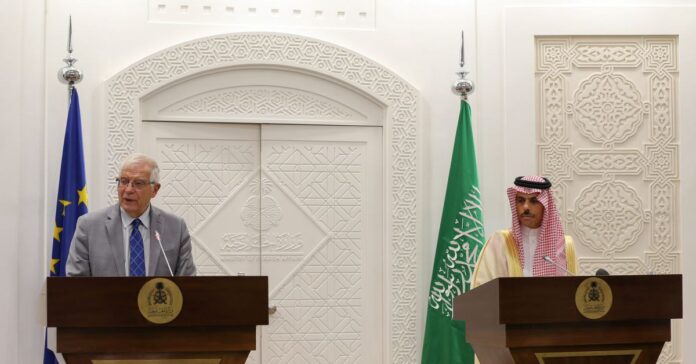
Russia FM, EU foreign policy chief discuss JCPOA, Afghanistan

“The talks focused on a wide range of pressing regional issues, including the situation in Afghanistan, Ukraine and Mail, along with the JCPoA (the Joint Comprehensive Plan of Action, known as the Iran nuclear deal) and the Middle East settlement. They also touched upon the state of and prospects for Russia-EU relations,” the statement reads.

Lavrov arrived at the UN Headquarters on Wednesday to attend the High-Level Week of the UN General Assembly. The Russian foreign minister has already held a number of meetings with foreign counterparts. He is expected to deliver a speech on September 25.

Meanwhile, Borrell told reporters that the European Union was working on the opening of its office in the Afghan capital of Kabul, but added, citing security concerns, that he could not speak about the timeframe.

After the United States ended its military operation in Afghanistan and withdrawn its troops from the country, the Taliban mounted an offensive and swept into Kabul, meeting no resistance on August 15. On September 6, they claimed full control of Afghanistan’s territory and on September 7, declared a new interim government.

Source: TASS

Blinken discusses JCPOA, Afghanistan with Persian Gulf FMs

President Joe Biden’s administration is keen to get Iran to return to talks on its nuclear programme after a three-month hiatus caused by its change in government, but Blinken is warning that the window for negotiations may soon close.

“Every passing day as Iran continues to take actions that are not in compliance with the agreement… we will get to a point at which simply returning to the JCPOA (Joint Comprehensive Plan of Action) will not recapture the benefits of the agreement,” Blinken told reporters after the meeting, using the abbreviation for nuclear deal’s official name.

The meeting, which took place on the margins of the 76th UN General Assembly, is the first time representatives of the Gulf Co-operation Council (GCC) have met together with Blinken, who took office in February.

The foreign ministers of Saudi Arabia, Bahrain, Kuwait, Qatar and UAE’s Minister of State Yousef Al Otaiba attended.

A source familiar with deliberations said the agenda included Iran, Afghanistan and the Israeli-Palestinian conflict, and the meeting’s ambience was described as positive and professional.

Syria and Lebanon were not discussed because the meeting ran out of time, the source explained.

Three sources confirmed to The National that Iran was the main topic during the meeting.

A US return to the Iran nuclear deal was also discussed along with Tehran’s regional behaviour and contingency plans should Iran fail to rein in any renegade actions.

The sources added GCC members agreed on the benefits of capping Iran’s nuclear programme through a US return to the JCPOA, but there was no consensus on the concessions Tehran should receive if such a return occurs.

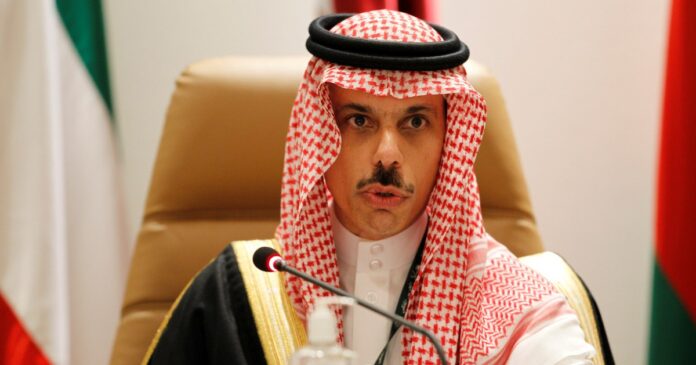
One source said that Saudi Foreign Minister Prince Faisal bin Farhan asked Blinken about contingency plans if efforts to return both parties to the JCPOA falter and if Iran’s regional behaviour deteriorates.

“What is the plan?” Prince Faisal asked.

Blinken assured the foreign ministers that the US is committed to the security of the Gulf, but gave no clear answer, the source added.

Despite meetings between Iran’s new Foreign Minister Hossein Amir Abdollahian and his European counterparts in New York, hopes are diminishing for a swift return to the deal.

Iran’s hard-line government has not committed to returning to talks nor to rolling back Tehran’s breaches of the deal.

On Afghanistan, one source said Qatar’s Foreign Minister Mohammed bin Abdulrahman Al Thani favoured using aid as a leverage with the Taliban without sanctioning the group.

Others stressed the need for the Taliban to uphold Afghanistan’s international commitments before any recognition could occur.

Blinken thanked the GCC ministers before the meeting for helping during evacuation efforts in Afghanistan. He called it “a vivid demonstration of how our Gulf partners provide critical support in times of need, and we greatly, greatly appreciate it”, according to a source.

While discussing the Israeli-Palestinian conflict, Blinken emphasised upholding the two-state solution and he thanked Qatar for its aid to the Palestinians.

One of the representatives at the meeting noted that Palestine used to be “the mother of all conflicts in the region, but is now the grandmother”, one person who was present at the meeting said.

He added the meeting is “a reflection of the importance that we all attach to the work that we’re doing, between the United States and the GCC”.

Source: The National

Chinese scientists claim Covid first spread in US, not Wuhan

Using mathematical models, a quartet of Chinese scientists has argued that the first case of Covid-19 appeared between April and November 2019 in the northeastern US, long before the outbreak in Wuhan.

“The calculation results show that the COVID-19 epidemic in the United States has a high probability of beginning to spread around September 2019,” says the 14-page paper published on Wednesday at ChinaXiv, a repository operated by the National Science Library of the Chinese Academy of Sciences.

The paper was authored by Zhouwang Yang, Yunhe Hu, and Zhiwei Ding from the University of Science and Technology of China, and corresponding author Tiande Guo of the University of Chinese Academy of Sciences.

The quarter set out to “infer the origin time of pandemic” based on “a data and model hybrid driven method”. They modeled the positive test rate to fit the actual trends and used “the least squares estimation to obtain the optimal model parameters,” before applying the “kernel density estimation…to infer the origin time of pandemic given the specific confidence probability”, according to the paper.

Officially, the first case of Covid-19 was registered in the US on January 20, 2020 – about a month after the outbreak in the Chinese city of Wuhan. The Chinese researchers, however, argue that there is a 50% probability of first cases in 11 US states and the District of Columbia prior to that – as early as April 2019 in Rhode Island and as late as November that year in Delaware.

Their sample consisted of mainly northeastern US states – Massachusetts, Vermont, New Hampshire, Connecticut, Rhode Island, New York, New Jersey, Delaware, Pennsylvania, Maryland and Virginia – with Michigan and Louisiana thrown into the mix.

Much of the paper focuses on Maryland, the location of Fort Detrick – a US Army base used to research bioweapons during the Cold War, and now hosts the US biological defense program. Although the paper does not specifically mention Fort Detrick, multiple Chinese officials have repeatedly suggested that the virus may have come from there, as counter to US speculation that it originated from gain-of-function research on bat viruses, conducted at the Wuhan Institute of Virology (WIV).

The so-called ‘lab leak’ hypothesis focuses on the funding the US National Institutes of Health provided to a nonprofit called EcoHealth Alliance, which partnered with the WIV to conduct bat coronavirus research.

Earlier this week, the web-based investigative collective DRASTIC published documents allegedly leaked by a whistleblower, showing that EcoHealth Alliance was asking the Defense Advanced Research Projects Agency (DARPA) for funding in 2018 to release modified viruses into bat caves in southern China, but the proposal was rejected as too risky.

The four researchers also claim that a “series of previous studies showed that the United States, Spain, France, Italy, Brazil and other countries had been attacked by the coronavirus before its outbreak in China”.

Source: RT

Catalan separatist leader detained in Italy

The European Parliament member (MEP) was expected to appear in court on Friday at a hearing that could see him extradited to Spain to face sedition charges.

The Catalan leader – who has been based in Belgium since the 2017 referendum – was detained in Alghero, Sardinia, his chief of staff, Josep Lluis Alay, wrote on Twitter on Thursday.

“At his arrival at Alghero airport, he was arrested by Italian police. Tomorrow [Friday], he’ll appear before the judges of the court of appeal of Sassari, who will decide whether to let him go or extradite him,” Alay said.
Puigdemont’s lawyer, Gonzalo Boye, wrote on social media that the exiled separatist leader was arrested on his arrival in Italy, where he was travelling in his capacity as an MEP.

He added the arrest was made on the basis of a warrant issued in October 2019 that had since been suspended.

Puigdemont, 58, is wanted in Spain on allegations of sedition over his attempts to have the Catalan region break away from Madrid through the 2017 referendum.

His arrest comes a week after the left-leaning Spanish government and regional Catalan authorities resumed negotiations to find a solution to Spain’s worst political crisis in decades.

In March, the European Parliament rescinded immunity for Puigdemont and two other pro-independent MEPs, a decision that was upheld in July by the European Union’s General Court.

However, the European Parliament’s decision is under appeal and a final ruling by the EU court has yet to be made.

Following Thursday’s arrest, Madrid expressed “its respect for the decisions of the Italian authorities and courts”.

“The arrest of Mr Puigdemont corresponds to an ongoing judicial procedure that applies to any EU citizen who has to answer to the courts,” the Spanish government said in a statement.

The statement added Puigdemont should “submit to the action of justice like any other citizen”.

New Catalan president Pere Aragones – a separatist but more moderate than his predecessor – condemned what he called the “persecution” of Puigdemont.

“In the face of persecution and judicial repression, the strongest condemnation. It has to stop,” he wrote on Twitter.

He added that “self-determination” was the “only solution”.

Besides Puigdemont, former Catalan regional ministers Toni Comin and Clara Ponsati are also wanted in Spain on allegations of sedition.

The October 2017 referendum was held by Catalonia’s separatist regional leadership despite a ban by Madrid, and the process was marred by police violence.

A few weeks later, the leadership made a short-lived declaration of independence, prompting Puigdemont to flee abroad.

Others who stayed in Spain were arrested and tried.

However, Puigdemont did not benefit from the pardon granted in June to nine pro-independence activists who had been imprisoned in Spain.

Source: AFP

US lawmakers seek to end support for Saudi war on Yemen

Lawmakers voted 219-207 to advance the measure, which was introduced by Democratic Rep. Ro Khanna (Calif.) and Vermont Independent Sen. Bernie Sanders. The heads of the House Armed Services and Intelligence committees, Adam Smith (D-Wash.) and Adam Schiff (D-Calif.), also co-sponsored the measure.

The amendment would be included in next year’s National Defense Authorization Act if it passes the Senate.

“The passage of our amendment as part of this year’s NDAA sends a clear signal to the government of Saudi Arabia that they must end their war of attrition, support a political settlement, and make amends,” Khanna said in a statement on Thursday.

“Next, our amendment will head to NDAA conference negotiations, and I will continue to push for its inclusion in the final conference report so that President Biden can sign it into law,” Khanna added.

“It’s time to do what is morally right, hold Saudi Arabia accountable, and fully end U.S. complicity in the Saudi-led coalition’s bombing of Yemeni civilians,” Khanna continued.

The advancement marks another incremental win for the California lawmaker and members of his party who have long sought to end US military support for Riyadh’s war effort in Yemen, a campaign that has largely failed to roll back the Houthis’ victories while worsening that country’s humanitarian crises.

“Our collective goal has been, and must remain, to bring about an end to the worst humanitarian crisis in the world as swiftly as possible,” Smith announced in a statement.

Ending the US role in the conflict has long had bipartisan support in Washington.

US President Joe Biden announced an end to US support for offensive operations by the Saudi-led military coalition in Yemen shortly after taking office, fulfilling an earlier campaign promise.

But the Pentagon has continued to provide maintenance support to the Royal Saudi Air Force, as well as what officials say is defensive intelligence to Riyadh for early warnings ahead of Houthi missile attacks on the Gulf kingdom.

The head of US forces in the Middle East, Gen. Kenneth “Frank” McKenzie, told Al-Monitor in April that the military does not provide intelligence support for offensive Saudi operations inside Yemen.

Former President Donald Trump twice used his veto power to block Congressional efforts to halt support for the Gulf coalition’s war effort.

The Houthi rebels, aided by Iran, now control a majority of Yemen’s population centers despite the Saudi-led, US-backed campaign.

The Houthis have blown off US and UN mediation and Riyadh’s proposals for a ceasefire, continuing to lob missiles and drones into Saudi Arabia while demanding the kingdom end the coalition’s blockade of Yemen.

The Biden administration’s point man on ending the crisis, Timothy Lenderking, met with senior Saudi and Yemeni officials in Riyadh.

Adam Lucente has the latest on progressive Democrats’ moves to hold to account Biden’s professed focus on human rights in foreign policy.

Source: Al-Monitor

China says Asia-Pacific doesn’t need ‘submarines and gunpowder’

China announced the Asia-Pacific region needs economic growth and jobs, not gunpowder and submarines, in the latest salvo from Beijing after the US, Australia and the UK announced a new trilateral security partnership.

Zhao Lijian, the China’s foreign ministry spokesperson, speaking in Beijing, urged the Aukus members to reverse their decision and “fulfil their international nuclear non-proliferation obligations”.

The Aukus pact, and the associated deal to help Australia build nuclear-powered submarines, boosts Australia’s power across the western Pacific, and comes as a response to the threats posed by China’s expanding military footprint.

“Facing common challenges of fighting the pandemic and economic recovery, the people in the Asia-Pacific region need growth and employment, not submarines and gunpowder,” Zhao added, in the first official comments from the foreign ministry following the Mid-Autumn Festival national holidays this week.

In the wake of the Aukus deal, western security analysts have braced for a tougher response from China. Beijing has so far confounded many experts by instead making several overtures that appear to embrace multilateralism on trade and climate change.

Less than 24 hours after Aukus was announced, Beijing formally lodged an application to join the Comprehensive and Progressive Agreement for Trans-Pacific Partnership.

The surprise move stumped many trade specialists because it potentially hands diplomatic leverage to Australia and Canada with whom China has seen ties fall to historic lows — all CPTPP members have a veto power over new members.

Xi Jinping, China’s president has also pledged to end China’s financing of new coal power plants abroad, in a victory for environmentalists following years of international lobbying efforts.

Xi’s comments, made at the opening meeting of the United Nations General Assembly in New York on Tuesday, helped to ease some fears that tension between China and the US threatens to derail co-operation on combating the global threat of climate change.

These concerns have escalated ahead of the of the COP26 UN climate conference in Glasgow in November that environmentalists see as critical to setting more ambitious targets for cutting carbon emissions.

Li Shuo, an energy policy officer at Greenpeace, the campaign group, stated Beijing needed to focus its attention on transitioning to cleaner energy within China.
“Reducing its coal addiction at home is an urgent need. More decisive signals should be sent in the lead up to Cop2026 to ensure China’s emissions peak before 2025,” Li noted.

Source: Financial Times

Iranian cleric warns Azeri officials not to fall for plots by Israel’s lackeys

Seyyed Mohammad Ali Al Hashem warned Azerbaijani officials that the Israeli regime aims to sow sedition and destabilize the region and Muslim countries.

He added that Israel feeds off of sedition and strife among Muslims. He was referring to the recent claims by a few Azeri MPs who talked about quote wiping Iran off the map.

Tabriz’ Friday prayer leader also spoke of the US plots against Iran. He said a pillar of Washington’s strategy against the Islamic Republic is to resort to aggressive regionalism through coalition with the reactionary regimes of the region and undermining the alliance between Iran and its allies.

Al Hashem however said Iran’s accession to the Shanghai Cooperation Organization as a permanent member marked a heavy defeat for the US and the Israeli regime and opened a new chapter in Iran’s alliance formation efforts.

Closure removal ritual

During the ritual, farmers remove the closure and go fishing in the morning. They do the ritual happily and treat it as a recreation too.

Iraq praises neighbors’ role in crushing Daesh

“Iraq was able to liberate cities from ISIS (Daesh or ISIL) and protect the world from its crimes,” he told the Assembly’s 76th Session in New York on Thursday.

He valued the support that had been provided by “our neighbors and friends” in making the victory possible.

At Baghdad’s request, Iran began providing military advisory support for the Iraqi forces’ anti-Daesh operations in 2014, when the group emerged in the Arab country, starting its campaign of bloodshed and destruction.

This is not the first time that the Arab country expresses its gratitude towards the Islamic Republic over the assistance.

Salih also considered “the valor” of the Iraqi military and the Popular Mobilization Units (PMU), also known as Hashd al-Sha’abi, to have been instrumental in routing the group.

He also thanked the Iraqi religious authority in the holy city of Najaf for issuing the fatwa (religious decree) that led to formation of the PMU following Daesh’s rise.

The PMU, a predominantly-Shia Muslim counter-terrorism force, has been integrated into the Iraqi armed forces as one of its official branches owing to its contribution to the anti-terror struggle.
Meanwhile, the Iraqi chief executive turned to the issue of regional peace and the pivotal role that was played by Iraq, Palestine, Yemen, and Syria’s stability in realization of a peaceful region.

“It is not possible to establish peace in the region without acknowledging and fulfilling the full legitimate rights of the Palestinian people,” he noted.

“Peace in the region will not be achieved” without realization of security and stability in Iraq and restoration of the country’s full sovereignty.

Nor is it possible to establish peace in this part of the world “without acknowledging and fulfilling the full legitimate rights of the Palestinian people”.

It is time for a serious move to end the suffering of the Syrians, he further stated, and also identified continuation of the war in Yemen and its security and humanitarian repercussions as a cause for concern.

Source: Iraqi News Agency