Thursday, December 25, 2025
Home Blog Page 2349

Dozens killed, many wounded as blast hits Afghan Shia mosque

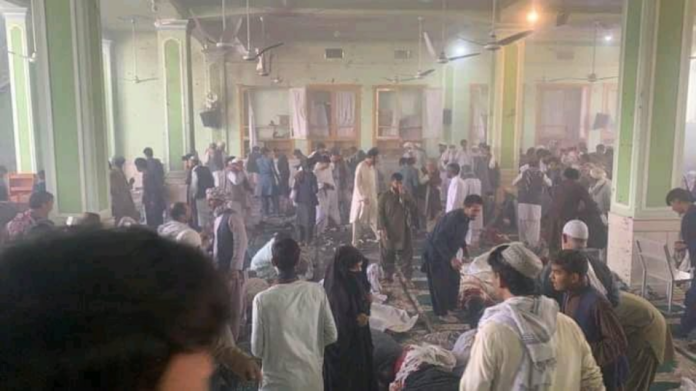
At least 32 people have been killed and 45 others wounded after an explosion went off inside a Shia mosque in Afghanistan’s southern city of Kandahar, according to public health officials in the province.

The blast on Friday afternoon took place in the Bibi Fatima mosque, the largest mosque for Shia worshippers in the city.

An eyewitness told the AFP news agency he heard three blasts, one at the main door of the mosque, another at a southern area, and a third where worshippers wash themselves.

Hospital sources told Al Jazeera they were inundated with patients, and that based on the number of increasing intakes, they feared a high casualty toll.

Taliban special forces arrived at the mosque to secure the site and an appeal went out to residents to donate blood for the victims.

Taliban spokesman Bilal Karimi confirmed the explosion and stated an investigation was under way, without providing further details.

There was no immediate claim of responsibility.

Photographs posted by journalists on social media showed many people apparently dead or seriously wounded on the bloody floor of the mosque.

The incident took place a week after dozens of people were killed and more than 100 others were wounded when a mosque in the northern province of Kunduz was targeted in a Daesh claimed bombing.

The Taliban-led government promised a quick response and to hold the perpetrators for the Kunduz attack responsible.

Russia says allies against US military presence in Central Asia

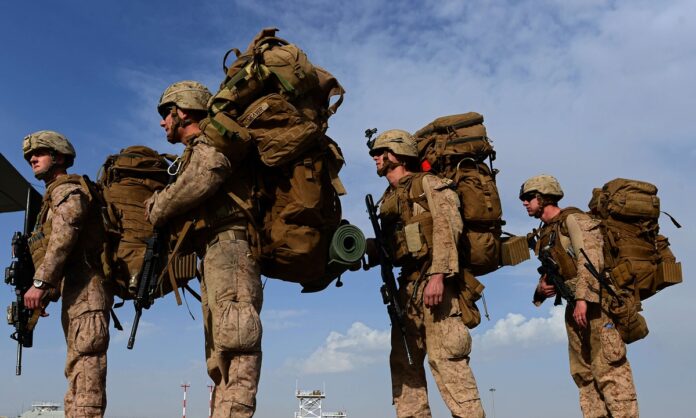
Asked at a news conference about Washington’s intentions of deploying anti-terrorism forces on the territory of Uzbekistan, Lavrov noted, “All our Central Asian neighbors, allies and strategic partners confirm in talks with us that they find such approaches to be inadmissible.”

“I did not hear about this issue and perhaps this question should be addressed to our colleagues in Uzbekistan,” he added.

“I should reiterate that all our friends in Central Asia are telling us that they are against such approaches either from the United States or from any other NATO member state,” Lavrov continued.

The Wall Street Journal reported earlier citing its unnamed sources that Moscow and Washington were allegedly in talks discussing the possible use of Russian military bases in Central Asia by American troops.

However, during a meeting in Moscow on October 12 with US Under-Secretary of State for Political Affairs Victoria Nuland, Russian Deputy Foreign Minister Sergey Ryabkov pointed out that Russia was against Washington’s military presence in Central Asia.

Iran MP denies parl. intends to keep wealth of officials confidential

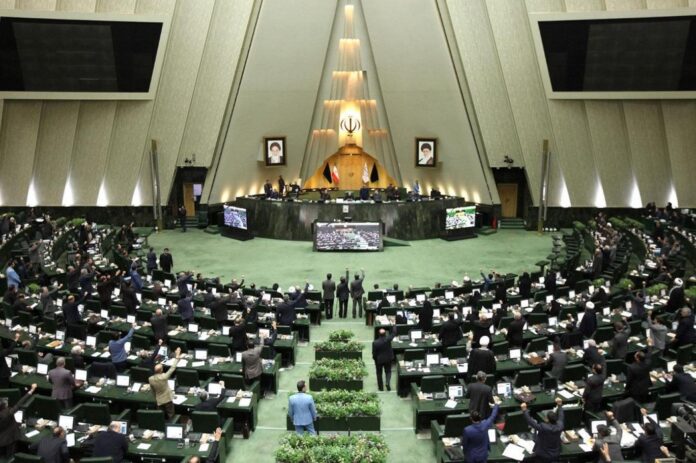
Ali Alizadeh, secretary of the Commission of National Security and Foreign Policy at Iran’s parliament said this revolutionary legislature has never sought the approval of such a plan and this report is basically a lie and a baseless rumor.

Alizadeh noted that such an issue has not been raised in parliament at all.

He added that with the coming to power of the revolutionary parliament, the establishment’s enemy has begun a propaganda to weaken the will of the legislative body.
He said this scheme of the enemy will also fail thanks to the vigilance, prudence and awareness of the Iranian people.

According to Alizadeh, parliament has taken an important step in correcting the gaps by approving important plans such as tax for vacant houses, the housing boom and the facilitation of businesses.

He added that the important priority of parliament is to ensure the public interests of the dear people of Islamic Iran, and parliament will never fail in this regard.

Lebanon army detains nine people following Beirut clashes

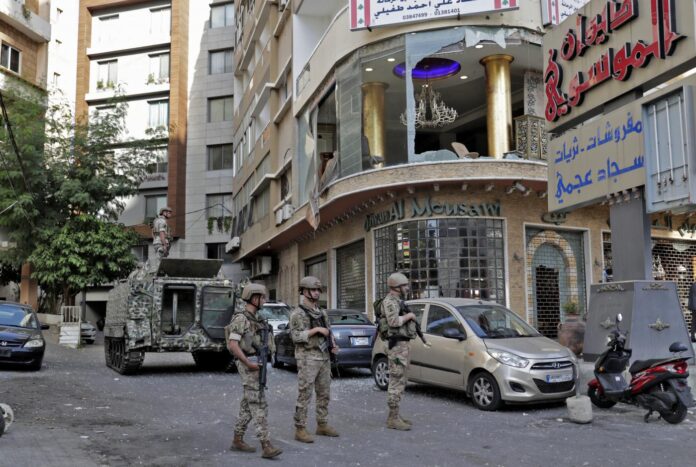
The Lebanese army has said it arrested nine people, including a Syrian, after gunfire erupted on Thursday in Beirut, leaving at least six dead and dozens wounded, according to the Lebanese Red Cross.

The army added on Twitter that it remained deployed in the area to ensure violence did not break out again.

Aoun has stated in a brief address to the nation that the clashes were a “painful and unacceptable scene”.

“It took us back to the days that we said we would never forget and never repeat,” he noted in his televised address, referring to the country’s 15-year civil war from 1975 until 1990.

Lebanon’s Prime Minister Najib Mikati told Reuters news agency that Thursday’s events were a setback to the government but would be overcome.

“Lebanon is going through a difficult phase not an easy one. We are like a patient in front of the emergency room,” Mikati said in an interview.

“We have a lot of stages after that to complete recovery,” he added.

Mikati announced on Twitter that Friday would be a day of public mourning for those killed in Beirut.

UN Secretary-General Antonio Guterres called on all concerned in Lebanon to immediately halt acts of violence and refrain from provocative actions or inflammatory rhetoric, a UN spokesman stated.

Guterres reiterates the need for an impartial, thorough and transparent investigation into the 2020 explosion at the Beirut port, UN spokesman Stephane Dujarric told reporters.

UN special coordinator for Lebanon, Joanna Wronecka, has also expressed concern.

“At this juncture, it is critical to show maximum restraint, ensure that calm is restored and that citizens are protected,” Wronecka wrote on Twitter.

The United States has also called for an easing of tensions in Lebanon after deadly violence in Beirut sparked fears of a return to sectarian strife.

“We join Lebanese authorities in their call for calm, their calls for a de-escalation of tensions,” State Department spokesman Ned Price told reporters.

France has also expressed concern over the deadly unrest that erupted in Lebanon over the investigation into last year’s Beirut port blast and urged all parties to calm the situation.
“France is deeply concerned over the recent hindering of the smooth running of the investigation … and the violence that has occurred in this context. France calls on all parties to bring about a de-escalation,” the foreign ministry said in a statement.

Clashes had erupted as a rally organised by the Hezbollah and Amal movements to demand the dismissal of the lead investigator into last year’s port explosion turned violent.

Hundreds of protesters gathered at the Beirut Palace of Justice, calling for the removal of Judge Tarek Bitar, accusing him of political bias.

Soldiers were deployed on the streets to contain the violence as an undeclared truce brought calm to the Lebanese capital, after nearly five hours of heavy gunfire.

Saudi FM says Riyadh-Tehran talks ‘cordial’

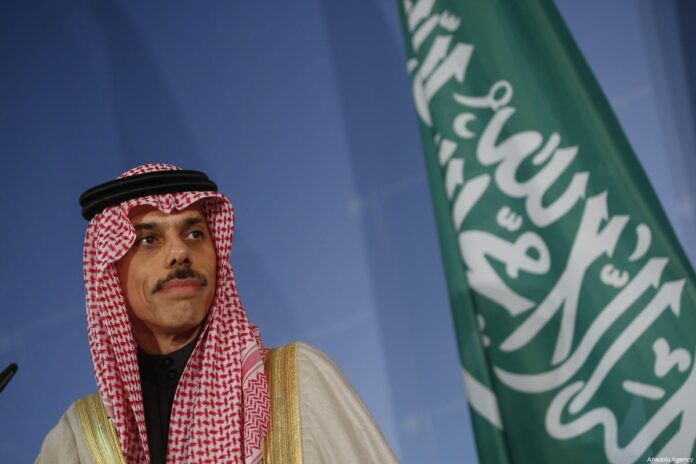
Saudi Arabia’s FM said the kingdom is “serious” about talks with Iran, signalling Riyadh’s desire to repair relations between two rivals that accuse each other of stoking tensions and instability across the Middle East.

“We are serious about the talks,” he told the Financial Times, adding, “For us it’s not that big a shift. We’ve always said we want to find a way to stabilise the region.”

The kingdom has held four rounds of talks with Iran since April, including a first meeting last month with the government of new hardline president Ebrahim Raisi. The negotiations reflect a tentative de-escalation in the region in the wake of the election of US president Joe Biden and with the economic hardship wrought by the pandemic.

Riyadh and Tehran, which claim leadership of the Sunni and Shia Muslim worlds respectively, cut diplomatic ties in January 2016 after Saudi Arabia’s embassy in the republic was ransacked. The diplomatic mission was attacked after Riyadh executed a senior Shia cleric.

Riyadh believes negotiations have not yet made sufficient progress to restore full relations with Tehran. But a Saudi official told the FT that it was considering an Iranian request for it to open its consulate in Jeddah. Riyadh was also considering allowing Tehran to reopen its representative office for the Organization of Islamic Co-operation in the port city. However, the kingdom was not yet ready to reopen a consulate in the Iranian religious city of Mashhad, with a senior official stating the dialogue so far lacked “substance”.

The discussions have been taking place amid European diplomatic efforts to broker a deal on Washington’s return to the nuclear deal Tehran signed with world powers in 2015. Talks have stalled since Raisi’s election in June.

The Saudi official added Tehran was “focused on signalling”.

“Especially to the west, [they are signalling] that ‘look, we have resolved our issues with the Saudis and any lingering things we can work out together so don’t talk to us about regional security’,” he said, noting, “‘Treat us like a normal country and let’s do this [nuclear] deal.’”

Tensions between Saudi Arabia and Iran soared after Riyadh backed former US president Donald Trump’s decision in 2018 to unilaterally withdraw Washington from the nuclear deal with Tehran and impose crippling sanctions on the republic. The following year, Iran was blamed for orchestrating a sophisticated missile and drone attack on Saudi Arabia’s oil infrastructure that temporarily knocked out half the kingdom’s crude output. Tehran has dismissed accusation it was behind attacks on Riyadh oil site.


But Saudi Arabia appeared to have recalibrated its more assertive foreign policy after Biden took office pledging to reassess relations with the kingdom, criticising the murder of Jamal Khashoggi by Saudi agents and freezing some arms sales to Riyadh.

Under Crown Prince Mohammed bin Salman’s stewardship, Riyadh had aggressively pursued its war with Iranian-backed Houthi rebels in Yemen; became embroiled in a bitter diplomatic dispute with Canada; and briefly detained Saad Hariri while he was Lebanon’s prime minister. But Prince Faisal insisted that Riyadh “did not pick fights”.

“The leadership has a clear policy that the priority is prosperity, building the country, Vision 2030 [reform plan], and you can’t deliver those things with a region in turmoil,” he said.

“So while we will vigorously defend our national security and our sovereignty, we will try to resolve them through diplomacy as well,” he stated.

He added that there was a “confluence of events that made it feel like it was the right moment” to talk to Iran.

“We were always willing to talk if they might actually be serious,” he continued, noting, “Various factors came into play.”

Diplomats say Riyadh wants Tehran to use its influence over the Houthi rebels in Yemen to help end the war there, with the kingdom keen to exit the conflict after intervening in 2015 to back the ousted Yemeni government.

The Associated Press reported last month that satellite imagery showed that the US had pulled its Patriot air defence system out of Saudi Arabia. But Prince Faisal said Washington had assured the kingdom that its “commitment to our security and the security of our border is ironclad, and we take them at their word”.

“We have a robust dialogue with the Americans, we agree 90 per cent of the time,” he stated.

“Are we unhappy about the general tone in Washington, not the administration? We think it’s not entirely based on where the true relationship is and the value of the relationship, but it’s affected by domestic factors,” he continued.

China urges US to lift all “illegal sanctions” on Iran

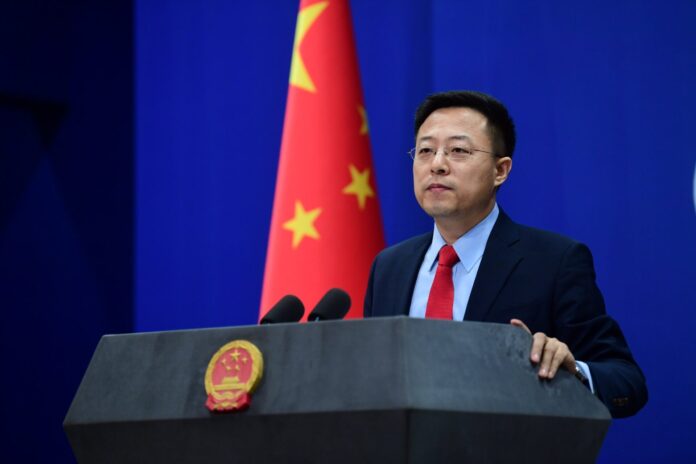
Zhao Lijian, the Chinese Foreign Ministry spokesperson, made the remark in response to a recent statement by Robert Malley, the US special envoy for Iran, that Washington was ready to consider “all options” to address the Iranian nuclear program and had talked to China about the sanctions.

Zhao rejected the use of sanctions and pressure against the Islamic Republic and said the full implementation of the Joint Comprehensive Plan of Action (JCPOA) was the “only effective way” to settle disputes on Iran’s nuclear program.

“China always believes that resuming the full and effective implementation of the JCPOA is the only effective way to resolve the Iranian nuclear issue. Facts have proved time and again that sanctions and pressure lead nowhere, and dialogue and consultation is the right way forward,” Zhao told reporters at the briefing.

“Iran has repeatedly reaffirmed its commitment to the JCPOA and its readiness to return to negotiations on the resumption of compliance. Relevant parties should respond to Iran’s reasonable demands by taking concrete actions, push for an early resumption of negotiations and strive for new progress,” he added.

The Chinese Foreign Ministry spokesman expressed Beijing’s opposition to anti-Iran sanctions and called on the administration of US President Joe Biden to remove the restrictive measures on Tehran and also refrain from imposing new ones.

“I would like to stress once again that as the one who caused the renewed tension on the Iranian nuclear issue, the US should correct its wrong policy of ‘maximum pressure’ on Iran, lift all illegal sanctions against Iran and measures of ‘long-arm jurisdiction’ over a third party, refrain from imposing new Iran-related sanctions and bring the JCPOA back on track at an early date,” Zhao said.

“The US is well aware of China’s position of opposing sanctions and China’s determination to firmly uphold its legitimate interests,” he added.

Iran and six world powers—the US, Russia, China, France, Britain and Germany— clinched the JCPOA in 2015. Three years later, the JCPOA was unilaterally abandoned by Washington under former US president Donal Trump and sanctions were reinstated as part of the so-called maximum pressure campaign, in spite of Tehran’s strict compliance with the multilateral accord.

Following a year of strategic patience, Iran resorted to its legal rights stipulated in Article 26 of the JCPOA, which grants a party the right to suspend its contractual commitments in case of non-compliance by other signatories, and let go of some of the restrictions imposed on its nuclear energy program.

The parties to the JCPOA began high-profile talks in Vienna earlier this year after the Biden administration voiced willingness to rejoin the deal and remove the draconian sanctions his predecessor slapped on the Islamic Republic.

Since the beginning of the Vienna talks, Tehran has argued that the US—as the first party that violated the JCPOA—needs to take the first step by returning to full compliance with the agreement. Tehran also says it will resume all of its nuclear commitments under the deal only after the US removes all the sanctions in practice.

Iran envoy warns about consequences of silence on Israel’s atomic program

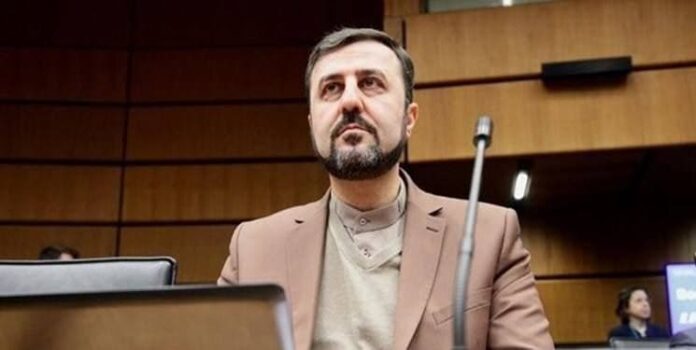
Kazem Gharibabadi said in a tweet that the International Atomic Energy Agency’s double standards toward the members of the Nuclear Non-proliferation Treaty, send the wrong message that staying out of the NPT means being exempt from any commitment and criticism and even being rewarded.

He said in that case, membership in the NPT and the full implementations of the IAEA’s safeguards will have no benefits and the agency cannot be trusted as a neutral and professional body while it does not fairly pursue its safeguards regime with regard to all its members.

Asked why the IAEA always talks about Iran and declines to discuss the Zionist regime’s nuclear program, the IAEA chief told Energy Intelligence several days ago that Israel has not signed the NPT but Iran is a member of the treaty and has some legal obligations under the non-proliferation regime.

Israeli is widely believed to possess hundreds of nuclear warheads, while the regime is not a member of the Non Proliferation Treaty (NPT). Israel does not allow its nuclear program be under the international supervision.

Iran: Lebanon along with resistance to overcome seditions rooted in Zionist regime

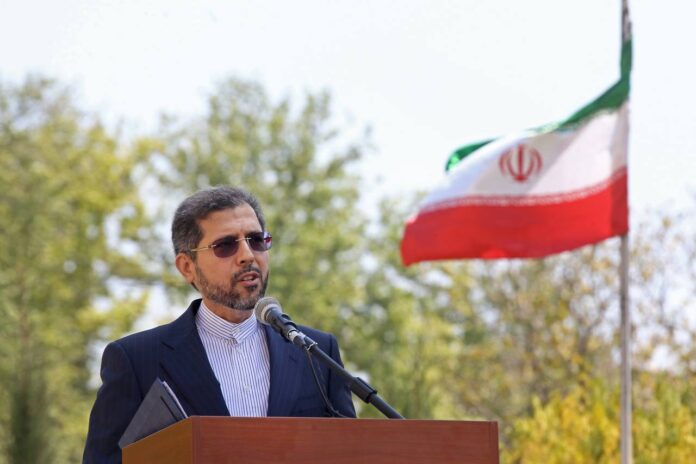
Iranian Foreign Ministry spokesman Saeed Khatibzadeh, referring to the Thursday tragic events in Lebanon, said “The Islamic Republic of Iran, while emphasizing the importance of maintaining stability and peace in Lebanon, closely monitors the developments in the country”.

He said Tehran believes that the people, government and army, along with the Lebanese resistance, through their cohesion and unity, as always, will successfully and proudly overcome the seditions and conspiracies that have their roots in the Zionist regime and are planned and carried out by the masters and agents of this regime.

He also said it is essential that the Lebanese government and officials take swift action to identify and arrest the perpetrators of these crimes and sedition among the Lebanese people.

Khatibzadeh expressed his condolences to the Lebanese government and people.

A political dispute over a probe into Beirut’s August 2020 port blast has caused the worst violence in Lebanon in more than a decade. The violence erupted after a protest by supporters of Hezbollah and the Amal movement against the judge in charge of the case was attacked by gunmen from a Christian party. The attack killed several protesters. Many more were injured. The demonstrators accuse the judge of bias and want him to be removed.

Russia welcomes resumption of Iran-EU talks

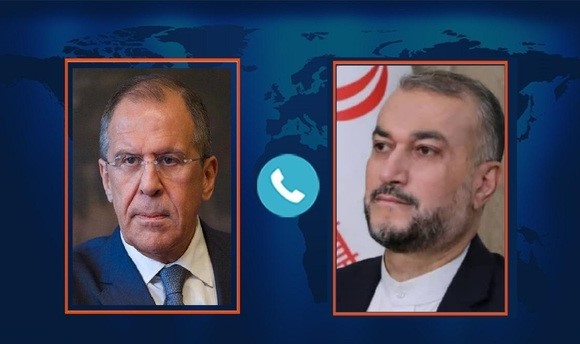
Following the negotiations between Iranian Deputy Foreign Minister Ali Bagehri Kani and Deputy Secretary General of the European External Action Service Enrique Mora in Tehran, the Iranian and Russian foreign ministers held a telephone conversation and exchanged views on the matter.

Hossein Amiraadollahian emphasized in this telephone conversation that today’s talks with Mora were positive and both sides expressed their satisfaction and readiness to continue the negotiations.

“Our current talks with Enrique Mora are focused on finding practical solutions to the current problems and impasse in Vienna, which are due to Washington’s non-aligned stance and approach to complete and effective lifting of unilateral and illegal sanctions,” he said.

Amirabdollahian also said at the end of today’s talks, the two sides agreed to continue consultations between Bagheri and Mora in Brussels in the next two weeks. Russian Foreign Minister Sergei Lavrov also welcomed today’s talks between Iran and the EU. He stressed that, following his detailed meeting with Amirabdollahian in Moscow last week, he had instructed his colleagues at the Russian Foreign Ministry to hold close consultations with their counterparts in the Islamic Republic of Iran to follow up on issues related to the nuclear deal.

In this telephone conversation, the Russian foreign minister praised Iran’s logical position on the return of all parties to the Iran nuclear deal to their obligations.

Lavrov also referred to his meeting with the foreign minister of the Republic of Azerbaijan today, saying he was informed of the good and constructive telephone conversation between Iran’s foreign minister and his Azeri counterpart.

Lavrov stressed that Moscow welcomes the agreements reached in the telephone conversation and considers them a step in the right direction.

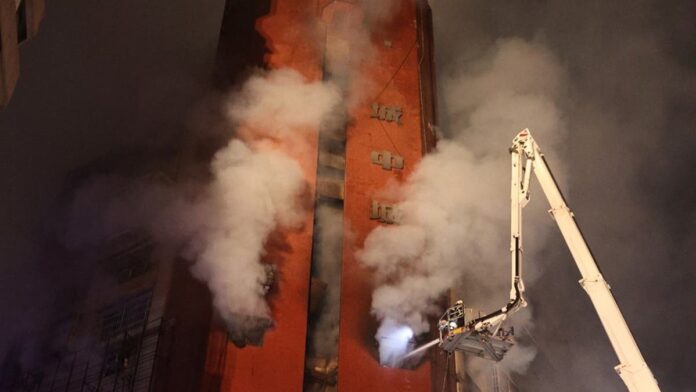
Fire kills 46, injures dozens in Taiwan

The fire broke out in the 40-year-old building in Kaohsiung’s Yancheng district in the early hours of the morning and was extinguished around dawn.

The Kaohsiung fire department said in a statement that after completing a search of the building they were able to confirm 46 deaths.

Mayor Chen Chi-mai stated the building was partly abandoned, having previously been host to restaurants, karaoke lounges and a cinema.

The government is investigating the cause including whether arson was to blame.