Friday, December 26, 2025
Home Blog Page 2324

Sudan govt. officials detained, PM under house arrest

Military forces in Sudan have put Hamdok under house arrest, according to Al-Hadath TV, and detained several members of the country’s civilian leadership.

Citing unidentified sources, the Saudi-owned broadcaster reported a military force besieged the prime minister’s home early on Monday before placing him under house arrest.

Other civilian officials taken into custody include Industry Minister Ibrahim al-Sheikh, and the governor of Sudan’s capital Khartoum, Ayman Khalid, family sources told Al Jazeera.

Information Minister Hamza Baloul, media adviser to the prime minister, Faisal Mohammed Saleh, and the spokesman for Sudan’s ruling sovereign council, Mohammed al-Fiky Suliman, were also arrested, according to officials who spoke to the Associated Press news agency.

Sudan has been on edge since a failed coup plot last month unleashed bitter recriminations between military and civilian groups meant to be sharing power following the toppling of the country’s long time leader Omar al-Bashir.

Al-Bashir was toppled after months of street protests in 2019, and a political transition agreed after his removal was meant to lead to elections by the end of 2023.

Al Jazeera’s Hiba Morgan, reporting from Khartoum, said “telecommunications access has been restricted” in the country “so it’s very hard to communicate with people here”.

“The military has also blocked all roads and bridges leading into Khartoum city. We’ve seen soldiers blocking access and they are telling us these are the orders they got. They are saying access to Khartoum city is to be restricted, and this is raising concern because that’s where the government institutions are, that’s where the presidential palace and the prime minister’s offices are located,” Morgan added.

There was no immediate comment from the military, with Sudanese state television broadcasting patriotic songs.

Al Hadath reported Abel Fattah al-Burhan, the head of Sudan’s sovereign council, was soon expected to make a statement on Monday’s developments. Al-Burhan had previously asserted his commitment to Sudan’s transition.

Meanwhile, the Sudanese Professional’s Association, the country’s main pro-democratic political group, called the military’s moves an apparent military coup and called on the public to take to the streets.

“We urge the masses to go out on the streets and occupy them, close all roads with barricades, stage a general labour strike, and not to cooperate with the putschists and use civil disobedience to confront them,” the SPA announced in a statement.

Reuters and AFP news agencies reported protesters, some carrying the national flag, took to the streets of Khartoum in response to the SPA’s call. Some of them burned tires.

Last week, tens of thousands of Sudanese marched in several cities to back the full transfer of power to civilians, and to counter a rival days-long sit-in outside the presidential palace in Khartoum demanding a return to “military rule”.

Hamdok has previously described the splits in the interim government as the “worst and most dangerous crisis” facing Sudan’s transition.

Poll: Biden sees sharpest popularity drop for any US leader since WW II

Polling shows that has suffered a larger approval rating drop at the start of his term than any president since World War II.

New polling from Gallup shows that Biden’s approval rating dropped from 56% in Q1 to 44.7% in Q3 which represents an 11.3% drop that has not been experienced by any president since World War II.

“This 11-point decline is larger than any prior president registered between his first and third quarters, although it is similar to those for the last three Democratic presidents — Barack Obama (10 points), [Bill] Clinton (seven points) and [Jimmy] Carter (nine points),” Gallup reported.

The polling results are based on data collected from October 1 through October 19.

Biden’s approval rating started to significantly drop over the summer as the nation continues to battle through the coronavirus pandemic and restrictions put in place by elected officials, including Biden who has faced widespread criticism for imposing federal vaccine mandates.

The president’s approval fell even further in September after his chaotic withdrawal from Afghanistan that resulted in the deaths of 13 US service members and left Americans behind, despite promises from his administration that wouldn’t occur.

Additionally, Democrats in Congress have failed to advance Biden’s infrastructure and spending agenda, further exacerbating his approval rating struggles.

Biden is also severely under water when it comes to how Republicans view him, with only 4% of Republicans polled saying they approve of the job he’s done and 94% disapproving. Conversely, 92% of Democrats approve of the job Biden is doing and 6% disapprove.

The 88% partisan gap in job approval is the highest since Biden took office. Biden campaigned on uniting the country.

Iran health minister: 85 pct. of Covid deaths unvaccinated people

According to Einollahi, concerns about the sixth wave of the pandemic in Iran are due to people who have not been inoculated yet.

Einollahi has denied claims that Covid vaccine causes death, adding vaccination and the resulting immunity fully prevents death from Covid and that scientific studies show that vaccination is a key factor in fighting Covid. 

He added that all Iranians will be vaccinated against Covid. 

Einollahi said Iran proved that it’s capable of inoculating the whole population in a short period as it managed to administer the first dose to over 70 percent of people in nearly two and a half months. 

Meanwhile, Iran’s Health Ministry announced on Sunday 171 more people have died of Covid-19 in the past 24 hours. It had put the number of the dead during the previous 24 hours at 124. The latest fatalities push to 125,223 the death toll since the pandemic started in early 2020.

Taliban not invited to Tehran summit on Afghanistan

Taliban spokesperson Zabihullah Mujahid looks on during a press conference in Kabul on August 24, 2021 after the Taliban stunning takeover of Afghanistan. (Photo by Hoshang Hashimi / AFP)

Tehran will host a ministerial meeting with Afghanistan’s neighboring countries on Wednesday and hold talks on inclusivity within the Afghan government and stability inside the country.

The Islamic Emirate is not invited to the meeting yet, but a spokesman of the Islamic Emirate, Zabiullah Mujahid, noted he hopes the meeting’s outcome will benefit Afghanistan.

It is reported that the meeting will mainly focus on topics of peace and stability and an inclusive government in Afghanistan.

“We are aware that the meeting will be held. The meeting relates to neighbors, and we are not invited,” Mujahid stated.

The foreign ministers and political representatives of Pakistan, China, Tajikistan, Uzbekistan, Turkmenistan and Russia will gather to discuss the formation of an inclusive government and other Afghan issues.

Since the collapse of the previous government, it is the second regional meeting to be held on Afghanistan.

“In the condition that regional and international contributions to Afghanistan are declining, any kind of meeting will benefit the country,” noted Badul Haq Emad, political analyst.

In the meantime, the acting foreign minister of the Islamic Emirate, Amir Khan Mutaqi, met Iranian ambassador Bahadur Aminian, the ministry of foreign affairs announced and the two sides discussed multiple issues including political and economic relations and as well as immigrants’ problems in Iran.

The Iranian embassy in Kabul released a statement and said that the formation of an inclusive government, peace and stability, economic challenges, and preventing Afghanistan from becoming a haven for terrorists, will be discussed in the meeting.

Iran reopens borders to foreign tourists

‘Iran Great Travel Destination for Globetrotters during Pandemic’

Shalbafian added on Saturday, the Covid Taskforce of Iran agreed to the reopening of Iran’s borders to foreigners following the end of the fifth wave of the Covid pandemic and the rise in vaccination rates.

He added that the Covid Taskforce has said foreign tourists can visit Iran provided that they observe all health protocols.

Shalbafian said the decision was made in a bid to support businesses and tourism facilities.

The Iranian Deputy Minister of Cultural Heritage, Tourism and Handicraft said, “We hope that the move by the government will result in a boom in tourism businesses”.

Russia: Iran demand for US nuclear guarantee “logical and justifiable”

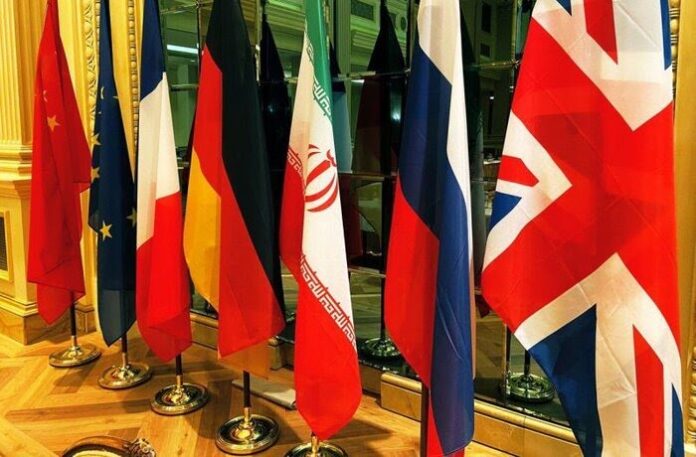
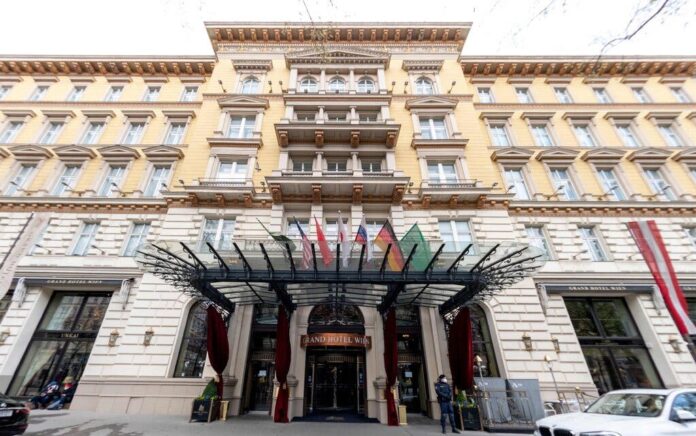
Russia’s lead negotiator at stalled multi-power talks to revive the 2015 nuclear deal stated Iran’s demand for a guarantee from the US government that it won’t quit the landmark accord again is “logical and justifiable”.

Mikhail Ulyanov, Russia’s ambassador at the United Nations International Atomic Energy Agency in Vienna, was responding to a report by Washington-based think tank, Quincy Institute, President Joe Biden had refused to provide Iran any assurance that the US won’t abrogate the agreement for a second time during his tenure.

“This Iranian demand seems to be logical and justifiable, it corresponds not only to diplomatic practice but also to elementary common sense,” Ulyanov said in a tweet on Sunday.

Iran’s Ambassador to the United Nations Majid Takht-Ravanchi told reporters in early July Tehran had asked Washington to provide strong guarantees that it will never again withdraw from the nuclear deal unilaterally.

He added that a US guarantee that it will never unilaterally leave the Iran nuclear deal again is vital to a successful conclusion of talks in Vienna on the terms of Washington’s return to the agreement.

Takht-Ravanchi noted that unless some US guarantee of stability was provided, European and other investors would not have the confidence to invest in the Iranian economy.

US says ready for talks with N Korea without preconditions

Washington’s envoy has expressed readiness for negotiations with Pyongyang without preconditions but urged the Asian country to end its recent series of missile tests and resume negotiations.

“I look forward to continuing to work with special representative Noh to explore different ideas and initiatives, including the ROK’s [South Korea’s] end-of-war proposal as we continue to pursue our shared objectives on the peninsula,” Kim said on Sunday, as quoted by the South Korean Yonhap news agency.

The special representative told reporters that Washington was ready to help address North Korea’s humanitarian concerns amid the coronavirus pandemic.

“We remain ready to meet with the DPRK [North Korea] without preconditions, and we have made clear that the United States harbors no hostile intent towards the DPRK,” Kim stated, adding that Washington hopes Pyongyang “will respond positively to our outreach.”

Kim stressed that North Korea’s missile tests are counterproductive and called on Pyongyang to stop “destabilizing” activities and return to the negotiating table.

In his turn, South Korean representative Noh noted that Seoul and Washington are ready to discuss any issues if North Korea accepts their talk offer.

At the start of October, US State Department spokesperson Ned Price announced that Washington was ready to meet with officials from North Korea without preconditions.

On Wednesday, US Ambassador to the United Nations Linda Thomas-Greenfield reiterated that the US was open to dialogue with Pyongyang without any conditions and held no hostile intent toward North Korea. Thomas-Greenfield called on North Korea to refrain from further provocations following Pyongyang’s recent launch of a ballistic missile from a submarine.

On Friday, UN Special Rapporteur on the human rights situation in North Korea Tomas Ojea Quintana stated that sanctions against North Korea should be reviewed and, when necessary, eased, given the humanitarian effects of the COVID-19 pandemic on the nation.

US, Taiwan discuss UN attendance ahead of Xi speech

US and Taiwanese officials discussed plans to allow the island to “participate meaningfully” at the UN on Friday in the latest move to upgrade Washington’s relationship with the island.

The US State Department said in a statement released on Sunday that “high-level representatives” of the US State Department and Taiwan’s foreign ministry had discussed “expanding Taiwan’s participation at the United Nations and in other international fora”.

“The discussion focused on supporting Taiwan’s ability to participate meaningfully at the UN and contribute its valuable expertise to address global challenges, including global public health, the environment and climate change, development assistance, technical standards, and economic cooperation,” the statement added.

“US participants reiterated the US commitment to Taiwan’s meaningful participation at the World Health Organization and UN Framework Convention on Climate Change and discussed ways to highlight Taiwan’s ability to contribute to efforts on a wide range of issues,” it continued.

China’s foreign ministry did not reply to requests for comment. Taiwan’s foreign ministry expressed “gratitude for US firm support”.

Participants included acting principal deputy assistant secretary for international organisations Hugo Yon, deputy assistant secretary for China, Taiwan, and Mongolia Rick Waters and Taiwan’s de facto deputy ambassador in Washington Wang Liang-yu, the statement read.

Taiwan, under the name of the Republic of China, had held the Chinese seat until then.

China views Taiwan as a breakaway province that must be reunited with the mainland, by force if necessary.

Although the US withdrew formal diplomatic recognition from Taiwan in 1979 when it established relations with Beijing, it is required by the Taiwan Relations Act to help the island to defend itself.

It has also maintained a policy of “strategic ambiguity”, in which it does not indicate whether it would take military action in Taiwan’s defence.

But relations between the US and Taiwan have been upgraded in recent years amid the escalating rivalry between Beijing and Washington. China has also intensified political and military pressure on the island.

US President Joe Biden caused confusion on Thursday when he told CNN that the US would come to the island’s defence in the event of an attack by mainland China. The White House later clarified that Washington’s policy toward Taiwan had not changed.

China’s foreign ministry has repeatedly called on the US not to send the wrong signal to proponents of Taiwanese independence. It said on Thursday that China had no room for concessions when it came to the issue of sovereignty and territorial integrity.

Shi Yinhong, a professor of international relations with Renmin University, said the Biden administration was following the previous administration’s policy of increasing official contacts with Taiwan, but given China’s international influence, Taiwan’s desire to return to the UN “cannot be achieved”.

“The United States hopes that through long-term activities, Taiwan’s international space will gradually expand and China’s international influence on the Taiwan issue will face setbacks,” he added.

“The United States and its allies, in terms of military, political, economic, and diplomatic measures to support Taiwan, may have a relatively large impact,” he continued.

Liu Weidong, a US affairs specialist from the Chinese Academy of Social Sciences, said the Biden administration was trying to adopt new tactics to further pressure China.

“The United States will not really help Taiwan, the so-called armed defence of Taiwan is only political rhetoric,” Liu added, noting, “Basically it will not be put into practice, the United States will not be willing to shed blood for Taiwan.”

Liu said Washington was stepping up its engagement with Taipei to send a message to Beijing “that I have enough power to restrain you and that you have no power to fight back”.

He added: “China’s principle has been consistent that China cannot accept any country to develop official relations with Taiwan, but now internationally, the trend of building close contact with Taiwan is surging, not only the United States, but also France, Lithuania, the Czech Republic, these countries that used to have no conflict with China are first to the front. In such a context, China’s response to the Taiwan issue is more difficult and a test of top leaders’ political wisdom.”

Iranian president: US, Europe facing decision-making crisis

Raeisi was speaking during a Sunday meeting with the Leader of Iran’s Islamic Revolution in the presence of some other government officials and foreign guests on the occasion of the Islamic Unity Week in Tehran.

He said Iran is sticking by its obligations regarding the nuclear deal and the talks aimed at reviving it. The president added that Tehran will not tie its economy to the negotiations.

Raeisi noted that the Islamic Republic’s foreign policy is based on interaction with the international community, particularly with neighboring countries.

Elsewhere in his comments, the Iranian president said the Covid pandemic and the supply of basic goods for citizens are two major concerns for his administration.

Raeisi said, “With the large-scale vaccination campaign, the government has taken a long stride in protecting people’s health and the provision of basic goods has dispelled worries”.

Hungarian PM: US, EU meddling in upcoming vote

Orban told tens of thousands of his supporters at a rally in Budapest that Washington and Hungarian-born billionaire George Soros were trying to get the Hungarian leftist opposition elected using their money, media and networks.

“But what matters is not what they in Brussels, in Washington and in the media which is directed from abroad, want. It will be Hungarians deciding about their own fate,” Orban stated.

“Our strength is in our unity… we believe in the same values: family, nation, and a strong and independent Hungary,” he added, calling on his supporters to defend his nationalist government.

The rally drew participants from across the country as well as from Romania, Italy and Poland.

Several Orban supporters at the rally were seen carrying Polish flags while one held a placard reading “Brussels = dictatorship.”

Showing his support for Poland, Orban said the “EU speaks and behaves to us as and the Poles as if we were enemies.”

Europe’s “high dignitaries wanted to beat Hungarians into Europeans, liberals” and tell the citizens of Hungary, as well as Poland, how to live, he continued.

Orban’s anti-immigration government faces increasing pressure both in Hungary and Brussels.

The EU is considering imposing financial penalties on Hungary over concerns of weakening democratic institutions and the rule of law.

Both Hungary and Poland have vowed to veto any EU measures to punish the other.

“Brussels would do well to understand that even the communists could not handle us. We’re the David who Goliath is better off avoiding,” Orban stated.

Hungary celebrated a bank holiday on Saturday, marking the uprising against communist rule that erupted on October 23, 1956, and was suppressed by Soviet troops a few days later.

Meanwhile, some two kilometers away from Orban’s rally, thousands of people gathered in support of the opposition.

For the first time since he rose to power in 2010, Orban will face a united front of opposition parties, including leftists, liberals and the formerly far-right, now center-right, Jobbik party in next year’s race.

The six-party alliance is led by small-town mayor and Catholic conservative Peter Marki-Zay.

At the separate opposition rally, Marki-Zay said that if elected, his government would draft a new constitution, stamp out corruption, introduce the euro and guarantee freedom of the press.

“This regime has become morally untenable… the momentum we have now should take us to April 2022,” he added.