Friday, December 26, 2025
Home Blog Page 2321

Iran’s FM meets Turkmen counterpart

Heading a delegation, Meredov who traveled to the Iranian capital on Tuesday morning, met with Amir Abdollahian. 

The Turkmen FM has traveled to Tehran to attend a meeting of foreign ministers of Afghanistan’s neighbors.

After meeting with Amir Abdollahian, the Turkmen Foreign Minister is scheduled to participate in the Iran-Turkmenistan Joint Commission.

The meeting of foreign ministers of six neighboring countries of Afghanistan plus Russia will be held in Tehran on Wednesday in the presence of Iranian President Ebrahim Raeisi.

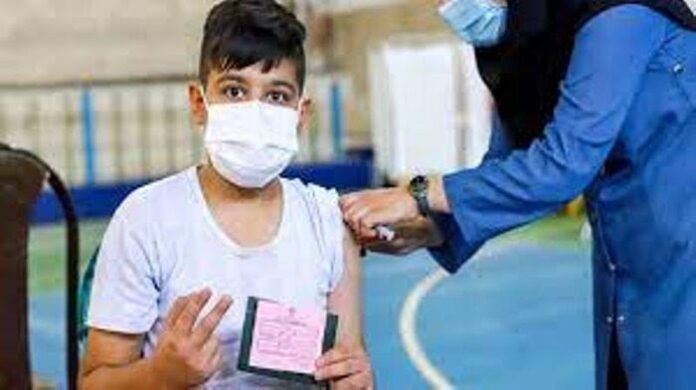
Iran’s Imports of Covid Vaccines Top 100mn

 The society’s director Karim Hemmati said the latest consignment consisted of six million doses of vaccines. He said his organization is ready to import any amount of vaccine the Health Ministry says is needed.

Hemmati added that Iran’s Red Crescent Society will continue to help to fight the coronavirus pandemic and continues its screening work at the borders, establishment of vaccination centers and cooperation with charity workers in this field. 

He said Iran is expected to inoculate 75 percent of the population against COVID-19, using both domestically-produced vaccines and imported jabs.

According to the Health Ministry, more than 81 million doses of coronavirus vaccines have been administered in Iran so far. This includes over 30 million people have also received a second dose.

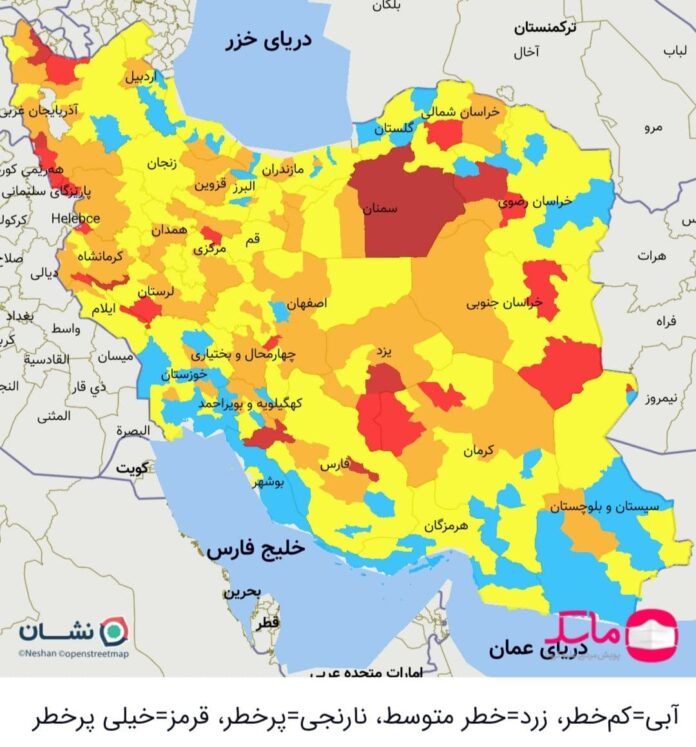
The pandemic has so far infected nearly six million Iranians and has taken the lives of 125,363 people.

The latest national infection number for 24 hours was on Monday during which over 7,500 new infections and 140 deaths were recorded.

Lebanon judge charges dozens over deadly Beirut clashes

Lebanon’s state news agency reported on Monday that Government Commissioner to the Military Court Judge Fadi Akiki had charged 68 people with crimes including murder, incitement to sectarian strife, the possession of unlicensed weapons, and more. According to the outlet, 18 of those are in detention.

Violent clashes erupted on October 14 between Lebanon’s two Shiite factions, Hezbollah and Amal, and gunmen believed to be supporters of the Christian Lebanese Forces Party. The unrest broke out during a Hezbollah-led protest against Tarek Bitar, the lead judge probing last year’s Beirut port blast that killed over 200 and wounded thousands.

Samir Geagea, the leader of the Lebanese Forces Party, has stated his refusal to be questioned by the judge unless he questions Hezbollah chief Sayyed Hassan Nasrallah first.

The turbulence that gripped the city and claimed seven lives took place on the border of Beirut’s Chiyah and Ain el-Rumaneh neighborhoods, the same frontline that divided the capital during the Lebanese civil war.

Lebanon’s military deployed armored vehicles to squash the unrest and declared that its troops would fire at any armed individual on the capital’s streets.

The protest came after the Lebanese court dismissed complaints from ex-Finance Minister Ali Hassan Khalil and former Public Works Minister Ghazi Zeiter, who were due to appear in the docks, allowing the judge to resume his investigation. Both of the men are allies of, or close to, the Hezbollah movement.

Before the probe was suspended for the second time in weeks, Nasrallah called for Bitar to be replaced due to his alleged politicization of the case and targeting specific officials.

Despite attempts to serve justice, the investigation into the port blast has made little headway in holding senior officials accountable. Bitar is the second judge to lead the probe after his predecessor, Fadi Sawan, was removed from his role in February after being hit with accusations that he was acting out of his jurisdiction by former ministers accused of negligence.

IAEA: Iran expanding uranium enrichment

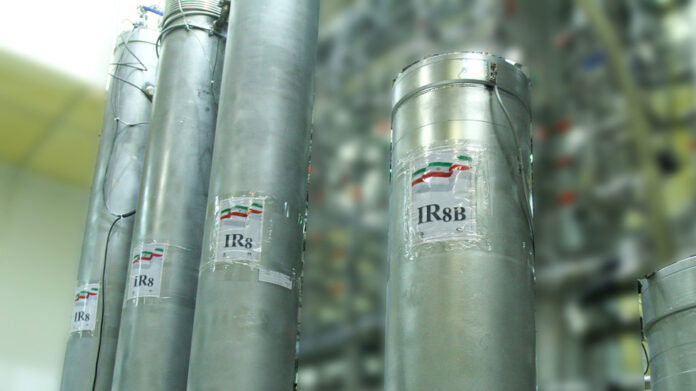
Iran has injected uranium hexafluoride gas enriched up to 20 percent purity level into a centrifuge at its Natanz nuclear facility, the United Nations’ nuclear watchdog reports.

“On 25 October 2021, the Agency verified that Iran began feeding (the gas) enriched up to 20% U-235 into a single IR-6 centrifuge in R&D (research and development) line 2 at PFEP (Pilot Fuel Enrichment Plant)” in Natanz, the IAEA said in a report on Monday, according to Reuters.

However, the agency also noted that the country was not keeping the output.

“The resulting product and tails streams were being re-combined,” the report added, meaning that after separating the enriched product it was mixed with the centrifuge’s waste and not kept.

In May 2019, Iran began a set of nuclear countermeasures in retaliation for the United States’ departure from the Joint Comprehensive Plan of Action (JCPOA), a historic 2015 nuclear deal between the Islamic Republic and world countries.

The measures were also taken in return for the US’s restoration of its nuclear-related sanctions against Iran, and failure by Britain, France, and Germany—Washington’s allies in the deal—to retain their business interactions with the Islamic Republic despite the oppressive economic bans.

As part of the retaliatory steps, Iran stopped recognizing the limits set by the deal on the level of its uranium enrichment activities and the volume of its heavy water reservoir.

On January 5 last year, the country said it would no longer observe any operational limitations on its nuclear industry, whether concerning the capacity and level of uranium enrichment, the volume of stockpiled uranium or research and development.

Tehran has invariably asserted that it would reverse all of its counter-steps if the Western allies resumed their obligations under the JCPOA.

Attack on Iran’s pavilion in Germany book fair foiled

A small number of MKO members attempted to stir chaos at Iran’s national pavilion, but failed, thanks to the vigilance of the pavilion staff and immediate presence of the Book Fair officials and the Frankfurt Police. 

The MKO members, who had gathered in front of the pavilion, were forced out of the Book Fair.

Frankfurt Book Fair, which had kicked off on October 19, was closed today (October 24).

The MKO is listed as a terrorist organization by much of the international community. Its members fled Iran in 1986 for Iraq, where they received support from then dictator Saddam Hussein.

The notorious outfit has carried out numerous attacks against Iranian civilians and government officials for several decades.

In 2012, the US State Department removed the MKO from its list of designated terrorist organizations under intense lobbying by groups associated to Saudi regime and other regimes adversarial to Iran.

A few years ago, MKO members were relocated from their Camp Ashraf in Iraq’s Diyala Province to Camp Hurriyet (Camp Liberty), a former US military base in Baghdad, and were later sent to Albania.

Those members, who have managed to escape, have revealed MKO’s scandalous means of access to money, almost exclusively coming from Riyadh.

The MKO terrorist group specified the targets as martyred Lieutenant General Qassem Soleimani, who commanded the Quds Force of the Islamic Revolution Guards Corps (IRGC), and Iranian President Seyed Ebrahim Rayeesi.

The terrorist organization said it would “welcome” their assassination, adding that it desired for the ranking officials to “join” Asadollah Lajevardi, Tehran’s former chief prosecutor, and Ali Sayyad-Shirazi, a former commander of the Iranian Army’s Ground Forces during Iraq’s 1980-88 war against Iran.

Earlier in June 2019, a leaked audio of a phone conversation between two members of MKO, revealed Saudi regime has colluded with the MKO elements to frame Iran for the tanker attacks in the Persian Gulf.

In the audio, which is being released by the Iran Front Page for the first time, Shahram Fakhteh, an official member and the person in charge of MKO’s cyber operations, is heard talking with a US-based MKO sympathizer named Daei-ul-Eslam in Persian, IFP news reported.

In this conversation, the two elements discuss the MKO’s efforts to introduce Iran as the culprit behind the tanker attacks in the Persian Gulf, and how the Saudis contacted them to pursue the issue.

“In the past week we did our best to blame the [Iranian] regime for the (oil tanker) blasts. Saudis have called Sister Maryam (Rajavi)’s office to follow up on the results, [to get] a conclusion of what has been done, and the possible consequences,” Fakhteh is heard saying.

“I guess this can have different consequences. It can send the case to the UN Security Council or even result in military intervention. It can have any consequence,” Daei-ul-Eslam says.

Attacks on two commercial oil tankers in the Gulf of Oman on June 13, 2019 and an earlier attack on four oil tankers off the UAE’s Fujairah port on May 12, 2019, escalated tensions in West Asia and raised the prospect of a military confrontation between Iran and the United States.

The US, Saudi Arabia, and the UAE have rushed to blame Iran for the incidents, with the US military releasing a grainy video it claimed shows Iranian forces in a patrol boat removing an unexploded mine from the side of a Japanese-owned tanker which caught fire in 2019.

It later released some images of the purported Iranian operation after the video was seriously challenged by experts and Washington’s own allies.

The MKO which is said to be a cult which turns humans into obedient robots, turned against Iran after the 1979 Islamic Revolution and has carried out several terrorist attacks killing senior officials in Iran; yet the West which says cultism is wrong and claims to be against terrorism, supports this terrorist group officially.

After the Islamic Revolution in 1979, the MKO began its enmity against Iran by killing over 17,000 Iranians and terrorist activities. Several members of the terrorist group and its leaders are living in France now, freely conducting terrorist activities.

The MKO terrorist group has martyred 17,161 Iranian citizens, including late president Mohammad Ali Rajayee, former prime minister Mohammad Javad Bahonar, late Head of Supreme Judicial Council Ayatollah Mohammad Beheshti, late Deputy Chief of the Iranian Armed Forces General Staff Ali Sayyad Shirazi, and 27 legislators, as well as four nuclear scientists.


Iran, Iraq Launch Visa Waiver Program

Iranian Mothers Can Now Pass Nationality to Children

“Iranians arriving in Iraq through airports in Baghdad and Najaf, as well as Iraqis travelling to Iran will no longer be required to obtain visas,” said Iran’s Ambassador to Baghdad Iraj Masjedi.

“They will only need to have passports,” the ambassador added.

He added visitors will also be able to travel to Iraq via the flight routes mentioned above and return to Iran by land.

The top diplomat noted Iranian travelers can stay in Iraq for a period of one month, which could be extended.

He also said, at the moment, Iran runs 90 flights to Iraq weekly, but a rise in the number of flights should be approved at a joint meeting with the Iraqi side

Meanwhile the Iraqi Interior Ministry had already announced that visas would be issued to Iranians upon arrival on Iraqi soil.

“Based on the authorization of the government of Iraq, issuing one-month extendable visas for Iranian nationals, who enter Iraq by air, has entered the execution stage.” the ministry said.

Tehran to Host Forum on Afghanistan

Iranian Foreign Ministry Spokesman Saeed Khatibzadeh said on Tuesday the event will not be a forum for rivalry; rather, he added, it will serve to make Afghanistan’s neighbours work together to help Afghans determine their own future.

He said it is up to Afghan people to determine their own destiny, adding other countries, including Iran, will only have a “facilitating” role.

“The conference on Afghanistan’s neighbouring countries opens in Tehran on Wednesday, October 27, 2021 at the foreign ministry in Tehran, bringing together Afghanistan’s neighbouring countries plus Russia,” said Khatibzadeh.

He said the event will be inaugurated by Iranian President Ebrahim Raeisi.

“Our top priority is to safeguard Afghan people’s rights, and we have made every effort, so far, not to sever our trade-economic relations with Afghan people,” the spokesman said.

“We have also told the ruling elite [in Afghanistan] that they should set the stage for a stable political and security situation,” he added.

“Unfortunately, under the current circumstances, we are concerned about a growth in terrorism in Afghanistan,” he explained.

“Iran, as a responsible player, seeks to help meet Afghan people’s demands,” he said.


No Orphan without Sponsor in Iran: Official

Morteza Bakhtiari, the head of the Imam Khomeini Relief Foundation, made the comment at a gathering aimed at promoting a national program to support orphans.

“Since the beginning of the implementation of this program, the number of sponsors of orphans and the needy has risen from 721,000 to 1.1 million,” he added.

The official noted more than Rls. 190 billion ($76 mn) was donated to orphans and the needy by those taking part in the program called Charity Plan.

“Just in one case, one of our major sponsors has formed a network of 800 benefactors, supporting around 137 thousand orphans,” he explained.

He said the government and Parliament are also backing the foundation in the implementation of the charity program.

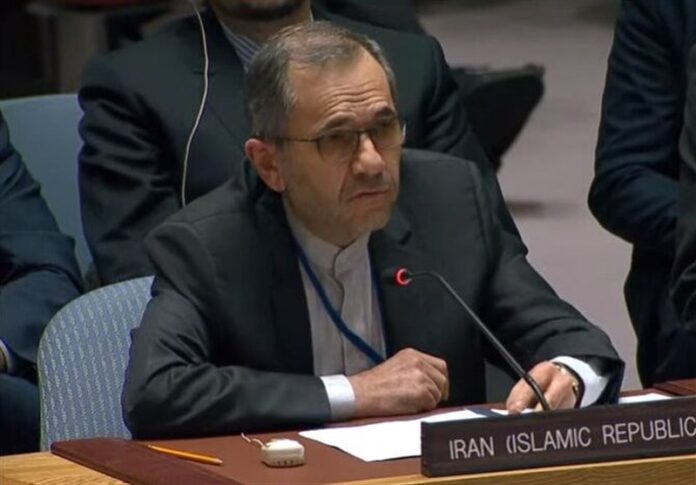
Iran slams UN rights report as “ill-intentioned”

Kazem Gharibabadi made the remarks on Monday following a new report prepared by Javaid Rehman, the so-called United Nations special rapporteur on the situation of human rights in Iran.

“At a time when the world is suffering from the attitudes and policies of such Western countries like the United States, issuance of such a report against the Islamic Republic, which, itself, is a victim of these countries’ actions is a completely political and diversionary measure,” he said.

The “ill-intentioned” report, the official lamented, had intentionally ignored various instances of extensive progress in the area of human rights in Iran.

The so-called UN official had also used “mendacious claims” made by foreign-based anti-Iran terrorist groups, which themselves are guilty of violating human rights, to devise the report’s central planks, Gharibabadi added.

“The Islamic Republic constantly moves towards enhancement and betterment of human rights, and this is based on religious guidelines not international obligations or political reports,” he noted.

Zahra Ershadi, Iran’s deputy ambassador to the UN, had also slammed the report earlier in the day.

Appointment of a special rapporteur for Iran, which was spearheaded by the West, especially Canada, was done on the basis of political motivations and against the interests of the Iranian nation, she had said.

Afghanistan says willing to buy oil from Iran

It came during a video conference between ACCI officials and Iranian commercial attaché Ebrahim Hosseini. The participants also discussed general trade issues between the two countries.

Kabul is currently struggling to resolve its ongoing issue with petroleum shortages and hopes that Tehran will be able to led a hand. Yet, for this to happen, Iran will have to help its neighbour in resolving a number of issues.

Kabul asked Hosseini to help Afghanistan with them.

“It is imperative for both countries to strengthen economic relations and promote trade and Afghan petroleum importers are in dire need of being provided with the required facilities by the Iranian government,” he stated.

The Iranian commercial attaché vowed to help Kabul to create the conditions necessary for launching the oil trade by “eliminating the existing challenges” and building the facilities required.

It is so far unclear how Kabul plans to pay for the purchase as a major portion of the government’s reserves was frozen in the US following the Taliban takeover in August. Since then, no foreign state, including Iran, has officially recognised the acting Taliban government. In addition, many countries designated the Taliban as a terrorist organisation, hence any taxes and duties paid to its coffers due to trade with the country might fall into the category of terrorist funding and result in criminal charges.

Kabul has called on the world’s nations, and specifically the US, to unlock Afghanistan’s reserves and recognise the new government after the Taliban seized the capital and most of the country practically without a fight. The international community is still considering how to proceed with regard to Afghanistan and its Taliban government, which claims to have severed ties with terrorist groups like al-Qaeda. So far, a plan is being considered to launch humanitarian relief efforts to help desperate Afghans.