Sunday, December 28, 2025
Home Blog Page 2313

More than a dozen killed in Yemen’s Aden blast

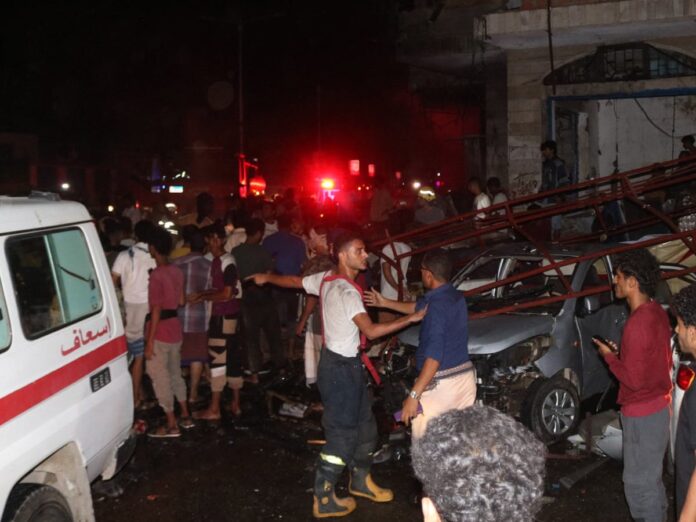
“Twelve civilians were killed in an explosion” in the vicinity of the Aden International Airport and “there are also serious injuries”, Reuters quoted an unnamed security official as saying on Saturday.

The cause of the huge blast was not yet known, the official further told Reuters, which also cited some eyewitnesses and a number of other unnamed officials, who confirmed the incident.

An airport official added a small truck exploded at an outer gate to the airport on Saturday evening, while a local official and two security sources said the vehicle was carrying petroleum products.

Earlier this month, an explosives-laden car in Aden targeting a convoy transporting the city governor claimed the lives of at least six people and wounded others. The governor survived.

In March 2015, Saudi Arabia, backed by the United States and regional allies, launched a brutal campaign against Yemen, with the goal of bringing the government of former President Abd Rabbuh Mansur Hadi back to power and crushing the Ansarullah movement, which had overthrown the previous Yemeni government in a revolution. The war has left hundreds of thousands of Yemenis dead, and displaced millions more. It has also destroyed Yemen’s infrastructure and spread famine and infectious diseases.

For the past few years, Hadi has turned Aden into his so-called regime’s temporary capital, gathering his armed militias there. However, tensions have also simmered within Aden itself between Hadi and the southern separatist groups, which are collectively known as the Southern Transitional Council (STC). The council is supported by the United Arab Emirates (UAE), which is Saudi Arabia’s significant ally in the war.

US, Israel behind cyberattack on Iran gas stations: Top General

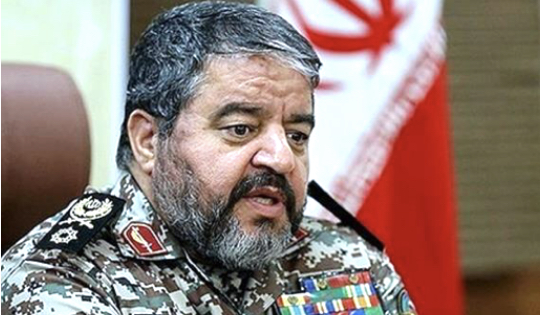
“We analyzed two incidents; one of them was the attack on Shahid Rajaee port, and the other the attack on the railways,” said Brigadier General Gholamreza Jalali in a televised interview.

“The two were similar [to the cyberattack on gas stations] in terms of the model of the attack,” he added.

“We believe the masterminds of those cyberattacks are definitely our enemies, i.e., the Americans and the Zionist regime [of Israel],” the top general noted.

However, he added, “We are reviewing technical information and cannot express our final viewpoint now,” he said.

“When somebody wants to attack you at the middleware or hardware level, they should be able to infiltrate into, and have access to the information in the embedded system,” he explained.

He added the one who is able to do this is usually the country or company which has developed that system.

He expounded on the missions of the Passive Defense Organization, saying one of the last measures adopted by the organization is to study the recent cyberattack on the country’s gas stations as well as moves to ensure the security of the nation’s cyber-infrastructure.

The top general said the hacking attack on the pumps took place at the middleware level, “which is a very complicated attack and difficult to counter.”

“The cyberattack on billboards was also connected to the attack on the fuel distribution system,” he noted.

He said elements inside the country may have been involved in the cyberattacks, adding security authorities are probing the issue.

Saudi FM says not much progress in talks with Iran

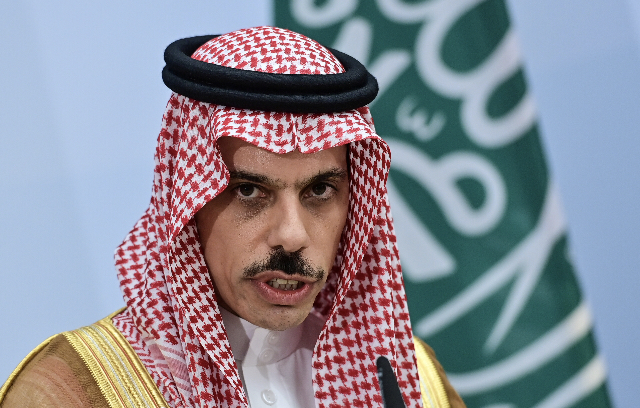
Bin Farhan made the remarks in Rome on the sidelines of the G20 summit. The two-day G20 summit in Rome, Italy, began on Saturday.

Leaders of the world’s top 20 economic powers have gathered in the Italian capital, Rome, to discuss climate change and the Coronavirus pandemic as two major crises, along with other international developments.

Reacting to the developments in Lebanon, he also claimed that his country has no idea that the new Lebanese government should stay or leave the office.

Without mentioning the pressure that Riyadh has put on Lebanon, the Saudi Foreign Minister claimed, “The root of the crisis in Lebanon goes back to the domination of Hezbollah.”

Bin Farhan’s claim coincides with the fact that Saudi Arabia, along with some other Arab countries, including the UAE, Kuwait and Bahrain, have recalled their ambassadors from Beirut and asked the Lebanese ambassadors to leave their country.

Iran and Saudi Arabia have been divided over a range of issues in recent years including the Saudi war on Yemen and its support of the Bahraini regime crackdown on its people.

Saudi Arabia accuses Iran of meddling in the kingdom’s internal affairs.

Iran also announced the Saudis helped militant groups that fought decade-long war to bring down the Syrian government but to no avail.

UAE recalls envoy from Beirut, advises citizens not to travel to Lebanon

The UAE, in solidarity with Saudi Arabia, has announced the withdrawal of its diplomats and advised citizens not to travel to Lebanon, Emirates News Agency (Wam) reported on Saturday.

The decision comes days after comments made by the Lebanon’s information minister – against the legitimacy led by Saudi Arabia in Yemen – put fresh strains on Gulf-Lebanese relations.

The comments by George Kordahi in an interview he stated was recorded on August 5, nearly a month before he took office, circulated heavily on social media.

The UAE’s Ministry of Foreign Affairs and International Cooperation has announced that the comments were considered polemics that contradict diplomatic norms and the history of Lebanon’s relations with the countries of the coalition, according to Wam. It also denounced them as reflecting Lebanon’s growing distance from its Arab brothers.

The UAE, Saudi Arabia, Bahrain and Kuwait also summoned their respective Lebanese ambassadors over the statements.

The Kingdom expelled its Lebanese ambassador and banned all imports from Lebanon.

Lebanon hopes to ease tensions with Arab states

“Lebanon is hoping to soon resolve the crisis with the Gulf countries and reiterates its commitment to the responsibilities it has before the Arab world and Saudi Arabia, in particular,” the minister told reporters after an urgent government meeting.

A US representative was present at the meeting, as the United States could help resolve the situation, the minister noted.

Regarding a potential resignation of the government, Bou Habib added that ministers had to continue their work and could not leave the country without the government.

The tensions were ignited by the recently published excerpts from an interview of Lebanese Information Minister George Kordahi, who criticized Saudi Arabia’s involvement in the Yemeni conflict.

On Friday, a Saudi state-run broadcaster announced that Riyadh was recalling its ambassador to Lebanon for consultations and asked the Lebanese envoy to leave the country within 48 hours. Bahrain and Kuwait have also asked Lebanese ambassadors to leave within 48 hours. Riyadh is even considering severing diplomatic relations with Lebanon, according to a diplomatic source.

‘Iran ready to act as hub for delivering goods into Afghanistan’

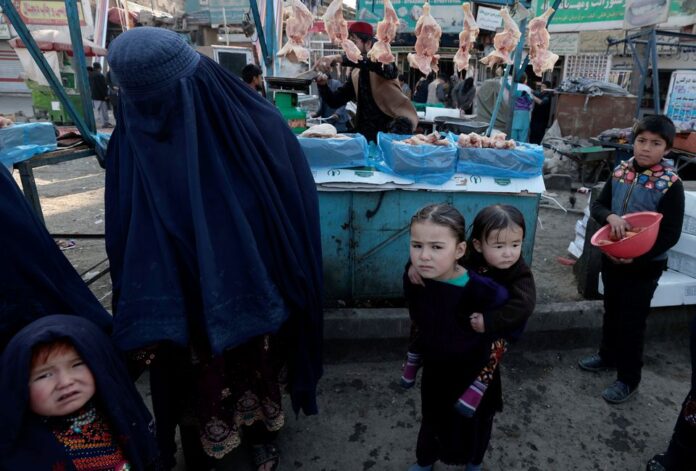
Both Iran and China have the same view about rooting out terrorism in Afghanistan and its spillover to neighboring countries as well as honoring a non-interference policy and territorial integrity in the country, Iranian Ambassador to China Mohammad Keshavarzzadeh told the Global Times in an exclusive interview.

The ambassador noted that Iran supported the use of the China-proposed Belt and Road Initiative to improve the economy and people’s livelihoods in Afghanistan.

He praised China’s pledge to host the third round of the meeting of foreign ministers of neighboring countries of Afghanistan and noted that Iran will lend its support to China.

“Iran, for its part will lend its support to China and believes that this mechanism will further increase cooperation and understanding among neighboring countries of Afghanistan and contribute effectively to their joint efforts toward helping Afghan people better safeguard their interests and step into the path of peace, inclusiveness, friendship and well-being,” he added.

During the Second Meeting of Foreign Ministers of the Neighboring Countries of Afghanistan hosted in Tehran on Wednesday, it was announced that the third round of the meeting will be held in 2022 in China.

The diplomat told the Global Times that “Iran is also supporting giving full play to the role that regional economic initiatives and organizations like the Belt and Road Initiative, SCO and ECO can have in improving the economy and the livelihood of the people of Afghanistan.”

According to the diplomat, the meeting mechanism of Afghanistan’s neighboring countries serves as a “very important regional arrangement to support peace, reconciliation and national unity in Afghanistan.”

China’s State Councilor and Foreign Minister Wang Yi participated in Wednesday’s meeting via video link. Wang stressed the importance of strengthening counter-terrorism cooperation at the meeting.

“Not only do we need to encourage the new Afghan authority to make a clean break with terrorist forces, but we also need to support it in independently, resolutely and effectively combating all extremist and terrorist organizations, including ISIL and the ETIM,” he said.

Keshavarzzadeh told the Global Times that all of the neighboring countries are very much concerned about terrorism in Afghanistan. He called on the Taliban to strive to fulfil its commitment to counter-terrorism.

Iran and China share common views on different regional and international issues, said the diplomat who stressed that an inclusive and broad-based political structure with the participation of all ethno-political groups is the only solution to the Afghan issue.

“Tehran’s meeting was mainly concentrated on promoting the political solution to the Afghanistan crisis. Iran’s position on this has been consistent and principled. We believe that forming an inclusive political structure that represents all ethnic and religious groups of this country is an imperative and during this conference Iran has reaffirmed that international recognition would not fly without internal reconciliation and a full-fledged representative government at home. Regional countries and members of the international community at large should help bring about a consensus in Afghanistan to secure lasting peace and prosperity,” he added.

Another point of significance, the ambassador noted, is how to face the legacy of foreign interference in the region.

“In this regard, any kind of action that could lead to renewal of irresponsible and bullying actions in Afghanistan should be avoided and the US and its NATO allies who created this chaotic situation should not shrink from their responsibilities,” the ambassador continued.

He mentioned that it’s important for Afghanistan to have access to its financial resources in order to avoid further suffering, especially as winter approaches.

“Last but not the least is the fundamental importance of observing human rights in Afghanistan, in particular the rights of women and girls and all ethnic and religious groups,” he stated.

The ambassador did not respond directly to the question about what conditions are required for Iran to recognize a Taliban-led government as Afghanistan’s legitimate government. Instead, he noted that Iran, as a neighbor which has historical links and a long border with Afghanistan, never looks at Afghan issues from such a position.

“Afghanistan’s political structure and development path are up to the Afghan people to decide. All the ethno-political groups and parties should participate in an inclusive government that will lead to national reconciliation, peace and integrity,” he said.

According to the ambassador, Iran now hopes to help with the urgent needs of Afghan people. Sending humanitarian assistance, opening borders at the earliest possible time to facilitate and normalize trade activities, providing fuel for the coming cold season, paying due attention to refugees and displaced people and keeping the diplomatic missions functioning are all important actions taken by Iran in accordance with brotherly relations, he added.

He called on the international and regional organizations, in particular the UN and its agencies, to shoulder responsibilities and provide Afghanistan and its neighboring countries with necessary assistance.

He said that Iran has declared its readiness to act as the hub for delivering goods and equipment into Afghanistan.

“Since Iran has been hosting more than 3 million Afghan nationals for more than three decades and its economy is strained by illegal and oppressive sanctions by the US, Iran should be provided with support from members of the international community in facing the issue of refugees coming from Afghanistan,” he added.

Russia slams new US sanctions on Iran

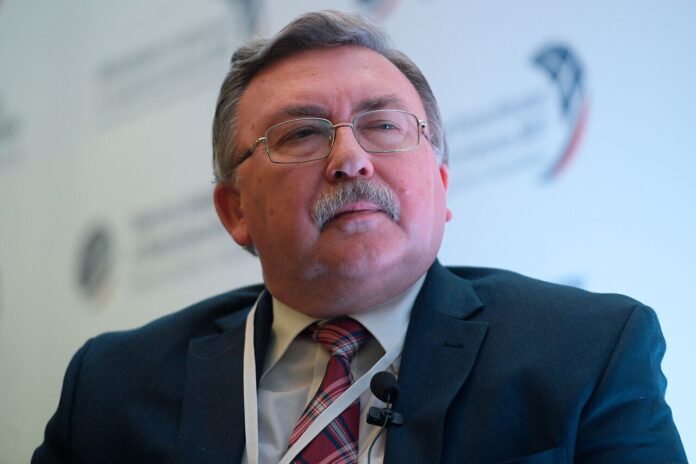
Ulyanov made the criticism in a tweet. He said all participants in the Vienna negotiations must avoid any move which would prevent effective resumption of the talks.

Iran has also condemned the sanctions as contradictory to the U-S government’s claims that it wants to rejoin the nuclear deal.

The US Treasury Department on Friday imposed sanctions on four Iranian individuals and two entities, for their involvement in promoting the Unmanned Aerial Vehicle (UAV) programs of Iran’s Islamic Revolution Guards Corps (IRGC).

Iran and the remaining parties to the Joint Comprehensive Plan of Action, JCPOA, have held several rounds of negotiations to resuscitate the deal.

They have agreed to resume negotiations to that end by the end of November.

Iranian Deputy Foreign Minister Ali Bagheri on Friday said Tehran and the European troika agreed that Iran and each of the signatories to the nuclear deal will hold separate face to face meetings in Vienna to discuss ways of removing the oppressive sanctions. Bagheri noted that what matters is the seriousness of the other side to lift the illegal sanctions.

EU ends risk warning for Iranian airspace

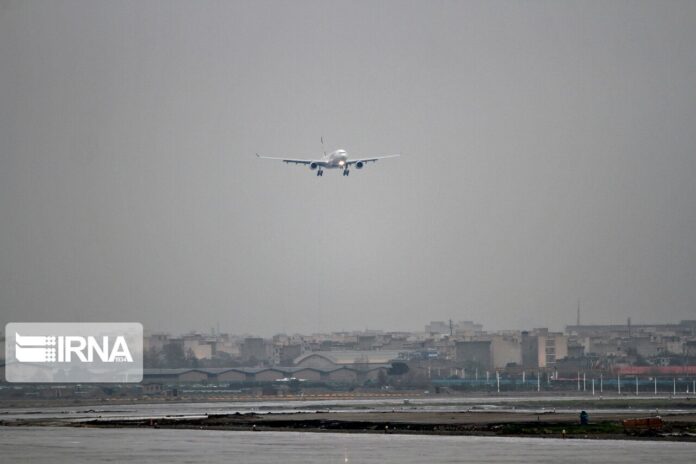
In a statement, he said Iranian officials had been holding negotiations with the European Union Aviation Safety Agency (EUSA) and several European countries to dispel their concerns over the safety of Iran’s airspace for passenger planes. 

In January 2020, the EUSA issued a statement which banned European airlines to fly their aircraft under the altitude of 25,000 feet in Iran’s airspace, which was valid until October 30, 2021, Amirmokri added. The statement also said the risk warning ended on October 30 and was no longer extended. 

The agency had warned airliners flying over Iran of the danger of being accidentally targeted, seven months after a Ukrainian jetliner was mistakenly shot down by Iran’s air defense systems over Tehran. Iran said the air defense systems mistook that airliner for an enemy missile.

Syria fends off daytime Israeli assault on Damascus countryside

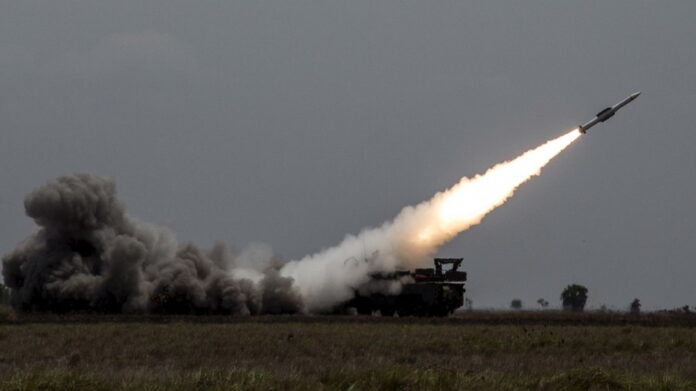
The Syrian military has announced the country’s air defenses have in a rare daytime strike intercepted missiles fired from the direction of the Israeli-occupied territories at Damascus countryside.

Citing a military source, Syria’s official news agency SANA reported Saturday that the Israeli regime launched missiles from the northern side of occupied Palestine and targeted some points in Damascus countryside around 11 am local time.

The source said that the country’s air defense systems were activated against “hostile targets from the direction of occupied lands”, and a number of the missiles were “repelled”.

The source also added the aggression injured two soldiers and caused some material damages.

Syrian state television had earlier reported of explosions heard in the countryside surrounding the capital.

The latest attack came just a few days after the Syrian media said Israeli helicopters had hit three targets on the outskirts of the town of al-Baath as well as other locations in southern Syria.

Two of the sites targeted on Monday were observation posts reportedly used by the Lebanese resistance movement Hezbollah, while the third target was a site next to a Syrian military facility. The strikes caused “material damage”, but there was no immediate word on casualties.

Israel frequently targets military positions inside Syria, especially those for Hezbollah, which has played a key role in helping the Syrian army in its fight against the foreign-backed terrorists.

The Tel Aviv regime mostly keeps quiet about its attacks on Syrian territories, which many view as knee-jerk reaction to the Syrian government’s increasing success in confronting terrorism.

Israel has been a main supporter of terrorist groups that have opposed the government of President Bashar al-Assad since foreign-backed militancy erupted in Syria nine years ago.

Covid downward trend holds in Iran

The latest fatalities push to 126,126 the number of people killed by Covid since the pandemic started in early 2020. 

However, the downward trend in Covid deaths, infections and hospitalizations has held over the past month. 

The death tallies in the past few weeks have been way lower than those during the peak of the 5th wave of the disease a couple of months ago. At that time, Covid  killed hundreds of people daily. 

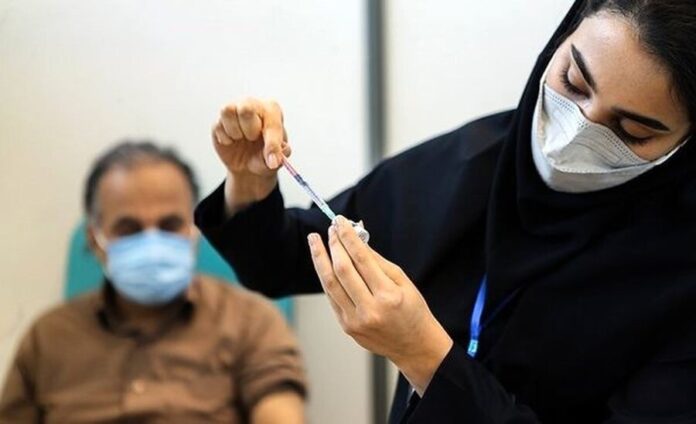
Authorities attribute the downward trend to the rising rate of vaccination against the Coronavirus.  Over a million people get inoculated each day on average. So far, 52,379.057 people have got the first dose of the vaccine and 33,674,073 people have received the second dose. 

Meanwhile, healthcare staff started to receive booster shots countrywide several days ago. So far, 84,340 people have received the third shot. 

Officials have removed some Covid-related bans. But they are warning people against relaxing health protocols, saying that could trigger a 6th wave of Covid.