Sunday, December 28, 2025
Home Blog Page 2285

WHO: 1mn Afghan children likely to die of malnutrition

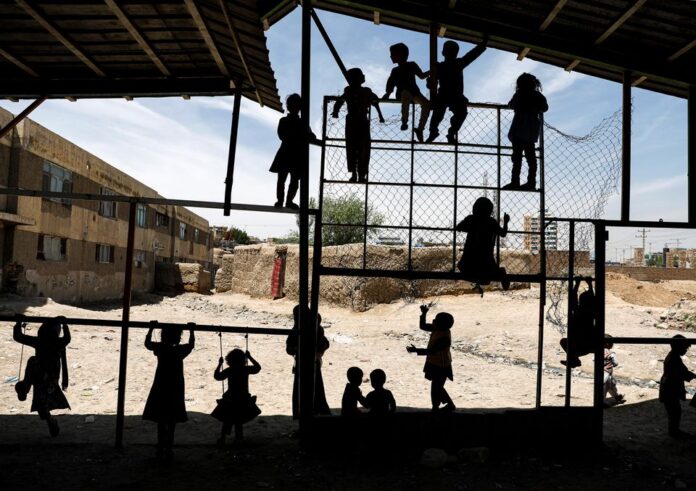
Around 3.2 million children are expected to suffer from acute malnutrition in Afghanistan by the end of this year, with 1 million of them at risk of dying as temperatures drop, a WHO spokesperson said on Friday.

Aid agencies have warned of famine as a drought coincides with a failing economy following the withdrawal of Western financial support in the aftermath of a Taliban takeover in August. The health sector has been hit especially hard, with many healthcare workers fleeing due to unpaid salaries.

“It’s an uphill battle as starvation grips the country,” Margaret Harris told Geneva-based journalists by telephone from the capital Kabul, adding, “The world must not and cannot afford to turn its back on Afghanistan.”

Nighttime temperatures are falling below zero degrees Celsius and colder temperatures are expected to make the old and the young more susceptible to other diseases, Harris said. In some places, people are chopping down trees to provide fuel for the hospitals amid widespread shortages, she continued.

Harris did not have numbers for the number of children who had already died from malnutrition but described “wards filled with tiny little children”, including with a seven-month old baby whom she described as “smaller than a newborn”.

Measles cases are rising in the country and WHO data shows 24,000 clinical cases had so far been reported.

“For malnourished children, measles is a death sentence. We will see so many more deaths if we don’t move on this quickly,” Harris stated.

With millions facing starvation and nearly the entire population teetering on the brink of poverty, Afghanistan could experience the worst humanitarian crisis “we’ve ever seen”, a United Nations Development Programme official has warned.

Some 23 million people are in desperate need of food, the $20 billion economy could shrink by $4 billion or more and 97% of the 38 million population are at risk of sinking into poverty, Abdallah Al Dardari, the resident representative for the UNDP in Afghanistan, said Wednesday.

“Afghanistan is probably facing the worst humanitarian disaster we’ve ever seen,” Al Dardari added.

“We have never seen an economic shock of that magnitude and we have never seen a humanitarian crisis of that magnitude,” he said.

Funding for the humanitarian crisis and for essential services is crucial to maintain lives and livelihood in the Central Asian country, he added.

Multiple reports say that several areas in Afghanistan are also facing droughts even as winter approaches.

Russia seeks restoring JCPOA, removal anti-Iran bans in Vienna

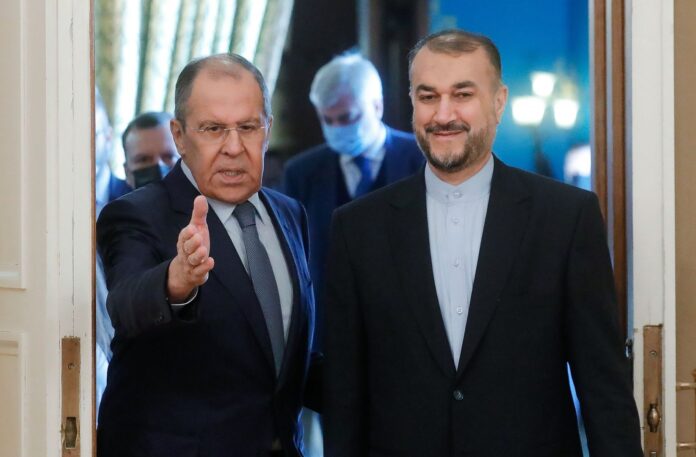
“On November 29, it is planned to resume talks of the signatories to the Joint Comprehensive Plan of Action (JCPOA) on settling the situation around the Iranian nuclear program. We will insist on implementing the agreements reached under this document in 2015, on their full implementation,” he stated.

“It means that the United States should resume the implementation of its commitments, including lift all the sanctions imposed in the context of the JCPOA,” Lavrov stressed.

According to the Russian top diplomat, the Iran nuclear deal was among the topics discussed in Paris during the 2+2 meeting between Russian and French defense and foreign ministers.

“Here, we have prospects for more constructive cooperation,” he added.

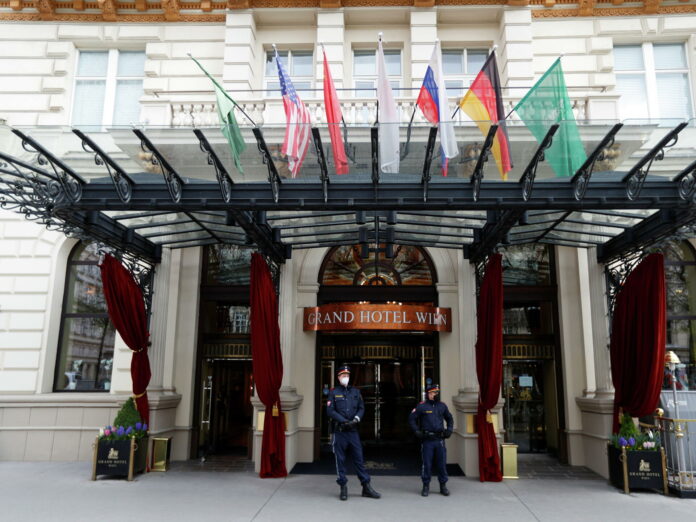
The JCPOA has had six offline meetings in Vienna since April to find ways to restore the nuclear deal in its original form. The sides discuss prospects for the United States’ possible return to the deal, steps needed to ensure full compliance with the deal’s terms by Iran, and issues of lifting the anti-Iranian sanctions.

The JCPOA, also known as the Iran nuclear deal, was signed between Iran, the five permanent members of the United Nations Security Council (Russia, the United Kingdom, China, the United States and France) and Germany in 2015. Under the deal, Iran undertook to curb its nuclear activities and place them under total control of the International Atomic Energy Agency (IAEA) in exchange of abandonment of the sanctions imposed previously by the United Nations Security Council, the European Union and the United States over its nuclear program.

The future of the deal was called in question after the United States’ unilateral pullout in May 2018 and Washington’s unilateral oil export sanctions against Teheran. Iran argued that all other participants, Europeans in the first place, were ignoring some of their own obligations in the economic sphere, thus making the deal in its current shape senseless. This said, it began to gradually scale down its commitments under the deal.

Meanwhile, US’ incumbent President Joe Biden has repeatedly signaled his readiness to return the US to the deal.

Biden: Supplies of petroleum sufficient to reduce purchase from Iran

The White House is required to affirm every six months that there is enough oil supply globally to maintain sanctions against Iran that were put in place in 2012, during Barack Obama’s administration.

Biden’s statement comes in advance of a virtual meeting with China’s President Xi Jinping on Monday, in what is expected to be the leaders’ most extensive meeting since Biden took office.

China is the largest purchaser of Iranian oil, averaging purchases of more than 500,000 barrels a day over the last three months.

Chinese purchases of Iranian crude have continued this year despite sanctions that, if enforced, would allow Washington to cut off those who violate them from the US economy.

The Biden administration is currently not enforcing those sanctions ahead of forthcoming negotiations with Iran to revive a 2015 nuclear deal that would let that nation sell its oil openly again.

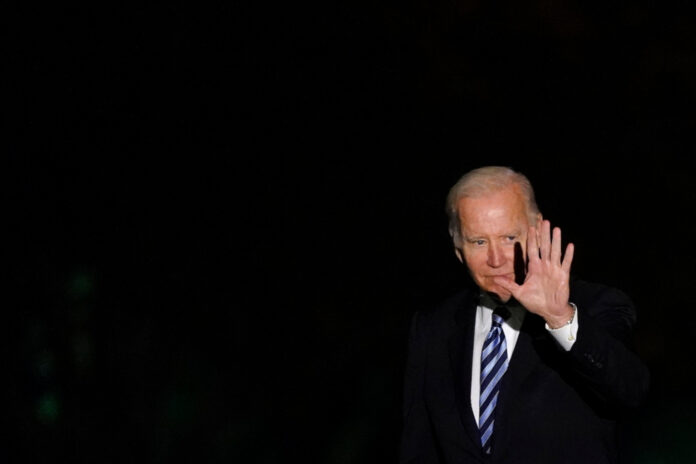
“Consistent with prior determinations, there is a sufficient supply of petroleum and petroleum products from countries other than Iran to permit a significant reduction in the volume of petroleum and petroleum products purchased from Iran by or through foreign financial institutions,” Biden announced in a memo to the State Department on Friday that.

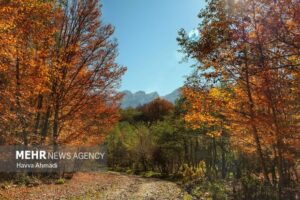
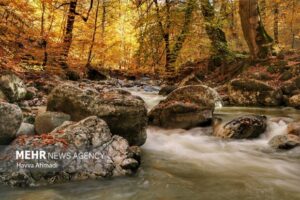
Mazandaran’s heaven of a thousand colors

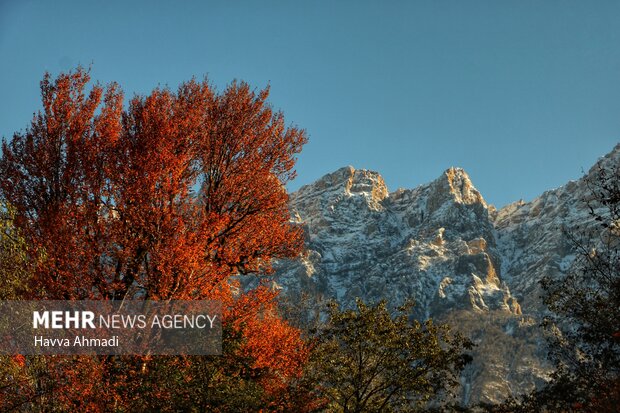
Mazandaran's heaven of a thousand colorsMazandaran's heaven of a thousand colorsMazandaran's heaven of a thousand colorsMazandaran's heaven of a thousand colorsMazandaran's heaven of a thousand colorsMazandaran's heaven of a thousand colorsMazandaran's heaven of a thousand colorsMazandaran's heaven of a thousand colors
Sang Deh, close to Shervinkooh and Shahriyar Kuh, 

still remains intact due to the distance that the Hyrcanian forests have created between this village and the surrounding villages and towns.

The forest is located in Dodangeh district of Sari, the capital city of the province, and its inhabitants speak Mazandarani or Mazani.

This area owes its beauty to the forests that surround it from the south and north.

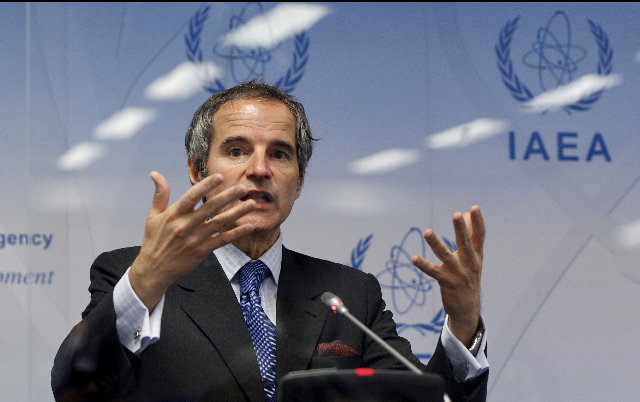
IAEA head urges more contacts with Iran government

The IAEA Director General on Friday raised concerns about the fact that the IAEA has yet to be contacted by Iran’s new government to discuss several outstanding disputes regarding nuclear activities.

Rafael Grossi said it was “astonishing” that President Ebrahim Raisi’s government had not been in contact since its election win in June.

“I have not had any contact with this government … that has been there for more than five months,” Grossi told reporters on the sidelines of a conference on nuclear security on Friday.

“I think that we should have had this contact much earlier… There’s a long list of things we need to discuss,” he added.

The IAEA chief stated the only exceptions had been “technical conversations” with Iran’s new atomic energy chief, Mohammad Eslami.

Grossi, who had been hoping to visit Iran before the next meeting of the IAEA’s board of governors starts on November 22, is still waiting for an invitation.

Iran has stopped observing some conditions of the Joint Comprehensive Plan Of Action (JCPOA) in 2019, after the United States withdrew from the plan in 2018 under then President Donald Trump and began imposing sanctions on Tehran.

The head of the Atomic Energy Organization of Iran (AEOI) has said the IAEA should not turn into a plaything for terrorist groups.

Eslami stated “nuclear terrorism” has levelled accusations against Iran’s nuclear program using “seditious ploys and … undocumented evidence”.

“Such behaviour has become threadbare,” noted Eslami, who is also the vice president.

He also weighed in on the level of uranium enrichment in Iran, saying Tehran remains committed to regulations within the framework of the Additional Protocol and lives up to its obligations under the Nuclear Non-Proliferation Treaty (NPT).

“The Islamic Republic of Iran’s nuclear program is peaceful, and uranium is enriched to a level which could be used for peaceful projects,” he added.

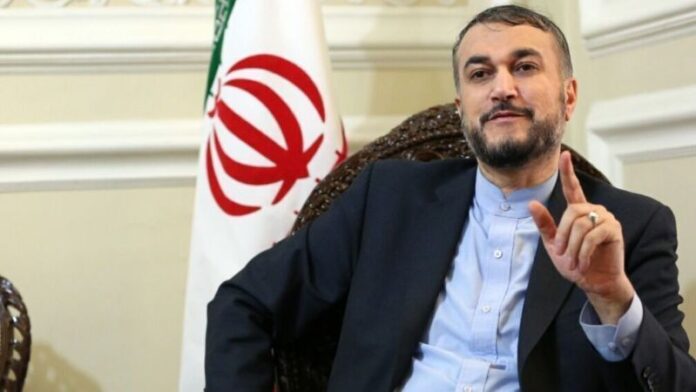
Iran FM: Reaching good deal in short time possible, lifting bans a must

Hossein Amri Abdollahian wrote on his Instagram page that the Islamic Republic of Iran does not intend to remain stuck in the stalemate of previous talks.

He referred to his recent phone calls with the foreign ministers of the five signatories to the nuclear deal, (JCPOA) namely China, Russia, Britain, Germany and France.

The Iranian foreign minister added the Islamic Republic of Iran is entering the talks with a pragmatic and result-oriented approach and it is determined to reach a good deal, but this calls for the effective and verifiable removal of sanctions and the return of all sides to full compliance with their commitments. I also pointed out that the US actions and violations including its imposition of fresh bans on Iran made it inalienably necessary that Washington give tangible guarantees.

According to Amir Abdollahian, the Islamic Republic of Iran does not intend to remain stuck in the stalemate of previous talks.

“If the other sides come to Vienna with a serious and positive view, it is possible to reach a good deal in a short time”, he said.

Amir Abdollahian reiterated the government of the Islamic Republic of Iran will diligently pursue the policy of developing balanced ties with other countries based on mutual respect and common interests and it is resolved to avoid tying the expansion of bilateral and multilateral economic cooperation to the JCPOA.

Vienna talks are scheduled to resume in November’s end.

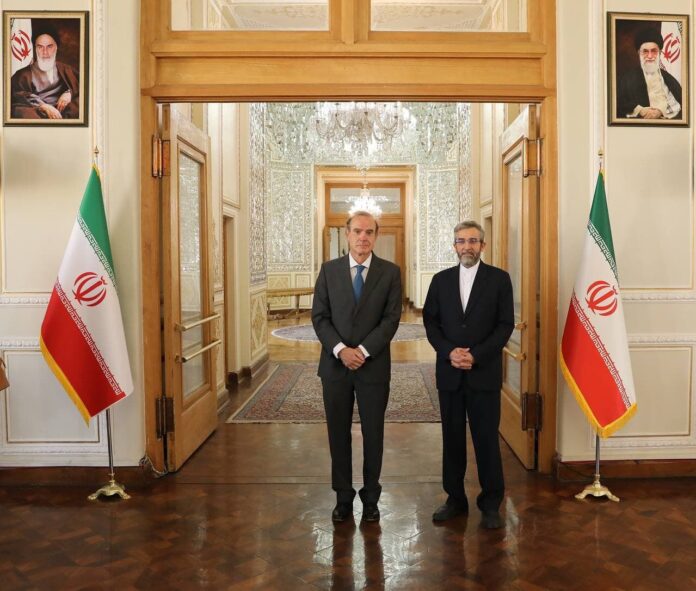
Top Iran nuclear negotiator meets EU’s Mora

The meeting happened inside the Iranian embassy in Madrid.

Bagheri and Mora agreed over the phone on the resumption of the Vienna talks between Iran and the 4+1 group of countries, namely Russia, China, Britain, France and Germany, last week.

Bagheri has said the main goal of the upcoming negotiations in Vienna is the removal of the anti-Iran sanctions and the return of the US to the nuclear deal, JCPOA, comes next.

Iran and the other sides have held 6 rounds of talks so far. They say they have made good progress but some differences remain.

One dispute is over the US insistence on keeping in place some of the sanctions imposed by the Trump administration following its unilateral withdrawal from the JCPOA in 2018.

The other sticking point is that the Biden administration is not ready to give any guarantees that the next US administration will stick to the nuclear deal.

Iran says the US must agree to redress its mistake as the party to blame for the current situation. Tehran also says the US must guarantee that no administration in Washington will again violate international law regarding the JCPOA.

The Vienna talks between Iran and the 4+1 will resume on November 29.

‘Iran seeks removal of US sanctions during Vienna talks’

“The main purpose of these talks from the Islamic Republic of Iran’s standpoint is to remove the illegal sanctions imposed on the Iranian nation by the US government in blatant violation of the JCPOA (the Joint Comprehensive Plan of Action) and the UN Security Council Resolution 2231,” Ali Baqeri said in an exclusive interview with Press TV in London.

Baqeri added the talks will not be about the nuclear issue, which has already been resolved, but will rather focus on the US withdrawal from the 2015 multilateral deal and the termination of its illegal sanctions against the Islamic Republic.

“What Americans did by leaving the nuclear deal was not only in violation of the JCPOA, but also the UN Security Council Resolution 2231. The objective of the negotiations is to remove US sanctions, both slapped in the past and in the wake of their withdrawal from the nuclear deal,” he noted.

The senior Iranian diplomat explained that the remedial measures that Tehran took in response to the US withdrawal from JCPOA are within the legal rights stipulated in Article 26 of the nuclear deal, which grants a party the right to suspend its contractual commitments in case of non-compliance by other signatories and let go of some of the restrictions imposed on its nuclear energy program.

He said Iran is seeking practical guarantees that the international deal would not be violated by the United States anymore.

“Not only did they (Americans) hurt Iranians by withdrawing from the nuclear deal, violating the UN Security Council Resolution 2231 and imposing sanctions on Iranians, but they also harmed the parties to the deal as they had business transactions and contracts with Iran,” Baqeri added.

He also lauded his recent conversations with officials from France, Germany and the United Kingdom, saying they were straightforward and serious.

“Those conversations were clear and progressive. I shared our perspective on the necessary framework for the upcoming talks in an unequivocal and very transparent manner. I also shared with them what our expectations of the upcoming negotiations are,” the Iran’s top negotiator pointed out.

“What is important for these European countries is to pursue their own interests rather than those of anyone else,” Baqeri continued.

The Iranian diplomat also hailed his talks with officials from the UK Foreign Office as positive, stating that the two sides had comprehensive discussions on bilateral relations, regional issues and future sanctions-removal talks.

Envoys from Iran and the P4+1 group of countries — Britain, France, Russia, and China plus Germany — are expected to hold the seventh round of discussions in the Austrian capital on November 29.

Former US President Donald Trump left the JCPOA in May 2018 and reimposed the anti-Iran sanctions that the deal had lifted. He also placed additional sanctions on Iran under other pretexts not related to the nuclear case as part of his “maximum pressure” campaign.

Following a year of strategic patience, Iran resorted to its legal rights under the JCPOA, which grants a party the right to suspend its contractual commitments in case of non-compliance by other signatories, and let go of some of the restrictions imposed on its nuclear energy program.

The US administration of Joe Biden has announced it is willing to compensate for Trump’s mistake and rejoin the deal, but it has shown an overriding propensity for maintaining the sanctions as a tool of pressure.

Tehran insists that all sanctions must first be removed in a verifiable manner before the Islamic Republic reverses its remedial measures.

Separately in another interview with Bloomberg, Baqeri said European signatories to the 2015 Iran nuclear deal have a critical role to play once talks resume in the Austrian capital.

They could provide powerful tools to bolster the agreement, he stated, especially employing blocking statutes to protect European companies doing business with Tehran from any future American sanctions.

“The use of their capabilities and means, including blocking statutes,” could definitely help, the deputy Iranian foreign minister continued, adding, “We want all the sanctions that are contrary to the nuclear deal to be lifted, whether that’s from the [Barack] Obama or Trump era.”

Asked if the nuclear talks will pick up from where they were stalled months ago, he noted, “The important point is that we reach an agreement that leads to a practical result.”

That might involve blending achievements from the previous rounds of talks and “part of it might be about matters outside of that,” Baqeri stated.

He highlighted that Iran had “good and constructive cooperation with the IAEA (International Atomic Energy Agency),” and he saw no reason for “any negative interaction with the agency.”

The top Iranian diplomat also said that a 400 million pound ($535 million) debt owed by the UK to Tehran over a decades-old military contract will hopefully be settled “soon,” and that the two countries are trying to work out how the payment can be made.

Baqer added the matter had been discussed in his meeting with British Foreign Ministry officials on Thursday.

“The main issue about paying the debt and its level is agreed, but the method and process of how the payment is made hasn’t yet been resolved,” he said, adding that the discussions will continue in Tehran next week.

The International Military Services (IMS), a subsidiary of the British Ministry of Defense, signed contracts in 1971 to sell more than 1,750 Chieftain tanks and armored vehicles to Iran. The deals were canceled after the Pahlavi regime was deposed in the 1979 Islamic Revolution, but Iran had already paid for the undelivered tanks and demanded its money back.

An international arbitration in 2008 ruled that the UK owed the debt, but it has not been paid off yet.

Iranian officials have denied any link between the case and the issue of Nazanin Zaghari, an Iranian who was arrested for spying in 2016.

Zaghari has been sentenced to prison in Iran for involvement in anti-government activities.

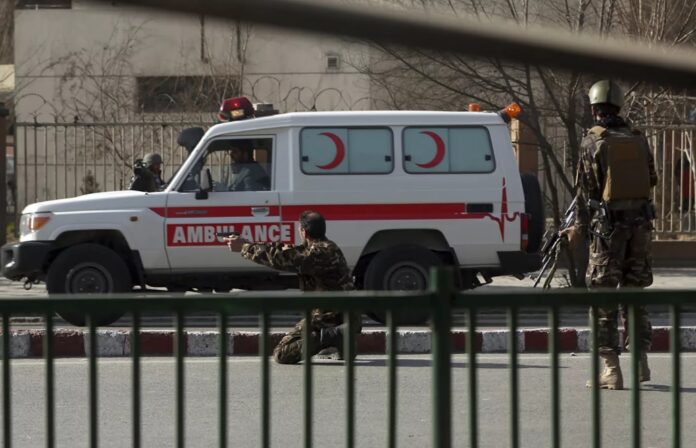
Afghanistan mosque hit by yet another blast; several killed and injured

At least three people were killed and 15 wounded Friday by a blast at a mosque in Afghanistan’s Nangarhar province, a hospital official told AFP.

The blast happened in Spin Ghar district of the eastern province, a hotbed of Islamic State group activity since the Taliban seized power in the country in August.

“I can confirm a blast during Friday prayers inside a mosque in Spin Ghar district. There are casualties and fatalities,” a Taliban official told AFP.

“So far three killed, 15 wounded,” a doctor at the local hospital told AFP.

The Afghan branch of the Islamic State group, which first emerged in Nangarhar in 2015, has claimed responsibility for a series of bloody attacks in Afghanistan since the Taliban’s return to power.

One of the latest, in early November, saw IS fighters raid the Kabul National Military Hospital, killing at least 20 people and injuring more than 50.

More than 120 people were killed in IS attacks earlier this year on two mosques popular with the ethnic minority Hazara community.

Ex-diplomat: India hurt “own interests” through compliance with US

Talmiz Ahmad, a former Indian ambassador to Saudi Arabia, Oman, and the United Arab Emirates (UAE), has spoken to Sputnik about New Delhi’s evolving policy towards Iran under Prime Minister Narendra Modi.

How would you characterise India’s relations with Iran under Prime Minister Narendra Modi? Are India’s ties with Iran dependent on its relations with the United States?

Ahmad: India’s relations with Iran have always been subjected to the vagaries of its ties with the United States. However, what has alarmed me in the recent period is India’s complete acceptance of what ex-President Donald Trump initiated in 2018.

While India has been involved in developing a substantial security relationship with the United States, it was entirely possible for Indian policy-makers to convey to Washington that New Delhi has its own interests in maintaining stable ties with Tehran.

Not only does India share the same neighbourhood with Iran and both have civilisational ties dating back a few thousand years, but there are geopolitical, economic, and security interests to be taken care of.

India is becoming part of America’s own agenda on Iran. Of late, the impression that New Delhi has sent out is that it has subordinated its interests to the US, even though everything that the US did has been illegal under international law. Iran hadn’t done anything illegal under the Joint Comprehensive Plan of Action (JCPOA).

While India did manage to get an exemption from the JCPOA-related American sanctions as far as its involvement in the port of Chabahar was concerned, the aggressiveness with which Washington promoted its sanctions scared away Indian companies from investing in Chabahar and complementing the government’s role in further developing the port and allied infrastructure around it.

India has always signalled to the Americans that it would remain subservient to its interests. But the Americans haven’t displayed the same reciprocity when it comes to our own regional and immediate interests.

Do you believe that the Joe Biden administration has been adopting a more moderate policy towards Iran than its predecessor? And has the change of administration in Washington benefited India-Iran ties?

Ahmad: Frankly, there hasn’t been much of a change in real terms. While Joe Biden did signal initially that getting the Americans back into the JCPOA would be a priority, the fact also remains that six rounds of negotiations have taken place and the US is still to get back into the agreement.

With regard to India, I would note that New Delhi almost doubled its annual budget allocation for the Chabahar port at the start of this year [after Biden took office]. However, I would wait until next year to see how much of the allocated budget has indeed been utilised, given that the sanctions still remain intact.

I would also like to point out here that, of late, there have been attempts by the Modi government to reengage with Iran after President Ebrahim Raisi’s election victory, despite Tehran being excluded from New Delhi’s strategic framework.

While India has opened a dialogue with the new government in Tehran, so far, I haven’t seen any evidence of anything concrete offered by India which would change the overall texture of bilateral relations.

How crucial is having warm and friendly ties with Iran for India’s geostrategic interests?

Ahmad: Iran has a very large geopolitical presence in the neighbourhood. It has a very long coastline. Then, its overall strategic value for India is only enhanced by the fact that it shares a border with both Pakistan and Afghanistan, as well as with Central Asian [countries]. It is effectively a role-player in West Asia, Central Asia as well as South Asia.

Of course, it is also a major energy provider and has traditionally ranked as the largest crude supplier for New Delhi. Its geography also makes it a crucial regional connectivity hub.

How do you see India’s role in the four-nation grouping including Israel, the United Arab Emirates, and the US that was unveiled last month?

Ahmad: The grouping, or Quad 2.0 as it has been referred to, makes no sense to me. You have to look at the timing before looking at the context. And I don’t think the new group will be of any strategic value for West Asia or India.

Very frankly, for India, being a member of the new group is just a publicity stunt from a government that has very little to show in terms of its foreign policy achievements. I think the new group will wither away into irrelevance with time.

I sense a strong US hand in pursuing the four nations, especially India, to come together for this grouping, just like it brokered the Abraham Accords last year.

So, has developing closer ties with the US backfired for India in its own neighbourhood?

Ahmad: For the last 15 years, India has been steadily upgrading its strategic and defence ties with the United States. To me, that is not a well-thought-out policy. It is a knee-jerk reaction of sorts to a certain challenge, which is the rise of China.

However, the pro-US policy that India has pursued in response to the challenge hasn’t benefited Indian interests as much as it should.

On the contrary, I would argue that this clear pro-US tilt may have contributed to the deterioration of relations with China and possibly led to the ongoing Ladakh standoff.

The security relationship that we have been building with the US has served American strategic interests quite well. The Quadrilateral Security Framework, or the Quad, has pulled India into the South China Sea and shown India to be an active participant in a grouping perceived to be hostile against China.

However, what about India’s 4,000-kilometre-long undemarcated border with China? Has the situation in Ladakh changed to India’s advantage since the Quad leaders’ virtual and in-person summits, both of which happened this year?

Ahmad: Russia and China are now closely collaborating, and a triumvirate of sorts has emerged at our border, involving both of them as well as Iran.

Pakistan and Afghanistan are in close coordination with these three countries and India has been left excluded in its own neighbourhood.

India has been more focused on the overall maritime scenario, while it has neglected its priorities, which remain its land borders.