Saturday, December 27, 2025
Home Blog Page 2269

Covid kills 118 in Iran while vaccination continues

The deaths push to 128,852 the number of people killed by the Coronavirus since the start of the pandemic that has killed millions worldwide. 

The Health Ministry also said there were 3,539 new cases including 618 hospitalizations. 

Since the start of the pandemic, 6,073,098 people have contracted Covid in Iran. The majority of them, that is, 5,771,363 people recovered from the disease. 

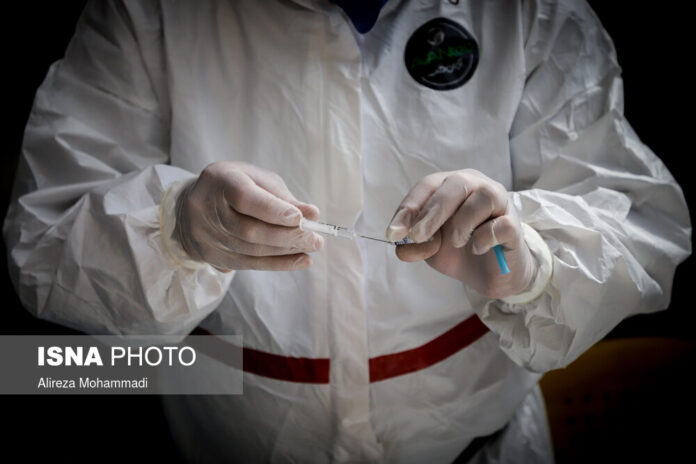
Meanwhile, Iran is pressing ahead with its nationwide vaccination campaign with the number of total doses administered so far reaching 101,492,535.

The high rate of vaccination has been credited for the overall downward trend in deaths and hospitalizations in Iran compared with the time when Iran was in the grip of the fifth wave of Covid-19. 

Now President Ebrahim Raisi has ordered authorities to lift the nighttime driving ban given the fast vaccination campaign across the country. 

Raisi however said his administration’s main concern is to protect the lives of citizens and will continue down this path until things return to normal nationwide.

Red Cross: lack of cash main problem in Afghanistan

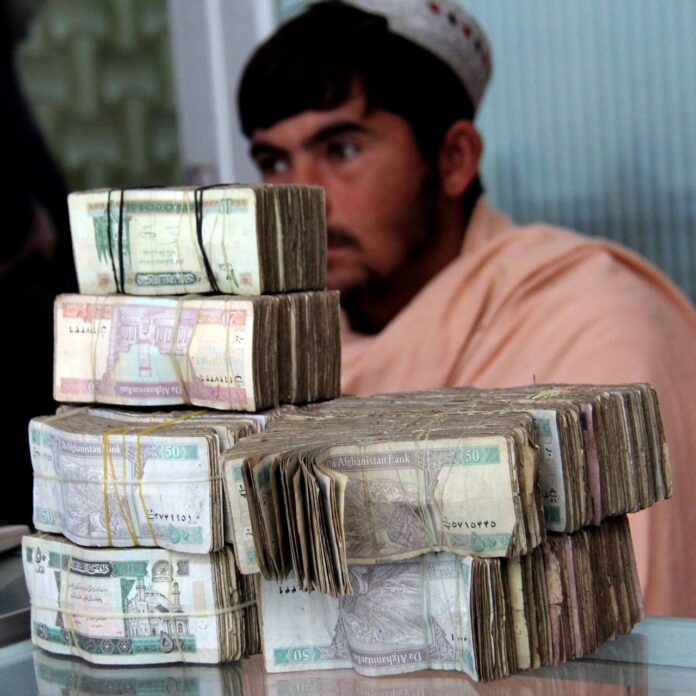
Afghanistan is facing a looming humanitarian crisis as aid organizations struggle with ways to pay doctors, nurses and others on the ground because there is currently no way to transfer salaries to bank accounts there, the ICRC president said.

Maurer’s comments echo those of the U.N.’s special representative for Afghanistan, who warned this week that the country is “on the brink of a humanitarian catastrophe” and that its collapsing economy is heightening the risk of extremism. The country’s economy is estimated to have contracted by 40% since the Taliban took control in August.

The Geneva-based ICRC, which has operated in Afghanistan for over 30 years, is temporarily carrying in bags of cash to the impoverished nation and converting dollars into the local currency, the afghani, in order to pay some of its staffers. The ICRC has been able to do this with regulatory approval by the U.S. Treasury Department’s Office of Foreign Assets Control. The ICRC also has an agreement with the Taliban-run Health Ministry that allows donor-funded payments to pass through the ICRC and bypass the Taliban, who have yet to be officially recognized by any nation.

“The main problem in Afghanistan is not hunger. The main problem is the lack of cash to pay salaries to deliver social services which have existed before,” Maurer told The Associated Press.

“Let’s not forget that most of these medical doctors, nurses, operators of water systems and electricity systems are still the same people. It is the leadership which has changed, but not these people,” he added.

Afghanistan’s aid-reliant economy was thrown into deep turmoil following the Taliban takeover of the capital, Kabul, in August and the collapse of the U.S.-backed Afghan government just weeks before the U.S. withdrew its last troops.

The Taliban leadership, which recently banned all foreign currency transactions, has urged the U.S. Congress to ease sanctions and release Afghanistan’s overseas assets in order for the government to be able to pay teachers, doctors and other public sector employees. After the Taliban takeover, the U.S. froze nearly $9.5 billion in assets belonging to the Afghan Central Bank and stopped shipments of cash.

Since the Taliban’s ascension to power this past summer, it’s not been possible for international aid organizations to wire transfer payments to accounts in Afghanistan as currently international currency cannot be changed into local currency by a network of banks in the country.

Maurer said humanitarian organizations cannot “fix an implosion of a whole country.”

He added what’s needed is an agreement on a sufficient injection of liquidity — something he believes is possible without formally recognizing the Taliban. The ICRC’s budget until mid-2022 has increased from $95 million to roughly $163 million to address Afghanistan’s increasingly urgent needs.

Hunger is just one of many problems facing millions in the country. The World Food Program has warned that nearly 9 million people in Afghanistan are at risk of facing “famine-like conditions.” An additional 14.1 million are suffering acute food insecurity.

Maurer stated the country could slide into a hunger crisis if drought impacts food production and if the disruption of the economy continues, but he stressed the immediate crisis facing Afghanistan remains paying salaries to keep basic services functioning.

“People who don’t get enough food will get sick,” Maurer continued, noting, “If the health system is not able to deal with the fragility of health, then this is again a problem. So I’m concerned about the interconnectivity of the food, health,

er, sanitation, electricity and educational system.”

The Swiss-born former diplomat traveled to Kandahar and other areas of Afghanistan in early September, just days after the U.S. withdrawal. During that visit he met with one of the top Taliban leaders, Mullah Abdul Ghani Baradar.

The ICRC says Maurer’s visit and meeting with Baradar reflects the aid organization’s principle of neutrality and was aimed at sending a clear message that the group would continue providing services to those in need on the ground, regardless of who is in power. The international aid organization has been providing assistance in Afghanistan since 1987, working closely with the Afghan Red Crescent Society.

The ICRC has around 1,800 staffers across Afghanistan, nearly all of them locals. They’ve provided assistance to victims of war at ICRC-assisted hospitals, helped ensure food and medicine reaches people in need and have worked on reuniting families in the aftermath of the hurried U.S.-led evacuation of more than 120,000 people in August. Hundreds of thousands more fled to neighboring countries such as Pakistan and Iran, which already host large populations of Afghan refugees.

The ICRC, founded in 1863, also works on the protection of prisoners of war.

Maurer stated the Taliban have been receptive to its requests to visit detainees in Taliban-run prisons, an issue he raised in his meeting with Baradar.

“We didn’t have to knock (on) the doors 20 times to get access again (to prisons),” he added.

This is in part because the Taliban were themselves visited by the aid group when they were detainees, Maurer continued.

“I think this has allowed us to make a case that the type of work of which they could also take advantage (of) as detainees in the past, would be reasonable policy to develop also as they move in to the power,” Maurer announced.

Iran to vaccinate refugees residing in the country

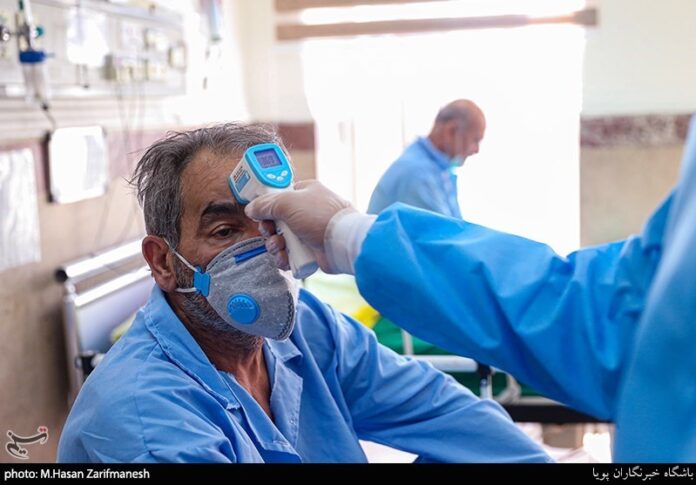
The director general of Bureau for Aliens and Foreign Immigrants Affairs (BAFIA) of Iranian Ministry of Interior, Mehdi Mahmoudi, said 1.6 million doses of COVID-19 vaccines have been delivered to Iran under the Humanitarian Buffer within the COVAX Facility, according to a Saturday report from the information center of Ministry of Interior.

Due to importance of inoculation of refugees and foreign nationals against coronavirus, the Islamic Republic of Iran has held various meetings with international bodies, Mahmoudi added.

Humanitarian Buffer within the COVAX Facility is under the support of the United Nations.

To fight the pandemic, Iran has been implementing a broad project on vaccination in recent months.

Coronavirus has killed over 5,150,000 worldwide since its outbreak in December 2019.

The number of the dead in Iran has passed 128,000.


  Russia: Regional dialog on JCPOA necessary

Reacting to E3 and US joint statement over Persian 

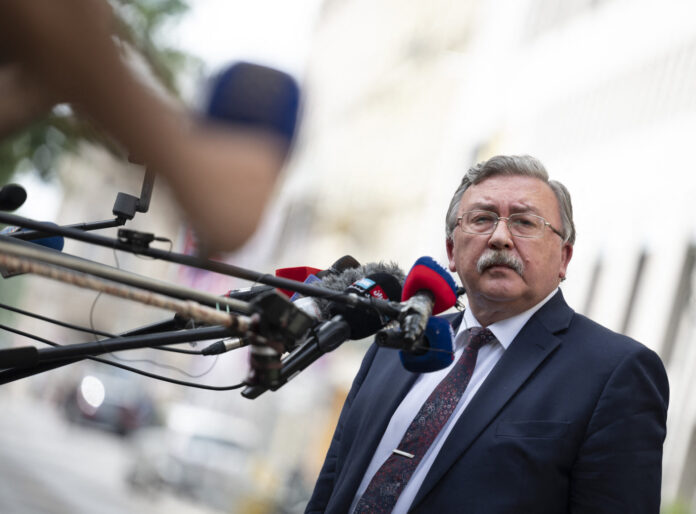
Gulf Cooperation Council (PGCC)’s demand on the Joint Comprehensive Plan of Action (JCPOA), the Russia’s ambassador at the United Nations International Atomic Energy Agency in Vienna, Mikhail Ulyanov, wrote on Twitter, “I would single out positively from this Statement the message that there is the need for a negotiated solution on JCPOA as well as enhanced regional dialogue.”

His remarks came in response to claims leveled by US Special Representative for Iran’s Affairs over Iran’s nuclear deal. Robert Malley met with the E3 political directors and senior officials from Egypt, Jordan, and the PGCC to discuss two paths open to Iran: continued nuclear escalation & crisis, or mutual return to the JCPOA, creating opportunities for regional economic & diplomatic ties. Time to choose is short, The President Joe Biden’s envoy has claimed.

The nuclear deal was unilaterally abandoned by the US in 2018 despite Iran’s full compliance with its nuclear undertakings, as repeatedly certified by the UN nuclear agency. The US then unleashed a “maximum pressure” campaign against Iran, which practically deprived the country of all of the deal’s economic benefits.

Tehran fully honored its nuclear obligations for an entire year, after which it decided to ramp up its nuclear work as a legal “remedial measure” against the US violation of the deal and the abject failure on the part of the other signatories, the E3 in particular, to safeguard its benefits.

Envoys from Iran and the P4+1 are expected to hold the seventh round of discussions in Vienna on November 29. The negotiations were paused in June, when Iran held its presidential election. Since then, the new Iranian administration has been reviewing the details of the six rounds of discussions held under the previous administration.

China calls for compliance with JCPOA

We hope that the International Atomic Energy Agency and Iran will resolve their differences in inspection and monitoring programs through dialog and negotiation, based on mutual respect, the Chinese Foreign Ministry spokesman said on Friday. 

He stressed that all parties should work to strengthen the diplomatic efforts to advance the process of resumption of Iran’s nuclear talks and achieve positive results. 

Top negotiators from Iran and the remaining parties to the JCPOA namely Russia, China, Britain, France and Germany will convene in the Austrian capital Vienna later this month for their seventh round of talks this year on a possible return of the United States to the deal. 

American diplomats will also travel to Vienna, but Iranian and U.S. negotiators will not talk directly. 

The U.S. abandoned the nuclear deal in May 2018 and re-imposed unilateral sanctions against Tehran. 

Iran insists that it will abide by its commitments only if the negotiations lead to the removal of all sanctions against Tehran.

Iran to produce 20mn doses of domestic Covid vaccine in months

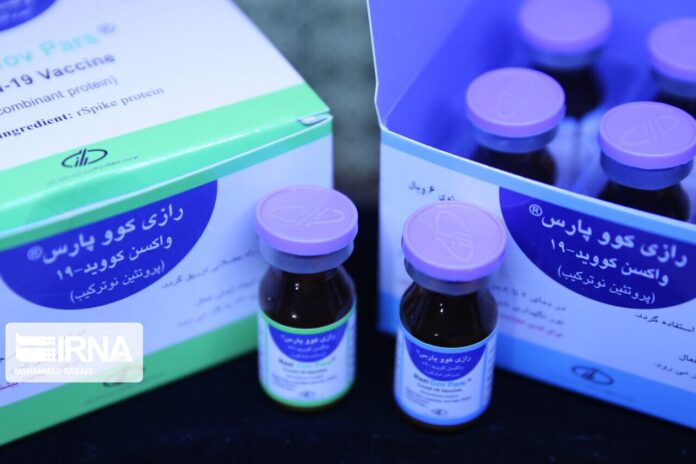
“So far, we have produced as many as 5 million doses of the Razi Cov Pars vaccine, and with a permit for emergency use being issued, we are seeking to produce 20 million doses by the end of the [Persian] year (ending March 21, 2022) and hand them over to the Ministry of Health and Medical Education,” said Mohammad Fallah, the deputy head of the Razi Vaccine and Serum Research Institute, which has developed the vaccine. 

“It is up to the health ministry to decide on the timing of the public distribution of the Razi Cov Pars vaccine across the country, and whenever an agreement is concluded and the vaccine is prepurchased, the vaccine can be supplied to different centers through the health ministry’s distribution networks and made available to the public in different parts of the country,” he added. 

He said a protocol is being drawn up to use this vaccine as a booster dose for all other COVID-19 vaccines. 

Razi Cov Pars is the second Iranian coronavirus vaccine the clinical trial of which has already begun. 

The recombinant protein method has been used in developing Razi Cov Pars, making it one of the safest vaccines. 

Razi Cov Pars can both be inhaled or injected.

  Iran seizes foreign vessel smuggling fuel

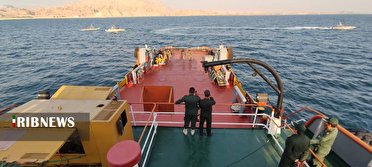
In a well-coordinated operation, the Iranian flotilla seized the ship with 11 crew members on board off the coast of Parsian town in Hormozgan province. 

Over 150 thousand liters of diesel was confiscated from the vessel and all 11 crew members were handed over to local judicial authorities as part of legal proceedings. 

Iran says it will seriously deal with fuel-smuggling in a bid to protect the country’s economy.


EU: Armenia, Azeri leaders to meet in Brussels

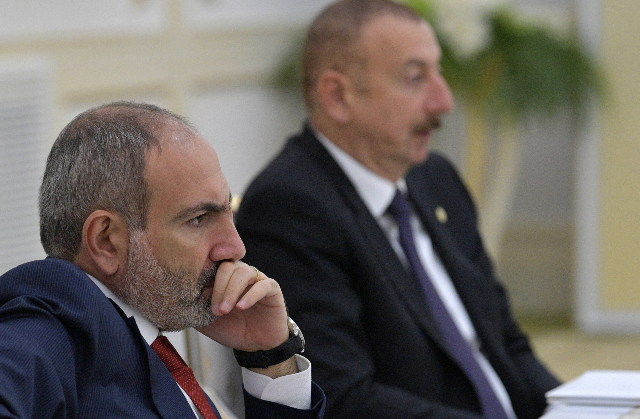
“Leaders have agreed to meet in Brussels to discuss the regional situation and ways of overcoming tensions for a prosperous and stable South Caucasus, which the EU supports,” a spokesman for Charles Michel, the president of the European Council representing EU member states, stated in a statement.

The meeting is to take place in the margins of the EU’s Eastern Partnership Summit in Brussels on Dec. 15.

The announcement came after talks between Michel and Azerbaijan’s President Ilham Aliyev as well as Armenia’s Prime Minister Nikol Pashinyan on Friday.

“During the phone calls, the Armenian and Azerbaijani leaders have also agreed to establish a direct communication line, at the level of respective Ministers of Defense, to serve as an incident prevention mechanism”, the EU added.

The European Union had urged both countries on Wednesday to disengage their troops and respect the ceasefire agreed the previous day, after reports that seven Azerbaijani soldiers were killed in border clashes.

On Tuesday, Armenia and Azerbaijan agreed to a ceasefire at their border after Russia urged them to step back from confrontation following the deadliest clash since a war last year over the Nagorno-Karabakh enclave that killed at least 6,500 people.

Iran urges UN to put spotlight on Israeli crimes

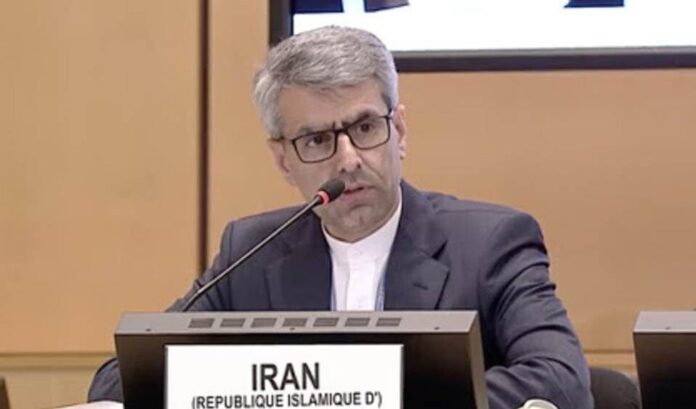
Ismail Baghaei Hamaneh, Iran’s Permanent Representative to the UN European Headquarters in Geneva, made the remarks in a meeting between ambassadors of member states of the Organization of Islamic Cooperation (OIC) and members of the United Nations Commission on Human Rights in Geneva on Friday to discuss crimes committed by the Zionist regime against the oppressed Palestinian people.

The Iran’s envoy has also called for distinguishing between fake and original accounts, referring to unfounded stories equate victims of Israeli crimes with the perpetrators of the heinous acts.

Such an account that perceives victims of Israeli crimes in the same place of the perpetrators of the misconduct is humanly shocking, legally unfounded and morally shameful, Baghaei Hamaneh cautioned.

The UN Commission on Human Rights has a historic responsibility to prevent normalizing systematic violation of human rights by the apartheid regime of Israel, he mentioned.

The Iranian envoy urged other participants in the meeting to cry out for justice and do not allow war crimes, crimes against humanity and blatant violation of human rights to become normal throughout the world.

Given the fact that the Zionist regime continues to commit crimes against the Palestinian people in the Gaza Strip and other regions of the occupied land, Muslim nations called for holding an urgent session by the UN Commission on Human Rights, which was held on May 27, 2021, issuing a resolution against the Israeli crimes.

According to the resolution, a group of three international lawyers from South Africa, India and Australia have been tasked with reviewing Israeli crimes in Palestinian territories.

Envoys from Iran, Pakistan, Turkey, Bangladesh, Malaysia, Maldives, Egypt and Palestine have urged the UN commission to hold Israel accountable for the crimes.

The UN Commission on Human Rights is scheduled to report on the issue in June next year.

Iran-China trade at over $10bn in first 9 months of 2021

According to figures released by China’s customs administration, bilateral trade decreased 7% compared to the same period in 2020. 

China’s imports from Iran in the January to September period grew 5 percent year on year to reach 4.818 billion dollars. 

But China’s exports to Iran fell by 15% to 5.607 billion dollars. 

China is Iran’s biggest trade partner and remains an important customer of its crude oil even as many other countries avoid buying Iranian oil out of fear of unilateral sanctions imposed by the United States.

The two sides signed a 25-year cooperation agreement this year to strengthen their long-standing economic and political ties.