Thursday, April 23, 2026
Home Blog Page 2251

Russia: US sanctions changed opinion of no country

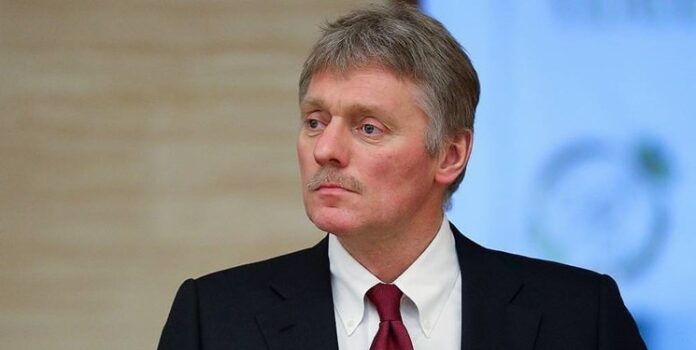
“We all know that the United States likes to play this game of sanctions, although we know an understanding they [have] never reached their goals. They have never managed to make a single country change their point of view,” Dmitry Peskov said.

“Our policy is to be open for cooperation with various countries, especially our partners. This kind of cooperation between Russia and Turkey should not be a threat for any country, especially for Greece, because the system is not offensive, it is defensive. 100% defensive,” Dmitry Peskov said.

He was answering a question in an interview with Greece’s ANT1 television network on Russia’s “specific interest” in the supply of the S-400 system to Turkey ahead of the Russian president’s meeting with the Greek prime minister in Sochi.

Washington and Ankara had an understanding on development of the American F-35 fighter jets in Turkey. However, the US excluded Turkey from the program over Ankara’s refusal to end its agreement to buy the Russian S-400 system. The US has never abandoned efforts to pressure Turkey to give up the deal and has imposed sanctions on Anakra in connection with the S-400 contract.

Iraqi PM says foreign combat forces to leave soon

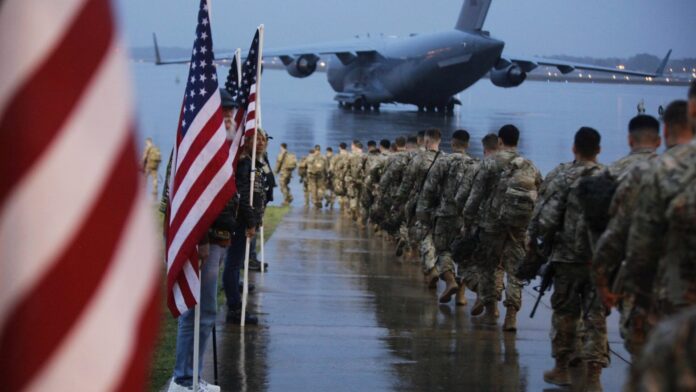
US troops

“In a few days, we will witness the withdrawal of all combat forces of the international coalition from Iraq according to the strategic agreement with the American side,” al-Kadhimi said in his televised speech during a ceremony on the occasion of the centenary of the founding of the modern Iraqi state in 1921.

“Their (remaining forces) role will be in the advisory areas, indicating the ability of the Iraqi forces to preserve the security of Iraq, the stability of its people,” al-Kadhimi added.

In the midst of the political debate about the results of Iraq’s early parliamentary elections, “everyone must be reassured. We will not allow any impact on your security and stability”, the Iraqi prime minister noted.

“The path of building the Iraqi state may be difficult and painful, but it is the only path that our children and grandchildren can take,” al-Kadhimi continued.

On Dec. 9, Iraqi National Security Adviser Qasim al-Araji announced the end of the combat mission in Iraq and the withdrawal of the US-led coalition forces from the country.

On Nov. 24, Tahseen al-Khafaji, spokesman of the Iraqi Joint Operations Command, stated the foreign combat forces would leave Iraq within 15 days, except for some advisers who will stay to support the Iraqi forces.

On Jan. 5, 2020, the Iraqi parliament passed a resolution requiring the government to end the presence of foreign forces in the country.

In July this year, the United States and Iraq held a session of strategic dialogue, during which the two countries agreed on withdrawing all US combat troops from Iraq by Dec. 31.

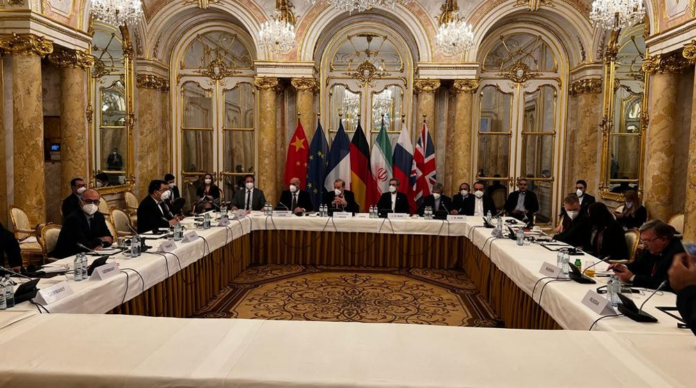
Negotiators at Vienna talks seeking to bridge differences

According to Iranian Students News Agency, ISNA, the negotiators have kicked off work on the proposed documents on the third day of the eighth round of talks.

Several meetings have so far been held in different formats with the focus being on the lifting of sanctions.

The documents proposed to the other parties by Iran in the seventh round of talks in two domains of sanctions removal and nuclear activities were based on the very same draft documents presented in the sixth round, with only some changes and revisions being added to them.

In fact, the revised documents were within the text and spirit of the 2015 Iran nuclear deal known as the Joint Comprehensive Plan of Action (JCPOA).

As reports suggest, although the climate of the talks is better than that of last week as parties have started reviewing Iran’s proposed documents, it seems some parties, namely the United States, are dragging their feet on efforts to help talks gain momentum.

ISNA adds It is true that negotiations are taking place between Iran and the 4+1 group of countries – Russia, China, Britain, France and Germany- and are running their course, but the presence of the US alongside other negotiating teams is necessary, too, especially with regards to the issue of sanctions.

So it is necessary that the other side, as a goodwill gesture, show its seriousness in the talks in the coming days in order to pave the way for the negotiations to move forward.

Meanwhile, Russia’s Permanent Envoy to International Organizations in Vienna Mikhail Ulyanov described the atmosphere of the negotiations as posivite.

“To my surprise, some analysts and journalists describe the situation at the #ViennaTalks as dramatic, “almost deadlock”. This is not the case in point. After the break, the negotiators returned to normal diplomatic business and maintain intensive dialogue. Atmosphere is positive,” he tweeted.

Top Iranian negotiator: Nuclear deal a redline

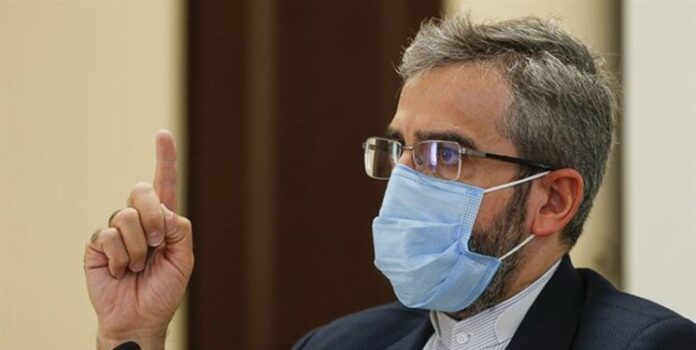
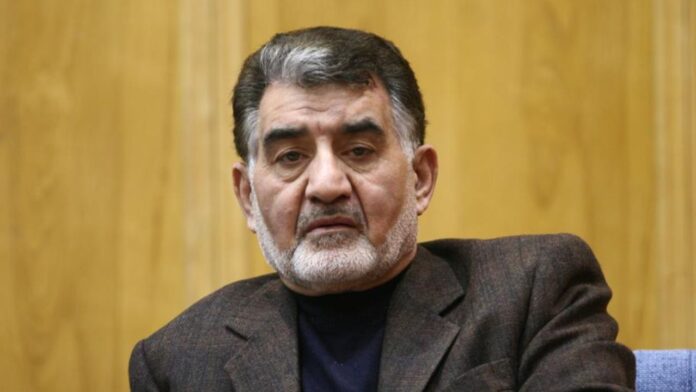
Ali Bagheri was speaking in an interview with Iran’s English news channel Press TV.

He said Iran will accept nothing short of the 2015 nuclear deal, formally known as the Joint Comprehensive Plan of Action, JCPOA.

Bagheri noted that Iran’s red-line is the JCPOA, to which the US intends to return. He said the rationale behind Iran’s stance in this regard is absolutely clear and the other sides understand this.

Bagheri added that the differences required decision-making at the highest level and are still on the table.

He added that Iran has outlined its views regarding its nuclear activities, the sanctions removal and verification of the sanctions removal.

According to the Iranian deputy foreign minister, the other sides have accepted some of Iran’s proposals but have rejected some others.

He noted that there are some other issues over which Iran and the P4+1 group must hold talks at a higher level.

Bagheri said Iran will not pre-judge about the US behavior in the talks and that Tehran is looking forward to seeing Washington’s new approach.

Intense negotiations over the removal of the US sanctions and Washington’s return have been continuing in Vienna since Thursday.

“Iraq pays part of $7bn debt to Iran”

Yahya Al Eshagh said the process of receiving these claims continues based on an agreement between the central banks of the two countries.

Al Eshagh added Iraq’s debts to Iran mostly relate to gas and electricity exports to the Arab country. He added that the Central Banks of Iran and Iraq have an agreement under which the Iranian Central Bank will spend part of the receivables to purchase the required items through Iraq and the other part will be paid to Iran in banknotes.

Al Eshagh said since the flow of exports to Iraq continues with the partial payment, Iraq’s debts to Iran remain in the range of 5 to 7 billion dollars, and consultations are underway to reduce this total amount and collect the total claims.

Palestinians vote in local elections amid rising anger with Abbas

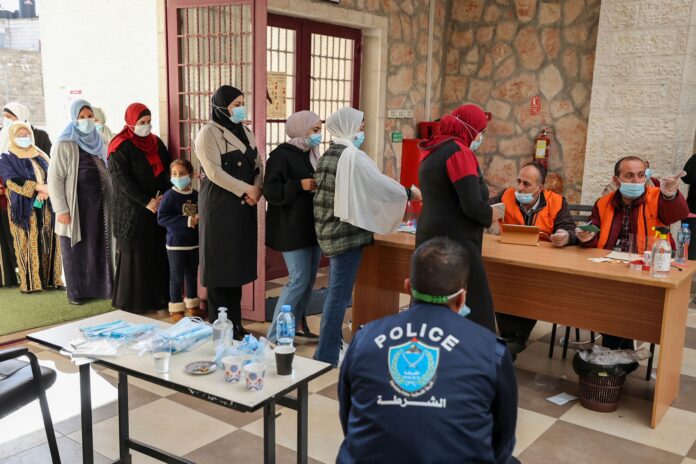
Palestinians are pictured at a polling station during municipal elections in the village of Baitain, East of the occupied West Bank city of Ramallah, on December 11, 2021. - Palestinians in villages of the Israeli-occupied West Bank voted in municipal polls today, amid a boycott by the main opposition Hamas, the Islamist rulers of Gaza, in protest at the indefinite postponement of a general election. (Photo by ABBAS MOMANI / AFP) (Photo by ABBAS MOMANI/AFP via Getty Images)

More than 400,000 Palestinians were eligible to cast ballots for representatives in 154 village councils in the West Bank, where Abbas’ Palestinian Authority has limited self-rule.

Municipal votes are typically held every four or five years.

Municipal elections are not being held in Gaza, whose rulers Hamas are boycotting the vote amid a rift with Abbas’ Fatah party.

The 86-year-old president postponed municipal votes in major West Bank cities, such as Ramallah, that could have been seen as a referendum on Abbas’ rule.

“These elections cannot be an alternative to legislative elections,” said Ahmad Issa, 23, outside a polling station in the West Bank village of Bir Nabala, adding that a legislative vote could offer “a horizon for the youth” and lead to reforms.

In the village of Beit Kahil, women and men lined up outside a polling station, some in facemasks to protect against COVID-19. Once inside, they placed voting papers in envelopes and dropped them into ballot boxes, dipping their fingers in ink as they left in a move to prevent people voting twice.

Abbas, whose support has sagged in opinion polls, drew widespread anger in April when he cancelled legislative and presidential elections scheduled for the summer, citing Israeli curbs on Palestinian voting in East Jerusalem.

Abbas’ rivals, including Hamas, accused him of using the Jerusalem voting dispute as an excuse to cancel elections that polls showed he and his party would lose to the group. Abbas, who has ruled by decree for over a decade, denies this.

A spokesman for Hamas, which boycotted previous municipal elections in 2012 and 2017, stated the group “refuses to participate in partial elections that are tailored to Fatah, and conducted by the Palestinian Authority”, calling on Abbas to reschedule the cancelled summer votes.

Hamas has enjoyed a surge in popularity in the West Bank and East Jerusalem since fighting an 11-day war with Israel in May. The group won student council elections this year at several top West Bank universities, an important barometer of support.

The Palestinians seek statehood in the West Bank, Gaza and East Jerusalem, territory Israel captured in a 1967 war. Israel annexed East Jerusalem in a move not recognised internationally, and peace talks between the two sides broke down in 2014.

Hamas won the Palestinians’ last legislative election in 2006. That victory laid the ground for a political rupture. Hamas seized Gaza after fighting a short civil war there with Fatah in 2007 and has ruled the coastal enclave ever since.

“Good news on the way about neutralization of sanctions”

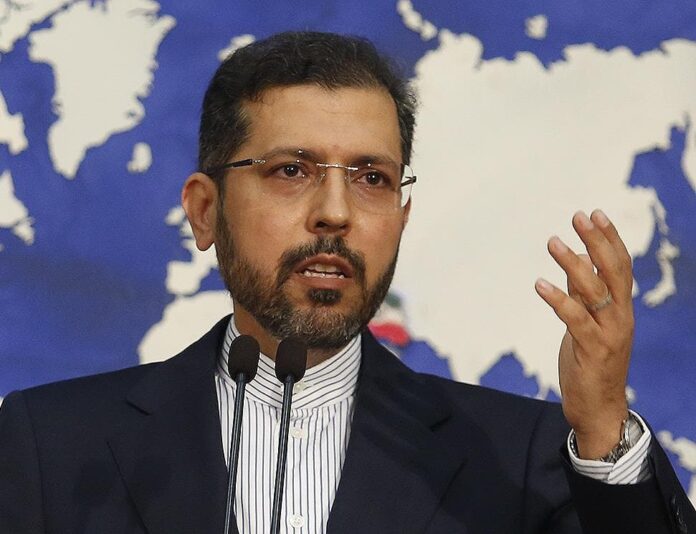
Khatibzadeh said simultaneously with the talks in Vienna, a meeting of Iranian ambassadors is being held in the Iranian capital so that in parallel with the lifting of sanctions that are taking place in Vienna, we can neutralize sanctions in Tehran.
He referred to the 13th Iranian government’s policy of good neighborliness, saying in this policy establishing lasting economic ties plays a key role. Khatibzadeh added that Iran took a long stride by joining the Shanghai Cooperation Organization and that the president’s presence at the ECO Summit complemented another aspect of regional cooperation.
He said “our colleagues at the Foreign Ministry have been directed to pursue the priorities of establishing lasting economic ties with neighbors.” Khatibzadeh added one of the most important priorities is to use the transit advantages of the Islamic Republic, the access of Iranian producers to the markets of neighboring countries, and the creation of stable communication infrastructures in some border areas.
Khatibzadeh said Iran’s Foreign Ministry has launched a 20-year roadmap for relations with neighboring countries similar to the 25-year one with China.

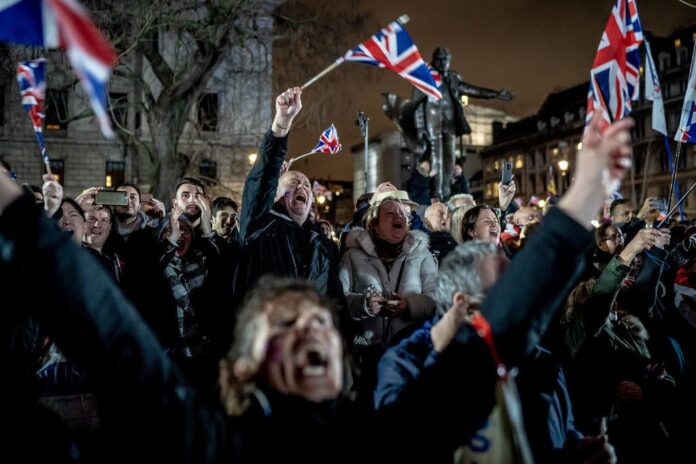
52% of Brits want to rejoin EU in reversal of 2016 referendum

Almost a year on from the end of the transition period, the reality of Brexit has started to set in for many people.

Brexit-backing newspaper the Express appeared to have made a stark U-turn after the Bank of England released damning data on the UK’s trading prospects outside of the EU.

Despite the best efforts of Foreign Secretary Liz Truss to reforge the trade deals the UK held as an EU member and the “endless opportunities” Brexit was supposed to create, the UK has “failed to make the vote profitable”, the newspaper noted, “with the prospect of “global Britain” quickly fading.”

The newfound pessimism about life outside of the bloc seems to be reflected in the polls.

Fifty two per cent of Brits now say they would vote to re-join the EU after 53 per cent said the same in November.

Conversely, 48 per cent want to stay out, in a reverse of the referendum in 2016.


IAEA head: Iran nuclear program makes great progress

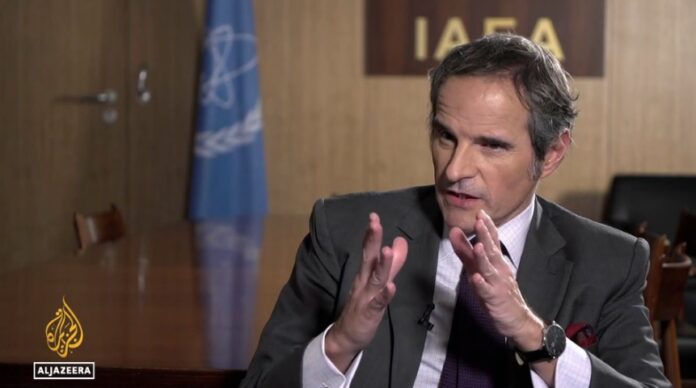
“We need to assess the situation with Iran. The country’s nuclear program is very advanced and enrichment is being done at 60 percent purity,” Rafael Grossi stated in an interview with Qatari Al Jazeera television news network.

He added that the IAEA is seeking to reach an agreement with Iran in order to reinstall surveillance cameras at the Karaj nuclear facility in the west of the Iranian capital of Tehran.

“Lack of information about events at Karaj facility in Iran prevents us from providing information to negotiators in Vienna,” Grossi noted.

“Some issues, such as the presence of nuclear material in some undeclared locations, need explanations from Iran,” the IAEA chief pointed out.

The remarks came as envoys from Iran and the P4+1 group of countries — Britain, France, Russia, and China plus Germany — are engaged in the seventh round of talks in Vienna aimed at reviving the 2015 nuclear deal, official known as Joint Comprehensive Plan of Action (JCPOA).

The revival of the JCPOA would require the US to remove its anti-Iran sanctions three years after Washington walked out of the multilateral agreement and imposed more sanctions on Iran to kill the deal.

The new round of talks between Iran and the P4+1 group of countries resumed in the Austrian capital on Thursday after being paused on December 3, when the participants returned to their capitals for additional consultations on two draft proposals that Tehran had put forward. The talks started on November 29 after a hiatus in the negotiations due to the presidential election in Iran.

Almost eleven months after Joe Biden was sworn in as president, the United States still refuses to remove the sanctions, despite Biden’s pledge to undo the Iran policy of his predecessor, Donald Trump, and end his “failed maximum pressure” campaign.

Although the US withdrawal from the JCPOA and its sanctions, coupled with the three European parties’ submission to Washington’s illegal moves, prompted Iran to legally reduce its nuclear undertakings, the four countries have upped the ante in the talks, voicing concerns over its nuclear measures.

Iran’s foreign minister has underlined Iran’s resolve to reach a “good agreement” through the ongoing talks in Vienna, saying the Western sides have talked the talk in recent years but it is high time they walk the walk as well to secure a serious, good deal.

“We are all in Vienna to negotiate to reach a good agreement,” Hossein Amir-Abdollahian wrote in a post on his Instagram page on Thursday night.

“The Western parties need to know that in the last eight years, enough words and empty promises have been uttered, but today, it is time to act,” Amir-Abdollahian noted.