Wednesday, April 29, 2026
Home Blog Page 2185

EU’s Borrell: Deal with Iran possible “in coming weeks”

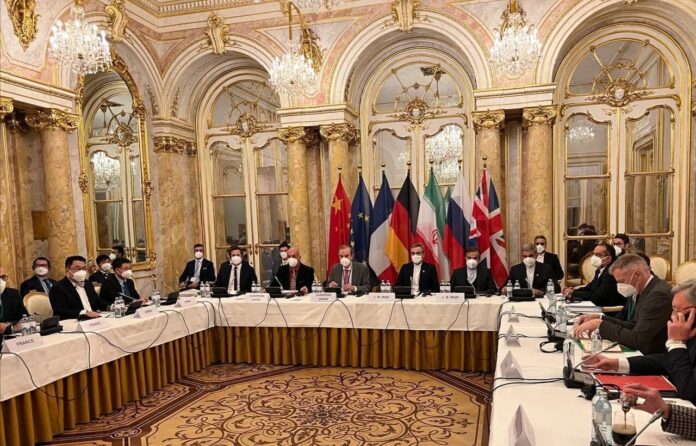
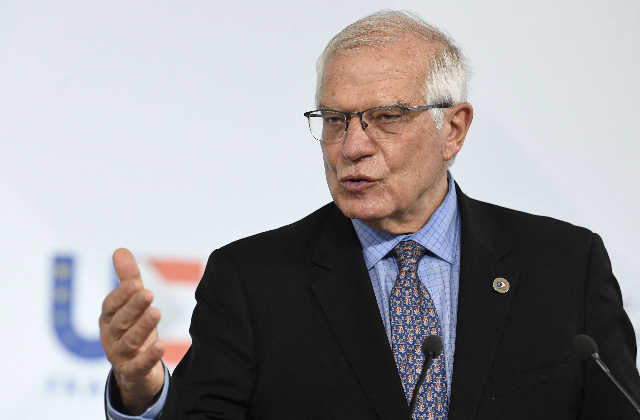
After an informal meeting of EU foreign ministers, Borrell said a renewed deal with Iran over its nuclear programme remained “possible” as talks in Vienna advance in a “better atmosphere”.

“We’re arriving at the end of a long process… there’s a better atmosphere since Christmas — Before Christmas I was very pessimistic. Today I believe reaching an accord is possible,” he added.

He stated a final deal could be concluded “in the coming weeks”.

“I still maintain the hope that it would be possible to remake this agreement and have it function as it did before the American withdrawal,” he noted.

But Borrell spoke alongside French Foreign Minister Jean-Yves Le Drian, who reiterated his view that the talks are progressing “much too slowly to be able to reach a result”.

“We now have to conclude and come to a decision: Either the Iranians want to complete this, in which case we have the impression that there will be flexibility in the Americans’ stance,” Le Drian said.

“Or they don’t want to complete this, and in that case we will be faced with a major proliferation crisis,” he added.

“There will be nothing more to negotiate if nothing happens,” he warned.

The eighth round of talks kicked off in Vienna in late December. The negotiations seek to restore the Joint Comprehensive Plan of Action (JCPOA) in its original form and bring the US back into the agreement.

Iran insists that the talks must lead to the removal of all American sanctions that were imposed against Tehran following Washington’s unilateral withdrawal from the landmark agreement in May 2018. Tehran has also demanded credible guarantees that Washington will not abandon the deal again.

Tehran announced Friday that Iran’s chief negotiator Ali Baqeri Kani and his European counterparts would temporarily return to their respective capitals, under an agreement reached among heads of the delegations, to handle affairs related to their political posts and for certain consultations.
Iran’s annual non-oil exports expected to touch $46bn

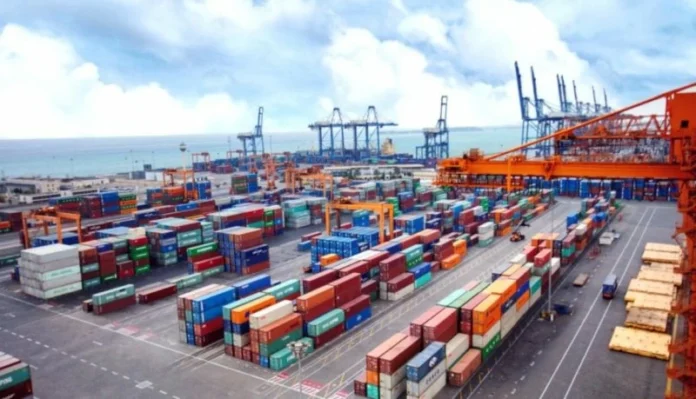
Given the growing trend of exports, the country’s revenues from the shipping of non-oil products could reach $46 billion, said the IRICA deputy chief for technical affairs.

The country’s average value of monthly non-oil exports in the first half of the Iranian calendar year (starting March 21, 2021) equaled to $3.5 billion, Foroud Asgari added.

The revenues have witnessed a considerable increase since late August, rising to $5 billion and bringing the total earning to $36 billion up to now, said the official, noting the rise in non-oil exports was behind it.

Elaborating on the reasons behind the increase in non-oil exports, he said the Central Bank of Iran (CBI) official in charge of currency returns was moved to the Ministry of Industry, Mine and Trade and thanks to the ministry’s import and export policies, the volume soared and motivated the exporters.

Iranian FM says Tehran-Beijing start implementing strategic agreement

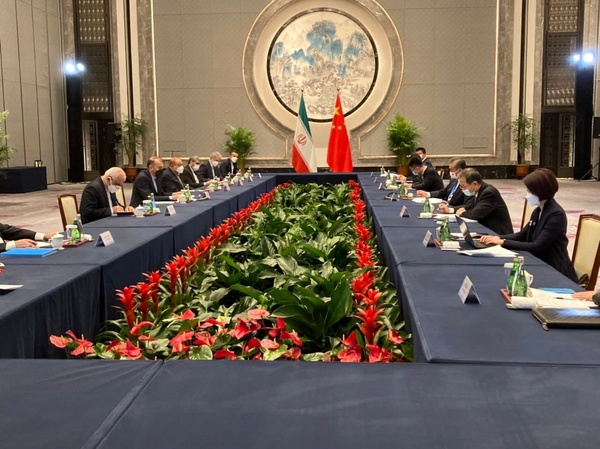
Amir Abdollahian told reporters Friday is the starting day of the execution of the deal.

The foreign minister added that to this end, he submitted to Chinese Foreign Minister Wang Yi Iranian President Ebrahim Raisi’s letter to Chinese President Xi Jinping.

He also said he held detailed talks with Wang over the Vienna talks.

Amir Abdollahian praised the Chinese and Russian chief negotiators in Vienna for their positive role in supporting the nuclear rights of the Islamic Republic of Iran.

Earlier, the Iranian Foreign Ministry said on its website that Amir Abdollahian and Wang held talks over a broad range of political, economic, trade, consulate, cultural, regional and international issues and explored ways of expanding bilateral cooperation between Tehran and Beijing.

During the talks, the Chinese foreign minister underlined his country’s readiness to expand cooperation with Iran in the financing, energy, banking and cultural sectors despite the illegal sanctions against the Islamic Republic.

He described the 25-year strategic cooperation deal between Iran and China as highly important and said Tehran and Beijing’s agreement to start executing the deal is a significant development that paves the way to fundamentally transform bilateral ties.

Wang announced China’s full support for Iran’s logical stance on the arrogant policies of the United States regarding the Iran’s nuclear deal, JCPOA. The top Chinese diplomat said Beijing’s policy is to continue supporting Iran’s position during the JCPOA talks and underscored that the US must redress its mistake of leaving the deal.

Amir Abdollahian also reaffirmed Iran’s support for the One China Policy and announced Iran’s readiness to expand ties with China in all areas.
He appreciated China for supplying Iran with 110 million doses of Covid Vaccine.

The Iranian foreign minister further outlined the latest state of cooperation between Iran and China in all areas, underlining Tehran’s determination to implement all infrastructure agreements with Beijing. Amir Abdollahian said expanding ties with neighbors and friendly nations is a foreign policy priority for the Islamic Republic of Iran.

Top negotiators temporarily leave Vienna as expert talks continue

Iranian foreign ministry announced Friday that Iran’s chief negotiator Ali Baqeri Kani and his European counterparts would temporarily return to their respective capitals, under an agreement reached among heads of the delegations, to handle affairs related to their political posts and for certain consultations.
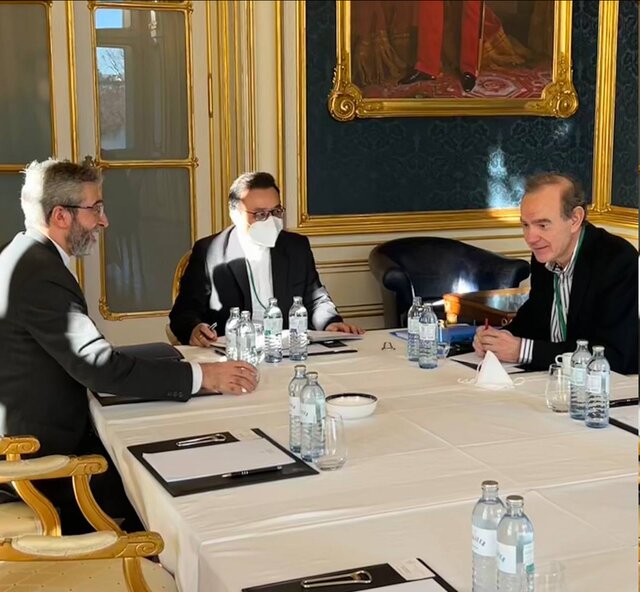
Expert talks will, however, continue non-stop in Vienna, according to the report.

The reports said the pause, which will last for two days, does not mean a suspension of the eight round of talks between Iran and the P4+1 group of states, namely France, Britain, Germany, Russia and China, on revitalizing the nuclear deal.

The fate of the agreement has been in doubt since 2018, when the US unilaterally left it.

The diplomatic process in Vienna is meant to remove the sanctions that Washington imposed on Iran after leaving the deal and to secure a US return to its contractual obligations.

Russian FM: Raisi visit to Moscow ‘very important’

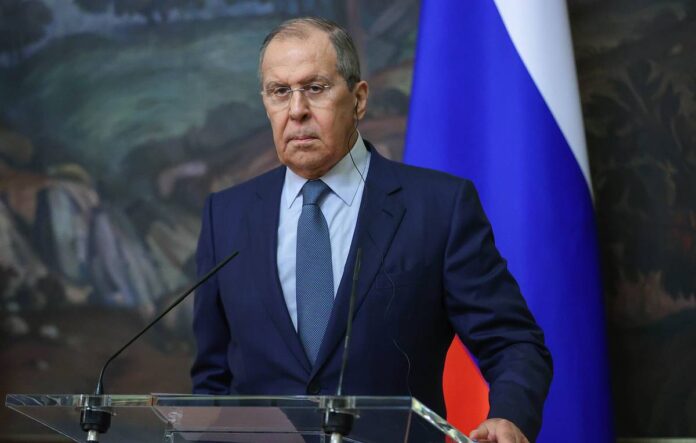
“The visit, in short, is very important. It’s time to resume contacts at the highest level, which are traditionally close and regular among us and which also fell victim to the coronavirus infection,” Lavrov said during a press conference on Russian diplomatic activities in 2021 on Friday.

“The significance (of the visit), first of all, is the need to take an inventory of our entire agenda taking into account changes in the leadership of Iran,” he added.

In late December, Iranian government spokesman Ali Bahadori Jahromi noted Raisi would visit Russia in the beginning of 2022 at the invitation of his Russian counterpart Vladimir Putin. Later, Kremlin Spokesman Dmitry Peskov announced Moscow and Tehran are preparing contacts at the highest level.

On nuclear talks, Lavrov stated real progress has been achieved.

“There has been real progress […] on the Iranian nuclear program; there is a real desire, between Iran and the US, first and foremost, to understand concrete concerns and understand how these concerns could be accounted for in the general package,” the minister said.

The top diplomat added that “it could only be a package solution,” just like the nuclear deal itself.

“The Joint Comprehensive Plan of Action was a package solution,” he noted.

According to the Russian FM, the experienced negotiators in Vienna “have already penetrated minute details of this negotiation matter” and “are making good progress.”

“I am knocking on wood, but we expect the agreement to be achieved,” he concluded.

The eighth round of talks kicked off in Vienna in late December. The negotiations seek to restore the JCPOA in its original form and bring the US back into the agreement.

Iran insists that the talks must lead to the removal of all American sanctions that were imposed against Tehran following Washington’s unilateral withdrawal from the landmark agreement in May 2018. Tehran has also demanded credible guarantees that Washington will not abandon the deal again.

Yemen says Iran peace plan can resolve crisis

Yemen

“The Iranian initiative offers a solution, deals with the war and blockade in Yemen, and provides a mechanism for inclusive intra-Yemeni dialogue as well as ways to de-escalate the status quo,” Abdullah said.

The foreign minister of the Yemeni National Salvation Government added, “The study or slight modifications of the Iranian initiative will help resolution of the lingering crisis in Yemen, and everyone should consider the plan.”

In April 2015, Iran proposed a four-point peace plan for Yemen. The plan called for an immediate ceasefire and end of all foreign military attacks, humanitarian assistance, a resumption of broad national dialogue and “establishment of an inclusive national unity government.”

Abdullah noted that Saudi Arabia was looking for a pretext to prolong its devastating military aggression against Yemen.

“What we want to tell them is the fact that they will not manage to defeat the Yemeni nation through their onslaught. All we want is negotiations in good faith,” Abdullah stated.

“Massacre and destruction is not the right way,” he said, adding, “We are fighting for our nation. We do not want anything from Saudi Arabia, but Riyadh seeks dominance over our country.”

He called on the Saudi-led coalition to end its support for Takfiri terrorist groups in Yemen, stressing that the foreign-backed extremists would not help peaceful settlement of Yemen crisis by any means.

Abdullah also lambasted Saudi Arabia for having used footage from a documentary on the 2003 US invasion of Iraq to accuse Yemeni armed forces of stockpiling ballistic missiles in the besieged Red Sea port city of Hudaydah.

The top Yemeni diplomat stated the footage was nothing but a piece of cinematic work, and it was meant to invent pretexts for a strike on Hudaydah.

He then slammed the international community’s stance vis-à-vis the Saudi war on Yemen.

“Every country pursues its own interests. That explains why many world states are silent [on Yemen war] and standing idly by. Their interests are close to those of aggressors, particularly Saudi Arabia,” Abdullah underlined.

He underscored that the Yemeni nation has the right to live in a free and independent country, and that Yemen seeks peaceful relations with others.

Saudi Arabia, backed by the US and regional allies, launched the war on Yemen in March 2015, with the goal of bringing the government of former Yemeni president Abd Rabbuh Mansur Hadi back to power and crushing popular Ansarullah resistance movement.

The war has left hundreds of thousands of Yemenis dead, and displaced millions more. It has also destroyed Yemen’s infrastructure and spread famine and infectious diseases.

The Yemeni armed forces and allied Popular Committees, however, have grown steadily in strength against the Saudi-led invaders, and left Riyadh and its allies bogged down in the country.

Russia: Activities to sabotage advancing talks in Vienna ‘senseless’

In a tweet on Friday, Russia’s representative to Vienna-based international organizations Mikhail Ulyanov drew attention to a rise in activities and “provocative” moves of the nuclear deal’s opponents in the “public space” as Iran and the P4+1 states “move ahead at the Vienna talks.”

“Regrettable and senseless. The absolute majority of states, incl. P5, aim at restoration of the nuclear deal and sanctions lifting,” he added in his tweet.

Iran and the P4+1 states — Russia, China, France, Britain plus Germany — resumed their talks on January 3 following a short pause with the goal of securing the United States’ return to deal and removing the sanctions it imposed on Iran after leaving the accord, officially titled the Joint Comprehensive Plan of Action (JCPOA).

The US is not allowed to directly join the talks since it is not currently a party to the JCPOA.
On Friday, Iran’s negotiating team, led by Deputy Foreign Minister Ali Baqeri Kani, sat down for talks with delegates of the three European signatories, with EU deputy foreign policy chief Enrique Mora, in attendance.

Meanwhile, Russian Foreign Minister Sergei Lavrov spoke of “real progress” in Vienna.
“There is a real desire, between Iran and the US, first and foremost, to understand concrete concerns and understand how these concerns could be accounted for in the general package,” he said.

The negotiators “have already penetrated minute details of this negotiation matter” and “are making good progress,” Lavrov said. “I am knocking on wood, but we expect the agreement to be achieved.”

Ties with Iran a priority in Pakistan’s new Natl. Security Policy

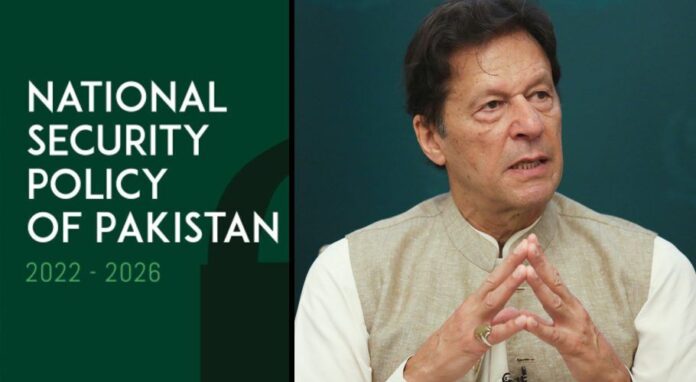
During a ceremony on Friday, Pakistani Prime Minister Imran Khan launched the public version of the country’s National Security Policy 2022-2026, which is described as the Pakistan’s first strategy paper of its kind that spells out the national security vision and guidelines for achieving those goals.

The ceremony was attended by Pakistan’s senior officials as well as diplomats and envoys of other countries, including Iranian Ambassador to Islamabad Seyyed Mohammad-Ali Hosseini.

The strategy paper lays emphasis, among other things, on economic diplomacy and expansion of ties with neighbors. It pays attention to common interests of the two countries, which it considers as two partners in efforts to establish peace and security in the region.

In the new national security vision, Pakistan considers a promotion of intelligence exchanges with Iran and border patrolling as a factor that could positively impact bilateral relations and cooperation.

At the ceremony, Khan said that the foremost aim of Pakistan’s foreign policy and military capability would be peace and stability in the region and beyond, and that the country’s foreign policy will also focus much more on pursuit of stepped-up economic diplomacy.

National Security Advisor Moeed Yusuf also said the National Security Policy centered around economic security and the geo-strategic and geo-political imperatives to strengthen Pakistan’s security and standing in the world.

Iran Covid: 24 people killed since Thursday

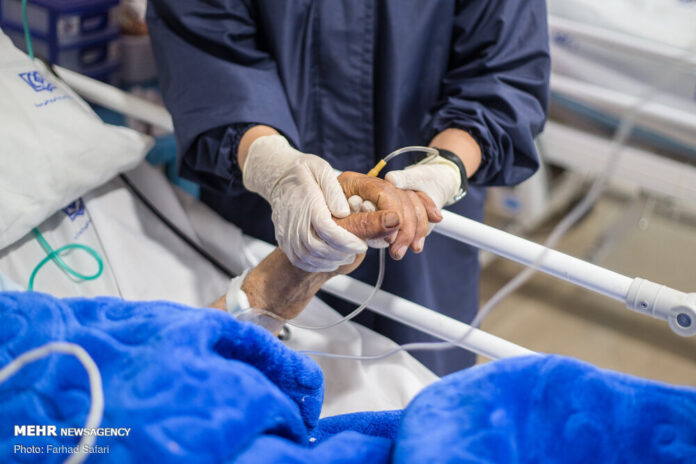
The fatalities pushed to 132,026 the death toll since the start of the pandemic some two years ago.

The Health Ministry also logged 2,539 Covid cases from Thursday to Friday. The new cases include 285 hospitalizations.

Meanwhile, the vaccination campaign continues in Iran with the number of the boosters administered so far reaching the 12 million mark.

The figures showed that so far 11,974000 booster shots have been injected to people in Iran while the total number of vaccine doses stands at 125,262,221.

Iranian authorities are urging citizens to get their third doses, saying that will boost their immunity to any new strain of Covid like Omicron, which is the latest variant of the disease. Official figures show around 1,000 cases of Omicron contraction have been registered so far in Iran.

The highly contagious disease has overwhelmed much of Europe and the US.

Harsh weather leaves two hikers dead in heights of northern Iran

Local officials said the pair, who had started the hike on January 1, sent distress signals on Thursday due to heavy snowing and freezing temperatures in the heights of Mount Alam, in the Alborz Mountain range.

Rescue teams were immediately dispatched in helicopters to the site at of height of 4,700 meters, they said.

One of the climbers was, however, found dead and the other, who was severely affected by freezing, died amid the transfer operation.

Mount Alam is the second highest peak in Iran after Damavand, with an elevation of 4,805 meters, and supports permanent snow and glaciers.

The mountain, which sits near the Caspian Sea, is commonly known as the paradise of mountaineers due to its steep foothills, beautiful glaciers and snowfields and challenging technical routes.