Thursday, January 15, 2026
Home Blog Page 2176

Russia: Iran ‘absolutely right’ to seek guarantees in nuclear talks

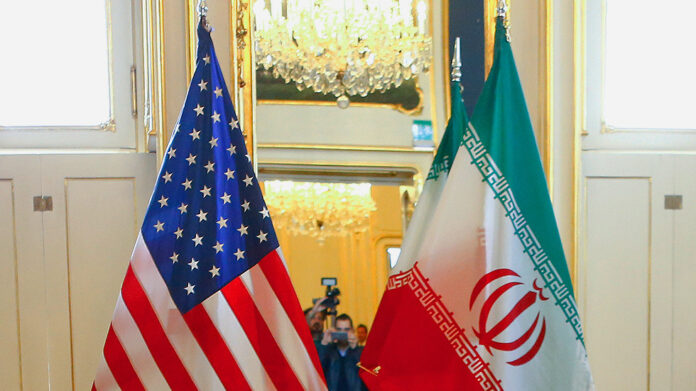
Mikhail Ulyanov, who is also Russia’s ambassador to international organizations in the Austrian capital, defended Iran’s stance on securing a guarantee from the American side so that Washington would not ditch the Joint Comprehensive Plan of Action (JCPOA) just like what it did at the time of former US President Donald Trump in 2018.

“Some people don’t want to learn lessons from the failed maximum pressure policy. Iranians are absolutely right when they ask for guarantees against a repetition of this catastrophic adventure,” Ulyanov tweeted.

The United States unilaterally abandoned the multilateral nuclear deal in 2018 despite Iran’s full compliance with its nuclear undertakings, as repeatedly certified by the UN nuclear agency. The US then unleashed a “maximum pressure” campaign against Iran, which practically deprived the country of all of the deal’s economic benefits.

Iran and the remaining parties to the JCPOA – Russia, China, France, Britain, and Germany – have been holding talks in Vienna since April last year. Tehran says it pursues the removal of all sanctions that the United States re-imposed on Iran following its withdrawal from the deal.

Iranian Foreign Minister Hossein Amir Abdollahian reaffirmed on Monday that Tehran has no intention to waste time or derail the sanctions removal talks in Vienna, criticizing the West, particularly the US, for failing to present any innovative proposals in the negotiations.

“We assured Chinese officials that Iran is not playing with time or trying to derail the negotiations, and that we have made constructive, positive and realistic proposals at the negotiating table in Vienna,” he stated in an interview with China Global Television Network (CGTN) before wrapping up his official visit to Beijing.

Iran says a lack of initiative among the Western parties to the Vienna deal is the main factor slowing down talks with Tehran.
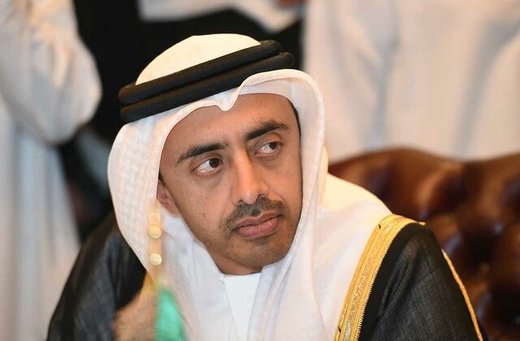
UAE condemns Yemeni attacks on Abu Dhabi

Abdullah bin Zayed Al Nahyan described them as a terrorist attack on civilian installations and a violation of international and humanitarian laws.

He also said the UAE reserves the right to respond to the bombing.

Abdullah bin Zayed also claimed that Yemen’s Houthis are trying to spread terror and chaos in the region.

The UAE foreign minister called on the international community to condemn the Yemeni strikes and offered condolences to the families of those killed in the attacks.

Meanwhile, Anwar Qarqash, a diplomatic advisor to the Emirati ruler, threatened Yemen’s Ansarullah movement, saying, “Such acts will lead to destruction”.

Without speaking of Saudi Arabia and the UAE’s aggression against Yemen, Qarqash also said the Houthis have undermined security in the region.

The Yemeni army and allied Ansarullah forces said earlier they launched drone and missile attacks deep inside the UAE as part of retaliatory attacks against the sheikhdom over its aggression against Yemen.

The UAE reported two fire incidents in the capital Abu Dhabi. It added that three fuel tankers exploded near storage facilities of oil firm ADNOC, killing three and wounding six. Some other sources say around a dozen were injured in the attacks.

There was also a fire at a construction site at Abu Dhabi International Airport.

The Emirates said initial investigations show the fires were possibly caused by drones.

The Saudi and Emirati war on Yemen has killed hundreds of thousands of people since its onset in March 2015 with millions more displaced.

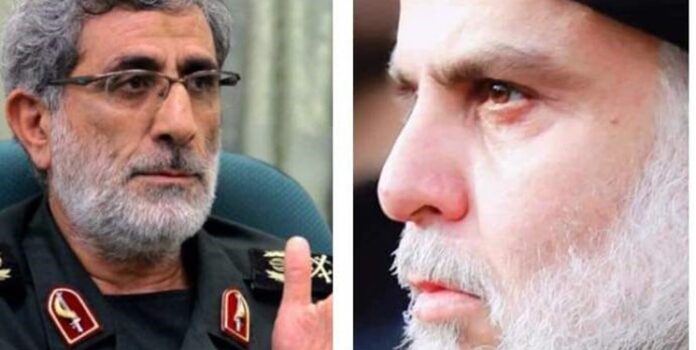
Report: Iran’s Quds Force cmdr. meets Iraqi cleric Muqtada al-Sadr

The source told Al-Yaum news website that Qaani met with Sadr at the Iraqi cleric’s house. He added that Qaani and Sadr examined the unification of the positions of the Shia political factions so that the Sadr group could form a faction within parliament with a Shia coordination committee called the Coordination Framework.

The source pointed out that the purpose of forming this faction is to form the Iraqi government.

He said Sadr insisted that Nouri al-Maliki, the leader of the State of Law coalition, not be present in the new government.

According to the source, Sadr said if Maliki does not participate, the Sadr group will form a faction with the Coordination Framework.

The source added that Qaani and Sadr also discussed a range of other issues including the need to take measures to fight corruption and to criminalize any effort to normalize ties with the Zionist regime.

According to this report, the Quds Force commander and the Iraqi cleric also underlined the need for the withdrawal of foreign forces from Iraq and for the protection of the Popular Mobilization Units.

The force also known as the Hashd volunteer was instrumental in the fight against Daesh that led to the terrorist group’s ultimate defeat in Iraq.

Iran president discusses upcoming Russia trip with veteran diplomats

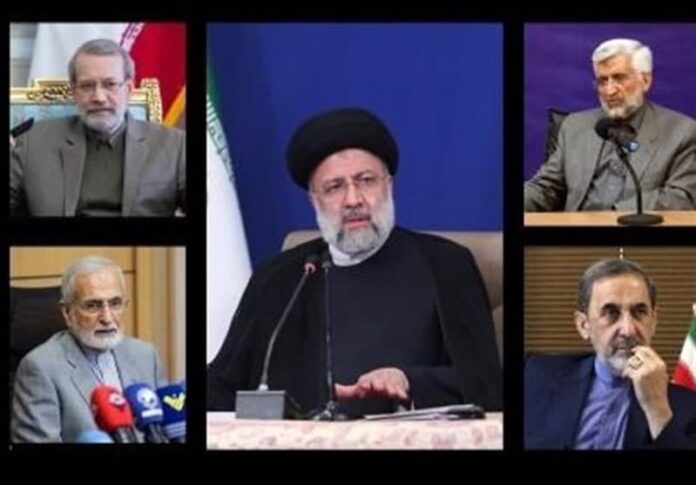
Raisi sat down for talks with chairman of Iran’s Strategic Council on Foreign Relations Kamal Kharrazi, the Leader of the Islamic Revolution’s envoy to the Supreme National Security Council Saeed Jalili, the Leaders’ senior advisor Ali Akbar Velayati and former parliament speaker Ali Larijani.

During the meeting, they discussed important regional and international issues and Raisi’s trip to Moscow which will take place later this week.

The Iranian president’s four guests highlighted the importance of Iran-Russia relations and discussed ways to expand Tehran-Moscow ties.

Kharrazi is a veteran diplomat who served as the minister of foreign affairs from 1997 to 2005.

Saeed Jalili was secretary of the Supreme National Security Council from 2007 to 2013 and served as Iran’s chief nuclear negotiator under former president Mahmoud Ahmadinejad.

Velayati was the minister of foreign affairs for more than fifteen years from 1981 to August 1997.

And Larijani served as the parliament speaker from 2008 to 2020 and was secretary of the Supreme National Security Council from 2005 to 2007.

Iranian FM: Tehran not after wasting time in Vienna talks

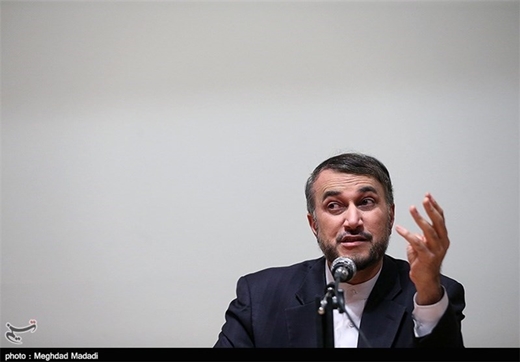
Amir Abdollahian

Amir Abdollahian made the comment in an exclusive interview with the CGTN news channel.

He added that Iran is not after diverting the negotiations either. The foreign minister said if the other side returns to its obligations under the Iran nuclear deal, JCPOA, Tehran will do the same.

Elsewhere in the interview, Amir Abdollahian described China’s stance in the Vienna talks as constructive and logical, saying Tehran appreciates China for its support during the nuclear negotiations.

Amir Abdollahian said during the negotiations, China has always been opposed to harsh US sanctions against Iran. “During the talks, we presented a positive, constructive and realistic proposal in Vienna. China and Russia supported it, but Western countries, including the United States, did not make any positive proposal”, he added.

Amir Abdollahian also spoke of the Iran-China ties. He said during his recent visit to Beijing, the two sides reached an agreement over a range of issues including their strategic partnership pact.

The Iranian foreign minister noted that Iran and China need a roadmap for the long-term implementation of the pact.

Amir Abdollahian stressed, “We believe that there are no challenges in bilateral relations between Tehran and Beijing, although the bullying behavior of the United States has affected some cooperation.”

The Iranian foreign minister also said multilateral relations are beneficial for all countries and that the US unilateralism and bullying will not be accepted by any country.

Duma MP: Iran’s Raisi to address Russian lower house Thursday

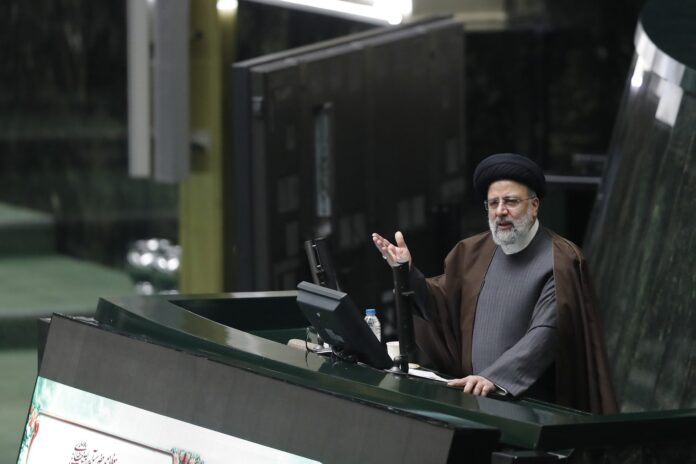
“On Thursday, the meeting will begin with a speech of the president of Iran,” Zhukov said on Monday after a Duma Council meeting.

On Sunday, state television channel Rossiya-1 reported Russian President Vladimir Putin will host his Iranian counterpart in Moscow next week.

This will be the first official meeting between the two since Raisi was sworn in as president of Iran in August 2021.

On Friday, Russian Foreign Minister Sergey Lavrov said Raisi’s upcoming visit to Moscow will be very important.

“The visit, in short, is very important. It’s time to resume contacts at the highest level, which are traditionally close and regular among us and which also fell victim to the coronavirus infection,” Lavrov stated.

“The significance (of the visit), first of all, is the need to take an inventory of our entire agenda taking into account changes in the leadership of Iran,” he added.

Russian FM hails Iranian president’s upcoming visit to Moscow

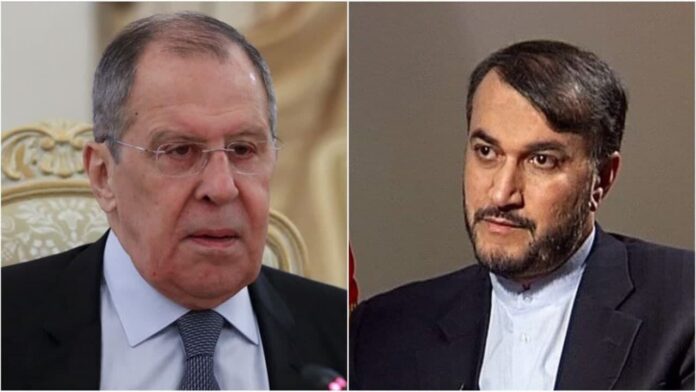
Speaking during a telephone conversation with Iranian Foreign Minister Hossein Amir Abdollahian, Lavrov said all necessary arrangements have been put in place for this visit.

Lavrov and Amir Abdollahian described Raisi’s trip as an important development in the relations between the two countries and a good opportunity to expand and deepen bilateral ties.

Meanwhile first deputy Speaker of Russia’s State Duma said  Iranian President Ebrahim Raisi will address a meeting of the Russian State Duma lower house of parliament on Thursday, January 20.

“On Thursday, the meeting will begin with a speech of the president of Iran,” Zhukov said.

Iran and Russia enjoy good economic and political relations.

Russia is a signatory to the P4+1 group of countries which are currently engaged in the Vienna talks over reviving the 2015 nuclear deal with Iran known as the JCPOA.

During the talks, Russia, along with China, has supported Iran’s stance and its push for the removal of US sanctions against the Islamic Republic.

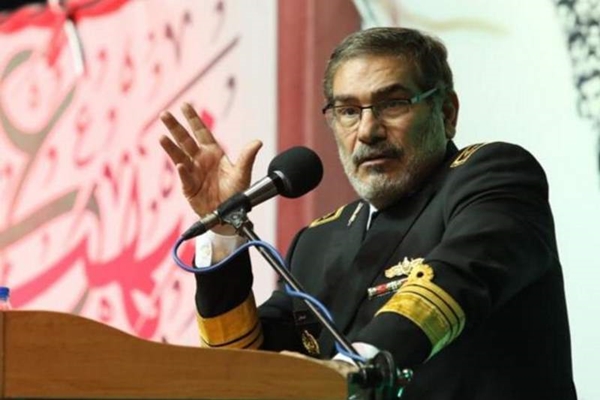
Iran’s Shamkhani hails strategic pact with China

Ali Shamkhani has made the remark on his Twitter account.

He suggested that the achievement is so important because it comes at a time when the US unilateralism is on the march and the so-called maximum pressure campaign against Iran is in place with the aim of excluding Iran from global economic interactions.

Iran and China announced the implementation of their landmark 25-year cooperation agreement on Friday.

The announcement came after an official visit by Iran’s Foreign Minister Hossein Amir Abdollahian to China. China and Iran signed the 25-year cooperation agreement last March, bringing the Islamic Republic into China’ Belt and Road Initiative, a multi-trillion-dollar infrastructure scheme intended to stretch from East Asia to Europe.

The agreement would deepen Sino-Iranian cooperation in other areas including energy, infrastructure, agriculture, health care and culture, as well as cyber security and cooperation with other countries.

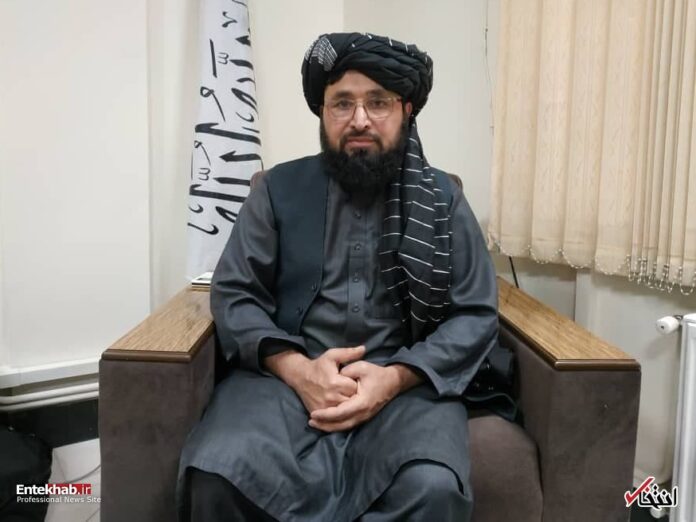
Taliban spokesperson: Muttaqi’s visit to Iran had major achievements

Deputy spokesman for Afghanistan’s Taliban-run government Bilal Karimi told Tehran-based Entekhab news and analysis website that during the trip, the two sides discussed in detail issues such as the expansion of security and economic cooperation, expressing hope that such bilateral talks would continue.

Muttaqi visited Iran earlier in January and held talks with Iranian Foreign Minister Hossein Amir Abdollahian.

Karimi noted that Iran is an important country in the region and one of Afghanistan’s most important neighbors, stressing that the Taliban leadership wants to expand relations with Tehran.

Afghanistan and Iran share a long border, have many religious and cultural commonalities and relations between the two sides need to be free from political and security tensions, Karimi stated.

He added that Iran is currently hosting several million Afghan refugees, which shows its goodwill and cooperation with Afghanistan.

“We assure all countries in the region, and especially our neighbors such as Iran and Central Asian countries that we will not pose any threat to them,” the Taliban spokesperson noted.

Asked about a border skirmish between Taliban forces and Iranian border guards in early December, he said the incident was a misunderstanding due to lack of coordination.

“We want to work closely with the Islamic Republic of Iran to prevent a recurrence of such incidents,” he added.

Karimi also said the Taliban government meets all the criteria for an independent government, calling on regional countries and the rest of the international community to recognize the group.

The Taliban took control of Afghanistan following America’s chaotic withdrawal of its forces in August. Ever since, the group has faced international calls to form an inclusive government.

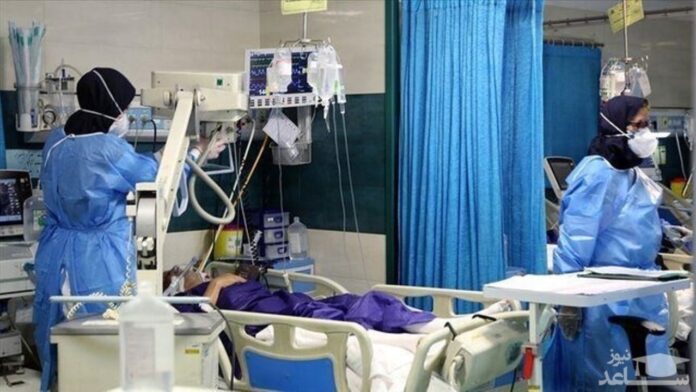
Number of Covid cases surge in Iran

The Health Ministry also logged 3,163 new Covid cases including 338 hospitalizations. The number of new infections on Monday shows a surge compared to Sunday. Yesterday’s caseload was 2,292.

Despite the surge in the cases, there are no red zones across Iran in terms of risk from Covid due to a nationwide vaccination campaign that has seen some 130 million doses of vaccine administered to people.

But it seems Iran is not out of the woods yet as authorities are warning that it’s highly likely that Iran will soon get hit hard by a new wave of the Covid pandemic.

A member of the scientific committee of Iran’s National Task Force for Fighting the Coronavirus has said the country is already in a new wave of Covid driven by the Omicron variant.

Minoo Mohraz added that the wave will reach its peak in the next 3 to 4 weeks. She also said the vaccine has little effect on Omicron, so it is important people get their boosters.

Omicron has already overwhelmed many countries around the world, including the US and countries in European.

The strain is said to be way more contagious than Delta, the previous variant, though less deadly.