Friday, April 10, 2026
Home Blog Page 199

Iranian speaker says US, NATO, Israel aligned against Tehran

Mohammad Bagher Ghalibaf

Speaking at a conference in Tehran marking “World Mosque Day,” Ghalibaf said Iran’s recent military operations, known as True Promise 1, 2, and 3, “demonstrated the country’s ability to confront advanced military systems deployed in the region.”

During US President Donald “Trump’s first term, he integrated the air defense systems of regional countries with a $4 billion plan, and today all those capabilities are arrayed against our missiles,” he said.

Ghalibaf described Israel as the “Nazism of the 21st century,” adding that Tehran’s real strength lies “in the hearts of the people,” not just in missiles or defense systems.

He urged closer coordination among government branches and greater involvement of citizens in national affairs, criticizing over-centralized management and inefficiencies in economic governance.

Warning of the possibility of future conflicts, the speaker emphasized that unity is key, adding: “If our cohesion falters, the enemy will not hesitate to strike again.”

Iranian daily warns of return to Ahmadinejad-era sanctions

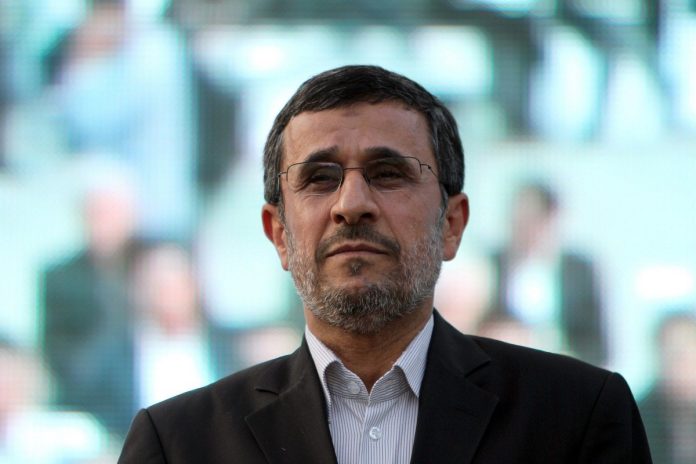
Mahmoud Ahmadinejad

In an editorial published Saturday, the paper warned of the consequences of the move by three European parties to the 2015 JCOPA nuclear deal on Thursday to activate snapback mechanism.

The daily cautioned that “not even a single line of sanctions, even on paper, should be underestimated,” urging the government to use all available resources to prevent further escalation. “Every effort must be made to keep the half-open door of diplomacy from closing,” it wrote.

The editorial criticized political factions it described as responsible for the previous era of isolation, saying, “Those who once called UN resolutions mere ‘pieces of paper’ and even mocked the idea of sanctions are now the ones expressing outrage as similar conditions return. The nation’s memory is not so short to forget who built that situation.”

Calling for a pragmatic approach, the paper emphasized that avoiding renewed isolation depends on coordinated action between Iran’s diplomatic apparatus and other state institutions, particularly amid rising tensions with European powers over the nuclear file.

EU member states ready to deploy military instructors to Ukraine after truce: Top diplomat

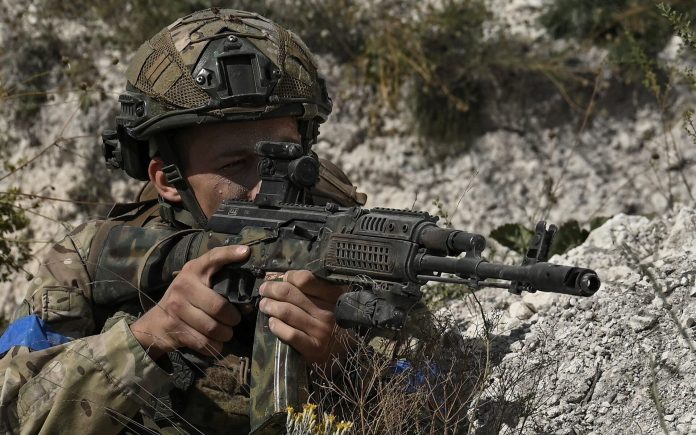
Russia Ukraine War

Kallas met with the ministers in Copenhagen to discuss several issues, including plans for security guarantees for Ukraine.

The meeting came the day after an EU mission building was damaged in a Russian strike on Kyiv.

“I welcome that there is broad support today to expand our EU military mission mandate to provide training and advice inside Ukraine after any truce,” Kallas said, as quoted on the European External Action Service website.

“We are the largest provider of training to Ukraine’s military. We have trained over 80,000 soldiers so far, and we must be ready to do more. Ministers were clear that the security guarantees for Ukraine must be robust and credible,” she added.

During peace talks between U.S. President Donald Trump, President Volodymyr Zelensky, and European leaders held in Washington, leaders pressured Trump to support Ukraine with adequate security guarantees.

Discussion on such measures, designed in theory to prevent a repeat Russian invasion of Ukraine once a peace deal is reached, returned to the limelight after Trump dropped demands for Moscow to agree to a 30-day unconditional ceasefire.

Zelensky has stated that security guarantees will be “set out on paper next week.”

What form security guarantees will take is still up for debate.

One of the earliest iterations floated was the idea of a French and U.K.-led multinational “reassurance force” under the banner of the Coalition of the Willing, though multiple other options have been raised since.

Moscow has repeatedly made it clear that it will not tolerate the presence of European boots on the ground in Ukraine as part of a peace settlement.

According to Italian Prime Minister Giorgia Meloni, ​​a robust security mechanism inspired by NATO’s Article 5 remains the main guarantee under consideration, though what this would look like in reality remains murky.

A report by the Financial Times claimed that the U.S. was prepared to back a European-led peacekeeping contingent in postwar Ukraine by contributing intelligence assets, air defense support, and battlefield oversight.

Another option under discussion, according to Politico, is a European-backed 40-kilometer buffer zone as an option for a ceasefire or postwar arrangement between Ukrainian and Russian forces.

A source in Ukraine’s President’s Office told the Kyiv Independent that these are simply a handful of the multiple different plans currently being discussed, with none of them close to being decided upon.

Israeli soldier killed, several wounded in intense fighting near Gaza City as 4 remain missing: Report

Israel Army

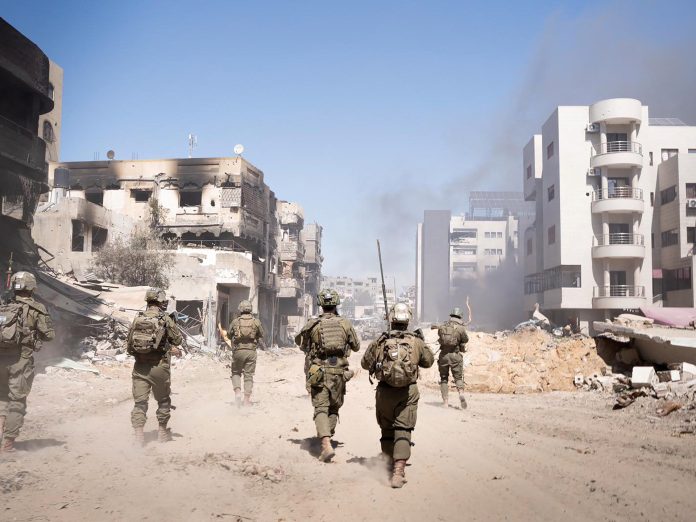
Fierce battles, accompanied by airstrikes and heavy artillery fire, are taking place in Gaza City’s outer neighborhoods as Israel attempts to occupy the city, Israeli media reported late Friday.

Channel i24 reports intense fighting as Israeli forces try to advance into the area.

Social media reports circulated about security incidents in Gaza resulting in the deaths of the soldiers, though the reports have not been confirmed by official sources.

Israeli media described the fighting as one of the most serious since Oct. 7, 2023, according to Roya News.

The Israeli military has imposed a publication ban until further notice, it said.

The media reported that the army launched extensive search operations amid growing concerns that some of the missing soldiers may have fallen into the hands of Hamas.

“We remind those who forget, death or capture,” Hamas’ al-Qassam Brigades wrote on Telegram, coinciding with reports of an ambush.

Based on footage showing intensive helicopter flights, flares, and the sounds of combat assessments suggest the army may have activated the “Hannibal Protocol” — a controversial doctrine designed to prevent soldier captures.

The developments follow harsh statements Thursday from Abu Obeida, spokesman for Hamas’s military wing, the al-Qassam Brigades.

Abu Obeida warned that Israel’s plans to occupy Gaza would prove disastrous for Tel Aviv’s political and military leadership. He said combat conditions would increase the chances of capturing soldiers.

He also added Israeli prisoners would remain in combat zones under the same risky conditions as Palestinian fighters, warning that any hostages killed in Israeli attacks would be publicly announced with names, photos and death certificates.

Israel’s current attacks are part of Operation Gideon 2, approved by Defense Minister Israel Katz in August, to occupy Gaza City. The operation continues with large-scale attacks that began two weeks ago in the Zeitoun neighborhood, extending to Sabra.

Israel has declared the area a “dangerous combat zone” while intensifying bombardments since early Thursday.

Israel has killed more than 63,000 Palestinians in Gaza since October 2023. The military campaign has devastated the enclave, which is facing famine.

Last November, the International Criminal Court issued arrest warrants for Israeli Prime Minister Benjamin Netanyahu and his former Defense Minister Yoav Gallant for war crimes and crimes against humanity in Gaza.

Israel also faces a genocide case at the International Court of Justice for its war on the enclave.

Germany warns Ukraine war may last for ‘many more months’

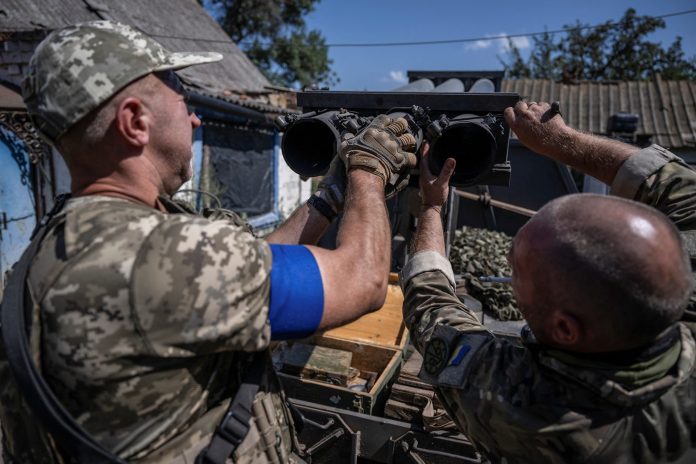
Russia Ukraine War

Speaking alongside France’s President Emmanuel Macron in the French city of Toulon, Merz said he had “no illusions” about the prospects of a swift conclusion to the war, and vowed that “we will not abandon Ukraine”.

Merz stated that he was “not surprised” at the Kremlin’s continued stalling on US President Donald Trump’s push to set up direct talks between Russian leader Vladimir Putin and his Ukrainian counterpart Volodymyr Zelensky.

“It is part of this Russian president’s strategy,” he added.

“Earlier this week it became clear to me that President Putin is unwilling to meet with President Zelensky and has set preconditions that are downright unacceptable”.

Merz also noted keeping Ukraine’s allies united in the so-called “coalition of the willing” was “one of our most urgent tasks”.

E3 urges Iran to agree deal to delay UN sanctions

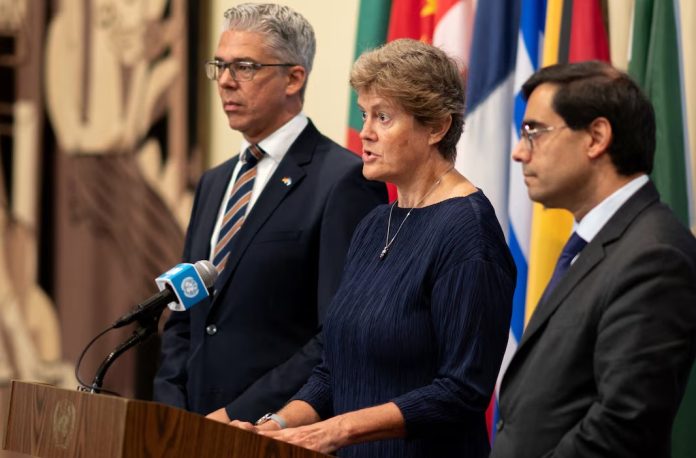
U.N. envoys for the three countries – known as the E3 – issued a joint statement before a closed-door Security Council meeting, a day after they launched a 30-day process to reimpose U.N. sanctions on Iran over its disputed nuclear program.

The E3 offered to delay reinstating sanctions – known as snapback – for up to six months if Iran restored access for U.N. nuclear inspectors, addressed concerns about its stock of enriched uranium, and engaged in talks with the United States.

“Our asks were fair and realistic,” stated Britain’s U.N. Ambassador Barbara Woodward, who read the statement.

“However, as of today, Iran has shown no indication that it is serious about meeting them.”

“We urge Iran to reconsider this position, to reach an agreement based on our offer, and to help create the space for a diplomatic solution to this issue for the long term,” she said, with her German and French counterparts standing next to her.

Russia and China have proposed a draft U.N. Security Council resolution that would extend the 2015 deal for six months and urge all parties to immediately resume negotiations. But they have not yet asked for a vote.

The pair, strategic allies of Iran, have removed controversial language from the draft – which they initially proposed on Sunday – that would have blocked the E3 from reimposing U.N. sanctions on Iran.

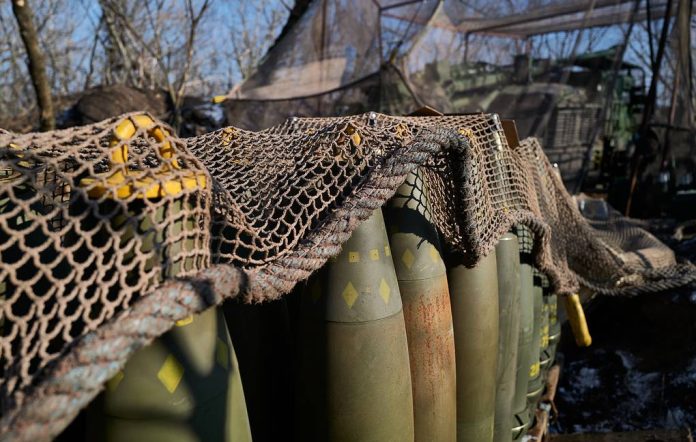
US give Ukraine weapons that enable it to attack deeper into Russia: envoy to NATO

“And finally, you know, we’re giving some deeper strike capabilities, and most likely, the Ukrainians are going to use them,” the diplomat said during a live broadcast on Fox News.

He did not specify which systems he was referring to, but mentioned the plans announced by Washington on Thursday to sell Kiev over 3,000 ERAM air-based missiles, as well as purchases of weapons for Ukraine from the United States by NATO allies.

“President Trump’s making sure that Ukraine can continue to defend itself, and by giving them some deeper strike capabilities that obviously could help them offensively,” Whitaker reiterated.

Russia has repeatedly pointed out that long-range strikes are carried out not by Kiev, but by Western countries, whose specialists provide target guidance. Russia will respond decisively if long-range systems are used against it, stressed Russian Foreign Ministry spokeswoman Maria Zakharova.

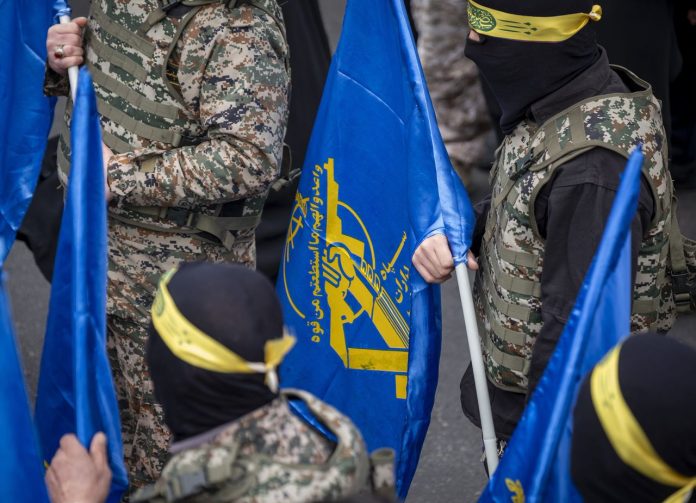
IRGC arrests 8 suspected Mossad agents in northeastern Iran

IRGC

In a statement released on Saturday, the IRGC’s Imam Reza unit said the arrests followed “precise and continuous intelligence operations” coordinated with the judiciary.

The suspects are accused of transmitting sensitive information, including coordinates of critical sites and details of high-ranking military figures, during the 12-day conflict with the US-Israeli alliance in June.

According to the statement, the group had received specialized training online from Mossad operatives and was planning attacks targeting senior Iranian officials and key infrastructure sites in the city of Mashhad.

Authorities also seized materials intended for building launchers, bombs, and explosive devices.

The IRGC said the network had ties with separatist groups and warned that any form of cooperation with Israel is strictly prohibited under Iranian law. Officials urged citizens to report suspicious activities via hotline numbers.

Iran’s parliament passed the “Countering Hostile Actions of the Zionist Regime” law in May 2020, mandating severe penalties for collaboration with Israel in any form.

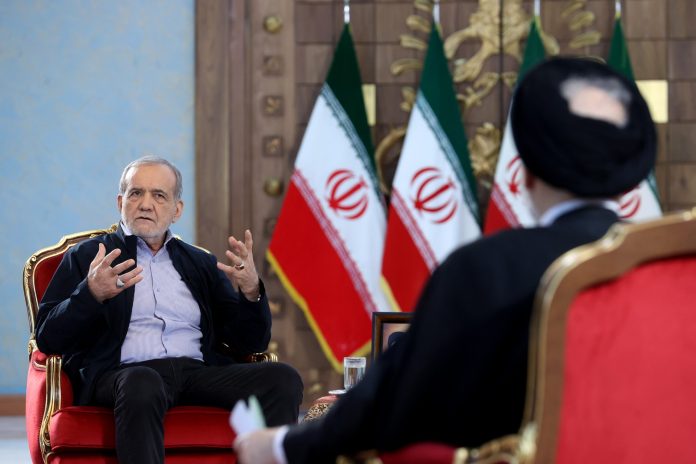
President Pezeshkian says Iran not seeking war, vows to resist assault

In a candid conversation with a number of Iranian political activists from across the spectrum, Pezeshkian said: “We do not want war, and we have said this from the very beginning. But we are not afraid of war either. Our people have also shown that if war is imposed, national unity and solidarity will emerge even more strongly.”

Pezeshkian warned that the United States and Israel are seeking to divide and overthrow Iran.

He emphasized the necessity of unity among political factions as well as the people in confronting adversaries, saying: “We must foster cohesion and solidarity inside the country. If we achieve unity, our strength will be inexhaustible, because when the people stand together, no power will so easily dare to covet our country.”

Referring to the recent 12-day war waged by the United States and the Zionist regime against Iran, he added that the enemies believed Iran was at its weakest point.

“They assumed that once they attacked, on the second or third day the people would flood the streets, and soon the system, the revolution, and the country would collapse.”

The President continued: “Iran belongs to all of our people; it is not the property of one particular group. The enemies never thought we would endure, but we stood firm. We are not seeking war, but if anyone seeks to invade, we will resist with strength.”

Iranian FM highlights diplomatic efforts amid regional tensions

In an article published by the Iran newspaper, Araghchi said more than 60 phone and video calls were held with foreign ministers worldwide during the 12-day conflict, emphasizing Iran’s right to self-defense under the UN Charter.

“Iran was not and will not be the initiator of war,” he noted, adding that Tehran would “never hesitate to defend its people and territory.”

He highlighted that nearly 120 countries and several international organizations condemned the Israeli attacks, calling it a sign of Iran’s growing diplomatic influence.

The minister also pointed to strengthened regional ties, particularly with Persian Gulf states, Turkey, and Pakistan, while maintaining strategic channels with Syria and Lebanon to secure access to the Mediterranean.

Araghchi said Iran’s foreign policy remains focused on “active, inclusive, and effective diplomacy,” balancing crisis management with economic initiatives.

These include expanding trade with neighboring countries, boosting regional connectivity, and deepening cooperation within blocs such as BRICS, the Shanghai Cooperation Organization (SCO), and the Eurasian Economic Union.