Friday, January 2, 2026
Home Blog Page 190

US sets new timeframe for ending Ukraine war

Russia Ukraine War

Speaking at a cabinet meeting with President Donald Trump on Tuesday, Witkoff said he will be “having meetings all this week” on Ukraine and other global conflicts, “and we hope to settle them before the end of this year.”

In a follow-up interview with Fox News, Witkoff stated that although Trump had expressed frustration with both Moscow and Kiev, the Russian side has at least “put a peace proposal on the table.” He acknowledged that territorial concessions “may not be something that the Ukrainians can take,” but argued that the Trump administration had brought the sides closer to agreement than ever before.

“There’s a peace proposal on the table,” Witkoff reiterated.

“We’re at this place where we think the end is in sight… we have technical teams working on it and we’re hopeful that by the end of this year, and maybe quite a bit sooner, we actually can find the ingredients to get to that peace deal,” he added.

According to Witkoff, Russian President Vladimir Putin expressed a clear desire to end the conflict and discussed Moscow’s position in depth with Trump during their historic Alaska summit earlier this month. While no details of any potential deal were made public, Moscow has long insisted that a sustainable settlement can only be achieved if Kiev agrees never to join NATO, undergoes demilitarization and denazification, and recognizes the new reality on the ground. This includes the status of Crimea, Donetsk, Lugansk, Kherson, and Zaporozhye as part of Russia – territories that voted to join the country in referendums in 2014 and 2022.

Witkoff emphasized that any decision on territorial concessions would be for Ukraine to make, and suggested the issue would be tied to long-term security guarantees. He noted that he would meet Ukrainian officials in New York this week and stressed that Washington maintains daily communication with Moscow. Recent reports have indicated that ongoing discussions include Kiev potentially ceding its remaining positions in Donbass in exchange for yet-to-be-defined Western commitments.

Witkoff further claimed “we may end up seeing a bilateral meeting” between Russian President Vladimir Putin and Ukraine’s President Volodymyr Zelensky, adding that Trump might be “needed at the table to finish a deal.”

Putin has not ruled out meeting Zelensky, but insisted a meeting could only follow tangible progress in negotiations. Moscow has also questioned Zelensky’s legitimacy, citing his expired presidential term and warning that any deals he signs could be overturned by his successor.

Turkey begins building bomb shelters across the country

According to the source, President Recep Tayyip Erdogan approved the project during a cabinet meeting in June.

At the time Iran and Israel were at war, with Israel hitting Iran with air strikes and Tehran responding with ballistic missiles.

The Turkish Housing Development Administration (TOKI) has been tasked with carrying out the construction.

Last month a report prepared by the Turkish National Intelligence Academy on Israel’s 12-day war with Iran recommended that the government establish early warning systems and build well-equipped shelters.

The report suggested making use of underground metro stations in major cities and implementing measures to minimise civilian casualties in the event of a regional conflict.

Turkish officials were particularly struck by Israel’s extensive network of bomb shelters in major cities, which allowed civilians to take refuge during bombardments.

On Tuesday, Turkish broadcaster NTV reported that the goal of the initiative is “to create safe areas where civilians can be protected in case of possible wars or disasters”, including nuclear threats.

The channel noted that Turkey currently lacks adequate shelter infrastructure and that existing facilities fail to meet basic requirements.

The Ministry of Urbanisation has also studied international examples such as Japan and Switzerland, NTV reported, adding that construction has already begun in certain cities, including the capital, Ankara.

Turkey’s Shelter Regulation, enacted in 1987, requires shelters in buildings above a certain size. In practice, however, the regulation has often been ignored, with many designated shelter areas being used instead as parking lots or storage spaces.

Six Syrian soldiers killed in Israeli aerial attack near Damascus

Israeli drones targeted Syrian army positions in the Damascus countryside near the city of al-Kiswah, the broadcaster reported early on Wednesday.

Following the fall of the Bashar al-Assad government last December, Israel has launched hundreds of strikes targeting military sites and assets across Syria.

Israel also expanded its occupation of the Syrian Golan Heights by seizing the demilitarised buffer zone, a move that violated a 1974 disengagement agreement with Syria.

Syria’s Ministry of Foreign Affairs said on Monday that Israel had sent 60 soldiers to take control of an area inside the Syrian border around Mount Hermon, near a strategic hilltop that overlooks Beit Jinn, close to the border with Lebanon in southern Syria. Israel did not immediately comment on the accusation.

Syrian Minister of Foreign Affairs Asaad al-Shaibani accused Israel of establishing intelligence facilities and military posts in demilitarised areas to advance its “expansionist and partition plans”.

Earlier this month, Israeli Prime Minister Benjamin Netanyahu shared his vision for a “Greater Israel“, a concept supported by ultranationalist Israelis that lays claim to the occupied West Bank, Gaza, and parts of Lebanon, Syria, Egypt and Jordan.

A coalition of 31 Arab and Islamic countries and the Arab League said the stance was a “blatant and dangerous violation of the rules of international law and the foundations of stable international relations”.

The latest Israeli military action in Syria follows deadly clashes in the Druze-majority Syrian province of Suwayda, where a week of sectarian violence in July killed 1,400 people, before a ceasefire put an end to the bloodshed. Israel had carried out strikes on Syrian troops and bombed the heart of the capital, Damascus, under the pretext of protecting the Druze people.

IRGC says neutralized terrorists in Southeastern Iran

IRGC

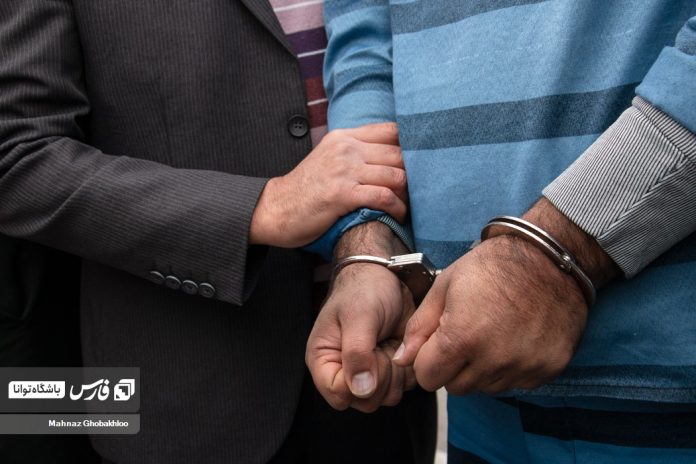
The IRGC Ground Force’s Quds Base announced its servicemen have conducted the anti-terror operations in cooperation with the Intelligence Ministry forces.

A total of 13 terrorists have been killed and several others arrested in the joint operations carried out in the early hours of Wednesday in Iranshahr, Khash and Saravan.

Meanwhile, the spokesperson for the Law Enforcement Command of the Islamic Republic of Iran (FARAJA) stated that the perpetrators of a recent fatal attack on a Police base in Iranshahr city in the southeastern province have been eliminated.

General Saeed Montazeralmahdi noted his colleagues have carried out a successful operation in cooperation with the security and intelligence organizations early Wednesday, killing 8 terrorists involved in a recent raid that resulted in the martyrdom of Police personnel at the ‘Daman’ Police station in Iranshahr.

The spokesperson added that a significant cache of weapons and ammunition was confiscated from the terrorists, including items stolen from the police station.

On August 22, armed assailants ambushed two police patrol units along the Khash-Iranshahr road in Sistan and Balouchestan province. The attack resulted in the martyrdom of five police officers. The terrorists fled the scene following the attack.

The so-called Jaish al-Adl terrorist group claimed responsibility for the assault that occurred in the Daman district of Iranshahr.

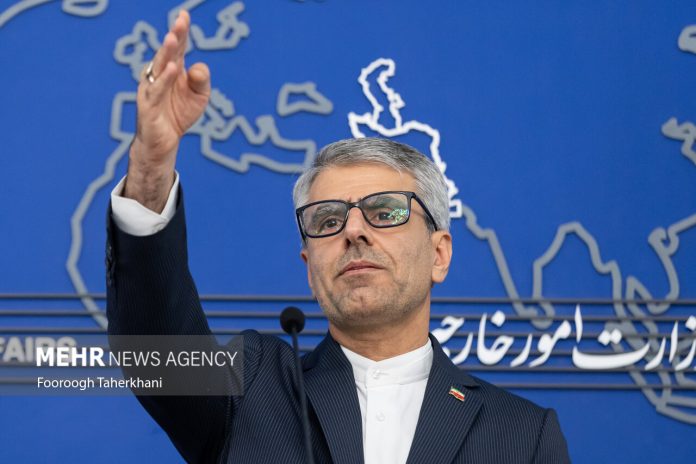
Spox: Iran, Europe contacts to continue in coming days

Baqaei stated that at the Geneva meeting, the responsibilities of the European parties were clearly conveyed, and Iran’s demands regarding the lifting of sanctions and its nuclear rights were explicitly outlined.

The seventh round of talks between Iran and the three European countries—Germany, France, and the United Kingdom—was held on Tuesday, August 26, in Geneva, with the participation of the Deputy EU Foreign Policy Chief.

The talks, at the level of deputy ministers and political directors, focused on sanctions relief, Iran’s nuclear program, and UN Security Council Resolution 2231.

Majid Takht-Ravanchi, Deputy Foreign Minister for Political Affairs, and Kazem Gharibabadi, Deputy for Legal and International Affairs, headed the Iranian delegation.

In a televised interview, Baqaei said that this negotiation process is part of the Islamic Republic of Iran’s policy to use all diplomatic capacities to safeguard the country’s national interests.

Referring to threats by the European parties to resort to the UN Security Council’s sanctions snapback mechanism, he stressed: “We presented our principled position that, for clear legal and juridical reasons, none of the three countries holds such a right. Moreover, if such a move is taken, its consequences and impacts will also affect those countries themselves.”

Kazem Gharibabadi also wrote last night on X: “Both sides set out their views on Resolution 2231. Iran remains committed to diplomacy and to a mutually beneficial diplomatic solution. It is time for the three European countries and the UN Security Council to make the right choice and give diplomacy time and space.”

Australia responsible for ‘consequences’ of expelling Iran’s envoy: Tehran

Iranian Foreign Ministry

Iran’s Foreign Ministry made the remarks in a statement on Tuesday, after Canberra decided to expel Tehran’s ambassador over allegations of attacks on Jewish sites.

“The Ministry of Foreign Affairs of the Islamic Republic of Iran regrettably considers the Australian government’s request for the ambassador and several Iranian diplomats to leave the country unjustified and contrary to the tradition of diplomatic relations between the two countries,” it said.

The ministry further rejected allegations that the Islamic Republic was behind two anti-Semitic attacks in Australia, vowing to take appropriate reciprocal action.

Additionally, the ministry highlighted the historical and documented fact that anti-Semitism is primarily a Western-European phenomenon that has been manifested in various forms at different times, suggesting that the recent misuse of this concept is aimed at suppressing protests against the occupation, apartheid, and genocide against the Palestinians.

While denouncing the ongoing crimes and genocide in Gaza, the ministry announced that Iran emphasizes the accountability of all supporters and those justifying these actions, and criticizes the Australian government’s accusations against the Islamic Republic as in alignment with the Israeli regime’s strategy of diverting attention from the humanitarian crisis in Palestine and escalating tensions in the region.

The ministry further added that Iran, while reserving the right to take reciprocal action, urges the Australian government to reconsider its decision and holds Canberra responsible for the consequences and repercussions of the decision, including the challenges it may pose for the Iranian community residing in the country.

On Tuesday, Australian Prime Minister Anthony Albanese accused Iran of orchestrating two attacks on Jewish sites in October and December, allegations made without presenting evidence.

Iran’s Foreign Minister Abbas Araghchi refuted Canberra’s allegation, describing it as an act of appeasement toward a “regime led by war criminals.”

Iran’s ambassador – now persona non grata – and other diplomats have been given seven days to leave Australia.

Trump threatens Russia, Ukraine with sanctions and tariffs

Donald Trump

Speaking to reporters at the White House on Tuesday, Trump said that it “takes two to tango,” and suggested that Ukraine’s Vladimir Zelensky “was not exactly innocent.”

“Thousands of young people, mostly young people, are dying every single week. If I can save that, by doing sanctions or by just being me, or by using a very strong tariff system that’s very costly to Russia or Ukraine or whoever we have,” Trump stated.

He also reiterated his readiness to slap new restrictions on Moscow. “We want to have an end. We have economic sanctions. I’m talking about economic because we’re not going to get into a world war,” he said.

Trump criticized his predecessor, Joe Biden, calling him “grossly incompetent” for allowing the Russia-Ukraine conflict to happen in the first place.

“Nobody goes into a war thinking they’re going to lose. They go in – I’m sure that Ukraine thought they were going to win. It’s going to be, you know, we’re going to win. You’re going to beat somebody that’s 15 times your size. Biden shouldn’t have let that happen,” Trump stated.

The US president also appeared to dismiss Moscow’s concerns about the Zelensky’s legitimacy.

“Doesn’t matter what they say. Everybody’s posturing. It’s all bullsh*t, ok? Everybody’s posturing,” Trump told reporters.

Russian Foreign Minister Sergey Lavrov reiterated Moscow’s stance in an interview with NBC aired on Sunday, calling Zelensky the “de facto head of the regime,” and stressed the person signing any peace deal must have legal authority to do so.

US soldiers begin withdrawal from key Iraqi bases

The US began a sudden withdrawal from Ain al-Asad base in Anbar province and the Victory Base Complex, located within the Baghdad International Airport, on Sunday, Iraqi news site Kurdistan 24 reported.

According to the report, the withdrawal of all US soldiers from the bases is being conducted in stages, but they will be emptied within “days”. Some of the US soldiers will relocate to Erbil, in Iraq’s Kurdistan region, the report added.

Iraq’s Shafaq news site reported earlier that a convoy of US soldiers from Ain al-Asad was en route to Syria – the US maintains several bases in northest Syria – and that others would redeploy to Erbil.

The pullout signals that the Trump administration is pushing ahead with a plan to withdraw US soldiers from Iraq.

In September 2024, Reuters reported that US and Iraqi negotiators had agreed on a plan during the Joe Biden administration to end the US military presence, which required only the sign-off of leaders in Baghdad and Washington.

According to Reuters, the plan called for all US-led coalition forces to leave Ain al-Asad air base in western Anbar province and significantly reduce their presence in Baghdad by September 2025.

The 2024 talks took place under very different conditions, underscoring just how much the region has changed.

By September 2024, Iranian-backed fighters had launched at least 70 attacks on US forces in Iraq, as part of the simmering regional conflict unleashed by the Hamas-led 7 October 2023 attack on southern Israel.

US soldiers also came under attack in Jordan.

The Iraqi militias who attacked US troops belong to a group aligned with Tehran called the “Axis of Resistance”, which included Lebanon’s Hezbollah, Yemen’s Houthis, and Bashar al-Assad’s former government in Syria. That loose network has been pummelled.

Less than a year later, Hezbollah’s leadership was assassinated by Israel, and its forces were severely decimated. Islamist rebels ousted Assad from power in late 2024.

Iraq’s Popular Mobilisation Units, the umbrella organisation of Iraqi state-funded and Iran-aligned Shia militias, was spared the fate of Assad and Hezbollah. But Tehran was put on its back heels from Israel’s surprise attack and the US’s bombing of its nuclear sites.

The US and Baghdad had an agreement to keep US soldiers in Iraq as part of efforts to defeat the Islamic State militant (IS) group. However, as Israel’s genocide on Gaza escalated, Iraqi Prime Minister Mohammed Shia al-Sudani faced new calls to end the US presence.

The Trump administration itself showed little interest in remaining in Iraq. Earlier this year, it already started downsizing its troop presence in Syria despite resistance from Israel. Critics of the US’s “forever wars” are likely to welcome the withdrawal.

US and coalition soldiers are expected to stay in Erbil, in the Kurdish semi-autonomous region, for just one more year. The withdrawal of US troops from this region would leave just a smaller US military presence in northeastern Syria.

The US’s legal justification for being in Syria, home to roughly 1,400 US troops, is also based on Washington’s agreement with Baghdad.

US troops are officially in Syria to ensure the enduring defeat of IS, but their presence is also seen as a strategic wedge against Iran and its proxies.

However, with Assad gone and Syrian President Ahmed al-Sharaa now aligned with Turkey and Sunni Gulf Monarchs, the US military footprint in Syria could diminish further.

American diplomat prompts outrage in Lebanon after telling media to ‘act civilised’

Tom Barrack, the United States ambassador to Turkiye and the special envoy for Syria, made the comments on Tuesday after meeting Lebanese President Joseph Aoun in Beirut to discuss plans for the disarmament of Hezbollah.

Briefing local media after the meeting, Barrack, who is of Lebanese descent, chided reporters for shouting out questions all at once, and appeared to draw a link between their behaviour and conflict in the Middle East.

“We’re going to have a different set of rules… please be quiet for a moment,” Barrack said.

“And I want to tell you something, the moment this starts becoming chaotic, like animalistic, we’re gone. So, you want to know what’s happening? Act civilised, act kind, act tolerant, because this is the problem with what is happening in the region.”

“In cadence with your kindness, your interest and your thoughtful questions, we’ll give you responses,” Barrack added.

“If that’s not how you’d like to operate, we’re gone.”

Barrack’s remarks prompted a swift backlash in Lebanon and farther afield, with commentators accusing the diplomat of displaying arrogance and a colonial mentality.

The Lebanese Presidency expressed regret over the comments, saying in a statement on X that the government has “full appreciation for all journalists” and “extends to them its highest regards for their efforts and dedication in fulfilling their professional and national duties”.

The Union of Journalists in Lebanon called on Lebanese and Arab media outlets to boycott future events involving the envoy until he issues a formal public apology.

“The union considers Barrack’s comments against journalists not as a mere slip of the tongue or an individual stance, but rather as a reflection of an unacceptable superiority in dealing with the media and an implicit disdain for the essence of journalistic work,” the media union announced in a statement.

“Furthermore, the content of his remarks reflects ingrained colonial arrogance towards the peoples of the region and constitutes a blatant violation of basic diplomatic etiquette and the values that diplomacy should represent – chief among them respect for press freedom and the people’s right to knowledge.”

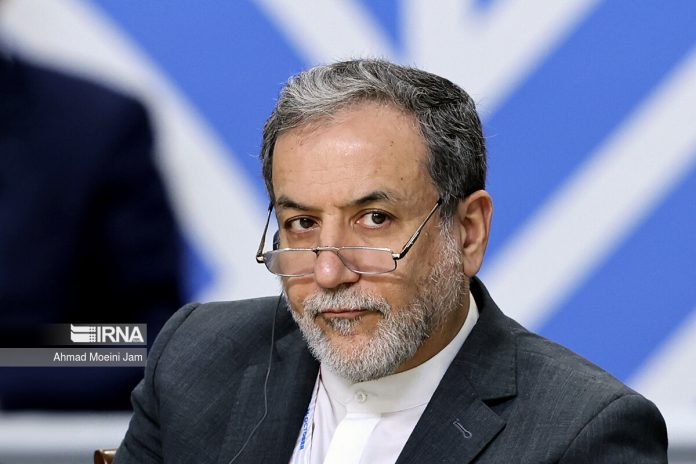
Time for Europeans to give diplomacy ‘time and space’: Iran’s Deputy FM

Nuclear Negotiations in Vienna

Gharibabadi made the remarks in an X post on Tuesday after he and Deputy Foreign Minister Majid Takht-Ravanchi met with senior diplomats from the three European signatories to the JCPOA, namely the UK, Germany, and France, in Geneva, focused on Resolution 2231.

Resolution 2231 is due to expire in October, officially lifting restrictions imposed on Iran’s nuclear program 10 years ago after the 2015 nuclear deal between Iran and the US, the E3, Russia, and China.

European countries, which have long threatened to trigger the so-called snapback mechanism, have said they will wait until the end of August to decide whether Tehran is serious about further negotiations on its nuclear work or whether they should invoke the snapback mechanism.

“Iran remains committed to diplomacy and a mutually beneficial diplomatic solution,” Gharibabadi added.

Iran asserts that European states lack both the legal standing and moral authority to invoke the “snapback” mechanism, a provision of the 2015 nuclear deal that would reimpose six UN Security Council resolutions against Tehran, originally adopted between 2006 and 2010.

To avert an imminent confrontation between Iran and Western governments, Russia has reportedly circulated a draft resolution proposing an extension of the current arrangement.

Under Moscow’s plan, the snapback provision would be extended but barred from activation for at least six months.

Iranian deputy foreign ministers Majid Takht-Ravanchi and Gharibabadi, along with senior representatives from the E3 countries, held a closed-door meeting at Iran’s Consulate General in Istanbul on July 25. The meeting, which lasted more than three hours, followed a similar round held on May 16 in Istanbul.