Sunday, April 19, 2026
Home Blog Page 160

Iranian scientific vice president: Path of supporting AI education continues

According to the Communications and Information Center of the Vice Presidency for Science, Technology, and Knowledge-Based Economy, Hossein Afshin, Vice President for Science, stated, “We are at the beginning of the journey. Although the registration of over 440,000 students and the participation of 33,000 in competitions is a remarkable figure, this is only a starting point, and the path of supporting AI education will continue.”

Afshin said that AI, as today’s driving force, requires a creative generation.

He explained that the Vice Presidency, recognizing this transformation, has made training the future builders of this field its main goal, and within the framework of the “Digital Iran” plan, is providing free AI education to more than two million students.

He added that these lessons present AI through games and entertaining activities, turning a complex concept into an enjoyable and practical experience for children and teenagers, adding by entering the world of AI through play and competition, they learn how to turn their ideas into reality.

According to Afshin, so far more than 440,000 students have registered for the program, and over 20,000 teachers are collaborating to widely develop programming and AI skills. Alongside student training, a platform has been created for teacher education, with Sharif University of Technology also participating in teacher training.

The vice president further announced that this initiative will continue until next summer, and support for top participants will also be sustained throughout the year.

Afshin noted that the National AI Competition, held online with the participation of 33,000 students on a public platform, set a rare record in the history of student competitions in the country in terms of scale and geographical diversity.

He stated that 33,043 participants came from 398 cities and 653 educational districts, with 20,218 girls and 12,822 boys, a meaningful statistic indicating greater female participation.

Afshin, who is also the President of the National Elites Foundation, assessed the participation of secondary school students as more prominent, noting that 6,658 were in primary school and 26,382 in secondary school. The provinces of Tehran, Khuzestan, Khorasan Razavi, Fars, and Hormozgan had the highest number of participants, marking an unprecedented figure.

Afshin described the competition, in terms of scale, nationwide spread, and prize value, as the largest programming and AI competition in the country and the region.

He added that the Computer Student Olympiad has about 7,000 registrants, the Mathematics Student Olympiad about 14,000, the programming section of the Khwarizmi Youth Festival about 4,000, and the programming section of the Khwarizmi Young Adults Festival fewer than 1,000 participants.
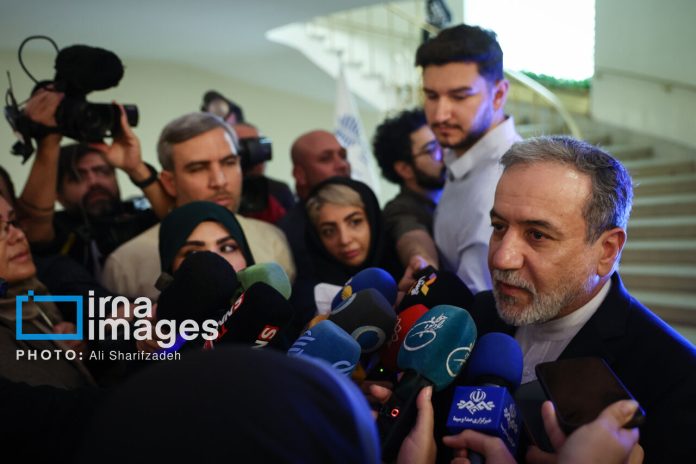
Iran warns snapback will create ‘new conditions’ and void deal with IAEA

Foreign Minister Abbas Araghchi made the remark on Monday upon arrival in New York at the head of a delegation for the 80th annual session of the United Nations General Assembly.

He said the agreement on cooperation with the IAEA was signed in the context of the US-Israeli acts of aggression in June against Iran, and the sides will face new conditions if the three European signatories to the 2015 nuclear deal trigger the snapback mechanism.

“In the press conference following the agreement with the IAEA, I emphasized that if the snapback is ultimately implemented, the agreement will also lose its validity,” the top Iranian diplomat stated.

Araghchi announced that he will be meeting with most of his European counterparts in New York.

“It is time for them to choose between cooperation and confrontation.”

“We hope for a diplomatic solution, but rest assured, if that fails, Iran is prepared to take necessary measures,” he added.

On September 9, the Iranian foreign minister and IAEA Director General Rafael Grossi reached an agreement on practical modalities to resume cooperation after a meeting in Cairo.

It came after the Iranian Parliament unanimously passed legislation requiring the administration to suspend all cooperation with the IAEA following the Israeli-US aggression, which targeted three of the country’s nuclear sites in a clear violation of international law and the Nuclear Non-Proliferation Treaty (NPT).

On September 19, the 15-member UN Security Council failed to adopt a resolution that would have prevented the reimposition of UN sanctions on Iran after the E3 triggered the “snapback” mechanism.

Tehran was accused of failing to comply with the nuclear deal, formally called the Joint Comprehensive Plan of Action (JCPOA).

Iran rejected the “illegitimate” move by the European troika, saying the United States had already pulled out of the deal. Tehran also accused the European trio of siding with illegal sanctions instead of honoring their own commitments.

Pointing to his scheduled meetings on Monday, Araghchi said he will sit down with Grossi to discuss the latest developments regarding Iran’s nuclear activities, the agreement with the IAEA, and the re-imposition of sanctions.

He added that Iran will respond to any “destructive” move by the European troika.

“They have tested the Islamic Republic of Iran at various times and know that we do not respond with a language of pressure and threats.”

“Rather, we will respond to a language of respect. If there is a solution, it is only a diplomatic solution,” he noted.


Russia risking ‘direct armed confrontation’ with NATO: UK

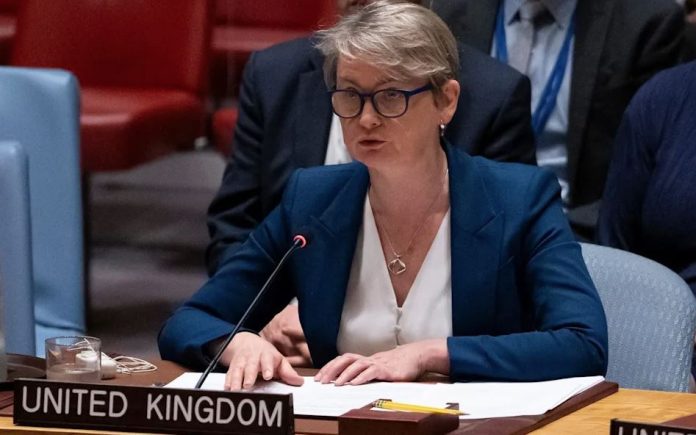
Yvette Cooper condemned recent Russian incursions into NATO airspace as she addressed the UN Security Council for the first time as Foreign Secretary.

She said: “They are a deliberate attempt to undermine the territorial integrity of sovereign nations and European security.”

“They risk miscalculation. They open the door to direct armed confrontation between NATO and Russia,” she added.

On September 19, three Russian jets entered Estonian airspace without permission, remaining there for 12 minutes and being intercepted by Italian aircraft operating as part of NATO’s Eastern Sentry mission.

The incursion followed similar incidents in Poland and Romania in which Russian drones were intercepted or shot down over NATO territory.

Speaking at the UN on Monday, Cooper stated: “Our alliance is defensive, but be under no illusion, we stand ready to take all steps necessary to defend NATO’s skies and NATO’s territory.

“We are vigilant. We are resolute. And if we need to confront planes that are operating in NATO airspace without permission, then we will do so.”


Putin: Russia ready to respond to any threat

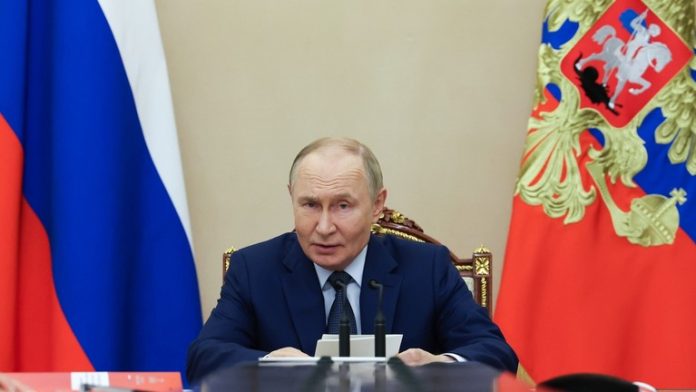
Speaking ahead of the Security Council meeting on Monday, Putin sounded the alarm with regard to the “extreme danger of further deterioration” of the geopolitical situation, particularly amid the Ukraine conflict.

He added that while Russia had offered “specific ideas” to correct this trajectory, these “warnings and initiatives received no clear response.”

“There should be no doubt about this: Russia is capable of responding to any existing and newly emerging threats. Responding not with words, but through the application of… military-technical measures,” Putin warned.

He noted Moscow’s decision to abandon the unilateral moratorium on the deployment of ground-based intermediate- and shorter-range missiles last month, describing it as “a forced step” caused by the need to counter plans to deploy US- and other Western-made missiles in Europe and the Asia-Pacific region.

Putin stressed, however, that Russia is not interested in warmongering and saber-rattling.

“We are confident in the reliability and effectiveness of our national deterrent forces, but at the same time we are not interested in further escalating tensions or fueling an arms race.”

He said that Russia has always prioritized “political and diplomatic methods for maintaining international peace, based on the principles of equality, indivisibility of security, and mutual consideration of interests.”

Putin signaled that Moscow is ready to prolong the 2010 New START Treaty, the last remaining arms control pact between Russia and the US, which expires in February. It limits each side to no more than 1,550 deployed strategic nuclear warheads and 700 deployed delivery systems, and provides for inspections and data exchanges to verify compliance.

This initiative, Putin stated, “could make a significant contribution to creating an atmosphere conducive to substantive strategic dialogue with the United States.”


France among six more states to formally recognise Palestinian statehood

Alongside France, which co-convened the meeting with Saudi Arabia on Monday in New York, Andorra, Belgium, Luxembourg, Malta and Monaco said they were recognising a Palestinian state.

Leaders from Australia, Canada, Portugal and the United Kingdom, which formally made the move to recognise Palestine a day earlier, also spoke at the meeting.

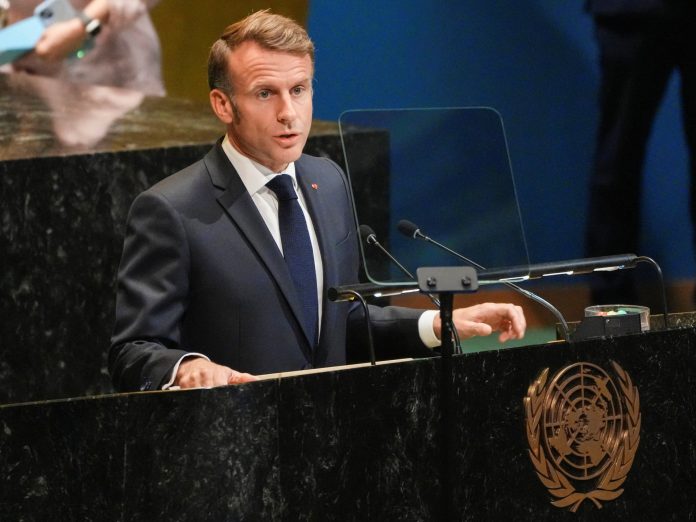
“We have gathered here because the time has come,” Macron said at the summit convened to revive the long-delayed two-state solution to end the Israel-Palestine conflict.

“It falls on us, this responsibility, to do everything in our power to preserve the possibility of a two-state solution,” Macron stated.

“Today, I declare that France recognises the state of Palestine,” he added.

The additional countries recognising Palestine now join some 147 of the 193 UN member states that had already formally recognised Palestinian statehood as of April this year.

With more than 80 percent of the international community now recognising the state of Palestine, diplomatic pressure has ramped up on Israel as it continues its genocidal war on Gaza, where more than 65,300 Palestinians have been killed and the has been enclave turned into rubble.

Spain, Norway and Ireland recognised Palestinian statehood last year, with Madrid also imposing sanctions on Israel for its war on Gaza.

Spanish Prime Minister Pedro Sanchez told the summit on Monday that a two-state solution was not possible “when the population of one of those two states is the victim of a genocide”.

“The Palestinian people are being annihilated, [so] in the name of reason, in the name of international law and in the name of human dignity, we have to stop this slaughter,” Sanchez stressed.

Macron, in his speech to the summit, also outlined a framework for the creation of a “renewed Palestinian Authority”. The post-war framework envisages an International Stabilisation Force (ISF) that would assist in preparing the Palestinian Authority (PA) to take over governance in Gaza.

PA President Mahmoud Abbas commended the countries that had recognised Palestine. He made his statement to the conference by video because he was denied a visa by the administration of US President Donald Trump to attend the UNGA this week.

“We call on those that have not yet done so to do so to follow suit”, Abbas said, adding that the PA also demanded “support for Palestine’s full membership in the United Nations”.

Israel and the US, which are becoming increasingly isolated internationally on the issue, boycotted the summit.

Although the vast majority of UN member states now recognise Palestinian statehood, new UN member states must have the support of the UN Security Council, where the US has used its veto to block Palestine from becoming a full UN member state.

Speaking at the summit, UN Secretary-General Antonio Guterres reiterated his support for the two-state solution, framing it as the only viable path towards peace after years of failed negotiations and ongoing violence.

Guterres said that statehood for Palestinians “is a right, not a reward”, rejecting US and Israeli claims that it was a reward for Hamas.

Saudi Arabia’s Foreign Minister, Prince Faisal bin Farhan Al Saud, thanked Macron and the UN chief for their efforts towards a two-state solution, which he stated is “the only way to achieve just and lasting peace”.

He added the conference comes at a time when “the Israeli occupation authorities continue their aggression and their brutal crimes” against Palestinians in Gaza.

Israel also continues its “violations in the West Bank, and its repeated attacks on Arab and Muslim countries, with the most recent attack on Qatar”, he continued.

“These actions underline Israel’s insistence on continuing aggressive practices that threaten regional and international peace and stability and undermine efforts of peace in the region,” he added.

The US, Israel’s closest ally, has criticised Western governments for their recognition of Palestine, with Secretary of State Marco Rubio earlier saying that the move will “embolden [Hamas]” and make it harder to end the war.

On Monday, White House press secretary Karoline Leavitt said that US President Donald Trump believes the countries’ recognition of Palestine “is a reward to Hamas”.

Israeli Prime Minister Benjamin Netanyahu has repeatedly emphasized that he would not allow the establishment of a Palestinian state. Last September, the UNGA passed a resolution calling on Israel to end its occupation of the Palestinian territory within a year.


US vows to ‘defend every inch of NATO territory’

NATO scrambled jets after three Russian MiG-31 fighters on Friday breached Estonian airspace for some 12 minutes, triggering complaints of a dangerous new provocation and a denial from Moscow.

Estonia, a NATO member, called for a meeting of the UN’s top body, the Security Council, “in response to Russia’s brazen violation of Estonian airspace”, and talks with other NATO allies.

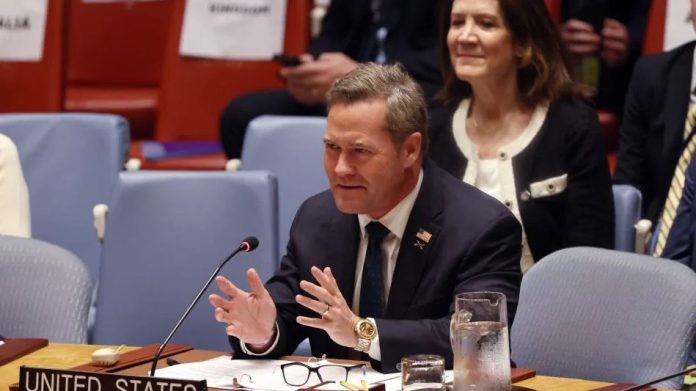
“As we said nine days ago, the United States stands by our NATO Allies in the face of these airspace violations. And I want to take this first opportunity to repeat, and to emphasize, the United States and our Allies will defend every inch of NATO territory,” said US Ambassador Mike Waltz.

The incursion came after fellow NATO member Poland announced earlier this month Russian drones had repeatedly violated its airspace during an attack on Ukraine, in what Warsaw called an “act of aggression.”

US President Donald Trump on Sunday joined the condemnation of the latest airspace violation, vowing to defend Poland and the Baltic states in case of escalation from Russia.

Asked whether he would help defend the EU members if Russia intensifies hostilities, Trump told reporters: “Yeah, I would.”

Trump’s relationship with Russian President Vladimir Putin has blown hot and cold, with the Kremlin leader pressing his invasion of Ukraine and the US president urging peace but showing little concrete sign of pressuring Moscow.

Trump stated Thursday at the close of a state visit to Britain that Putin had “really let me down” by continuing the war, now in its fourth year.

“At a time when President Trump and the United States has been focused, and spent an enormous amount of time and effort to end this horrific war between Russia and Ukraine, we expect Russia to seek ways to de-escalate — not risk expansion,” Waltz added in his maiden speech to the Council.

Western powers have warned that Russia is playing with fire with its repeated ventures into NATO airspace, whose members have a mutual defense assistance pact.

In the incident in Estonian airspace, Italian F-35 fighters attached to NATO’s air defense support mission in the Baltic states, along with Swedish and Finnish aircraft, were scrambled to intercept the Russian jets and warn them off.

Hungary calls for deal to lower risk of war with Russia

Moscow has long characterized the conflict as a proxy war led by the US-led military bloc against Russia using Ukrainian manpower.

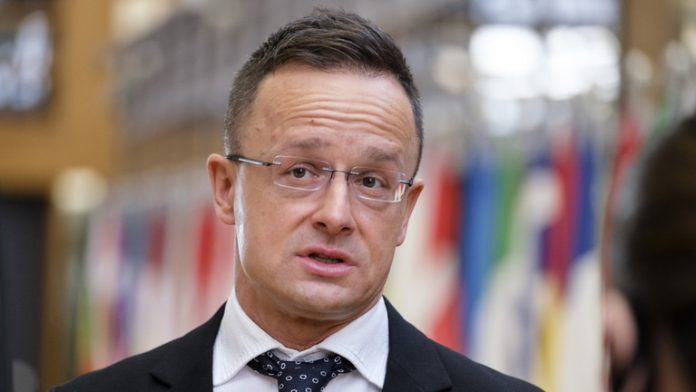
Speaking to the Russian news agency on the sidelines of the UN General Assembly in New York, Szijjarto suggested peace in Ukraine as a way to prevent a dangerous escalation between Russia and NATO.

“If there is peace, if this [Ukraine] war ends, then we can reduce the risk of escalation to zero. But as long as this war continues, I fear that events will occur that carry the risk of escalation, and that is truly bad news,” he said.

Earlier this month, the top diplomat stated that Ukraine and the EU were attempting to “drag” Hungary into the conflict. Despite pressure from Brussels, Budapest has resisted providing military support to Kiev and opposed the bloc’s sanctions against Russia, instead calling for a diplomatic solution.

In recent weeks, EU and NATO members Poland and Estonia have both accused Russia of violating their airspace – claims Moscow has denied as baseless.

In response to Russian drones allegedly crossing into Polish territory earlier this month, NATO launched its Eastern Sentry operation to increase the US-led military bloc’s presence near its eastward flank.

The Russian Foreign Ministry has stated that the drone allegations were fabricated for the purpose of derailing the Ukraine peace talks. Russia has long accused European NATO members of working to prolong and escalate the conflict.

According to Moscow, the US-led military bloc is already “de facto” fighting a war against Russia.

“NATO provides both indirect and direct support to the Kiev regime,” Kremlin spokesman Dmitry Peskov stressed last week. Despite this, Moscow remains “ready and willing” to work towards diplomatically settling the Ukraine crisis, he added.

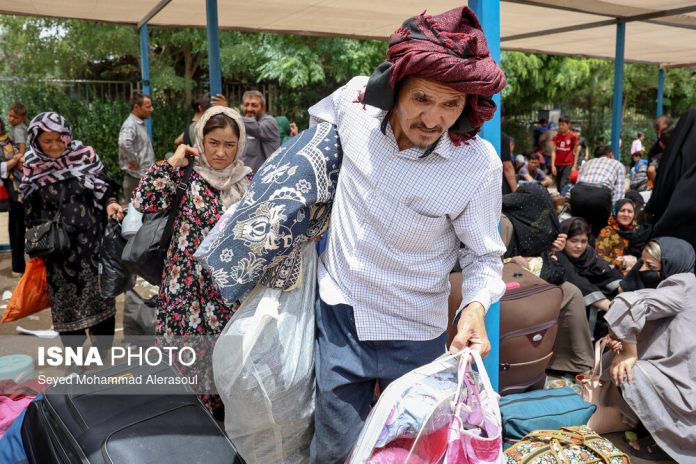
Tehran governor announces deportation of 1.4 million illegal foreign nationals

According to Mohammad Sadegh Motamedian, the removal of these individuals has freed up more than 3,000 classrooms and contributed to a 30–35 percent decrease in rental prices.

He further noted that the second phase of deportations will begin this week to ensure a more comprehensive resolution of the issue of illegal foreigners.

Motamedian underlined that the recent measures have significantly reduced the strain on public services and housing, adding that the authorities are determined to continue until the situation is fully stabilized.

Iran has hosted millions of Afghans since the 1980s when their country was occupied by the former Soviet Union. After the end of the Soviet occupation, wars did not end in Afghanistan and the refugee influx into Iran continued, putting a huge strain on the Iranian economy.

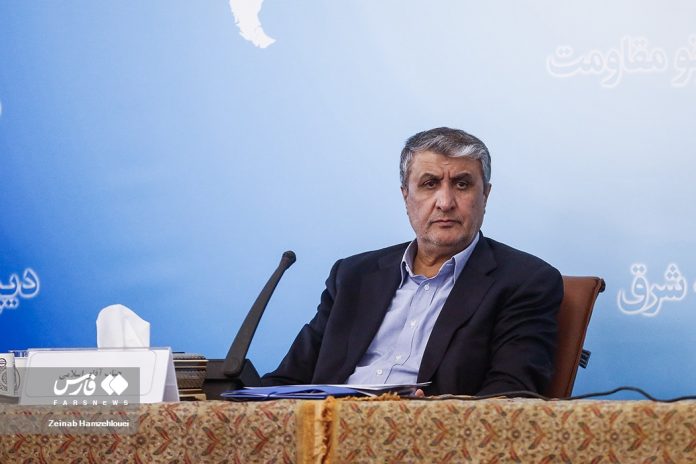
Nuclear chief: Iran to continue its programs within safeguard obligations

Mohammad Eslami

Upon arrival in Russia, Eslami referred to recent remarks by Russian President Vladimir Putin during his meeting with Iranian President Masoud Pezeshkian in January. Eslami said nuclear energy remains the most prominent area of cooperation between the two countries.

He noted that the construction of the second and third units of the Bushehr nuclear power plant is progressing rapidly, thanks to the support of senior Iranian officials.

The head of the Atomic Energy Organization of Iran stressed that Russia plays a defined role in Iran’s ambitious plan to generate 20,000 megawatts of nuclear power.

He spoke about Iran’s participation in the Atomexpo exhibition and related events, saying Tehran and Moscow would sign bilateral cooperation documents.

Eslami also criticized the International Atomic Energy Agency (IAEA) for its silence over the recent US and Israeli attacks on Iranian nuclear facilities that are under safeguards.

He stressed that Iran continues its programs within safeguard obligations and will expand cooperation with the IAEA only if the agency acts impartially and in line with Iran’s parliamentary law.

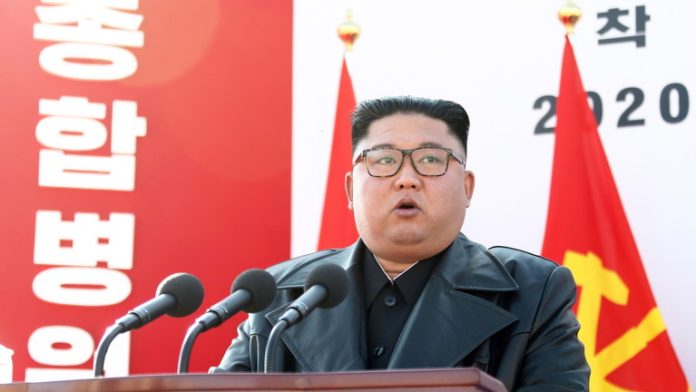
North Korean leader teases ‘secret weapons’

In a speech carried by the state-run KCNA news agency on Monday, Kim said Pyongyang must “continuously stockpile even more formidable forces capable of repelling all military threats,” and accused Washington and its allies of destabilizing the region by staging “provocative actions that further escalate tensions” and disregarding North Korea’s security concerns.

To offset the perceived threat, North Korea has “acquired new secret weapons and has achieved a significant number of research achievements in defense science,” Kim said, without elaborating.

He added that Pyongyang also “successfully built a strategic axis for safeguarding maritime sovereignty by producing destroyers capable of performing various maritime military missions.”

His comments come after North Korea said earlier this month it completed the final ground test of a solid-fuel engine intended for the Hwasong-20 intercontinental ballistic missile, a weapon that could potentially reach the continental US.

Last week, Kim also oversaw tests of tactical attack drones known as Kumsong and an unmanned strategic reconnaissance aircraft. In March, he observed tests of AI-powered “suicide drones.”

In his speech, Kim also reiterated his criticism of the concept of “phased denuclearization,” stressing that “we will never give up our nuclear weapons,” while noting that North Korea’s nuclear status is a “national law.”

At the same time, he struck a peaceful tone, saying if the US abandons what he called a “vain obsession with denuclearization and acknowledges reality,” the two countries would have an opportunity to forge ties.