Friday, January 16, 2026
Home Blog Page 1451

COVID-19 figures in Iran decline even further: Official data

COVID in Iran

Only six people died of the disease during the same period.

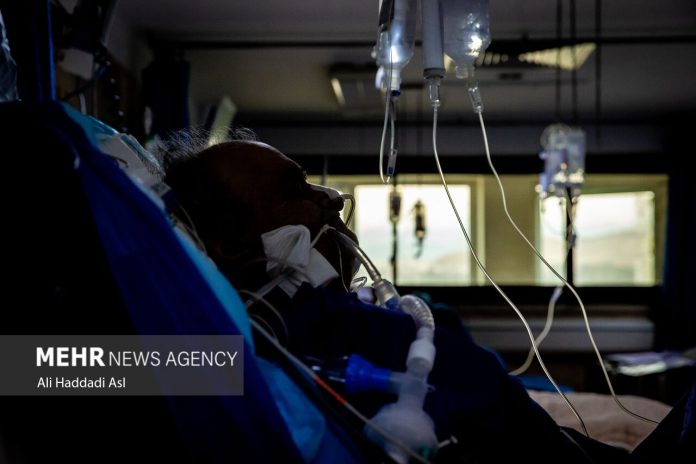
Some 236 people continue to be under intensive care at hospitals across the country.

Since the start of the COVID-19 pandemic in early 2020, over 146,230 people have lost their loves. And 7,364,870 patients have recovered.

Iran developed its own COVID-19 vaccine, and since starting a national vaccination rollout, it has administered over 155,530,000 doses of Iranian and foreign vaccines.

Meanwhile, no Iranian city is in red alert status for COVID, and only one Iranian city is in orange status. That latter figure was down from seven a day earlier.

Some 447 other cities are either in yellow or blue status.

Earlier this month, the World Health Organization (WHO) declared that COVID-19 was no more a public health emergency, but stressed that it was still a global threat. Globally, nearly seven million people died of the disease over the last three years.

Israel-backed terror outfit disbanded in western Iran:  Intelligence minister

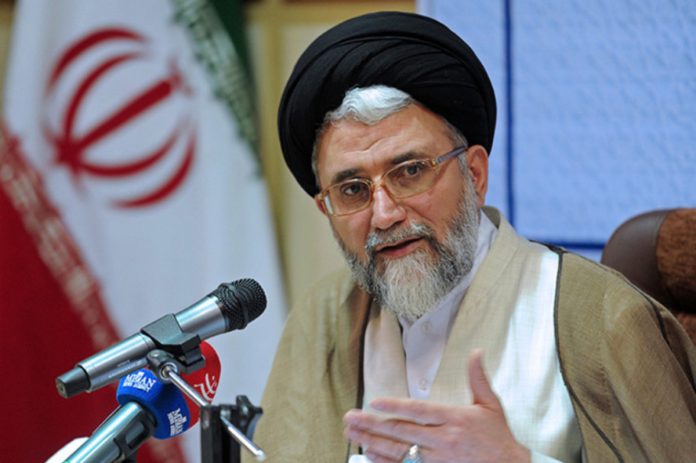
Iranian Intelligence Minister Esmail Khatib

Khatib said at a ceremony in the capital Tehran on Sunday that the terrorists had sneaked across the border into western Iran from Iraq’s semi-autonomous Kurdistan region.

“Given the cooperation of the new Iraqi administration [led by Prime Minister Mohammed Shia’ al-Sudani] and the assurances offered, we wish to see our western borders secure and clear of any security incident,” he continued.

“We remind the Kurdistan Regional Government (KRG) of its responsibilities in this regard,” he added.

Khatib made clear that Iranian military and security forces will not hesitate to deliver a powerful and crushing response to any destabilizing act against the country’s border regions.

Elsewhere in his Sunday remarks, Khatib said more than 200 anti-Iran media outlets, 35 think tanks, and dozens of intelligence services were actively involved in foreign-sponsored riots that broke out in some parts of the country.

Foreign-backed riots erupted in Iran in mid-September after the death of 22-year-old Iranian woman Mahsa Amini, who fainted at a police station in the capital Tehran and was pronounced dead three days later at the hospital.

Iran’s intelligence community has said several countries, including the United States and the United Kingdom, have used their spy and propaganda apparatuses to provoke violent riots in the country.

Bahrain says to restore full diplomatic relations with Lebanon

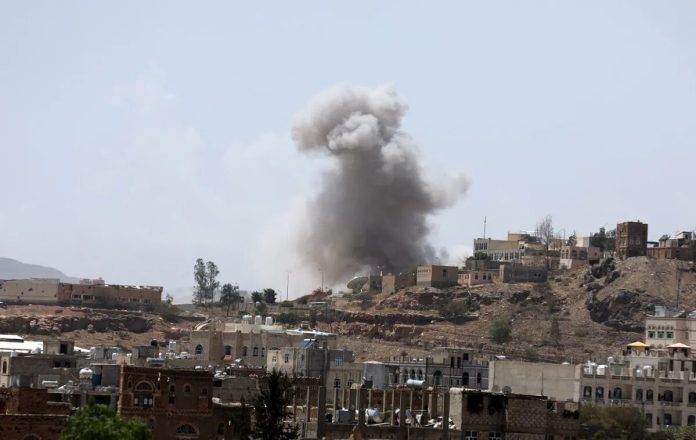
Yemen War Saudi Air Stike

Manama said on Saturday it was bringing an end to the impasse, a move welcomed by Beirut.

Bahrain and other Persian Gulf countries followed Saudi Arabia in recalling their diplomats from Lebanon in October 2021 after the then-information minister, George Kordahi, was quoted as criticising the Saudi role in the war in Yemen, which has produced what the United Nations describes as the world’s worst humanitarian crisis.

Kordahi said in an interview, which he gave a month before his appointment but it later surfaced online, that the Iran-aligned Houthis were “defending themselves … against an external aggression” in Yemen. He also said the long-running conflict was “futile” and called for it to end.

In response, Riyadh recalled its ambassador and ordered Lebanon’s envoy to leave the kingdom. Its Gulf allies – the United Arab Emirates, Kuwait and Bahrain – followed suit, expelling Lebanon’s envoys.

“The Kingdom of Bahrain has decided to restore diplomatic representation” at the ambassador level in Lebanon, the Bahraini foreign ministry announced, adding that this would “strengthen the fraternal relations between the two countries”.

Lebanon’s Prime Minister Najib Mikati stated the country “appreciated this decision and welcomes it”.

Saudi Arabia returned its envoy to Lebanon in April last year.

The restoration of ties comes amid a number of other efforts to resolve regional disputes, including bringing Syria back into the Arab League. After more than a decade of isolation, Bashar al-Assad, the president of Syria, attended the regional bloc’s 32nd summit in Saudi Arabia’s port city of Jeddah on Friday.

There has also been a recent rapprochement between Iran and Saudi Arabia brokered by China.

On May 25, Qatar and Bahrain will resume flights as part of a normalisation of diplomatic relations between them.

In 2017, Bahrain, along with Saudi Arabia, the UAE and Egypt, severed ties and imposed a blockade on Qatar over claims it was too close to Iran and backed hardline groups, allegations Doha has always firmly denied.

Iran military chief hails Navy’s ‘historic’ round-the-world mission

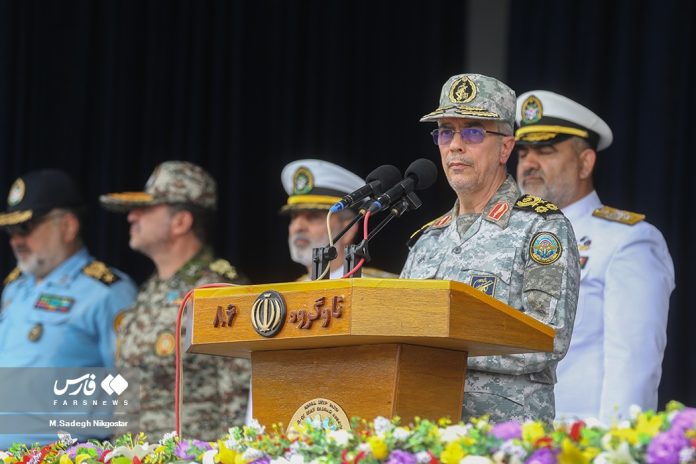
General Mohammad Bagheri

Chairman of the Joint Chiefs of Staff of the Iranian Armed Forces General Mohammad Bagheri made the comments during a welcoming ceremony on Sunday in the southern port city of Bandar Abbas along the Persian Gulf, after the flotilla finished the eight-month-long mission and returned home.

Even the countries that are rich and possess all kinds of military equipment and can potentially carry out such a mission, are not courageous enough to embark on such a mission, he said.

He hailed the Navy men for setting sail on such a “dangerous mission” using domestically-built vessels, despite all the sanctions, economic pressure and political propaganda against the country.

For his part, Navy Commander Rear Admiral Shahram Irani said the successful mission proved that Iran and Iranians cannot be sanctioned or isolated in the world.

Admiral Irani said the Navy turned the ‘We Can’ slogan into ‘We Could.”

In the face of enemy plots, sanctions and threats, Iran’s naval forces pursue an agenda for “all-out and lasting development” and for promotion of relations with the international community, he added.

Iranian military official in Kabul amid dispute over water rights

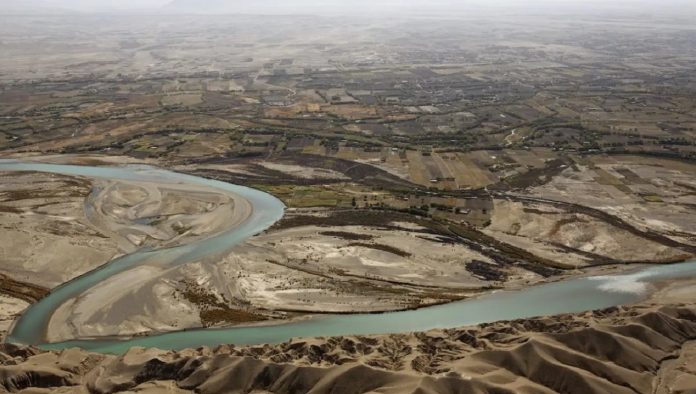
Helmand river

Afghanistan’s interim defense ministry reported that an Iranian delegation, led by Bahram Hosseini Motlagh, the head of the Planning and Operations Department of the General Staff of the Armed Forces of Iran, held talks with Haji Mali Khan Seddigh, the deputy chief of staff of Taliban’s army, in Kabul, and his companions.

During the talks, the report said, the Afghan side said it sought “good relations with Iran and was committed to neighborly cooperation in different areas”.

The Iranian delegation, in turn, stressed Iran’s determination to forge good ties with Afghanistan, it added.

Tehran and Kabul have been locked in a row over the latter’s refusal to allow Iran access to its share of water from the Helmand River in violation of a 1973 treaty.

As per the provisions of the treaty, Afghanistan is bound to release 820 million cubic meters of water from the river annually, but Iranian authorities have repeatedly said that Kabul has been withholding its share.

Earlier this week, Iran delivered a stern warning to Afghanistan against withholding Iran’s water rights, cautioning the Taliban that they will be responsible for the repercussions of their refusal.

Five border guards killed in terror attack in southeast Iran

Iran Border Guard

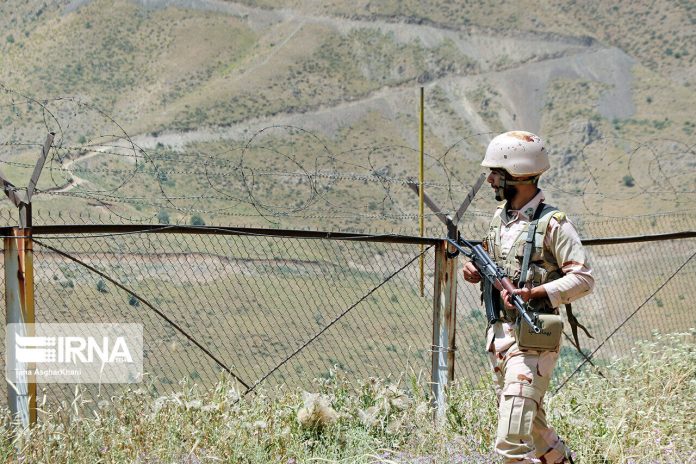
Mohammad-Mahdi Shamsabadi, the prosecutor general of the city of Zahedan, the capital of Sistan and Baluchestan Province, said on Sunday the border guards lost their lives in overnight clashes with members of the notorious Jaish al-Adl terror group, Mizan Online reported.

He said the skirmishes broke out as the terrorists were trying to sneak into the Iranian side of the border.

An arrest warrant has been issued for the perpetrators of the crime, the judicial official added.

The so-called Jaish al-Adl group is responsible for several terrorist attacks against civilians and security forces in Sistan and Baluchestan.

The terror entity openly calls itself a separatist group and says it seeks to cede the province from Iran.

Moscow, Beijing express ‘strong dissatisfaction’ with G7 communique

G7

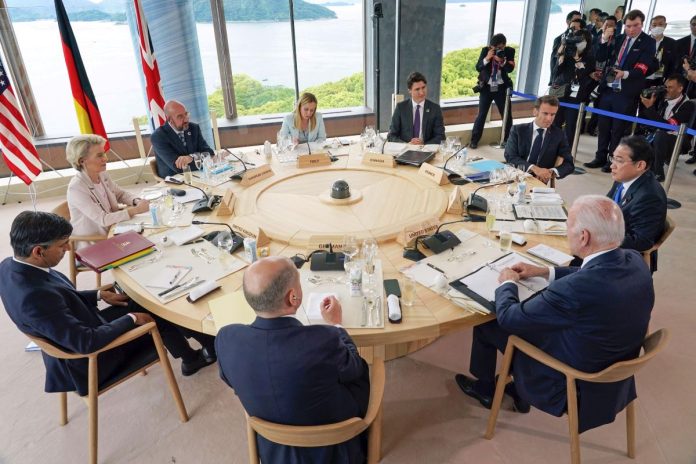
Russian Foreign Minister Sergey Lavrov has stated that the decisions made at the G7 summit were aimed to hold back Moscow and Beijing.

“Look at the decisions that are being discussed and adopted today in Hiroshima at the G7 summit and which are aim to deter Russia and the People’s Republic of China,” he said, speaking at the Russian Council on Foreign and Defense Policy.

“It is not hidden that the existence of Russia as an independent center is incompatible with achieving the goal of the global dominance of the West,” the foreign minister added.

In a Saturday joint statement, the G7 leaders in Japan said they agree to “support Ukraine for as long as it takes in the face of Russia’s illegal war of aggression” and to “coordinate our approach to economic resilience and economic security.”

The leaders also mentioned a series of positions related to China, including the need to counter “economic coercion” and protect advanced technologies that could threaten national security, while also stressing that cooperation with Beijing was necessary.

The Chinese Foreign Ministry said in a statement on Saturday that the international community will not fall in line with the pro-Western rules pushed by the G7 and will not allow the US-led group to dominate world affairs.

“China will never accept the so-called rules imposed by the few. The international community does not and will not accept the G7-dominated Western rules that seek to divide the world based on ideologies and values,” the statement read.

The Foreign Ministry went on to accuse the group of acting on behalf of “America-first” policies and attempting to impose its will on others.

“That simply shows how little international credibility means to the G7,” the ministry said.

“Gone are the days when a handful of Western countries can just willfully meddle in other countries’ internal affairs and manipulate global affairs,” it added.

The Group of Seven is an informal club consisting of the US, Canada, Britain, France, Germany, Italy, and Japan. The annual meetings are also typically attended by officials representing the EU.

In a joint communique adopted at the summit in Hiroshima, Japan on Saturday, the G7 listed multiple allegations aimed at Beijing, including technology theft, “economic coercion,” and human rights abuses at home. The group stressed that it strongly opposes “any unilateral attempts to change the status quo by force” regarding Taiwan and the South China Sea.

Beijing responded by saying that “affairs related to Hong Kong, Xinjiang and Tibet are purely China’s internal affairs.” China accused the G7 of endangering peace in the region by providing “support for ‘Taiwan independence’ forces.”

Although G7 members refrain from formally establishing diplomatic ties with Taiwan, the US has sold weapons to Taipei and promised to defend it from a potential attack from the mainland. US politicians have also met with officials from Taiwan, prompting harsh criticism from Beijing, which opposes any form of diplomatic contacts with the Taipei authorities.

Taliban given 1-month ultimatum to allow Iran access to Helmand water share

Iran water share

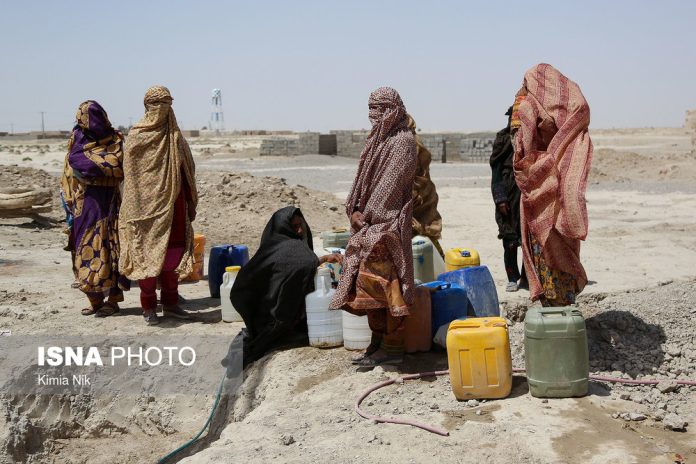
In an interview with the state TV, Hassan Kazemi Qomi referred to the Taliban’s claim of water shortages, saying if there is water on the Afghan side, contrary to the claim, and they refuse to meet Iran’s water right, they “have to be accountable.”

The water issue concerns the Iranian nation’s fundamental rights and the government will thus take befitting action, he said.

“The Taliban officials know that if they seek a stable and strong government in this country that includes all the people’s representatives, and if they want this country to move toward rebuilding, stability, independence, territorial integrity and prosperity, they must have constructive interaction with their neighbors. And they understand this,” Kazemi Qomi added.

Tehran and Kabul have been locked in a war of words in recent days over the Taliban’s violations of the 1973 treaty on shared water resources.

As per the provisions of the treaty, Afghanistan is bound to release 820 million cubic meters of water from the river annually, but Iranian authorities have repeatedly said that Kabul has been withholding its share.

Iranian President Ebrahim Raisi has recently warned the Taliban against the repercussions of refusing to allow Iran access to its water share.

Meanwhile, in a statement on Friday, Iranian Foreign Ministry warned that Tehran will not hesitate to use pressure to make the Taliban respect the water rights of Iran.

ICC denounces Russian arrest warrant for its prosecutor

The International Criminal Court (ICC)

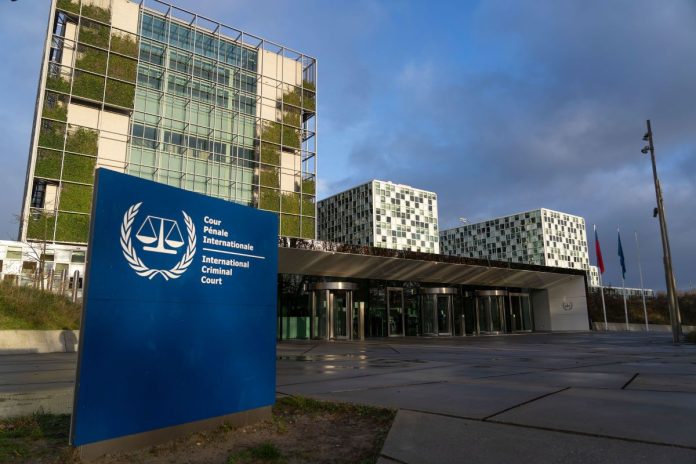
In a statement Saturday, the ICC called Russia’s actions against prosecutor Karim Khan, “acts of intimidation and unacceptable attempts to undermine the mandate of the International Criminal Court to investigate, sanction and prevent the commission of the gravest international crimes.”

The court’s oversight and legislative body, the Presidency of the Assembly of State Parties, “stands firmly by the International Criminal Court, its elected officials, and its personnel,” the statement reads.

“We reiterate our full confidence in the ICC as an independent and impartial court of law,” the statement added.

The ICC said in a separate statement Saturday that it is “aware and profoundly concerned about unwarranted and unjustified coercive measures reportedly taken against ICC officials, notably the Prosecutor of the Court and the judges of Pre-Trial Chamber II by the authorities of the Russian Federation.”

In March, the ICC — whose jurisdiction is not recognized by Russia — issued a warrant for the arrest of Russian President Vladimir Putin and another Moscow official, Maria Lvova-Belova, alleging they were involved in the deportation and “reeducation” of Ukrainian children in Russia.

Later in March, Russia’s Investigative Committee opened a criminal case against the ICC judges Tomoko Akane, Rosario Aytala, and Sergio Godinez, as well as Khan.

On Friday, Russian state news agency TASS reported that Russia’s Ministry of Internal Affairs had issued an arrest warrant for Khan.

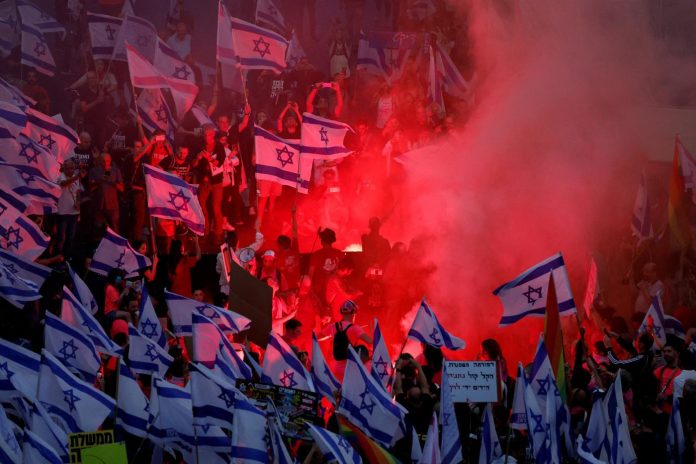
Israelis hold mass rallies against PM’s judicial reform for 20th week

Israel Protest

The planned overhaul, which would give the government control over naming judges to the Supreme Court and let parliament override many rulings, was paused after opponents organised some of the biggest street protests ever seen in Israel.

The government accuses activist judges of increasingly usurping the role of parliament, and says the overhaul is needed to restore balance between the judiciary and elected politicians.

Critics say it will remove vital checks and balances underpinning a democratic state and hand unchecked power to the government.

A sea of blue and white Israeli flags, which have become a symbol of the protests, coated a central highway in Tel Aviv. Protestors chanted, “Israel is almost a dictatorship,” as a banner reading “stop them” was held up by the crowd.

“It scares me that we are still a few hours away at any given moment from turning from a democracy to a dictatorship,” Sagi Mizrahi, a 40-year-old computer programmer told Reuters in Tel Aviv.

“I’m here because of the judicial system and the laws that are still sitting on the table, it’s just scary,” Mizrahi added.

Protests garnered lower attendance last Saturday as a truce between Israel and the Palestinian Islamic Jihad group officially came into effect, ending a five-day bombardment of the Gaza Strip, which was the worst episode of cross-border fire since a 10-day war in 2021. Protests seemed to have been invigorated with Hebrew media estimating some 90,000-100,000 in attendance. The police force did not immediately respond to a request for comment.

“Gradually, myself my kids and my grandkids are losing the hope to live here in a democratic state and to have a normal life like every person deserves,” Hava Golan, 65 year-old biology professor stated.