Saturday, December 27, 2025
Home Blog Page 1319

Deputy minister: Iran’s daily oil production to hit 3.5mn barrels

Iran Oil

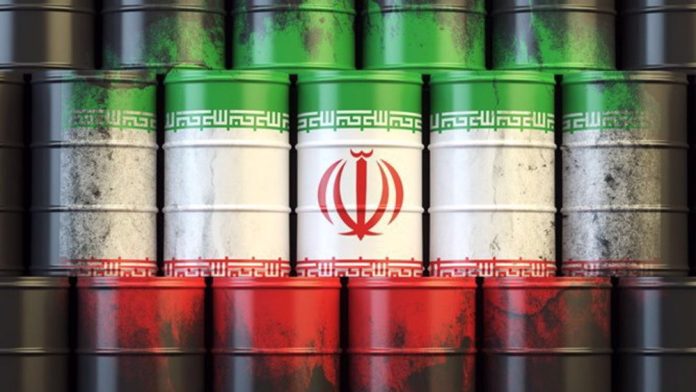
Mohsen Khojasteh Mehr told a press conference on Wednesday that the current administration started off with production of 2.2 million barrels per day in August 2021 but has increased its production despite the chokehold placed on Iran’s oil industry by the US.

Khojasteh Mehr also announced that production of gas in Phase 11 of South Pars Gas Field in the Persian Gulf, which is among the strategic goals of the administration of President Ebrahim Raisi, will start within weeks.

He said the production of gas in Phase 11 will resume after two decades thanks to efforts by Iranian experts and by reliance on domestic capacities.

The official said, despite sanctions by the US and some of its allies, negotiations are underway for the finalization of oil contracts worth 60 billion dollars. In the second half of the current Iranian year, Iran will finalize some other contracts for joint oil fields worth 8 billion dollars.

Ex-Iranian diplomat: No diplomatic way out of water standoff with Taliban

Iran Water Crisis

Mohsen Roohi Sefat, a formet Iranian diplomat in Afghanistan, told Khabar Online that Iran should have preserved its bargaining chips to restore its rights in talks with the Taliban in neighboring Afghanistan.

He undermined Iran’s strategy to deal with the longstanding rift diplomatically, saying “We have no option. No one makes a deal with a government that is in need. No one bargains with a government that admits it is incompetent.”

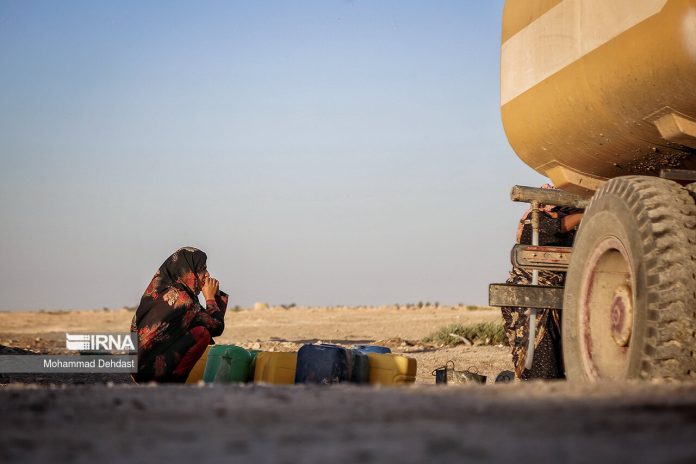
The Taliban have been refusing to allow Iran’s share of water from Helmand to stream into Iran and have caused a drought in Iran’s Sistan and Baluchestan.

Iranian officials have stressed that Afghanistan’s Taliban government must adhere to the terms of the internationally-binding 1973 Helmand river water treaty and supply Iran with its share of water from the river.

Iran’s Space Agency said recently that images obtained from Iranian satellites show that the Afghan government is preventing water from reaching the Iranian side of the border by building numerous dams and diverting the flow of the water.

Dozens wounded in powerful blast at factory in Moscow Region

Russia Explosion Blast

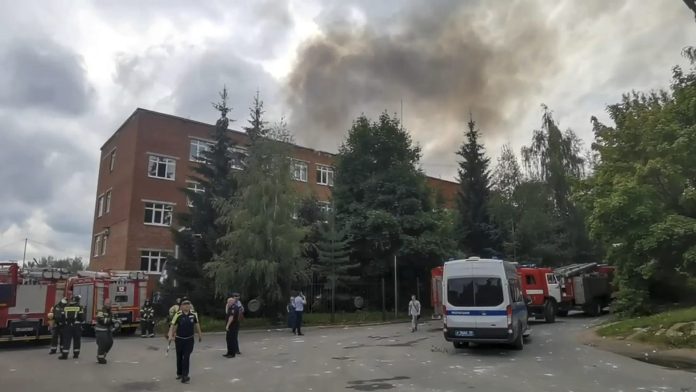
The incident took place at the Zagorsk Optical-Mechanical Plant, which designs and produces optical and electronic equipment for military purposes, manufacturing, and healthcare. Prosecutors have confirmed the preliminary data that the explosion occurred in the pyrotechnics warehouse.

Andrey Vorobyev, Moscow Region’s governor, said citing emergency services that 31 people were injured in the blast, with three of them being taken to an intensive care unit. He added that a total of 19 people have been hospitalized.

Mass evacuation efforts have been announced from all the facilities on the premises of the factory.

Numerous clips shared by local media show a large plume of smoke towering over nearby buildings and rising from the factory.

A source in the emergency services told RIA Novosti that the explosion took place due to a violation of technical procedures.

Meanwhile, the Mash Telegram channel shared footage from a nearby security camera that captured the moment of the explosion, showing a fireball and a plume of smoke rising in the distance. It claimed, citing eyewitnesses, that the blast shattered windows in at least ten nearby buildings, with ceilings collapsing in office buildings.

BAZA Telegram channel suggested that some people might be trapped under the rubble, adding that the emergency services had arrived on the scene and that traffic near the factory had been closed.

Biden’s security adviser in UAE after Saudi visit

Sullivan Biden

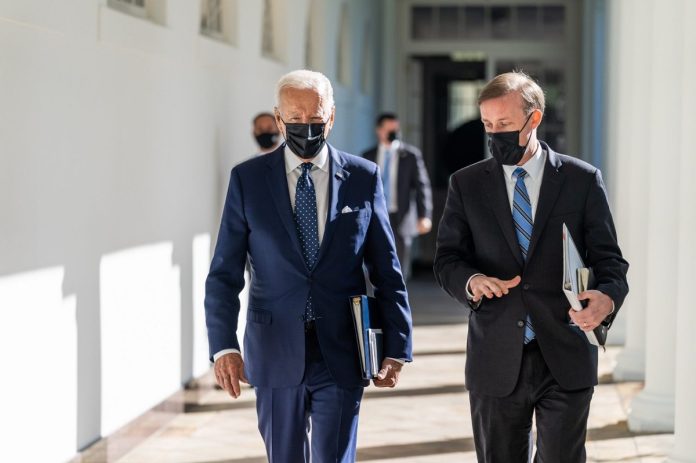
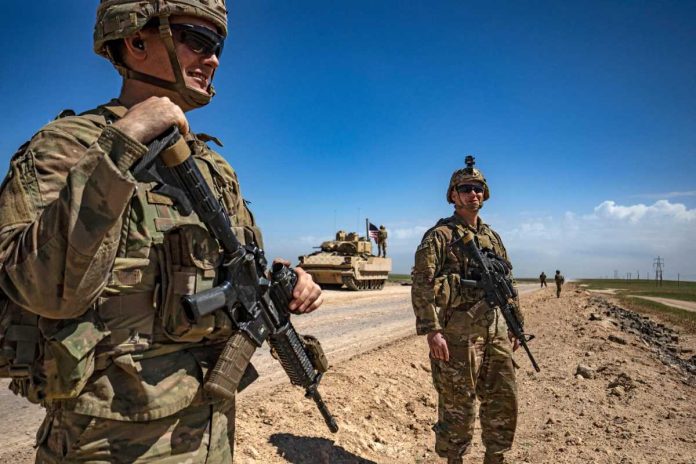
Sullivan and Emirati President Sheikh Mohamed bin Zayed Al Nahyan met on Tuesday in Abu Dhabi, where they discussed “close, strategic” US-Emirati relations, as well as regional and international developments, the official WAM news agency reported.

They also “stressed the importance of joint action to ensure peace and stability in the Middle East,” the report added.

UAE Foreign Minister Sheikh Abdullah bin Zayed Al Nahyan and Secretary-General of the Supreme Council for National Security Ali bin Hammad al-Shamsi were also present at the meeting.

Over the weekend, Sullivan had held talks with Saudi leaders in Jeddah on the sidelines of a meeting on the Ukraine war.

The meetings come as the US dispatched more than 3,000 sailors and Marines to the Red Sea aboard the assault ship USS Bataan and the dock landing ship USS Carter Hall in response to Iran’s alleged “harassment and seizures of merchant vessels.”

The deployment brought additional aircraft and helicopters to join a dozen US F-35s, as well as F-16 and A-10 aircraft and Navy guided-missile destroyers that had already arrived in the Persian Gulf under the pretext of protecting vessels crossing the main waterways in the strategic region.

It followed an announcement by the US military about plans to put armed personnel on commercial ships traveling through the Strait of Hormuz.

Separately on Tuesday, US Central Command (CENTCOM) chief General Michael Kurilla traveled to the UAE and Bahrain, home to the US Fifth Fleet, aboard an American Navy destroyer.

Kurilla met with UAE military Chief of Staff Lieutenant General Issa Saif Mohammed al-Mazrouei as well as Bahraini King Hamid bin Isa Al Khalifah.

The provocative US military presence in the Persian Gulf drew a fresh warning from Iran’s Islamic Revolution Guards Corps (IRGC) on Monday.

“Iran has reached such a high degree of power and capability that can respond in kind to any US action and mischief [in the region], including the seizure of ships,” stressed the IRGC’s spokesman Brigadier General Ramezan Sharif.

Expert: All plans to revive Lake Urmia were waste of budget

Lake Urmia

Nasser Karami, a professor at the Norwegian University of Science and Technology (NTNU), in an interview with Tehran-based Didar News Outlet on Tuesday, had harsh words for the Lake Urmia Restoration Headquarters for their ‘inappropriate’ strategies that led to changing the course of the rivers and drying up several wetlands instead of giving a new lease of life to the lake.

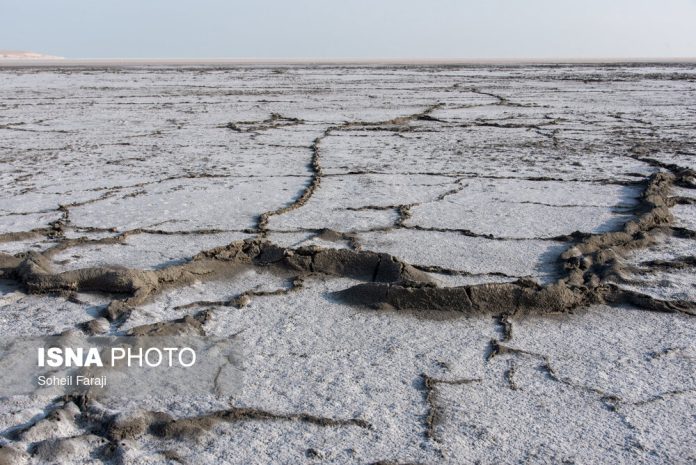
In 2013, when the headquarters was put at the helm to restore the lake, it promised it would increase the water level from 1.9 billion cubic meters to over 15 billion cubic meters in a ten-year time span. However, the unique and vital ecosystem has today disappeared.

Karami blamed deep wells, traditional agriculture, and failure to upgrade agricultural methods for the ecological disaster.

The Iranian climatologist, however, rejected reports that “the lake is gone forever”, as announced recently, and sounded optimism that after the start of the precipitation season in two months at least half of the lake will come back to life.

Syria’s envoy says US supplied terrorists with chemical weapons

US Forces in Syria

Speaking at a UN Security Council meeting on “The situation in the Middle East” in New York on Tuesday, Alhakam Dandy argued that the UN body’s insistence on convening monthly meetings on the so-called Syrian chemical file, while no incident has actually happened, is meant to invent pretexts for certain Western states to repeat their anti-Syria accusations.

He underscored that “Syria condemns any use of chemical weapons anywhere, anytime and by any party.”

Dandi also stressed the need to rectify the behavior of the Organization for the Prohibition of Chemical Weapons (OPCW) and keep it clear of misinformation, politicization and polarization.

The Western media and governments have repeatedly accused the Syrian government of using chemical weapons against its own citizens in the war against terrorists.

Syria surrendered its stockpile of chemical weapons in 2014 to a joint mission led by the United States and the Organization for the Prohibition of Chemical Weapons (OPCW), which oversaw the destruction of the weaponry. It has also consistently denied using chemical weapons.

On April 14, 2018, the United States, Britain, and France carried out a string of airstrikes against Syria over a suspected chemical weapons attack on the city of Douma, located about 10 kilometers northeast of the capital Damascus.

That alleged attack was reported by the White Helmets group, which published videos showing them purportedly treating survivors.

Leaked OPCW documents later showed that the investigators of the Douma incident had found “no evidence” of a chemical weapons attack.

However, the organization censored the findings under pressure from the US and its allies to conceal evidence undermining the pretext of the US-led bombing of Syria days after the alleged attack.

Hundreds of academics equate Israeli occupation with apartheid

Israel Palestine

The letter, which began circulating on Friday, has received around 200 signatures per day with “more coming in, quite literally, by the minute”, Omer Bartov, professor of Holocaust and genocide studies at Brown University and organiser of the letter, told Middle East Eye.

The letter featured 752 signatories at the time of publication.

The authors said there was a direct link between Prime Minister Benjamin Netanyahu’s attempt to overhaul Israel’s judiciary and its illegal occupation of millions of Palestinians in the occupied Palestinian Territories.

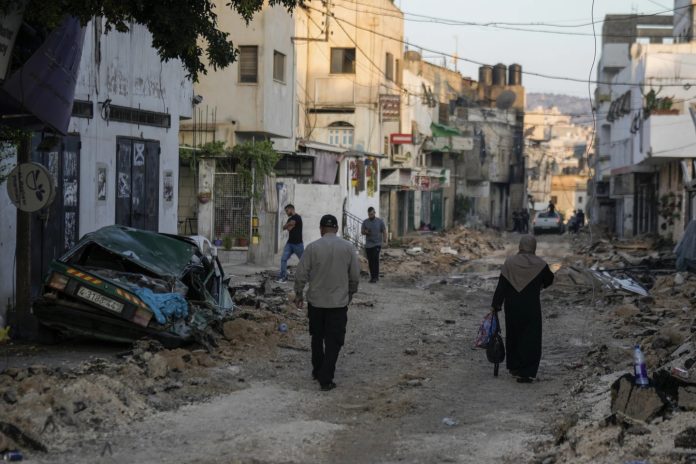
“The ultimate purpose of the judicial overhaul is to tighten restrictions on Gaza, deprive Palestinians of equal rights both beyond the Green Line and within it, annex more land, and ethnically cleanse all territories under Israeli rule of their Palestinian population,” the letter added.

Notably, the letter made a clear reference to “the elephant in the room: Israel’s long-standing occupation that, we repeat, has yielded a regime of apartheid.”

“There cannot be democracy for Jews in Israel as long as Palestinians live under a regime of apartheid,” it added.

Bartov told MEE that there were a number of Israeli academics who signed the letter who previously would have likely refused to equate the occupation with apartheid. One of the most prominent he identified was Benny Morris, professor emeritus at Ben-Gurion University of the Negev.

“The main change is that Israeli behavior, in the West Bank, but also apparently unfolding vis-a-vis Israel’s Arabs now, has become increasingly brutal over the past few years, and especially more in the past half year. It has made more and more people realise that continued occupation is morally and politically impossible,” he said.

Leading academics such as Peter Beinart from the City University of New York, and Avrum Burg, the former speaker of the Knesset and chairman of the Jewish Agency for Israel also signed the letter.

Academics whose backgrounds span from evolutionary biology at the Hebrew University of Jerusalem to choreography and rabbinical studies at Hebrew College also endorsed the letter. Besides leading academics in Israel, it received support from professors at Yale, Brown, Columbia, and Harvard University in the United States.

On social media platform X, previously known as Twitter, one user anticipated potential accusations of anti-semitism.

“The broad inclusion of so many academics representing a stunningly broad spectrum of distinguished Jewish voices, indicates a watershed moment also in American Jewish views about Israel, and a new willingness by public figures, reflecting the sentiments of the younger generation, to honestly criticise Israeli policies,” Bartov added.

According to a Middle East Eye tally, at least 208 Palestinians have been killed by Israeli fire this year, including 36 children – a rate of nearly one fatality per day.

A total of 172 people have died in the West Bank and East Jerusalem, making 2023 one of the bloodiest years in the occupied Palestinian territories. Another 36 people were killed in the Gaza Strip.

Lior Sternfeld, an associate professor of history and Jewish studies at Penn State University and organiser of the letter, said people were beginning to see a link between the moves by Israel’s far-right government to remake the country’s judiciary and the occupation.

“Now more than ever before, regular middle-way people, intellectuals, and leaders see that unbreakable connection between the occupation and the current political moment,” she told MEE.

“Israelis and Americans who in the past disagreed with the occupation but were willing to look past it are fed up,” she continued.

Iranian FM to participate in economic commission in South Africa

Hossein Amirabdollahian

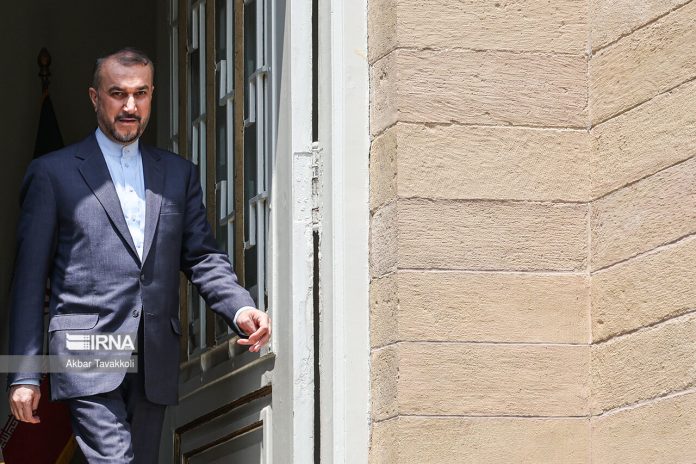
Iran’s Foreign Ministry Spokesman Nasser Kanaani announced that the Amirabdollahian would take part in the 15th Joint Commission of the Islamic Republic of Iran and South Africa to exchange views on ways to expand cooperation between the two countries.

The foreign ministers of the two countries are in charge of the joint commission.

Ties between Iran and South Africa have grown in recent years, mostly as a counterweight to U.S. unilateral policies and sanctions.

Amirabdollahian took part in a meeting of the BRICS group of emerging economies – Brazil, Russia, India, China and South Africa – in Cape Town in June at the invitation of his South African counterpart.

Senior MP says Iran has many options to force South Korea to return frozen funds

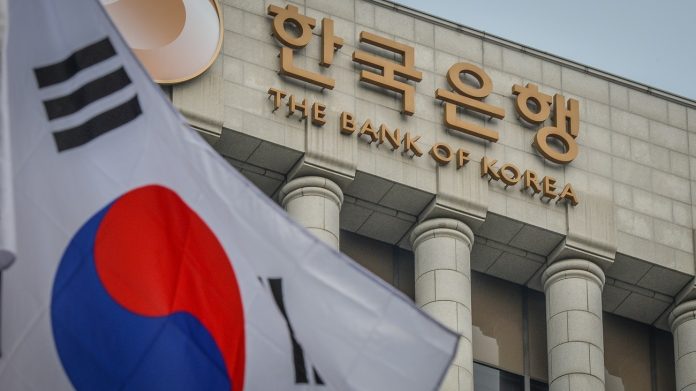
The Bank of South Korea

Fada Hossein Maleki, a member the powerful National Security and Foreign Policy Committee of the Iranian parliament, said on Tuesday that Iran will exhaust all measures to secure the release of the funds blocked in South Korea.

“We have repeatedly said that Iran will not sit idle if this $7 billion is not paid back and we have many options that would be to South Korea’s detriment and we will definitely use them,” Maleki was quoted as saying by semi-official ILNA news agency.

The remarks came hours after the Iranian parliament started procedures related to a bill submitted by the government which seeks the approval of the legislature to refer the dispute with South Korea over the blocked funds to international arbitration.

Maleki stated the bill was a response to Seoul’s repeated unfulfilled promises about the return of the Iranian funds, adding that the parliament would do its utmost to help the government secure the release of the funds.

“The Koreans said again and again that they will pay but they never fulfilled their promises and this created a kind of distrust and the government reached the conclusion that it should seek the help of the parliament,” added the politician.

South Korean authorities claim US sanctions on Tehran make it practically impossible to use the international banking system to return the funds that it has deposited to tow bank accounts in the country for purchases of oil and petroleum products before 2018.

Russia’s top diplomat doubts Iran nuclear deal will be fully restored

Sergei Ryabkov

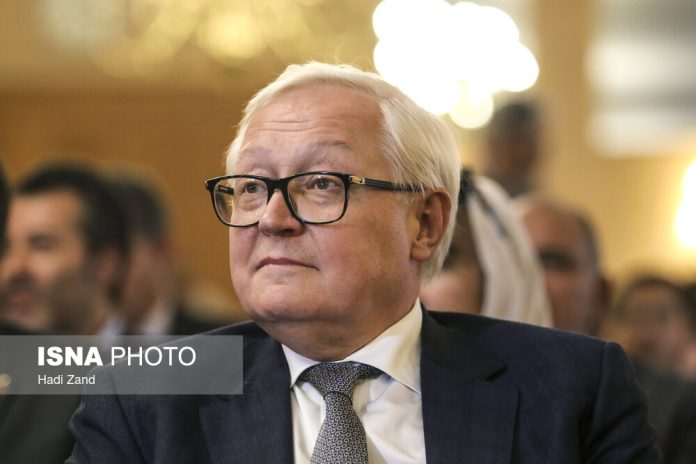
Ryabkov, who is in Tehran for the “Iran and BRICS” conference, told reporters on Tuesday Iran has already demonstrated its willingness to revive the Joint Comprehensive Plan of Action (JCPOA) in its original form.

“However,” he continued, “due to reasons unrelated to the JCPOA, the Western countries have once again exploited this situation to exert pressure on Iran and gain concessions.”

“This is an unfair but common game that does not surprise us. It is their choice, and I don’t think we will see a complete revival of the JCPOA. I don’t know if any alternatives might be found or not,” he added.

The Russian diplomat urged Western leaders to “reassess what is in their interests” and distance themselves from the misguided policies of the Donald Trump administration, which unilaterally withdrew from the accord in 2018.

Ryabkov cautioned Iran against the hostile policies of the US, which he described as an unreliable partner, slamming Washington’s hostile policies towards Moscow and Tehran.

Iran and Russia commonly consider the US to be responsible for the problems that have faced the proper implementation of the 2015 nuclear deal between Tehran and world countries, the Russian Foreign Ministry has cited the countries’ officials as saying.

The ministry issued the remarks in a statement on Tuesday following a meeting in Tehran between Ryabkov and his Iranian counterparts Ali Bagheri-Kani and Reza Najafi.

Tehran and Moscow were unanimous in believing that the failure to implement the deal stemmed from the “erroneous policy of ‘maximum pressure’ pursued by the United States and those who think similarly,” the statement read.

Iran proved the peaceful nature of its nuclear program to the world by signing the JCPOA with six world powers. However, Washington’s exit in May 2018 and its subsequent re-imposition of sanctions against Tehran left the future of the deal in limbo.

Multilateral diplomatic efforts to salvage the JCPOA have been stalled since last August, with Iran blaming the United States for failing to guarantee that it will not leave the deal again.

Iran has repeatedly announced that the JCPOA revival is possible if the US and the European signatories to the agreement have the will to reach that aim, warning that the opportunity will not last forever.