Saturday, December 27, 2025
Home Blog Page 1313

MKO terrorists plan to relocate to Canada: Report

MKO

The MKO ringleaders have reportedly decided to relocate their base to Canada following the Albanian government’s intense pressures and after the failure of their negotiations with the Paris government over relocation to France.

An informed security source told Tasnim that the MKO terrorists have come up with the relocation plan after the government of Albania and its counter-terrorism court imposed restrictions on the terrorist group following the discovery of incriminating evidence from their Ashraf-3 camp near Manze, a small hill town 30 kilometers west of Albania’s capital Tirana.

“The MKO heads are making preparations for the gradual pullout of their members (from Albania),” the source said.

The source noted that the MKO terrorists have failed to obtain France’s consent for the relocation of a number of their elements to a camp in Auvers-sur-Oise on the northwestern outskirts of Paris.

The MKO terrorists have employed their lobbies in the Canadian government, the source continued, adding that arrangements have been made to relocate the MKO elements with temporary Canadian passports or temporary resident permits in Canada in the first step.

The MKO terrorists have reportedly come to the decision after realizing that their status quo in Albania is similar to what they experienced in Iraq.

Last week, the government of Albania banned Maryam Rajavi, the ringleader of the terrorist MKO group, from entering the country.

Sources stated Albania’s counter-terrorism court has issued the ban after reviewing evidence that shows the group has run terrorist activities in Iran.

Rajavi fled from Albania to France in late June, after Albanian police forces raided the camp hosting the MKO due to its engagement in “terror and cyber-attacks” against foreign institutions.

They seized 150 computer devices linked to terrorist activities.

At least one MKO terrorist was killed and dozens of others were injured during the clashes at the camp.

MKO members spent many years in Iraq, where they were hosted and armed by the former Iraqi dictator Saddam Hussein. They sided with Saddam during the 1980-88 imposed war against Iran and then helped him quell domestic uprisings in various parts of the Arab country.

The hated group is responsible for killing thousands of Iranian civilians and officials after the victory of the Islamic Revolution in 1979.

More than 17,000 Iranians, many of them civilians, have been killed at the hands of the MKO in different acts of terrorism including bombings in public places, and targeted killings.
Palestinian officials welcome first Saudi Arabia envoy

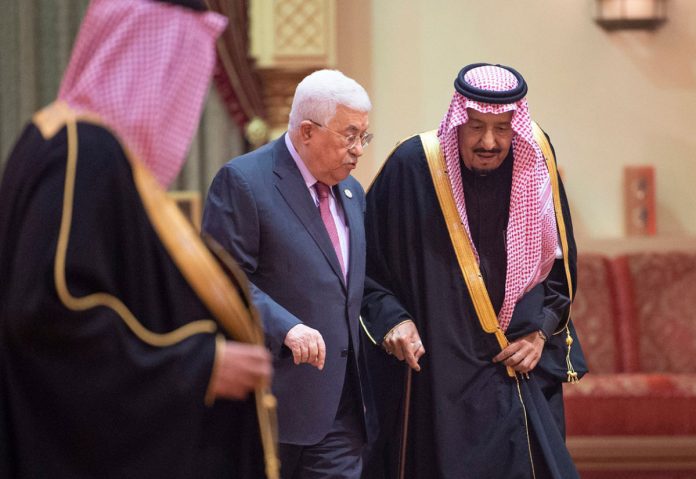
Mahmoud Abbas and King Salman

Palestinian President Mahmoud Abbas’s diplomatic adviser Majdi al-Khalidi received a copy of the credentials of Ambassador Nayef al-Sudairi as a non-resident envoy in Jordan on Saturday, according to Palestinian news agency Wafa.

Al-Sudairi, the kingdom’s current ambassador to Jordan, will also serve as consul general in Jerusalem.

Al-Khalidi stated the occasion is “an important step that will contribute to further strengthening the strong brotherly relations that bind the two countries and the two brotherly peoples”.

The Saudi envoy also called the appointment “an important step”, which underscores the desire of King Salman and Crown Prince Mohammed bin Salman “to strengthen relations with the brothers of the State of Palestine and give it a formal boost in all areas”. He made the remarks in video broadcast by the Saudi state-affiliated Al-Ekhbariya channel.

The file for the Palestinian Territories has traditionally been handled by Saudi Arabia’s embassy in Amman.

Palestinian analyst Talal Okal stated the new appointment is a step towards an official Saudi representation office in the occupied West Bank.

“It is also a message Saudi Arabia was committed to the rights of the Palestinians in a fully sovereign state,” Okal added.

The ambassador’s appointment occurred while the United States is looking to normalise Israeli-Saudi relations.

The US, Israeli and Saudi officials, however, have said any such deal is a long way off, as a number of thorny issues – from Israeli raids in the occupied West Bank, to Saudi nuclear power development – stand in its way.

Riyadh has repeatedly announced it will stick with the decades-old Arab League position of not establishing ties with Israel until the conflict with the Palestinians is resolved.

Still, in recent months, Riyadh and Washington have held talks concerning Saudi conditions for normalisation. These include security guarantees and assistance with a civilian nuclear programme.

Israeli Foreign Minister Eli Cohen said on Thursday “peace between Israel and Saudi Arabia is a matter of time”.

According to Aziz Alghashian, a Saudi analyst and expert on Saudi-Israeli relations, Saturday’s move “gives insight into how diplomatic relations might be between Saudi Arabia and Israel: a Saudi ambassador to Palestine with a file for Israel”.

“The immediate signal is to treat Saudi demands for Israeli concessions seriously,” Alghashian underlined.

Last week, Palestinian Foreign Minister Riyad al-Maliki noted the Palestinian Authority is hoping to relay its concerns to Saudi officials about the normalisation push.

Russia has begun producing own version of Iran’s Shahed drones: Report

Russia Drone

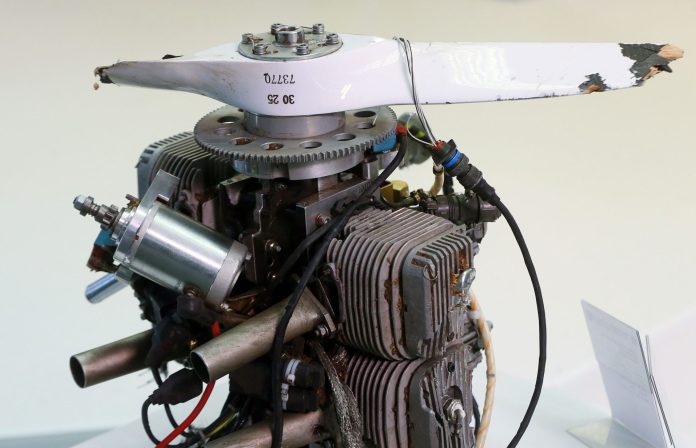
Conflict Armament Research (CAR) has previously documented drones in Ukraine that are marked with the Russian word for geranium, “geran,” implying at first glance that they are of Russian origin. The research center had said the unmanned aerial vehicles, or UAVs, were all Iranian-made Shahed-131 and Shahed-136 models.

But when CAR investigators got their hands on the physical remnants of two Geran-2 Russian drones used in Ukraine last month, a detailed analysis showed that Russia “has started producing and fielding its own domestic version of the Shahed-136,” the research center declared.

Investigators added “major differences in the airframe construction and in the internal units, including for navigation” showed that the two UAVs were manufactured in Russia rather than Iran.

The researchers described the development as a turning point in Moscow’s ability to extend its heavy use of the unmanned weapons.

“Almost a year after the first use of Iranian-manufactured UAVs in Ukraine, evidence that the Russian Federation has begun producing its own domestic versions marks a significant evolution in the country’s UAV capabilities that will allow it to sustain its reliance on single-use UAVs,” investigators wrote.

Russia “now has more than one pathway to still be able to sustain its current attack patterns” in Ukraine, CAR added.

The researchers said Russia “has distilled the principles of the Shahed series UAV, while simplifying its functioning by combining new solutions” and will likely be able to produce new UAVs fairly quickly.

Both Iran and Russia have repeatedly denied claims that Tehran has provided Moscow with drones to be used in the Ukraine war.

Iranian Foreign Minister Hossein Amirabdollahian in November dismissed media controversy over Iran’s alleged support for Russia in the Ukraine war, adding, however, that Tehran had provided Moscow with a limited number of drones months before the war in Ukraine.

He also assured that Iran will not be indifferent if it is proven that Russia has used Iranian drones in the conflict.

Kremlin Spokesman Dmitry Peskov has also blasted these reports as bogus and stressed that the Russian army used domestically-made drones.

Israelis rally against hard-right cabinet’s policies for 32nd week

Israel Protest

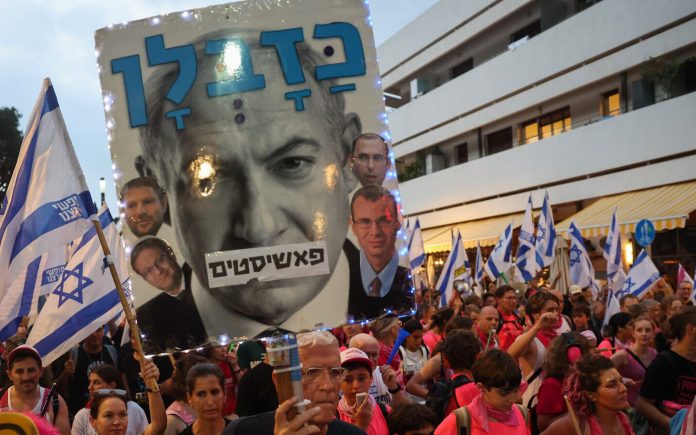
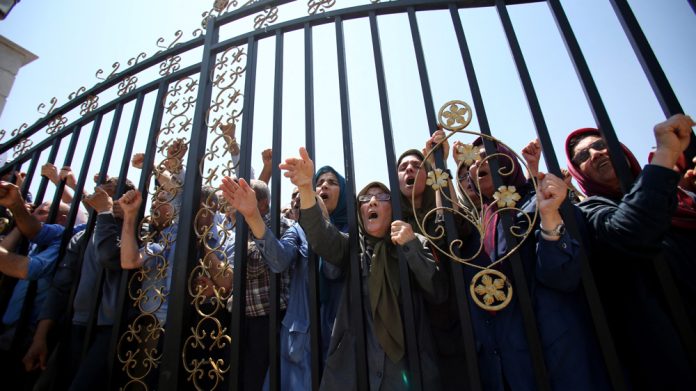
The rallies were held on Saturday, with the coastal city of Tel Aviv drawing the biggest crowd as was the case in previous weeks.

“I came to protest here for the 32nd week in a row. We come here each week … [in protest] against the coup that the Israeli” cabinet “is trying to do,” one of the protesters was quoted by Reuters as saying in Tel Aviv rally.

“I am here for the 32nd week in a row, this is my 32nd Saturday night. I am here. And I am here because I believe that [what Israeli Prime Minister Benjamin] Netanyahu … [is] doing … is dangerous,” another protester stated.

“Israel is being torn apart and we feel we are on the brink of a civil war,” Peleg, who is a doctor, stressed, adding that Netanyahu’s cabinet “needs to be overthrown.”

Hundreds of protesters marched toward the residence of the Knesset speaker following the protests at the nearby Kaplan junction in Tel Aviv, where they faced the regime’s forces who tried to disperse them.

Similar rallies were also held in other locations across the occupied territories, including in the cities of Haifa, Netanya, and Herzliya, in the occupied city of al-Quds, and in the southern town of Ashdod.

According to Israeli media, over 1,500 protesters gathered outside the residence of the regime’s president in al-Quds.

The hard-right cabinet of Netanyahu, which includes far-right and ultra-Orthodox parties, triggered the demonstrations in January by announcing the so-called judicial overhaul plan, which it then forwarded to the Knesset in the form of several bills.

The changes seek to enfeeble the Supreme Court in the face of the political elite by rendering the former incapable of striking down the decisions that are made by the latter. Other proposed changes include giving the Israeli cabinet a greater say in the appointment of judges to the court.

Ever since its onset, the protest movement has snowballed into the biggest to have ever been faced by the occupying entity throughout its history.

Public outrage has grown since last month, when the Knesset passed the first bill of the judicial overhaul plan after opposition lawmakers left the session. The bill scrapped the “reasonableness” law, through which the Supreme Court can overturn decisions made by Israeli cabinet such as ministerial appointments.

Opponents have described the overhaul drive as an attempt by Netanyahu, who stands accused in several corruption cases, to overturn future verdicts against him.

The protests have also seeped into the military, where an increasing number of army reservists have been threatening to stop reporting for duty in a show of their opposition to the overhaul scheme.

UN says number of Palestinians killed by Israel so far in 2023 exceeds previous year

Israel Gaza

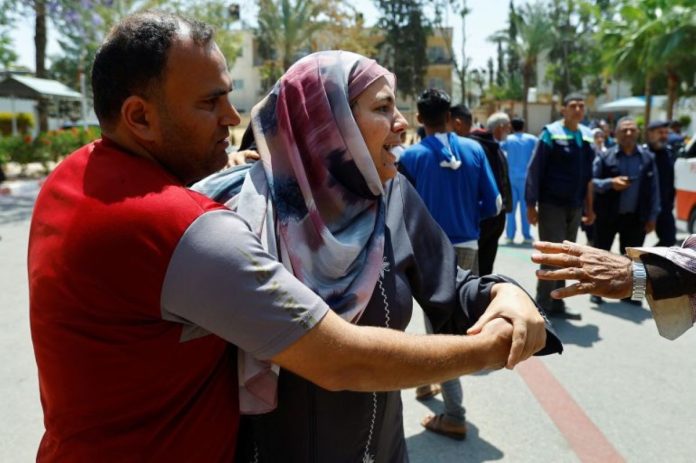
The biweekly Protection of Civilians Report published by the United Nations Office for the Coordination of Humanitarian Affairs (OCHA) in Palestine said that Israeli forces have shot dead 13 Palestinians in the West Bank between July 25 and August 10, including three children, bringing this year’s total number of Palestinians killed to 167, Palestine’s official Wafa news agency reported.

This surpasses last year’s figure of 155, which was already the highest number of fatalities in the West Bank since 2005, the report added.

According to the OCHA report, a Palestinian man was also shot dead during a settler attack on the village of Burqa, east of the city of Ramallah, on August 4, bringing the number of Palestinians killed by settlers in the West Bank and East al-Quds to seven.

The report added that 276 Palestinians, including at least 60 children, were injured by Israeli forces between July 25 and August 7. At the same time, six Palestinians, including one child, were injured by Israeli settlers.

Since the beginning of the year, 683 Palestinians have been injured by live ammunition fired by Israeli forces in the West Bank, which is more than double the equivalent period in 2022, the report said.

OCHA also noted that Israeli settlers have damaged Palestinian property in 14 instances across the West Bank, with the UN recording 591 settler-related incidents resulting in Palestinian casualties, property damage, or both in the first six months of 2023.

Israeli authorities have also demolished, confiscated, or forced people to demolish 56 structures in East al-Quds and Area C of the West Bank, displacing 23 Palestinians, including 12 children.

Tensions have been high across the occupied West Bank for the past year and a half, with the Israeli military carrying out near-nightly raids and the Palestinians carrying out retaliatory attacks.

Israeli settlers have also noticeably escalated attacks against Palestinians in the occupied West Bank in recent months.

More than 700,000 Israelis live in 279 settlements built since the 1967 Israeli occupation of the Palestinian territories of the West Bank and al-Quds.

All Israeli settlements are illegal under international law. The United Nations Security Council has condemned Israel’s settlement activities in the occupied territories in several resolutions.

Syria accuses US of supporting terrorists

US Forces Syria

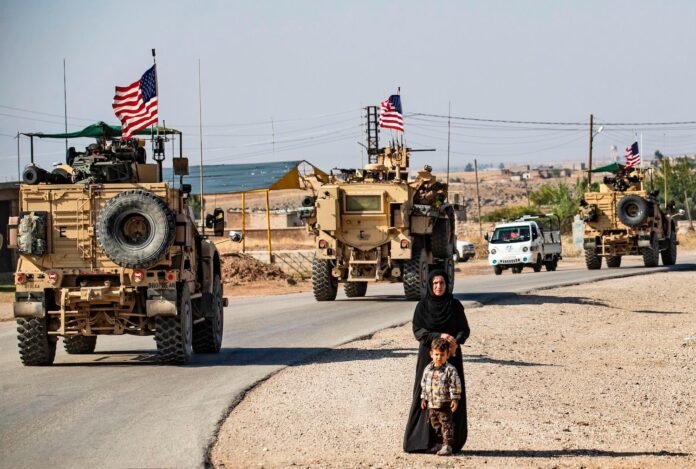
“US forces are sponsoring terrorists, who are responsible for the August 10 ambush on Syrian servicemen in the Deir ez-Zor governorate,” the ministry said in a statement, published by the SANA news agency on Sunday.

“This criminal act was committed by those whom the United States uses as a tool for implementing its schemes in Syria and the entire region,” it added.

The Syrian ministry underscored that the illegal US military presence on the territory of the country is accompanied by the plundering of its oil reserves and growing economic pressure on the people of Syria.

“The Americans blatantly violate Syria’s sovereignty and destabilize the situation in order to continue their occupation,” the ministry underlined.

Damascus pledged to continue its operations against terrorists until the threat is fully eliminated.

“Syria also confirms its readiness to free its lands from US, Israeli and Turkish forces, in accordance with the international law,” the document noted.

At least 33 Syrian servicemen were killed on August 10 when a bus they were travelling in was ambushed near the city of Al Mayadin some 368 km away from the capital of Damascus. Medical sources said later that the death toll may grow, because 11 wounded servicemen were admitted to hospital in serious condition.

According to the Al Hadath television, terrorists carried out over 40 armed assaults in eastern Syria since the start of 2023, killing 67 servicemen and militiamen.

Iranian officials seek to allay concerns over “gasoline shortage, price hike”

Iran petrol station

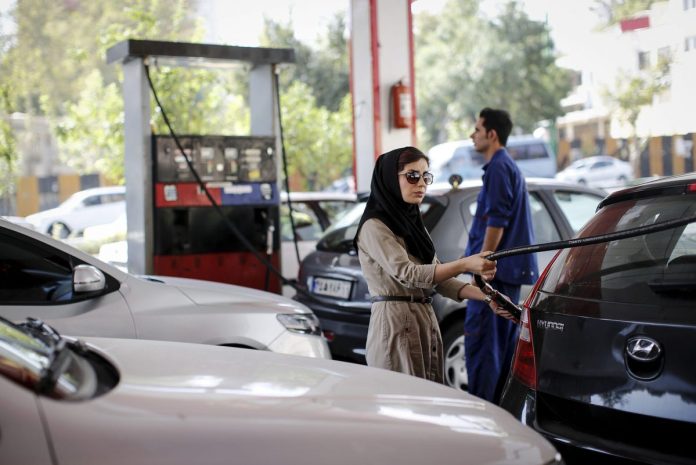
In an interview with the state-run television on Saturday, Director of the National Iranian Oil Products Distribution Company Ali Akbar Nejad Ali denied there was a shortage of fuel supply at gas stations, and added the government does not have any plans to increase fuel prices at the stations as there is no law or resolution to authorize the rise in prices.

Despite assurances by officials, Iranian lawmaker Mostafa Reza Hosseini did not rule out the possibility of an increase in the prices.

Hosseini laid into critics of the high inflation rate during the administration of former President Hassan Rouhani, who have kept a low profile despite the surge in prices since incumbent president Ebrahim Raisi took office.

“There is a possibility of an increase in the price of gasoline. Every day, we have a new trial and error and use people as lab mice. One day we have issues with automobile prices and the next day we see different decisions regarding fuel and basic commodity prices.”

According to witnesses, there were long lines of motorists who had rushed to gas stations in the capital Tehran and other cities on Sunday to fill up the tank.

Iranian team in Afghanistan to inspect Helmand amid water dispute with Taliban

Helmand River

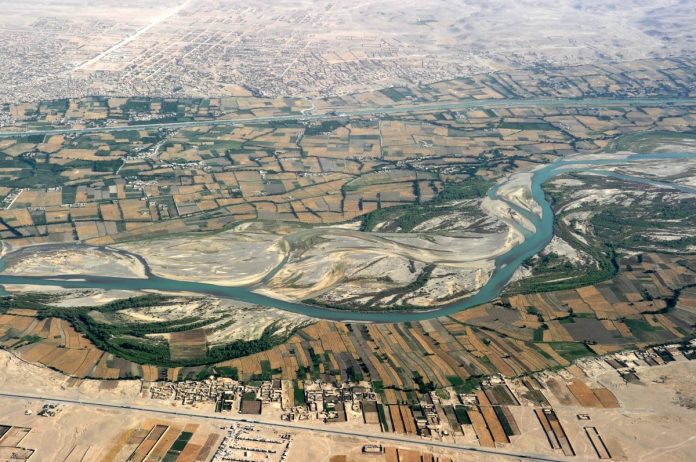
Iran’s special representative for Afghanistan, Hassan Kazemi Qomi, said on Sunday the Iranian experts are visiting Helmand for the first time and would soon prepare a report on the level of water.

The Taliban have been refusing to allow Iran’s share of water from Hirmand, or Helmand, to stream into Iran and have caused a drought in Iran’s southeastern province of Sistan and Baluchestan which is located in a hot and dry region and receives low rainfall compared to other regions in the country.

Iran’s Space Agency said recent images obtained from Iranian satellites show that the Taliban government is preventing water from reaching the Iranian side of the border by building numerous dams and diverting the flow of the water.

Iranian officials have stressed that Afghanistan must adhere to the terms of the internationally-binding 1973 Hirmand River water treaty and supply Iran with its share of water from the river.

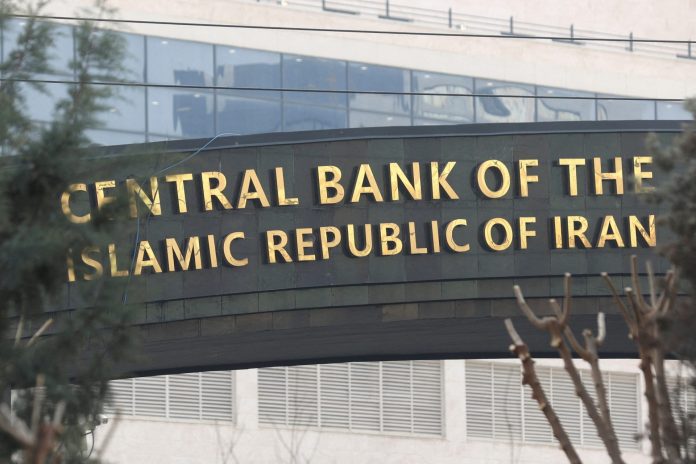
Chief banker says Iranian bank accounts in Qatar to process released funds

Iran Central Bank

Farzin said in a post on his social media account on Saturday that Iran can use the funds to purchase goods and products that are not subject to US sanctions.

“Soon all these euro resources will be deposited to accounts of six Iranian banks in Qatar and will be used for purchase of non-sanctioned commodities via bank payments,” added Farzin.

The statement came two days after Iranian Foreign Ministry confirmed that the country had reached an initial agreement with the US on exchange of prisoners, adding that the deal also include the release of $6 billion worth of Iranian funds that had been blocked in South Korea for the past years because of US sanctions.

However, Iranian authorities have said that the prisoner swap deal with the US will only go through if the funds that have reportedly been transferred to a Swiss bank account are moved to designated bank accounts in Qatar.

Farzin’s Saturday statement contradicts remarks given by sources to US media on Thursday which indicated that Iran’s funds will be transferred to an account held by the central bank of Qater.

He said “a third country” had accepted the costs of changing the funds, which were in South Korean currency won, to euro.

The chief banker added, however, that Iran had lost nearly $1 billion worth of its funds in South Korea over the past years because of won devaluation.

Poll shows majority of Danes support ban on Quran burning

Quran

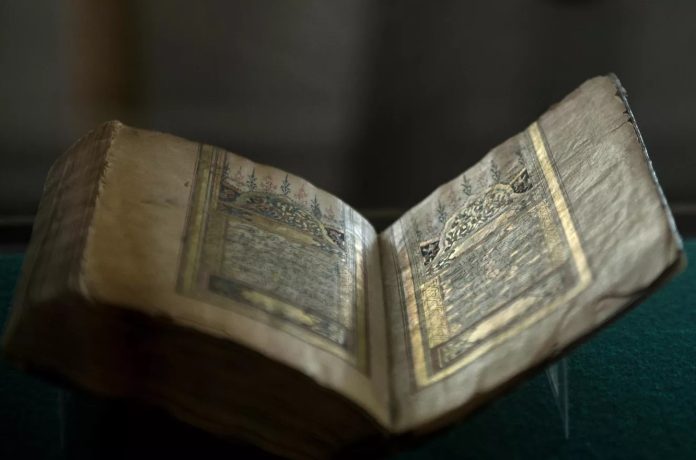
The Megafon survey conducted for a local TV news channel found that 51% of 1,008 people polled totally or mostly agreed with the government’s motion to ban Quran-burning outside of embassies, while 39% were against it.

Over the past month, the holy Muslim book has been subject to acts of desecration by extremist elements multiple times in Sweden and Denmark, whose governments have sanctioned and justified such insults as “freedom of expression.”

The sacrilegious acts have ignited the ire of the entire Muslim community across the globe. Several countries have summoned or expelled Swedish and Danish ambassadors.

The Nordic countries have deplored the desecration of the Quran but claimed that they cannot prevent it under constitutional laws protecting freedom of speech.