Friday, December 26, 2025
Home Blog Page 1197

Iran FM tells UN chief Tehran backs any political solution to Israeli genocide in Gaza

Gaza War

Iranain Foreign Minister Hossein Amirabdollahian, who is in New York to attend an extraordinary session of the UN General Assembly on Palestine, discussed with Guterres the latest developments in the Middle East and the situation in the Gaza Strip.

In the meeting, Amirabdollahian emphasized that some countries’ remaining silent and the United States’ backing for Israel’s brutal aggression and genocide have further emboldened the apartheid Israeli regime to step up its attacks against civilians in Gaza and the West Bank.

“A central plank of the Islamic Republic of Iran’s foreign policy is to offer constant support for Palestinian people’s resistance and fights for freedom aimed at fully restoring their rights,” said Amirabdollahian.

The top Iranian diplomat called for immediate and decisive action by the international community and the United Nations, particularly the UN Security Council, in fulfilling their duties in supporting the resistance of the Palestinian people.

“Iran backs any political solution that would put an immediate end to the crimes against humanity and genocide taking place in Gaza, would help send in humanitarian aid constantly, and would counter the forced displacement of the people of Gaza,” added the Iranian foreign minister.

“If the current situation and the Israeli regime’s war crimes continue, there will be every possibility of the war spreading and new war fronts opening in the region,” Amirabdollahian noted.

“The establishment of lasting and just peace in the region will be possible only by fully ending the occupation of Palestine, the return of all refugees to their own land, the determination of a future system for Palestine based on a referendum attended by all main residents of that land, including the Jews, Christians and Muslims, and finally the establishment of an independent and integrated Palestinian state with the holy Qods as its capital based on a political plan registered by the Islamic Republic of Iran with the Secretariat of the United Nations,” Amirabdollahian explained.

The UN chief, in turn, highlighted Iran’s unique role in the region, calling for Tehran to press ahead with its diplomatic and constructive political efforts.

Guterres described the humanitarian situation in Gaza as disastrous, urging all sides to work towards ending the war and dispatching humanitarian aid.

He said everyone should try to help establish peace and security in the region and across the world.

Guterres underscored the United Nation’s key priority is to see humanitarian aid being sent in and a ceasefire taking hold.

He said the world body emphasizes a political solution to the conflict.

UN overwhelmingly approves resolution calling for ceasefire in Israel-Palestine war

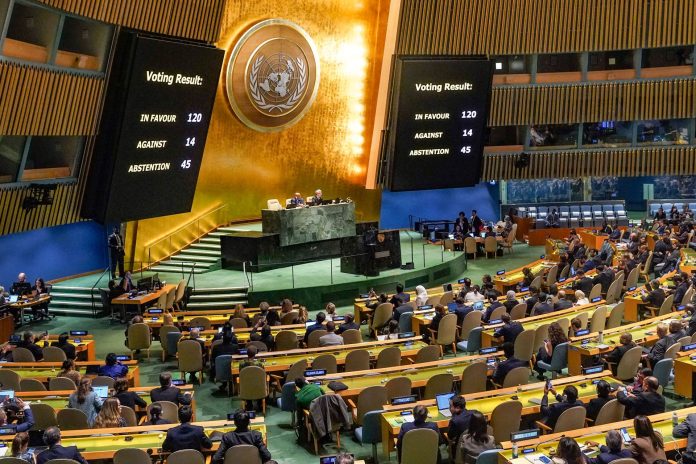
A resolution was introduced by Jordan and passed the General Assembly overwhelmingly, with 120 countries voting in favor of the resolution, 14 against and 45 abstained. Applause broke out in the assembly hall when the positive vote count was displayed.

The resolution calls for an “immediate, durable and sustained humanitarian truce leading to a cessation of hostilities,” as well as “immediate, full, sustained, safe and unhindered humanitarian access.” It also asks Israel to rescind its recommendation to evacuate northern Gaza.

The resolution urges “the immediate and unconditional release of all civilians who are being illegally held captive,” but does not name Hamas as the captor.

The US and Israel had denounced the motion, arguing that it did not include explicit criticism of Hamas.

Earlier Friday, an amendment introduced by the Canadians and backed by the United States to include harsh language about Hamas in the resolution was rejected by the General Assembly.

The vote comes as the Israel Defense Forces announced earlier Friday it is “expanding ground operations” in the Gaza Strip and “operating forcefully” on all fronts to fulfill its goals in the war with Hamas.

Israel has rejected the call for a ceasefire in Gaza approved by the UNGA, with the Israeli foreign minister calling it “despicable” in a post on social media.

“We reject outright the UN General Assembly despicable call for a ceasefire,” Israeli Foreign Minister Eli Cohen wrote on X, the platform formerly known as Twitter.

“Israel intends to eliminate Hamas just as the world dealt with the Nazis and Daesh.”

In a speech following the resolution’s passage, Israeli Ambassador to the UN Gilad Erdan said, “Today is a day that will go down in infamy. We have all witnessed that the UN no longer holds even one ounce of legitimacy or relevance.”

“The majority of the international community has shown that it prefers to support the defense of Nazi terrorists rather than support the law-abiding state of Israel to defend it civilians,” he added.

The Palestinian Authority foreign ministry welcomed the “overwhelming support” received for the UN resolution calling for a ceasefire in the Israel-Hamas war.

“This vote signals the commitment of a moral majority of the international community to uphold its obligations and the rejection of double standards and politicization of international humanitarian law,” the West Bank-based ministry said in a statement.

It added the “international community has spoken in a clear and united voice against Israel’s ongoing crimes and deliberate violations of international law,” adding that UN countries have “stood their ground in defense of international law as the universal rule that applies to all without exception.”

Experts fear Ukraine will run out of ammunition in 2024

Russia Ukraine War

In a lengthy article dissecting the failure of Ukraine’s summer counteroffensive, the French newspaper highlighted three key factors: Russia’s decision to voluntarily withdraw from Kherson and construct an elaborate line of defenses in late 2022, Ukraine’s insufficient tactical prowess, and Russia’s “greater strategic depth” – or its ability to replace lost men and materiel.

“2024 is going to be fraught with danger for the Ukrainians,” risk consultant Stephane Audrand told Le Monde.

“The equipment that has already been delivered to them will be depleted, but they will only be able to partially reconstitute it, as Western production capacities will not be optimal until 2025.”

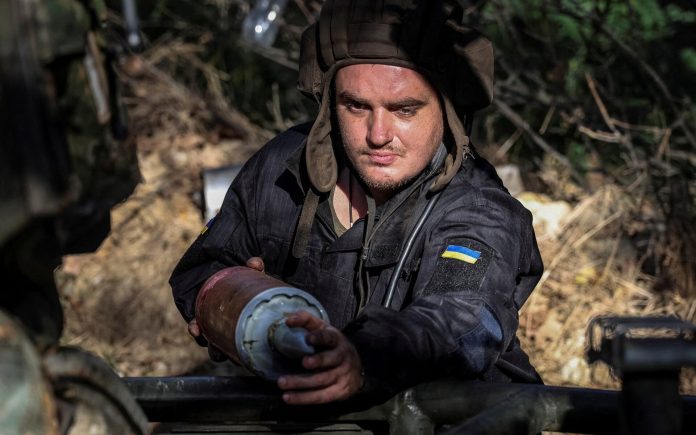
Russian forces have maintained an artillery advantage since the beginning of the conflict, firing anywhere from three to ten times as many shells per day as their Ukrainian counterparts, according to estimates from American and Ukrainian sources reported last year. With shortages becoming more acute earlier this year, American trainers began instructing Ukrainian soldiers to change their tactics in order to conserve ammunition.

Meanwhile, the Pentagon emptied its stockpiles of 155mm ammunition in South Korea and Israel to keep Kiev’s guns firing. With Israel also asking for this increasingly rare ammo, Washington has reportedly diverted tens of thousands of shells back into its Israeli depot, having originally set them aside for Ukraine.

“Unlike Ukraine, Russia is unlikely to face serious ammunition shortages in 2024,” Nikolay Bielieskov, a researcher at Kiev’s National Institute for Strategic Studies, told the newspaper.

“[Russian President] Vladimir Putin has already been working for over a year to put a large part of the Russian economy on a war footing. Even if this process is far from perfect, it is yielding results.”

Speaking at a press conference last week, Estonian military intelligence chief Colonel Ants Kiviselg estimated that Russia has around four million artillery shells in its stockpiles – double the number that the US has sent to Ukraine since last February.

“This [means they] could continue at the current relatively low intensity of [using] 10,000 rounds per day for just over a year,” he explained, adding that Russia is capable of manufacturing between 2 and 3 million more per year.

Even if the entire Western world were to mobilize its entire arms production capacity exclusively for Ukraine, “that will be not enough for this war,” Ukrainian Strategic Industries Minister Aleksandr Kamyshin told Politico on Monday.

Speaking to Russian servicemen on Tuesday, Russian Defense Minister Sergey Shoigu said that the Ukrainian military is losing combat power and “panicking.” Shoigu claimed that Russian forces downed 24 Ukrainian military planes in a four-day period, crediting “new weapons systems” for the achievement.

US troops attacked 20 times in Iraq, Syria in recent days: Pentagon

US Troops in Syria

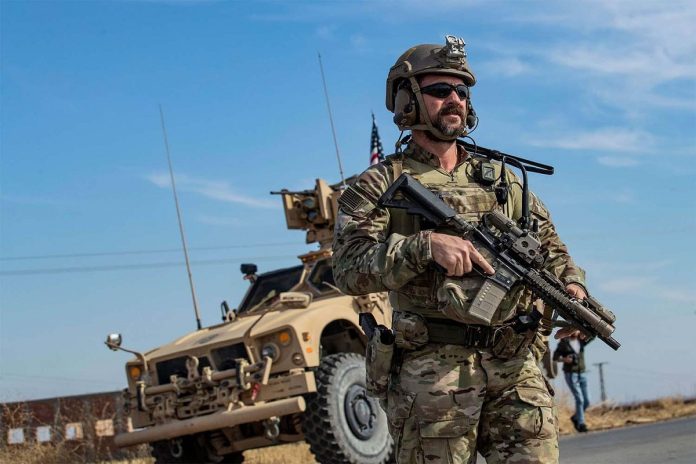
“Between Oct. 17-27, US and Coalition Forces have been attacked at least 14 separate times in Iraq and six separate times in Syria by a mix of one-way attack drones and rockets, for a total of 20 attacks to date,” Ryder said on Friday.

He added that most of the attacks were disrupted by defensive actions and failed to reach their targets.

The Pentagon earlier confirmed two US fighter jets carried out strikes against two targets in eastern Syria in response to attacks against US forces in Iraq and Syria.

According to the Pentagon, the air raids were carried out in response to an uptick in attacks by Iran’s “proxy forces” against US forces in Iraq and Syria.

Ryder has stated that additional assessments of the strikes have determined that there were no casualties as a result of the earlier airstrikes.

The Pentagon press secretary further reiterated that the recent US strikes in Syria are by no means indicative of a shift in the American approach to the Palestine-Israel conflict.

“These narrowly tailored strikes in self-defense were intended solely to protect and defend US personnel in Iraq and Syria,” Ryder said during a Friday briefing.

“They are separate and distinct from the ongoing conflict between Israel and Hamas, and do not constitute a shift in the US approach to the Israel-Hamas conflict,” he added.

US President Joe Biden has also offered legal justification for American airstrikes on eastern Syria this week, saying the operations were a rightful response to a string of drone and rocket attacks on US forces in the region.

In a letter to US lawmakers published on Friday, the White House announced the air operations were in line with presidential war powers, and followed repeated “attacks against United States personnel and facilities in Iraq and Syria” this month.

“At my direction, on the night of October 26, 2023, United States forces conducted targeted strikes against facilities in eastern Syria,” Biden said, claiming that the sorties hit sites used by Iran’s Islamic Revolutionary Guard Corps (IRGC) and “affiliated groups”.

The strikes “were intended to establish deterrence and were conducted in a manner to limit the risk of escalation and avoid civilian casualties”, the letter continued, describing them as “necessary and proportionate”.

Iranian Foreign Minister Hossein Amirabdollahian has denied that Iran had instructed groups in Syria and Iraq to target US troops in recent days.

He stated it was Washington — not Tehran — that was fanning the violence in the region.

Iran’s former FM warns of Israel’s plot to drag US into war against Iran

Javad Zarif

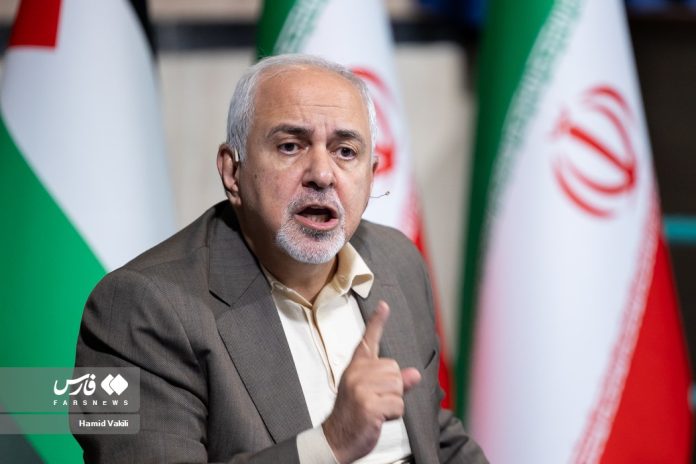
Zarif noted that the number 1 goal of Tel Aviv is to drag the US into a war on Iran, which he described as the Israeli regime’s long-time dream.

Zarif said Israel’s former prime minister Ariel Sharon once visited Washington to persuade the US to attack Iran instead of Iraq.

He cited Sharon as telling US officials that “the right target” was Tehran, not Baghdad.

Zarif stressed that the US declined to attack Iran because it knew it would be confronted by the Iranian people.

Elsewhere in his comments, Zarif further said no matter what Israel does, it can no longer restore its image of invincibility after the October 7 attack by resistance fighters from Gaza.

Zarif said founder of the Islamic Republic of Iran Imam Khomeini was the pioneer in shattering that image and that Palestinians are beholden to him for their victory.

The former top Iranian diplomat said as long as occupation persists, defense against it is legitimate.

Israel-Palestine conflict LIVE: Israel says its ground forces inside Gaza Strip

Gaza War

7,703 dead so far in Gaza: Health ministry

At least 7,703 people have been killed since Israel began attacking the Gaza Strip, according to the enclave’s health ministry

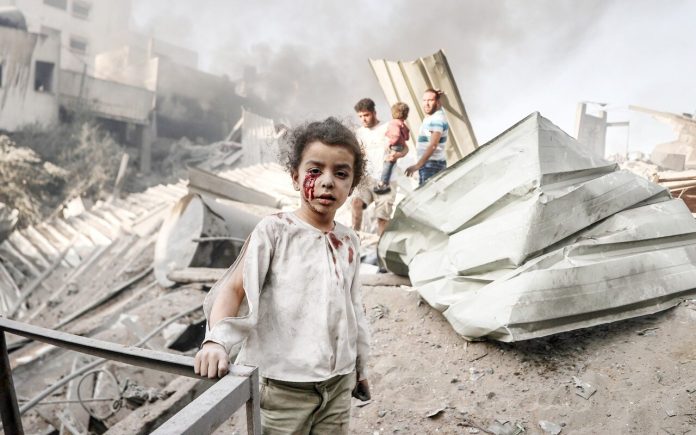
The ministry added that more than 3,500 children were among the dead.

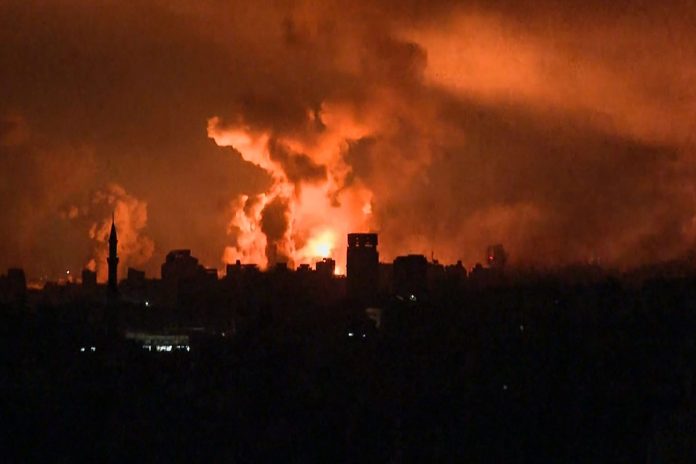
The new death toll comes after a night that has seen some of the heaviest Israeli bombings the strip has ever experienced.

Ashraf al-Qudra, the spokesperson of the health ministry in Gaza, stated that the heavy Israeli bombardment had turned Gaza into a “ball of fire”.

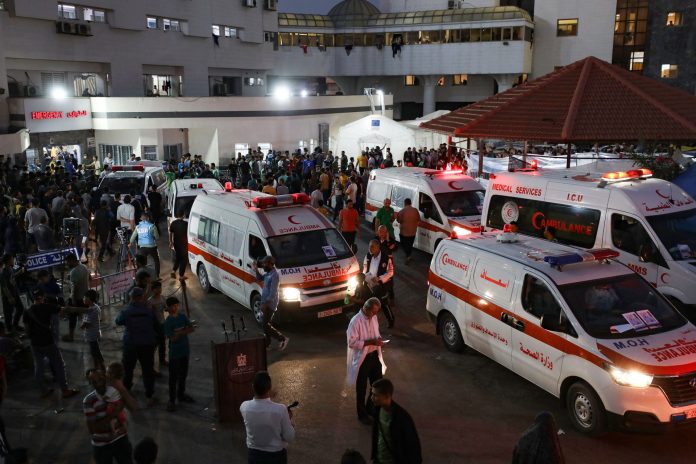
Al-Qudra added that Israel’s actions had caused complete paralysis of the health system, medical teams and ambulances in Gaza.

Repeating a call for international help, he also called on medical students and retired nurses to come forward.


Israeli ground forces inside Gaza: Army spokesman

Israeli ground forces are inside Gaza having entered the enclave overnight from the north, army spokesman Daniel Hagari claimed Saturday.

Israeli forces “went into the Gaza Strip and expanded the ground operation where infantry, armor and engineer units and artillery with heavy fire are taking part,” Hagari said during a press briefing in Tel Aviv.

“The forces are in the field and continue the fighting,” he added without giving further details.

The Israel Defense Forces (IDF) spokesman’s words confirm the military operation has undergone a significant expansion after what it had earlier described as two “targeted raids,” which took place on Wednesday night and Thursday night. Both those raids saw ground forces withdraw after a few hours.

However, it does not appear as though any major ground offensive aimed at seizing and holding significant amounts of the territory is yet underway.

Hagari said the army had suffered no casualties in overnight fighting, and added, “we keep doing everything in order to keep our forces safe.”

The IDF spokesperson stated Gazans who had moved south of Wadi Gaza, a waterway bisecting the centre of the strip, were in an area he called a “protected space,” and would receive more food, water and medicine today, though he did not give any details.

Hagari also reiterated his appeal to disregard rumours of a hostage deal with Hamas, calling it a cynical move by the group aimed at promoting what he called “psychological terror.”

“Returning the hostages home is of highest national effort. And all our operational activities are directed towards the realization of this goal,” he continued.


Families of Israeli hostages demand meeting with Netahyahu

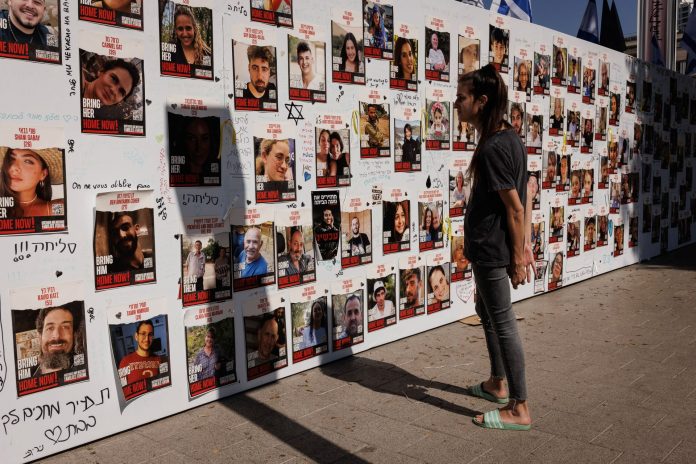
The families of Israeli hostages held in Gaza by Hamas have warned they will begin protesting if Israel Prime Minister Benjamin Netanyahu and Defence Minister Yoav Gallant do not meet with them on Saturday.

A spokesperson for the families said they plan to gather at a central square in Tel Aviv. They want the meeting because of increased apprehension about their loved ones after Israel ramped up attacks on Gaza overnight.

The military’s claim it is targeting tunnel infrastructure has prompted fear among the families that military leaders are being cavalier with the lives of the hostages, who are believed to be held inside the tunnels.


El-Sisi urges warring sides to respect Egypt’s sovereignty

President Abdel Fattah el-Sisi has called for Egypt’s sovereignty and position to be respected, warning the international community over the possible regional expansion of the conflict.

His comments came a day after projectiles hit two Egyptian Red Sea towns, Taba and Nuweiba. At least six people were injured in the attack that struck Taba near the border with Israel.

El-Sisi also added his country is working to play a positive role in the conflict in Gaza through the release of those held captive.


Hundreds of buildings destroyed in Israeli bombing: Rescue service

Israeli air raids have destroyed hundreds of buildings in the Gaza Strip overnight, the civil defence service in Gaza said.

“Hundreds of buildings and houses were completely destroyed and thousands of other homes were damaged,” spokesperson Mahmud Bassal told AFP, adding that the intense bombardments had “changed the landscape” of northern Gaza.


Gaza at tipping point, humanity must prevail: WFP chief

Cindy McCain has added her voice to those warning that the situation in Gaza had reached “a tipping point”.

“The silence is deafening,” the head of the World Food Programme said on X, adding, “Humanity must prevail.”

Like other aid groups, the UN’s food agency has also lost contact with its teams in Gaza due to the telecommunications blackout.

“As conflict rages on, I am extremely worried for the safety of all humanitarian workers and civilians,” McCain stated.


There are no winners in war: UN migration agency

The International Organization for Migration has renewed its call for a ceasefire.

The UN agency wrote on X: “Civilians must be protected. There are no winners in war. The most vulnerable pay the heaviest toll.”


Erdogan says Israel is in a ‘state of madness’

Turkish President Recep Tayyip Erdogan has called on Israel to “immediately come out of its state of madness and stop its attacks” on the Gaza Strip.

“The Israeli bombardments on Gaza, which intensified last night, have again targeted women, children and innocent civilians, deepening the humanitarian crisis,” he said.


WHO says still unable to contact staff, health facilities

Tedros Adhanom Ghebreyesus says the UN’s health agency is still unable to reach its staff and health facilities after Israel cut phone and internet services across Gaza.

“I’m worried about their safety,” the World Health Organization chief wrote on X.

“Evacuation of patients is not possible under such circumstances, nor to find safe shelter. The blackout is also making it impossible for ambulances to reach the injured.”


Israel says its troops continue operating inside Gaza

Israeli military spokesman Major Nir Dinar has stated on Saturday that Israel’s troops continue their ground operations inside the Gaza Strip.

Dinar told the AFP news agency: “Our troops are operating inside Gaza as they did yesterday.”

The Israeli army has also announced it has struck 150 underground targets in the north of the Gaza Strip, including tunnels used by Hamas.

Several Hamas members were killed in the air raids overnight, according to a statement on X.


UN aid agencies say they’ve lost contact with staff in Gaza

Several United Nations agencies report they have lost contact with their local staff in Gaza, as most of the communication capabilities of the enclave appear to have been interrupted.

Communications in Gaza have been severely disrupted in the past several hours as a result of airstrikes, the main Palestinian telecoms company says, although those with Israeli or eSIMs still have patchy connection.


Gaza communication blackout may conceal ‘mass atrocities’: HRW

The widespread communication shutdown in Gaza could potentially shield “mass atrocities” Human Rights Watch warned on Saturday, amidst ongoing heavy bombardment of the region by Israel.

“This information blackout risks providing cover for mass atrocities and contributing to impunity for human rights violations,” the group’s senior technology and human rights researcher, Deborah Brown said in a statement.


Trucks entering Gaza through Rafah ‘nothing more than crumbs’: UNRWA chief

Speaking at a news briefing in occupied East Jerusalem, Philippe Lazzarini has called for a humanitarian ceasefire.

“Many of us saw in these trucks [entering through Rafah border crossing] a glimmer of hope. This is, however, becoming a distraction. These few trucks are nothing more than crumbs that will not make a difference for two million people in the streets,” the UNRWA commissioner-general said.

“We should avoid conveying the message that a few trucks a day means the siege is lifted for humanitarian aid; this is not true. The current system in place is geared to fail. What is needed is meaningful and uninterrupted aid flow and to succeed we need a humanitarian ceasefire to ensure this reaches those in need. This should not be too much to ask for.”

“There have been intense negotiations and endless diplomacy to open a humanitarian supply line,” he added.

“So far it has only resulted in a handful of aid convoys. This will not reverse the fact that Gaza is being strangled. The people of Gaza feel shunned, alienated and abandoned.”

“At least 57 colleagues of mine have been killed. In one day, we had confirmation that 15 were killed,” he continued, stating, “One of our colleagues two days ago died while he was going to the bakery to get bread. He left six children behind, six displaced children in shelter.”


More United Nations staff killed in Gaza: Relief agency

The number of United Nations staff killed in Gaza has increased to 53, after 14 lost their lives in the past 24 hours, according to a statement from the UN Relief Works Agency for Palestine Refugees (UNRWA) on Friday.

Nearly 640,000 out of 1.4 million internally displaced people in Gaza are sheltering in 150 UNRWA facilities across the strip, the statement said, adding that some of them have been killed at school sites operated by the relief agency.

Since the devastating October 7 Hamas attacks on Israel, which sparked its retaliatory offensive in Gaza, 18 displaced people sheltering at schools have been killed and 282 have been wounded, the UNRWA noted.


Current war in Israel and Gaza has been deadliest for journalists since 1992: Advocacy group

The past three weeks of the Israel-Hamas war has been the deadliest period for journalists covering conflicts in decades, according to the Committee to Protect Journalists (CPJ).

At least 29 journalists have lost their lives since the first attack by Hamas on October 7, it said in a statement released Friday. The CPJ added it began tracking the deaths of journalists covering a conflict in 1992.

Of the journalists killed, at least 24 were Palestinian, four were Israeli, and one was Lebanese, CPJ said.

The journalism advocacy group further said it was “highly alarmed” by reports of a communications blackout in Gaza.

“As news bureaus lose contact with their crews and reporters in Gaza, who are independently bearing witness to provide information about developments and the human toll of this war, the world is losing a window into the reality of all sides engaged in this conflict,” CPJ announced.

Communications in Gaza have been severely disrupted in the past several hours as a result of Israeli airstrikes, according to the local telecoms provider Jawwal.

The last standing major internet operator in the region, Paltel, experienced damage to its international routes, according to NetBlocks, an internet outage monitoring firm based in London.


Doctors Without Borders expresses deep concern over situation in Gaza

Médecins Sans Frontières (MSF), also known as Doctors Without Borders, expressed on Friday profound concern about the situation in Gaza.

The organization said it has “lost contact with some of our Palestinian colleagues on the ground,” and expressed particular worry for patients, medical staff and families seeking refuge at Al Shifa hospital and other healthcare facilities.

“We call for the unequivocal protection of all medical facilities, staff and civilians across the Gaza Strip,” MSF wrote on X.


Gaza death toll numbers ‘reliable’: HRW

Omar Shakir from Human Rights Watch says death toll numbers from the Gaza health ministry are “reliable” after President Biden cast doubt on the figures.

“When we’ve done our own independent verification of particular strikes. The numbers have been generally consistent with no major deviations. The reasons for that are primarily methodological; the Gaza health ministry has access to data from morgues and hospitals that simply are not available to others,” Shakir told Al Jazeera.

“All this time we’re debating death counts and death tolls the bodies continue to pile up, and the focus for leaders really needs to be on preventing further mass atrocities – not quibbling over numbers,” he added.

At least 7,300 Palestinians have been killed in Israeli attacks since October 7, the Gaza health ministry has announced.


UN says Gaza health ministry death tolls in earlier conflicts ‘credible’

The UN agency for Palestinian refugees says the death toll given by the health ministry in Gaza had proved to be “credible” in previous conflicts after Washington raised doubts about figures from the current war.

“In the past, the five, six cycles of conflict in the Gaza Strip, these figures were considered as credible and no one ever really challenged these figures,” UNRWA chief Philippe Lazzarini told reporters.

Lazzarini added 57 UNRWA staff had been killed since the conflict began, explaining how the agency’s death toll was in line with the ratio of Palestinians killed to the territory’s overall population, as provided by the health ministry.

“We have more or less the same percentage,” he continued.

Lazzarini’s comments came just days after US President Joe Biden said he had “no confidence” in the figures provided by Gaza’s health ministry, drawing criticism from Palestinian rights advocates. On Thursday, meanwhile, the health ministry released a list with the names of the more than 7,000 Palestinians, including nearly 3,000 children, killed since the war began on October 7.


Thousands of patients at risk over lack of fuel: WHO

At least 94,000 litres of fuel are required daily to keep critical operations running at Gaza’s 12 major hospitals, the World Health Organization says.

Richard Peeperkorn, the WHO’s representative in the occupied Palestinian territories, warned the acute shortage of fuel and medical supplies puts at risk 1,000 patients in need of kidney dialysis, 130 premature babies in incubators, 2,000 cancer patients, and patients in intensive care.

“Maternal and neonatal health is worsening as the acute fuel crisis puts babies at risk,” Peeperkorn added.

He urged for a sustained supply of fuel, food, water, and medical supplies to Gaza, stressing the need for safe passage for aid within Gaza along with a ceasefire.


UNESCO says Gaza pupils, teachers ‘extremely vulnerable’

The UN’s culture agency has reiterated calls for a ceasefire in Gaza, where it said more than 625,000 pupils and some 22,500 teachers “are in an extremely vulnerable situation”.

UNESCO said it reminds “actors” in the conflict of their obligation to humanitarian law, especially Resolution 2601, which condemns attacks on civilians connected to schools, including students and teachers and “urges all parties to armed conflict to immediately cease such attacks and threats of attacks”.

Among the rising death toll, UNESCO added dozens were UNRWA employees, the vast majority being teachers and educators.


‘Running out’: People of Gaza going hungry: UN

“Gaza is struggling with a lack of basic supplies. Food and water are running out. People are facing increasingly desperate conditions,” says Abeer Etefa, a World Food Programme spokesperson.

“Outside Gaza, conditions in the West Bank are decreasing every day.”

United Nations agencies have warned the collapse of water and sanitation services will spark bouts of cholera and other deadly infectious diseases if urgent humanitarian aid is not delivered.

Israel cut off its water pipeline to Gaza – along with the fuel and electricity provisions that power water and sewage plants – after announcing a total blockade of the Palestinian enclave following the Hamas attack.


UN health agency cites reports of 1,000 unidentified bodies under Gaza rubble

The World Health Organization says it has received estimates that the bodies of at least 1,000 unidentified people who have not yet been included in death tolls are still buried under the rubble in Gaza.

“We also get these estimates that there are still 1,000 plus people under the rubble which have not been identified yet,” Richard Peeperkorn, the UN health agency’s representative for the occupied Palestinian territory, stated in response to a question about the death toll in Gaza. He did not elaborate.

According to Gaza’s health authorities, more than 7,000 people have been killed by Israeli bombardments in the past three weeks.


Israel ‘clearly’ opposes aid deliveries: UN

Israel “clearly” opposes the delivery of humanitarian aid to northern Gaza where hundreds of thousands of civilians remain trapped during incessant bombing.

“The government of Israel has been clear that they don’t want us delivering [aid] in the north,” Lynn Hastings, the UN’s humanitarian coordinator for Palestine, says.

“So our staff will have to assume certain security risks if we determine the assistance that we have to be lifesaving and needs to be delivered,” Hastings added.

“I’ve said it before that over a million people cannot just pick up and move to the south where there have been repeated bombings. There is no service delivery, there is no shelter there. We need to be able to deliver [assistance] to those people and we need to be able to deliver assistance to wherever people are in need.”


‘Soon many more will die’ from Gaza siege: UN

The United Nations warns “many more will die” as a result of Israel’s ongoing “total blockade” of the Gaza Strip, saying basic services in the Palestinian territory are “crumbling”.

“People in Gaza are dying – they are not only dying from bombs and strikes, soon many more will die from the consequences of [the] siege imposed on the Gaza Strip,” stated Philippe Lazzarini, commissioner general for the UN agency for Palestinian refugees.

“Basic services are crumbling, medicine is running out, food and water are running out, the streets of Gaza have started overflowing with sewage,” he added.

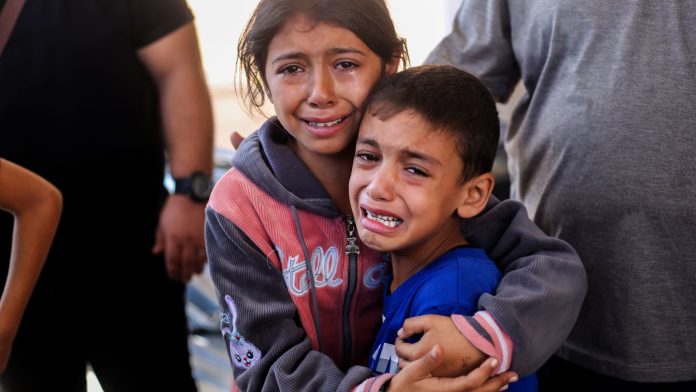
Israel says Gaza’s largest hospital a Hamas command center, Palestinians reject

Gaza War

Army spokesperson Daniel Hagari accused Hamas of directing rocket attacks and commanding Hamas operations from bunkers underneath the hospital building, which he said was linked to the network of tunnels that Hamas has dug underneath Gaza City.

He claimed other hospitals inside Gaza were also being used by Hamas in similar ways during a media presentation that included aerial photos, graphics and voice recordings,

“When medical facilities are used for terror purposes, they are liable to lose their protection from attack in accordance with international law,” Hagari added, appearing to suggest such hospitals were now firmly and publicly on Israel’s target list.

The army would “continue making efforts to minimize harm to the civilian population,” he continued.

Hagari offered only one piece of evidence at the presentation: a phone call purporting to be between two Gazans discussing the presence of Hamas’ headquarters at the hospital.

He stated Israel had more evidence that he could not yet make public, but which had been shared with what he called the intelligence community, which had accepted Israel’s allegations, he said.

Palestinians rejected the Israeli army claim.

The Director General of the Gaza Health Ministry, Dr. Medhat Abbas, told CNN’s Eleni Giokos that Gaza’s hospitals, “are used to treat patients only” and are not being used “to hide anyone.”

Hamas also rejected the claim, calling on “the United Nations, Arab and Islamic countries to immediately intervene to stop the madness of bombing and destroying the medical system.”

Mustafa Barghouti of the Palestine National Initiative based in Ramallah stressed Israel was lying.

“They keep lying to justify criminal acts against a civilian population, now they want to justify attacking people in a hospital” he told Sky News.

And Mads Gilbert, a Norwegian physician who has worked at the hospital on several occasions, including during three periods of open hostilities between Hamas and Israel, called the allegations “old.”

“We heard these unsubstantiated claims during the 2009 and 2014 attacks. We have never seen any single sign or proof, we’ve had zero restrictions on filming and photographing in Shifa, and have never been controlled in any ways,” he told CNN.

Hamas says cannot free captives until Israel-Gaza ceasefire

The newspaper quoted an official called Abu Hamid as saying on Friday that the group needed time to locate all of those who had been taken to Gaza by various Palestinian factions during a Hamas-led attack on Israel on October 7, that prompted the war.

Abu Hamid, a member of a Hamas delegation that arrived in Moscow on Thursday, stated that Hamas announced its intention to release “the civilian prisoners” since the first days of the war.

“Hundreds of citizens and dozens of fighters from various Palestinian factions entered the territories occupied in 1948, and … they captured dozens of people – most of them civilians,” he continued.

“We need time to find them in the Gaza Strip and then release them,” the official added.

Abu Hamid also stressed that the Israeli air raids on Gaza have killed 50 of the captives.

More than 200 captives are being held by Hamas in the Gaza Strip after being captured during the Palestinian group’s October 7 onslaught, according to Israel.

Hamas on Monday freed two elderly Israeli civilian women from the besieged enclave following the release of two captives with dual US-Israeli nationality last Friday.

The mediation efforts between the two sides over the captives are led by Egypt and Qatar.

More than 7,000 Palestinians, including at least 2,900 children, have been killed in Israeli attacks targeting Gaza since October 7. More than 1,400 people were killed in the Hamas attack on Israel, which started on October 7 and reportedly ended a day later.

Israel has cut off Gaza’s access to essential supplies, including fuel, as it carries out a bombing campaign that has destroyed entire neighbourhoods and brought humanitarian conditions to breaking point.

Hamas spokesman Osama Hamdan has also said there are “no talks” currently taking place between the group and Israel over a potential ceasefire and prisoner exchange.

“There [were] talks and there [were] political efforts to achieve such an arrangement”, he told Al Jazeera, but there are “no talks” amid the intensified Israeli bombardment of Gaza.

Hamdan added Israeli forces are “moving towards the borders of Gaza from different points”.

“It’s clear that they know they have lost … the narrative issue, so they want to cut Gaza from the world in order to commit their crimes in deep silence,” he continued.

“It’s clear they’ve started that [ground invasion], but they’re worried about the consequences, they are worried about what might happen on the ground and they are facing a very strong resistance.”

Israel could be committing war crimes: UN agency

Gaza War

During a press conference in Geneva on Friday, Shamdasani was asked if the Israeli bombing of Gaza in response to the surprise attack by Hamas on October 7 could be characterized as “genocide.”

The spokesperson avoided a direct answer, but said her agency was “concerned that war crimes are being committed. We are concerned about the collective punishment of Gazans in response to the atrocious attacks by Hamas, which also amounted to war crimes.”

She also stressed that the UN “at this point can’t go further than that,” adding that it was up to an independent court of law to determine whether war crimes have taken place.

The Israel Defense Forces (IDF) have been bombarding Gaza relentlessly since Hamas fighters infiltrated Israel three weeks ago, killing around 1,400 people and taking more than 200 others hostage.

According to the Health Ministry in the Palestinian enclave, Israeli airstrikes on Gaza have already led to the death of more than 7,000 people, including 2,900 children. The head of the UN agency for Palestinian refugees (UNRWA), Philippe Lazzarini, told reporters in Jerusalem on Friday that the ministry’s figures have always been viewed as “credible.”

Shamdasani also read out a statement from UN High Commissioner for Human Rights Volker Turk, in which he called on all sides of the conflict “to heed the calls for peace.”

The statement included condemnation of Israeli airstrikes on Gaza and its blockade of the enclave, as well as criticism of Israel’s calls for Palestinians to evacuate the targeted areas.

“Nowhere is safe in Gaza. Compelling people to evacuate in these circumstances… and while under a complete siege raises serious concerns over forcible transfer, which is a war crime,” the statement read.

The Israeli bombardment “in densely populated areas has caused extensive damage to civilian infrastructure and loss of civilian lives that, by all appearances, is difficult to reconcile with international humanitarian law,” it added.

Iran, Russia invest $38bn on North-South Corridor 

Addressing a gathering in the opening ceremony of an international conference dubbed “The North-South Corridor; a New Concept” in the Russian city of Astrakhan on Friday, the Iranian director of the Iranian-Russian Port of Salianka, Daryush Jamali, branded the corridor as “a key element of the Eurasian transport network”.

He added Tehran and Moscow have almost equal shares of the investment, elaborating 330 wagons as well as 54,000 containers have so far been purchased and negotiations are underway for construction of 21 ships for the corridor.

Iran’s ambassador to Russia, the director of Afghanistan’s railway, the director of the Iraqi railway and the head of the North-South Integration Club were among the participants of the event.

The 7,200-km ship, rail, and road corridor is planned for moving freight between India, Iran, Azerbaijan, Russia, Central Asia and onwards to Europe to increase trade connectivity between major Iran, Russia invest $38bn on North-South Corridor

Iran and Russia have so far invested 38 billion dollars to boost shipping lines for the North-South transport corridor which links Asia to Europe.

Addressing a gathering in the opening ceremony of an international conference dubbed “The North-South Corridor; a New Concept” in the Russian city of Astrakhan on Friday, the Iranian director of the Iranian-Russian Port of Salianka, Daryush Jamali, branded the corridor is “a key element of the Eurasian transport network”.

He added Tehran and Moscow have almost equal shares of the investment, elaborating 330 wagons as well as 54,000 containers have so far been purchased and negotiations are underway for construction of 21 ships for the corridor.

Iran’s ambassador to Russia, the director of Afghanistan’s railway, the director of the Iraqi railway and the head of the North-South Integration Club were among the participants of the event.

The 7,200-km ship, rail, and road corridor is planned for moving freight between India, Iran, Azerbaijan, Russia, Central Asia and onwards to Europe to increase trade connectivity between major cities en route.