Monday, December 29, 2025
Home Blog Page 1161

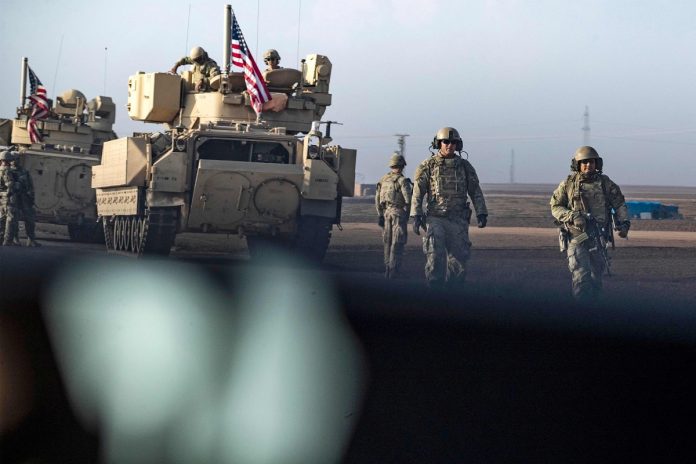
US troops attacked 66 times since uptick in ME violence: Pentagon

US Troops

“US forces have been attacked approximately 66 times since October 17. Thirty-two separate times in Iraq and 34 separate times in Syria,” Singh said during a media briefing on Tuesday.

US personnel have sustained approximately 62 injuries in these attacks, Singh added, noting that the number of injuries does not include those sustained during the Monday night attack because they are still being evaluated.

US soldiers in Iraq and Syria have seen a significant increase in the number of attacks since the breakout of the Palestine-Israel conflict in early October.

Washington has accused Iran-backed militias, but admitted there is no evidence to pin blame on Tehran’s leadership for ordering the strikes.

Iranian Foreign Minister Hossein Amirabdollahian has denied that Iran had instructed groups in Syria and Iraq to target US troops in recent days.

He stated it was Washington — not Tehran — that was fanning the violence in the region.

“The US could face dire consequences in the Middle East if it continues to support Israel,” Amiradbollahian stressed, adding that Washington “is advising others to show self-restraint, but it has sided with Israel totally”.

“If the United States continues what it has been doing so far, then new fronts will be opened up against the United States.”

He also cautioned that the continued bloodshed in Gaza “will make the situation get out of control in the region.”

“The American side should decide – does it really want to escalate, intensify the war?” he asked.

The foreign minister went on to deny that Iran had instructed militant groups in Iraq and Syria to attack the US, insisting that they were acting on their own.

“They’re not receiving any orders from us, any instructions,” he noted.

Iran has repeatedly warned the United States against any act of mischief in the region.

Washington is concerned that the Israel-Hamas conflict could spread through the Middle East and leave US troops at isolated bases exposed. Iran and its supporters say the US shares responsibility for Israel’s declared war against the Palestinian armed group Hamas.

Ukraine loses over 13,700 soldiers, about 1,800 weapons, equipment units in November: Russia

Russia Ukraine War

“In total, since the beginning of the month, the enemy has lost over 13,700 people, about 1,800 units of various weapons and military equipment,” Shoigu told a Ministry board meeting.

All attempts by the Ukrainian armed forces to conduct a landing operation in the Kherson direction are unsuccessful, Shoigu said.

“All attempts of the Ukrainian armed forces to conduct a landing operation in the Kherson direction were unsuccessful. Thanks to the proactive and professional actions of our military personnel, units of the marine corps and special operations forces of Ukrainian troops are suffering significant losses,” the minister added.

Additionally, the Russian armed forces are holding positions along the entire line of combat contact in the military operation zone, gradually improving their positions, the minister stated.

The minister issued his last assessment of Ukrainian casualties in late October, when he said they had surpassed 90,000 since the start of Kiev’s ill-fated counteroffensive in early July. During this week’s meeting, Shoigu described the cost paid by Ukrainian soldiers in the conflict as “colossal.”

Valery Zaluzhny, Ukraine’s top general, previously stated that the conflict with Russia had reached a “stalemate” and that his armed forces would likely not achieve a breakthrough in the confrontation anytime soon. President Volodymyr Zelensky has disputed the assessment, claiming that progress was still being made in his nation’s attempt to return Ukraine to its pre-2014 borders.

On Monday, US Secretary of Defense Lloyd Austin visited Kiev to meet Zelensky and announce Washington’s latest package of military assistance, worth some $100 million. The Pentagon, however, has warned that it is running out of money authorized by Congress to be spent on Ukraine.

Moscow has described the Ukraine conflict as part of a US-led proxy war against Russia, in which Ukrainians are used as “cannon fodder”. Anatoly Antonov, Moscow’s ambassador to Washington, called the latest package of aid “a sedative pill” for the Zelensky government, as it edges closer to complete collapse.

Israel-Palestine conflict LIVE: UN says 1.7 million people displaced in Gaza Strip

Israel says its unit commander killed in northern Gaza

The Israeli army announced a unit commander in its Golani Brigade was killed during the fighting in northern Gaza.

At least 71 Israeli soldiers have been killed since the start of its ground incursion into the Gaza Strip. Palestinian fighters say losses by Israeli forces are greater than it.


Conflict between Israel and Hamas has gone beyond war to ‘terrorism’: Pope

Pope Francis on Wednesday met separately with Israeli relatives of hostages held by Hamas and Palestinians with family in Gaza and said the conflict had gone beyond war to become “terrorism”.

Speaking in unscripted remarks at his Wednesday general audience in St. Peter’s Square shortly after the early morning meetings in his residence, Francis stated he heard directly how “both sides are suffering”.


Palestinian Islamic Jihad says Israeli ‘non-civilian prisoners’ will not be freed

In a statement on its Telegram channel, the Palestinian Islamic Jihad (PIJ) group said Israeli soldiers will not be released until “all our prisoners are liberated from enemy prisons”.

In addition to Hamas, the PIJ has also been holding captives since October 7.

“We emphasise our continued confrontation of aggression, at all field and political levels, in order to thwart all the goals of this aggression,” the statement added.


Several killed in Israeli raids in West Bank

While Israel has continued its attack on Gaza, killing at least 100 Palestinians across the enclave overnight and this morning, its targeting of Palestinians in the occupied West Bank has also continued.

Here are the latest developments:

  • Five Palestinians have been killed and five injured in an Israeli raid on the Tulkarem refugee camp.
  • One Palestinian was killed during an Israeli raid in Azzun, east of Qalqilya.
  • At least 23 Palestinians were detained in a raid on Dheisheh refugee camp south of Bethlehem.
  • Other raids took place in Awarta, southeast of Nablus; al-Dahiriyah and Idhna, south of Hebron; and Jalazone refugee camp, north of Ramallah.

Israeli military working out details for pause in fighting: Spokesperson

The Israeli military is still working out details for the pause in fighting included in the hostage release deal, Israel Defense Forces (IDF) spokesperson Lt. Col. Jonathan Conricus told CNN’s Pamela Brown.

Conricus said the exact timing of the pause remains to be determined.

“Until we are told to do so by the Israeli government, we will continue fighting Hamas and when such a deal will come into effect, we will respect that. But we will be very vigilant on the ground,” Conricus continued.

Conricus added he fears Hamas will use the pause in fighting to resupply and regroup.

“Of course we would rather continue to apply pressure on Hamas,” he said, “But this pause is for a very important cause.”

“I can assure that we will be respectful of any agreement, that we will honor the commitments made by the Israeli government,” he added.

The agreement would see the release of at least 50 hostages in Gaza — women and children — in exchange for a four-day pause in Israel’s air and ground assault on the enclave, according to the Israeli government.

While the exact names of the hostages to be released has yet to be publicized, Conricus stated they are all Israelis, though some have dual nationalities.

The deal will also include the release of 150 Palestinian prisoners — women and children — held in Israeli jails, according to a Hamas statement. It would also allow the entry of hundreds of trucks carrying aid relief, medical supplies and fuel to Gaza.


Blinken to visit Israel early next week: Report

US Secretary of State Anthony Blinken is planning to visit Israel next week amid a looming prisoner swap deal and truce between Hamas and Israel.

According to Axios, Blinken’s trip has not been finalized but would take place after the US Thanksgiving holiday  on Thursday and before a summit of top NATO diplomats in Brussels on Tuesday.

The US has lobbied Israel to seal a hostage deal and pursue a pause in fighting in Gaza.

Blinken has already visited Israel three times since the outbreak of war on 7 October.


150 Palestinian prisoners will be released from Israeli jails as part of hostage deal: Hamas

One hundred and fifty Palestinian prisoners held in Israeli jails will be released as part of a deal reached with Israel over hostages held in Gaza, according to a Hamas statement early Wednesday.

The prisoners are women and children, the statement added.

Hamas confirmed the deal, brokered by Qatari and Egyptian mediation, which will see the release of 50 hostages, also women and children, held in Gaza since October 7. It also said the agreement involves the entry of hundreds of trucks carrying aid relief, medical supplies and fuel to all parts of Gaza.


3 Americans could be part of hostage release of 50 women and children: Officials

Three Americans could be part of the agreement securing the release of 50 women and children held hostage in Gaza, senior US officials said.

Ten Americans remain unaccounted for, including two women and one 3-year-old girl, according to a senior administration official.

“We’re determined to get everybody home,” a senior administration official said when pressed by CNN’s MJ Lee on the remaining unaccounted for Americans.

“The way the deal is structured, it very much incentivizes the release of everybody,” the official added.

“The hostages deal, as it is structured, includes a pause, a humanitarian pause over a number of days, four to five days at least. And there’s the potential with additional releases for that to be for that to be extended, but that will also be dependent upon Hamas releasing additional hostages.”


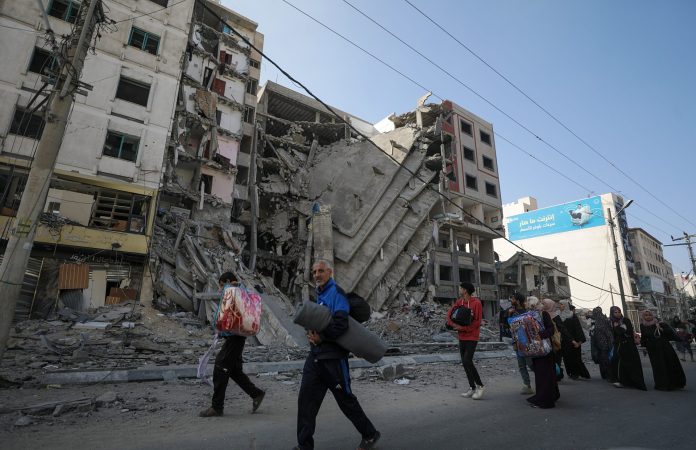
Satellite data indicates up to 50% of buildings in northern Gaza have been damaged in 6 weeks of war

Up to 50% of the buildings in northern Gaza and Gaza governorates have been damaged since October 7 in the Israel-Hamas war, according to an analysis of radar satellite data, called SAR, carried out by researchers at the City University of New York Graduate Center and Oregon State University.

Here’s what researchers found about different regions in Gaza from October 7 to November 18:

  • At least 20% of buildings in the entire Gaza Strip were likely damaged.
  • About 18,300 to 23,500 buildings are likely to have been damaged in northern Gaza, equating to 40% to 51% of the governorate’s buildings.
  • In the Gaza governorate, which is home to the enclave’s capital, Gaza City, 24,600 to 31,300 buildings are likely to have been damaged by fighting, equating to 40% to 50% of the buildings there.

Researchers also added since November 10, there has been a marked increase in the damage to buildings in the governorates of Khan Younis and Deir al Balah, where Israel has repeatedly told civilians from the north to flee to.

Israeli Defense Minister Yoav Gallant claimed last week that the country’s forces were in control of northern Gaza.


Israel says 4-day truce in Gaza could be extended if more hostages are released

The Israeli government held out the potential for a truce to extend beyond the original four-day period, saying in a statement that an extra day would be added to the truce for each 10 additional hostages available for release.

The statement also made clear that Israel plans to resume its air and ground campaign “to complete the eradication of Hamas” once this round of hostage releases concludes.

Israel’s cabinet approved a deal that would see the release of some hostages from Gaza on Tuesday in exchange for a four-day truce in Israel’s air and ground campaign in the enclave. The deal was approved by a significant majority of the cabinet.


Israel’s cabinet votes to approve deal to release at least 50 hostages in exchange for 4-day truce

Israel’s cabinet has approved a deal that would see the release of at least 50 hostages — women and children — held in Gaza by Hamas, in exchange for a four-day truce in Israel’s air and ground campaign in the enclave, according to an Israeli government statement.

The statement held out the potential for the truce to extend beyond the original four-day period, saying that an extra day would be added to the truce for each 10 additional hostages available for release.

The statement also made clear that Israel plans to resume its air and ground campaign “to complete the eradication of Hamas” once this round of hostage releases concludes.

The statement made no mention of the release of Palestinian prisoners held in Israeli jails, though it is understood this is also a key part of the deal.


1.7 million people displaced in Gaza Strip

In its latest update on the humanitarian situation in the Gaza Strip, the main United Nations agency in the besieged territory announced that almost 1.7 million people have been displaced since October 7.

The United Nations Relief and Works Agency for Palestine Refugees in the Near East said that 930,000 internally displaced people were sheltering in its premises across Gaza as of November 19. The shelters are already severely overcrowded and have no more room for new arrivals, it added.

The organization announced the displacement of so many people was resulting in significant spread of diseases, including acute respiratory illness and diarrhea, instances of which have increased by 40% in the last two weeks.

Heavy rain and limited access to water and sanitation in Gaza are also posing a “serious threat of a mass disease outbreak” among children, the United Nations Children’s Fund warned Tuesday.

“Let’s be clear: the control of fuel and the access to water is to control whether thousands – perhaps tens of thousands – of children live or die,” UNICEF spokesperson James Elder told a press briefing in Geneva.

On average, there is one shower unit for every 700 people and 160 people share a single toilet, according to UNRWA.

UNRWA also added it was told 120 liters of fuel would be allowed into Gaza every second day — but even that would only cover half of the critical daily requirement.

Without more fuel, the agency said it would be forced to handle a reduced number of aid trucks carrying humanitarian aid crossing daily into Rafah, and large parts of Gaza would continue to be flooded with sewage, further increasing risks of disease.

The agency also provided some other updates on its operations in Gaza. According to UNRWA, as of November 19:

  • A total of 1,268 aid trucks had entered Gaza through the Rafah crossing. Of these, 200 were UNRWA trucks, carrying food, water, medical supplies and other essential non-food items.
  • At least 778 internally displaced people sheltering in UNRWA premises have been injured and at least 176 killed since 7 October. That number is an estimate and is expected to be higher.
  • 17 installations were directly hit and 45 were impacted by collateral damage.
  • More than 100 UNRWA workers have been killed since the beginning of the war. At least half have been killed south of Wadi Gaza, in the area where Israel’s military has told civilians to move.
  • Nine out of 22 of its health centers are still operational in the middle and southern areas of Gaza.
  • There are an estimated 50,000 pregnant women in Gaza, with more than 180 giving birth every day.
  • Wells continue to operate, and water trucking operations to the shelters in Rafah and Khan Younis continue. However, due to the reduced availability of fuel, the production of water wells had decreased from an average of 10,000 cubic meters to 7,000.

Over 10 million Iranians sign up to go to Gaza to fight Israel

The online campaign, dubbed “I’m your rival” aimed at countering the Israeli regime’s “war crimes, crimes against humanity, and genocide against Palestinians”, has garnered significant attention and widespread support across Iran, Fars News Agency reported.

Since the Gaza-based resistance movement Hamas launched Operation Al-Aqsa Flood against Israel in response to the regime’s campaign of aggression, violation, and carnage against Palestinians, Israel has been raining bombs on the Gaza Strip for the past 45 days.

According to the Gaza Ministry of Health, 13,300 Palestinians, including 5,600 children and 3,550 women, have been slain and over 31,000 have been injured as a result of Israeli attacks on hospitals, residential homes, and civilian infrastructures in Gaza.

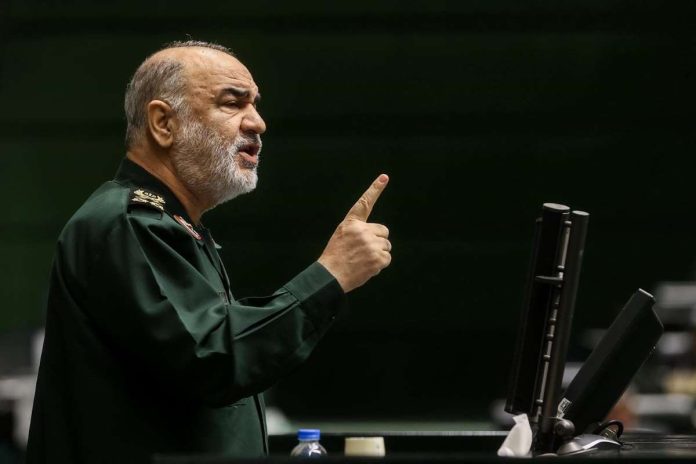
US denying permission to Israel for ceasefire in Gaza: IRGC Chief

Hossein Salami

Addressing a conference of university professors in Tehran, the IRGC commander stated the Zionist regime is looking for a ceasefire because it is gripped by crisis after attacking Gaza.

However, the Americans do not permit the Israeli regime to go for a ceasefire, he added.

The IRGC commander noted that the anxiety and unease that the Zionists feel in Gaza at present are much more severe than what appears.

On the other hand, the people of Gaza remain mentally calm and are not afraid of anything, he stated.

The general noted that the Al-Aqsa Storm operation has shattered the credit of the US, the West and the Zionists and laid bare their true nature.

He also described the Islamic Republic of Iran as the central point of political developments in the region, saying all attention is focused on Iran as everybody wonders how Iran will handle the game.

More than 13,300 people have been killed in Israeli attacks on Gaza since October 7, when Hamas launched a surprise operation against the Zionist regime.

Iran slams UN Security Council for failing to call for ceasefire in Gaza amid Israel bombardment

Gaza War

Iran’s Permanent Ambassador to the UN Amir Saeed Iravani made the remarks in an address to a UN General Assembly meeting on the humanitarian situation in Gaza on Monday.

He was referring to a mid-November resolution passed by the Security Council, which only called for “extended humanitarian pauses” in Gaza.

The resolution, prepared by Malta, was adopted with 12 votes in favor, while the United States, Britain and Russia abstained. It followed repeated vetoes cast by the United States, Israel’s biggest and oldest ally, against previous resolutions that called for cessation of the Israeli regime’s aggression against Gaza.

Iran’s ambassador said the Security Council’s resolution failed to stop Israel’s atrocities in Gaza as it lacked an executive guarantee and was not legally binding.

“There is generally an expectation that the content of the Security Council’s resolution should have included the main elements of the resolution of the General Assembly that was adopted with a majority of 121 votes, especially its key point that there is a most urgent need for an immediate, sustainable and durable truce for civilians,” he added.

The General Assembly’s resolution, which was adopted in late October, called for “an immediate, durable, and sustained humanitarian truce leading to a cessation of hostilities” in the Gaza Strip.

“What has happened since the adoption of this resolution [by the Security Council]? Has the number of attacks on innocent people decreased? Has Gaza’s population received sufficient humanitarian assistance? The answer is no. Instead, the representative of the occupying regime said in the same meeting that they would do whatever they wish,” Iravani said.

Iran’s ambassador added that the Security Council’s resolution “lacks an adequate provision for ending the war, which is essential for ceasing Israel’s atrocities in Gaza against innocent civilians.”

Noting that “the people of Gaza expect concrete support from the United Nations,” Iravani stated, “Gaza is experiencing a challenging time and the people of Gaza are facing unabated war crimes and crimes against humanity by the Israeli regime.”

“In such a dire situation, sympathy is no longer enough,” he continued.

According to Gaza’s Government Media Office, the death toll from Israel’s geocidal war on the territory climbed to 13,300 on Monday, including more than 5,600 children and 3,550 women, with 31,000 people wounded so far.

Russia-China de-dollarization almost complete: Moscow

Dollar

Since the introduction of Western sanctions on Moscow, Russia and China have accelerated the use of their own currencies in trade. According to Belousov, 95% of all transactions between Russia and China are now carried out in one of the countries’ national currencies, and given the rapid expansion of mutual trade and cooperation, this percentage is likely to grow.

Speaking at a meeting of the Russia-China intergovernmental commission in Beijing on Monday, the deputy prime minister said bilateral trade between the two countries will exceed the target of $200 billion this year, and may reach $300 billion by 2030.

He noted that China has long been among Russia’s major trade partners and that the scope of investment opportunities for the two countries is expanding.

“New joint investment projects are being launched in priority sectors such as the automotive industry, mining and gas chemical industries, agriculture, logistics, IT sector and others,” Belousov said.

Chinese companies have greatly benefited from the pullout of Western companies from the Russian market, as they have been actively filling the gaps and are eager to expand their presence in Russia further.

“The withdrawal of Western companies from Russia has created vast opportunities for Chinese partners to take part in Russia’s in oil and gas, petrochemical and car manufacturing enterprises, as well as companies producing consumer goods, glass products, and construction materials,” Belousov stated.

Russia has largely been supplying China with energy products, such as oil and gas, as well as refined products, agri-food, and industrial products. China has been exporting almost all types of goods, including food, equipment, mobile phones, electronics, engineering products, furniture, toys, textiles, clothing, and footwear.

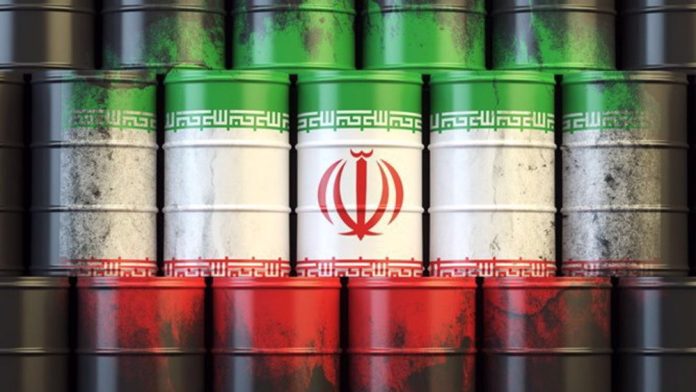
Minister: Iran to increase oil production to 3.6mn barrels per day in months

Iran Oil

Javad Owji made the remarks during a visit by President Ebrahim Raisi to the oil ministry on Monday to discuss the ministry’s performance amid draconian US-led Western imposed sanctions.

Owji said the oil ministry has 50 new projects for new investment worth 47.5 billion dollars, and a total of 182 projects worth 76 billion dollars to increase the upstream and downstream production capacity.

He added the ministry’s main priorities have been to draw in more investments for the future projects and completing partly-finished projects to boost production.

Carrying out gas megaprojects, completing and launching oil pipeline projects, increasing oil and gas condensate refining capacities, and expanding the storage of natural gas are among the other achievements by the ministry, Owji briefed.

Daily slams Iranian pro-‘purification’ official as ‘deviant’

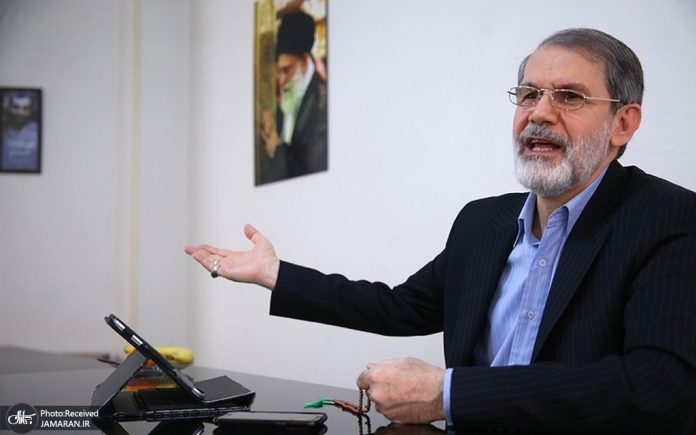
Iranian daily Jomhouri-e Eslami in an article on Tuesday laid into Sadegh Mahsouli, the head of the far-right Perseverance Front, for infuriating the public by “ignoring diversity of opinions in society and making every effort to consolidate power.”

“The way some parliamentary candidates are treated on the one hand, and the comments some political activists make about the parliamentary elections and the governance structure of the country, on the other, are issues that, if not addressed, will bring about a dangerous future for our country,” Jomhouri-e Eslami wrote.

The newspaper noted that the demand for “further purification” by Mahsouli, who was also the interior minister and minister of welfare and social security during former president Mahmoud Ahmadinejad’s tenure, is “illegal, and against freedom of speech and expression”, and will blow in the face of the goals supposed to propel by the Islamic Revolution.

The so-called purification move, which has already started and is moving ahead at full blast in Iran, is reportedly aimed at securing a parliament dominated by supporters of President Ebrahim Raisi.
Mahsouli himself has described the move as “meritocratic.”

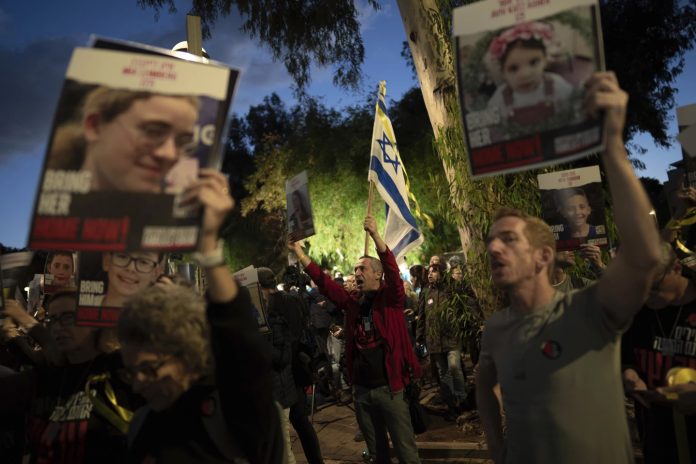
Families of Gaza hostages reject talk of death penalty for Hamas detainees

A number of suspected attackers were detained after members of the Palestinian armed group from Gaza killed more than 1,200 people in southern Israel and kidnapped about 240, Israel announced.

The proposal was advanced by the party of far-right National Security Minister Itamar Ben-Gvir, who posted on X on Monday: “The death penalty law for terrorists is no longer a matter of left and right. … [It’s] a moral and essential law for the State of Israel.”

Relatives of some of the people held by Hamas told a parliamentary panel that even discussing the death penalty could have catastrophic consequences for their loved ones held in Gaza.

“It would mean playing along with their mind games, and in return, we would get pictures of our loves ones murdered, ended, with the state of Israel and not them [Hamas] being blamed for it,” Yarden Gonen, whose sister Romi is among the hostages, told Ben-Gvir and his party colleagues.

“Don’t pursue this until after they are back here,” she continued, adding, “Don’t put my sister’s blood on your hands.”

The families of the hostages worry that even discussions of executions pose a danger to their relatives who have themselves already been threatened with execution at the hands of Hamas.

Gil Dilkma, a cousin to one of the captives, pleaded with Ben-Gvir to drop the legislation.

“Remove the law if you have a heart,” he stated.

Striking a similar note, the Missing Families Forum announced in a statement that such discussion “endangers the lives of our loved ones without promoting any public purpose”.

Another family member of one of the captives echoed this concern, shouting, “Stop talking about killing Arabs. Start talking about saving Jews!”

Some right-wing politicians responded to these objections with consternation. Almog Cohen, a member of the Israeli far-right Otzma Yehudit party shouted back, “You have no monopoly over pain”.

“You are silencing other families,” another far-right politician said.

Some Israeli politicians have argued in the past that more executions would serve to deter “terrorism”.

When a task force was established by Israel’s Ministry of Justice this month to find punishments “befitting the severity of the horrors committed” for those tried and convicted, the death penalty was refloated as an option.

Ben-Gvir called for capital punishment to be implemented, saying that doing this was “more critical now than ever … for the sake of those murdered and who fell in the line of duty and, no less, so that there will be no more people kidnapped”.

The conservative Likud party of Prime Minister Benjamin Netanyahu, however, has shown little interest in advancing the bill during its long rule.

The only court-ordered death sentence in Israel took place in 1962 when convicted Nazi war criminal Adolf Eichmann was executed by hanging. Israeli military courts, which often handle cases involving Palestinians, have the power to hand down the death penalty by a unanimous decision of three judges, but this has never been implemented.

Linor Dan-Calderon, three of whose relatives are being held captive, accused Ben-Gvir’s party of having “confused priorities”.

“You’ve gotten mixed up because we are a nation that pursues life not one that pursues revenge – even if in the past we did something to Eichmann,” she stated, adding, “I am simply asking you to drop this from the agenda.”