Wednesday, December 31, 2025
Home Blog Page 1073

Biden notified US lawmakers of plans to approve F-16 sale to Turkey

F-16

The report said on Wednesday that Biden in a letter to lawmakers urged them to approve the $20 billion sale.

US law requires the US president to formally notify Congress 30 days before the US government can take the final steps to complete certain foreign military sales of high value.

Turkey has long waited for the United States to approve the F-16 deal.

On Tuesday, the Turkish parliament ratified the protocol on Sweden’s accession to NATO in a 287-to-55 vote with four abstentions after 20 months of delay. The decision will go into effect once Turkish President Recep Tayyip Erdogan signs a corresponding decree. Erdogan has 15 days to consider the possibility of signing the document.

Washington, Baghdad expected to start talks on future of US military presence in Iraq

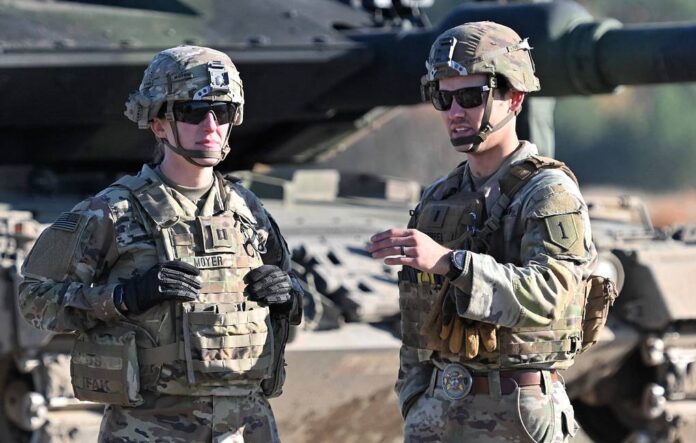
US Forces

The US and Iraq agreed to form a higher military commission last summer, according to the Pentagon, as a vehicle for the talks. The discussions between US and Iraqi officials, akin to a working group, will focus on the next phase of the US-led anti-IS coalition, with the terror group now reduced to a shadow of its former self. US military officials and diplomats will be involved in the discussions, officials added.

The negotiations about the future of the US’ military presence have now taken on a greater urgency amid the wider regional instability and insecurity, and amid growing public calls by the Iraqi government for the US to withdraw its troops from the country. Those calls have come in response to the US launching airstrikes inside Iraq targeting “Iran-backed militants” who have been attacking US personnel there.

The US has roughly 2,500 troops currently in Iraq who have been operating there in an advise and assist capacity since December 2021, when the US military announced the end of its combat role in the country.

Part of the discussions will focus on whether and when it will be feasible to end the US military presence in Iraq. The US prefers a schedule that would be based on conditions in Iraq, including the ongoing defeat of IS and the stability of the government and the Iraqi security forces, US officials stated.

But some elements within the Iraqi government prefer a schedule based on a timeline, setting the date for an American withdrawal regardless of the stability or the security situation within the country.

On January 10th, the office of Iraqi Prime Minister Mohammed Shia al-Sudani said they would soon begin the process “to end the presence of the international coalition forces in Iraq permanently”.

A US official told CNN that “the US and Iraq are close to agreement on starting the Higher Military Commission dialogue that was announced back in August”.

“The HMC will be an opportunity to jointly evaluate the conditions required for the future of the D-ISIS fight in Iraq and shape the nature of the bilateral security relationship,” the official continued, adding, “We have been discussing this for months. The timing is not related to recent attacks. The US will maintain full right of self-defense during the talks.”

Jonathan Lord, the director of the Middle East security program at the Center for New American Security, told CNN that the US needs to transition its support for Iraq toward building “a lasting and sustainable military capacity in the [Iraqi Security Forces], to avoid another 2014. That hasn’t happened”.

“If we leave now, with no plan in place, we’re sending the patient back out on the street, with no plan to stay healthy,” he added, comparing the initial anti-IS intervention to an emergency room hospital stay.

“Chances are, if things go bad, they’ll end up right back there. And it’s the most expensive, least efficient way to help them.”

On Tuesday, following the latest round of US strikes in Iraq, a spokesperson for the prime minister said in a statement that the strikes are “undermining agreements and various sectors of joint security cooperation” as the two countries are working to “reshape the future relationship”.

The US and Iraq agreed to start talks on the future of the US’ military presence last year, before the October 7 terror attack by Hamas on Israel sparked wider regional tensions and emboldened “the Iran-backed groups” in Iraq and across the Middle East.

The Pentagon has maintained that the Iraqi government has not formally asked the US military to withdraw, emphasizing that the troops are still there at the invitation of the Iraqi government. And there is no set deadline for a conclusion to the higher military commission discussions, or their ultimate outcome.

Jon Alterman, the director of the Middle East Program at the Center for Strategic and International Studies, said the politics of the US military presence in Iraq have been “treacherous” for more than a decade, but it’s not a binary choice of staying or leaving. Nor is this a process that needs to move quickly, he added.

“This is a choice of where you want to be on a spectrum. Diplomats can manipulate both the timing and the direction of the talks and arrive at a wide variety of potential outcomes.”

Still, rumblings of a potential US change in its force posture in Iraq would be a victory for Iran, Alterman continued, adding, “Any sign that this is the beginning of the end would be widely celebrated in Iranian corridors.”

On Wednesday, Iraq’s foreign minister hinted at the coming discussions, saying in a statement that he met with the US Ambassador to Baghdad, Elena Romanowski, and “received from her an important message from the American government to the Iraqi government, which will be studied by the Prime Minister and the relevant concerned authorities. Next steps will be taken regarding it soon”.

The US also has a presence in Syria to fight the IS, but administration officials told CNN that a withdrawal from that country is not under consideration.

“The Biden administration is not considering a withdrawal of forces from Syria,” a senior US official told CNN.

Israel planning ‘permanent army stations’ in Gaza: Report

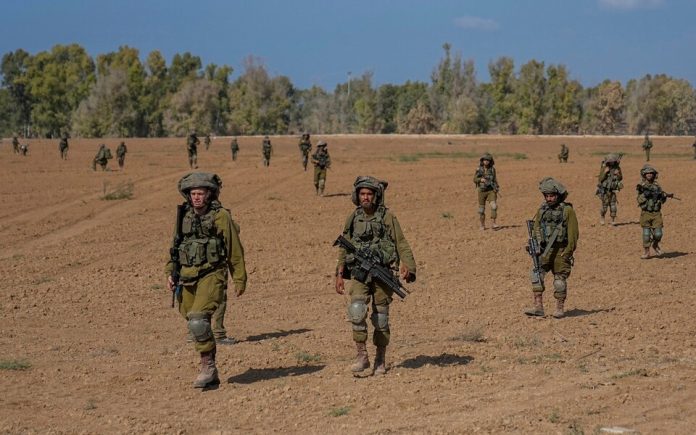
Israel Army

News of the plans comes despite international pressure on Israel to accept a two-state solution with the Palestinians and withdraw its army from the coastal enclave.

Earlier this month, the Israeli army announced that it would move into a “low intensity” phase of its war with the Palestinian group Hamas, in which heavy bombardments of Gaza would be replaced by targeted special operations.

There have been no signs of this materialising on the ground, though, with the military continuing its heavy shelling both in northern Gaza and areas around Khan Younis in the southern Gaza Strip, where intense clashes are ongoing.

Israeli Prime Minister Benjamin Netanyahu has stated quite openly that the Israeli army will continue its operations in Gaza until Hamas is destroyed in the area and that, “in the future, the state of Israel has to control the entire area from the [Jordan] river to the [Mediterranean] sea”.

Both Israeli and US intelligence assessments have indicated that Hamas is far from being eradicated, and Netanyahu’s determination to “bring complete victory” has put him at odds with many inside Israel, including fellow war cabinet member Gadi Eisenkot, who has said that the “absolute defeat” of the armed group is not a realistic objective.

The Israeli military officer, who asked MEE not to report his rank and name, said that Netanyahu and his government associates had already asked the army to establish permanent bases in the Gaza Strip, excluding the possibility of any post-war Palestinian administration in the enclave.

The officer added the order to build up the military installations was given verbally.

“We have received orders to determine the locations of permanent army stations within Gaza,” he continued, adding, “The defence ministry and the army informally assigned a small number of officers for this purpose.”

The officer stated that the worst-case scenario imagined by Netanyahu and his allies is to turn Gaza into the occupied West Bank, where the Israeli army has a free hand to do whatever it wants, from raiding houses to arresting Palestinians without a warrant or a court order.

“Netanyahu and his far-right war cabinet are not planning to withdraw from Gaza,” the officer said.

He added that the prime minister is looking for ways and models to ease the international pressure over the army operations in Gaza by scaling down its presence while still maintaining it.

“This model is a more militarised version of the West Bank. I have served in the West Bank. Gaza will not be like that place, there will be more frequent military stations and more soldiers.”

Israeli newspaper Yedioth Ahronoth has reported that “thousands of dunams of Gazan territory will remain under Israeli control after the war”.

Israel’s bombing campaign and ground operations following the 7 October Hamas attack on Israel have now left more than 25,700 Palestinians, most of them women and children, dead.

There is an ongoing humanitarian crisis in Gaza, with more than 63,000 Palestinians wounded, disease rife and available drinking water scarce.

Responding to pressure from EU diplomats to end the war and take steps towards a two-state solution with the Palestinians, Israeli Foreign Minister Israel Katz floated the idea of an artificial island off the coast of Gaza, which Israel would control to monitor aid into the coastal enclave.

“I think that the minister could have made better use of his time and focus on the security of his country, bearing in mind the high number of deaths in Gaza,” Josep Borrell, the EU’s foreign policy chief, told reporters after the presentation of the plan, which included a video.

Iranians celebrate National Father’s Day, Imam Ali’s birth anniversary

Iran Flower

Muslims particularly Shias consider Imam Ali, the Prophet’s son in law and his cousin, as a highly revered figure and the symbol of justice and bravery; hence, commend him as a role model for men.

On this occasion, people usually pay visits to their fathers and get gifts and pastries for their them or male members of their families to honor their status.

Based on traditional and cultural teachings in Iran, father is considered the pillar of the family, even after children fly the nest.

Yemen’s Houthis say their missile hit US warship, Washington denies

US Navy Warship

The Yemeni group that controls the western part of Yemen – including the capital, Sanaa – has been harassing vessels linked to Israel since late October, in support of the Palestinians in Gaza. After British and American forces bombed Yemen earlier this month, the Houthis expanded their ban on US and UK merchant ships as well.

”A clash took place today with a number of American destroyers and warships in the Gulf of Aden and Bab al-Mandab, while those ships were providing protection for two American commercial ships,” Houthi spokesman Yahya Saree said in a statement.

During the two-hour clash, “a direct hit on an American warship” caused the two merchant ships to retreat, Saree added.

“A number of our ballistic missiles reached their targets despite the attempt of warships to intercept them.”

CENTCOM, which is in charge of US forces in the area, had a different account of events, however.

”Iranian-backed Houthi terrorists fired three anti-ship ballistic missiles from Houthi-controlled areas of Yemen toward the US-flagged, owned, and operated container ship M/V Maersk Detroit, transiting the Gulf of Aden,” the US military said on X (formerly Twitter).

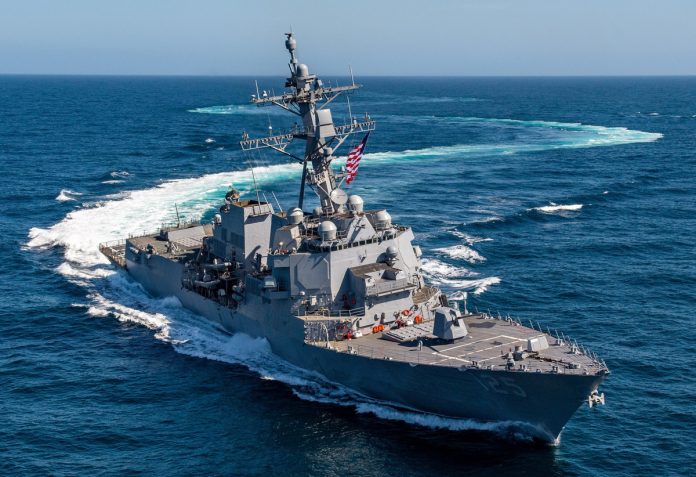
”One missile impacted in the sea. The two other missiles were successfully engaged and shot down by the USS Gravely,” CENTCOM added.

“There were no reported injuries or damage to the ship.”

It was unclear whether the Maersk Detroit had changed course as the result of the attack. The ship’s destination is officially listed as Namibia, on the southwest coast of Africa.

Earlier this week, the Pentagon announced that its combat operations against the Houthis have been dubbed ‘Operation Poseidon Archer’, adding that it was distinct from ‘Operation Prosperity Guardian’, intended to safeguard shipping through the Bab-el-Mandeb and the Suez Canal.

About 15% of the world’s maritime trade passes through the corridor that’s in the sights of Houthi missiles. Most commercial shipping companies have already rerouted their vessels around Africa, facing skyrocketing insurance premiums.

The Houthis have vowed to continue interdicting ships linked to Israel “until the aggression stops and the siege on the Palestinian people in the Gaza Strip is lifted”.

Ukraine calls for international probe into downing of Russian Il-76

Russia’s Il-76 plane

According to the Russian Defense Ministry, the Il-76 military transport was transporting 65 Ukrainian captives when it was shot down by a Ukrainian missile over Belgorod Region. Six Russian crew members and three officials were also on board. There were no survivors.

”We must determine all the hard facts – as much as possible, given that the plane crashed on Russian territory,” Zelensky said in a video published on his website.

He added that the Ukrainian authorities are investigating the incident and working to “determine the fate of all POWs”.

“Our country will be insisting on an international investigation,” the president stated, accusing Moscow of “playing with the lives of Ukrainian POWs”. He did not name a culprit in the destruction of the IL-76, however.

Several Ukrainian media outlets and journalists initially cited sources as saying that the aircraft was “transporting missiles” and was shot down by Ukrainian troops. They quickly deleted their original reports after Russia revealed that the plane was carrying Ukrainian captives.

The Russian MOD insisted that Kiev was “well aware” that the captives would have been transported on a military plane to an airfield near the Russian city of Belgorod, from where they would have been taken to an exchange point. Ukrainian military intelligence agency GUR claimed that they had not been informed in advance about the route, or the means, of the prisoners’ transportation.

The Russian Foreign Ministry announced on Wednesday Ukraine’s attack on the Russian Il-76 plane that led to its crash in the Belgorod Region was “deliberate”, and called the incident a “terrorist act”.

The Ukrainian General Staff has released a statement saying that Russia has been using transport planes to resupply Belgorod with missiles used to strike Kharkov, and that the planes were therefore a legitimate military target. It did not mention any prisoners, though.

Russia requested to convene an urgent meeting of the UN Security Council to discuss the incident. Foreign Minister Sergey Lavrov told reporters that “Ukrainian propaganda” has been frantically “trying to concoct other explanations” since the information about the passengers of the doomed flight was revealed.

Saudi Arabia set to open first-ever alcohol store

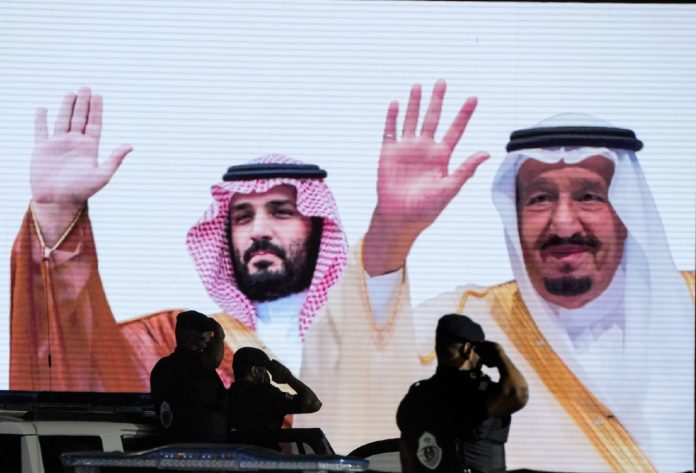
MbS King Salman

A source informed Reuters that the store will be opened in the capital Riyadh’s diplomatic quarter, and would be “strictly restricted” to non-Muslims.

The store is expected to open in the coming weeks.

Since it was officially prohibited in 1952, the kingdom has strictly banned alcoholic beverages in the country, without even the limited exceptions made by some otherwise teetotal neighbouring Persian Gulf states such as the UAE and Qatar.

While underground consumption of alcohol always existed in the country (with foreign officials often acquiring it through diplomatic pouches) the new store marks the first legal sales of alcoholic beverages – a move likely to anger many conservative Muslims who view consumption as prohibited by Islamic teachings.

The move comes in the wake of regulations announced over the weekend by local media aimed at curbing the “improper exchange” of alcohol between diplomatic residences.

A Saudi government statement on Wednesday said the authorities were introducing “a new regulatory framework…to counter the illicit trade of alcohol goods and products received by diplomatic missions”.

“The new process will focus on allocating specific quantities of alcohol goods when entering the Kingdom to put an end to the previous unregulated process that caused an uncontrolled exchange of such goods in the Kingdom.”

Saudi Crown Prince Mohammed bin Salman has been keen to push a number of social reforms in the kingdom as part of his much-touted Saudi 2030 Vision.

He overturned a ban on women driving in 2018 and has allowed public concerts and the proliferation of cinemas, even as he imposed a widespread crackdown on both liberal and conservative critics within the kingdom and stifled dissent.

However, despite rumours, there had been numerous public pushbacks on any suggestion of overturning the 72-year alcohol ban.

The 1952 ban came in response to an incident involving Prince Mishari bin Abdulaziz Al Saud and a British diplomat, Cyril Ousman.

At a party hosted by the diplomat, then British vice-consul in Jeddah, the 19-year-old prince shot Ousman dead after he refused to serve him more alcohol.

Following the killing – which saw Prince Mishari sentenced to life imprisonment – King Abdulaziz Ibn Saud, founder of the modern Saudi state, banned all alcohol in the country.

People convicted of consuming alcohol in Saudi Arabia could previously be served with fines, jail time, public flogging and deportation for foreigners.

EU preparing new sanctions against Russia over Ukraine war

Kremlin

The 13th package of restrictions will reportedly involve new travel bans and asset freezes targeting Russian businesses and individuals allegedly linked to Moscow’s military operation in Ukraine. However, it will likely also include a long-delayed agreement on a €50 billion ($54.5 billion) support package for Kiev, along with another €5 billion in annual military assistance. Sources told the news outlet that a decision to set aside the income generated by Russia’s frozen assets in the EU may also be included in the package.

”It’s money, weapons and sanctions at a time when we recognize [the Ukrainians] need encouragement. But two years in, there are limits to what we can do,” an unnamed EU diplomat told the FT.

The new sanctions, however, are unlikely to include a ban on Russian aluminum imports, nor target Russia’s nuclear fuel and liquefied natural gas (LNG) exports, due to a lack of consensus among the member states regarding these measures, sources claimed.

The EU has imposed 12 rounds of sanctions on Russia since the outset of the Russia-Ukraine conflict in February 2022. The measures have been aimed at weakening the country’s economy and making it unable to fund its military operation. However, despite Russia suffering a downturn in the first year of the hostilities, its economy has since stabilized, largely due to timely fiscal policy changes and the re-direction of most of the country’s trade to Asia.

Moscow has repeatedly called the sanctions “illegal”, but noted that they have so far proved unsuccessful. According to Valentina Matvienko, the speaker of the upper chamber of the Russian parliament, the country will continue to withstand sanctions pressure despite Western attempts to destabilize it.

”We need to be aware that the illegal sanctions pressure on our country will not disappear – it will last for a long time. For every success of ours, for every achievement, our opponents will try to respond with new restrictions, bans, even acting to their own detriment… But everyone already understands that their main goal, their dream – to inflict a strategic defeat on Russia – is not destined to come true,” Matvienko stated at a parliamentary meeting on Wednesday.

US denies reports of Syria troop withdrawal

US Troops Syria

Responding to a query from Russia’s RIA Novosti on Wednesday, a Pentagon spokesman denied reports this week by Foreign Policy magazine and Middle East news outlet Al-Monitor.

Foreign Policy claimed on Wednesday that US government officials were having “active internal discussions” regarding how and when to withdraw troops from Syria, while Al-Monitor reported on Monday that the Pentagon had proposed a plan for its Kurdish allies in Syria to partner with the Syrian government in their conflict with the Islamic State (IS) terrorist group.

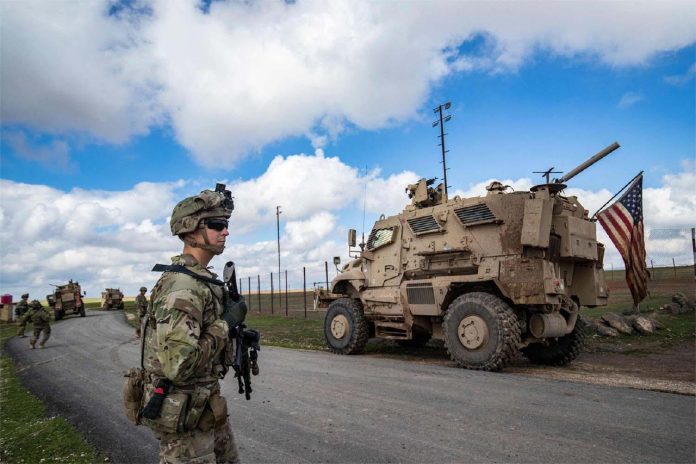
US officials have repeatedly justified their deployment of about 900 troops in oil-rich areas of northeastern Syria, in violation of Damascus’ sovereignty, as necessary to ensure the “enduring defeat” of IS. US lawmakers voted down a bill last year that called for an end to the illegal US presence, which has dragged on for nearly a decade and outlived Washington’s failed regime-change campaign against Syrian President Bashar Assad.

Foreign Policy magazine writer Charles Lister, a senior fellow at the Middle East Institute in Washington, argued that US President Joe Biden’s administration might give a “gift on a golden platter” to the resurgent IS if it pulls troops out of Syria. He added the administration was reconsidering its military priorities in the Middle East as the Israel-Hamas war ratchets up tensions in the region.

The White House National Security Council convened a meeting earlier this month – at the Pentagon’s request – with representatives of the CIA, the US State Department and “other relevant stakeholders” to discuss a plan to encourage the Kurds to collaborate with Damascus against IS, Al-Monitor said. The outlet cited unidentified people familiar with the deliberations and added they had declined to comment on whether the proposal would involve ending the US occupation.

A Pentagon official reportedly told CNN on Tuesday that Washington has “absolutely no intention” of supporting a partnership between its Syrian Democratic Forces (SDF) allies and the Syrian government.

Amerin Zaman, the Turkey-based correspondent who authored the Al-Monitor report, responded by insisting that a US interagency policy meeting on the plan was held on January 18. Zaman reported that Turkish officials had input on the US proposal. Washington and Ankara, which are NATO allies, have clashed over US-SDF operations in Syria.

Turkish President Recep Tayyip Erdogan has accused the US of training and arming Kurdish “terrorists” in Syria. After US forces shot down a Turkish drone over Syria in October, he vowed to take “necessary action when the time comes”.

UN unable to end Gaza war: Iran president

Raisi and Erdogan

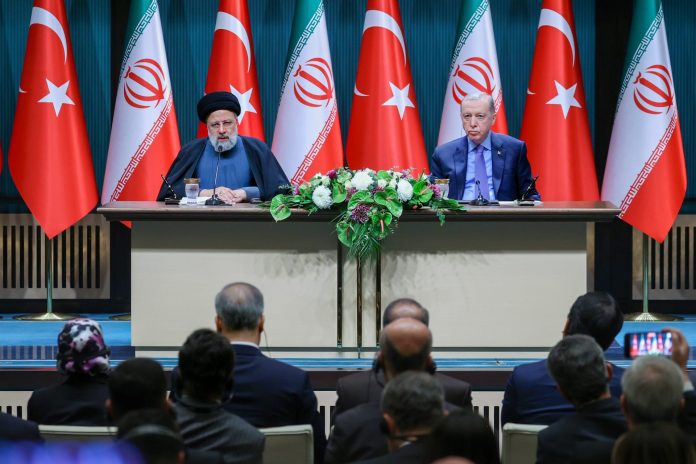
He made the call in a joint presser with his Turkish counterpart Recep Tayyip Erdogan, which was held following a two-hour meeting between the two at the presidential palace in Ankara on Wednesday.

“Those who claim to defend human rights and whose mission is to defend global peace and security have been on the sidelines and are no longer effective,” he said

The president called the Palestinian issue the top issue of humanity and said the entire world is shocked by the extent of death and destruction in Gaza.

Raisi added it’s a tragedy that the US is officially supporting the Israeli genocide and is practically complicit in the war.

“It is a great tragedy that America officially backs the Zionist regime. In fact, it is the United States that commits these crimes, and it is more unfortunate that the unions, international organizations, and the United Nations have lost their effectiveness and are unable to prevent the crimes that have become clear to everyone.”

The Iranian president said international organizations have failed the test of Gaza and showed they’re no longer effective. He added the world should move toward forming new mechanisms to deal with threats to international peace and security.

He also urged Arab and Muslim nations to immediately cut ties with the Israeli regime and disrupt its financial lifelines to force the regime to stop its indescribable violence in Gaza.

Raisi stated he and Erdogan agreed that more efforts must be made to support Palestinian resistance and to restore their rights.

He said the Israeli occupation must end and Israelis must compensate for 75 years of crimes against Palestinians.

The Iranian president added Palestinians are the victors of over 100 days of war in Gaza and the Israeli regime is the loser.

In his remarks, the Iranian president also thanked Erdogan for his warm welcome and efforts to expand bilateral relations.

The president said the two countries have had good relations for many years and now they want to elevate these ties to even higher levels in future.

Raisi added Iran and Turkey are two regional heavyweights who can work to settle regional and even international issues.

Touching on economic cooperation, he said the two countries plan to engage in more efforts to boost bilateral trade to 30 billion dollars.

He added they also agreed to further boost their fight against the scourge of terrorism in the region.

Erdogan, for his part, said he discussed with his Iranian counterpart the need for cessation of Israel’s “inhumane” attacks on Gaza and the urgency of just and permanent peace.

He stated they also agreed on the importance of avoiding steps that would further threaten security, and stability of our region, referring to the Israeli onslaught on Gaza.

Erdogan added he also discussed with his Iranian counterpart the importance of closer cooperation to fight the Kurdistan Workers’ Party militant group and its affiliate terrorist groups.

The presser was held shortly following the eighth meeting of the Iran-Turkey high-level cooperation council.

The two presidents oversaw the signing of 10 memoranda of understanding to promote bilateral cooperation in various arenas including, security, education, energy, and natural resources.

Raisi and Erdogan will also attend the joint meeting of business people and economic actors of Iran and Turkey. The Iranian president will also meet with Iranian nationals living in the neighboring country.

Heading a high-ranking politico-economic delegation, Raisi left Tehran for Ankara on Wednesday at the invitation of his Turkish counterpart.