Wednesday, December 31, 2025
Home Blog Page 1060

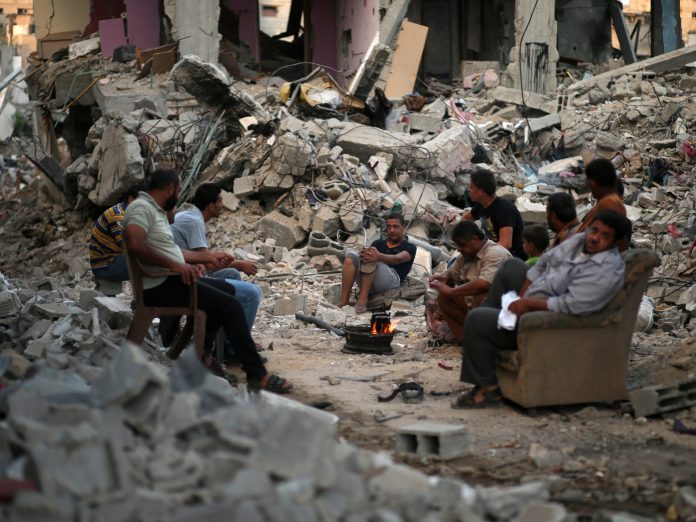
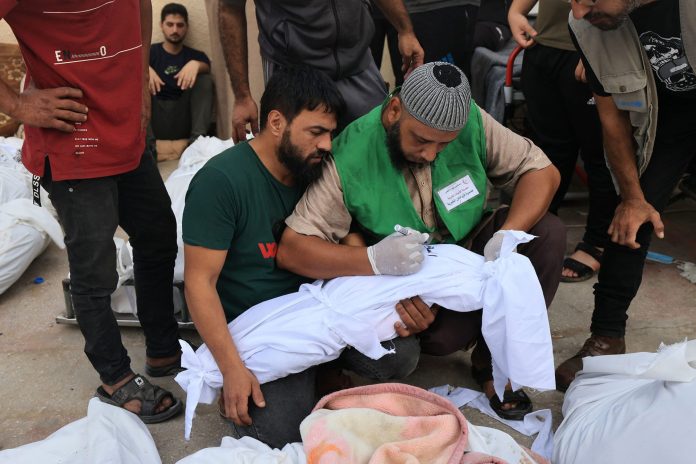
Gaza death toll surges past 27,000

Gaza War

The Gaza-based Health Ministry made the statement as the Israeli deadly onslaught against the Palestinian territory enters its 118th day.

It also said 66,139 other people have been injured in the ongoing aggression.

The statement added that in the past 24 hours, the Israeli army committed 15 massacres across the Gaza Strip which left 118 people killed and 190 others injured.

“Many people are still trapped under rubble and on the roads and rescuers can’t reach them,” the statement read.

Israel has pounded the Gaza Strip since a cross-border attack by Palestinian group Hamas in October, in which nearly 1,200 Israelis are believed to have been killed.

About 85% of Gazans have been displaced by the Israeli onslaught, while all of them are food insecure, according to the UN. Hundreds of thousands of people are living without shelter, and ⁠less than half of aid trucks are entering the territory than before the start of the conflict.

EU mulls launching naval mission in the Red Sea in less than a month

Yemen Houthis

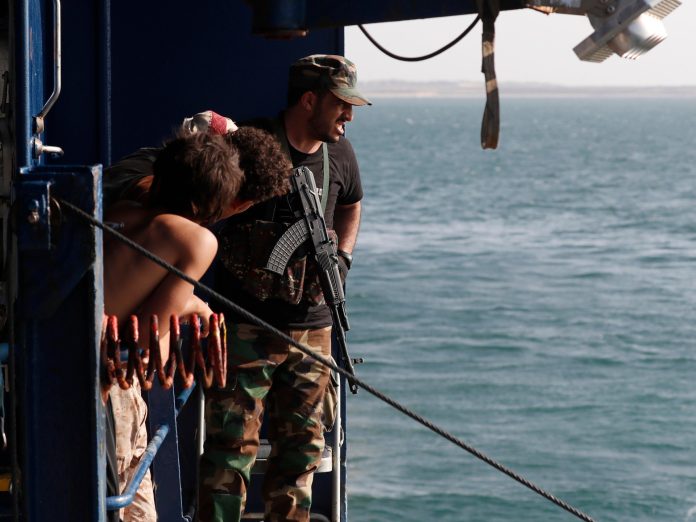
“Maritime security in the Red Sea has significantly deteriorated over the last weeks and we are very much advancing the work of a new maritime operation in order to act in a purely defensive mode to protect merchant vessels,” Borrell confirmed after an informal meeting of defence ministers in Brussels.

“Our goal is to establish and launch this mission, Aspides, at the latest on the 19 February, I hope, and I’m sure, we will,” he added.

Foreign affairs ministers from across the bloc are scheduled to meet in the Belgian capital on that date and stamp the plan with their approval.

Yemenis have been conducting many military operations against Israeli vessels or those heading towards the occupied Palestinian territories’ ports.

The operations have been described as a response to an October 7, 2023-present war and siege that the Israeli regime has been waging against Gaza following an operation carried out by the Palestinian territory’s resistance movements.

Nearly 27,000 Palestinians, mostly women, children, and adolescents, have died so far in the war, which enjoys untrammeled military and political support on the part of the United States, the Zionist regime’s biggest ally.

In response, Washington has formed a military coalition against Yemeni forces in the Red Sea and endangered maritime navigation in the strategic waterway.

The US and the UK, backed by several countries, have also struck tens of targets at several locations in Yemen in recent weeks.

The increased risks faced by ships in the Red Sea have forced the world’s biggest freight firms to avoid the Suez Canal and sent insurance costs soaring. Instead of Suez – the quickest cargo route from Asia to Europe – many vessels are now diverting round the Cape of Good Hope, incurring higher expenses on fuel, maintenance and wages.

Container freight rates for key global trade routes have also surged after Washington and London launched airstrikes on targets in Yemen with the stated goal of protecting maritime commerce in the Red Sea and the Bab-el-Mandeb straits, the world’s busiest routes.

Putin says Russia to expand Ukraine’s ‘demilitarized zone’

Russian Troops

Russian border regions have been subjected to frequent drone and missile attacks, as well as shelling by the Ukrainian military, since the start of the conflict between Kiev and Moscow. One of the deadliest attacks took place on December 30, when Kiev’s forces struck the Russian border city of Belgorod with multiple rocket launchers, including the RM-70 Vampire – an upgraded heavier version of the Soviet BM-21 Grad system.

A December strike claimed the lives of 25 people, including children, and left more than 100 injured. In January, another massive strike hit the city of Donetsk, killing 27 civilians. Both attacks were condemned by the UN.

“This [demilitarized] line should … lie at such a distance from our territory that it would ensure the security [of Russian cities],” the president said on Wednesday, adding that he was specifically referring to protection from “foreign-made longer-range weapons that the Ukrainian authorities use to strike peaceful cities”.

According to Putin, Russian forces fighting on the frontlines were pushing Kiev’s troops away from Russian borders to safeguard national security.

“This is the main mission for our guys: to protect their homeland, to protect our people.”

The “demilitarization” and “denazification” of Ukraine were cited as the major goals of Russia’s ongoing military campaign from the very beginning. Putin specifically mentioned a demilitarized or “sanitary” zone that was to be created in Ukraine in June 2023. At the time, the Russian president said that this zone could be created if Kiev’s forces continue to launch attacks at Russian cities. The goal of this move would be to make it impossible for the Ukrainian military “to reach us”, he added.

The US and its allies have been actively supplying Ukraine with heavy weapons throughout the conflict that ranged from howitzers and various artillery pieces to multiple rocket launchers and missile systems.

The list of the longer-range Western-made weapons in Kiev’s possession include the British-made Storm Shadow missiles that have a range of 250km (155 miles) and the US-made Army Tactical Missile Systems (ATACMS), which have a range of up to 160 kilometers (100 miles).

Earlier this week, Politico reported that Washington could provide Kiev with Ground Launched Small Diameter Bombs (GLSDB), which also have a range of around 160 kilometers (100 miles).

Military intelligence chief Kirill Budanov told The Telegraph on Tuesday Ukrainian forces will go on the offensive against Russia once more in the spring. It remains unclear how Kiev will acquire the weapons or the half a million men it needs to cover its losses after last summer’s failed counteroffensive.

Budanov claimed that Russia’s offensive operations around the Donbass settlements of Kupyansk, Liman, Artyomovsk (called Bakhmut in Ukraine), and Avdeevka will be “completely exhausted” by “early spring.”

“We make a move, the enemy makes a move,” he said, adding, “Now is the enemy’s turn. It will end, and then ours will start.”

Ukraine’s last counteroffensive began in June and lasted until around October, with Ukrainian forces attempting to penetrate Russia’s defensive lines at multiple points across Kherson, Zaporzhye, and Donetsk Regions. It failed to achieve any significant territorial gains and cost Kiev around 160,000 lives, according to figures from the Russian Defense Ministry.

This time around, the Ukrainian military would be heading into battle with much of its Western-provided hardware destroyed and its best-trained troops replaced with inexperienced conscripts, all while continued military aid from the US remains uncertain. Even now, the situation at the front is “dramatic,” anonymous “generals and soldiers” told Germany’s Die Welt newspaper last week, citing shortages of vital ammunition and fresh recruits.

Ukrainian President Volodymyr Zelensky announced plans last month to mobilize around 500,000 new conscripts to cover those lost since the beginning of the conflict almost two years ago. While Ukraine does not publish casualty figures, the Russian Defense Ministry places Kiev’s losses since February 2022 at nearly 400,000 men. Aleksey Arestovich, a former aide to Zelensky, put the figure at up to 300,000.

Zelensky’s top general, Valery Zaluzhny, described the battlefield situation in November as a “stalemate”, a comment that reportedly angered Zelensky. Acrimony between the two men exploded into the headlines this week when Zelensky reportedly fired – then rehired – Zaluzhny, all while Kiev’s censorship office dismissed the story as a baseless rumor aimed at “destroying the unity of Ukrainian society”.

However, American officials told Bloomberg earlier this month that the rift between the president and the general was real, and was “slowing efforts to crystallize a new strategy” for the coming year.

According to British newspaper The Times, Zaluzhny’s position was offered to Budanov, who declined. Had Zelensky replaced Zaluzhny with Budanov, he would have swapped a cynic with someone who shares his “messianic” belief in a military victory over Russia, as Zelensky’s aides described his vision in a Time magazine article last year.

It is unclear whether Zaluzhny, like Budanov, believes that Ukraine will be able to launch a counteroffensive this spring.

Gaza economy needs decades to go back to pre-war levels: UN

Gaza War

The assessment came in a report by the United Nations Conference On Trade And Development (UNCTAD) that outlined the severe social and economic deterioration experienced in Gaza since the initiation of military operations following attacks by the Palestinian resistance group, Hamas, on Israel in early October.

“UNCTAD’s assessment underscores that restoring pre-conflict socioeconomic conditions in Gaza will take decades and requires substantial foreign aid,” the UN body announced in a statement.

The report, drawing upon innovative satellite imagery and official data, meticulously quantifies the extent of the conflict.

The Gazan economy had already contracted 4.5% in the initial three quarters of 2023, according to UNCTAD’s findings. But the military operation has exacerbated the decline, resulting in a staggering 24% GDP contraction and a 26.1% drop in GDP per capita for the entire year.

“If the current military operation were to end immediately with reconstruction starting right away and the 2007-2022 growth trend persists with an average growth rate of 0.4 per cent, it would take Gaza until 2092 just to restore the GDP levels of 2022 with GDP per capita and socioeconomic conditions continuously declining.”

“However, even with the most optimistic scenario that GDP could grow at 10% annually it would still take Gaza’s GDP per capita until 2035 to pre blockade level of 2006,” it added.

“The recovery of Gaza’s economy from the current military operation will demand a financial commitment, several times the $3.9 billion that resulted from the 2014 military operation in Gaza and will involve a concerted international effort to restore pre-conflict socioeconomic conditions.”

Prior to the recent military escalation, Gaza endured dire socioeconomic conditions, with more than 2 million residents confined to one of the world’s most densely populated areas and basic necessities such as clean water and electricity were scarce, and unemployment rates soared.

The ongoing military operation has exacerbated Gaza’s plight, displacing 85% of its population and halting economic activities, it noted.

UNCTAD stressed the urgent need to break the cycle of economic destruction, cautioning against a return to the pre-conflict status quo.

“The possibility and speed of recovery in Gaza will depend on ending military operation, donors’ engagement and subsequent growth performance. An optimistic scenario suggests that even with an immediate end to the fighting bringing Gaza back to the socioeconomic conditions that prevailed prior to the outbreak of the current confrontation would take decades without a properly funded recovery programme fully backed by the international community,” it said.

Furthermore, it emphasized the crucial role of immediate financial support to the Palestinian government, warning of a wider collapse without sustained governance and essential public services.

Ultimately, UNCTAD asserted that the resolution of Gaza’s crises hinges upon ending the military operation and lifting the blockade, advocating for a two-state solution in accordance with international law and relevant United Nations resolutions.

“Donors and the international community are urged to recognize that the constraints on the Palestinian economy, specifically in Gaza, extend beyond the recent confrontation,” it added.

Israel has launched relentless air and ground attacks on the Gaza Strip since a cross-border attack by Hamas in October.

The onslaught has killed nearly 27,000 victims, mostly women and children, displaced 85% of the blockaded enclave’s population and created conditions for famine. Israel said 1,200 people were killed in the Hamas attack.

The International Court of Justice (ICJ), in its interim ruling on the genocide case filed by South Africa, ordered Israel to prevent acts of genocide in Gaza and enable the provision of urgently needed basic services and humanitarian assistance to address the adverse conditions of life faced by Palestinians.

Tel Aviv also has to submit a report to the ICJ on all measures taken to give effect to the order within one month.

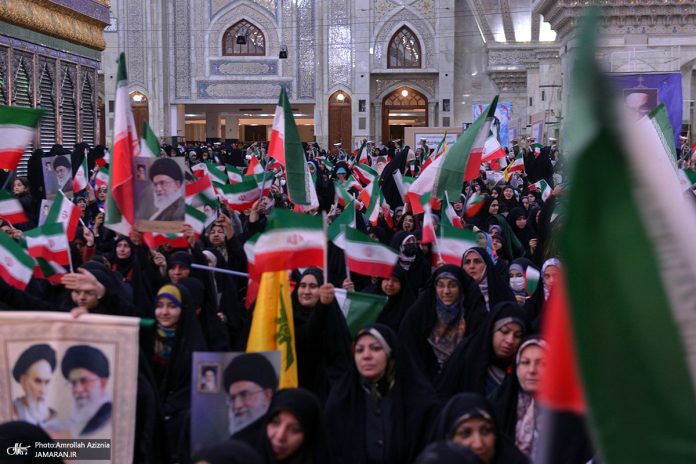
Iran kicks off ceremonies to mark 45th anniversary of Islamic Revolution

Iran Flag

The special events took place in the mausoleum of Imam Khomeini, the founder of the Islamic Republic of Iran, south of the Iranian capital Tehran on Thursday morning.

The ceremony started at 09:33 local time (06:03 GMT) to mark the exact time of Imam Khomeini’s arrival to the country after 15 years of exile in France on February 1, 1979.

His return to Iran put an end to the ruling of the US-backed Pahlavi regime and the victory of the Islamic Revolution in the country ten days later.

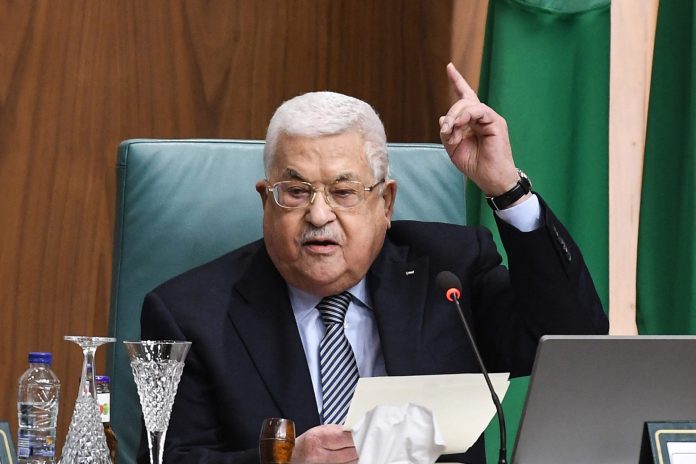
PA president vows to resist Israeli plans to separate Gaza from Palestine

Mahmoud Abbas

He made the statement during a meeting at the presidential headquarters in Ramallah attended by members of the Central Committee of the Fatah movement, several members of its Revolutionary Council, the secretary of the Advisory Council and secretaries of the movement’s regions in the northern provinces, according to the official Palestinian news agency Wafa.

Abbas also reaffirmed “the unwavering Palestinian political stance regarding the urgent need for an immediate cease-fire, the complete withdrawal of Israeli occupation forces from Gaza and the swift delivery of humanitarian aid to the beleaguered region”.

He stressed “the importance of preventing the displacement of the Palestinian people from their land, citing the historical trauma of the 1948 Nakba and the enduring repercussions that have befallen the Palestinian people for decades since then”, according to Wafa.

President Abbas also affirmed “the unity of the Palestinian land in Gaza, the West Bank and East Jerusalem under the jurisdiction of the State of Palestine”.

“The State of Palestine will not abandon (its) people in Gaza. We will share the livelihood, the salaries and the stipends in Gaza and the West Bank,” he added.

“We will not allow the occupation’s plans to separate Gaza from the rest of the Palestinian territory or annex any part of it.”

The president highlighted “the continuous efforts with international partners and regional allies to stop the ongoing Israeli aggression and provide comprehensive assistance to the Palestinian people in Gaza, including enabling them to return to their homes that have been destroyed by the Israeli occupation forces”.

He pointed out that “Israel’s withholding of the Palestinian clearance revenues would not block the State of Palestine from fulfilling its responsibilities, especially towards the people of Gaza”.

Israel launched a deadly offensive on the Gaza Strip following an Oct. 7 attack by the Palestinian group Hamas, killing at least 26,900 Palestinians and injuring 65,949. Nearly 1,200 Israelis are believed to have been killed in the Hamas attack.

The Israeli offensive has left 85% of Gaza’s population internally displaced amid acute shortages of food, clean water and medicine, while 60% of the enclave’s infrastructure has been damaged or destroyed, according to the UN.

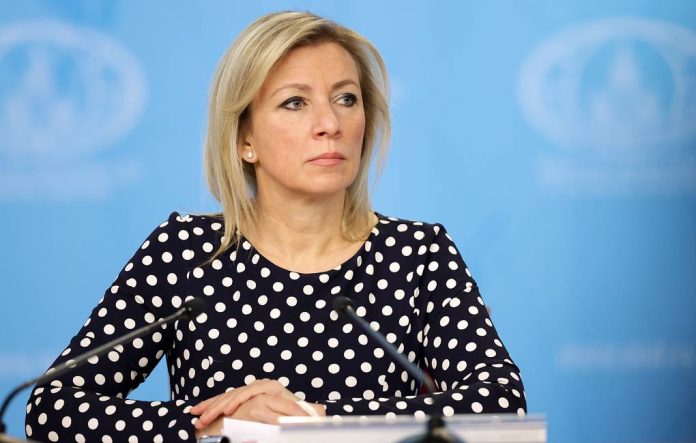
Russia says disrupts no intl. bonds in cooperating with Iran, North Korea

Maria Zakharova

“Russia does not disrupt anything by interacting with Iran and North Korea. We develop our relations on a bilateral basis, on the basis of mutual respect. It is beneficial to both of us. Our country breaks no international commitments,” Zakharova said, commenting on Western media’s publications on the alleged use of Iranian and North Korean weapons in the special military operation zone.

“What, how and why we do anything within relations with other countries is entirely our own business,” the diplomat added.

Zakharova has repeatedly stressed that accusations by Western countries of illegal military-technical cooperation between Russia and the DPRK are unfounded and unsubstantiated.

Earlier, Russian Foreign Minister Sergey Lavrov denied Washington’s claims that Pyongyang was providing military assistance to Moscow.

Russia and Iran have repeatedly rejected allegations that Iran supplies drones to Russia for use in Ukraine. Kremlin Spokesman Dmitry Peskov called such reports a falsification and emphasized that the Russian army uses domestically produced drones. In November 2022, Iranian Foreign Minister Hossein Amirabdollahian stated that the republic had supplied drones to Russia, but in small quantities and a few months before the start of the special military operation.

Yemen’s Houthis say struck US commercial ship in Red Sea

Yemen Houthis

The military operation took place on Wednesday, the Houthis announced through their spokesman Brigadier General Yahya Saree.

“American Commercial ship, KOI, was targeted with appropriate naval missiles, while heading towards the occupied Palestinian ports,” Saree stated.

Yemenis have been conducting many such operations against Israeli vessels or those heading towards the occupied Palestinian territories’ ports.

The operations have been described as a response to an October 7, 2023-present war and siege that the Israeli regime has been waging against Gaza following an operation carried out by the Palestinian territory’s resistance movements.

Nearly 27,000 Palestinians, mostly women, children, and adolescents, have died so far in the war, which enjoys untrammeled military and political support on the part of the United States, the Israeli regime’s biggest ally.

The operation against the merchant ship came just hours after the Yemeni forces fired “several” missiles at USS Gravely, an American Navy warship, just off the Yemeni coast in the Red Sea.

Saree reaffirmed “the forces’ commitment” to continue their operations until the Israeli regime ceases its aggression against Gaza and lifts its blockade against the territory.

The United States and the UK have also conducted several missile attacks against Yemeni targets in response to the Yemeni operations.

The spokesman asserted that “the Armed Forces are to face the US-British escalation with escalation and to carry out more military operations within Yemen’s legitimate [right to] defense in response to the continued aggression”.

Yemen’s Houthi militia has stated it plans more attacks on United States and British warships.

The group’s statement, released on Wednesday, stressed all US and British warships participating in “aggression” against Yemen are targets. The statement stoked concern over the simmering tensions in the region as well as increased disruption to world trade.

US weighing options to recognize Palestinian state after Gaza war: Report

White House

US Secretary of State Anthony Blinken has asked the State Department to review how the US and international community could recognize an independent Palestinian state.

Part of the deliberations include an examination of how to create a demilitarized Palestinian state based on other examples in the world.

President Joe Biden signalled earlier this month to reporters that his administration was looking into the creation of an independent Palestinian state that would have no military, as a way to gain Israeli support.

In his remarks to reporters, Biden alluded to other demilitarized states, such as a handful of small European principalities and island nations.

The State Department’s review comes as the Biden administration ramps up efforts to seal a lengthy ceasefire to the war in Gaza.

The White House dispatched CIA director Bill Burns to Paris, France, over the weekend to hammer out the details of a potential six-week pause in Gaza fighting, that Arab and US officials hope could lead to a permanent ceasefire.

Hamas has announced it is reviewing the agreement, but the deal faces a number of obstacles, not the least of which is Israel’s public refusal to agree to a full ceasefire and the removal of Israeli soldiers from Gaza when fighting stops.

The Biden administration has consistently said that it believes a two-state solution is the only way to resolve the Israel-Palestine conflict.

That has put it at odds with Prime Minister Benjamin Netanyahu’s government, which has publicly said it would oppose the creation of an independent Palestinian state. Some members of Netanyahu’s government are also calling for Israel to re-settle the Gaza Strip and expel its Palestinian population.

The media leak saying that the State Department is reviewing options to recognize a Palestinian state could be a way to put pressure on Netanyahu’s government as it weighs the US-backed ceasefire proposal.

Israel’s offensive in Gaza has dragged on with no end in sight, and about 80 percent of Hamas’s tunnel network remains intact, according to the Wall Street Journal.

Israeli officials’ statements that the war in Gaza could drag on through 2024 stand in sharp contrast to the Biden administration’s lobbying for a precise and short military campaign in the besieged enclave in response to the Hamas-led 7 October attack.

For decades, the US has refused to unilaterally recognize an independent Palestinian state, insisting that such a move will only come after Israel and the Palestinian Authority have reached a final agreement on a two-state solution.

The US has also regularly blocked efforts at the United Nations to recognize Palestine as an independent state. According to the Axios report, one of the options on the table for the US, short of recognizing an independent Palestinian state, would be to lift its veto on the move at the UN Security Council.

Other US allies have also stated they are considering recognizing an independent Palestinian state. On Monday, British Foreign Secretary David Cameron said the UK should “set out what a Palestinian state would look like”.

WHO warns Gazans starving to death

Gaza War

The WHO’s emergencies director Michael Ryan said on Wednesday that the risk of famine was already high and on the rise.

“This is a population that is starving to death, this is a population that is being pushed to the brink,” Ryan said.

The WHO official added efforts to bring aid into Gaza are constantly disrupted and that the space for humanitarian intervention was being constrained in “every aspect”.

Major donor Western countries have announced the suspension of their aid to the UN agency for Palestinian refugees (UNRWA). The UN announced cutting the “lifeline” 2 million people in Gaza depend on is a “collective punishment”.

“The civilians of Gaza are not parties to this conflict and they should be protected, as should be their health facilities.”

Ryan stated the people in Gaza “are right in the middle of a massive catastrophe”.

The WHO official further said access to proper nutrition has become a major issue in the Gaza Strip, with the calorie count and the quality of nutrition consumed by the people having dropped sharply. Populations are not supposed to survive indefinitely on food aid, he added.

“It’s supposed to be emergency food aid to tide people over.”

“And if you mix a lack of nutrition with overcrowding and exposure to cold through lack of shelter… you can create conditions for massive epidemics.”

“And we’re seeing them,” Ryan continued.

Elsewhere in his remarks, Ryan pointed to the dramatic reduction in the number of operational health facilities in Gaza.

On Wednesday, the head of the WHO Tedros Adhanom Ghebreyesus warned that cutting funds to the UN Palestinian refugee agency would entail “catastrophic consequences” for people in Gaza. “No other entity has the capacity to deliver the scale and breadth of assistance that 2.2 million people in Gaza urgently need”.

“We appeal for these announcements to be reconsidered,” Ghebreyesus said.

Ghebreyesus also added the WHO was facing continued “extreme challenges” in propping up Gaza’s health system.

“Over 100,000 Gazans are either dead, injured, or missing and presumed dead.”

The United Nations Relief and Works Agency for Palestine Refugees in the Near East (UNRWA) also warned Wednesday that in Gaza, “access to clean water is a matter of life and death”.

“In Gaza, every day is a struggle to find bread and water. Every day is a struggle to survive,” it wrote on X.

The agency pointed out that “without safe water, many more people will die from deprivation and disease”.

Israel launched a deadly offensive on the Gaza Strip following an Oct. 7 attack by the Palestinian group Hamas, killing at least 26,900 Palestinians and injuring 66,000. Nearly 1,200 Israelis are believed to have been killed in the Hamas attack.

The Israeli offensive has left 85% of Gaza’s population internally displaced amid acute shortages of food, clean water and medicine, while 60% of the enclave’s infrastructure has been damaged or destroyed, according to the UN.