Monday, December 29, 2025
Home Blog Page 1040

Russia dismisses Ukraine’s Starlink claims

Starlink

SpaceX CEO Elon Musk donated some 20,000 Starlink terminals to Ukraine shortly after Russia launched its offensive against the country in February 2022. Ukrainian troops are using them to operate drones along the front line. However, the billionaire said last year that he had refused Ukraine’s request to activate the Starlink service in Crimea.

Speaking to reporters on Monday, Peskov noted that Starlink had never been certified in Russia, meaning that it “cannot be and is not being delivered here officially”. He added that, for this reason, the technology cannot be used in any official capacity in Russia.

The Kremlin’s representative concluded by saying that there was no point in Moscow getting involved in a “discussion between the Kiev regime and entrepreneur Musk”.

In a post on X (formerly Twitter) on Sunday, Musk lamented that “a number of false news reports claim that SpaceX is selling Starlink terminals to Russia”.

“To the best of our knowledge, no Starlinks have been sold directly or indirectly to Russia,” the SpaceX CEO added.

In a separate statement on Thursday, SpaceX insisted that it “does not do business of any kind with the Russian government or its military,” and has “never sold or marketed Starlink in Russia, nor has it shipped equipment to locations in Russia”.

Meanwhile, on Sunday, Ukraine’s Main Directorate of Intelligence (GUR) claimed to have intercepted a conversation between Russian military personnel, where one service member could be heard saying in Russian “Starlink is working, we have internet [access]”.

GUR spokesman Andrey Yusov alleged that Russian troops are “systematically” using Starlink terminals.

In September, Musk said his company had refused to enable Starlink coverage over Crimea.

“Now, the reason it was turned off was actually because… the United States has sanctions against Russia… and that includes Crimea,” he explained at the time. In the absence of any direct orders from the US leadership, SpaceX opted not to run afoul of the regulations despite Kiev’s request to do so, the entrepreneur noted.

Earlier, CNN reported that Musk’s decision had thwarted a Ukrainian drone attack against the Russian Black Sea Fleet.
Iranian parliament’s news website down after cyberattack

Iran Parliament

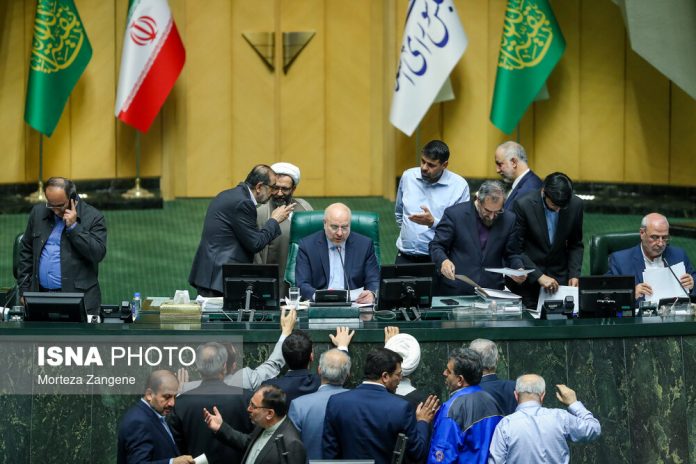
No group has claimed responsibility for the cyberattack, but apparently the so-called Mojehadin-e Khlaq Organization (MKO) is behind the hacking as pictures of the anti-Iran terrorist cult’s leaders were uploaded on the website.

UK announces sanctions on ‘extremist’ Israeli settlers over West Bank violence

Israel Palestine

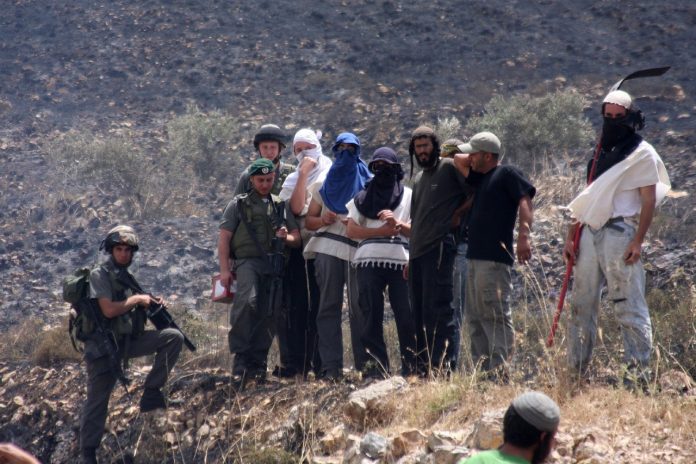
The sanctions announced on Monday follow what the UK called “unprecedented levels of violence by extremist settlers in the West Bank” over the past year by some residents of illegal Israeli settlements and outposts there.

The sanctions represent a rare move by London and Washington against Israelis as war rages in the besieged Gaza Strip.

The transatlantic allies’ steadfast support for Israel’s military operations in the territory has drawn heavy criticism both internationally and among sections of their domestic populations.

Announcing the asset freezes and travel and visa bans against the settlers, British Foreign Secretary David Cameron said: “Israel must also take stronger action and put a stop to settler violence.”

“Too often, we see commitments made and undertakings given but not followed through,” he added.

Cameron stated “extremist Israeli settlers” are threatening Palestinians, often at gunpoint, and “forcing them off land that is rightfully theirs”, branding the behaviour “illegal and unacceptable”.

“Extremist settlers, by targeting and attacking Palestinian civilians, are undermining security and stability for both Israelis and Palestinians.”

Two of the individuals sanctioned – Moshe Sharvit and Yinon Levy – have in recent months used physical aggression, threatened families at gunpoint and destroyed property, Cameron’s foreign ministry said.

Their actions are “part of a targeted and calculated effort to displace Palestinian communities”, the Foreign, Commonwealth and Development Office added.

London also targeted Zvi Bar Yosef, who it said had set up an illegal outpost in the West Bank in 2018, which has been described by local Palestinian residents as a “source of systematic intimidation and violence”.

A fourth person London sanctioned, Ely Federman, has been involved in multiple incidents against Palestinian shepherds in the South Hebron Hills, according to the Foreign Office.

Levi was the only one of the quartet to also be targeted by the US when it imposed sanctions on four Israeli settlers for attacking Palestinian communities in the West Bank, accusing them of undermining stability and security in Israel and the Palestinian territories.

The US sanctions target Levy, David Chai Chasdai and Einan Tanjil, who are accused of assaulting and intimidating Palestinians. They also target Shalom Zickerman, who is accused of assaulting Israeli activists.

The White House also announced a new decree to penalise perpetrators of “extremist settler violence” in the West Bank.

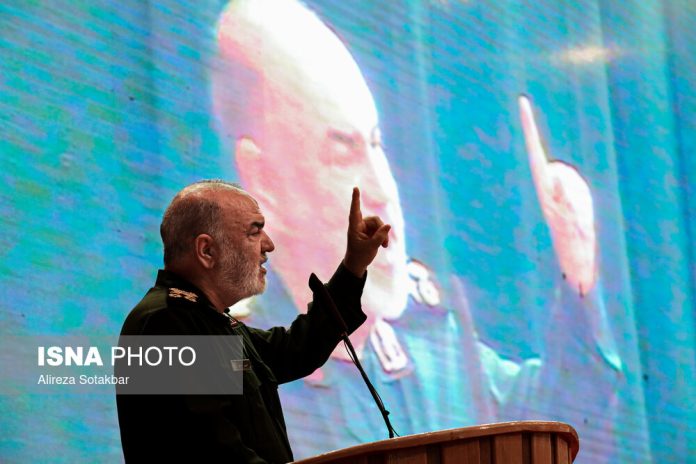
IRGC commander says elite forces launched long-range ballistic missile from warship

Hossein Salami

Major General Hossein Salami stated on Monday that the achievement means that the IRGC will have the capacity to hit any target because its ocean-cruising warships can sail to any location around the world.

“One long-range ballistic missile was successfully fired from a military vessel of the IRGC Navy in joint cooperation between the IRGC Aerospace Force and the IRGC Navy,” Salami was quoted as saying by semi-official Tasnim news agency.

The development comes amid Iran’s growing success in expansion of its defensive missile program. The country has used the missiles in attacks in recent years on terrorist targets located as far as the Mediterranean.

However, Iran has repeatedly declared that its missile capabilities are solely used for deterrence and defense.

It has warned the United States and Israel that any action against Iran will be met with missile attacks on their military positions and interests in the region.

Last month, Iranian long-range missiles were fired at a base controlled by the Israeli spying agents in Iraq’s Kurdistan region, as well as on gatherings of terrorists in Syria who were involved for explosions that killed more than 90 people in early January in the city of Kerman.

EU makes decision on frozen Russian funds in response to Ukraine war

Russian Ruble

The EU and the US moved to freeze an estimated $300 billion in assets belonging to the Russian Central Bank, most of which are held by the Brussels-based clearinghouse Euroclear, in February 2022.

On Monday, the European Council ordered all depositors holding €1 million ($1.08 million) or more in Russian Central Bank assets to keep separate accounts of “extraordinary cash balances accumulating due to EU restrictive measures” and prohibited them from disposing of any interest or profits from the frozen assets.

“This decision paves the way for the Council to decide on a possible establishment of a financial contribution to the EU budget raised on these net profits to support Ukraine and its recovery and reconstruction at a later stage,” the Council said in a statement.

Moscow has protested the US and EU sanctions as illegal, adding that any attempt to outright seize the Russian funds would be declared theft and receive a response in kind. Russian bankers have also warned that such a step would destroy the confidence of the rest of the world in the rule of law in the West and trigger a run on European and US banks because they would no longer be considered safe.

While the US has been the most outspoken advocate of confiscating the frozen funds to send to Ukraine, the EU stands to lose the most from Moscow’s potential retaliation against such a step. Euroclear alone accounts for €196.6 billion ($211 billion) in frozen Russian assets, and it has accrued nearly €4.4 billion in interest over the past year.

The EU’s “invention of openly fraudulent schemes for the seizure of income from Russian assets is dictated by the need to create the illusion of legitimacy over attacks on our property and thereby camouflage what is in fact an outright theft”, the Russian Foreign Ministry announced over the weekend, responding to reports that Brussels would move to seize the interest.

Some EU members have likewise been skeptical of the confiscation proposal.

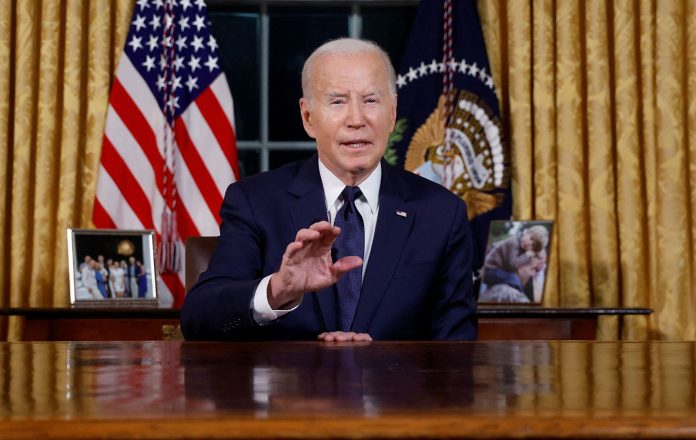
Biden calls Netanyahu ‘assh*le’ over Israeli intransigence on Gaza

Joe Biden

“He just feels like this is enough. It has to stop,” one of the insiders told the news outlet.

Biden has complained that Netanyahu is “giving him hell” by refusing to consider a ceasefire with Hamas in Gaza, the sources said, adding that the US president is upset the Israeli leader has rejected several “good deals” put before him.

Biden’s frustration has spilled over into allegedly calling the Israeli PM an “assh*le” on three separate occasions, according to his confidants.

“He’s been a pain in my ass lately,” the US president reportedly told a small group of donors at a recent fundraiser, qualifying his frustration by insisting he was still a “Zionist” who believed Hamas must be destroyed and Israel protected.

Last week, Politico reported that Biden had referred to his Israeli counterpart as “a bad f**king guy”, a claim denied by his spokesperson, Andrew Bates. NBC’s sources affirmed that the president had deemed it “counterproductive” to be “too harsh on Netanyahu publicly”.

However, late last week he described Israel’s ongoing assault on Gaza as “over the top”, subsequently insisting Tel Aviv refrain from moving forward with a planned ground assault on the southern city of Rafah until it has “a credible and executable plan” to safeguard the Palestinian civilians there.

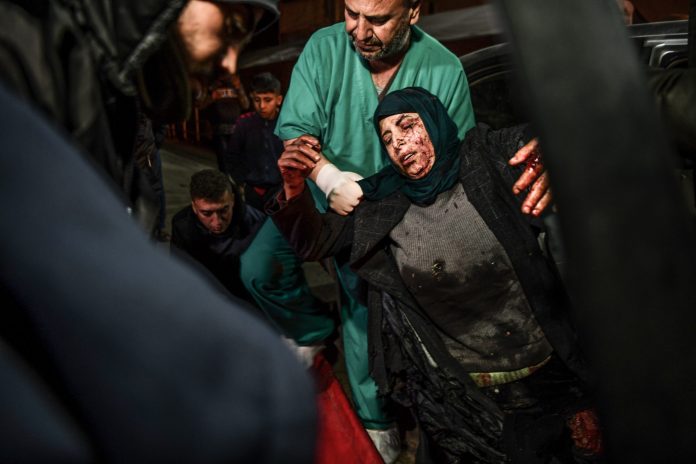
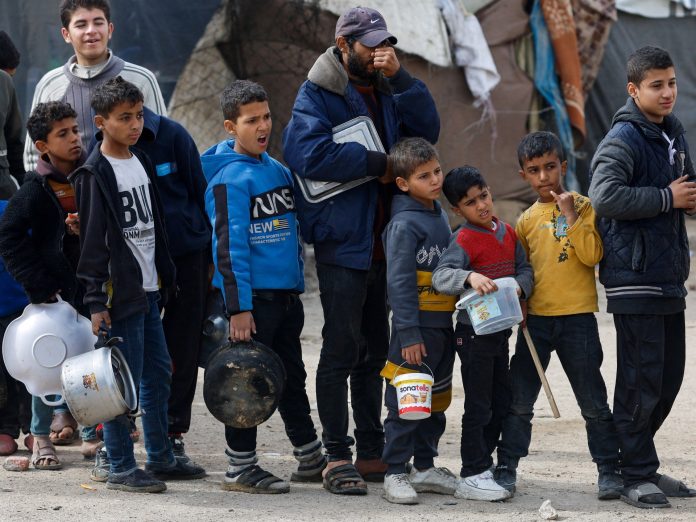
Four months of nonstop Israeli bombing have displaced over 85% of Gaza’s residents, many of them more than once. Over a million Palestinians are crowded into a tent city hastily constructed in Rafah, where the Israel Defense Forces have corralled most of the enclave’s inhabitants after all but leveling Gaza City and Khan Younis.

Several Israeli politicians have called for Palestinians to be resettled outside Gaza. While West Jerusalem has officially disavowed this policy, it still plans a ground invasion of Rafah, despite the Palestinians having nowhere left to flee inside the enclave.

The US has unflinchingly backed Israel despite charges of genocide brought against Israel in the International Court of Justice and the International Criminal Court. The Biden administration has repeatedly circumvented Congress to supply the IDF with hundreds of millions of dollars in weaponry, though officials have since claimed to be weighing potentially halting or slowing the flow of arms sales, to pressure Israel to stop killing so many Palestinian civilians.

Since Hamas attacked it last October, Israel has killed over 28,000 Palestinians in Gaza, mostly women and children, according to the enclave’s health ministry. The Palestinian group’s raid left 1,200 Israelis dead.

Iran FM: Israel invasion of Rafah in Gaza to have “dire consequences” for Tel Aviv

Gaza War Rafah

In a message on X social media platform, the Iranian foreign minister warned against the spillover of the “war crimes and genocide” by the Israeli regime to Palestinian refugees in densely-populated Rafah.

Israel has already conducted airstrikes on Rafah, killing scores of Palestinians, and is reportedly preparing for a mass ground invasion.

Meanwhile Iranian Foreign Ministry Spokesman Nasser Kanaani strongly condemned the “murderous airstrikes by the Zionist regime against residential and civilian areas” in Rafah.

While noting that Rafah hosts more than a million displaced Palestinians, Kanaani warned that the Zionist regime’s aggression against the region and its threats of a ground invasion could lead to a humanitarian catastrophe and another crime against the defenseless Palestinian people.

Kanaani stressed that such an intention and action is contrary to the current negotiations on the issue of ceasefire and disrupts them.

He added Israel’s airstrikes also run counter to the temporary orders issued by the International Court of Justice.

The Iranian foreign ministry spokesperson also warned against the dangerous consequences of this “barbaric act” and voiced concern about the persistence of “the genocide in Gaza by the Zionist regime.”

Kanaani underscored that time is now for the US and other western allies of the Zionists to contain “the insane behavior” of the Israeli regime’s officials and immediately stop the massacre of the defenseless Palestinians if they are sincere in their claims that they are worried about regional security and stability.

He drew the attention of international bodies, governments and the world public opinion to the worrying implications of any military move by Israel for the situation of the residents of Rafah and the displaced Palestinians there.

Kanaani also underlined the role of international organizations, particularly the United Nations, in stopping the continuation of Israel’s
onslaught on Gaza.

More than 28,000 Palestinians have been killed in Israel’s onslaught against Gaza since early October last year.

Hamas says Israel freeing 2 captives a marketing ploy for a defeated army

Israel Hostages Hamas

Hamdan said that this comes “in light of the defeats and resistance the Israeli army faces in ongoing fighting, especially in Khan Younis, as well as its failure to retrieve the rest of the captives”.

“It is an attempt to boost the army’s low morale in light of its failure to achieve any of its goals,” he added.

“As we wait for the official account from the resistance [Hamas], we point to news reports that indicate that the two captives were not in Hamas’s custody but rather held with a civilian family, which casts doubt on the credibility of Israel’s account and confirms its effort to exaggerate the incident.”

Four months in, fighters in the Qassam Brigades still have 134 captives, which “in itself is an achievement for the resistance”, he continued.

Meanwhile, Abu Obaida, spokesperson for Hamas’s armed wing, the Qassam Brigades, said the three captives have died of wounds sustained in Israeli strikes.

Abu Obaida added the group will postpone releasing the slain captives’ names until the fate of the rest of the wounded captives becomes clear.

On Oct. 7, Hamas attacked Israeli settlements near the Gaza Strip, resulting in the death of 1,200 Israelis, injury to 5,500 and the capture of at least 250 hostages.

In response, Israel waged its war on besieged Gaza Strip. So far, Israel has killed almost 28,500 Palestinians, mostly women and children, and injured more than 68,000 others.

The Israeli war on Gaza has pushed 85% of the territory’s population into internal displacement amid acute shortages of food, clean water and medicine, while 60% of the enclave’s infrastructure has been damaged or destroyed, according to the UN.

Israel stands accused of genocide at the International Court of Justice, which in an interim ruling in January ordered Tel Aviv to stop genocidal acts and take measures to guarantee that humanitarian assistance is provided to civilians in Gaza.

On November 24, Qatar mediated a deal between Israel and Hamas on a temporary truce and the exchange of some of the prisoners and hostages, as well as the delivery of humanitarian aid into the Gaza Strip. The ceasefire was extended several times and expired on December 1.

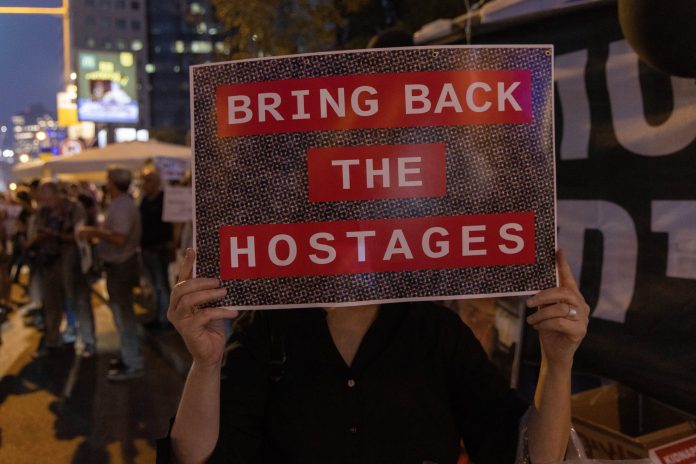
Israel estimates the presence of “137 hostages still held in the Gaza Strip”, according to media reports and statements from Israeli officials.

UN cautions over ‘unprecedented’ levels of ‘near famine-like conditions’ in Gaza Strip

Gaza War

Some 550,000 people are now likely facing catastrophic food insecurity levels, while the whole population is in crisis mode, the UN’s Food and Agriculture Organization (FAO) announced.

“There are unprecedented levels of acute food insecurity, hunger, and near famine-like conditions in Gaza,” FAO Deputy Director General Beth Bechdol said in an interview published by the Rome-based agency.

“We are seeing more and more people essentially on the brink of and moving into famine-like conditions every day,” she continued, adding all 2.2 million people in Gaza are in the top three hunger categories, from level three, which is considered an emergency, to level five, or catastrophe.

The Integrated Food Security Phase Classification (IPC) rates hunger levels from one to five.

“At this stage, probably about 25 percent of that 2.2 million are in that top-level IPC five category,” Bechdol said.

Before the conflict, the people of Gaza had “a self-sustaining fruit and vegetable production sector, populated with greenhouses, while there was also a robust backyard small-scale livestock production sector,” Bechdol added

“We’ve recognised from our damage assessments that most of these animal inventories, but also the infrastructure that is needed for that kind of specialty crop production, are virtually destroyed.”

Since a cross-border incursion by the Palestinian group Hamas on Oct. 7, killing some 1,200 people, an Israeli offensive into Gaza has killed more than 28,000 people and caused mass destruction and shortages of necessities.

The Israeli war on Gaza has pushed 85% of the territory’s population into internal displacement amid acute shortages of food, clean water and medicine, while 60% of the enclave’s infrastructure has been damaged or destroyed, according to the UN.

Israel stands accused of genocide at the International Court of Justice, which in an interim ruling in January ordered Tel Aviv to stop genocidal acts and take measures to guarantee that humanitarian assistance is provided to civilians in Gaza.

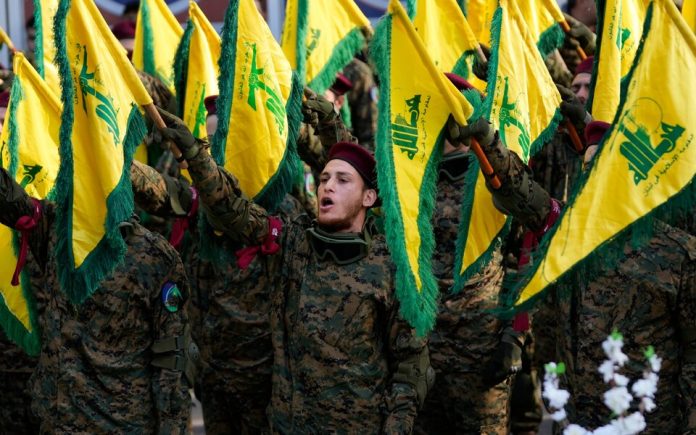
Hezbollah carried out over 1,000 attacks against Israel since start of Gaza war: Report

Hezbollah

Al-Mayadeen television news network reported that the armed group had struck Israeli outposts at least 1,013 times between October 8 last year and February 11.

The Israeli regime launched its devastating hostilities in the Gaza Strip on October 7 after the territory’s Hamas-led Palestinian resistance groups carried out a surprise retaliatory attack, dubbed Operation Al-Aqsa Storm, against the occupying entity.

The Israeli military has also been carrying out attacks against the Lebanese territory since then, prompting retaliatory strikes from Lebanon’s resistance movement Hezbollah in support of the Palestinian people in the Gaza Strip.

The movement has vowed to keep up its retaliatory operations as long as the Tel Aviv regime continues its onslaught on Gaza.

The Israeli campaign in Gaza has killed at least 28,000 people, most of them women and children. Another 68,000 individuals have also been wounded.

Israeli Defense Minister Yoav Gallant has recently told senior Israeli officials that Hezbollah is “ten times stronger than Hamas”, Israel’s Kan public broadcaster has reported.

President Joe Biden and his aides have also advised Israeli Prime Minister Benjamin Netanyahu not to launch pre-emptive strikes against Hezbollah in Lebanon.

Hezbollah has already fought off two Israeli wars against Lebanon in 2000 and 2006, forcing a humiliating retreat upon the Tel Aviv regime’s military in both cases.

The resistance movement has vowed to resolutely defend Lebanon in case of any Israeli-imposed war.