Sunday, December 28, 2025
Home Blog Page 1032

UN says displaced Palestinians fleeing Rafah after intensified Israeli airstrikes

Gaza War

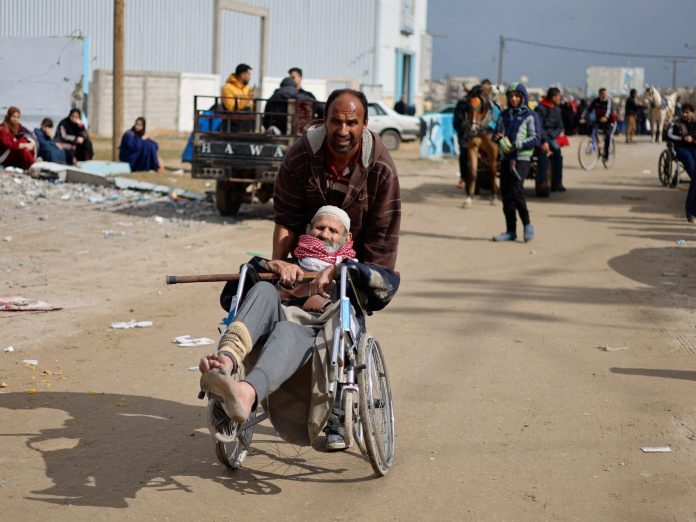
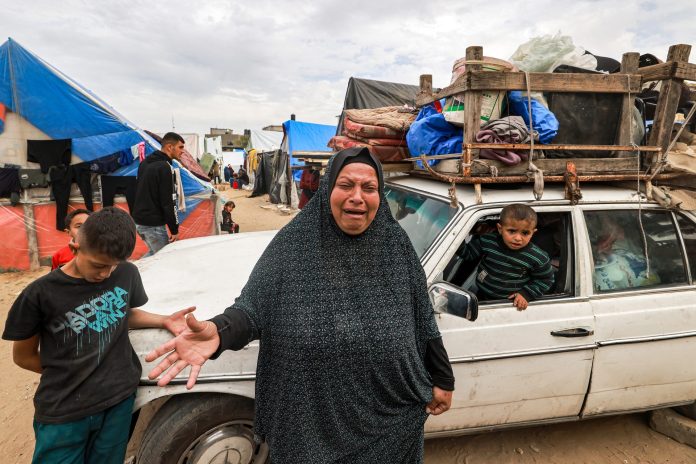
“Intensified airstrikes on Rafah, where more than half of Gaza’s population are crammed into less than 20 per cent of the Gaza Strip, and statements by Israeli officials about a ground operation in Gaza have reportedly led to the movement of people out of Gaza’s southernmost governorate toward Deir al Balah,” said the United Nations Office for the Coordination of Humanitarian Affairs (OCHA).

On Friday, former Israeli prime minister and current war cabinet minister Benny Gantz stated Israel “won’t stop” until all hostages are returned, even if that means continuing hostilities during the Muslim holy month of Ramadan.

He added that Israel is preparing for a military incursion into Gaza and will act “in dialogue” with its partners, including Egypt, and “direct the population to protected areas.”

In a separate statement on Friday, Israeli Defense Minister Yoav Gallant told reporters that Israel had “no intention” of sending Palestinians into Egypt as part of an evacuation of Rafah, the focus of its next military offensive.

Gallant provided no details about a potential evacuation but claimed “we are thoroughly planning future operations in Rafah, which is a significant Hamas stronghold.”

Israel has driven most of Gaza’s population into Rafah with repeated evacuation orders that international human-rights experts have deemed to be attempted ethnic cleansing, designating “safe” corridors only to bomb them hours later, according to survivors.

Over 85% of the territory’s inhabitants have been displaced since Israel declared war four months ago, many more than once, and hundreds of thousands live in famine conditions, according to the UN.

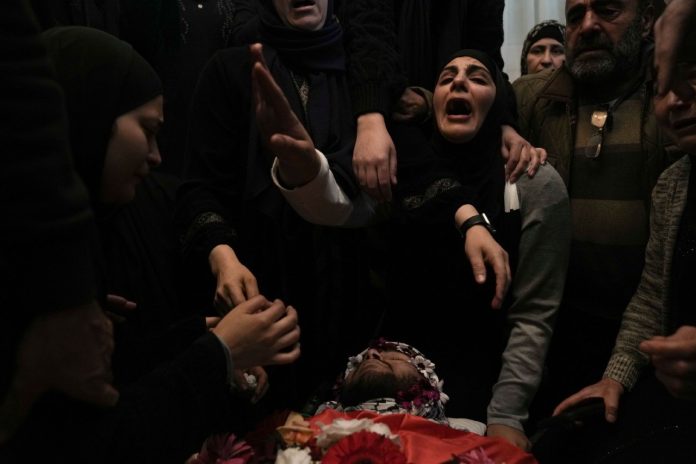
Hostilities between Hamas and Israel have so far claimed the lives of around 1,200 Israelis and nearly 29,000 Palestinians. Israeli Prime Minister Benjamin Netanyahu has insisted that peace in the region can only be achieved after the armed group is destroyed and Palestinian society is “deradicalized”. He has also pushed back against a potential peace deal that would involve the “unilateral recognition of a Palestinian state”.

Hamas leader Ismail Haniyeh has blamed Israel for a lack of progress in achieving a ceasefire deal in Gaza.

Haniyeh stated on Saturday that Hamas would not “accept anything less than a complete cessation of the aggression, withdrawal of the occupation army from Gaza and lifting of the unjust siege”.
US to dispatch weapons to Israel amid threats of Rafah invasion in Gaza

Israel Army

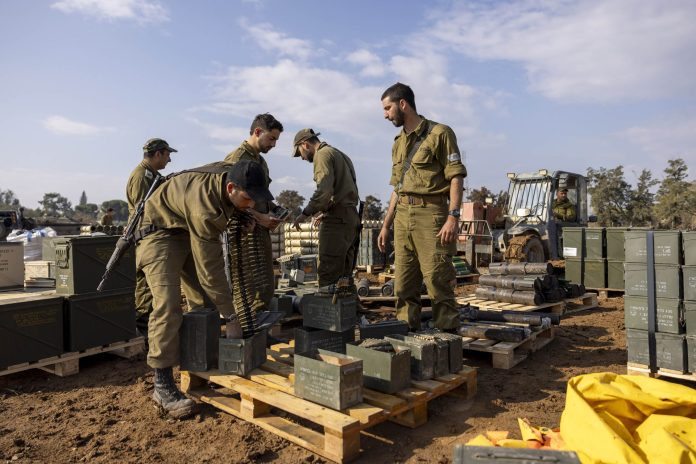
The proposed arms delivery includes about a thousand each of MK-82 500-pound (227kg) bombs and KMU-572 Joint Direct Attack Munitions (JDAMs) that turn unguided munitions into precision-guided bombs, The Wall Street Journal reported on Friday, citing unnamed US officials.

The US is further considering sending FMU-139 bomb fuses, with the total shipment estimated to be worth tens of millions of dollars, which will be paid from US military aid to Israel.

The report cited an assessment of the proposed arms transfer drafted by the US embassy in Jerusalem as saying the Israeli government has requested “rapid acquisition of these items for the defence of Israel against continued and emerging regional threats”.

The assessment also dismisses potential human rights concerns, saying “Israel takes effective action to prevent gross violations of human rights and to hold security forces responsible that violate those rights”.

The administration of US President Joe Biden has so far twice bypassed Congress to urgently send bombs and other munitions to Israel amid the war that has killed more than 28,000 Palestinians, mostly children and women, and left tens of thousands more injured or missing.

According to the WSJ, the US has provided roughly 21,000 precision-guided munitions to Israel since the start of the war last October. It said the remaining weapons are enough to sustain 19 weeks of bombing Gaza, but that would shrink to days if Israel also launches a full assault on Lebanon, where it has been engaged in border fighting with Hezbollah.

On Friday, Biden stated he has repeatedly told Israeli Prime Minister Benjamin Netanyahu there “has to be a temporary ceasefire” in Gaza during “extensive” conversations this week.

In the face of widespread international condemnation, Israel has insisted it will soon launch a ground invasion of Rafah, the southernmost city in the Gaza Strip that borders Egypt. It is where an estimated 1.4 million of the enclave’s 2.3 million population has been forcibly displaced in Israeli attacks across Gaza in the four-month conflict.

While the Biden administration maintains that an Israeli incursion into the densely packed city would be a “disaster”, it has said that such an operation would not result in tangible consequences, such as a freeze in US weapons transfers.

Biden said he cautioned Netanyahu against moving forward with a military operation into Rafah without a “credible and executable plan” to protect Palestinians sheltering there.

“I anticipate, I’m hoping, that the Israelis will not make any massive land invasion [of Rafah] in the meantime. So, my expectation, that’s not gonna happen,” Biden added.

Washington, some of Israel’s other allies, in addition to the United Nations and a slew of rights groups, have said an assault on Rafah given the dire humanitarian situation suffered by Palestinians in Gaza would prove catastrophic.

Netanyahu has ordered the military to draw up plans that would evacuate civilians, but top UN officials have said there is no feasible way of moving people from the area and that there is no safe place left in Gaza.

Israeli Defence Minister Yoav Gallant said the country is “thoroughly planning” its ground invasion of Rafah, and Netanyahu promised early on Friday to reject “international dictates” on a long-term resolution of Israel’s conflict with the Palestinians.

Ukraine army chief announces troops withdrawal from front-line city of Avdiivka

Russia Ukraine War

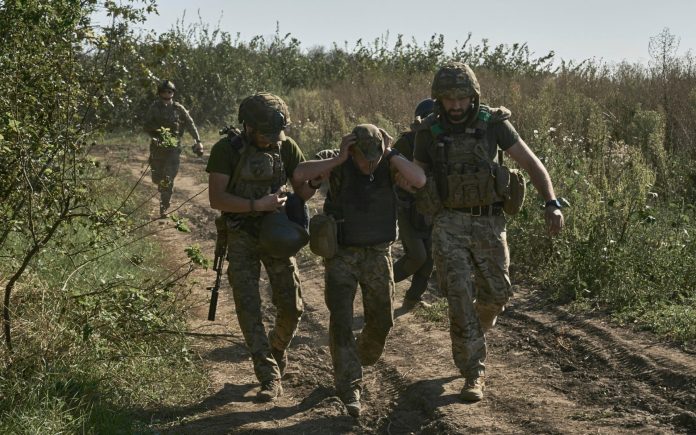
“I decided to withdraw our units from the town and move to defence from more favourable lines in order to avoid encirclement and preserve the lives and health of servicemen,” Oleksandr Syrskii said on Saturday, days after taking the helm of the Ukrainian military in a major shake-up.

The battle for the industrial hub, less than 10km (six miles) north of the Russian-controlled city of Donetsk, has been one of the bloodiest of the two-year war. Many compare it with the battle for Bakhmut, in which tens of thousands of soldiers were killed.

Russia has been trying to capture the city since October and has surrounded it on three sides, leaving limited resupply routes for Ukrainian forces.

Avdiivka had about 34,000 inhabitants before the Russian invasion. Most of the city has been since destroyed but an estimated 1,000 residents remain, according to local authorities. Videos on social media showed a town left in rubble.

“In a situation where the enemy is advancing over the corpses of their own soldiers with a 10-to-one shelling advantage, under constant bombardment, this is the only right decision,” stated Oleksandr Tarnavsky, the army’s commander of the Avdiivka area.

Before issuing orders to pull out of Avdiivka, Tarnavsky on Friday said several Ukrainian soldiers had been captured by Russian forces.

The city has important symbolic value and Moscow hopes its capture will make Ukraine’s bombing of Donetsk more difficult. The withdrawal comes ahead of Russian presidential elections scheduled for March in which incumbent Vladimir Putin is set to win a fifth term, allowing him to continue leading the invasion of Ukraine.

Avdiivka lies in the Donetsk region of Ukraine, which the Kremlin has claimed to be part of Russia since a 2022 annexation that remains unrecognised by nearly all United Nations members.

On Friday, Ukrainian President Volodymyr Zelenskyy signed security pacts with France and Germany to lock in support for Kyiv. He is also expected to make further pleas for financing and armaments at the Munich Security Conference on Saturday.

All 27 European Union countries this month agreed on an additional 50-billion-euro ($54bn) aid package for Ukraine.

United States President Joe Biden said on Thursday that Avdiivka risked falling to Russian forces because of ammunition shortages following months of Republican congressional opposition to a new US military aid package for Kyiv.

Israel behind recent attacks on Iran gas pipelines: Report

Iran gas pipelines blast

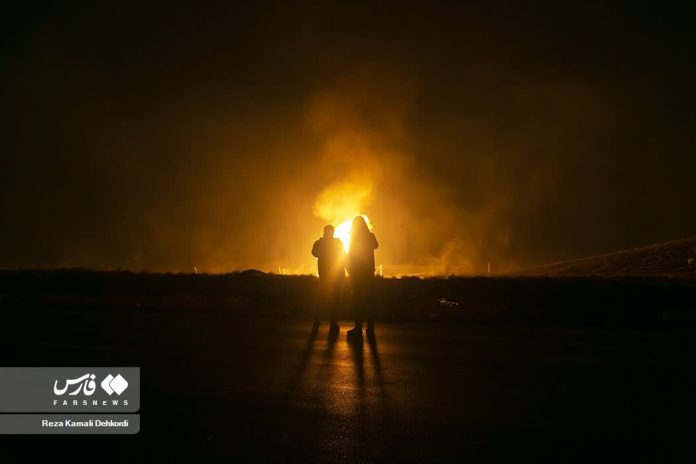
Iranian Oil Minister Javad Owji said on Wednesday that a “terrorist sabotage” attack had targeted two main gas transmission pipelines in the country’s southwestern province of Chaharmahal and Bakhtiari as well as the southern province of Fars, causing a massive explosion and a subsequent fire.

The blast disrupted the flow of heat and cooking gas to provinces with millions of people.

The New York Times citing two Western officials and a military strategist reported on Friday that the attacks had been carried out by Israel.

“The enemy’s plan was to completely disrupt the flow of gas in winter to several main cities and provinces in our country,” Iran’s oil minister told Iranian media on Friday.

Owji added that the goal of the attack was to damage Iran’s energy infrastructure and stir domestic discontent.

Saeed Aqli, head of dispatching operations at the National Iranian Gas Company (NIGC), also said that the act of terror struck the transmission lines in Borujen County in Chaharmahal and Bakhtiari Province.

He added that a crisis management session had been convened shortly afterwards, with the Iranian oil minister, deputy oil ministers as well as senior security officials in attendance.

Aqli further noted that firefighting brigades could extinguish the blaze within hours and the work on repairing the transmission lines was underway.

The terrorist attack on Iran’s major gas transmission lines came as anti-Iran media outlets had been suggesting assaults on the Iranian energy sector over the past few months, and some US senators had even called for the bombing of Iran’s oil and gas infrastructure.

Iran has asserted, on numerous occasions, that the regional resistance groups act independently and do not take orders or receive finances from the Islamic Republic.

16 Iranian athletes banned from sports activities in 2023 due to doping offences

Doping

ISNA reported, they were banned from competitions during specific time periods until mid-February, 2024.

The athletes were from different disciplines, namely wrestling, weightlifting, judo, basketball, cycling, field and track events and soccer.

The definitive cases on doping violations which resulted in verdicts issued in 2023 remain open.

Final rulings will be declared after appeals proceedings are completed.

Man killing 12 family members in southeast Iran shot dead by police

Iran Police

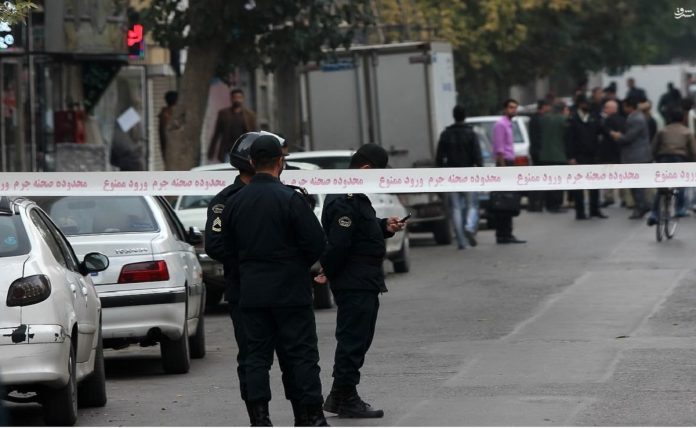
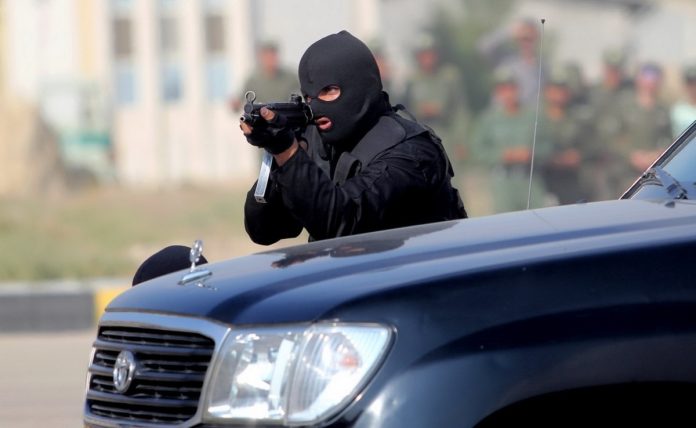
Police had launched a manhunt for the man after he escaped following the killing spree.

The assailant had killed a dozen of his family members, including his father, brother and sister-in-law, with a Kalashnikov due to family feud.

ICJ rejects South Africa’s request for ‘urgent measures’ to save Rafah amid looming Israeli offensive

Gaza War

“The Court notes that the most recent developments in the Gaza Strip, and in Rafah in particular, ‘would exponentially increase what is already a humanitarian nightmare with untold regional consequences’, as stated by the United Nations Secretary-General,” the International Court of Justice (ICJ) said in a statement on Friday.

It added the situation in Rafah “demands immediate and effective implementation of the provisional measures indicated by the Court in its Order of 26 January 2024”, when it ordered Israel to take all steps within its power to ensure genocidal acts are not being committed in its war on Gaza.

However, the court “does not demand the indication of additional provisional measures”, its statement read.

South Africa said on Tuesday that it had lodged an “urgent request” with the ICJ to consider whether Israel’s military operations targeting Rafah breach provisional orders the court handed down last month in a case alleging genocide.

Israel on Thursday called on the court to reject the request, stating: “South Africa’s unjustifiable claims make clear that its request is not driven by any change in circumstances, nor does it have any basis in fact or law.”

Israel’s war on Gaza has killed nearly 29,000 Palestinians across the Strip, according to health authorities. The relentless bombardment since October 7 has also displaced most of the population.

About 1.4 million people are now sheltering in Rafah, on the border with Egypt, which Israel had initially designated a “safe zone” for civilians.

But Israel has been threatening to launch a ground invasion there, a move that the UN and international governments – including Israel’s Western allies – have warned against.

South Africa’s urgent request to the court mentioned the hundreds of thousands of civilians trapped in Rafah, many of them fleeing “pursuant to Israeli military evacuation orders, from homes and areas that have largely been destroyed by Israel”. They could now be threatened directly, it said.

Israel’s unprecedented planned military offensive against Rafah would result in further large-scale killing, harm and destruction “in serious and irreparable breach” of the Genocide Convention and of the ICJ’s ruling at the end of January, the request added.

In its statement on Friday, the ICJ said that Israel “remains bound to fully comply with its obligations under the Genocide Convention and with the said Order, including by ensuring the safety and security of the Palestinians in the Gaza Strip”.

Israel strongly denies committing genocide in Gaza. However, the ICJ last month ruled that it had jurisdiction to hear South Africa’s case against Israel, in which the latter is accused of breaching the Genocide Convention.

The court ordered Israel to do all it can to prevent death, destruction and any acts of genocide in Gaza, but the panel of judges stopped short of ordering an end to the military offensive that has laid waste to the Palestinian enclave.

US investigators probing Israel killing of Palestinian Americans in West Bank

Israel Palestine

US embassy officials have visited the home of 17-year-old Mohammed Ahmad Khdour and took pictures of the car he was driving, as well as pictures of the scenes surrounding the incident, the Associated Press reported.

Last week, they also collected medical and legal reports issued by the Ramallah prosecutor’s office and the hospital that treated 17-year-old Tawfik Abdel Jabbar, who was killed in January.

The US Office of Palestinian Affairs wrote on X on 14 February, that it was “devastated” by the killing of Khdour and called for “a quick, thorough, and transparent investigation, including full accountability”.

A US State Department spokesperson told MEE that the US has no “higher priority than the safety and security of US citizens overseas, and we are always concerned when a US citizen dies overseas”.

They added that they are following the investigations closely and are engaged with Israeli authorities on the matter. The State Department also announced that they are in touch with both families and are working to gather more information, as well as pressing Israel for further information.

Khdour, 17, was shot dead by Israeli forces earlier this week. Relatives told AP that he was driving with a cousin on a hillside in Biddu, the town located just outside Jerusalem where Khdour had resided since he was two years old.

According to AP, Khdour was taking a break after studying and decided to go on a drive with his cousin. Before he died, they spent the day taking photos of each other for social media and eating chocolate-covered waffles.

When they were returning to their village, his cousin said they heard gunfire and a shot came through the car’s window, hitting Khdour in the head. He was later pronounced dead.

Khdour’s father mentioned that he was unaware of whether Israel had initiated an investigation into the case and stated that he had not received any communication from Israeli authorities.

Just weeks prior to Khdour’s death, 17-year-old Jabbar was shot dead by Israeli forces as he drove a pickup truck in the occupied West Bank.

The only other passenger in the car reported what seemed to be Israeli gunfire which struck the rear of the vehicle, causing it to overturn multiple times.

In late January, the United States called for an investigation in response to the death of a 17-year-old Palestinian American in the West Bank, who was killed by Israeli forces, according to Palestinian health officials.

At a briefing, State Department spokesperson Vedant Patel noted the US had requested an immediate investigation into the death of Jabbar, who was killed on 19 January.

Palestinian health officials reported that the American-born teenager was killed by Israeli security forces in the occupied West Bank. His uncle told Reuters that his death occurred amidst clashes with the Israeli military.

“We are devastated about the killing of 17-year-old US citizen, Tawfic Abdel Jabbar, in the West Bank,” Patel told reporters.

“We have called for an urgent investigation to determine the circumstances of his death and accountability… as appropriate,” he added.

The statement of concern from the White House led to an unusually swift commitment by the Israeli police to conduct an investigation. But Israeli police have still not released any new findings in the case, AP reported.

2 terrorists arrested over deadly attack on police headquarters in SE Iran

Iran Police

General Montazer-al-Mahdi emphasized that the apprehension of these two terrorists occurred promptly in a city within Sistan and Baluchestan province, facilitated by swift and decisive action.

Furthermore, the general stated that a firearm and various equipment were seized from these two terrorists.

General Montazer-al-Mahdi concluded by affirming that four terrorists associated with the terrorist group responsible for the Rask attack had been previously arrested.

Back in late December, Iran’s police chief announced that the country would target terrorists “wherever” it sees fit after 11 police forces were killed in a terrorist attack in the southeastern province of Sistan and Baluchestan.

Brigadier General Ahmad Reza Radan made the remarks while visiting the city of Rask, where the terrorist attack took place on Friday.

“Among the 11 police forces that were martyred, there were several Sunni individuals. This shows that the enemy does not distinguish between religious sects and different ethnicities. It wants to deal a blow to everyone in the Iranian nation,” Radan explained.

The Police chief also called on Iran’s neighbor Pakistan to take the fight against terrorism more seriously.

“I want to assure the people of Iran and our colleagues across the country that the terror act will not go unpunished. We are working with intelligence forces and other armed units to bring all the terrorists to justice,” the official added.

The Jaish-al-Adl terrorist group has claimed responsibility for the attack, which was one of the deadliest in years for the region sitting close to Iran’s border with Afghanistan and Pakistan. Iran’s interior minister has pointed the finger of blame at Israel, saying the regime was the one to recruit and train the terrorists.

Iran unveils two homegrown air defense systems

Iran air defense system

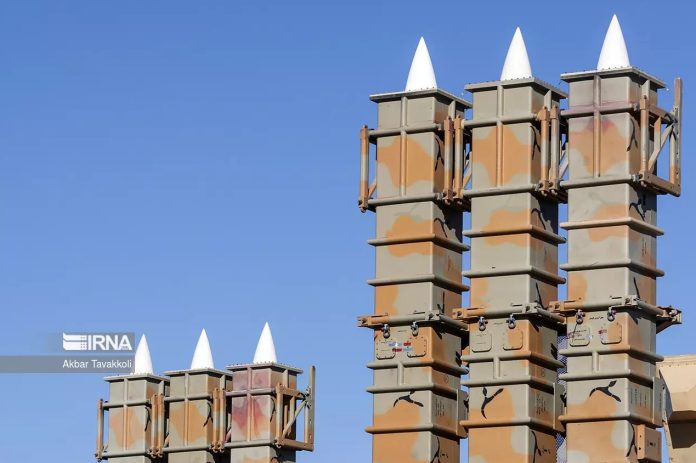
The Ministry of Defense has unveiled the Arman anti-ballistic missile system as well as a low-altitude air defense system called Azarakhsh.

Arman, a tactical missile interception system, is capable of firing several missiles simultaneously within a range of 75 to 120 kilometers.

Experts say the range can be increased up to 150 kilometers.

The system is designed to operate at intermediate and high altitudes and is made up of a transporter, launcher and radar.

Other mobile missile launchers can be attached to the Arman system, too.

Iran has unveiled and inducted several homegrown defense systems, including missile and drones, in recent months.