Sunday, December 28, 2025
Home Blog Page 1020

Former ‘Daesh bride’ loses appeal against removal of British citizenship

Shamima Begum

Three judges unanimously concluded that the then home secretary, Sajid Javid, had the power to set aside concerns she may have been a victim of child trafficking when she left east London as a schoolgirl and travelled in secret with two friends to live under Islamic State (IS) in 2015.

The court also held that Javid had acted lawfully even if it meant Begum, now 24, was effectively stateless – because she theoretically held Bangladeshi citizenship, which applied up to her 21st birthday, at the time of his decision in 2019.

An argument raised by her lawyers, that citizenship deprivation disproportionately affected British Muslims, and so was a breach of equalities law, was also dismissed because there is an exemption for cases involving national security.

Dame Sue Carr, the head of the court of appeal, said the judges unanimously dismissed Begum’s appeal: “It could be argued that the decision in Miss Begum’s case was harsh.”

“It could also be argued that Miss Begum is the author of her own misfortune. But it is not for this court to agree or disagree with either point of view.”

“Our only task is to assess whether the deprivation decision was unlawful. We have concluded it was not and the appeal is dismissed,” she added.

Begum’s solicitor, Daniel Furner, stated they would seek to fight on, hinting at a possible appeal to the supreme court. Furner added he had promised Begum and the government that they were “not going to stop fighting until she does get justice and until she is safely back home”.

A Home Office spokesperson said: “We are pleased that the court of appeal has found in favour of our position in this case. Our priority remains maintaining the safety and security of the UK and we will robustly defend any decision made in doing so.”

Maya Foa, the director of Reprieve, an NGO that represents the two dozen British women detained in north-east Syria, stated that “this whole episode shames ministers who would rather bully a child victim of trafficking than acknowledge the UK’s responsibilities”.

Begum is being held in indefinite detention in the Roj refugee camp in north-east Syria, which is controlled by Kurdish forces who captured her early in 2019 at the end of the ground war against IS in Syria and Iraq.

Shortly after, Javid revoked her British citizenship on the grounds it was “conducive to the public good”, after she had given an interview to the Times in which she said she did not regret living four years in the so-called caliphate and had told the BBC the Manchester Arena terror attack was “a kind of retaliation”.

But, two years later, in September 2021, Begum said she had made a mistake and would “rather die than go back to IS” in a TV interview. Insisting she was not a terrorist, she said she was prepared to come back to the UK and be put on trial to prove her innocence.

“The government do not have anything on me,” she added.

A protracted legal battle has ensued, in which Begum’s case has already been blocked once by the supreme court. It was established in earlier proceedings that although she had never been to Bangladesh, she was eligible for its citizenship up until the age of 21, because it was the origin country of her parents.

Last year, Begum lost a challenge against the decision at the special immigration appeals commission (Siac). Begum’s lawyers brought a bid to overturn this decision at the court of appeal, with the Home Office opposing the challenge.

Begum’s legal team put forward five grounds to overturn Siac’s decision. But the court of appeal judges – Carr, Lord Justice Bean and Lady Justice Whipple – ruled against her in each instance, an emphatic judgment that gives Begum limited hope in any further appeal.

The judges concluded that “there was no material shortcoming” on the part of Javid “arising out of any failure to take account of the possibility that Ms Begum had been trafficked for the specific purpose of sexual exploitation”.

The then home secretary was aware of “the likelihood that she was a child victim of others who wished to exploit her for sexual or extremist reasons”. But they held he was entitled to conclude that fears she posed a risk to national security were more significant because it was “a question of evaluation and judgment” allowed to him in law.

MI5, the domestic spy agency, advised Javid that she was a threat to the UK because Begum had aligned with IS by staying in Syria for four years. In addition, the intelligence agency concluded at the time, “public sentiment is overwhelmingly hostile” to her.

Javid also acted lawfully “despite knowing that she had nowhere else to go” because she retained a theoretical Bangladeshi citizenship. Her lawyer’s argument that Begum was rendered “de facto stateless” because she was not able to go to Bangladesh was irrelevant, because it was trumped by the national security concern.

It would not be possible to do the same today, the judges added, because of her age. “It is important to note that the same decision could no longer be made, because [of] the loss of Ms Begum’s Bangladeshi citizenship when she reached her 21st birthday,” they wrote.

Begum’s lawyers, the judges said, also unsuccessfully argued that citizenship deprivation was “disproportionately applied to British Muslims of certain ethnic minorities” and “impacts detrimentally upon the relations between members of Muslim communities and others”.

National security exemptions to the public sector equality duty allowed Javid to act as he did, the judges concluded.

Next steps, which will include whether Begum wishes to apply for permission to appeal to the UK supreme court, will be discussed at a hearing in a week’s time.
US announces 500 new sanctions against Russia, longest blacklist to date

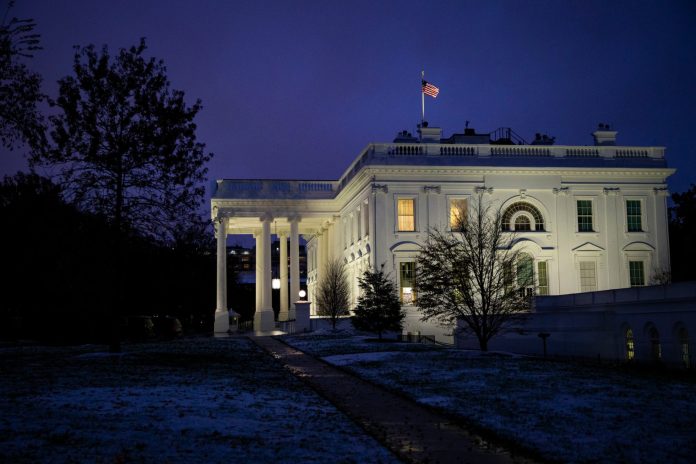
White House

The sanctioned entities include the operator of Russia’s Mir payment card system, which soared in popularity after Russia was cut off from SWIFT and Visa/MasterCard in 2022. Russian energy firms and companies linked with the military-industrial sector made up the bulk of the 100 targeted entities, which were published in a US Treasury Department list on Friday.

Among the individuals sanctioned are Russian soldiers, figures involved in military procurement, and executives in the finance sector. More than two dozen of those named are based outside of Russia, including in China, the United Arab Emirates and Vietnam.

In a statement on Friday, Biden said that the list would also include “individuals connected to [Alexey] Navalny’s imprisonment”.

A former far-right campaigner feted in the West for his opposition to Putin’s government, Navalny died in a Russian penal colony last week after suddenly falling ill. Navalny had been serving a 19-year sentence for “extremist activities”, and although an investigation into his death is ongoing, Biden and other Western leaders have held Putin responsible for his passing.

Friday’s sanctions package is the lengthiest tranche of penalties unveiled by Washington since the conflict in Ukraine began almost two years ago. In his statement, Biden noted that it was drafted in response to Russia’s “ongoing war of conquest on Ukraine and for the death of Alexey Navalny”.

The sanctions “will ensure Putin pays an even steeper price for his aggression abroad and repression at home,” the American leader added.

Sanctioned individuals are barred from entering the US, while American citizens and companies are forbidden from trading with sanctioned individuals or entities. In a parallel move, the EU announced sanctions on 200 Russian individuals and companies, including some which appear on the American list.

The Russian Foreign Ministry described these restrictions as “fruitless attempts to put pressure on Russia”, and announced that Moscow had “significantly expanded” its list of sanctioned European officials, companies, and individuals in response, including those “responsible for providing military assistance to the neo-Nazi regime in Kiev”.

Successive rounds of Russian sanctions have failed to “crater” the Russian economy, as Biden predicted they would in 2022. Instead, the Russian economy grew by 4% in 2023, Russian Prime Mikhail Mishustin announced earlier this month. This figure of 4% eclipses the 2.7% forecast by the Russian Central Bank in January.

Less than a week before Mishustin’s announcement, the International Monetary Fund significantly raised its growth forecast for the Russian economy in 2024. It now expects growth of 2.6% this year, a sharp increase from its October forecast of a 1.1% gain.

Israeli post-war Gaza plan ‘destined to fail’: Palestinian Authority

Gaza War

“If the world wants security and stability in the region, it must end the Israeli occupation of Palestinian territories and recognise the independent Palestinian state with Jerusalem as its capital,” Nabil Abu Rudeineh, the spokesperson for Palestinian President Mahmoud Abbas, was quoted as saying on Friday by the Palestinian state news agency Wafa.

Netanyahu’s plan is his first official proposal for what comes after the war in Gaza – in which Israel has killed more than 29,000 Palestinians.

According to the document, presented to members of Israel’s security cabinet on Thursday, Israel would maintain security and military control over all land west of Jordan, including the occupied West Bank and Gaza – territories where the Palestinians want to create their independent state.

In the long-term goals listed, Netanayhu also rejected the “unilateral recognition” of a Palestinian state. He said a settlement with the Palestinians will only be achieved through direct negotiations between the two sides – but it did not name who the Palestinian party would be.

In response, Abu Rudeineh rejected any effort to separate governance in Gaza from the West Bank.

“Gaza will only be part of the independent Palestinian state … Any plans to the contrary are destined to fail,” he said, adding, “Israel will not succeed in attempts to alter the geographic and demographic reality in the Gaza Strip.”

“Netanyahu’s proposed plans aim to perpetuate Israel’s occupation of Palestinian territories and prevent the establishment of a Palestinian state,” Abu Rudeineh continued.

The White House also added its unease with the plan, with US National Security Council spokesperson John Kirby sauind that Washington had been “consistently clear with our Israeli counterparts” about what was needed in post-war Gaza.

“The Palestinian people should have a voice and a vote… through a revitalised Palestinian Authority,” Kirby stated.

“We don’t believe in a reduction of the size of Gaza… we don’t want to see any forcible displacement of Palestinians outside Gaza and, of course, we don’t want to see Gaza dominated or ruled by Hamas.”

The war in Gaza has revived international calls – including from Israel’s main backer, the United States – for the so-called two-state solution as the ultimate goal for resolving the decades-long Israel-Palestinian conflict. However, many senior Israeli politicians oppose the creation of a Palestinian state.

While on Gaza, Netanyahu’s plan emphasised that the war would continue until Israel had achieved all of its announced goals: the dismantlement of military capabilities and infrastructure operated by Hamas and Islamic Jihad; the return of all captives taken on October 7; and the removal of all security threats originating from Gaza.

The enclave will then be run by “local officials” who are not tied to “countries or entities that support terrorism”.

It is also unclear whether representatives of the Palestinian Authority (PA) will be involved in controlling Gaza.

The Israeli prime minister’s plan also outlined demilitarisation and deradicalisation as goals to be achieved in the medium term in Gaza. It does not elaborate on when that intermediary stage would begin or how long it would last, but says that the “the Israeli army will maintain indefinitely the freedom to intervene in Gaza to prevent the resurgence of terror activity”.

It also proposes that Israel have a presence on the Gaza-Egypt border in the south of the enclave and says that Israel should cooperate with Egypt and the US in that area to prevent smuggling attempts, including at the Rafah crossing.

Lastly, Netanyahu’s plan also says that the UN relief agency for Palestinian refugees, UNRWA, would be shut.

Israel has long tried to eliminate the UN agency, which enshrines the right of Palestinian refugees to return home. Israel has recently made claims that UNRWA has links to Hamas, a claim that the body has fiercely denied, and that US intelligence assessments have cast doubt on, according to reports.

In a statement, the Palestinian Foreign Ministry has also rejected “what the Israeli media referred to as Netanyahu’s principles for the post war Gaza”.

The statement deemed the principles “an official acknowledgment of reoccupying the Gaza Strip and imposing Israeli control over it”.

The statement called Netanyahu’s remarks a “plan to prolong the genocide war against the Palestinian people, and an attempt to gain more time to implement the displacement plan.”

It also described them as “an overt maneuver obstructing the US and international efforts aimed at cease-fire and prisoners exchange agreements, resolving the conflict and establishing a Palestinian state.”

World Bank cautions Gaza economy plummeted by over 80% due to Israeli strikes

Gaza War

In a report, the bank said the attacks on the Palestinian enclave since October have resulted in massive loss of life and the effects of the conflict on the Palestinian economy have been consequential.

GDP plummeted from approximately $670 million in the third quarter to roughly $90 million in the fourth quarter, it added.

Stating that the Palestinian economy experienced one of the largest shocks recorded in recent economic history since the start of the conflict, the report said: “Almost all economic activity in Gaza has ground to a halt”.

“The conflict is expected to leave lasting impacts on the affected populations in Israel, Gaza, and the West Bank, extending far beyond any economic assessment,” it added.

The report also said about 1.7 million Palestinians living in Gaza — some 75% of the total population in Gaza — have been internally displaced and the entire population of 2.3 million is suffering from a shortage of food, water, electricity, fuel and medicine.

“The observed level of fixed assets damage and destruction is catastrophic,” it added.

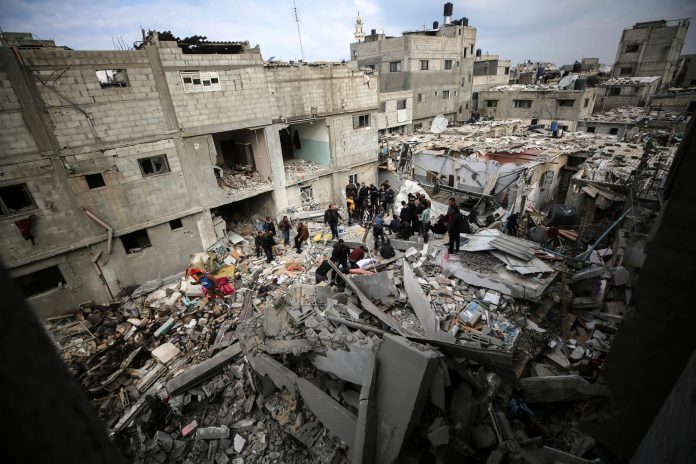
Israel has pounded the Gaza Strip since an Oct. 7 cross-border attack by the Palestinian group Hamas. The ensuing Israeli war has killed more than 29,500 people and caused mass destruction and shortages of necessities. Nearly 70,000 people have been injured.

Around 1,200 Israelis are believed to have been killed in the Hamas attack while over 200 were taken back to Gaza as hostages.

The Israeli war on Gaza has pushed 85% of the territory’s population into internal displacement amid acute shortages of food, clean water and medicine, while 60% of the enclave’s infrastructure has been damaged or destroyed, according to the UN.

Israel stands accused of genocide at the International Court of Justice. An interim ruling in January ordered Tel Aviv to stop genocidal acts and take measures to guarantee that humanitarian assistance is provided to civilians in Gaza.

Hostilities have continued unabated, however, and aid deliveries remain woefully insufficient to address the humanitarian catastrophe.

NATO says Ukraine can deploy F-16s to attack deep inside Russia

Volodymyr Zelensky F16

The NATO head has argued that Ukraine has the right to self-defense against Russian “aggression”, which would include “striking legitimate Russian military targets outside Ukraine”.

As to when the government in Kiev might actually receive the promised jets, Stoltenberg would not say. Each NATO member that has pledged to deliver F-16s has different policies and will decide themselves, he explained.

While some of Ukraine’s backers want the jets in action as soon as possible, they will have a stronger impact if the pilots are well-trained and there are enough maintenance and support crews on hand, according to Stoltenberg.

“So, I think we have to listen to the military experts exactly when we will be ready to or when allies will be ready to start sending and delivering the F-16s,” he said, adding, “The sooner the better.”

Ukraine has long demanded the F-16 as a way to combat Russian air superiority. Denmark and the Netherlands have both pledged to contribute some of their jets, with President Volodymyr Zelensky putting the total number at 42. The first Ukrainian pilots training in the West finished their classes in the UK in December.

The way the US-made jet is designed means it might have difficulties operating from Ukrainian runways, sparking speculation that they could be flown from Poland, Romania or the Baltic states instead.

Russia has repeatedly warned such a deployment would be an escalation of the conflict and may even risk nuclear war, as the F-16 is capable of delivering B61 gravity bombs.

“So, if one of those planes takes off from a NATO nation – what would that be? An attack on Russia. I shall not describe what could happen next,” Dmitry Medvedev, former Russian president and deputy head of Russia’s National Security Council, stated in an interview on Thursday.

Warm winter in Iran raises concerns over continued drought

Ahad Vazifeh, the head of the National Center for Drought and Crisis Management in Iran, said “In winter, temperatures above normal have been recorded in most parts of the planet and this year will likely be one of the very hot years… and the drought crisis will continue.”

Vazifeh blamed a very strong El Nino, dubbed Super El Nino, for the rising temperatures on the earth during the past eight years, and Iran is among the hardest hit countries on the planet.

The phenomenon is a climate pattern that describes the unusual warming of surface waters and exhibits irregular variation in winds and sea surface temperatures.

The head of the Iranian drought management center said the southern and eastern provinces in the country received lower than average precipitations in 2023.

“Heat, low rainfall and snow drought increase the level of water stress and cause water supply challenges for drinking, agriculture and industry. This year, water needs more management for the central, southeastern to northeastern and southwestern provinces,” he said.

The rate of rainfall in the country has remarkably reduced in recent decades and many provinces have experienced several multi-year droughts.

Iran’s Jahanbakhsh misses Feyenoord’s life-saving penalty shootout

The match ended in a 1-1 draw but AS Roma won 4-2 on penalties as goalkeeper Mile Svilar made two crucial saves during the shootouts.

After the final whistle, AS Roma’s Iranian striker Sardar Azmoun approached Jahanbakhsh, his national team teammate, to comfort him over the loss.

Iran completes first phase of new nuclear power plant 

Mohammad Eslami

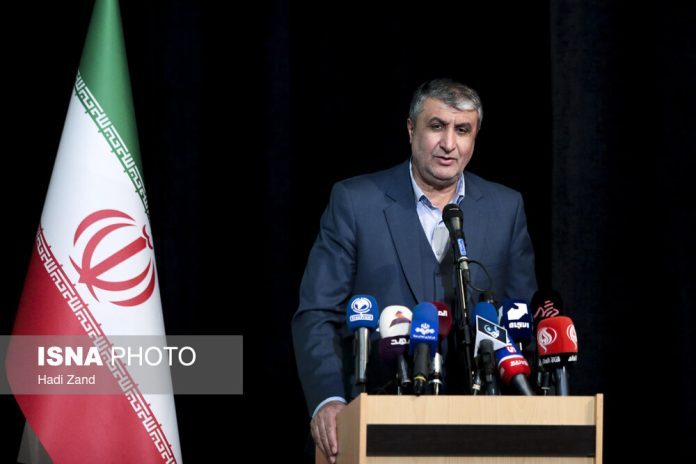
Mohammad Eslami said on Friday that the construction of the main facility of the power plant is underway in the city of Darkhovein.

He said that the Karoon nuclear power plant, Iran’s first domestically designed and constructed nuclear power facility, is being prepared for the second phase of construction.

The AEOI chief said foreign contractors, under immense pressure from the West, failed to fulfill their commitment to construct the nuclear power plants and the projects were shelved.

However, Iran decided to advance the construction of the power plants by relying on domestic capabilities and potentials, he added.

Eslami, who was in Khuzestan province to inspect the progress of the project, said on Thursday that Iran is using nuclear technology products in 150 large industrial complexes.

He explained that the AEOI produces tools that are used not only in the nuclear industry but also in other sensitive industries such as oil, gas and petrochemicals.

Tehran hosts urban marathon

The public sports festival included running for 5 kilometers in two sections; children’s running competition, and a walking program.

Here are some of the pictures of the event.

2024 Beach Soccer World Cup: Iran beat UAE, set to play Brazil in semi-final

Iran Beach Soccer Team

Facing the host UAE in the quarter-finals, Iran emerged victorious with a 2-1 triumph.

The captivating victory propels them into the top four teams globally, setting the stage for a highly anticipated semi-final clash against Brazil.

The tournament, held in Dubai, witnessed Iran’s beach soccer prowess in Group B, where they conquered formidable opponents.

Overcoming the European champion Spain in penalty kicks, a resounding 6-3 victory against Argentina, and a comeback against Pacific islanders Tahiti showcased Iran’s resilience and skill.

The Thursday night’s quarter-final showdown against the UAE demonstrated the Iranian team’s determination to advance, ultimately setting the stage for a formidable semi-final encounter with Brazil, a team boasting five prestigious titles.

As the nation celebrates this remarkable achievement, anticipation builds for the next chapter in Iran’s journey in the Beach Soccer World Cup.