Saturday, December 27, 2025
Home Blog Page 1015

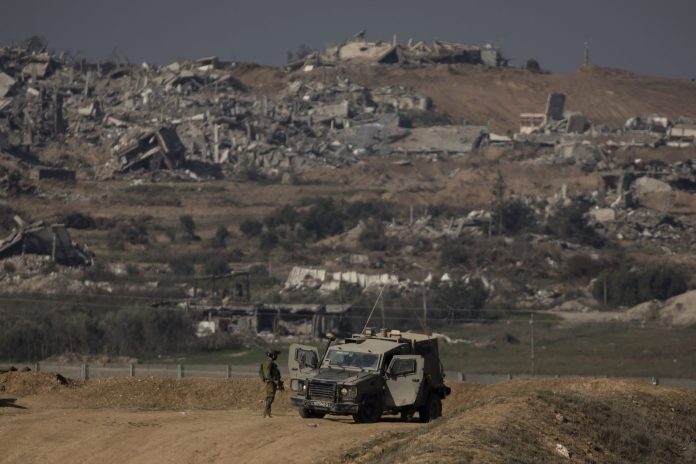
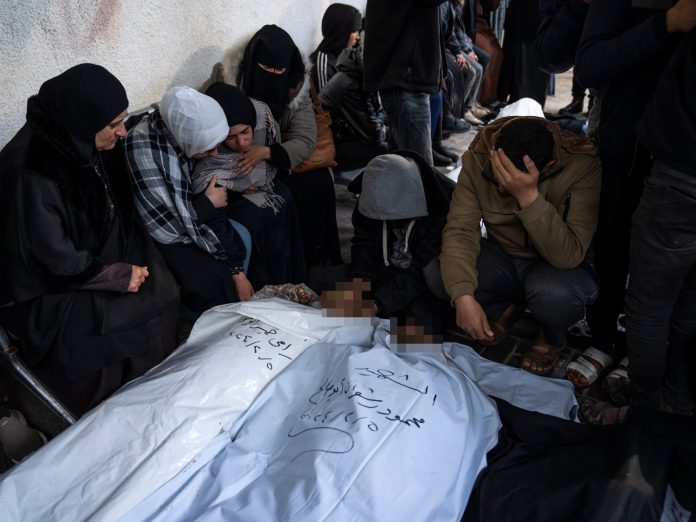
Gaza death toll nears 30k

Gaza War

The ministry said in a statement that 70,043 Palestinians have also been injured in the ongoing Israeli army onslaughts.

It added that in the past 24 hours, Israeli forces committed 10 massacres across the territory, killing 90 people and injuring 164 more.

“Many people are still trapped under rubble and on the roads and rescuers can’t reach them,” the ministry added.

Israel has pounded the Gaza Strip since a cross-border attack by Palestinian group Hamas in October, in which nearly 1,200 Israelis are believed to have been killed.

The conflict has pushed 85% of the territory’s population into internal displacement amid acute shortages of food, clean water, and medicine, while most of the enclave’s infrastructure has been damaged or destroyed.

Israel stands accused of genocide at the International Court of Justice, which in an interim ruling in January ordered Tel Aviv to stop genocidal acts and take measures to guarantee that humanitarian assistance is provided to civilians in Gaza.

Tel Aviv now plans a ground offensive in the southern city of Rafah, where 1.4 million people have taken refuge.

Palestinian Authority PM resigns

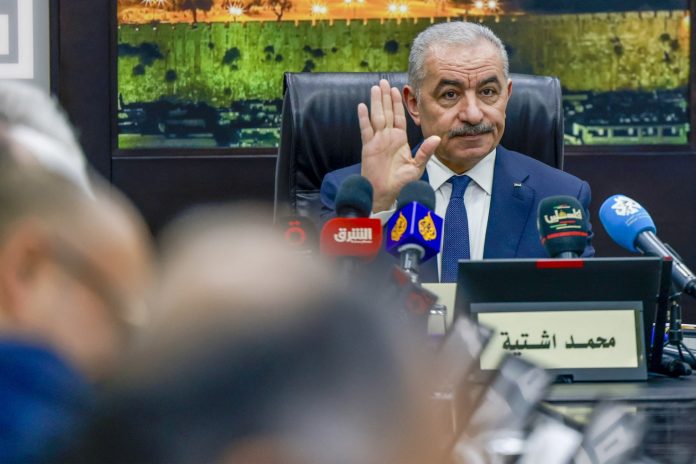
Palestinian Prime Minister Mohammad Shtayyeh

“The decision to resign came in light of the unprecedented escalation in the West Bank and Jerusalem and the war, genocide and starvation in the Gaza Strip,” Shtayyeh, who submitted his resignation to President Mahmoud Abbas on Monday, said.

“I see that the next stage and its challenges require new governmental and political arrangements that take into account the new reality in Gaza and the need for a Palestinian-Palestinian consensus based on Palestinian unity and the extension of unity of authority over the land of Palestine,” he added.

Shtayyeh’s comments come as US pressure grows on Abbas to shake up the Palestinian Authority [PA] and begin work on a political structure that can govern a Palestinian state following the war.

However, Israeli Prime Minister Benjamin Netanyahu has on numerous occasions rejected calls for the PA under Abbas to take control of a Palestinian state and govern over Gaza.

Last week, Israeli lawmakers backed Netanyahu’s rejection of any “unilateral” recognition of a Palestinian state.

“The Knesset came together in an overwhelming majority against the attempt to impose on us the establishment of a Palestinian state, which would not only fail to bring peace but would endanger the state of Israel,” stated Netanyahu.

But the Palestinian Foreign Ministry slammed the vote and accused Israel of holding the rights of Palestinians hostage due to the occupation of Palestinian territories.

“The ministry reaffirms that the State of Palestine’s full membership in the United Nations and its recognition by other nations does not require permission from Netanyahu,” it announced in a statement.

Since the signing of the Oslo Accords in the early 1990s, little progress has been made towards achieving a two-state solution.

As the International Court of Justice hears from about 50 countries on the legal implications of Israel’s occupation of the West Bank, the far-right Israeli Finance Minister Bezalel Smotrich on Thursday announced plans to build more than 3,300 new homes in response to a shooting that killed one Israeli civilian.

Smotrich said the decision would begin an approval process for 300 new homes in the Kedar settlement and 2,350 in Maale Adumim, where the attack occurred.

US Secretary of State Antony Blinken stated he was “disappointed” to hear of the Israeli announcement of the new settlements.

“It’s been longstanding US policy under Republican and Democratic administrations alike that new settlements are counter-productive to reaching an enduring peace,” he stressed in Buenos Aires.

“They’re also inconsistent with international law. Our administration maintains a firm opposition to settlement expansion and in our judgement this only weakens, it doesn’t strengthen, Israel’s security,” he added.

Violence in the occupied West Bank has escalated significantly after the October 7 Hamas attack on southern Israel that killed 1,139 people. Israel’s retaliatory bombardments on Gaza have killed almost 29,800 Palestinian civilians, according to Gaza’s health ministry.

Palestinian health officials also say that 401 people have been killed by Israeli fire in the occupied West Bank during the same period.

IMF revises up economic growth projection for Iran in 2023

Iran Oil

Releasing its latest quarterly report, known as World Economic Outlook, the IMF said Iran’s economy grew 5.4 percent in 2023 showing a remarkable boost compared to the preceding year. The international agency had previously predicted a three-percent growth for the country’s economy in that year.

The IMF also forecast a 3.7 percent economic growth for Iran in 2024, while its previous projection in October 2023 had put the figure at 2.5 percent.

The world body attributed the hike in Iran’s growth rate to a surge in the country’s oil output, which it said has surpassed 2.7 million barrels per day so far in 2024.

IMF’s figures confirm reports by the Iranian government agencies suggesting that the country is on a path to control inflation and restore economic growth to levels seen before 2018 when the United States withdrew from an international deal on Iran’s nuclear program and re-imposed sanctions on the country.

The sanctions initially affected Iran’s oil revenues and led to periods of negative economic growth in the country. However, Iran started to recoup the losses in the second half of 2022 after it implemented a series of economic reform programs to offset the impact of sanctions.

Yemen says era of US, allies’ control of international waters ‘over’

US Navy Warship

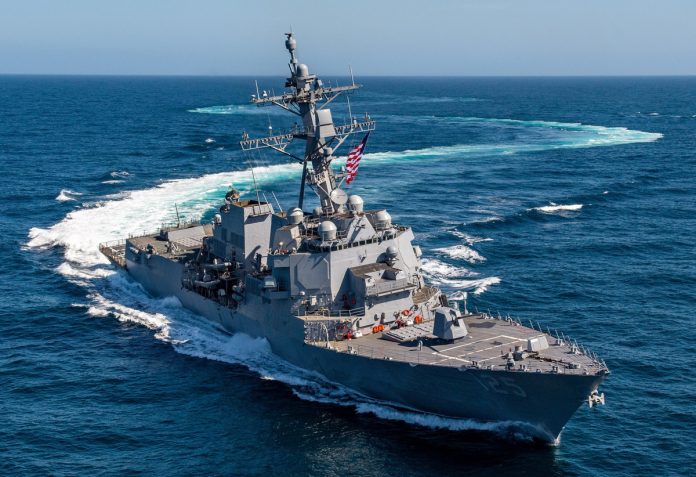
“The United States, Britain and Israel must realize that the policies of demarcation and assertion of hegemonic influence on international waters are obsolete and no more favorable,” Major General Mohammed al-Atifi stated at a graduation ceremony of Yemeni cadets in the country’s western coastal city of Hudaydah on Sunday.

He stressed that the Yemeni Armed Forces could properly redefine maritime security in the Red Sea and the Arabian Sea following their decision to block the passage of ships of any nationality heading towards ports in the 1948 Israeli-occupied territories.

Atifi further noted that Yemeni naval units could also restore the identity of the two seas, which had been hijacked by the occupying Tel Aviv regime.

“We reaffirm that the Yemeni Armed Forces won’t target any ships, which are neither affiliated to the Zionist enemy nor serving its interests. Marine navigation for vessels through the Red Sea and the Arabian Sea is safe,” the Yemeni defense chief added.

Atifi emphasized that the Sana’a-based National Salvation Government stands fully committed to all international treaties and conventions, as well as pacts that neither undermine Yemen’s dignity and national sovereignty nor impose particular wills.

“As long as the Zionists’ atrocities continue in Gaza, we will continue our operations against the usurping entity. Washington has aided and abetted the Zionist entity to forge ahead with its genocidal war on our Palestinian brethren and sisters,” he continued.

Yemenis have declared their open support for Palestine’s struggle against the Israeli occupation since the regime launched a devastating war on Gaza on October 7 after the territory’s Palestinian resistance movements carried out the surprise Operation Al-Aqsa Storm.

The Yemeni Armed Forces have stressed they won’t stop retaliatory strikes.

The maritime attacks have forced some of the world’s biggest shipping and oil companies to suspend transit through one of the world’s most important maritime trade routes.

Tankers are instead adding thousands of miles to international shipping routes by sailing around the continent of Africa rather than going through the Suez Canal.

CIA built anti-Russian spy network in Ukraine: Report

CIA

The US specialists funded and organized a network of secret bases on the territory of the former Soviet state and made Kiev a part of a “secret coalition” against Moscow, the paper said, citing a host of current and former officials in the US, Ukraine and Europe.

Ukraine currently hosts at least 12 secret spy bases located near the Russian border that gather all sorts of information on Russia as well as coordinate drone strikes and a network of agents supposedly operating inside Russia.

The NYT journalists were able to visit one such forward operating base located in an underground bunker. The reporters said that the place was used to eavesdrop on Russian military communications and oversee drone strikes on Russian territory. The base was funded and equipped by the CIA, NYT added, citing a senior Ukrainian intelligence official, General Sergey Dvoretsky.

The US intelligence agency particularly equipped the base with communications equipment and large computer servers, the general told the daily, adding that the bunker was used to hack into Russian, Belarusian and Chinese satellites.

According to the newspaper, the CIA and other American intelligence agencies also supplied Ukraine with information on Russian troop movements and missile strikes throughout the ongoing conflict between Moscow and Kiev.

The active cooperation between the two nations’ intelligence services started almost immediately after the 2014 Maidan coup and Kiev has since turned into “one of Washington’s most important intelligence partners against the Kremlin”, NYT said.

The post-coup Ukrainian authorities actively sought America’s approval by particularly handing over Russian secrets to them since the US had little interest in assets that could not produce any intelligence of value on Moscow, NYT reported.

In 2015, the then head of the Ukrainian military intelligence, General Valery Kondratiuk, handed over a stack of top-secret files, including information on the Russian Navy’s Northern Fleet and nuclear submarine designs at a meeting with a CIA deputy station chief in Kiev.

A year before that, the then head of the Ukrainian domestic security service (SBU), Valentin Nalivaichenko, who was appointed by the post-coup authorities, approached the local CIA and MI6 chiefs, seeking a three-way partnership and asking them to help him rebuild his service from scratch.

In 2016, the CIA started training an elite Ukrainian commando force known as Unit 2245. General Kirill Budanov, who currently heads Ukrainian military intelligence, is also a former member of the CIA-trained Unit 2245, according to NYT.

American spies also provided specialized training to members of the Fifth Directorate – a paramilitary unit created by Kiev for operations against Russia. The members of this hit squad were involved in some high-profile assassinations in Donbass, including that of a commander Arsen Pavlov, aka ‘Motorola’, who was blown up in an elevator in 2016, NYT said. Existence of the assassination unit was also revealed by Nalivaichenko in a separate interview with The Economist in September 2023.

The US intelligence operatives were also instrumental in Kiev’s response to the start of the Russian military operation in February 2022. The CIA operatives remained at a certain location in western Ukraine while the US was evacuating its personnel from the country ahead of the conflict.

“Without them, there would have been no way for us to resist the Russians,” Ivan Bakanov, another former head of the SBU, told NYT.

Moscow has repeatedly pointed to the threats to its national security coming from the increased US activities on Ukrainian territory and Kiev’s NATO aspirations. It also cited the need to ensure Russia’s security as one of the reasons for the start of its military operation in February 2022, while Kiev maintained that Moscow’s actions were “completely unprovoked”.

Yemen’s Red Sea operations strike heavy blow to UK retailers: Report

UK retailers

The Guardian carried the report, citing results of a survey conducted by the British Chambers of Commerce (BCC), a business lobby group.

The research of more than 1,000 British retail companies showed that above half of the firms had been affected by the Yemeni reprisal operations.

“The price of shipping a container from Asia to Europe has gone up by as much as 300% for some businesses, while logistical delays have added up to three to four weeks to delivery times,” the report said.

Since November, Yemen’s Armed Forces have been targeting Israeli vessels or those bound for the occupied territories’ ports in protest at the war that enjoys heavy political, military, and intelligence support from the United States and Britain.

The report added the cost of shipping goods from China to Europe has more than doubled since December, as shipments must now travel around Africa rather than through the Suez canal – a route that takes about two weeks longer.

The supply chain problems are expected to be exacerbated next month as China begins shipping again in earnest after its annual pause for the two weeks of lunar new year celebrations.

“Besides escalating costs, the delays are creating knock-on effects, such as cashflow difficulties and component shortages on production lines.”

William Bain, head of trade policy at the lobby group, urged the UK government to support exporters in next week’s budget amid weak global demand and higher costs.

“There has been spare capacity in the shipping freight industry to respond to the difficulties, which has bought us some time. And recent [government] data also indicates the impact has yet to filter through to the UK economy, with inflation holding steady in January,” Bain stated.

Bain added it was “a difficult time for firms” as the recent introduction of the government’s new post-Brexit customs checks and procedures for imports from Europe had also been “adding to costs and delays”.

The Yemeni forces have vowed to keep up their strikes as long as the Israeli regime sustains the war and an all-out siege that it has been simultaneously employing against Gaza.

The war has so far killed nearly 30,000 Palestinians, mostly women and children, and injured 70,000 others.

Rescue teams deployed to snow-hit areas in Iran

Iran Snow

Babak Mahmoudi also said on Monday that the rescue teams in 23 provinces of the country helped hundreds of vehicles unstuck from the frigid roads, and provided shelter for hundreds more snow-hit people.

The rescue teams also distributed blankets, food supplies, and drinking water among those who were trapped in their vehicles in the snow.

The heavy snowfall has cuff off access to hundreds of villages, leaving many of them without water and power.

Ukrainian defense chief admits half of western weapons arrive late

Weapons Arms Russia Ukraine War

“At the moment, commitment doesn’t constitute delivery,” Umerov said on Sunday at a forum in Kiev.

“50% of commitments are not delivered on time.” He added, “Basically, whatever committed that doesn’t come on time, we’ll lose people, we’ll lose territories.”

Umerov made the comments as Ukraine’s conflict with Russia dragged into its third year amid ammunition shortages and struggles to have a new $60 billion aid package approved by US lawmakers.

Kiev has suffered battlefield setbacks in recent days, including last week’s fall of Avdeevka, a key Donbass stronghold, to Russian forces. Ukrainian President Volodymyr Zelensky reacted to the defeat by warning that “artificial deficits of weapons” allow Moscow to gain the upper hand.

While Western countries have committed over $230 billion in aid to Ukraine since February 2022, Umerov claimed that Russia’s government is devoting over $150 billion annually to the conflict. He added that Ukraine is defending itself without air superiority against a larger foe, making timely weapons shipments all the more crucial.

“Allies are supposed to deliver aid on time during this war,” Umerov said, stating, “We have a plan. We’re working to execute the plan. We’re doing everything possible – and impossible – but we struggle without timely supplies.”

Speaking at the same forum on Sunday, Zelensky released an estimate of Ukrainian casualties for the first time since the conflict began, saying 31,000 troops had been killed.

The figure is a small fraction of Russian and third-party estimates for Kiev’s battlefield deaths. The Russian Defense Ministry announced last month that Ukraine had lost about 400,000 troops, including 215,000 in 2023 alone. US officials told the New York Times that as of last August, about 70,000 Ukrainian soldiers had been killed.

Ukrainian General Aleksandr Syrsky, who was promoted to commander-in-chief after his predecessor was fired earlier this month, acknowledged that Kiev’s forces face “very difficult and tense” conditions on the front lines. Umerov also replaced a sacked predecessor when he was named defense minister last September.

Biden aide says US, Israel, Egypt and Qatar agreed on ‘basic contours’ of captive deal

Israel Hostages

The deal is still under negotiation, said Sullivan, who added there will have to be indirect discussions by Qatar and Egypt with Hamas.

Israeli Prime Minister Benjamin Netanyahu on Sunday stated it was not clear yet whether a hostage agreement would materialise from ongoing talks, declining to discuss specifics but saying Hamas needed to “come down to a reasonable situation”.

Netanyahu, speaking in an interview with CBS News, added he was meeting with staff later on Sunday to review a dual military plan that included the evacuation of Palestinian civilians in Gaza and an operation to destroy remaining Hamas battalions, which Israel claims are located in Rafah in southern Gaza.

“If we have a deal, it will be delayed somewhat, but it will happen. If we don’t have a deal, we’ll do it anyway,” he told CBS.

Sullivan said on Sunday in an interview on NBC’s “Meet the Press” programme that US President Joe Biden has not been briefed on Israel’s plan for military operations in Rafah, but believes civilian life must be protected.

“We do not believe that an operation, a major military operation, should proceed in Rafah unless there is a clear and executable plan to protect those civilians, to get them to safety and to feed, clothe and house them,” Sullivan added.

The talks began last week in Paris and were attended by the chiefs of Israel’s spy agency Mossad and domestic security service Shin Bet, along with mediators from the United States, Qatar and Egypt.

Prior to the latest round of talks, Hamas had stressed it would accept nothing less than a complete cessation of fighting and an end to the siege of Gaza, something Netanyahu had dismissed while emphasising “total victory” over the armed group.

Close to 30,000 Palestinians, mostly women and children, have been confirmed killed by the Ministry of Health in Gaza, with thousands more missing and presumably still under the rubble.

More than 100 captives, including Israelis and other nationals, were released as part of a one-week pause in fighting in November, which also saw hundreds of Palestinians released from Israeli prisons.

In Israel, pressure has been steadily building on Netanyahu and his war cabinet to strike a deal to secure the release of the captives.

Netanyahu says Israel’s total victory in Gaza ‘weeks away’

Israel Army

Netanyahu’s government has faced international pressure to cancel the Rafah invasion because around 1.4 million civilians are taking refuge in the city after being driven from other parts of the Palestinian enclave by Israeli bombardments. Civilians will be evacuated into previously cleared areas to the north of Rafah before the Israeli Defense Forces (IDF) storm Gaza’s last Hamas stronghold, the PM explained

Speaking in a CBS News interview on Sunday, Netanyahu said the offensive in Rafah, Gaza, will be briefly delayed if a temporary ceasefire is negotiated with Hamas, but it will happen sooner or later.

“If we don’t have a deal, we’ll do it anyway,” he continued, adding, “It has to be done because total victory is our goal, and total victory is within reach – not months away, weeks away, once we begin the operation.”

“Victory is in reach, and you can’t have victory until you eliminate Hamas,” Netanyahu stated.

“Once we begin the Rafah operation, the intense phase of the fighting is weeks away from completion.”

He claimed that the IDF has already destroyed 18 of the 24 Hamas battalions in Gaza, and four of the surviving units are concentrated in Rafah, near the enclave’s border with Egypt.

Netanyahu insisted that Israeli forces won’t force Palestinian civilians into Egypt, jeopardizing diplomatic relations with Cairo. Asked about US demands for a “credible” plan to evacuate displaced Gazans from Rafah, he stressed, “We don’t have to be prodded. We’re on the same page with the US on this because that’s how we do it.”

The war began when Hamas fighters launched surprise attacks against southern Israeli villages on October 7, killing more than 1,100 people and taking hundreds of hostages back to Gaza. Netanyahu said the conflict can only end when Israel achieves its three key goals: eliminating Hamas, freeing the hostages, and ensuring that Gaza never again poses a threat to Tel Aviv.

Negotiations for a ceasefire – to enable an exchange of Hamas hostages for Palestinian prisoners held in Israeli jails – started on Friday in Paris.

A deal will only be possible if Hamas backs down from its “crazy demands”, Netanyahu added.

Nearly 30,000 people have been killed in Gaza since the war began, according to local health authorities.